
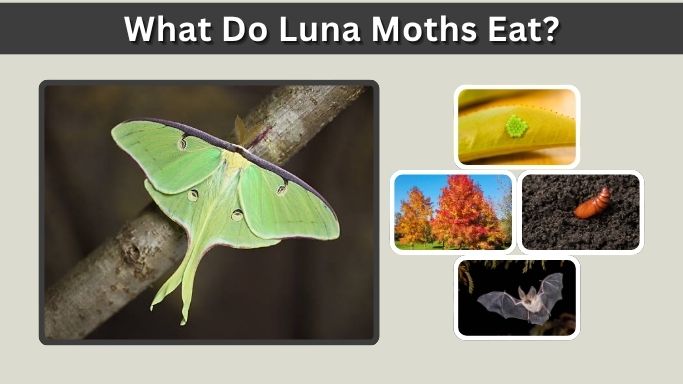
Luna moths have a very unusual diet because their feeding habits change completely during life. Luna moth caterpillars eat leaves from specific trees, but adult luna moths do not eat or drink at all. This surprises many people because adult moths look large and active. In this guide, you’ll learn what luna moths eat, what their caterpillars feed on, and why adults cannot eat.
Do Luna Moths Eat?
Luna moths only eat during their caterpillar stage. Once they become adult moths, they stop eating completely. Adult luna moths do not drink nectar, chew leaves, eat fruit, or feed on clothing. Their only goal as adults is to mate and lay eggs before their short life ends.
Why Adult Luna Moths Do Not Eat
Adult luna moths do not eat because they do not have working mouthparts. Many butterflies and moths use a long tube-like mouthpart called a proboscis to drink nectar. Luna moths, however, emerge as adults with reduced, nonfunctional mouthparts.
This means they cannot sip nectar from flowers or drink water. They also cannot bite people, chew plants, or damage stored food. Everything an adult luna moth needs for energy comes from the fat stored during its caterpillar stage.
Because adults cannot eat, their lifespan is very short. Most adult luna moths live for about a week. During this time, males search for females, females lay eggs, and the next generation begins.
What Do Adult Luna Moths Eat?
Adult luna moths eat nothing. They do not eat flowers, leaves, fruit, honey, sugar water, or household materials. Even if you offer food, an adult luna moth cannot use it because its mouthparts are not designed for feeding.
This is why it is not helpful to put out nectar or fruit for an adult luna moth. If you find one, the best thing to do is keep it safe from pets, bright lights, and rough handling. Place it near trees or shrubs if it is in a dangerous spot.
Do Luna Moths Eat or Drink?
Adult luna moths do not eat or drink. They survive on stored energy from the larval stage. Their adult body is built for reproduction, not feeding.
This makes luna moths different from many common butterflies and moths. A butterfly may visit flowers for nectar every day, but a luna moth has only a short window of time to find a mate. Its life as an adult is brief, silent, and focused.
What Do Luna Moth Caterpillars Eat?
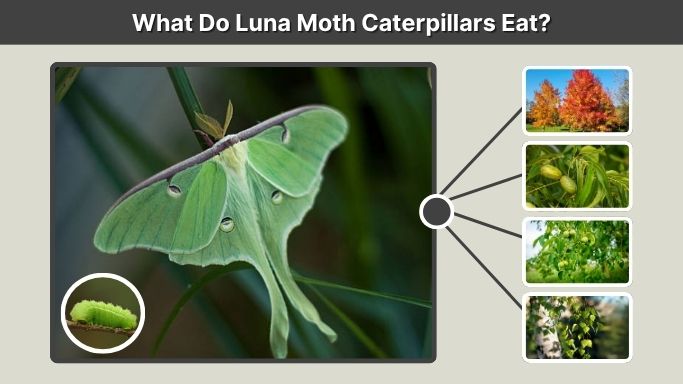
Luna moth caterpillars are the feeding stage of the species. They eat leaves from specific hardwood trees and shrubs. These plants are called host plants because they support the caterpillar’s growth. Without the right host plants, luna moth caterpillars cannot develop properly.
Common Luna Moth Caterpillar Host Plants
Luna moth caterpillars eat leaves from several native trees. Their exact food choice can vary by region, but common host plants include:
- Sweetgum
- Hickory
- Walnut
- Birch
- Persimmon
- Sumac
- Alder
- Beech
- Willow
- Pecan
- Butternut
- White oak in some areas
These plants provide the nutrients caterpillars need to grow. A young caterpillar starts small and eats tender leaf tissue. As it grows, it eats more leaves and becomes larger, greener, and stronger.
What Leaves Do Luna Moth Caterpillars Eat?
Luna moth caterpillars mainly eat leaves from trees rather than soft garden vegetables. They prefer leaves from woody host plants such as walnut, hickory, sweetgum, birch, and persimmon. These leaves are part of their natural diet.
A caterpillar found on one host plant should not be moved randomly to another plant unless you know it is safe. Some caterpillars become used to a particular plant species and may not accept a sudden change. If you find one feeding on persimmon, walnut, or hickory, it is usually best to leave it there.
Do Luna Moth Caterpillars Eat Tomato Plants?
Luna moth caterpillars do not normally eat tomato plants. Tomato leaves are not one of their usual host foods. If you see a green caterpillar eating tomatoes, it is more likely to be a tomato hornworm or another garden caterpillar, not a luna moth caterpillar.
Luna moth caterpillars usually stay on trees and shrubs. They are not major vegetable garden pests. They may feed on leaves, but they usually do not appear in large groups that destroy gardens.
Do Luna Moth Caterpillars Eat Vegetables?
Luna moth caterpillars are not known for eating common vegetables like lettuce, cabbage, tomato, pepper, or beans. Their diet is mostly tree leaves. They need suitable host plants to grow correctly.
If someone finds a luna moth caterpillar near a garden, it may have fallen from a nearby tree or moved while searching for a place to pupate. Mature caterpillars often leave the host plant when they are ready to spin a cocoon. At that point, they may wander across lawns, paths, or garden beds.
Luna Moth Diet by Life Stage
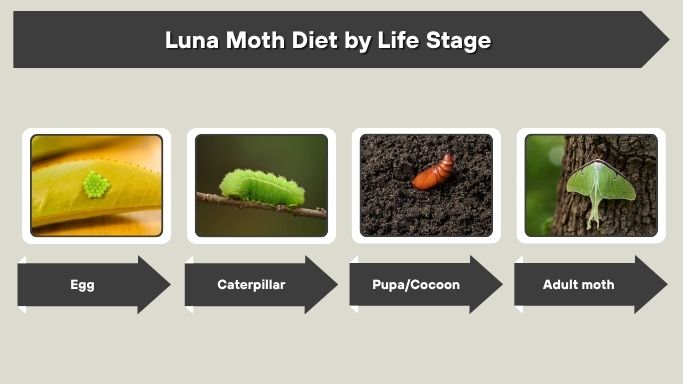
The luna moth’s diet depends on its stage of development. The caterpillar stage is all about eating and growing. The adult stage is about mating and reproduction. This difference is important because many people ask what luna moths eat without knowing that adults and caterpillars behave very differently.
| Life Stage | Does It Eat? | Food Source |
| Egg | No | Does not feed |
| Caterpillar | Yes | Leaves from host trees |
| Pupa/Cocoon | No | Uses stored energy |
| Adult moth | No | Does not eat or drink |
Egg Stage
The egg stage does not eat. A female luna moth lays eggs on or near suitable host plants. The egg contains enough nutrients for the tiny caterpillar to develop before hatching.
After the caterpillar hatches, it begins feeding on nearby leaves. This is why females choose host plants carefully. If eggs are laid on the wrong plant, the young caterpillars may not survive.
Caterpillar Stage
The caterpillar stage is the only true feeding stage. Luna moth caterpillars eat a lot because they must store enough energy for later life stages. They molt several times as they grow.
During this stage, the caterpillar builds body mass. The energy it stores will help it survive the pupal stage and adult stage. Since adults do not eat, good nutrition during the caterpillar stage is extremely important.
Cocoon and Pupa Stage
Inside the cocoon, the luna moth does not eat. The caterpillar has finished feeding by this point. It uses stored energy to transform into an adult moth.
The cocoon is often made with silk and leaves. In many cases, it may be found in leaf litter on the ground. This is one reason fallen leaves are important for moths. Cleaning up every leaf in a yard can remove shelter for pupae.
Adult Stage
The adult stage does not feed. The moth emerges from the cocoon, expands its wings, and begins searching for a mate. Males use their wide, feathery antennae to detect female scent signals.
Females lay eggs after mating. Since adults cannot eat, they must complete reproduction quickly. This short adult life makes luna moth sightings feel special and rare.
What Eats Luna Moths?
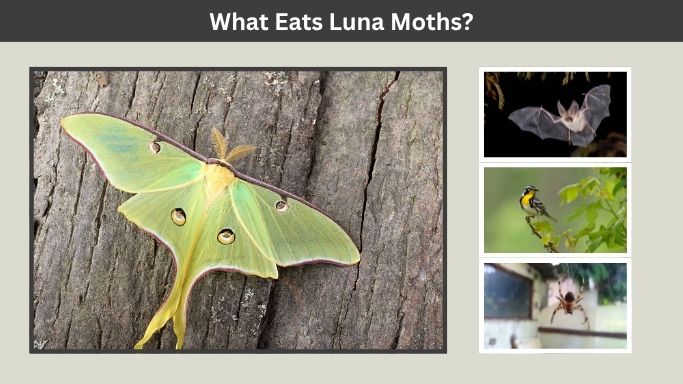
Luna moths are part of the food chain. Their eggs, caterpillars, pupae, and adults can all be eaten by predators. Even though adult luna moths are large and beautiful, they still face danger from birds, bats, spiders, and other animals.
Common Predators of Luna Moths
Several animals may eat luna moths or their caterpillars, including:
- Bats
- Birds
- Spiders
- Wasps
- Ants
- Small mammals
- Frogs
- Lizards
- Predatory insects
- Parasitoid flies and wasps
Bats are especially important predators of adult moths because luna moths fly at night. The long tails on luna moth wings may help confuse bats during attacks. Some studies suggest the tails can interfere with a bat’s ability to strike accurately.
Do Birds Eat Luna Moths?
Yes, birds can eat luna moths, especially when moths rest during the day. A luna moth sitting on a wall, tree trunk, or porch may be vulnerable to birds. Caterpillars can also be eaten by birds searching leaves for insects.
However, luna moths have some protection. Their green color helps them blend with leaves. Their large eyespots may also startle or confuse some predators. Still, many luna moths are eaten before they can reproduce.
Do Bats Eat Luna Moths?
Yes, bats can eat luna moths. Since luna moths are active at night, they share the same airspace with hunting bats. Bats use echolocation to find flying insects in the dark.
The luna moth’s long hindwing tails may help it survive bat attacks. The tails can draw attention away from the body, giving the moth a better chance to escape. Even if a predator damages the tail, the moth may survive if the body and main wings remain usable.
Do Luna Moths Eat Clothes or Household Items?
Luna moths do not eat clothes, carpets, stored grains, paper, wood, or furniture. Adult luna moths do not eat anything, and their caterpillars eat leaves from trees. They are not household pests.
Luna Moths vs Clothes Moths
People sometimes worry that a large moth near the house might damage clothing. Luna moths are not clothes moths. Clothes moths are much smaller and usually live indoors where they may damage wool, fur, feathers, or other natural fibers.
Luna moths are outdoor insects. If one enters a house, it usually came in by accident, often because it was attracted to light. It should be gently moved outside rather than killed.
Can Luna Moths Damage Gardens?
Luna moth caterpillars may chew leaves on host trees, but they are not usually serious garden pests. They do not normally attack vegetable gardens, and they rarely appear in numbers high enough to damage healthy trees.
A few chewed leaves on a host tree are part of nature. If you want to support luna moths, avoid spraying pesticides on trees where caterpillars may be feeding. Even natural or organic sprays can harm caterpillars if applied directly.
What to Feed a Luna Moth Caterpillar
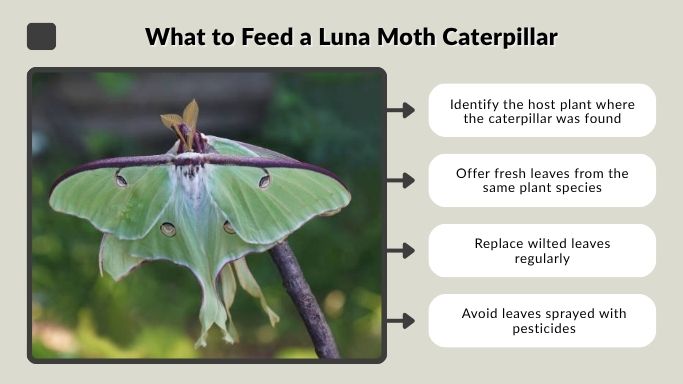
If you are caring for a luna moth caterpillar, the safest food is leaves from the plant it was already eating. Do not guess randomly. A caterpillar that was found on walnut should be given fresh walnut leaves. One found on sweetgum should be given sweetgum leaves.
Feeding Tips for Caterpillars
Use these careful feeding tips:
- Identify the host plant where the caterpillar was found
- Offer fresh leaves from the same plant species
- Replace wilted leaves regularly
- Avoid leaves sprayed with pesticides
- Keep the container clean and ventilated
- Do not give human food, fruit, or sugar water
- Provide space when the caterpillar is ready to pupate
Caterpillars need clean leaves and a safe environment. Mold, old leaves, and poor ventilation can harm them. If you are not experienced with raising moths, it is often better to leave the caterpillar outdoors on its natural host plant.
What Do Baby Luna Moths Eat?
“Baby luna moth” usually means luna moth caterpillar. Newly hatched caterpillars eat soft leaf tissue from the host plant where the eggs were laid. They do not eat milkweed, grass, vegetables, or household foods.
Young caterpillars are very small and delicate. They need the correct leaves right away. If they hatch away from suitable food, they may not survive.
How to Help Luna Moths Find Food
Helping luna moths means supporting their caterpillar host plants. Since adults do not eat, planting flowers for nectar will not directly feed adult luna moths. Instead, the best support is to grow native trees and reduce chemical use.
Best Ways to Support Their Diet
To make your yard more luna moth friendly:
- Plant native host trees such as sweetgum, hickory, walnut, birch, or persimmon
- Keep some natural leaf litter under trees
- Avoid broad insecticides
- Reduce bright outdoor lighting at night
- Leave caterpillars on safe host plants
- Protect wooded edges and native shrubs
- Avoid removing every chewed leaf from trees
These steps create a better habitat for luna moth caterpillars and other native insects. A yard with native trees may support more birds, pollinators, and wildlife overall.
FAQs
What do luna moths eat?
Adult luna moths do not eat anything. They do not drink nectar, chew leaves, or eat fruit. Luna moth caterpillars are the feeding stage, and they eat leaves from host trees such as sweetgum, hickory, walnut, birch, persimmon, sumac, and willow.
Why don’t adult luna moths eat?
Adult luna moths do not eat because they do not have functional mouthparts. They survive on energy stored from the caterpillar stage. Their adult life is short, usually around a week, and their main purpose is to mate and lay eggs.
What do luna moth caterpillars eat?
Luna moth caterpillars eat leaves from specific hardwood trees and shrubs. Common host plants include sweetgum, walnut, hickory, birch, persimmon, sumac, beech, willow, alder, and pecan. They need the right host leaves to grow and complete their life cycle.
Do luna moths eat clothes?
No, luna moths do not eat clothes. They are not clothes moths. Adult luna moths do not eat at all, and their caterpillars feed on tree leaves outdoors. If a luna moth enters a house, it is usually accidental and should be gently released outside.
What animals eat luna moths?
Luna moths can be eaten by bats, birds, spiders, frogs, lizards, ants, wasps, and other predators. Caterpillars may also be attacked by parasitoid wasps or flies. Adult moths have long wing tails that may help confuse hunting bats at night.
