
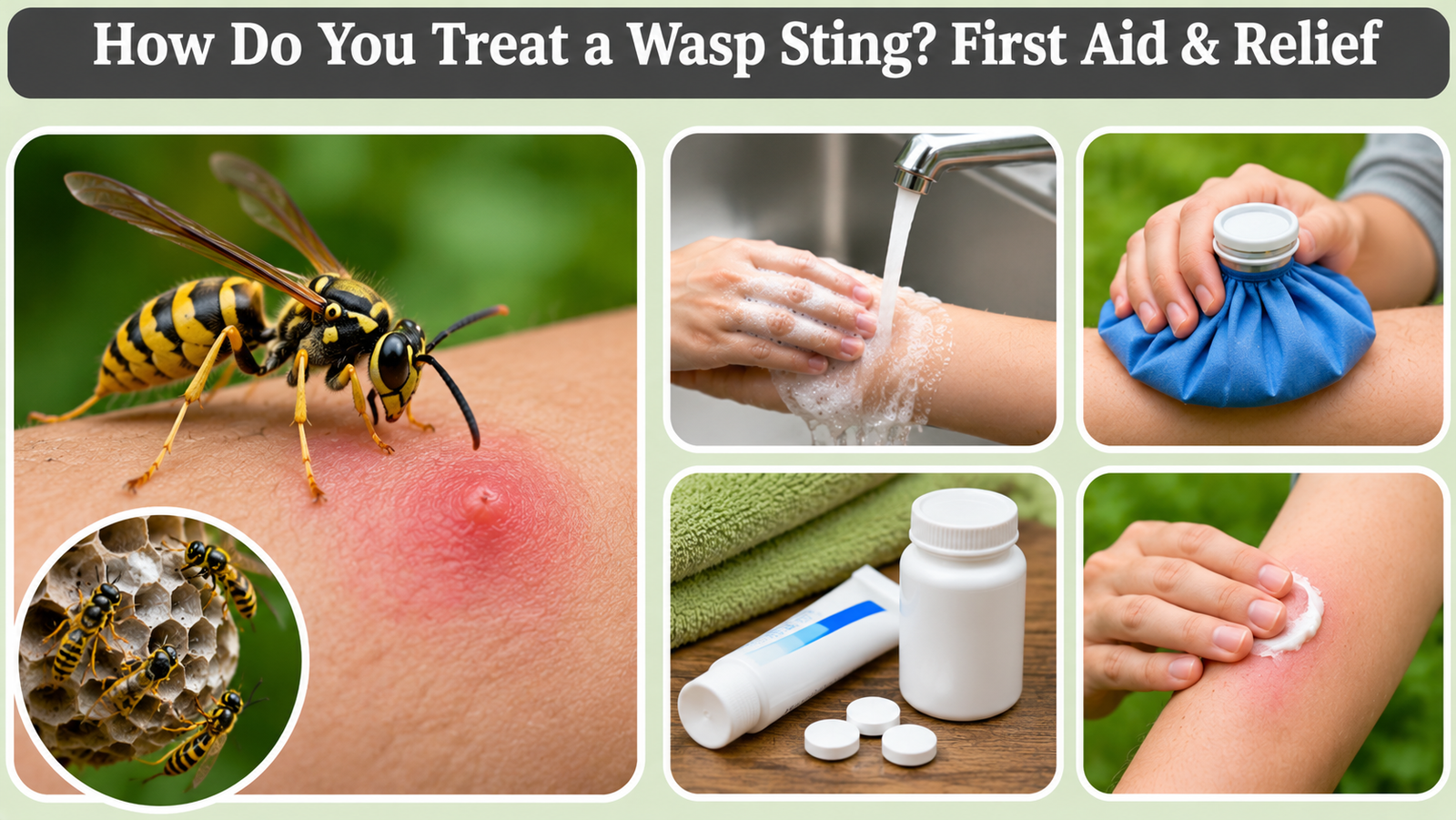
Getting stung by a wasp can cause sudden pain, redness, itching, and swelling. Fortunately, most wasp stings are mild and can be treated at home with simple first aid. Washing the skin, applying a cold compress, and using suitable over-the-counter treatments often provide relief. However, stings near the eyes or inside the mouth need special attention, and severe allergic reactions require emergency care. This guide explains how to treat a wasp sting, reduce swelling, help children and pets, and recognize warning signs that should never be ignored.
How Do You Treat a Wasp Sting Immediately?
Move away from the wasp and its nest. Most uncomplicated stings need cleaning and symptom relief. Wasp venom can cause pain and inflammation even without an allergy. These steps apply to red wasps, paper wasps, and yellowjackets.
Step-by-Step First Aid for a Wasp Sting
- Move to safety. Walk away from nearby wasps.
- Check for a stinger. Wasps rarely leave one; remove any visible stinger promptly.
- Clean the sting. Wash with soap and water.
- Apply cold. Use a wrapped ice pack for 10–20 minutes.
- Remove jewelry. Take off rings before fingers swell.
- Watch for an allergy. Breathing trouble, faintness, or throat swelling is an emergency.
Do not scratch or squeeze the area. Elevate a swollen limb if helpful.
How Do You Treat Wasp Sting Swelling and Itching?
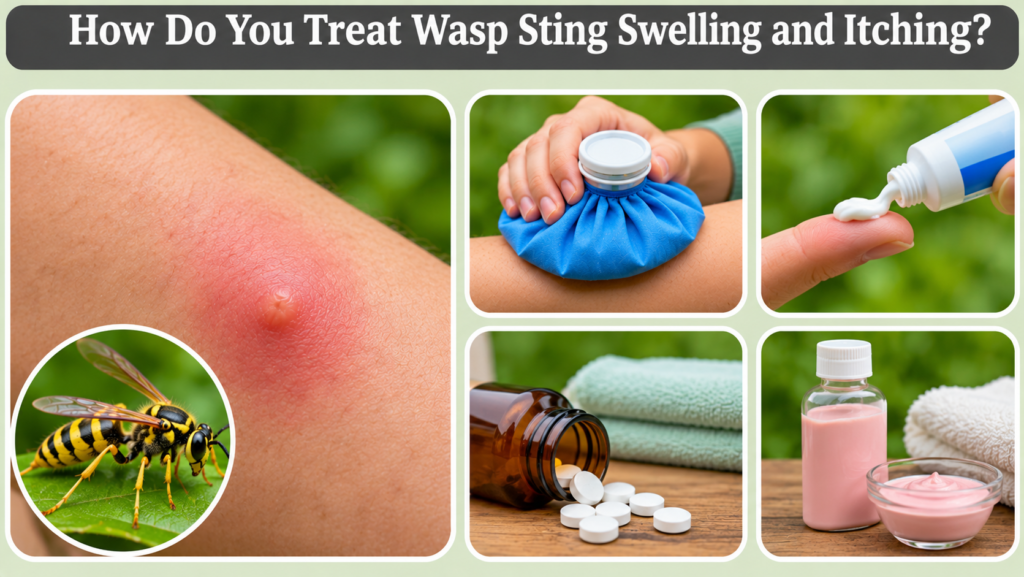
Itching and swelling may outlast the initial pain. Some people develop a larger reaction that expands for a day or two. Treatment focuses on comfort and avoiding irritation. Local swelling does not necessarily indicate a dangerous allergy.
Home Treatments That May Help
- Cold compress: Relieves pain and swelling; wrap ice in cloth.
- Hydrocortisone cream: May ease itching and inflammation when used according to the label.
- Oral antihistamine: May relieve itching; check age restrictions and interactions.
- Calamine lotion: Can soothe irritated skin without scratching.
- Pain medicine: Acetaminophen or ibuprofen may help when safe to take.
Toothpaste, mud, vinegar, and baking soda are not proven venom treatments. Avoid applying them to broken skin.
How Long Does the Swelling Last?
Pain often improves within hours; itching may last a day or two. Larger swelling may peak after 24–48 hours. Seek advice for worsening pain, pus, fever, or increasing redness and warmth.
How to Treat a Wasp Sting on Different Body Parts
Stings on the hands, face, and sensitive areas may need extra care. Although basic cleaning and cooling remain useful, stings involving the eye, mouth, or airway can become serious and require medical assessment.
Wasp Sting on a Finger, Hand, Arm, or Head
For a finger or hand sting, remove rings, use a cold pack, and elevate the hand. Arm and scalp stings generally receive similar care. Seek assessment for severe pain, numbness, or reduced movement.
Wasp Sting on the Lip, Face, Eyelid, or Eye
Apply a cool compress to facial skin without pressing on the eye. Eye stings or significant eyelid swelling need prompt assessment. Seek urgent care for stings inside the mouth or throat. Difficulty swallowing, voice changes, or breathing trouble require emergency services.
Wasp Stings in Children and Toddlers
Clean and cool the sting, then observe the child. Use only age-appropriate medicines; never guess an adult dose. Seek medical care for unusual drowsiness, widespread symptoms, significant swelling, or stings near the eye or inside the mouth. Breathing trouble is an emergency.
Do Different Types of Wasp Stings Need Different Treatment?
First aid is similar for red, paper, black, European wasps, and hornets. Sting color does not determine treatment. Location, number of stings, and allergic symptoms matter most.
Red Wasp, Paper Wasp, Black Wasp, and Hornet Stings
Wash, cool, and treat discomfort appropriately. Paper wasps may defend their nests; hornets and yellowjackets can sting repeatedly. Keep away from nests and seek advice after numerous stings.
How Do You Treat a Bee or Wasp Sting?
Bee and wasp stings receive similar care. Honey bees often leave a barbed stinger; wasps usually do not. Remove a visible stinger promptly, then clean and cool the skin. These principles apply in the UK, Australia, and United States.
When Is a Wasp Sting an Emergency?
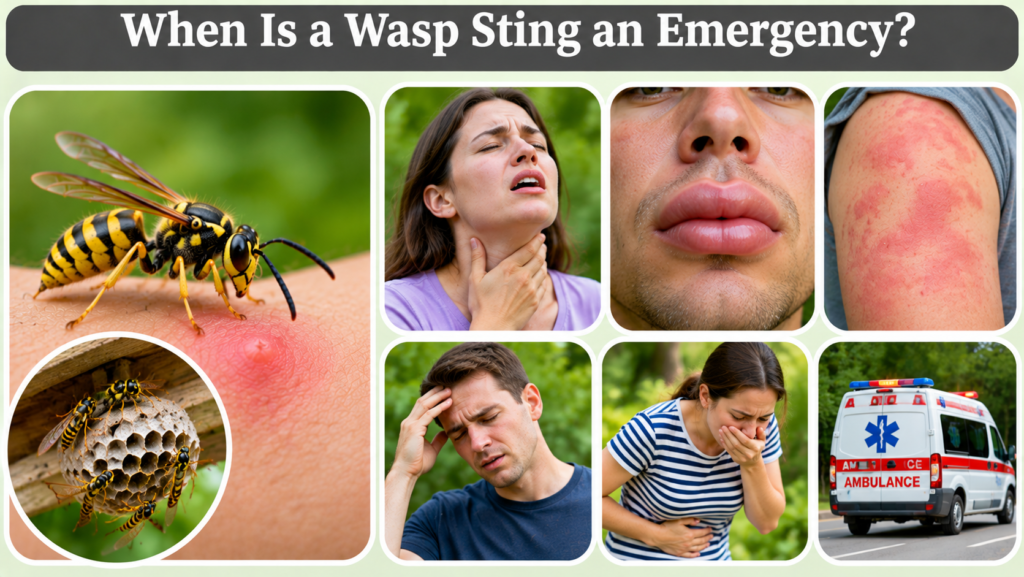
Wasp venom can trigger anaphylaxis, a life-threatening reaction that may begin within minutes. Severe symptoms can occur despite little swelling at the sting site. Never wait for breathing or circulation problems to resolve on their own.
Warning Signs of a Severe Allergic Reaction
Call emergency services if any of these appear after a sting:
- Difficulty breathing, wheezing, or throat tightness.
- Swelling of the tongue or throat, or difficulty swallowing.
- Fainting, marked dizziness, confusion, or collapse.
- Widespread hives together with breathing, digestive, or circulation symptoms.
- Repeated vomiting or severe abdominal symptoms suggesting a systemic reaction.
Use prescribed epinephrine immediately according to the emergency plan. Antihistamines are not a substitute. Emergency evaluation remains essential even if symptoms improve.
When Should You See a Doctor?
Seek assessment for worsening swelling, infection signs, severe pain, multiple stings, or eye or mouth stings. People with previous severe reactions should consult an allergist. Simple local stings rarely require antibiotics.
How Do You Treat a Wasp Sting on a Dog or Cat?
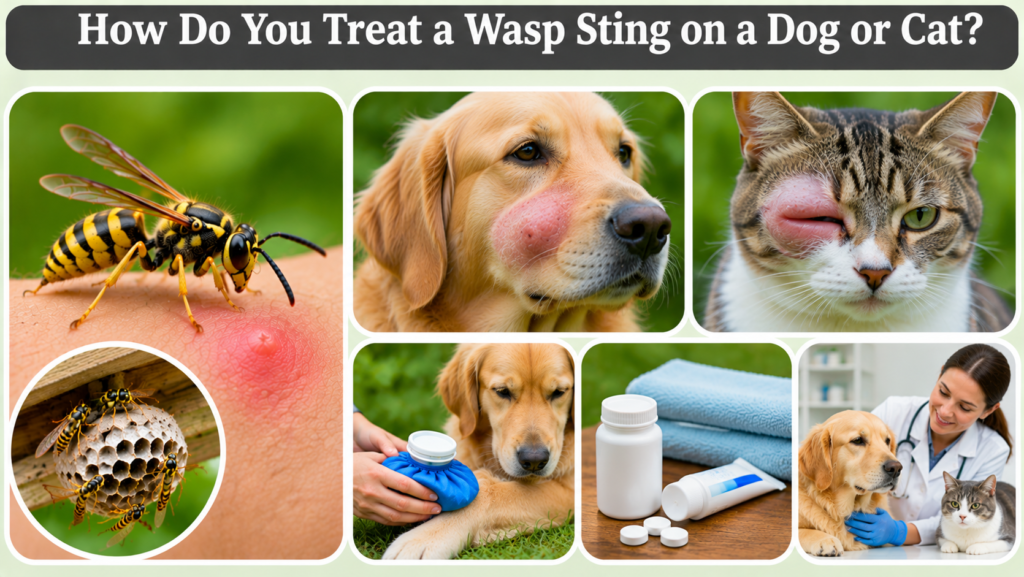
Dogs and cats may be stung on paws, noses, or mouths. A single sting may be mild, but face or throat swelling is concerning. Keep pets calm and consult a veterinarian before using human medicines.
First Aid for Pets
- Move the dog or cat away from the nest or insect.
- Check for a visible stinger without squeezing the skin.
- Apply a cool, damp cloth to a small external sting if the pet tolerates it.
- Contact a veterinarian before giving antihistamines, painkillers, or creams.
Seek emergency veterinary care for breathing trouble, collapse, vomiting, substantial facial swelling, mouth stings, or multiple stings. Never guess a human medicine dose.
FAQs
1. What is the fastest way to treat a wasp sting?
Move away from the wasp, wash the affected skin, and apply a wrapped cold pack. These steps help relieve pain and limit swelling. If itching develops, an appropriate antihistamine or hydrocortisone cream may help. Watch for symptoms of a serious allergic reaction.
2. Can you treat a wasp sting at home?
Yes, most mild wasp stings can be managed at home. Clean the area, apply cold, and use suitable symptom-relief products. Home treatment is not appropriate for breathing difficulties, fainting, throat swelling, or other signs of anaphylaxis, which require emergency care.
3. Should you remove a stinger after a wasp sting?
Wasps usually withdraw their stingers, so nothing remains in the skin. Honey bees are more likely to leave a stinger. If you see one, remove it promptly by scraping or plucking, then clean the skin. Do not dig into the skin searching for one.
4. Does a swollen wasp sting mean you are allergic?
Not necessarily. Some swelling around the sting is a normal reaction, and larger local swelling can occur without anaphylaxis. However, widespread hives with breathing symptoms, throat swelling, fainting, or severe digestive symptoms suggest a potentially dangerous systemic reaction and require immediate help.
5. How do you treat a wasp sting in the mouth?
Seek urgent medical care for a sting inside the mouth or throat, because swelling may threaten the airway. Do not rely on home remedies or wait for visible swelling to become severe. Call emergency services immediately if breathing, speaking, or swallowing becomes difficult.
