
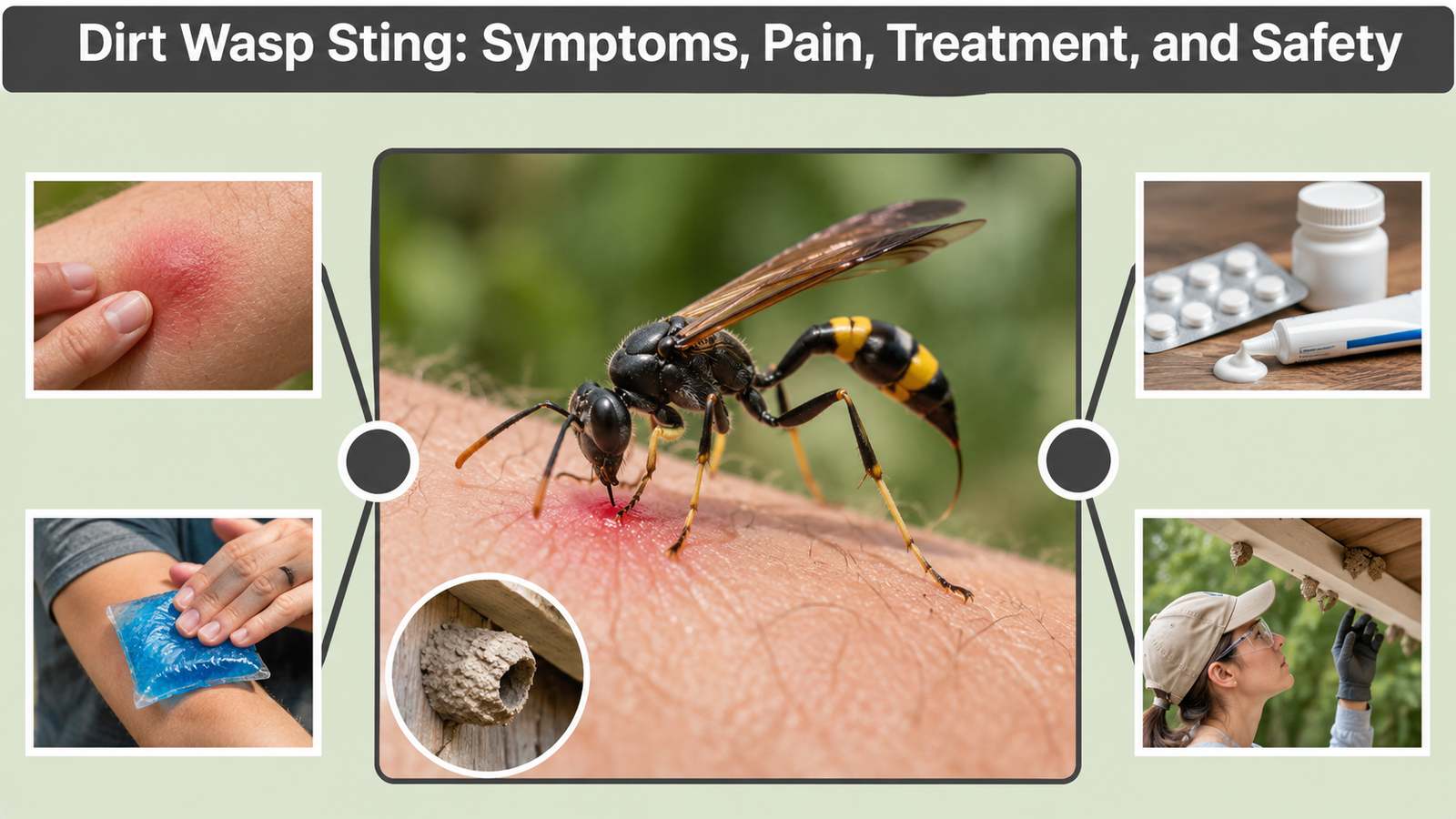
Dirt wasps may look intimidating, especially when they fly around porches, walls, or muddy areas. However, most insects called dirt wasps are solitary mud daubers, which are much less likely to sting people than social wasps. Although a dirt wasp sting can cause temporary pain, redness, and swelling, serious reactions are uncommon. Understanding the difference between mud daubers and aggressive nesting wasps can help you respond safely. This guide explains whether dirt wasps sting, what a sting feels like, how to treat it, and when to seek medical attention.
Do Dirt Wasps Sting Humans?
Yes, dirt wasps can sting, but they usually avoid people. “Dirt wasp” commonly refers to a mud dauber, a solitary wasp that builds nests from wet soil. Its stinger primarily paralyzes spiders to feed its young. A mud dauber is more likely to fly away than defend its nest.
What Is a Dirt Dauber Wasp?
Mud daubers are slender wasps, often black, blue-black, or black and yellow. They create mud tubes on sheltered surfaces, including porches and garages. Unlike yellowjackets, they do not live in defensive colonies. “Dirt diver wasp” may refer to a mud dauber or ground-nesting digger wasp.
Some solitary digger wasps excavate soil tunnels, while yellowjackets sometimes build underground colonies. Their behavior differs significantly.
Why Would a Dirt Wasp Sting?
A mud dauber may sting if trapped in clothing, pressed against skin, or handled roughly. Walking past its nest rarely provokes an attack. Females can sting; males cannot.
What Does a Dirt Wasp Sting Feel Like?
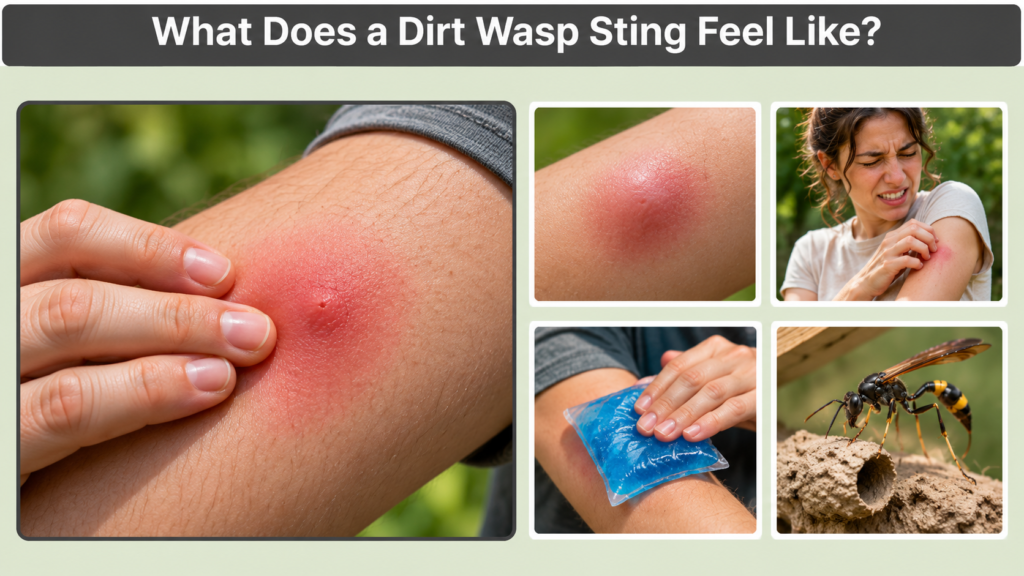
A dirt wasp sting typically causes sudden, sharp pain followed by localized discomfort. The intensity depends on the wasp species, sting location, and individual response. For most people, symptoms remain near the sting and improve with basic care.
Common Dirt Wasp Sting Symptoms
Typical local reactions may include:
- Sharp pain or burning: A brief, immediate sensation where the stinger enters the skin.
- Redness: A small red or pink area surrounding the puncture.
- Mild swelling: Puffiness that can increase during the first several hours.
- Itching or tenderness: Irritation that may continue after the initial pain fades.
- Temporary warmth: The skin around the sting may feel warmer than nearby areas.
Swelling may extend beyond the sting site. This does not automatically mean anaphylaxis, but worsening symptoms need medical assessment.
Dirt Dauber vs. Other Wasp Stings
Mud dauber stings are often milder than those from yellowjackets or paper wasps, although pain varies. Mud daubers are also less likely to sting because they do not defend their nests aggressively.
Yellowjackets can sting repeatedly when their colony is disturbed. Do not assume a wasp entering a ground hole is a harmless mud dauber. The sting alone cannot reliably identify the insect.
How to Treat a Dirt Wasp Sting at Home
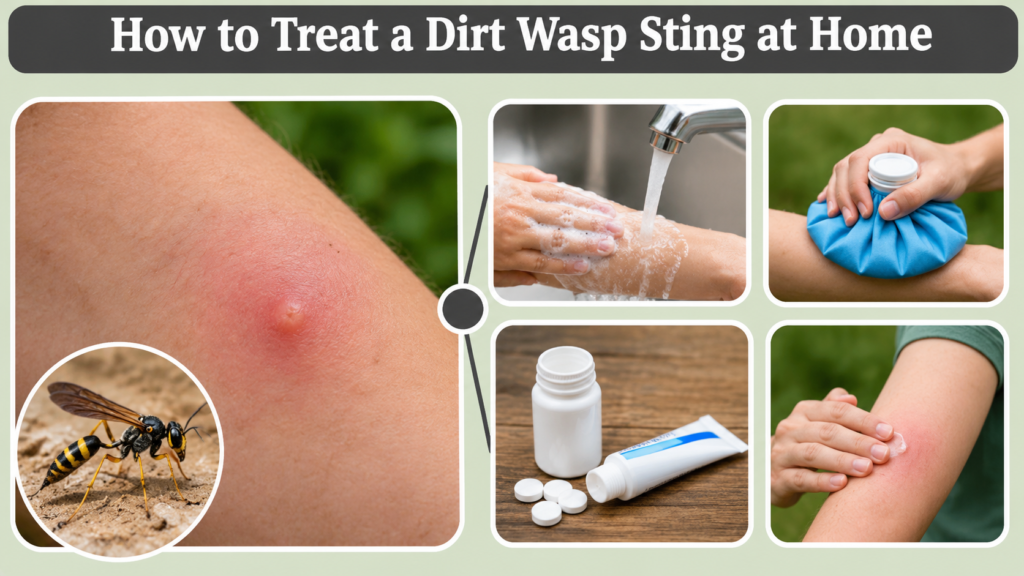
Most uncomplicated dirt wasp stings can be treated at home. Clean the skin, reduce swelling, and monitor for allergy symptoms. Move away from the insect before treatment. Breathing difficulty or other signs of anaphylaxis require immediate emergency help.
First Aid for a Dirt Wasp Sting
For a mild, localized reaction, follow these steps:
- Move away. Do not disturb nearby nests.
- Check for a stinger. Wasps rarely leave one behind; remove any visible stinger promptly.
- Wash the area. Use soap and water.
- Apply a cold compress. Use an ice pack wrapped in cloth for 10–20 minutes at a time.
- Relieve discomfort. An over-the-counter pain reliever, antihistamine, calamine, or hydrocortisone may help when appropriate; follow label directions.
- Monitor symptoms. Watch for worsening swelling or allergic signs.
Avoid scratching; broken skin increases infection risk. Elevating a swollen limb may help.
How Long Does a Dirt Wasp Sting Last?
Pain often settles within hours; itching or redness may last a day or two. Larger local reactions may worsen for 24–48 hours before improving. Seek medical advice for persistent symptoms, fever, pus, or increasing warmth and redness.
Can Rubbing Dirt on a Wasp Sting Help?
No. Soil does not neutralize wasp venom. Rubbing dirt or mud onto punctured skin introduces contaminants and may increase infection risk, particularly after scratching.
If dirt touches the sting, wash with soap and running water. Use a cold compress instead. Never cut, squeeze, or attempt to suck out venom.
When Is a Dirt Wasp Sting Dangerous?
Any wasp sting can trigger a severe allergic reaction. Sting pain does not predict anaphylaxis. Symptoms affecting breathing, circulation, or several body systems require urgent treatment, even if the sting looks minor.
Signs of a Severe Allergic Reaction
Call emergency services immediately if someone develops:
- Difficulty breathing, wheezing, or persistent coughing.
- Swelling of the tongue, throat, or lips.
- Dizziness, fainting, confusion, or sudden weakness.
- Widespread hives or flushing accompanied by other serious symptoms.
- Repeated vomiting or severe abdominal symptoms after a sting, especially alongside other allergic signs.
Use prescribed epinephrine immediately according to the person’s emergency plan. Antihistamines cannot replace epinephrine. Emergency evaluation is necessary afterward.
When to Contact a Doctor
Seek medical advice for mouth, throat, or eye stings, multiple stings, or substantial swelling. Increasing redness, pain, warmth, fever, or drainage may indicate infection. Anyone with a previous severe reaction should discuss allergy testing and an emergency plan with a clinician.
How to Prevent Dirt Wasp Stings
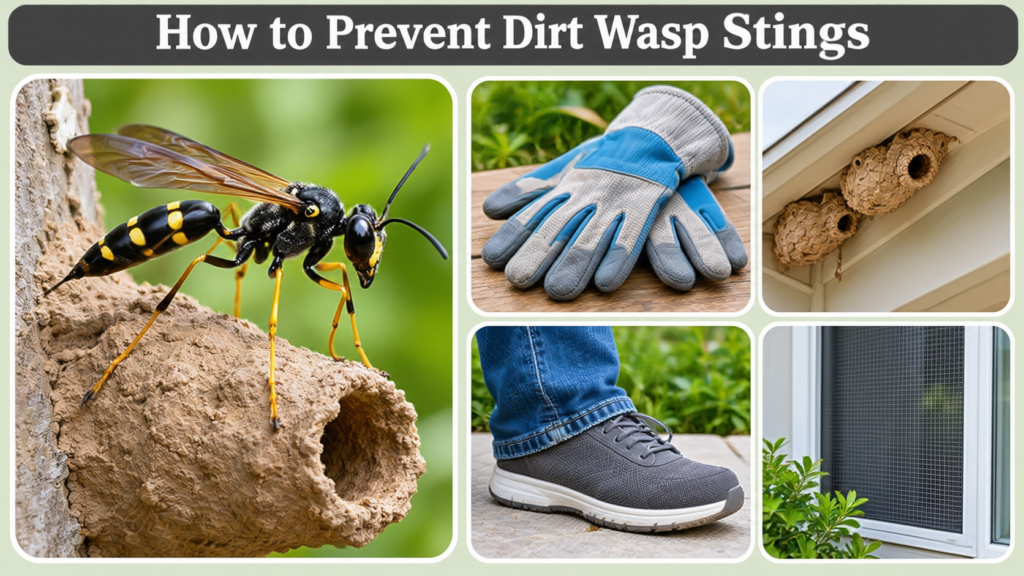
Give solitary wasps space. Mud daubers are beneficial spider predators, and nests in quiet locations usually pose little threat. Unnecessary interference increases contact with the insects. A few practical habits help prevent accidental stings.
Simple Prevention Tips
- Avoid grabbing or swatting mud daubers with bare hands.
- Check gloves, shoes, and outdoor clothing before use.
- Look for mud nests around sheds, garages, and covered porches.
- Teach children not to poke nests or handle unfamiliar insects.
- Keep doors and window screens in good repair.
- Ask a pest-control professional to assess nests near busy entrances when identification or safe removal is uncertain.
If numerous wasps enter one ground hole, keep people and pets away. They may be yellowjackets, whose colonies can deliver multiple stings.
FAQs
1. Do dirt dauber wasps sting people?
Yes. Female dirt dauber wasps have functional stingers and can sting people. However, they are solitary and generally nonaggressive. Stings are unusual and most often happen when someone accidentally traps, squeezes, or handles a wasp. Leaving mud daubers alone greatly reduces the risk.
2. Do dirt daubers sting worse than other wasps?
Usually not. Mud dauber stings are often considered less painful than those of some social wasps, although individual experiences vary. The bigger difference is behavior: mud daubers seldom sting people, whereas yellowjackets or paper wasps may defend their colonies when threatened.
3. Is a dirt wasp sting poisonous?
Dirt wasps inject venom rather than poison. For most people, one sting causes a temporary local reaction. However, venom can trigger a dangerous allergic response in susceptible individuals. Breathing difficulty, throat swelling, fainting, or rapidly developing widespread symptoms require immediate emergency care.
4. Can dirt make a wasp sting worse?
Yes. Dirt may carry microorganisms that can contaminate the small puncture left by a sting. Rubbing soil onto the skin is not a proven way to relieve pain or neutralize venom. Wash the area with soap and water and use a clean cold compress instead.
5. Can a dirt wasp sting more than once?
Yes. A female mud dauber can generally use her stinger repeatedly, unlike a honey bee that often loses its barbed stinger after stinging a person. Still, mud daubers rarely sting unless trapped or handled. Do not try to catch one with your hands.
