
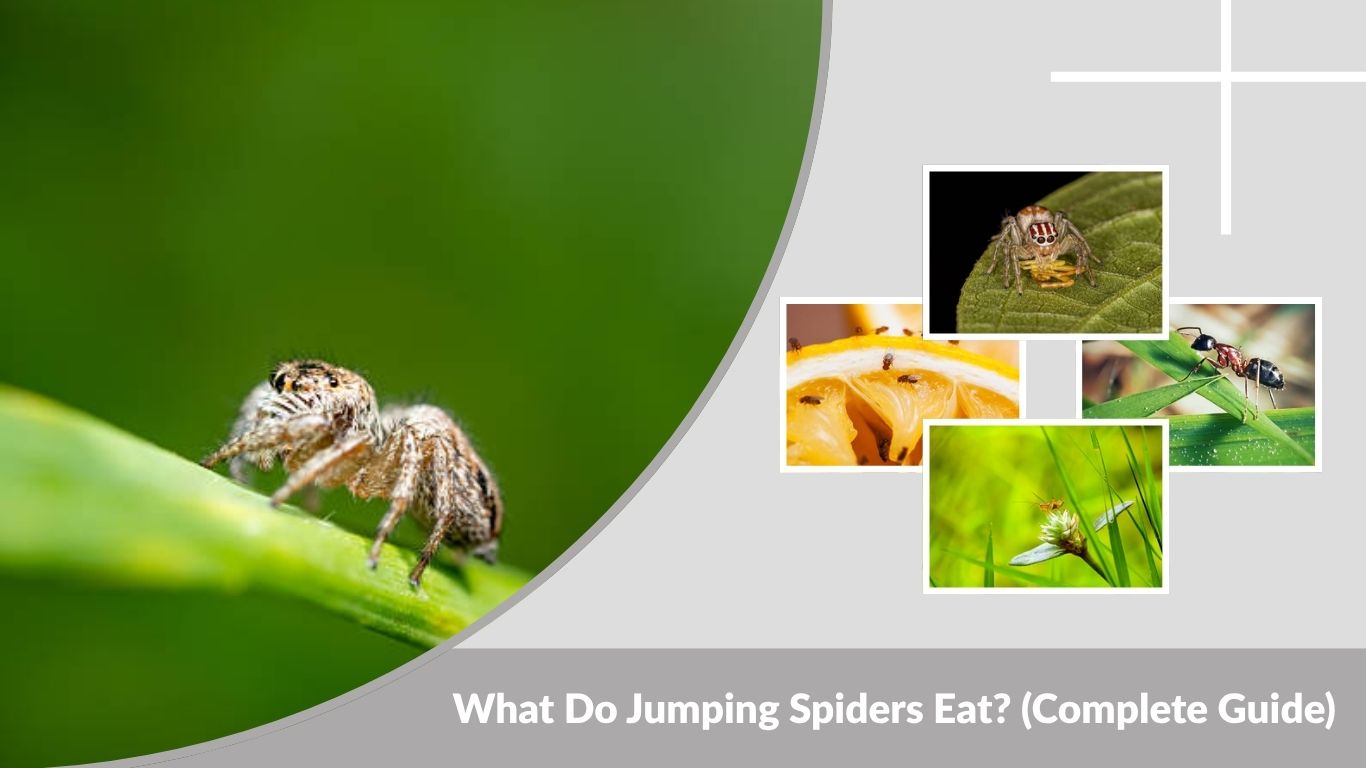
Jumping spiders are fascinating little hunters known for their sharp vision and quick movements. Unlike most spiders, they don’t rely on webs to catch prey—instead, they actively stalk and jump on their food. This makes many people curious: what do jumping spiders eat?
The answer depends on several factors, including their size, species, and environment. Whether you’re observing one in your home or keeping one as a pet, understanding their diet can help you appreciate these tiny predators even more.
What Do Jumping Spiders Eat? (General Diet)
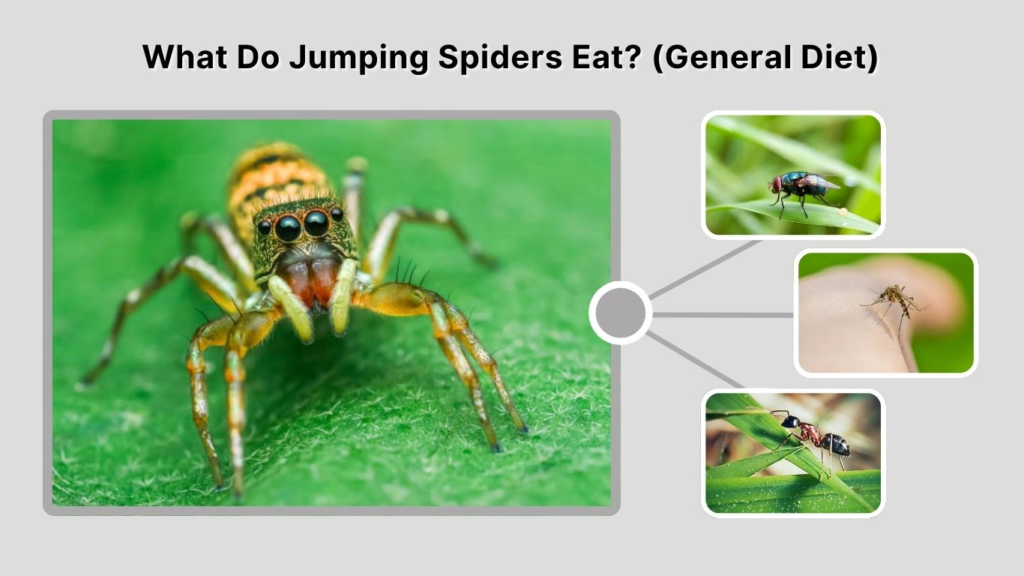
Jumping spiders are strictly carnivorous, meaning they only eat other living creatures. Their diet mainly consists of small insects and other arthropods that they can easily catch and overpower.
Common foods include:
- Flies
- Mosquitoes
- Gnats
- Ants
- Small moths
- Beetles
So, if you’re wondering what bugs jumping spiders eat, the answer is simple: almost any small insect they can hunt. Their excellent eyesight allows them to track moving prey, making them very effective hunters.
In some cases, jumping spiders will even eat other spiders, although this is less common and usually happens when food is scarce.
What Do Jumping Spiders Eat in the Wild?
In the wild, jumping spiders are active daytime hunters. They rely on their vision rather than webs, carefully stalking their prey before pouncing with precision.
Their diet varies depending on where they live. For example:
- In homes or urban areas, they often eat flies and mosquitoes
- In gardens or forests, they may hunt beetles, caterpillars, and other small insects
If you’ve ever asked, what do jumping spiders eat in the house, the answer is usually common household pests. This makes them beneficial because they help control insect populations naturally.
Similarly, wild jumping spiders eat whatever prey is available, adapting their diet based on their surroundings.
What Do Jumping Spiders Eat in Captivity (Pets)?
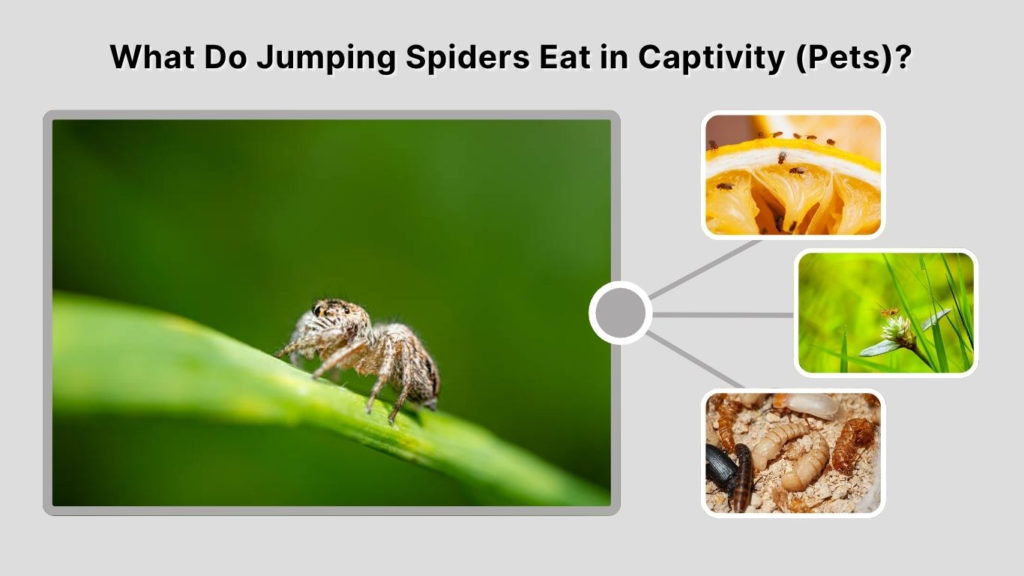
Jumping spiders are becoming increasingly popular as pets, especially species like the Regal jumping spider. When kept in captivity, their diet needs to be carefully managed to ensure they stay healthy.
Pet jumping spiders typically eat:
- Fruit flies (ideal for smaller spiders)
- Small crickets
- Mealworms (in moderation)
- Waxworms (as an occasional treat)
If you’re wondering what do pet jumping spiders eat, the key is to match the prey size to the spider. The food should always be smaller than the spider itself to avoid injury.
Most pet jumping spiders should be fed about 2–3 times per week. It’s also important to avoid feeding insects that may have been exposed to pesticides, as this can harm your spider.
What Do Baby and Tiny Jumping Spiders Eat?
Baby jumping spiders, also known as spiderlings, have very different dietary needs compared to adults. Because they are extremely small, they can only eat tiny prey.
Newborn jumping spiders usually eat:
- Infusoria (microscopic organisms)
- Wingless fruit flies
- Very small gnats
As they grow into juveniles, they begin to eat slightly larger prey such as small flies or micro crickets. Adult jumping spiders, on the other hand, can handle bigger insects.
So, whether you’re asking what do baby jumping spiders eat or what do tiny jumping spiders eat, the answer depends on their size. The smaller the spider, the smaller the prey must be.
Do Jumping Spiders Eat Other Spiders?
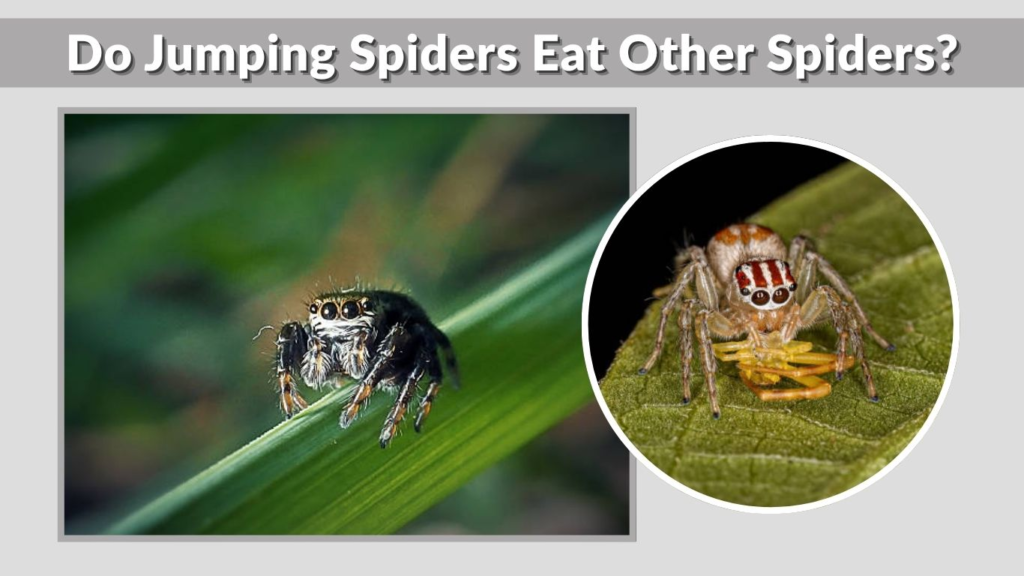
Jumping spiders are opportunistic predators, which means they will eat a wide variety of prey when given the chance. This includes other spiders. While insects make up the majority of their diet, jumping spiders may attack and consume smaller or weaker spiders, especially if food is limited.
However, this behavior is not their primary feeding habit. Most jumping spiders prefer insects because they are easier to catch and more abundant. So, if you’re wondering what spiders jumping spiders eat, the answer is: only occasionally, and usually smaller species.
Diet Differences by Species
Although all jumping spiders are carnivorous, their diet can vary slightly depending on the species, mainly due to size and habitat.
Bold or Daring Jumping Spiders (Phidippus audax)
Bold jumping spiders are larger and stronger than many other species. Because of their size, they can handle bigger prey such as crickets, flies, and even small grasshoppers. If you’re asking what bold or daring jumping spiders eat, the answer is generally larger insects compared to smaller species.
Regal Jumping Spiders (Phidippus regius)
Regal jumping spiders are popular pets and have a similar diet to bold jumping spiders. They prefer flies, crickets, and other medium-sized insects. In captivity, they are often fed crickets and mealworms.
Zebra Jumping Spiders
Zebra jumping spiders are smaller, so their diet consists of tiny insects like gnats, flies, and small ants. They are commonly found on walls and windows, where they hunt small flying insects.
Peacock Jumping Spiders
Peacock jumping spiders are very small and primarily eat tiny insects. Their diet includes gnats and other microscopic or very small prey. Due to their size, they cannot handle larger insects.
Other Common Types
Other species, such as tan jumping spiders, black jumping spiders, and house jumping spiders, generally follow the same pattern: they eat insects appropriate to their size and environment. Regardless of species, all jumping spiders rely on movement to detect prey.
What Do Jumping Spiders Eat in Different Conditions?
The diet of jumping spiders can also change depending on environmental conditions.
In Winter
During colder months, jumping spiders become less active. In some cases, they may enter a state similar to dormancy. As a result, they eat much less frequently or may not eat at all for periods of time.
Indoors
Indoor jumping spiders typically feed on household insects such as flies, mosquitoes, and small bugs attracted to light. This is why they are often considered helpful, as they naturally reduce pest populations.
So, if you’re wondering what jumping spiders eat in the winter or inside your home, the answer depends on activity levels and available prey.
What Do Jumping Spiders Like to Eat Most?
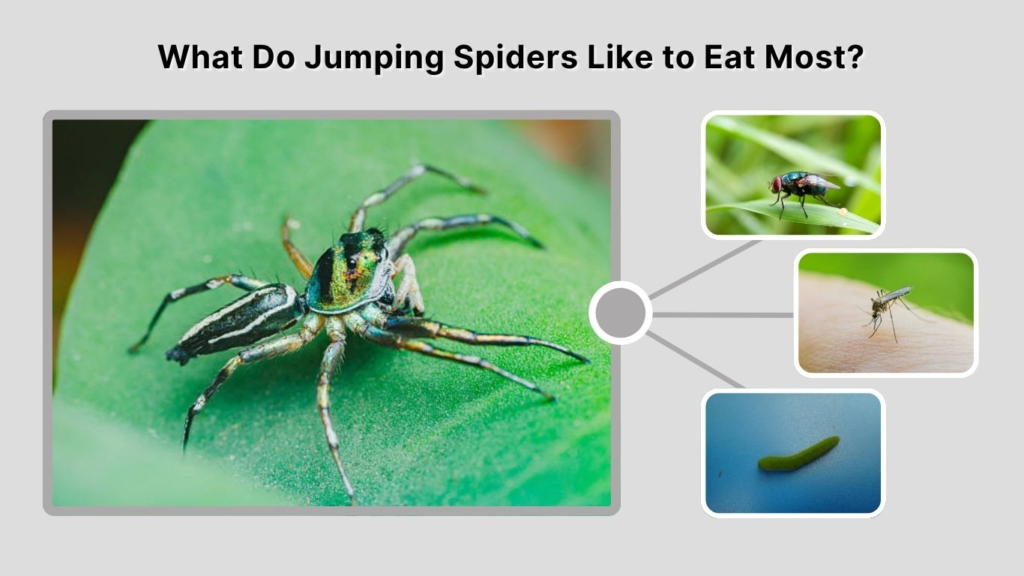
Jumping spiders prefer live, moving prey. Their hunting strategy depends heavily on their vision, so movement is what triggers their attack response.
Their favorite foods usually include:
- Flies
- Mosquitoes
- Soft-bodied insects
They tend to avoid prey that is too large, too hard, or potentially dangerous. Because they do not use webs to trap food, they rely entirely on their ability to chase and capture prey.
If you’re asking what jumping spiders like to eat, the best answer is small, active insects that are easy to catch.
Feeding Tips and Safety (For Pet Owners)
If you are keeping a jumping spider as a pet, proper feeding is essential for its health.
Here are some important tips:
- Always provide appropriately sized prey
- Avoid insects that may have been exposed to pesticides
- Feed live prey to stimulate natural hunting behavior
- Do not overfeed; 2–3 times per week is usually enough
It’s also a good idea to lightly mist the enclosure occasionally, as jumping spiders can drink small water droplets.
Conclusion
Jumping spiders are skilled hunters with a diet that mainly consists of small insects and other arthropods. Whether in the wild or in captivity, they rely on their excellent vision and agility to catch moving prey.
From tiny spiderlings eating microscopic organisms to adult spiders hunting flies and crickets, their diet changes as they grow. Different species may prefer different prey sizes, but the overall pattern remains the same.
