
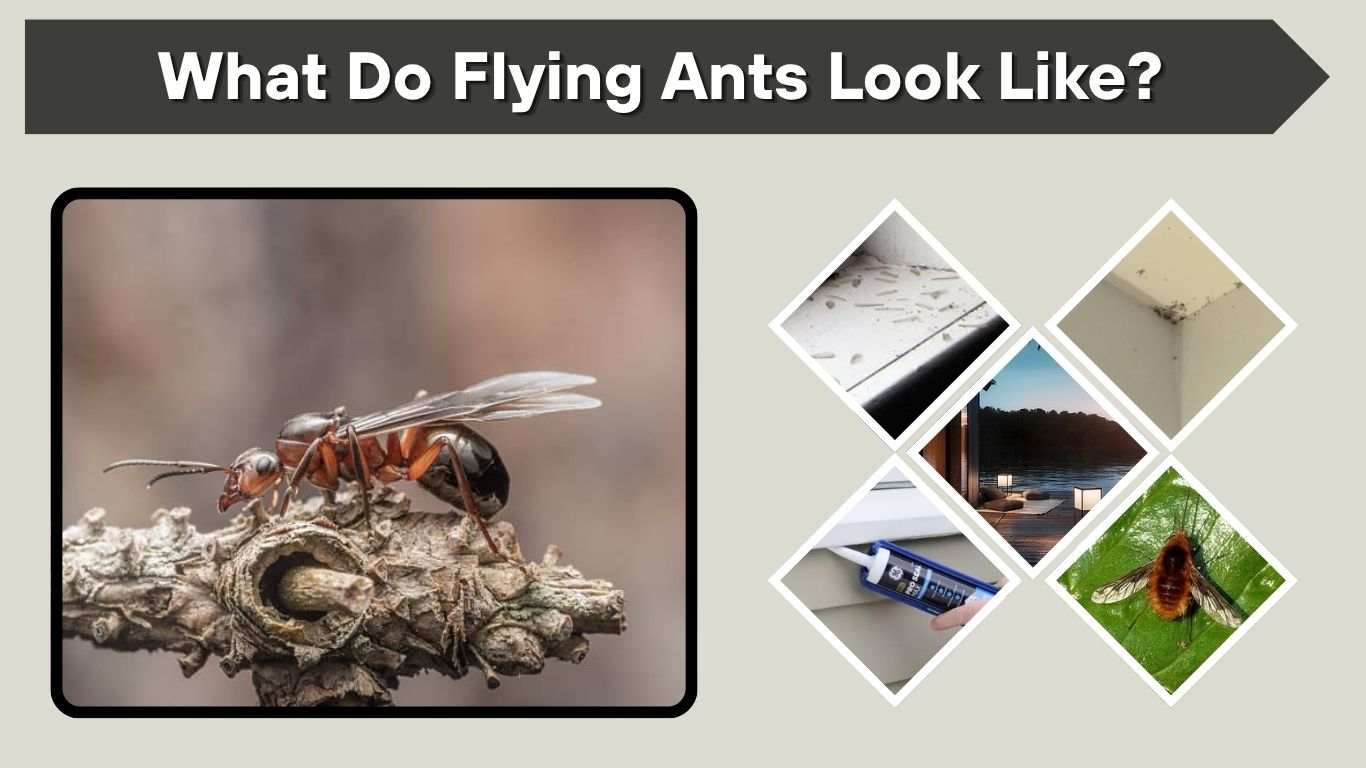
Flying ants look like regular ants with wings, but they are often confused with termites, wasps, flies, and other small flying insects. They usually have a narrow waist, bent antennae, six legs, and two pairs of wings. Seeing them indoors can be surprising, especially when they gather near windows or lights, but most are reproductive ants leaving a colony to mate.
What Do Flying Ants Look Like?
Flying ants are winged reproductive ants, also called alates. They are usually male ants or young queen ants from a mature colony. Unlike worker ants, these ants have wings for a short time so they can leave the nest and mate.
A flying ant usually has:
- A clearly segmented ant-like body
- A narrow, pinched waist
- Bent or elbowed antennae
- Six legs
- Two pairs of wings
- Front wings longer than back wings
- Black, brown, red, or reddish-brown coloring
The wings may look clear, smoky, pale, brownish, or even white in bright light. Some flying ants are tiny, while others, such as flying carpenter ants, can look large and intimidating.
Why Do Some Ants Have Wings?
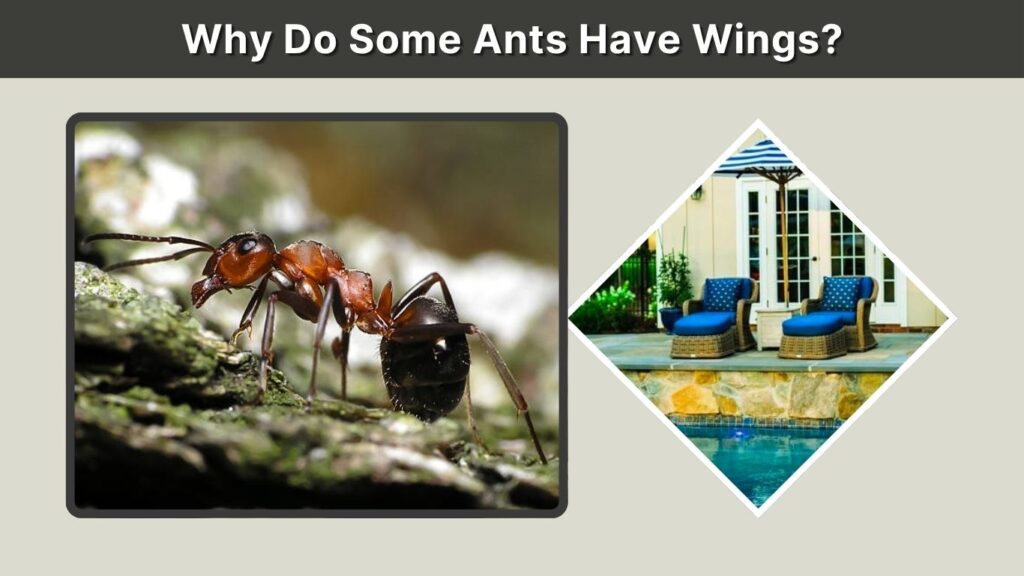
Some ants have wings because they are part of the colony’s reproductive stage. A mature ant colony produces winged males and queens. These ants leave the nest during a mating flight, also called a swarm.
After mating, male ants usually die. Fertilized queens may remove their wings and search for a place to start a new colony. This is why you may find loose wings on windowsills, floors, or near doors after a flying ant swarm.
Winged ants often appear during warm, humid weather, especially after rain. They may gather near lights, windows, pools, patios, or cracks where they entered a home.
Flying Ant Identification Features
The best way to identify flying ants is to look closely at their waist, antennae, and wings. Color alone is not reliable because flying ants may be black, red, brown, or mixed in color.
| Feature | Flying Ant | What to Look For |
|---|---|---|
| Waist | Narrow and pinched | Body looks clearly divided |
| Antennae | Bent or elbowed | Not straight like termites |
| Wings | Four wings | Front wings longer than back wings |
| Body | Segmented | Head, thorax, and abdomen visible |
| Size | Small to large | Depends on species and caste |
| Color | Black, brown, red, or mixed | Color alone does not confirm species |
If an insect has a pinched waist, bent antennae, and unequal wing pairs, it is probably a flying ant.
What Do Flying Ants Look Like in the House?
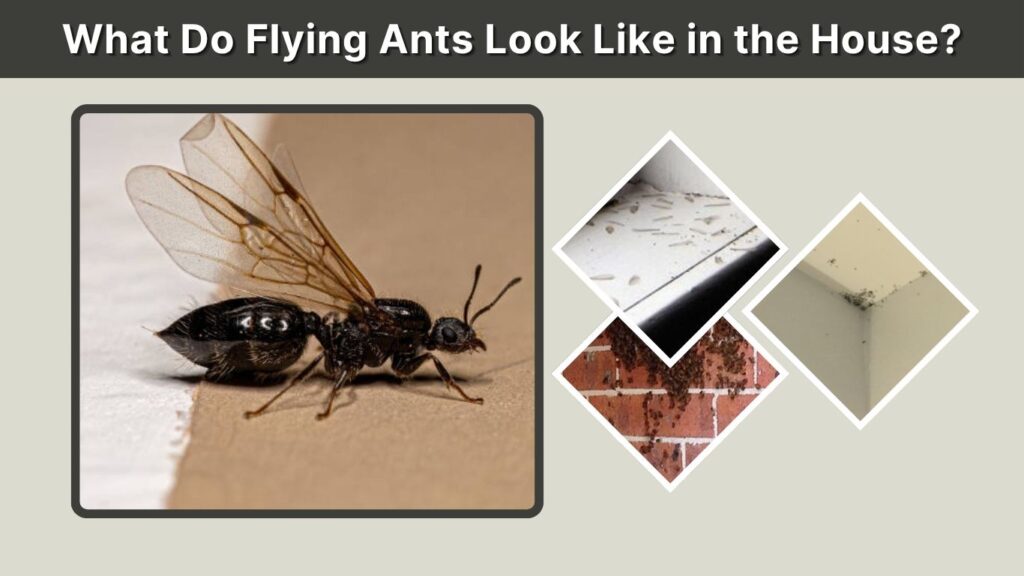
Flying ants in the house often appear near windows, light fixtures, doors, bathrooms, kitchens, basements, or attic spaces. They may crawl more than they fly, especially once trapped indoors.
You may notice:
- Winged ants crawling on windows
- Loose wings near lights or sills
- Ants gathering in one room
- A sudden swarm after warm weather
- Large black ants near damp wood
- Ant-like bugs coming from wall cracks
A few flying ants may have entered from outside. However, many flying ants appearing indoors, especially more than once, may suggest a nest inside or very close to the house.
Flying Ants vs Termites
Flying ants and termites are commonly confused. This matters because termites can damage wood, while most flying ants are less destructive. However, carpenter ants can also be a concern because they nest in damp or damaged wood.
Flying ants have a narrow waist, bent antennae, and front wings that are longer than their back wings. Termites have a broad waist, straight antennae, and four wings of equal length.
If you find insects near wood, windows, or piles of loose wings, compare these features carefully. If you are unsure, save a sample or take a clear photo for identification.
Do Termites Look Like Flying Ants?
Yes, winged termites can look like flying ants at first glance. Both can swarm, both have wings, and both may appear indoors. The easiest clue is the waist. Flying ants look pinched in the middle, while termites have a straighter, thicker body.
Termite wings also tend to be longer and equal in size. Flying ant wings are unequal, with the front pair longer than the back pair.
Bugs That Look Like Flying Ants
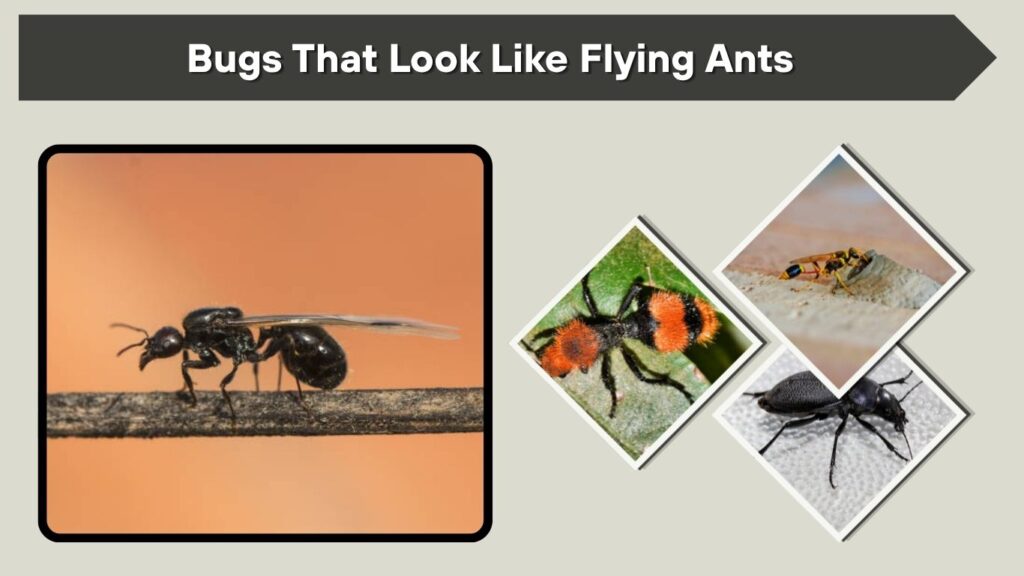
Several insects can be mistaken for flying ants. Some are harmless, while others may sting, bite, or signal a pest issue. The key is to compare body shape, wings, antennae, and behavior.
Common lookalikes include:
- Winged termites
- Small wasps
- Ant-like flies
- Carpenter ants with wings
- Velvet ants
- Fungus gnats
- Flying midges
- Tiny bees
- Ichneumon wasps
- Other ant-mimicking insects
Some flies and wasps mimic ants as a form of protection. Others simply look similar because they are small, dark, and winged.
Flying Bug That Looks Like an Ant
A flying bug that looks like an ant may be a true flying ant, but it could also be a wasp, termite, or fly. If the insect has two wings instead of four, it may be a fly. If it has a long stinger-like structure, it may be a wasp or a harmless wasp-like insect.
To narrow it down, check:
- Does it have a pinched waist?
- Are the antennae bent?
- Are there four wings?
- Are the front wings longer?
- Is the body fuzzy or smooth?
- Does it sting or act aggressively?
- Is it coming from wood or soil?
A close photo from above and the side can help with identification.
Flying Ants That Look Like Wasps
Some flying ants look like wasps because they have wings, narrow waists, and long bodies. However, wasps usually have straighter or longer antennae, a more pointed abdomen, and a stronger flying style.
A flying ant usually crawls and flutters more awkwardly indoors. A wasp often flies more directly and may act more defensive. If the insect has a clear stinger and repeatedly stings, it is probably not a flying ant.
Avoid handling any ant-like flying insect with bare hands until you know what it is.
Flying Ants That Look Like Bees or Flies
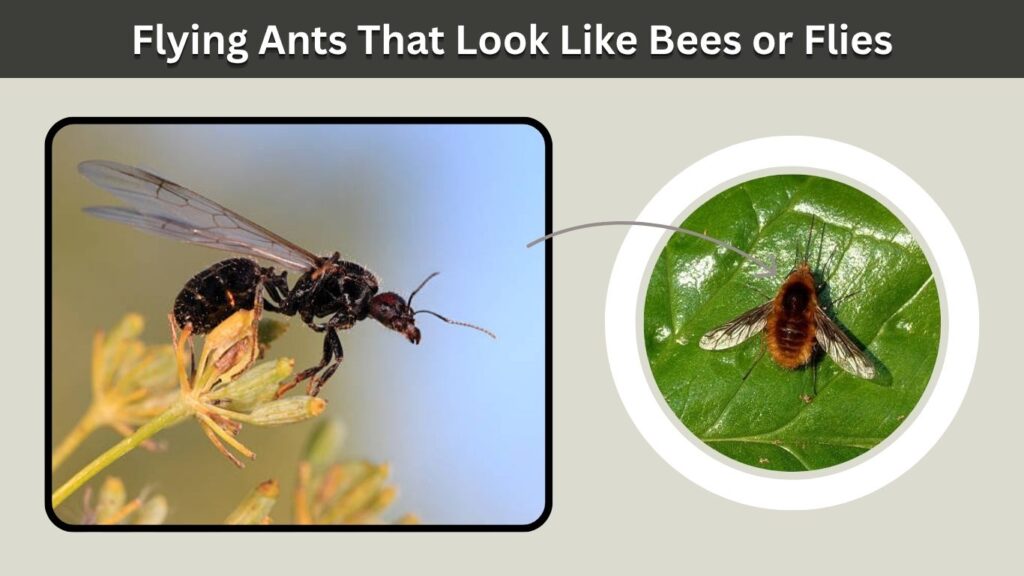
Some small flying insects may look like ants, bees, or flies depending on size and color. Bees are usually fuzzier and have a more rounded body. Flies have only one pair of wings and often have large, rounded eyes.
Flying ants are usually smoother, more segmented, and have bent antennae. They also often appear in groups during swarming season, while many flies or bees appear singly.
What Do Flying Ant Bites Look Like?
A flying ant bite may look like a small red bump. It can be itchy, slightly swollen, or tender. Most flying ants do not bite unless handled or trapped against the skin.
A bite may cause:
- Mild redness
- Small bump
- Itching
- Slight swelling
- Tenderness
- A pinching feeling
If the reaction is painful, burning, or forms a pustule, it may be a sting from a species such as a fire ant rather than a simple bite. Seek medical help for severe swelling, trouble breathing, widespread hives, or signs of infection.
What Does a Flying Ant Nest Look Like?
Flying ants do not build a special flying ant nest. They come from regular ant colonies. The nest may be in soil, under pavement, inside rotting wood, in wall voids, under mulch, or near foundations.
Outdoor nests may look like:
- Small soil mounds
- Cracks with ant activity
- Trails near pavement
- Openings in garden soil
- Ants moving in and out of mulch
Indoor nests may be harder to see. Carpenter ants may nest in damp wood and leave sawdust-like debris called frass. Repeated flying ants indoors should be investigated.
Do Flying Ants Like Light and Water?
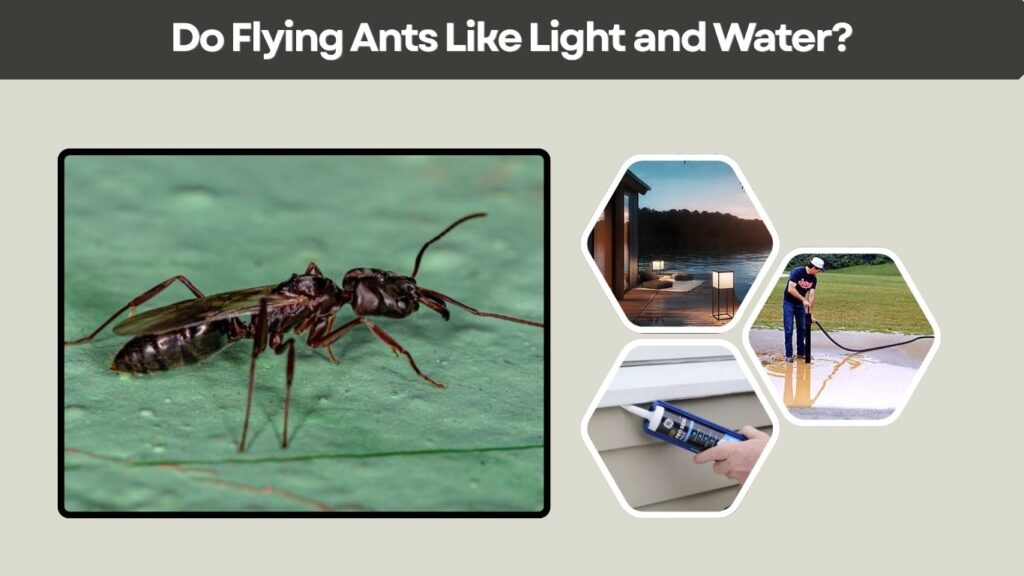
Flying ants are often attracted to lights, especially during swarming events. This is why they may gather near windows, porch lights, lamps, or bright rooms at night.
They may also appear near water sources such as pools, sinks, bathrooms, or damp areas. Moisture can attract ants, and some colonies prefer damp soil or damaged wood.
To reduce indoor activity:
- Turn off unnecessary outdoor lights
- Seal window and door gaps
- Repair screens
- Fix leaks
- Remove standing water
- Keep food sealed
- Vacuum visible swarmers
- Check damp wood areas
Carpenter Ants That Look Like Flying Termites
Carpenter ants are one of the most important flying ants to identify. Winged carpenter ants can look like termites, especially when they appear indoors. They are often large and black, but some species may be reddish or mixed in color.
Carpenter ants do not eat wood like termites, but they tunnel through it to make nests. They often prefer damp or damaged wood. If you see large winged ants indoors, look for moisture issues, window leaks, roof leaks, or wood damage.
Signs may include large ants, shed wings, sawdust-like debris, and repeated activity near wood.
FAQs
What does a flying ant look like?
A flying ant looks like a regular ant with wings. It usually has a pinched waist, bent antennae, six legs, and two pairs of wings. The front wings are normally longer than the back wings.
How can you tell flying ants from termites?
Flying ants have bent antennae, a narrow waist, and unequal wing pairs. Termites have straight antennae, a broad waist, and four wings that are about the same length.
What bugs look like flying ants?
Bugs that look like flying ants include winged termites, small wasps, ant-like flies, fungus gnats, tiny bees, velvet ants, and other ant-mimicking insects. Body shape and antennae help separate them.
What do flying ants look like in the house?
Indoors, flying ants often appear near windows, doors, lights, bathrooms, or basements. You may see winged ants crawling, loose wings on windowsills, or a sudden swarm in one room.
Do flying ants bite?
Some flying ants can bite, but most only bite if handled or trapped against the skin. A bite usually looks like a small red bump with mild itching, swelling, or tenderness.
