
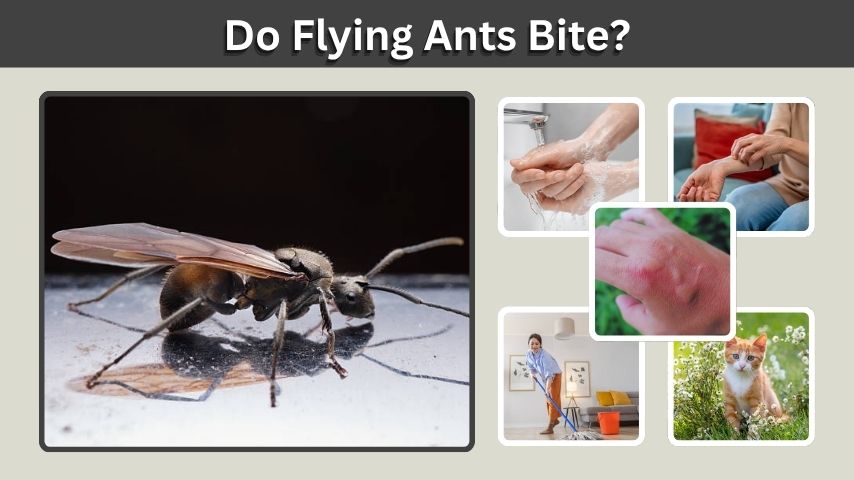
Flying ants can look alarming when they suddenly appear around windows, lights, patios, pools, or inside the house. Many people wonder, “Do flying ants bite?” The answer is yes, some flying ants can bite, but most do not bite unless they are handled, trapped, or threatened. In many cases, winged ants are more interested in mating and finding a new nesting site than bothering humans.
What Are Flying Ants?
Flying ants are not a separate species of ant. They are winged reproductive ants, also called alates. These ants are usually males and young queens that leave an established colony during a mating flight.
A flying ant swarm often happens during warm, humid weather, especially after rain. You may see them outdoors around lights, sidewalks, lawns, gardens, or patios. Sometimes they enter homes through cracks, doors, vents, or window gaps.
Flying ants can be black, brown, red, or reddish-black depending on the species. Some are tiny, while others are large, especially flying carpenter ants.
Do Flying Ants Bite?
Yes, flying ants can bite, but many species rarely bite people. A flying ant may bite if it is squeezed, picked up, caught in clothing, or trapped against the skin. Most winged ants are focused on reproduction, so they usually try to escape instead of attack.
The chance of being bitten depends on the ant species. Some ants have stronger jaws and are more likely to bite. Others may sting rather than bite. Fire ants, for example, are known for painful stings, while carpenter ants can bite with their jaws if handled.
In most cases, a flying ant bite is mild and causes temporary irritation.
Do Flying Ants Bite or Sting?
Flying ants may bite, sting, or do neither, depending on the species. Many common winged ants can bite with their mandibles, but they do not have a dangerous sting. Some ant species, such as fire ants, can sting and inject venom.
The confusion happens because people often use “bite” and “sting” for the same skin reaction. A bite comes from the ant’s jaws. A sting comes from a stinger at the end of the abdomen.
| Feature | Flying Ant Bite | Flying Ant Sting |
|---|---|---|
| Cause | Jaws or mandibles | Stinger and venom |
| Feeling | Pinch, mild pain, irritation | Burning, sharp pain, swelling |
| Common species | Carpenter ants, some black ants | Fire ants, some stinging ants |
| Skin reaction | Red bump, itch, mild swelling | Painful welt, pustule, stronger swelling |
| Risk | Usually mild | Can be more painful; allergy risk possible |
If the bite burns strongly, forms a blister-like pustule, or happens repeatedly, it may be from a stinging ant such as a fire ant.
What Does a Flying Ant Bite Look Like?
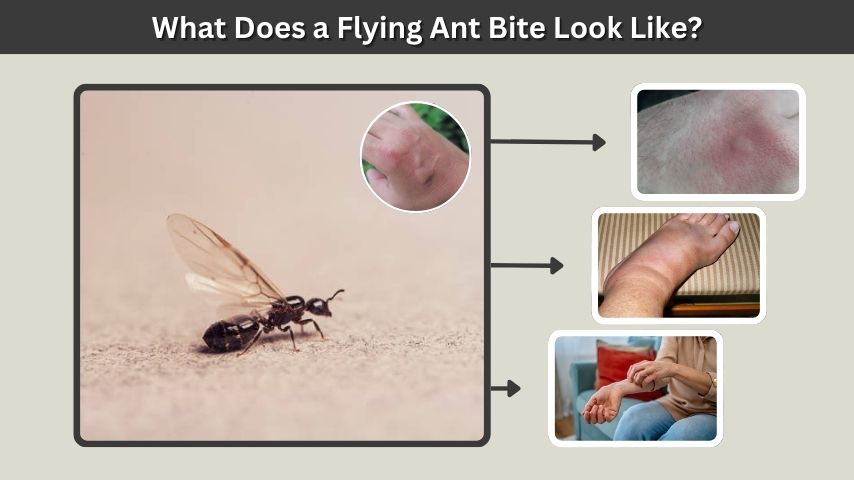
A flying ant bite may look like a small red bump on the skin. It can be itchy, slightly swollen, or tender. Some people may notice a tiny puncture mark, but many bites look similar to other insect bites.
Common signs include:
- Small red bump
- Mild swelling
- Itching
- Tenderness
- Slight burning or pinching feeling
- Local redness around the spot
A flying ant sting, especially from a fire ant, may look more intense. It can cause a raised welt, burning pain, and later a small white pustule. Do not pop pustules, because opening the skin can increase infection risk.
Flying Ant Bite Symptoms
Most flying ant bite symptoms are mild and local. They usually affect only the small area where the ant bit or stung.
Possible symptoms include:
- Itching
- Redness
- Mild swelling
- Pain or tenderness
- Burning sensation
- Small raised bump
- Warmth around the area
Symptoms often improve within a day or two. However, some people react more strongly to insect bites and may develop larger swelling or longer-lasting itching.
Are Flying Ant Bites Dangerous?
Most flying ant bites are not dangerous. They are usually irritating rather than serious. However, a bite or sting can become more concerning if there is a strong allergic reaction, infection, or multiple stings.
You should be more cautious if:
- The swelling spreads quickly
- The pain gets worse instead of better
- The bite becomes hot, red, or filled with pus
- You develop fever
- You have trouble breathing
- Your lips, tongue, throat, or face swell
- You feel dizzy, faint, or confused
Severe allergic reactions to insect bites or stings are uncommon but can be serious. Emergency symptoms include breathing trouble, widespread hives, facial or throat swelling, dizziness, or signs of shock.
Flying Ant Bite Treatment
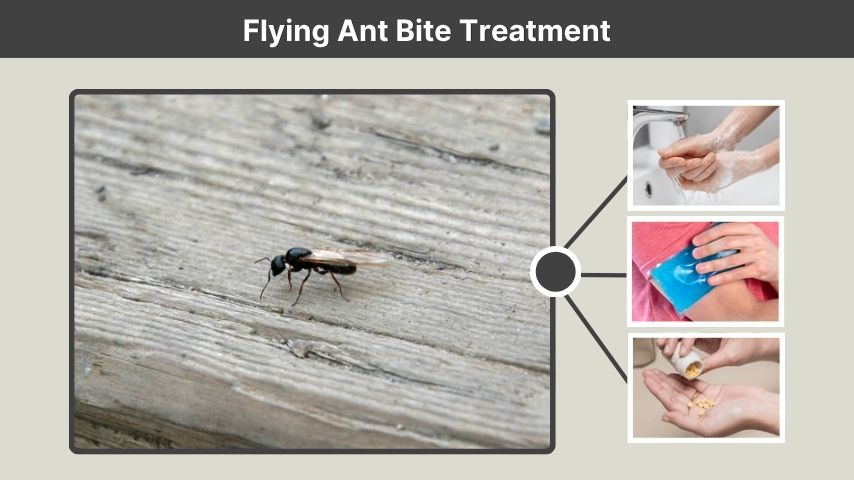
Most flying ant bites can be treated at home with simple first aid. The goal is to reduce itching, swelling, and irritation.
Basic treatment steps:
- Wash the area with soap and water.
- Apply a cold compress for 10 to 15 minutes.
- Avoid scratching the bite.
- Use hydrocortisone cream for itching if needed.
- Take an oral antihistamine if itching is bothersome.
- Use pain relief medicine if the bite is sore.
- Watch for signs of infection or allergy.
Mayo Clinic notes that most insect bites and stings are mild and can be managed at home with basic care, but symptoms such as severe allergic reaction need urgent medical attention.
Flying Ant Bite Remedy at Home
A home remedy may help mild itching or swelling, but it should not replace medical care for severe symptoms. Cold compresses are often the safest first step. You can also keep the area clean and avoid scratching.
Helpful home care tips include:
- Use ice wrapped in a cloth
- Elevate the area if swollen
- Keep the bite clean and dry
- Apply calamine lotion for itch
- Avoid tight clothing over the bite
- Do not squeeze or scratch the bump
If symptoms worsen after a few days, or if redness spreads, contact a healthcare professional.
Allergic Reaction to Flying Ant Bite
An allergic reaction can happen after a bite or sting from many insects, including some ants. Mild reactions may include extra itching, redness, or swelling around the bite. A severe allergic reaction is much more serious.
Possible allergy symptoms include:
- Hives away from the bite
- Swelling of lips, face, tongue, or throat
- Wheezing or trouble breathing
- Chest tightness
- Dizziness or fainting
- Nausea or vomiting
- Rapid heartbeat
- Confusion
Cleveland Clinic explains that bites and stings can range from mild to life-threatening depending on the insect and the immune response, and severe symptoms such as hives or breathing trouble can signal an emergency.
Do Flying Ants Bite Humans?
Yes, flying ants can bite humans, but they usually do not seek people out. A flying ant is more likely to bite when pressed against the skin or handled. Most bites happen accidentally.
For example, a flying ant might bite if:
- It gets trapped under clothing
- Someone grabs it with bare fingers
- It lands on skin and is slapped
- It is caught in bedding or towels
- A person walks barefoot near a swarm
The best way to avoid bites is to avoid handling flying ants and remove them safely.
Do Flying Ants Bite Dogs or Cats?
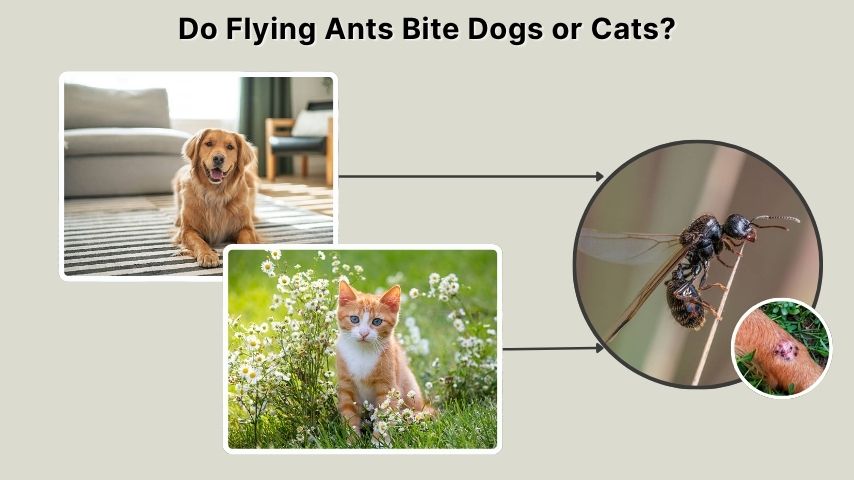
Flying ants can bite dogs or cats, but it is not usually common or serious. Pets may get bitten if they step on ants, sniff them, eat them, or lie near a swarm. The risk is higher with stinging ants such as fire ants.
Watch pets for:
- Paw licking
- Sudden yelping
- Scratching
- Swelling around muzzle or paws
- Drooling
- Vomiting
- Weakness
- Trouble breathing
Call a veterinarian if your pet has facial swelling, breathing trouble, repeated vomiting, or seems unusually weak after contact with ants.
Flying Carpenter Ant Bites
Flying carpenter ants can bite if handled. They have strong jaws compared with many small household ants. A carpenter ant bite may feel like a pinch and can cause mild redness or irritation.
The bigger issue with flying carpenter ants is not the bite. It is what their presence may suggest. Large flying carpenter ants inside a house can mean there is a mature colony nearby or inside damp wood.
Signs of carpenter ants include:
- Large black or dark ants indoors
- Winged ants near windows
- Sawdust-like frass
- Activity near damp wood
- Rustling sounds in walls
- Repeated swarms indoors
If large flying ants appear indoors repeatedly, inspect for moisture problems and possible nesting sites.
Flying Black Ant Bites
Flying black ants may bite, but most black flying ant bites are mild. Many black flying ants are simply reproductive ants leaving a colony. They may appear in large numbers during swarming season.
A black flying ant bite may cause a small red bump, itching, or mild swelling. If the ants are large, they may be carpenter ants. If they are tiny, they may be another household ant species.
To reduce bites, vacuum visible ants, seal entry points, and avoid touching them with bare hands.
Flying Red Ant Bites
Flying red ants may be more concerning because some red ants can sting. Fire ants, for example, can deliver painful stings and may sting multiple times. A fire ant sting often feels like burning and may later form a small white pustule.
If you are bitten or stung by red flying ants, wash the area, apply a cold compress, and monitor symptoms. Seek medical help if you have severe swelling, spreading redness, breathing trouble, or signs of allergy.
Flying Ants in the House: Do They Bite Indoors?
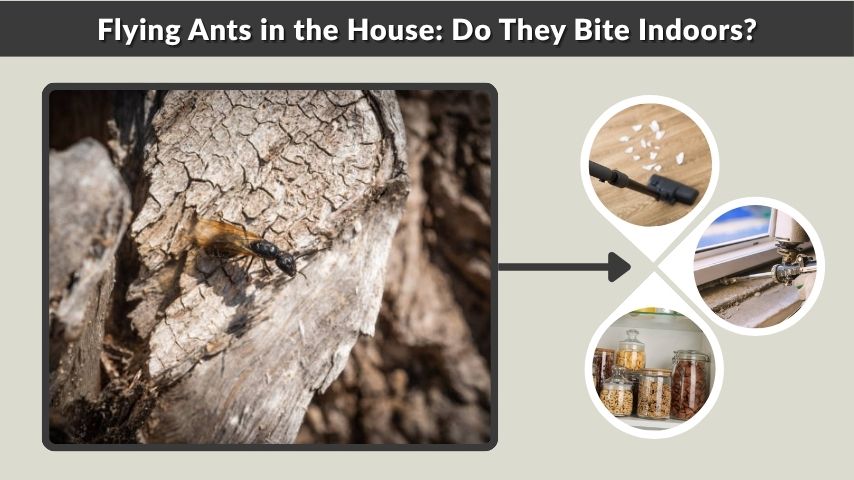
Flying ants in the house can bite, but they usually do not unless disturbed. Their presence indoors is more important as a possible sign of an ant colony.
A few flying ants may have entered from outside. A large indoor swarm may mean ants are nesting in walls, floors, crawl spaces, attics, or damp wood.
To manage flying ants indoors:
- Vacuum them instead of crushing them by hand
- Seal cracks around doors and windows
- Repair screens
- Reduce indoor moisture
- Check for leaks
- Store food in sealed containers
- Look for ant trails
- Call pest control if swarms repeat
If you find flying ants in one room again and again, the source may be nearby.
How to Prevent Flying Ant Bites
Preventing flying ant bites is mostly about avoiding contact and reducing indoor entry.
Prevention tips include:
- Do not handle flying ants with bare hands
- Keep windows and doors screened
- Seal cracks and gaps
- Reduce outdoor lights near doors
- Keep food covered
- Clean up spills quickly
- Wear shoes outdoors during swarms
- Keep pets away from ant mounds
- Fix leaks and damp wood
- Remove nearby nesting materials when possible
During flying ant season, sudden swarms may happen even in clean homes. Prevention reduces the chance of ants coming indoors and lowers the risk of accidental bites.
Flying Ants vs Termites: Why Identification Matters
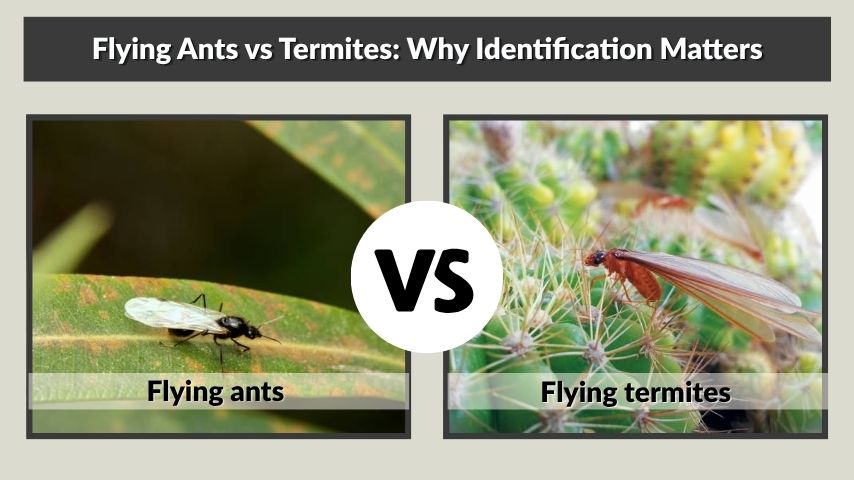
People often confuse flying ants with termites. This matters because termites can damage wood, while most flying ants are less destructive. However, carpenter ants can also be a concern.
Flying ants usually have:
- Bent antennae
- Narrow pinched waist
- Front wings longer than back wings
- Clearly segmented body
Flying termites usually have:
- Straight antennae
- Broad waist
- Four wings of equal length
- Softer, more uniform body shape
If you are unsure whether you have flying ants or termites, save a sample or take a clear photo and contact a pest professional.
FAQs
Do flying ants bite?
Yes, some flying ants can bite, but most bite only when handled, squeezed, or trapped against the skin. Many flying ants are focused on mating and do not seek out humans.
What does a flying ant bite look like?
A flying ant bite may look like a small red bump with mild swelling, itching, or tenderness. A sting from a fire ant may cause stronger burning pain and sometimes a small white pustule.
Are flying ant bites dangerous?
Most flying ant bites are not dangerous and improve with basic home care. However, seek urgent help for breathing trouble, facial or throat swelling, dizziness, widespread hives, or signs of a severe allergic reaction.
How do you treat a flying ant bite?
Wash the area with soap and water, apply a cold compress, avoid scratching, and use hydrocortisone cream or an antihistamine for itching if needed. Watch for infection or allergic symptoms.
Do flying ants bite or sting?
Some flying ants bite with their jaws, while some ant species can sting. Fire ants are known for painful stings. Many common winged ants do not sting and only bite defensively.
