
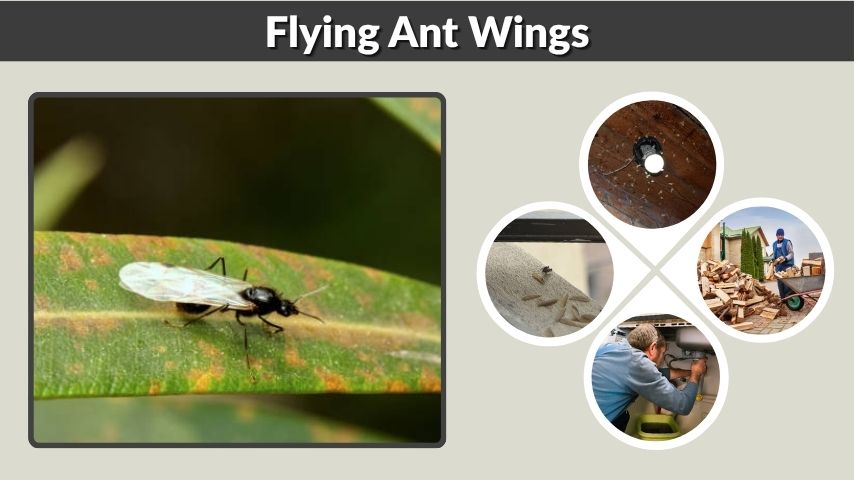
Flying ant wings can make ordinary ants look confusing, especially when they suddenly appear around windows, lights, patios, or inside the house. These winged ants are usually reproductive ants leaving a colony to mate and start new nests. Their wings are temporary, and queens often remove them after mating. Knowing how flying ant wings look also helps you tell them apart from winged termites.
What Are Flying Ant Wings?
Flying ant wings are the wings found on reproductive ants, also called alates. These ants are usually males and young queens. Worker ants do not normally have wings, so seeing ants with wings often means a colony is mature enough to produce swarmers.
Flying ants are not a separate type of insect. They are regular ants at a special reproductive stage. Their wings help them leave the original colony, join a mating flight, and spread to new nesting sites.
Winged flying ants may be black, brown, reddish, yellowish, or mixed in color depending on the species. Some people notice black flying ants with wings indoors, while others find them outside after rain or near lights.
Why Do Flying Ants Have Wings?
Flying ants have wings for reproduction. When an ant colony becomes mature, it may produce winged males and queens. These winged ants leave the nest during a nuptial flight, mate in the air or nearby, and then the fertilized queens search for places to begin new colonies.
Flying ants often appear when conditions are right, such as warm weather, high humidity, and recent rain. That is why many people suddenly see flying ants with wings in large numbers for a short period.
Common reasons flying ants appear include:
- A mature colony is releasing swarmers
- Warm, humid weather triggers mating flights
- Outdoor lights attract winged ants
- Cracks or gaps allow them indoors
- A nest is located near the house
- Queens are looking for new nesting sites
A few flying ants outside are usually normal. Many winged ants inside the house may need closer inspection.
How Many Wings Do Flying Ants Have?
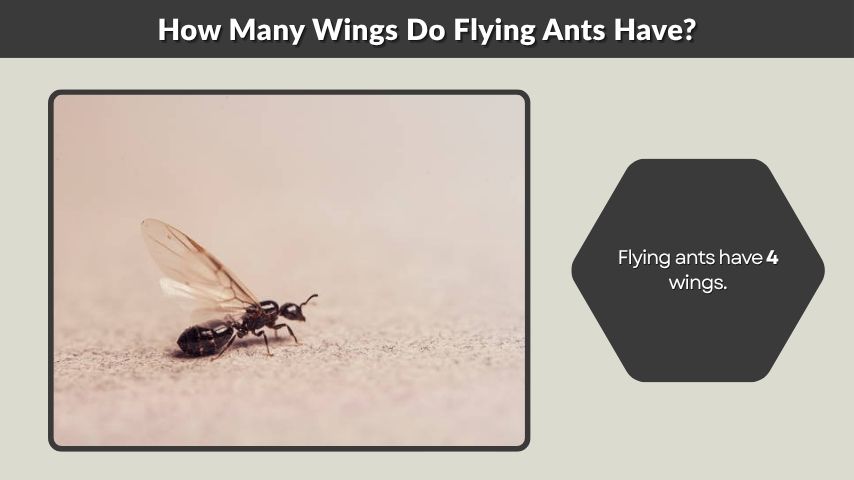
Flying ants have four wings. They have two front wings and two hind wings. The front wings are usually larger than the hind wings, which is one of the best ways to separate flying ants from winged termites.
The wings may look clear, smoky, white, gray, brownish, or dark depending on lighting and species. Searches such as “flying ants white wings,” “flying ants black wings,” and “flying ants with clear wings” often describe the same basic insect seen under different conditions.
| Feature | Flying Ant Wings | Winged Termite Wings |
|---|---|---|
| Number of wings | Four wings | Four wings |
| Wing size | Front wings longer than back wings | All wings about equal length |
| Body waist | Narrow and pinched | Broad and straight |
| Antennae | Bent or elbowed | Straight or bead-like |
| Wings after swarming | Queens often shed them | Termites also shed wings |
The wing size difference is especially important when trying to identify insects found near windowsills, doors, or light fixtures.
Do Flying Ants Lose Their Wings?
Yes, flying ants can lose their wings. After mating, fertilized queen ants often shed or pull off their wings. They no longer need them once they begin searching for a nesting site or starting a new colony.
This is why you may find ants without wings near piles of loose wings. The wings did not always “fall off” by accident. In many cases, the queen removes them as part of the normal life cycle.
Male flying ants usually die soon after mating. Queens survive and may begin a new colony if they find the right location.
Why Do Flying Ants Shed Their Wings?
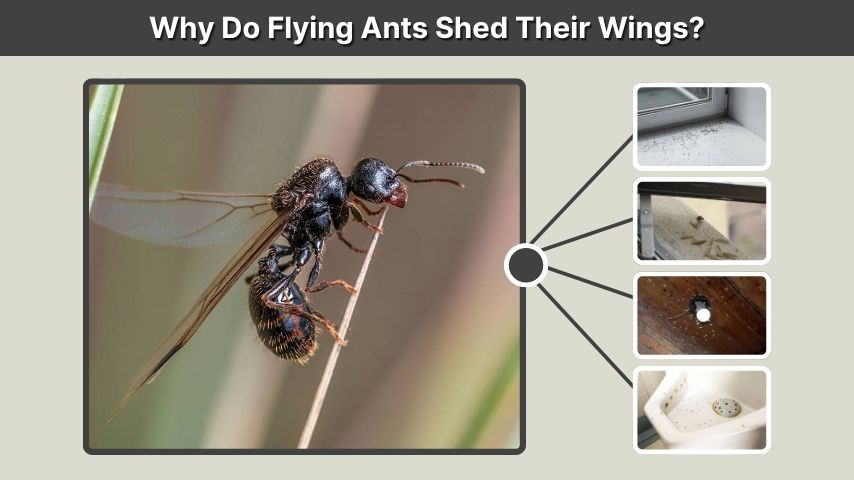
Flying ants shed their wings because the wings are only needed for mating and dispersal. Once a queen has mated, flying is no longer useful. Keeping wings would make it harder to move through soil, wood gaps, cracks, or tight nesting spaces.
People often ask why flying ants pull, rip, remove, or take off their wings. In most cases, this is normal behavior after a mating flight. The queen’s body changes focus from flying to nesting and egg-laying.
You may notice shed wings:
- On windowsills
- Near doors
- Around lights
- In bathrooms
- In basements
- Near cracks in flooring
- Around wall gaps
- Near indoor plants
Shed wings indoors can be a clue that winged ants or termites have been swarming nearby.
Flying Ants vs Termites With Wings
Flying ants and winged termites can look similar at first, but they are not the same. This difference matters because termites are usually more serious wood-damaging pests. Some ants, such as carpenter ants, can also damage wood by nesting in it, but they do not eat wood like termites.
Flying ants usually have a pinched waist, bent antennae, and unequal wings. Termites usually have a straight body, straight antennae, and four wings of equal length.
Quick Identification Tips
Use these signs to compare flying ant wings vs termite wings:
- Flying ants have front wings longer than back wings.
- Termites have four wings of similar length.
- Flying ants have a narrow waist.
- Termites have a broad, straight waist.
- Flying ants have elbowed antennae.
- Termites have straight antennae.
- Flying ants look more segmented.
- Termites look more uniform and soft-bodied.
If you find many loose wings indoors and cannot identify the insect, save a sample or take a close photo. This can help with pest identification.
What Do Flying Ants Look Like With Wings?
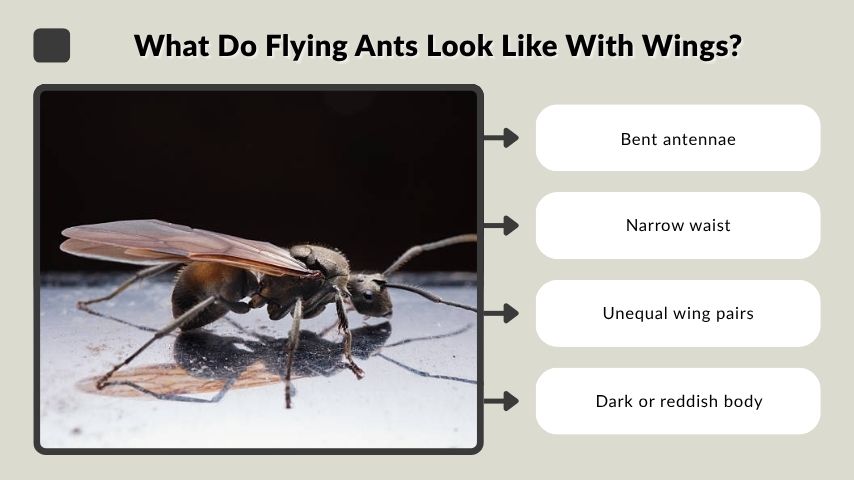
Flying ants look like ants with a pair of long front wings and a pair of smaller back wings. Their bodies are divided into three main parts: head, thorax, and abdomen. They usually have a narrow waist between the thorax and abdomen.
Some are tiny flying ants with wings, while others are large flying ants with wings. Large black flying ants may be carpenter ants, especially if found indoors near damp wood, windows, or wall voids.
Important features to look for include:
- Bent antennae
- Narrow waist
- Unequal wing pairs
- Dark or reddish body
- Segmented ant shape
- Wings longer than the body
Color alone is not enough for identification. Wing shape, body form, and antennae are more reliable.
Are Flying Ants Born With Wings?
Only reproductive ants develop wings. Worker ants are usually wingless and stay in the colony to forage, care for young, build tunnels, and defend the nest. Males and young queens develop wings when the colony is ready to reproduce.
So, flying ants are not ordinary workers that suddenly grow wings later in life. They develop as winged reproductive ants from the start of their adult stage.
After mating, queens remove their wings. That is why a queen may later look like a large wingless ant.
Can Winged Ants Fly?
Yes, winged ants can fly, but they are not always strong or graceful fliers. Their main purpose is to leave the colony and mate, not to fly long distances like bees or flies. Some winged ants may flutter, crawl, or fall near windows and lights.
Ants with wings that do not fly may be weak, newly emerged, trapped indoors, or near the end of their mating period. Queens that have shed their wings no longer fly.
Black Flying Ants With Wings
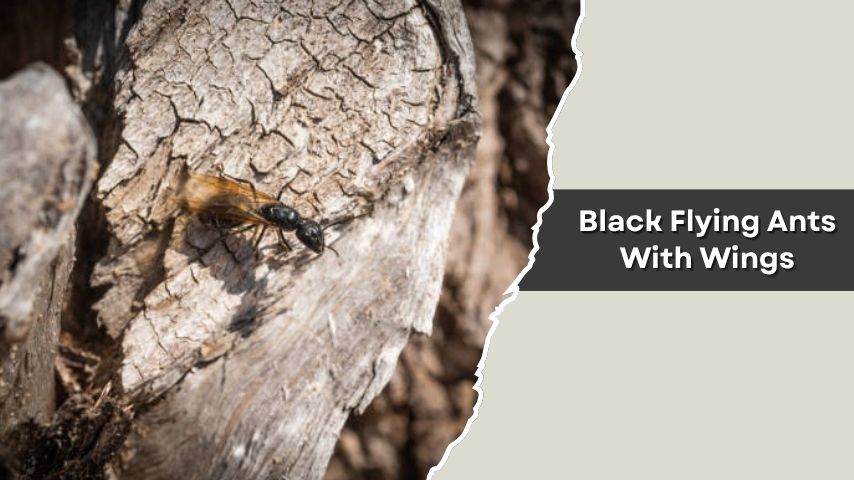
Black flying ants with wings are common during swarming season. They may be small household ants, pavement ants, field ants, or carpenter ants. The larger the ant, the more important it is to check for carpenter ant activity.
Large black winged ants indoors may suggest a nest in or near the structure, especially if you see them repeatedly.
Look for signs such as:
- Winged ants near windows
- Ants coming from wall cracks
- Shed wings indoors
- Sawdust-like debris
- Activity near damp wood
- Ant trails in kitchens or bathrooms
If the swarm happens once, it may be outdoor ants entering accidentally. If it repeats, the source may be inside.
Flying Ants With White or Clear Wings
Flying ants with white wings are often ants with pale, clear, or reflective wings. Wings can look white when light shines through them, especially against dark bodies. This does not always mean they are a different species.
However, pale wings can also make people think of termites. Again, body shape is the best clue. If the insect has a pinched waist and bent antennae, it is more likely a flying ant. If it has a broad waist and equal-length wings, it may be a termite.
Flying Ant Wings in the House
Finding flying ant wings in the house may mean winged ants have recently swarmed indoors. It may also mean queens have removed their wings after mating. A few wings near a window may not be serious, but many wings in one area should be investigated.
Possible causes include:
- Outdoor ants entered through gaps
- A colony is nesting in a wall
- Carpenter ants are nesting in damp wood
- Ants are attracted to indoor lights
- A swarm occurred in a basement or attic
Clean up loose wings, but also look for live insects, trails, moisture problems, and entry points.
How to Prevent Flying Ants With Wings Indoors
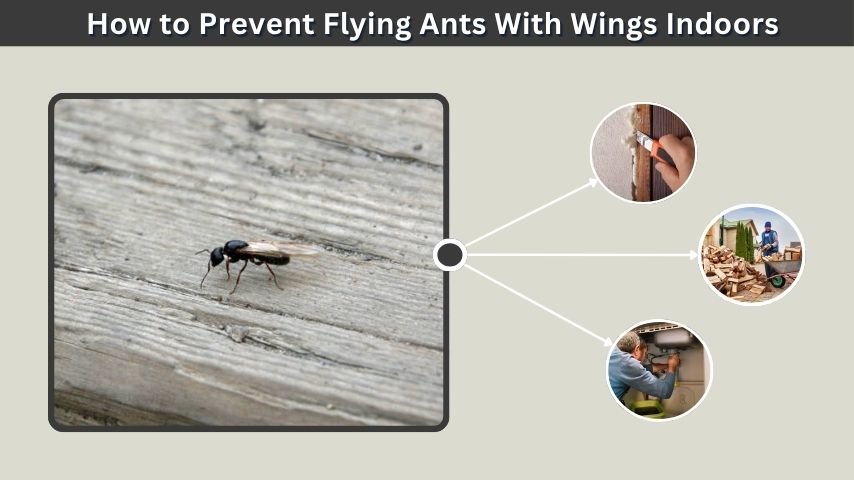
Preventing winged ants is mostly about sealing entry points and reducing nesting conditions. You cannot stop outdoor ants from swarming, but you can make your home less accessible.
Helpful prevention steps include:
- Seal cracks around windows and doors
- Repair damaged screens
- Reduce outdoor lighting near entryways
- Fix leaks and moisture problems
- Move firewood away from the house
- Replace rotting wood
- Keep gutters clear
- Store food in sealed containers
- Vacuum swarmers instead of crushing them
If flying ants keep appearing indoors, especially large black ants, consider a professional inspection.
FAQs
Do flying ants lose their wings?
Yes, flying ants can lose their wings. After mating, queen ants often shed or remove their wings because they no longer need to fly. They then search for a nesting site and may start a new colony.
How many wings do flying ants have?
Flying ants have four wings. Their two front wings are usually longer than their two back wings. This helps separate them from winged termites, which have four wings of nearly equal length.
Why do flying ants shed their wings?
Flying ants shed their wings after mating because the wings are only needed for the reproductive flight. Once a queen is ready to start a colony, wings become unnecessary and may get in the way.
Are flying ants with wings termites?
No, flying ants with wings are not termites, but they are often confused with them. Flying ants have bent antennae, a pinched waist, and unequal wings. Termites have straight antennae, a broad waist, and equal-length wings.
Do all ants with wings fly?
Most winged reproductive ants can fly, but not all fly well or for long. Some may crawl, flutter, or lose their wings after mating. Worker ants usually do not have wings and cannot fly.
