
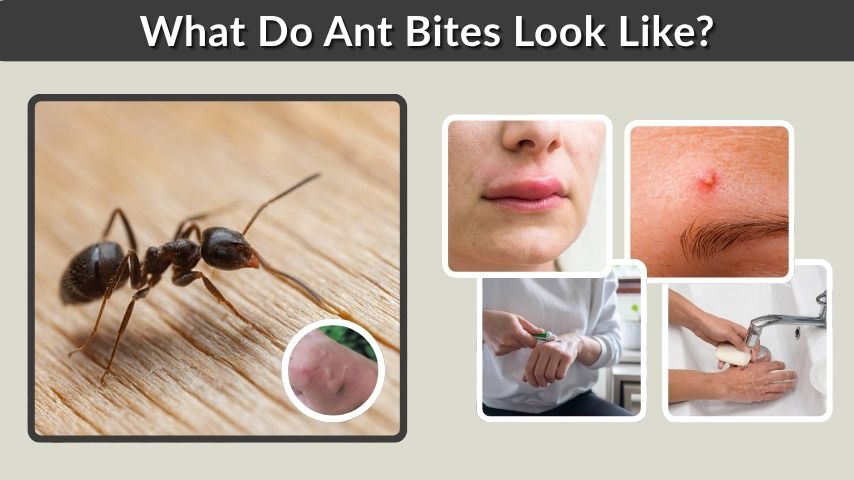
Ant bites usually look like small red bumps, swollen spots, or itchy welts on the skin. Some may feel like a sharp pinch, while others burn or sting for hours. Fire ant bites are more noticeable because they can turn into white, pus-like blisters. The exact appearance depends on the ant type, your skin reaction, and whether the bite becomes irritated or infected.
How Ant Bites Usually Appear on Skin
Most ant bites start as tiny raised bumps. They may be red, pink, skin-colored, or darker than the surrounding skin. On lighter skin, the area often looks red or inflamed. On darker skin, the bite may appear brown, purple, grayish, or slightly darker than the natural skin tone.
At first, the bite may feel like a quick pinch or burning sting. After a few minutes, swelling and itching can begin. Some people only get one small bump, while others develop several clustered spots if they were bitten by multiple ants.
Common Visual Signs
Ant bites can vary, but many have similar features:
- Small raised bumps on the skin
- Redness, swelling, or warmth around the bite
- Itching, burning, or tenderness
- A tiny center mark where the bite or sting happened
- Clusters of bumps on feet, ankles, legs, hands, or arms
- White blisters in the case of fire ant stings
Ant bites often appear on exposed areas of the body. Feet and ankles are especially common because people step near ant trails, nests, or mounds without noticing.
What Do Fire Ant Bites Look Like?
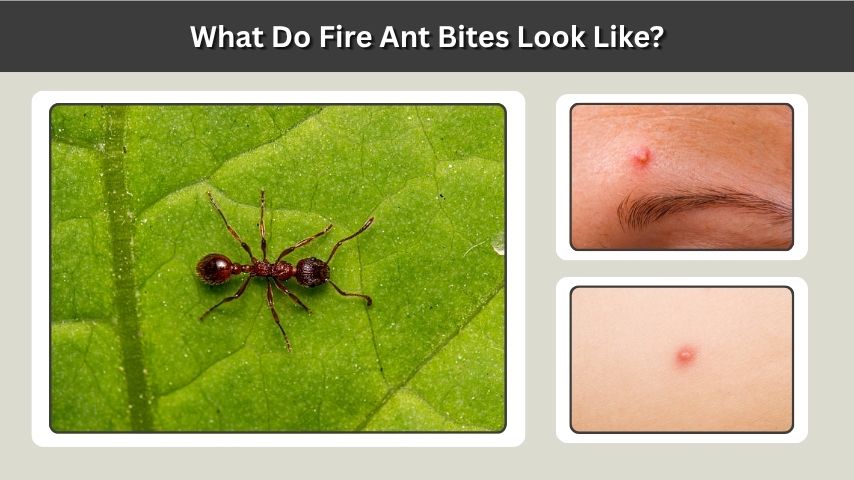
Fire ant bites are usually more painful and more recognizable than regular ant bites. Technically, fire ants bite first to grip the skin, then sting and inject venom. This can cause a sharp burning feeling, which is why they are called fire ants.
The first sign is often a red, swollen bump that burns or hurts. Within several hours, the bump may become itchy. After about a day, many fire ant stings form small white or yellowish pustules that look like tiny pimples or blisters.
Fire Ant Bite Timeline
| Time After Bite | What It May Look Like | What It May Feel Like |
| Immediately | Small red or swollen spot | Sharp sting, burning, pain |
| A few hours later | Raised itchy bump or welt | Itching, warmth, tenderness |
| Around 24 hours | White blister or pustule | Itchy, sore, sensitive |
| Several days later | Dry scab or healing mark | Mild itching or irritation |
Fire ant bites often appear in groups because fire ants can sting more than once, and several ants may attack at the same time. A person may notice a cluster of similar bumps in one area, especially on the feet, ankles, or lower legs.
What Do Red Ant Bites Look Like?
“Red ant bites” often refer to fire ant stings, but not every red ant is a fire ant. In many cases, red ant bites look like red, swollen bumps that may itch, sting, or burn. If the ant is a fire ant, the bite may later develop into a white pustule.
A regular red ant bite may look like a small mosquito bite. It can be slightly raised and itchy, with redness around the center. If the skin is sensitive, the swelling may spread wider than expected.
Red Ant Bite Features
Red ant bites may show:
- A red or pink raised bump
- Mild swelling around the bite
- Itching or burning
- Tenderness when touched
- A small blister if venom causes a stronger reaction
- Several bumps in a small group
If a red ant bite becomes increasingly painful, hot, swollen, or filled with spreading redness, it may need medical attention.
What Do Black Ant Bites Look Like?
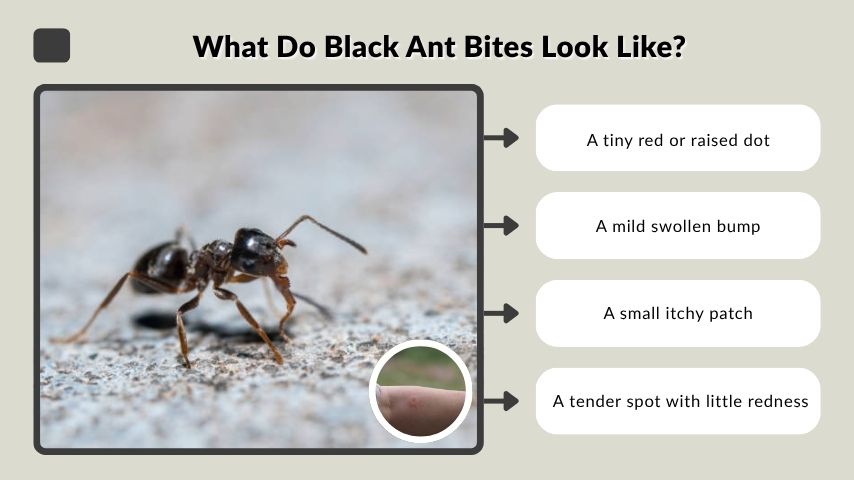
Black ant bites are often milder than fire ant stings. Many common black ants do not aggressively bite humans unless disturbed. When they do bite, the mark may appear as a tiny red bump, a small irritated spot, or a mild welt.
Carpenter ants, which are often large and black, can bite if handled or threatened. Their bites may feel like a pinch and leave a small red mark. Unlike fire ants, black ant bites usually do not form white pustules unless the skin becomes irritated or infected.
Black Ant Bite Appearance
A black ant bite may look like:
- A tiny red or raised dot
- A mild swollen bump
- A small itchy patch
- A tender spot with little redness
- A minor scratch-like mark from the mandibles
Black ant bites are usually less dramatic than fire ant bites. However, scratching can make any bite worse and may lead to broken skin or infection.
What Do Ant Bites Look Like on Humans?
On humans, ant bites can look different depending on age, skin tone, allergy sensitivity, and the type of ant. Some people develop only a tiny bump, while others get large itchy welts.
On lighter skin, ant bites may look red or pink. On brown or Black skin, they may appear dark brown, purple, gray, or slightly raised without obvious redness. Swelling, warmth, itching, and pain can be more useful signs than color alone.
Common Places on the Body
Ant bites on humans often appear on:
- Feet and toes after stepping near ants
- Ankles and lower legs from outdoor exposure
- Hands and wrists after touching plants, soil, or nests
- Arms after gardening or yard work
- Waistline or under clothing if ants crawl inside fabric
Ant bites under tight clothing may become more irritated because of friction and sweat.
What Do Ant Bites Look Like on Dogs?
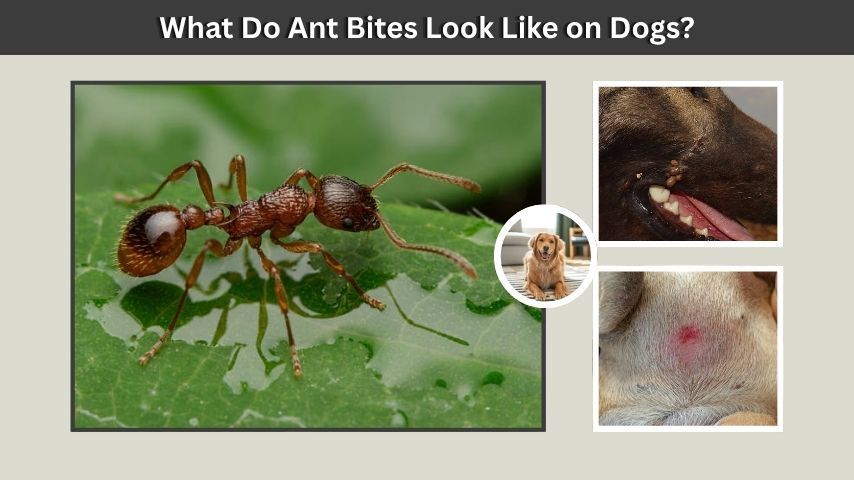
Ant bites on dogs can be harder to see because fur may hide the marks. You may first notice behavior changes instead of visible bumps. Dogs may lick, chew, scratch, whine, limp, or suddenly jump away from an outdoor area.
When visible, ant bites on dogs may look like small red bumps, swollen spots, or irritated patches. Bites commonly appear on the paws, belly, nose, mouth area, and legs. Fire ant stings may cause clusters of bumps or blister-like marks.
Signs Your Dog May Have Ant Bites
Watch for these signs:
- Licking or chewing paws
- Red bumps between the toes
- Swelling on the muzzle, lips, or face
- Sudden scratching or restlessness
- Limping after walking outside
- Small bumps on the belly or thin-fur areas
- Vomiting, weakness, or breathing trouble in serious reactions
If your dog has facial swelling, trouble breathing, collapse, repeated vomiting, or extreme weakness, contact a veterinarian immediately.
What Do Infected Ant Bites Look Like?
Most ant bites heal without infection, but scratching, popping blisters, or poor wound care can let bacteria enter the skin. An infected ant bite may look worse after a day or two instead of gradually improving.
Infection can cause spreading redness, increasing swelling, warmth, pus, and worsening pain. The bite may become tender, shiny, or crusted. Red streaks moving away from the bite can be a serious warning sign.
Warning Signs of Infection
A bite may be infected if you notice:
- Redness spreading beyond the original bite
- Increasing pain instead of improvement
- Skin that feels hot to the touch
- Yellow or green drainage
- Swelling that keeps getting worse
- Fever or chills
- Red streaks near the bite
Do not pop fire ant blisters. Popping them can open the skin and increase the risk of infection.
What Do Ant Bites Look Like If You Are Allergic?
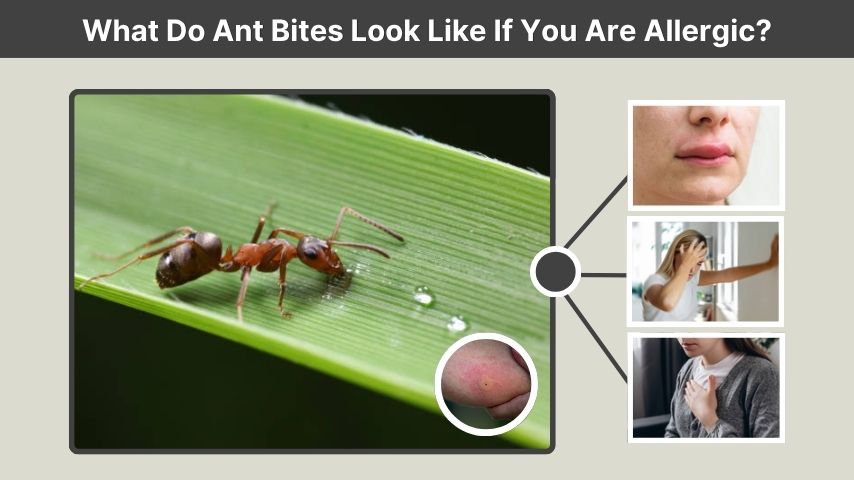
An allergic reaction can make ant bites look much larger and more swollen than usual. A mild allergic reaction may cause a big itchy welt around the bite. The area may feel warm, tight, and uncomfortable.
A severe allergic reaction is different. It may affect the whole body, not just the skin. This can include hives, swelling of the lips or face, dizziness, chest tightness, wheezing, or trouble breathing.
Emergency Allergy Symptoms
Get urgent medical help if ant bites are followed by:
- Trouble breathing
- Swelling of the lips, tongue, throat, or face
- Dizziness or fainting
- Rapid heartbeat
- Widespread hives
- Chest tightness
- Confusion or severe weakness
These signs can point to anaphylaxis, which is a medical emergency.
Ant Bites vs Other Bug Bites
Ant bites can look similar to mosquito bites, flea bites, bed bug bites, or spider bites. The biggest clue is often where you were and how the bite felt when it happened.
Ant bites often happen outdoors, especially near grass, soil, pavement cracks, gardens, or ant mounds. They may sting or burn right away. Fire ant bites are especially distinctive because they often form small white pustules after several hours.
How to Tell the Difference
Mosquito bites usually look like soft, itchy welts and may appear after being outdoors near standing water. Flea bites are often small, grouped bumps around ankles or legs. Bed bug bites may appear in lines or clusters after sleeping. Fire ant bites often burn at first and may later form white blisters.
If you saw ants on your skin, felt a burning sting, or stepped near an ant mound, ant bites are more likely.
How Long Do Ant Bites Last?
Mild ant bites may improve within one or two days. Itching can last longer, especially if the bite is scratched. Fire ant pustules may take several days to dry, scab, and heal.
Some marks may leave temporary dark spots, especially on deeper skin tones or if the bite was scratched. These marks usually fade slowly over time, but repeated irritation can make them last longer.
Normal Healing Signs
A healing ant bite may:
- Become less swollen
- Itch less each day
- Form a small dry scab
- Change from red or purple to brown
- Flatten gradually
- Stop feeling warm or painful
If the bite becomes more painful, more swollen, or more red after the first day, it may not be healing normally.
How to Care for Ant Bites at Home
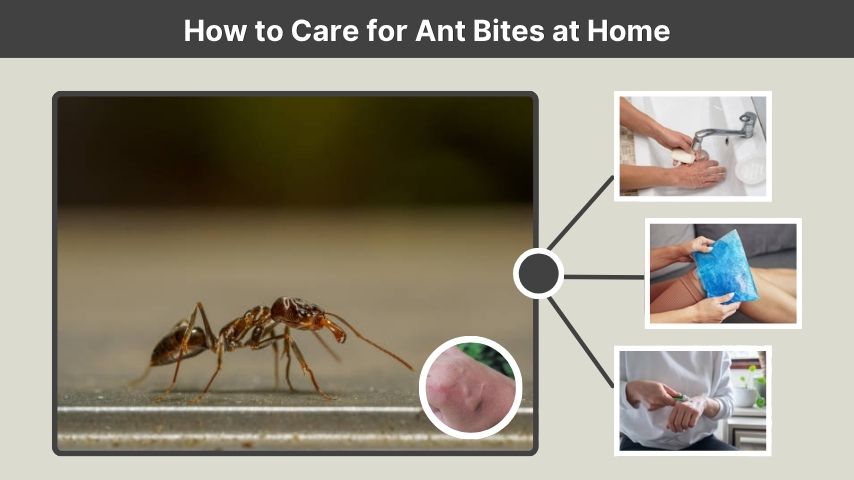
Most mild ant bites can be cared for at home. The goal is to reduce itching, calm swelling, and prevent infection.
Wash the area gently with soap and water. Apply a cold compress for swelling. Avoid scratching, even if the bite is itchy. Scratching can break the skin and delay healing.
Simple Care Tips
You can try:
- Washing the bite with soap and clean water
- Using a cold compress for 10 to 15 minutes
- Applying an anti-itch cream if suitable
- Taking an oral antihistamine if itching is widespread
- Keeping fingernails short to reduce skin damage
- Covering irritated bites with a clean bandage
- Leaving fire ant pustules alone instead of popping them
Seek medical advice if symptoms are severe, spreading, infected, or not improving.
When Should You See a Doctor?
You should consider medical care if the bite reaction seems unusual or severe. Some swelling and itching are common, but worsening symptoms can signal infection or allergy.
See a healthcare provider if the bite area keeps expanding, becomes very painful, drains pus, or is accompanied by fever. You should also get help if you have many fire ant stings, a bite near the eye, or symptoms that affect breathing or the whole body.
Children, babies, older adults, and people with known insect allergies may need extra caution.
FAQs
What do normal ant bites look like?
Normal ant bites usually look like small raised bumps with mild redness, swelling, or itching. They may feel tender or sting briefly. On darker skin, the marks can appear brown, purple, or gray instead of red. Most normal bites stay small and improve within a few days.
What do fire ant bites look like on humans?
Fire ant bites often start as painful red bumps that burn or sting. After several hours, they may become itchy welts. Within about 24 hours, many develop small white or yellow pustules that look like tiny pimples. They often appear in clusters on feet, ankles, or legs.
What do ant bites look like on dogs?
On dogs, ant bites may look like small red bumps, swollen spots, or irritated patches, especially on paws, belly, legs, nose, or mouth area. Because fur can hide the marks, signs like licking, chewing, limping, scratching, or facial swelling may be easier to notice than the bites themselves.
What do infected ant bites look like?
Infected ant bites may look increasingly red, swollen, warm, painful, or filled with pus. The redness may spread instead of shrinking. Yellow drainage, fever, red streaks, or worsening tenderness can also be warning signs. Scratching or popping blisters can raise the risk of infection.
What do ant bites look like if you are allergic?
If you are allergic, ant bites may become large, swollen, itchy welts. A serious allergic reaction can cause widespread hives, face or throat swelling, dizziness, wheezing, chest tightness, or trouble breathing. These symptoms need urgent medical help because they may signal anaphylaxis.
