
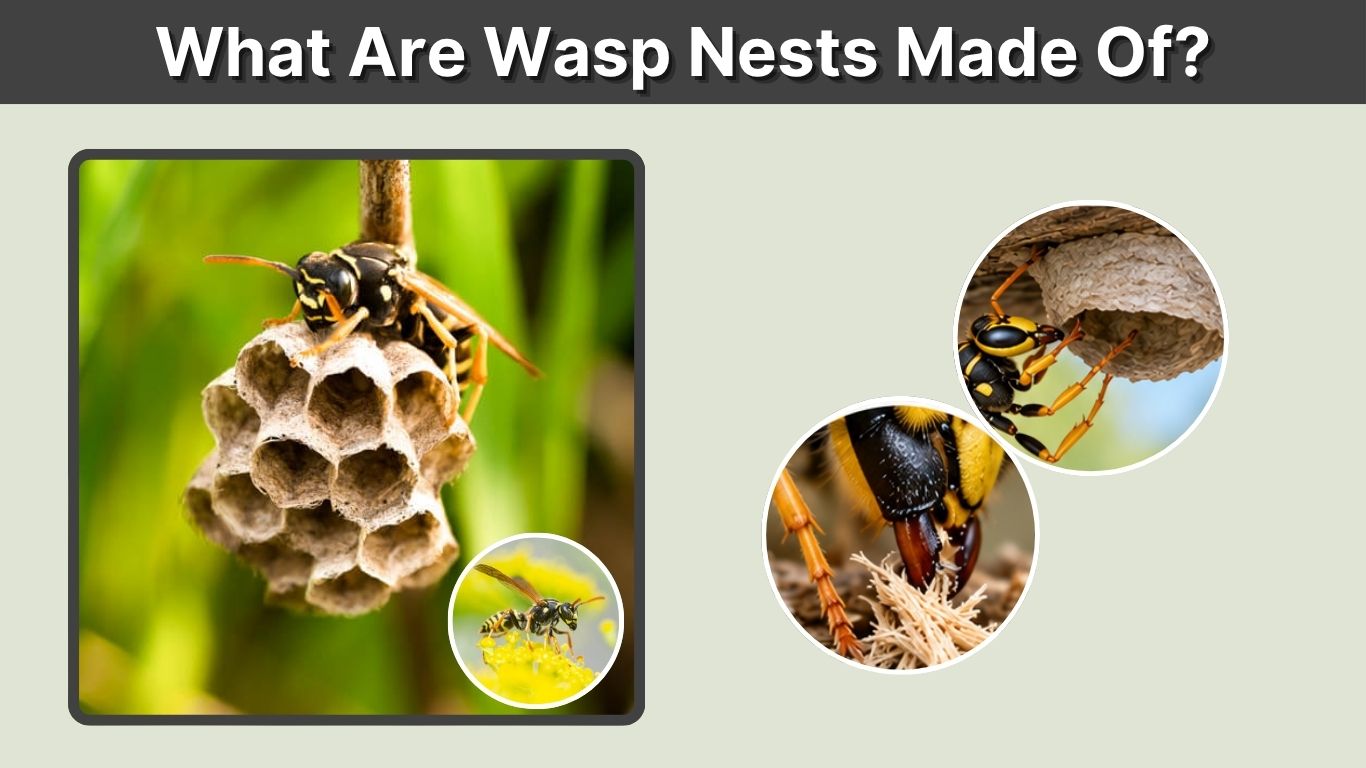
Have you ever noticed a gray, papery nest hanging from a tree branch or tucked beneath your roof and wondered how wasps build it? These insects are surprisingly skilled builders, using natural materials to create protective homes for their colonies. Understanding what wasp nests are made of reveals how different species collect materials, construct chambers, and protect their developing young. While many social wasps rely on wood fibers and saliva, others use mud, soil, or existing cavities. This guide explores the materials, construction methods, and unique features of wasp nests.
What Are Wasp Nests Made Of?
Most familiar social wasp nests are made from a paper-like material created by mixing chewed wood fibers with saliva. Wasps collect these fibers from weathered wood, fences, trees, and other wooden surfaces. Once processed, the fibers form a lightweight building material that can be shaped into protective walls and nesting chambers.
Wood Fibers and Plant Material
Wood fibers are the primary construction material for paper wasps, yellowjackets, and many hornets. Worker wasps scrape weathered wood with their mandibles, collecting tiny fragments of cellulose-rich material.
These fibers may come from dead branches, wooden fences, untreated boards, or deteriorating plant material.
Wasps generally prefer wood that is relatively easy to scrape. They process the collected fibers into pulp before incorporating them into the growing nest.
Saliva as a Natural Binding Agent
Wasp saliva serves as a natural adhesive that helps bind collected fibers together.
As wasps chew the fibers, saliva moistens and combines with the material, creating a workable pulp. Once shaped and dried, this mixture becomes the familiar paper-like structure.
The resulting material is surprisingly strong for its weight, allowing many wasp species to construct large nests without relying on heavier building materials.
Mud and Soil Materials
Not all wasps make nests from wood pulp.
Mud daubers and many potter wasps collect damp soil or mud to construct individual nesting chambers. These structures harden as they dry, producing a rigid enclosure for developing larvae.
Other wasps excavate tunnels directly into the ground rather than constructing a separate aboveground nest.
How Do Wasps Make Their Nests?
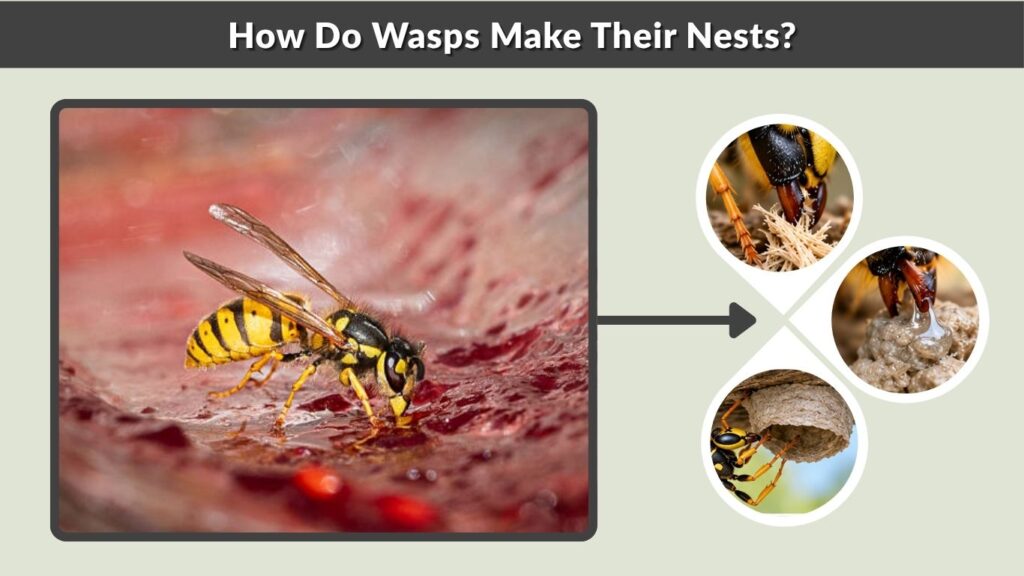
Building a wasp nest requires several stages of material collection, processing, shaping, and construction. Social wasp colonies usually begin with a founding queen, who builds the first cells and raises the initial workers. As the colony expands, workers take over much of the nest-building activity.
Step-by-Step Nest Construction Process
- Collecting wood fibers: Wasps scrape tiny pieces of weathered wood or plant material using their mandibles.
- Mixing with saliva: They chew the collected fibers and combine them with saliva to produce a moist pulp.
- Creating the foundation: The founding wasp attaches the first nesting structure to a suitable surface.
- Building brood cells: The wasps shape pulp into hexagonal chambers where eggs and developing larvae are housed.
- Expanding the structure: Workers add new cells, comb layers, and protective coverings as the colony grows.
This coordinated process allows social wasps to enlarge their nests throughout the active season.
What Are Wasp Nest Petioles Made Of?
A wasp nest petiole is the narrow stalk that connects certain nests to branches, ceilings, or other supporting surfaces.
In paper wasps, this stalk is primarily constructed from processed plant fibers, much like the rest of the nest.
Some species apply chemical secretions to the petiole that help discourage ants from reaching the developing brood.
The petiole supports the comb and keeps it suspended beneath the attachment point.
Different Types of Wasp Nests and Their Materials
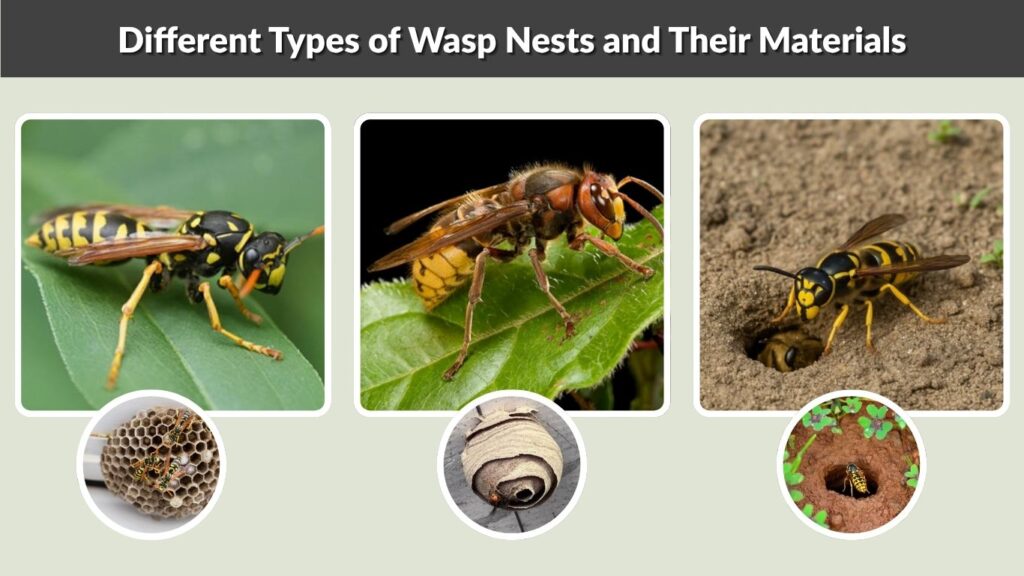
Wasp species use different construction techniques depending on their nesting habits and environments. Some build exposed paper combs, while others construct enclosed structures or hardened mud chambers. Recognizing these differences can help identify the type of wasp responsible for a particular nest.
Paper Wasp Nests
Paper wasps construct exposed nests from chewed wood fibers mixed with saliva.
Their nests usually resemble small, upside-down umbrellas with visible hexagonal cells. They commonly attach these structures beneath roof edges, branches, decks, and sheltered outdoor surfaces.
Unlike many hornets and yellowjackets, typical paper wasps do not surround their combs with a complete protective paper envelope.
Hornet and Yellowjacket Nests
Hornets and yellowjackets also construct nests from processed wood pulp. However, many species build multiple layers of comb enclosed within an outer paper envelope.
The outer covering helps shield the developing colony from environmental conditions and disturbances.
Some yellowjackets establish nests underground in abandoned animal burrows, while others occupy hollow trees or wall cavities. Their paper combs remain hidden inside these protected spaces.
Mud Dauber and Potter Wasp Nests
Mud daubers build nests from moist mud collected near puddles, streams, or damp soil.
They transport small mud pellets and shape them into tubular chambers or enclosed structures. Once dry, the material becomes firm and durable.
Potter wasps may construct small jug-shaped mud nests with narrow openings. Other species build chambers inside existing cavities and use mud to separate the individual brood cells.
Ground-Nesting Wasp Burrows
Many solitary digging wasps do not create conventional paper nests.
Instead, they excavate tunnels in sandy or loose soil and construct underground chambers for their developing offspring.
The surrounding earth provides structural support, while the female wasp may place captured insects inside the chambers as food for her larvae.
Why Do Wasp Nests Look Like Paper?
Wasp nests often resemble handmade paper because both materials contain processed plant fibers. However, wasps produce their building material naturally using their mandibles and saliva rather than industrial equipment. This fibrous construction gives many nests their distinctive texture, layered appearance, and relatively low weight.
Why Are Wasp Nests Gray or Brown?
The color of a paper wasp nest depends partly on the wood fibers used during construction.
Gray nests often result from weathered wood, while brown or tan sections may come from different plant sources.
Some enclosed nests display noticeable stripes or swirling patterns because workers collect fibers from different materials as the colony expands.
Are Paper Wasp Nests Waterproof?
Paper wasp nests have some natural resistance to moisture, but they are not completely waterproof.
The arrangement of fibers and the wasps’ saliva-based binding material help create a relatively durable structure.
Enclosed nests also offer physical protection for the inner combs. Nevertheless, prolonged exposure to heavy rain, wind, or physical damage can weaken the nest.
This is one reason many wasp species choose sheltered nesting locations.
Wasp Nests vs. Bee Hives: What Is the Difference?
Wasp nests and bee hives can look similar because both may contain hexagonal brood cells. However, their construction materials are fundamentally different. Recognizing this distinction helps homeowners identify nests around buildings, gardens, and trees.
Paper Materials vs. Beeswax
Honey bees produce beeswax from specialized glands on their bodies. They use this wax to construct combs for raising young and storing honey and pollen.
Social wasps, on the other hand, typically collect external plant fibers and transform them into a paper-like material.
Key differences include:
- Honey bee comb: Made from beeswax produced by bees.
- Paper wasp nest: Made from chewed wood fibers and saliva.
- Yellowjacket nest: Made from layered paper pulp.
- Hornet nest: Commonly made from enclosed paper combs.
- Mud dauber nest: Made from dried mud or soil.
Although their construction materials differ, both bees and wasps build chambers that protect their developing offspring.
How Long Do Wasp Nests Last?
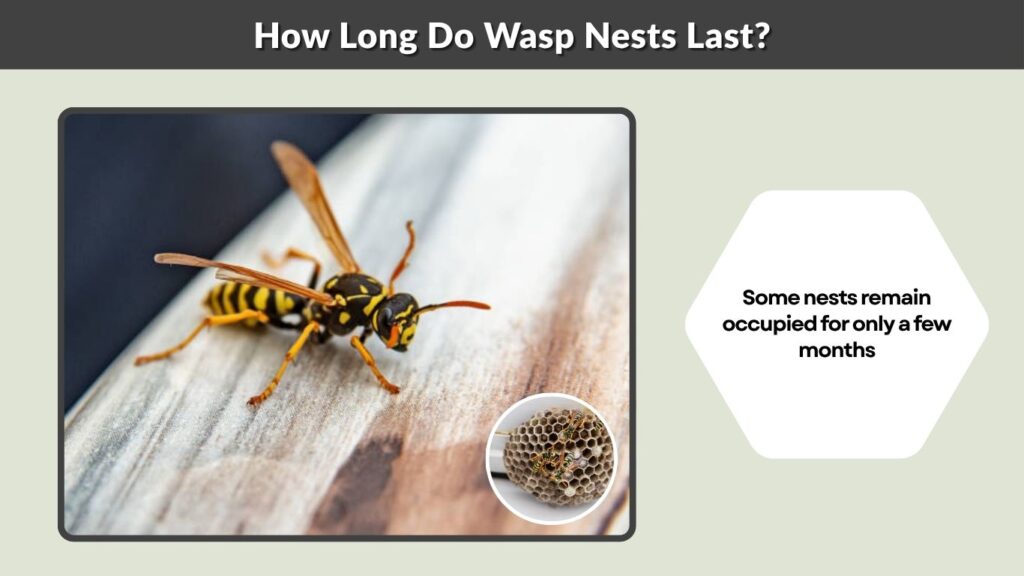
The lifespan of a wasp nest depends on the species, seasonal climate, and surrounding environmental conditions. Some nests remain occupied for only a few months, while their physical structures can persist after the colony disappears. Understanding this cycle explains why abandoned wasp nests are sometimes discovered during winter or early spring.
Do Wasps Reuse Old Nests?
In temperate regions, most social wasp colonies are seasonal.
As cold weather arrives, the workers and founding queen typically die, while newly mated queens seek sheltered overwintering locations.
During the following spring, surviving queens generally establish new colonies rather than reusing abandoned nests.
However, some social wasps in warmer climates may maintain colonies over longer periods.
What Happens to Empty Wasp Nests?
Once abandoned, paper nests gradually deteriorate through exposure to moisture, weather, and other environmental factors.
Sheltered nests may remain recognizable for months or longer.
Mud dauber nests are often more resistant to weathering because their hardened soil construction provides a relatively rigid structure.
An apparently empty nest should not be handled until inactivity has been reliably confirmed.
Is It Safe to Touch or Remove a Wasp Nest?
The construction material does not determine whether a nest is safe to approach. Even delicate-looking paper structures may contain defensive wasps. Disturbing an active colony can result in multiple stings, especially when dealing with yellowjackets or other social wasps.
Signs That a Wasp Nest Is Active
A nest may still be occupied if you notice wasps entering and leaving it regularly, workers gathering on its surface, or insects carrying materials toward the structure.
However, a lack of visible activity during a brief observation does not guarantee that the nest is abandoned.
Avoid touching, shaking, cutting, burning, or spraying an unidentified nest.
If the nest is located near a frequently used entrance or outdoor living area, consult a qualified pest management professional for assessment.
FAQs
1. Are all wasp nests made of paper?
No. Paper wasps, yellowjackets, and many hornets use paper-like wood pulp, while mud daubers and potter wasps use mud. Some solitary wasps dig nests directly into the soil.
2. What kind of wood do wasps use to make nests?
Wasps commonly collect fibers from weathered wood, dead branches, wooden fences, and other accessible plant materials. The preferred sources vary by species and availability.
3. What holds a wasp nest together?
Saliva helps bind chewed wood fibers into a paper-like material. Once the shaped pulp dries, it forms the walls, combs, and supporting structures of the nest.
4. Are hornet nests made of the same material as wasp nests?
Yes. Hornets are wasps, and many hornet species construct their nests using chewed wood fibers and saliva. Their nests often have layered protective outer envelopes.
5. Are wasp nests made from wood or mud?
Both materials are used, depending on the species. Most familiar social wasps construct paper nests from wood pulp, while certain solitary wasps build hardened mud chambers.
