
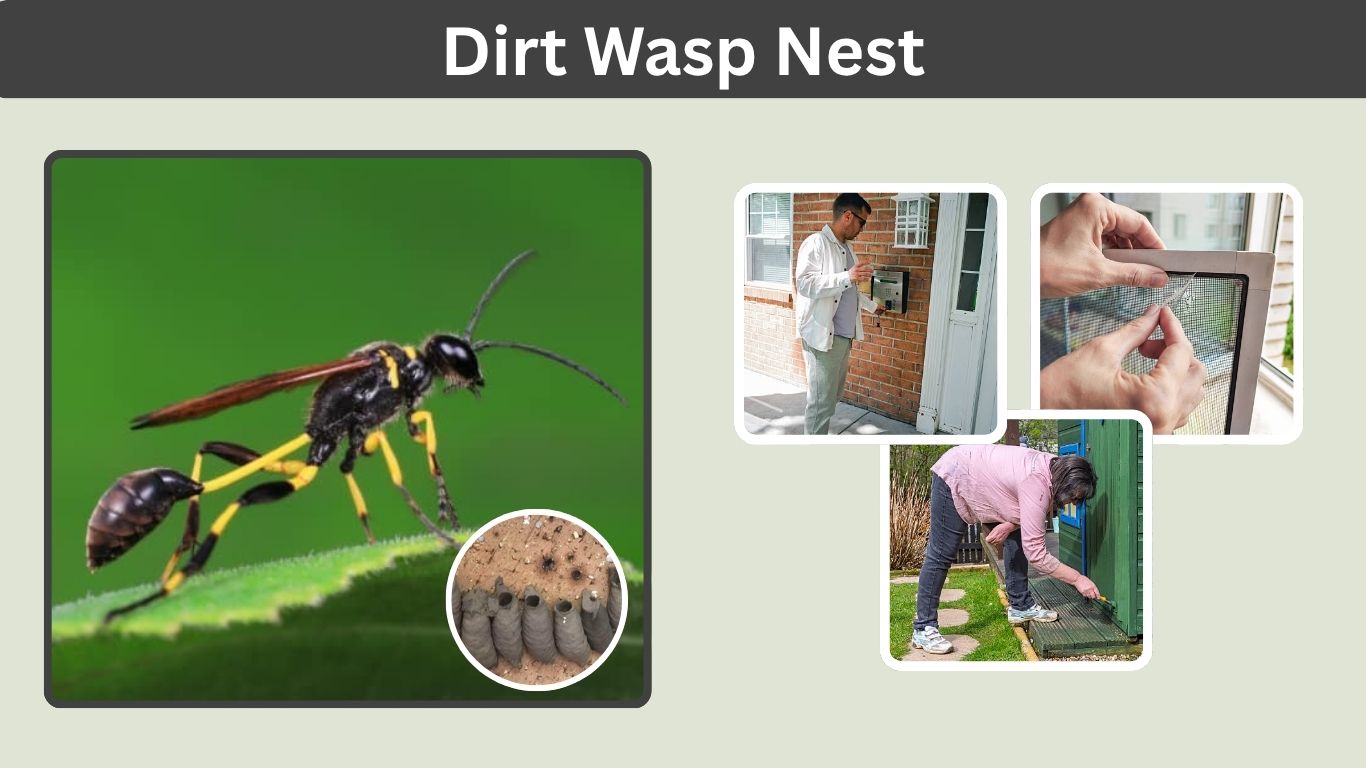
Have you discovered a strange dirt-like structure attached to your wall or noticed wasps flying around holes in your yard? These nests may belong to several wasp species, including mud daubers, potter wasps, and ground-nesting wasps. A dirt wasp nest can vary in shape, size, material, and location depending on the species responsible. Some wasps build hardened mud chambers, while others excavate tunnels directly into the soil. This guide explains how to identify different dirt wasp nests, understand their construction, assess potential dangers, and manage them safely.
What Is a Dirt Wasp Nest?
A dirt wasp nest is a nesting structure made from mud or soil, or a burrow excavated into the ground by certain wasp species. The term is commonly associated with mud daubers, but it can also describe nests constructed by potter wasps and underground nesting species.
What Are Dirt Wasp Nests Made Of?
Mud-building wasps collect moist soil, clay, and small particles of earth to construct their nesting chambers. They transport small mud pellets to protected locations and shape them into tubes, rounded cells, or pot-like structures.
As the material dries, it hardens into a durable protective shell.
Ground-nesting wasps use a different approach. Rather than carrying mud to another location, they excavate tunnels directly into loose soil.
What Does a Dirt Wasp Nest Look Like?
Dirt wasp nests can appear as small mud lumps, elongated tubes, miniature clay pots, or simple holes in the ground.
Their colors usually range from gray and tan to reddish brown, depending on the surrounding soil.
Some nests have smooth surfaces, while others look rough, cracked, or layered. The shape and location provide stronger identification clues than color alone.
Types of Dirt Wasp Nests
Different wasp species use mud and soil in distinctive ways. Some construct individual chambers above ground, while others create underground tunnels to protect their developing offspring. Recognizing these nesting styles makes it easier to determine which wasps are present around your property.
1. Black and Yellow Mud Dauber Nest
Black and yellow mud daubers construct rounded or irregularly shaped mud nests containing several internal chambers.
They commonly attach their nests beneath roof overhangs, inside garages, and along sheltered walls.
Each chamber contains an egg and paralyzed spiders that provide food for the developing larva. These wasps are solitary and generally do not aggressively defend their nests.
2. Organ Pipe Mud Dauber Nest
Organ pipe mud daubers build long, cylindrical mud tubes arranged next to one another.
Their distinctive structures resemble the pipes of a musical organ. They are commonly found beneath bridges, roof edges, and other protected surfaces.
Female wasps construct and provision the chambers with spiders for their offspring.
3. Potter Wasp Nest
Potter wasps often construct small mud chambers shaped like miniature clay pots or rounded containers.
These nests may be attached to branches, fences, or sheltered building surfaces.
Unlike mud daubers that primarily collect spiders, many potter wasps provide caterpillars as food for their developing larvae.
4. Ground Digger Wasp Nest
Ground-digging wasps excavate tunnels directly into the soil. Their nests usually appear as circular openings with loose dirt surrounding the entrance.
Cicada killer wasps are a familiar example. Females create underground chambers and supply them with paralyzed cicadas.
These solitary wasps generally present a lower sting risk than defensive social wasps.
How to Identify a Dirt Dauber Wasp Nest
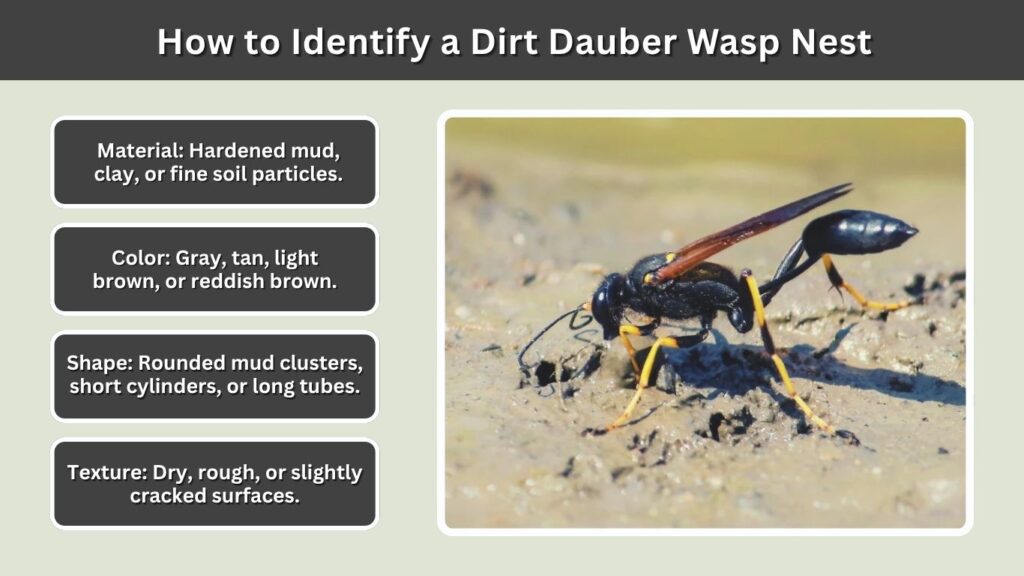
Mud dauber nests are among the easiest dirt-based wasp structures to recognize because they are usually attached to visible surfaces. Their compact construction and distinctive shapes help distinguish them from paper wasp nests or underground burrows.
Common Identification Features
- Material: Hardened mud, clay, or fine soil particles.
- Color: Gray, tan, light brown, or reddish brown.
- Shape: Rounded mud clusters, short cylinders, or long tubes.
- Texture: Dry, rough, or slightly cracked surfaces.
- Location: Under eaves, porch ceilings, garages, and sheltered walls.
- Internal structure: Separate chambers containing developing wasps and stored prey.
- Exit holes: Round openings may indicate that adult wasps have emerged.
A visible opening does not necessarily mean the entire nest is empty. Other chambers may still contain developing insects.
Why Are There Spiders Inside Dirt Wasp Nests?
Mud daubers hunt spiders and temporarily paralyze them using their stings.
The female places captured spiders inside a mud chamber, deposits an egg, and seals the opening.
When the larva hatches, it feeds on the stored spiders before eventually developing into an adult wasp.
This feeding behavior makes mud daubers beneficial predators that help regulate spider populations.
Dirt Dauber Nest vs. Paper Wasp Nest
Although dirt daubers and paper wasps belong to the broader wasp group, they use different materials and nesting methods. Mud daubers build individual earthen chambers, while paper wasps form social colonies in nests made from chewed wood fibers mixed with saliva.
Key Differences Between Their Nests
| Feature | Dirt Dauber Nest | Paper Wasp Nest |
| Construction | Mud or clay | Chewed wood fibers |
| Appearance | Tubes or mud lumps | Open hexagonal comb |
| Texture | Hard and earthen | Lightweight and papery |
| Nesting behavior | Solitary | Social colony |
| Food for larvae | Mainly spiders | Mainly other insects |
| Nest defense | Usually low | Can be defensive |
Which Nest Is More Dangerous?
Paper wasps can become defensive when someone approaches or disturbs their active colony.
Mud daubers are generally less aggressive because they do not maintain large cooperative colonies with numerous workers protecting a shared nest.
However, female mud daubers can sting if handled, trapped, or threatened. Both nest types should be observed without unnecessary disturbance.
Do Wasps Build Nests in Dirt?
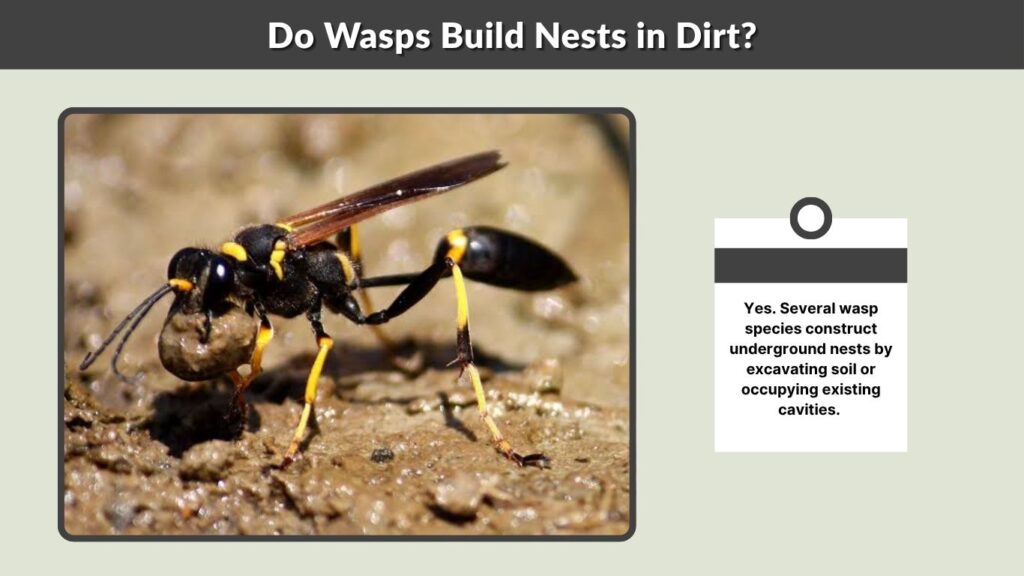
Yes. Several wasp species construct underground nests by excavating soil or occupying existing cavities. However, these nests differ from the mud structures built by dirt daubers. Understanding the distinction is particularly important when wasps are entering and leaving holes in lawns or garden beds.
Ground Wasp Nests in Lawns
Solitary digging wasps often prefer sunny areas with loose, well-drained soil.
Their nests may be surrounded by small mounds of excavated dirt. Several females can establish separate burrows close together, giving the impression of a large colony.
Yellowjackets can also nest underground, frequently using abandoned rodent burrows or other preexisting cavities.
Unlike solitary digging wasps, yellowjackets form social colonies that may vigorously defend their nesting area.
How to Recognize an Underground Wasp Nest
Observe activity from a safe distance.
Numerous wasps entering and leaving one opening may indicate a yellowjacket colony.
Separate holes with only occasional individual wasps may indicate solitary digging species.
Because underground nests can be difficult to identify, avoid digging into unfamiliar entrances.
How to Remove a Dirt Wasp Nest Safely
Dirt wasp nest removal depends on whether the structure belongs to a solitary mud-building species or an underground social colony. Many solitary wasps are beneficial and can safely remain undisturbed. Removal becomes more relevant when nests interfere with doors, equipment, or frequently occupied areas.
Safe Dirt Wasp Nest Removal Steps
- Identify the nest: Determine whether it is a mud dauber structure or an underground colony.
- Observe from a distance: Look for wasps entering, leaving, or actively constructing chambers.
- Avoid disturbing active nests: Wait until inactivity is reliably confirmed or consult a professional.
- Remove abandoned mud structures: Once confirmed inactive, accessible mud nests can often be carefully scraped from suitable surfaces.
- Clean the attachment area: Remove remaining dirt and residue without damaging the underlying material.
- Inspect nearby locations: Check sheltered areas for additional nesting activity.
Do not attempt to excavate an active underground yellowjacket colony. Professional treatment is the safer option when the nest presents a significant sting hazard.
Should You Spray a Dirt Wasp Nest?
Routine insecticide spraying is generally unnecessary for solitary mud daubers.
If an active nest creates a safety concern, seek advice from a qualified pest management professional.
Never use gasoline, fire, boiling water, or unapproved chemical mixtures to destroy a nest.
How to Prevent Dirt Wasps From Building Nests
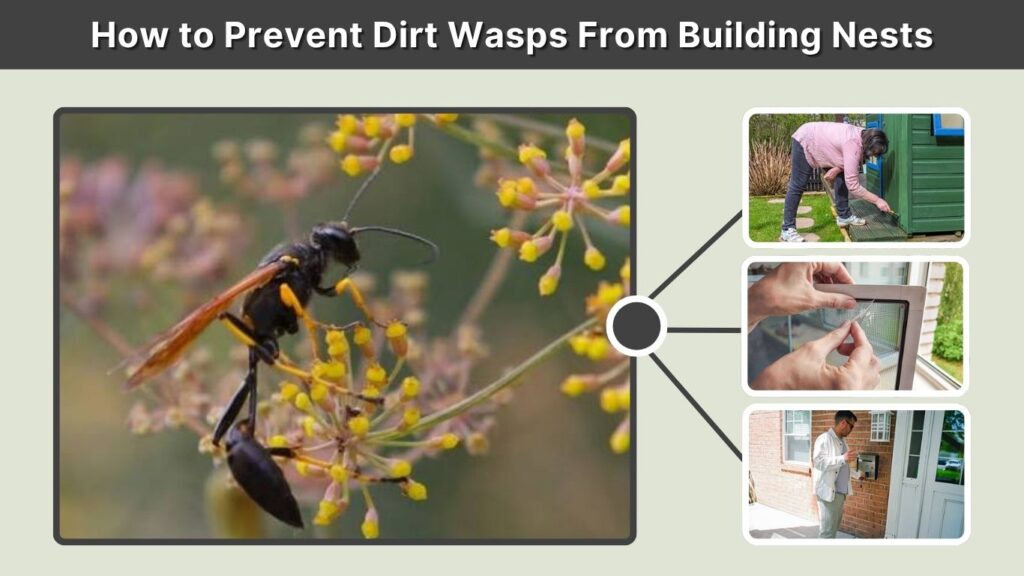
Preventing unwanted dirt wasp nests involves reducing attractive nesting sites while maintaining a healthy outdoor environment. Different wasp species prefer different conditions, so prevention methods should match their nesting habits.
Practical Prevention Tips
- Seal unnecessary gaps around sheds, garages, and outdoor structures.
- Repair damaged screens and maintain secure doors.
- Inspect sheltered walls and roof overhangs periodically.
- Keep outdoor equipment openings protected when not in use.
- Maintain dense grass coverage to discourage some digging wasps.
- Cover exposed garden soil with suitable mulch or groundcover.
- Avoid leaving equipment unused in areas where mud nests regularly develop.
These measures may reduce nesting opportunities, but they cannot guarantee that wasps will avoid the property entirely.
FAQs
1. What kind of wasp builds a nest out of dirt?
Mud daubers and potter wasps build nests from mud or clay. Other species, including cicada killers, excavate tunnels directly into the soil.
2. Are dirt wasp nests hard?
Yes. Mud dauber and potter wasp nests become relatively hard when their wet mud construction dries. Their strength depends on the soil material and environmental conditions.
3. Do dirt wasps sting humans?
Female mud daubers can sting, but they are usually not aggressive. Ground-nesting yellowjackets are more likely to sting defensively when their colonies are disturbed.
4. Can dirt wasps reuse an old nest?
Some mud dauber species may reuse or modify existing mud nests. Other species construct new chambers during each nesting cycle.
5. Should I remove a dirt dauber wasp nest?
Removal is usually unnecessary if the nest is in an undisturbed location. If it interferes with household activities, consider removing it after confirming that it is inactive.
