
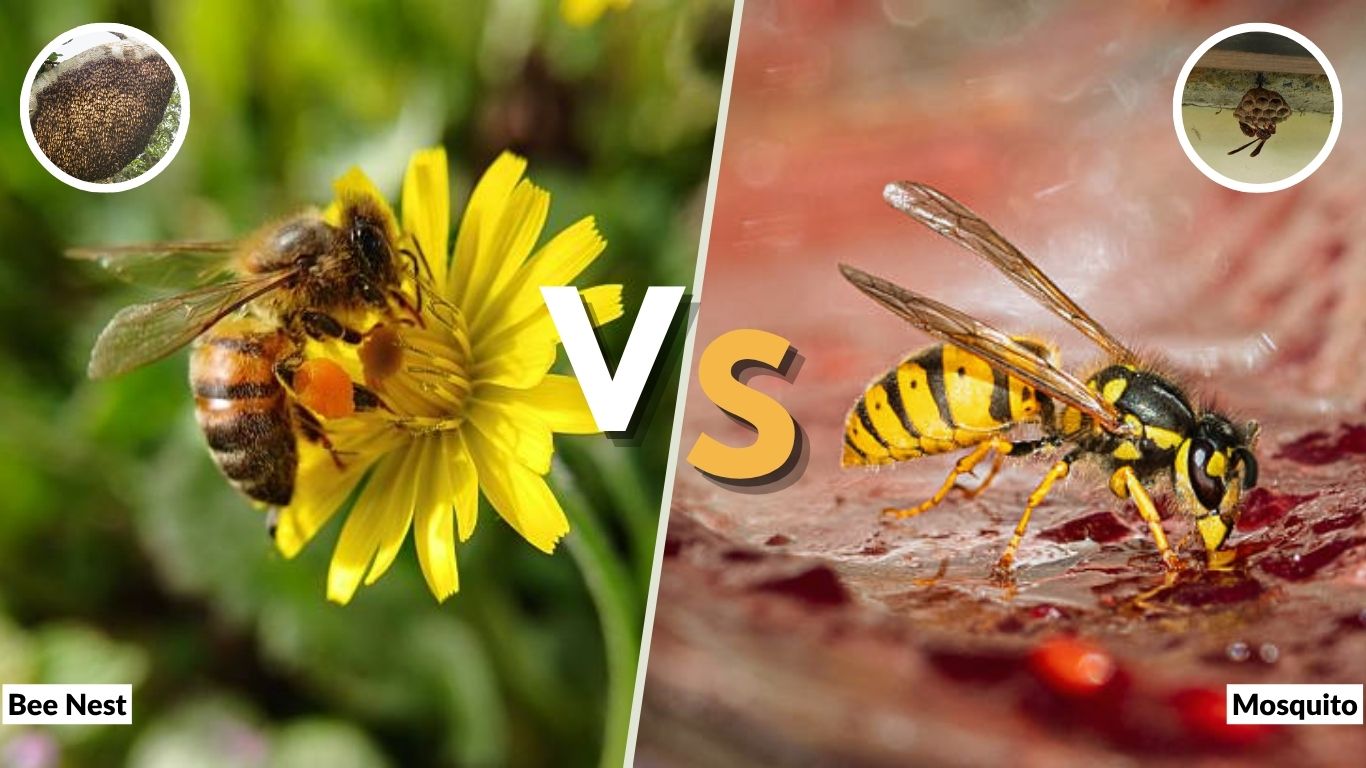
Finding a nest around your home can be concerning, especially when you cannot tell whether it belongs to bees or wasps. Although these insects may look similar, their nests have noticeable differences in appearance, materials, structure, and location. Understanding bee nest vs wasp nest identification can help you recognize the insects, avoid unnecessary disturbance, and decide whether professional removal is necessary. This guide explains the differences between bee hives, wasp nests, and hornet nests, including practical tips for identifying them safely.
What Is the Difference Between a Bee Nest and a Wasp Nest?
The biggest difference between a bee nest and a wasp nest is the material used for construction. Honey bees build wax combs, while many social wasps create paper-like structures using chewed wood fibers. Their shapes, colors, and nesting locations also vary depending on the species.
Nest Materials and Construction
Honey bees produce beeswax from specialized glands and use it to build hexagonal comb cells. These cells provide space for developing young and storing pollen, nectar, and honey. The comb often appears creamy white, golden yellow, or brown as it ages.
Paper wasps, yellowjackets, and hornets construct nests from wood fibers mixed with saliva. Their nests generally have a dry, grayish, or brown appearance with a texture resembling layered paper.
However, not every bee or wasp builds these structures. Some solitary bees nest in soil or wood, while mud dauber wasps construct nests from mud.
Shape and External Appearance
Honey bee colonies commonly occupy enclosed cavities containing multiple vertical sheets of wax comb. Occasionally, they build exposed combs in sheltered locations.
Paper wasp nests frequently resemble upside-down umbrellas with visible hexagonal cells. Hornet and some yellowjacket nests often have rounded shapes with protective outer envelopes.
The shape alone cannot guarantee identification because different species construct different kinds of nests.
Bee Hive vs Wasp Nest: Key Differences at a Glance
Comparing the physical characteristics of a bee hive and wasp nest makes identification easier. These differences are particularly useful when nests appear under roof edges, inside trees, or around outdoor structures. The following comparison mainly describes honey bees and common social wasps.
| Feature | Bee Nest (Honey Bees) | Wasp Nest (Social Wasps) |
| Material | Beeswax | Chewed wood fibers |
| Color | Cream, yellow, brown | Gray, tan, brown |
| Structure | Wax comb sheets | Open or enclosed paper combs |
| Texture | Waxy | Dry and papery |
| Common location | Tree hollows, walls, hives | Eaves, trees, walls, ground |
| Honey storage | Yes | No |
| Colony duration | Often survives multiple years | Usually seasonal in temperate climates |
| Nest defense | Defended when threatened | Defended when threatened |
Both insects can become defensive when their colonies are disturbed, so identification should always be performed from a safe distance.
Common Types of Bee Nests and Wasp Nests
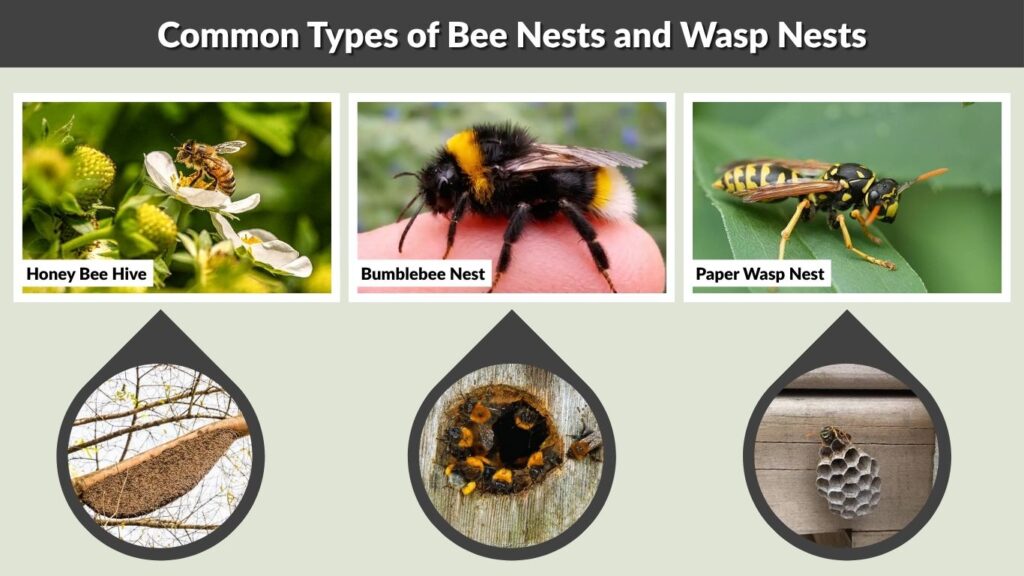
Bee and wasp nests vary considerably between species. Understanding the most common nest types can help homeowners distinguish between beneficial pollinators and potentially hazardous colonies. Some structures are easily visible, while others remain hidden inside walls, trees, or underground cavities.
Common Nest Types and Identification
- Honey Bee Hive: Contains vertical beeswax combs with hexagonal cells. Usually found inside tree hollows, artificial hives, or wall cavities.
- Bumblebee Nest: Often consists of irregular wax cells and storage pots inside sheltered cavities, abandoned rodent burrows, or dense vegetation.
- Paper Wasp Nest: Features an exposed, umbrella-shaped comb attached by a narrow stalk, usually beneath eaves, railings, or branches.
- Yellowjacket Nest: Typically contains layered paper combs surrounded by an envelope. Colonies may occupy underground burrows, wall voids, or aboveground structures.
- Hornet Nest: Often forms a large, enclosed papery structure with an entrance opening. Location and shape depend on the hornet species.
- Mud Dauber Nest: Consists of hardened mud tubes or rounded chambers attached to walls, sheltered ceilings, or outdoor structures.
Which Nest Is Easier to Recognize?
Exposed paper wasp nests are usually easier to identify because their open cells remain visible. Honey bee colonies inside hollow trees or wall cavities are harder to recognize because their wax combs are hidden.
When the nest structure cannot be seen, observing the insects entering and leaving from a distance may provide more reliable identification clues.
Ground Bee Nest vs Ground Wasp Nest
Ground nests can be particularly confusing because several bees and wasps use underground spaces. Some solitary bees excavate small tunnels in loose soil, while yellowjackets often occupy existing underground cavities. Bumblebees may also build colonies below ground, making appearance and insect activity important identification clues.
How to Identify Ground Nesting Bees
Many solitary ground-nesting bees create individual tunnels surrounded by small piles of loose soil. Several nest entrances may appear together in a lawn or garden bed.
Common signs include:
- Multiple small holes spread across exposed soil.
- Small mounds of loose dirt around entrances.
- Bees carrying pollen toward nesting tunnels.
- Individual bees using separate entrances.
- Activity concentrated during their nesting season.
Most solitary ground-nesting bees are relatively gentle and rarely sting unless handled or threatened.
How to Identify Ground Nesting Wasps
Ground-nesting yellowjackets frequently establish colonies in abandoned animal burrows or other underground cavities.
Unlike solitary ground bees, large numbers of yellowjackets may repeatedly enter and exit through one opening. They can vigorously defend their colony when disturbed.
However, some solitary wasps also excavate individual ground tunnels. Therefore, a hole in the soil does not automatically indicate a yellowjacket nest.
Avoid approaching or disturbing any unidentified underground nest.
Bee Nest vs Wasp Nest vs Hornet Nest
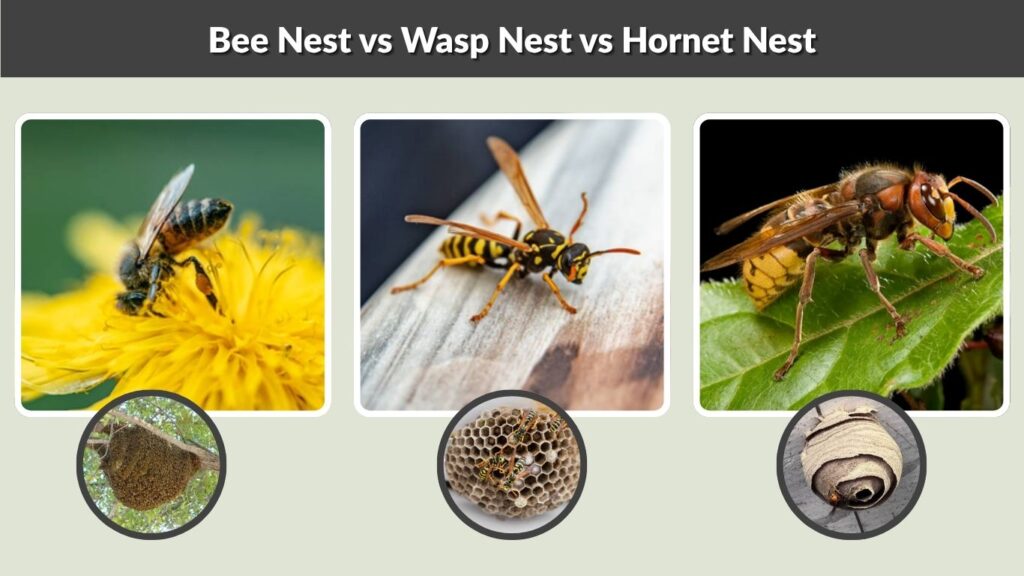
Hornets are a type of wasp, but their nests often have characteristics that make them distinguishable from common paper wasp nests. Understanding these differences helps prevent confusion when identifying a large hanging nest around your home.
How Hornet Nests Differ
Many hornet species construct enclosed paper nests with several internal comb layers. Their nests may appear round, oval, or football-shaped and are sometimes attached to tree branches or located inside hollow spaces.
Paper wasps, by contrast, typically construct exposed combs without a complete outer covering.
Honey bees build wax comb rather than a layered paper envelope. Their colonies also store honey, unlike hornets and other wasps.
The bald-faced hornet, despite its common name, is actually a type of yellowjacket. It creates large enclosed paper nests, often in trees or shrubs.
How to Identify a Bee or Wasp Nest Around Your House
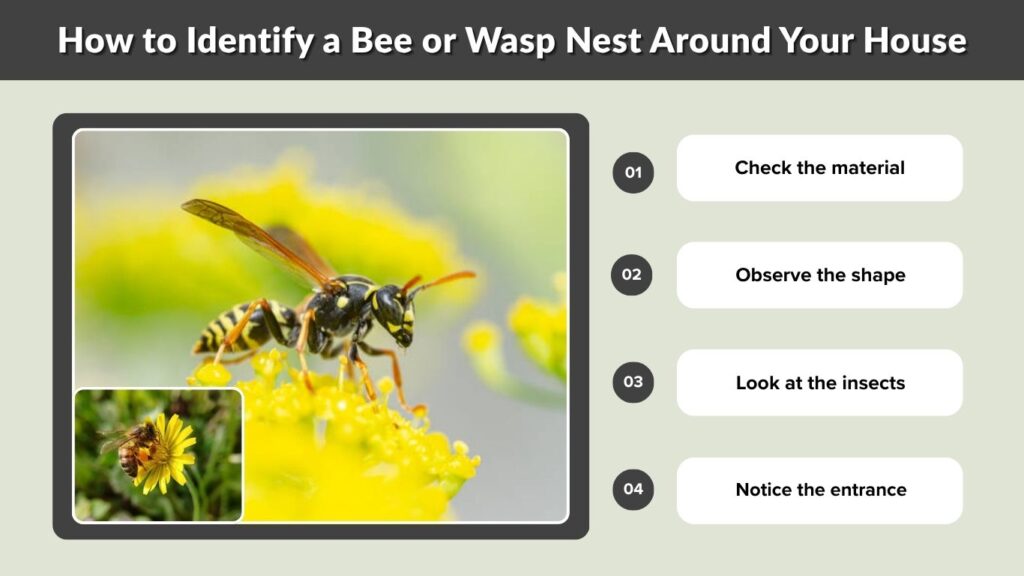
Nests near homes commonly appear under roof edges, inside attics, around wall openings, or beneath decks. Identifying the nest involves examining its visible characteristics and observing insect activity without approaching closely.
Important Identification Clues
- Check the material: Waxy comb suggests honey bees, while gray paper suggests social wasps.
- Observe the shape: Open umbrella-shaped combs often belong to paper wasps.
- Look at the insects: Honey bees are generally hairier, while yellowjackets typically appear smoother and shinier.
- Notice the entrance: Numerous insects moving through a single ground opening may indicate a social colony.
- Consider the location: Carpenter bees often use wood tunnels, while mud daubers attach mud chambers to sheltered structures.
Bee or Wasp Nest Inside a Wall
Both honey bees and yellowjackets can establish colonies inside wall cavities. In these situations, the nest itself may remain completely invisible.
Honey bees often enter through gaps around siding, roofing, or other structural openings. Yellowjackets can use similar entry points.
Do not seal an active entrance or attempt to open the wall yourself. Professional identification is important because removing a honey bee colony may also require removing wax comb, honey, and other nest material to prevent further problems.
Are Bee Nests or Wasp Nests More Dangerous?
Both bee and wasp colonies may defend their nests when threatened. The level of danger depends on the species, colony size, nesting location, and whether someone accidentally disturbs the nest.
Bee Nest Safety
Honey bees generally focus on collecting nectar and pollen when away from their colony. However, a honey bee colony can become defensive if its nest is disturbed.
Bumblebees may also defend their colonies, although many solitary bee species rarely sting.
Wasp Nest Safety
Social wasps, particularly yellowjackets, can deliver repeated stings when defending their nests. Disturbing an underground colony while mowing, digging, or walking nearby can trigger defensive behavior.
A history of severe allergic reactions makes any stinging insect encounter particularly concerning. Difficulty breathing, throat swelling, or faintness following a sting requires immediate emergency medical care.
What Should You Do If You Find a Bee or Wasp Nest?
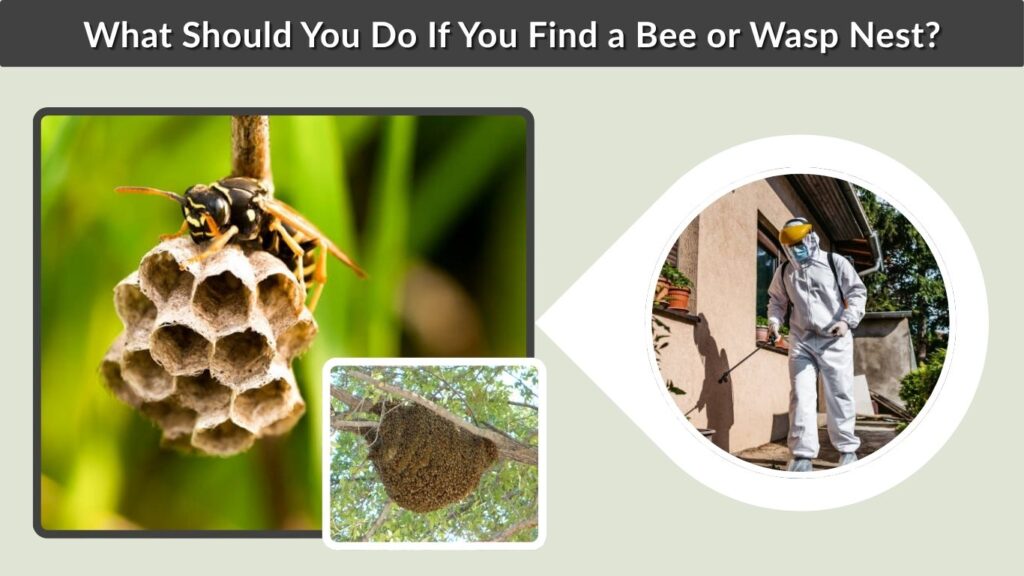
Discovering an active nest does not always mean it must be removed. Many solitary bees and wasps provide valuable ecological benefits, including pollination and natural pest control. However, nests close to entrances, children’s play areas, or frequently used walkways may require professional assessment.
Safe Steps to Follow
- Keep your distance: Avoid touching, shaking, or approaching an unidentified nest.
- Observe from afar: Use a zoom camera to examine insects and visible nest features.
- Keep children and pets away: Prevent accidental disturbance around the nesting location.
- Avoid DIY disturbance: Never burn, flood, strike, or block an active nest.
- Contact a qualified professional: A local beekeeper experienced in removals may help with honey bee colonies, while a pest management professional can assess hazardous wasp nests.
Should You Remove the Nest?
Honey bee colonies should be preserved whenever practical, and professional live removal may be an option. Established colonies inside buildings require particular care because abandoned comb and honey can cause structural or pest problems.
An exposed wasp nest in an isolated area may not require intervention. However, a large active colony near household activity may warrant professional management.
FAQs
1. What is the easiest way to tell a bee nest from a wasp nest?
Check the visible construction material. Honey bees build wax combs, while paper wasps, hornets, and yellowjackets construct paper-like nests from wood fibers.
2. Do bees and wasps build nests in the same places?
Yes. Both can establish nests in trees, walls, and sheltered outdoor locations. However, their preferred nesting sites vary significantly by species.
3. Can a wasp nest look like a bee hive?
Yes. Both may contain hexagonal cells, making exposed combs appear similar. The material and overall structure help distinguish wax bee comb from paper wasp comb.
4. How can I tell a ground bee nest from a ground wasp nest?
Solitary ground bees often use numerous individual tunnels. Ground-nesting yellowjackets commonly have many workers entering and leaving a shared opening. Neither sign is conclusive without identifying the insects.
5. Should I remove a bee nest or wasp nest near my house?
Not necessarily. If the nest is in an undisturbed location, it may be safe to leave it alone. Nests near busy entrances or living spaces should be evaluated by an appropriate professional.
