

Wasps are well known for their painful stings, and one species often encountered around homes and gardens is the umbrella wasp. Named for their umbrella-shaped nests, these insects belong to the paper wasp family (Polistes species). Their stings can be a frightening experience, causing pain, swelling, and in some cases serious allergic reactions. Understanding what happens when stung, how to recognize symptoms, and the best treatments can make encounters less alarming and more manageable.
What is an Umbrella Wasp?
Umbrella wasps are part of the larger group of paper wasps, widely distributed across North America, Europe, Asia, and other regions. They build distinctive umbrella-shaped nests, usually under eaves, tree branches, or sheltered spots. These nests are made of chewed wood fibers mixed with saliva, forming papery cells where their larvae develop.
Unlike hornets and yellowjackets, umbrella wasps are generally less aggressive. However, they fiercely defend their nests if they feel threatened. Their colonies are relatively small, usually containing fewer than 200 individuals, but their stings can still pack a punch.
Because umbrella wasps often nest close to human homes, encounters are fairly common. A sting may happen when someone accidentally disturbs a nest or comes too close to it.
Anatomy of an Umbrella Wasp Sting
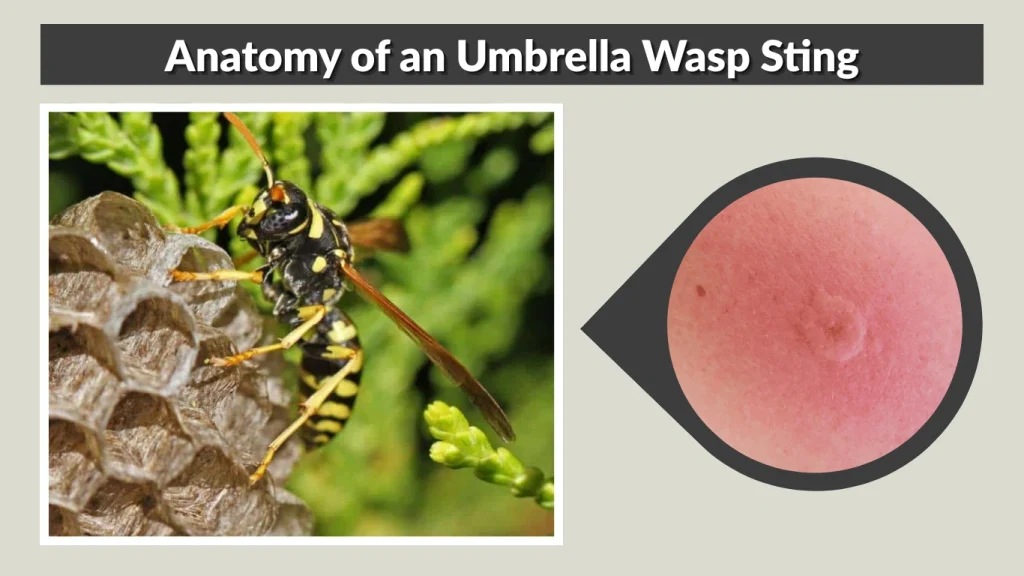
The sting of an umbrella wasp is both a defense mechanism and a hunting tool. It consists of a sharp stinger attached to a venom gland.
- Unlike bees, which lose their stingers after a sting, umbrella wasps can sting multiple times without dying.
- The stinger pierces the skin and injects venom, which contains proteins that affect pain receptors, blood vessels, and immune responses.
- This venom is what causes the familiar burning sensation, swelling, and redness at the sting site.
The venom also serves an important role for the wasp: defending its nest from predators and immobilizing prey (caterpillars and other insects) that are fed to developing larvae.
Symptoms of an Umbrella Wasp Sting
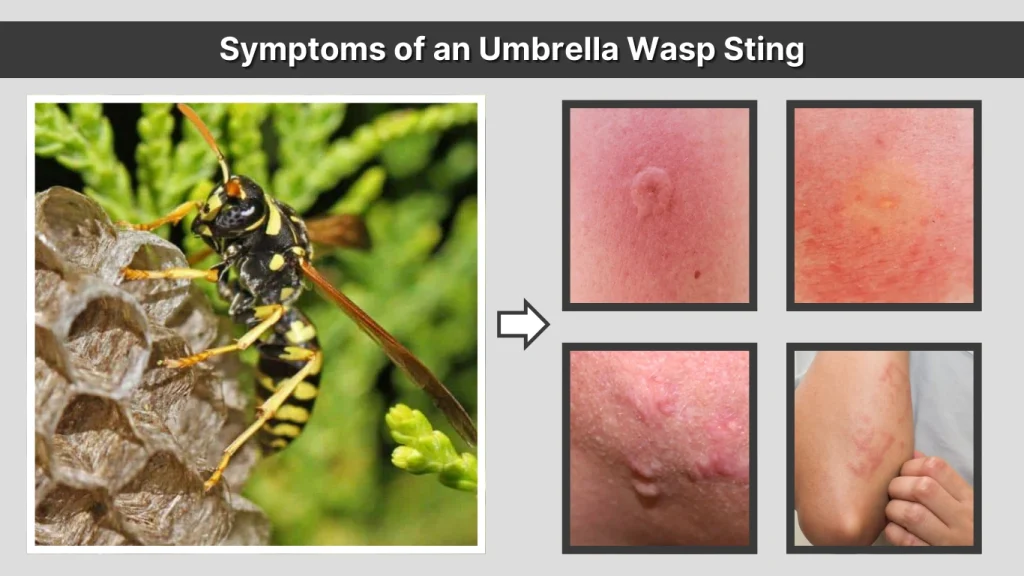
When a person is stung by an umbrella wasp, symptoms appear quickly. Most reactions are mild to moderate and confined to the sting site.
Common Symptoms
- Immediate sharp pain or burning sensation.
- Redness and swelling around the sting site.
- Itching or irritation after the initial pain subsides.
- Raised welt or bump where the stinger entered.
Duration of Symptoms
- Pain usually lasts for a few minutes to an hour.
- Swelling and redness may remain for several hours or up to a day.
- Itching or irritation can linger for a few days, depending on sensitivity.
These symptoms are normal and not considered dangerous unless they worsen significantly.
Reactions to an Umbrella Wasp Sting
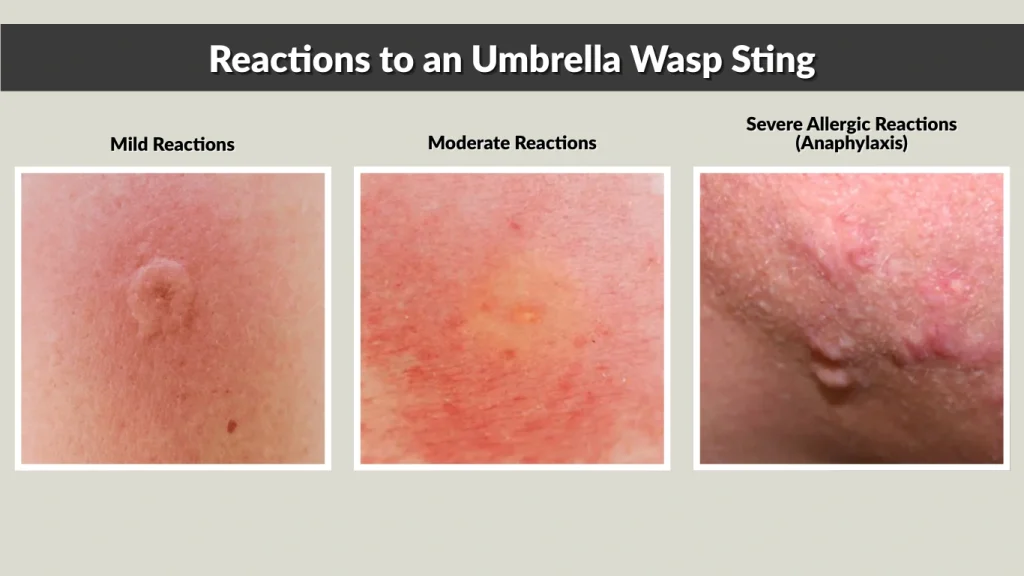
The body’s reaction to a wasp sting depends on several factors: the person’s sensitivity, location of the sting, and whether it is a single or multiple stings. Reactions can be categorized as mild, moderate, or severe.
Mild Reactions
These are the most common and occur in most sting cases.
- Localized pain and burning sensation.
- Redness, swelling, and itching confined to the sting site.
- Symptoms improve within hours to a day with simple first aid.
Moderate Reactions
Some individuals may experience a stronger local reaction, especially if stung multiple times.
- Swelling extends beyond the sting site (for example, a sting on the hand may cause swelling in the entire hand or arm).
- Pain and irritation last for several days.
- Discomfort may interfere with daily activities but is rarely dangerous.
Severe Allergic Reactions (Anaphylaxis)
In rare cases, an umbrella wasp sting can trigger a severe allergic reaction known as anaphylaxis, which requires immediate medical attention. Symptoms may include:
- Difficulty breathing, wheezing, or tightness in the chest.
- Swelling of the lips, tongue, or throat.
- Dizziness, fainting, or rapid heartbeat.
- Nausea, vomiting, or abdominal cramps.
These reactions are life-threatening and demand urgent medical care, often with epinephrine (EpiPen) and hospitalization.
Factors Affecting Sting Reactions
Not everyone reacts the same way to an umbrella wasp sting. Several factors influence the severity of symptoms:
Number of stings: Multiple stings deliver more venom, leading to stronger reactions.
Location of the sting: Stings on sensitive areas like the face, neck, or hands may cause more discomfort.
Individual sensitivity: People allergic to wasp venom may react more severely, even with a single sting.
Age and health: Children, the elderly, and those with compromised immune systems may experience stronger effects.
Understanding these factors helps determine whether a sting is just a temporary nuisance or a medical emergency.
First Aid and Immediate Treatment
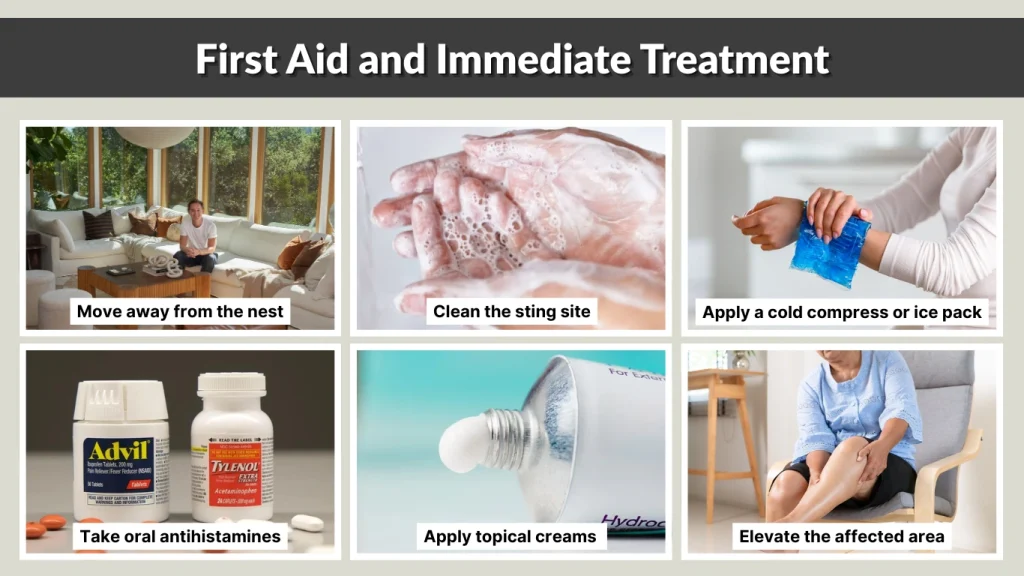
If you are stung by an umbrella wasp, quick action can reduce pain and swelling. Here are the recommended steps:
- Move away from the nest – Umbrella wasps may sting repeatedly if they sense ongoing disturbance.
- Clean the sting site – Wash gently with soap and water to prevent infection.
- Apply a cold compress or ice pack – Reduces pain and swelling. Wrap ice in a cloth to avoid direct skin contact.
- Take oral antihistamines – Helps relieve itching and swelling for moderate reactions.
- Apply topical creams – Hydrocortisone cream or calamine lotion can soothe irritation.
- Elevate the affected area – If the sting is on a limb, raising it helps reduce swelling.
These steps are effective for most mild to moderate reactions and often prevent the sting from becoming more uncomfortable.
Medical Treatment for Severe Cases
For individuals who experience severe allergic reactions, immediate medical attention is crucial. Medical professionals may use:
- Epinephrine (EpiPen): Provides rapid relief in cases of anaphylaxis by reducing airway swelling and improving breathing.
- Steroids: Reduce inflammation and allergic response.
- Stronger antihistamines: Used in hospital settings to manage severe swelling and hives.
- Oxygen and IV fluids: Given during emergency care if blood pressure drops dangerously low.
Anyone who has experienced a severe reaction should carry an epinephrine injector and consult an allergist for long-term management.
Home Remedies for Relief
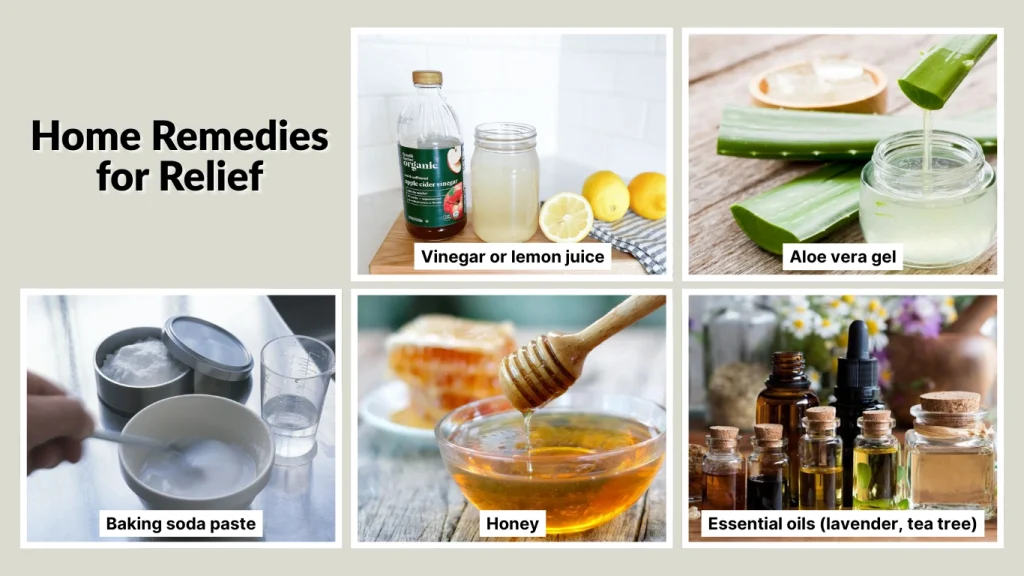
For mild to moderate stings, natural remedies can provide additional comfort:
- Baking soda paste – Neutralizes venom acidity and eases irritation.
- Vinegar or lemon juice – Mildly reduces swelling and discomfort.
- Aloe vera gel – Soothes burning and itching.
- Honey – Known for its antibacterial and anti-inflammatory properties.
- Essential oils (lavender, tea tree) – Sometimes applied for skin relief, though not medically proven.
While these remedies may help, they should not replace medical care in severe cases.
Preventing Umbrella Wasp Stings
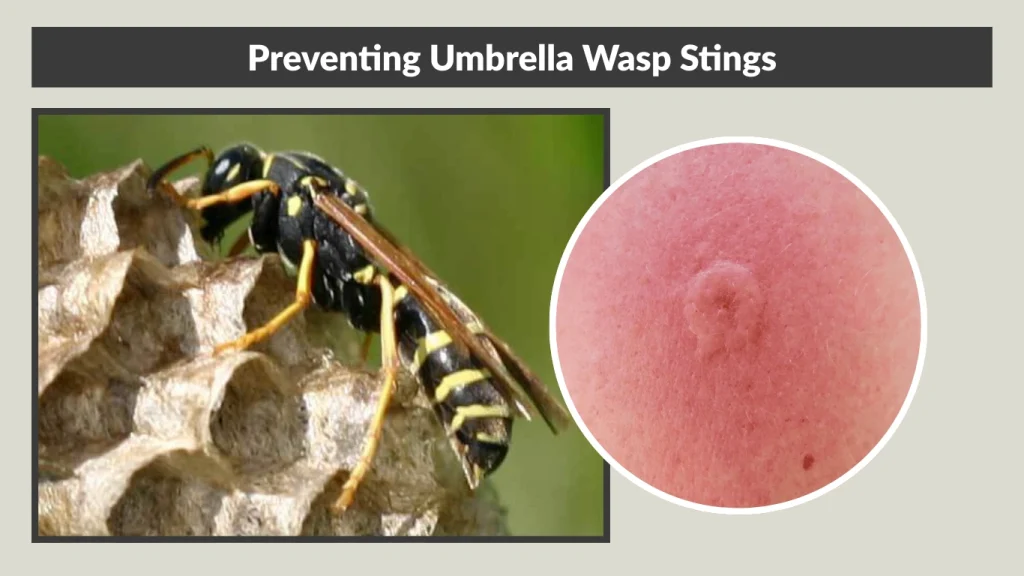
Prevention is the best strategy for avoiding painful stings. Key tips include:
- Avoid disturbing nests – Umbrella wasps are most aggressive near their nest.
- Wear protective clothing – Long sleeves and gloves when gardening or working near outdoor structures.
- Keep food covered outdoors – Sweet foods and drinks attract wasps.
- Seal entry points – Close gaps around roofs, sheds, and walls where wasps may build nests.
- Professional removal – If a nest is in a high-traffic area, hire pest control rather than attempting removal yourself.
By reducing opportunities for conflict, you can coexist with umbrella wasps without unnecessary risk.
Umbrella Wasp Sting vs. Other Wasp Stings
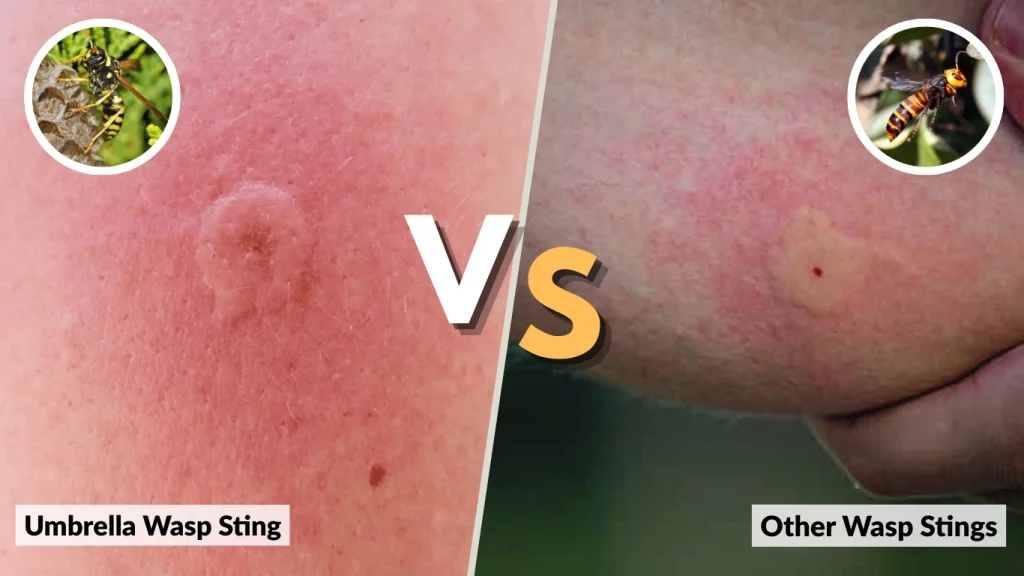
Many people wonder how umbrella wasp stings compare to those of hornets or yellowjackets.
- Pain level: Comparable to a hornet sting but generally less severe than the Asian giant hornet.
- Aggression: Umbrella wasps are less aggressive than yellowjackets and typically sting only when their nest is threatened.
- Number of stings: Since umbrella wasps can sting multiple times, disturbing a nest may result in repeated stings.
Overall, while painful, an umbrella wasp sting is usually less dangerous than that of more aggressive species.
Key Facts to Remember
- Umbrella wasps are named for their distinctive umbrella-shaped nests.
- Their sting can be painful but is usually not dangerous.
- Most reactions are mild, though moderate swelling can occur.
- Severe allergic reactions are rare but require emergency care.
- Preventive steps, such as avoiding nests, reduce the risk of being stung.
FAQs
Do umbrella wasps sting more than once?
Yes, unlike bees, umbrella wasps retain their stinger and can sting multiple times if threatened.
How long does the pain last?
Pain usually peaks in the first few minutes and subsides within an hour. Swelling and itching may last 1–3 days.
Can children react differently to umbrella wasp stings?
Children may experience stronger localized reactions due to their smaller body size, but serious allergic reactions remain rare.
What should I do if I get multiple stings?
Seek medical help if you receive many stings, as the venom can accumulate and cause stronger reactions.
Should I remove an umbrella wasp nest near my home?
If the nest is in a high-traffic area or near children, professional removal is recommended. Otherwise, leaving it alone is often safe, as umbrella wasps are not aggressive unless disturbed.
