

With their shimmering metallic colors and secretive behavior, cuckoo wasps are among the most striking yet mysterious insects in the wasp family. Known scientifically as members of the Chrysididae, these tiny creatures are famous for their parasitic lifestyle, sneaking into the nests of other insects to lay their eggs. Despite their dazzling appearance, many people wonder—are cuckoo wasps dangerous, do they sting, and where are they found? This guide explores their size, life cycle, nesting habits, and role in ecosystems across regions like Florida, Texas, Georgia, and even the UK.
What is a Cuckoo Wasp?
Cuckoo wasps are small, jewel-like insects belonging to the family Chrysididae. Their name comes from their behavior, which is similar to the cuckoo bird—laying eggs in the nests of other species. Instead of building their own nests, they rely on solitary bees and wasps as hosts for their young. With over 3,000 known species worldwide, cuckoo wasps are admired for their glittering metallic appearance and fascinating parasitic lifestyle.
Scientific Name and Classification

- Scientific Family: Chrysididae
- Order: Hymenoptera (same order as bees, ants, and other wasps)
- Subfamilies: Chrysidinae, Amiseginae, and Cleptinae, each with unique traits
- Species Diversity: Found across continents, from hot deserts to temperate gardens
Cuckoo wasps are closely related to other solitary wasps and bees but stand out due to their parasitism. Their evolutionary adaptations make them one of the most specialized groups of wasps.
Physical Appearance and Size
Cuckoo wasps are instantly recognizable because of their shimmering metallic colors, often in shades of blue, green, or red. Their exoskeleton is not only beautiful but also serves as armor, protecting them when attacked by hosts.
- Size Range: Usually between 6 mm and 12 mm, though some species are smaller or slightly larger
- Shape: Compact body with distinct segmentation
- Coloration: Iridescent and jewel-like, reflecting sunlight in multiple hues
- Defense Mechanism: Can curl tightly into a ball (a behavior called conglobation) to shield vulnerable parts from host stings or bites
Sting and Bite: Do Cuckoo Wasps Sting?
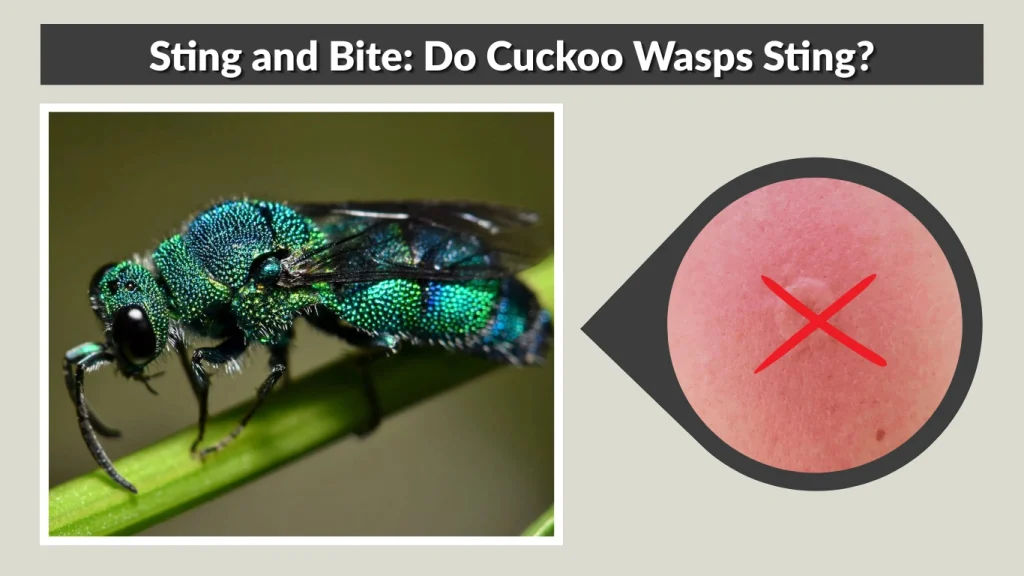
Unlike many wasps, cuckoo wasps are not aggressive and rarely use their stingers. In fact, most species have a modified ovipositor (egg-laying organ) instead of a functional stinger, which means they cannot sting humans at all. Some species may give a mild prick if handled roughly, but it is not harmful or venomous. Their primary defense is curling into a ball, relying on their tough exoskeleton rather than attacking.
Are Cuckoo Wasps Dangerous?
Cuckoo wasps may look intimidating with their metallic armor, but they are completely harmless to humans. They do not sting aggressively, spread diseases, or damage homes. Their parasitism only affects solitary bees, wasps, and other insects whose nests they invade. In fact, they play an important role in maintaining balance in ecosystems by controlling host populations. For humans, their presence is more of a visual wonder than a threat.
Life Cycle of Cuckoo Wasps

The cuckoo wasp life cycle is a fascinating example of brood parasitism, much like the cuckoo bird. Instead of building nests or raising their young, female cuckoo wasps lay their eggs inside the nests of other insects.
- Egg Stage – A female sneaks into the host nest and deposits her eggs alongside or near the host’s eggs.
- Larva Stage – When the cuckoo wasp larva hatches, it feeds on the host’s egg, larva, or the stored food supply intended for the host’s offspring.
- Pupa Stage – The larva then develops within the host’s nest, protected until maturity.
- Adult Stage – Finally, the fully developed cuckoo wasp emerges, ready to repeat the cycle.
This clever survival strategy allows cuckoo wasps to thrive without the effort of nest building or provisioning food.
Nesting Behavior
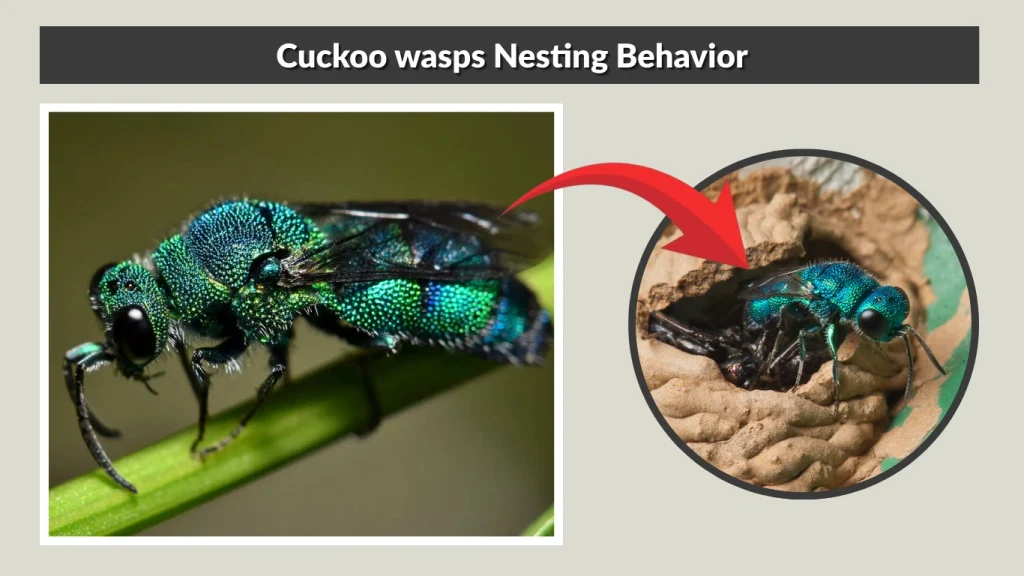
Cuckoo wasps are unique because they do not build their own nests. Instead, they specialize in parasitizing the nests of solitary bees and wasps. A female cuckoo wasp locates a suitable host nest and waits for the right moment to sneak inside. Once inside, she lays her egg near or on the host’s eggs. The host often tries to defend its nest, but cuckoo wasps have evolved defensive adaptations, including their tough exoskeleton and the ability to curl into a protective ball. This nesting strategy gives them the nickname “kleptoparasites” since they rely on the hard work of others to raise their young.
Habitat and Location
Cuckoo wasps are found across the globe, thriving in areas where their host insects are abundant. They are most commonly seen in sunny, sandy, or dry habitats where solitary bees and wasps build nests.
- Preferred habitats: Meadows, grasslands, open woodlands, and urban gardens
- Common environments: Near bee hotels, wooden structures, sandy soil, and flower patches
- Global distribution: Present in North America, Europe, Asia, Africa, and Australia
Their preference for bright, open habitats makes them easier to spot when sunlight reflects off their metallic bodies.
Cuckoo Wasps in the United States
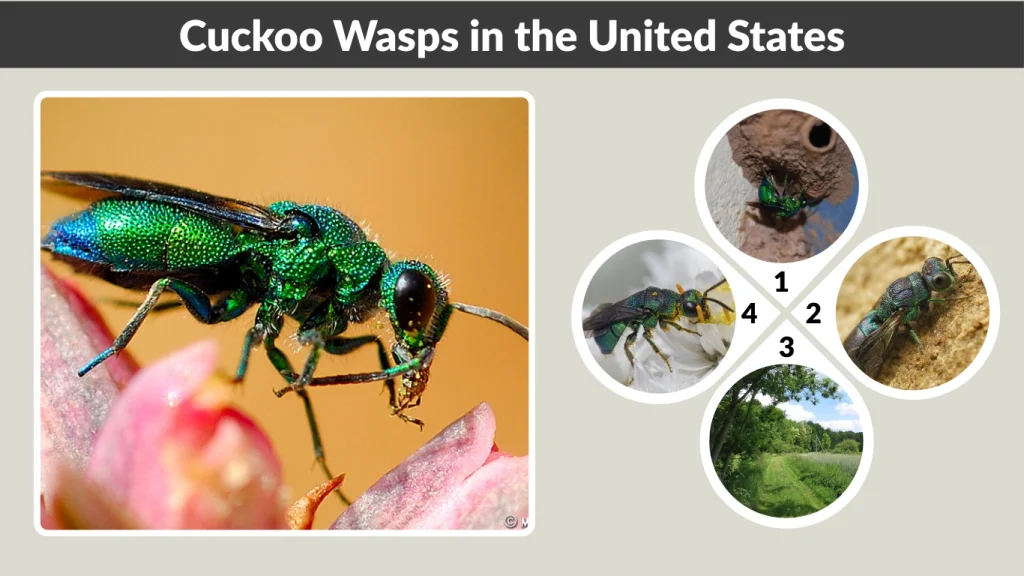
Cuckoo wasps are well-distributed across the U.S., but some regions have higher populations due to favorable climates and host availability.
- Florida – Warm, humid conditions support diverse cuckoo wasp species, often found near solitary bee nests in gardens.
- Texas – Known for a variety of cuckoo wasps adapted to dry, hot conditions, often found around sandy soils.
- Georgia – Frequent in gardens and wooded areas, especially near bee hotels or natural nesting spots.
- UK Presence (bonus) – In southern England and Wales, cuckoo wasps are rarer but still observed in sunny habitats, making them species of conservation interest.
Behavior and Adaptations
Cuckoo wasps are masters of stealth and survival. Their most notable behavior is parasitism, where they exploit the nests of solitary bees and wasps. Instead of attacking directly, they patiently wait for the host to leave and then slip inside to lay their eggs. To protect themselves from retaliation, they have several adaptations:
- Curling into a ball (conglobation) to shield vulnerable body parts.
- Tough exoskeleton that resists stings and bites.
- Metallic coloration that not only dazzles but may act as camouflage in sunlight.
These features make cuckoo wasps one of the most resilient and specialized insects in their ecosystem.
Importance in Ecosystem
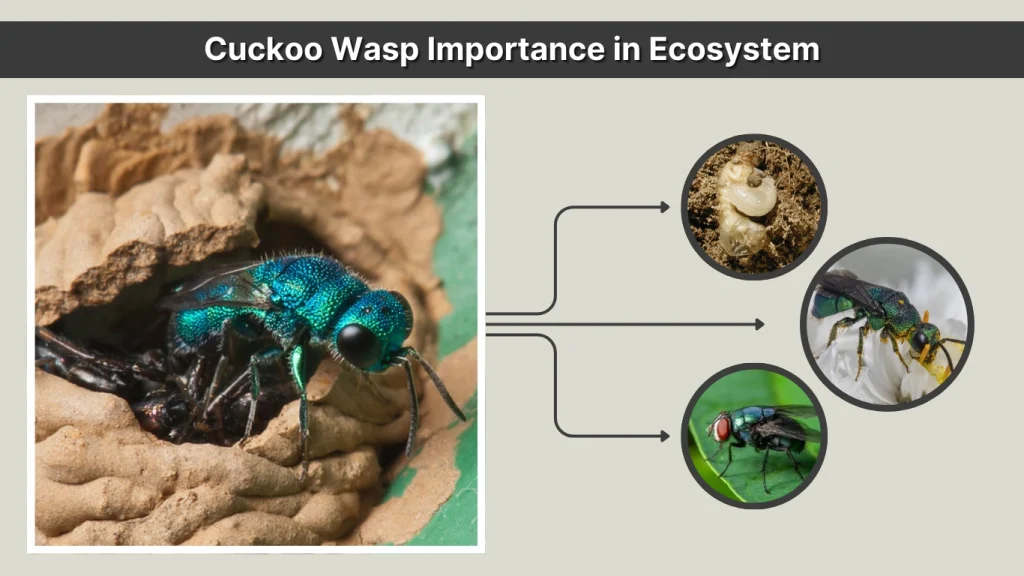
Although they are parasites, cuckoo wasps play an essential role in nature. By targeting solitary bees and wasps, they help regulate insect populations and maintain ecological balance. Their presence also signals a healthy environment, as they depend on abundant host species. Additionally, their iridescent beauty draws the interest of entomologists, wildlife photographers, and nature lovers, highlighting the diversity of insect life.
Cuckoo Wasps in House: Should You Worry?
Occasionally, cuckoo wasps may wander indoors, especially during warm months when they are active. However, they are not pests and cause no harm to people, pets, or property. If you find one in your home, it’s best to gently guide it outside. Unlike paper wasps or hornets, cuckoo wasps will not build nests inside houses or attack humans. Their accidental indoor visits are harmless and short-lived.
Difference Between Cuckoo Wasp and Other Wasps

Cuckoo wasps stand apart from other wasp species due to their size, color, and lifestyle.
- Paper Wasps: Unlike paper wasps, which build umbrella-shaped nests and live socially, cuckoo wasps are solitary and parasitic. They never create their own nests.
- Mud Dauber Wasps: Mud daubers are solitary nest builders that craft mud nests to raise their young. Cuckoo wasps, on the other hand, infiltrate these nests and lay their eggs inside.
- Cuckoo Bees: While cuckoo bees also lay eggs in the nests of other bees, cuckoo wasps are distinct for their jewel-like metallic exoskeleton and their strong armor-like defense.
These comparisons highlight cuckoo wasps as unique specialists among parasitic insects.
Conservation Status
Most cuckoo wasp species are not endangered, but their populations depend heavily on the abundance of host insects. Habitat loss, pesticide use, and reduced numbers of solitary bees and wasps can affect cuckoo wasp survival. In some regions, like the UK, certain species are considered rare and monitored for conservation. Encouraging pollinator-friendly habitats, planting wildflowers, and reducing chemical use in gardens can indirectly help protect cuckoo wasp populations.
FAQs
What is the scientific name of the cuckoo wasp?
Cuckoo wasps belong to the family Chrysididae, within the order Hymenoptera. This family includes thousands of species, each with its own genus and scientific classification. While the family name remains Chrysididae, individual species vary, which is why the exact scientific name depends on the specific type of cuckoo wasp.
Do cuckoo wasps sting humans?
Most cuckoo wasps cannot sting humans because their ovipositor is adapted for laying eggs, not delivering venom. Unlike hornets or paper wasps, they do not use aggression as a defense. Instead, they protect themselves by curling into a ball. Even if pricked, it is painless and medically harmless.
Where are cuckoo wasps found?
Cuckoo wasps are found worldwide, especially in warm, sunny regions where solitary bees and wasps build nests. In the U.S., they are common in states like Florida, Texas, and Georgia. In Europe, including the UK, they appear in sunny meadows and gardens. Their global spread makes them a truly widespread insect.
Are cuckoo wasps dangerous?
No, cuckoo wasps are harmless to humans. They do not sting aggressively, spread disease, or damage property. Their parasitic lifestyle only affects their insect hosts, such as solitary bees and wasps. For humans, they are fascinating insects to observe, admired for their shimmering jewel-like appearance rather than feared.
What do cuckoo wasps eat?
Adult cuckoo wasps mainly feed on nectar from flowers, helping them survive and providing incidental pollination. Their larvae, however, feed on the eggs, larvae, or stored food of host insects inside the nests they invade. This dual feeding behavior ensures their survival without the need to build nests themselves.
