
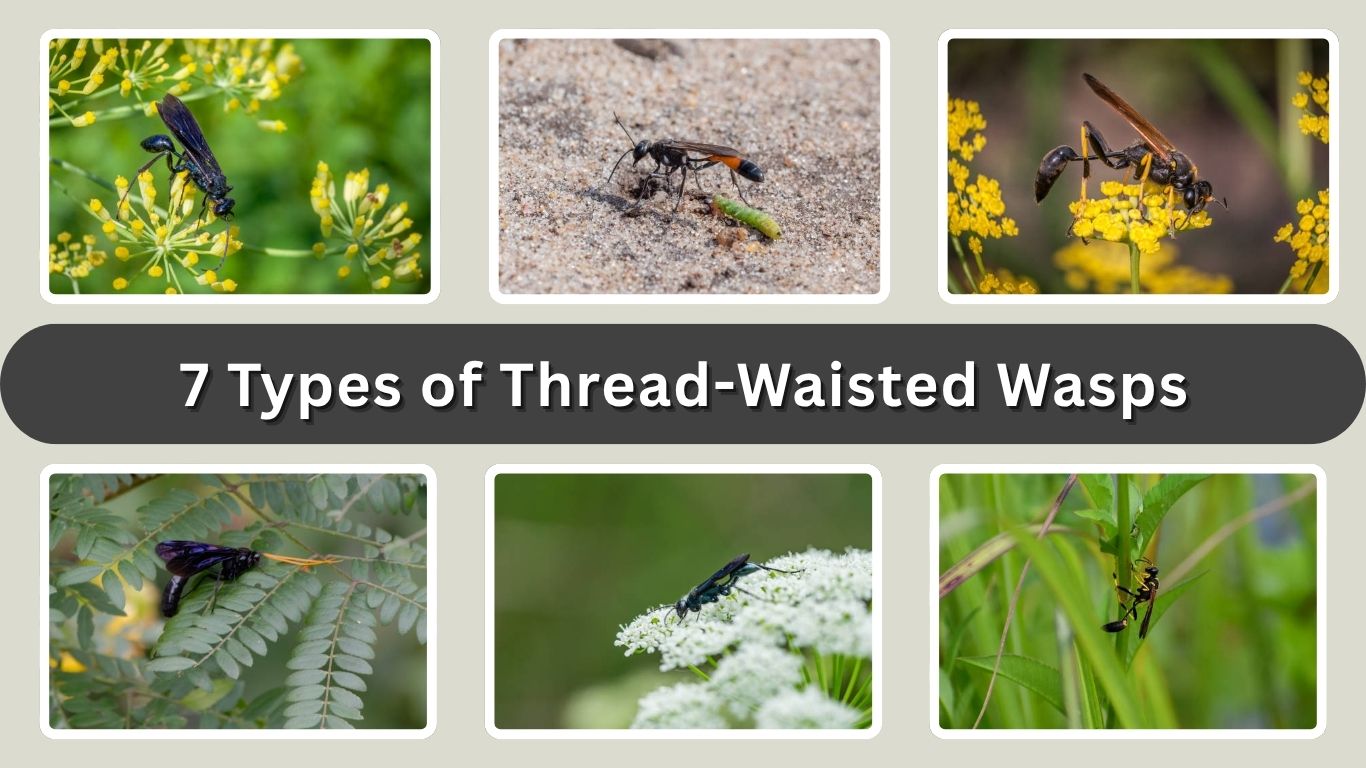
Thread-waisted wasps are a fascinating group of solitary wasps known for their extremely narrow “thread-like” waist and graceful appearance. Despite their intimidating look, they are generally non-aggressive and play an important role in controlling pest populations. These wasps can be found in gardens, forests, and open landscapes, where they hunt insects and build unique nests in soil or mud. Many species also visit flowers for nectar, contributing to pollination. In this guide, you will discover 7 different types of thread-waisted wasps and their key features.
1. Great Golden Digger Wasp
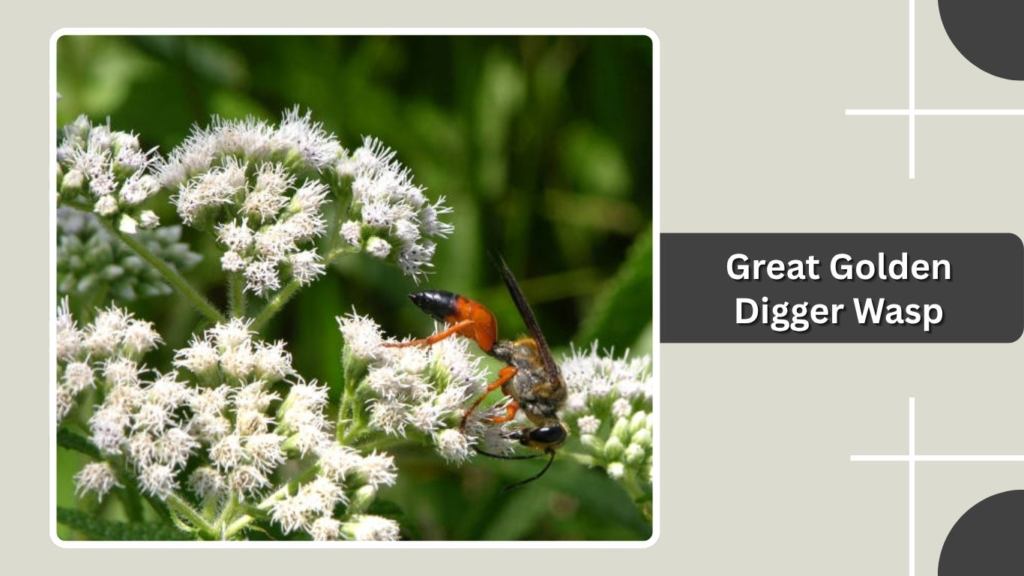
The Great Golden Digger Wasp is a highly recognizable thread-waisted wasp known for its bright golden hairs and graceful, slender body. It is often seen flying low over the ground in search of prey or visiting flowers for nectar. Despite its somewhat intimidating appearance, this wasp is solitary and generally harmless to humans. It plays an important ecological role by controlling populations of insects such as grasshoppers and crickets, making it beneficial for gardens and natural habitats.
Identification
- Medium to large size, typically 2–3 cm long
- Slender body with a very narrow, thread-like waist
- Thorax covered in dense golden-yellow hairs
- Black or dark abdomen, sometimes with a slight metallic sheen
- Long, spiny legs adapted for digging in soil
- Transparent wings with a light amber or brownish tint
Habitat and Distribution
The Great Golden Digger Wasp is commonly found in open, sunny environments where the soil is loose and suitable for digging. Typical habitats include gardens, meadows, fields, sandy areas, and roadside edges. It prefers well-drained soils that allow easy excavation of nesting burrows. This species is widely distributed across North America, particularly in the United States and southern Canada. During the summer months, adults are frequently seen visiting flowers for nectar or flying close to the ground while searching for prey or nesting sites. They are especially active on warm, sunny days.
Behavior and Diet
This wasp is solitary, meaning each female builds and provisions her own nest without the help of a colony. Adult Great Golden Digger Wasps feed primarily on nectar from flowering plants, contributing to pollination. The female hunts insects such as grasshoppers, katydids, and crickets. She paralyzes her prey with a sting and transports it back to her burrow. These prey items serve as food for her developing larvae. The wasp is not aggressive and rarely stings humans unless handled or provoked.
Lifecycle
The lifecycle begins when the female excavates a burrow in the soil, creating several chambers for egg-laying. She hunts and paralyzes prey, placing one or more insects into each chamber before laying a single egg on the stored food. After hatching, the larva feeds on the paralyzed prey, ensuring a fresh food supply. The larva grows and eventually pupates within the burrow. Depending on environmental conditions, development may take several weeks. The adult wasp later emerges from the soil, ready to reproduce and continue the cycle.
2. Black-and-Yellow Mud Dauber
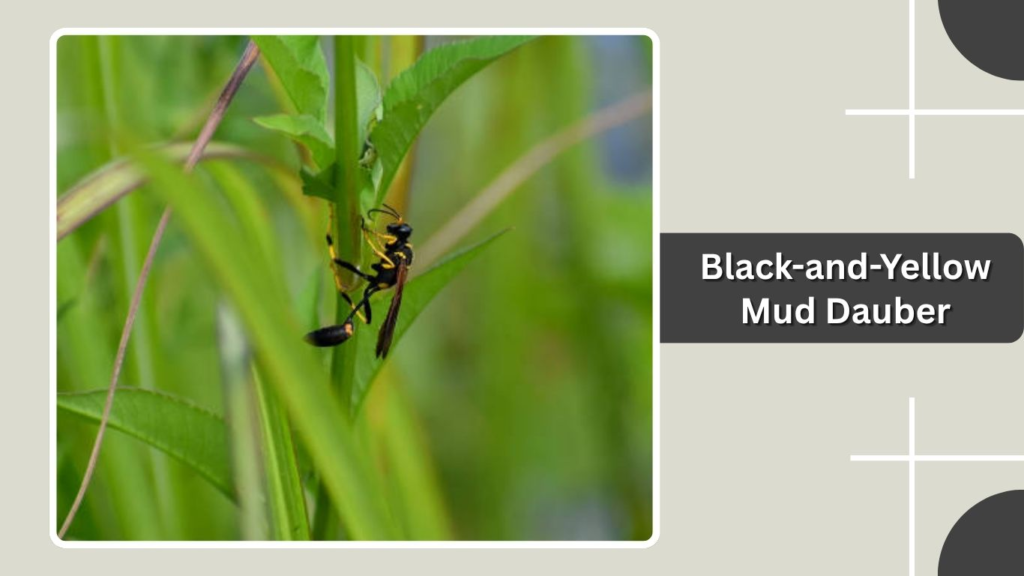
The Black-and-Yellow Mud Dauber is a slender thread-waisted wasp known for building nests out of mud. It is commonly seen around homes, barns, and sheltered outdoor structures. Despite its wasp-like appearance, it is non-aggressive and beneficial, as it helps control spider populations.
Identification
- Medium size, about 2–3 cm long
- Very slender body with a long, narrow waist
- Black body with bright yellow markings
- Long legs that dangle during flight
- Smooth, shiny appearance
- Clear wings with a slight dark tint
Habitat and Distribution
The Black-and-Yellow Mud Dauber is commonly found in warm, sheltered areas such as under eaves, inside sheds, garages, and barns. It prefers locations where mud is available for nest construction and spiders are abundant for feeding larvae. This species is widely distributed across North America. It thrives in both rural and suburban environments. Adults are most active during spring and summer, often seen collecting mud or flying around structures where they build their nests.
Behavior and Diet
This wasp is solitary and non-aggressive. Adults primarily feed on nectar from flowers. The female builds tube-shaped mud nests attached to walls or ceilings. She hunts spiders, paralyzes them, and places them inside the nest as food for her larvae. Each nest cell contains several spiders and one egg. These wasps rarely sting and usually avoid human interaction, making them harmless and beneficial.
Lifecycle
The female constructs a mud nest divided into several chambers. In each chamber, she places paralyzed spiders and lays a single egg. The larva hatches and feeds on the stored spiders. After completing development, it pupates inside the mud cell. The adult eventually emerges by breaking through the mud wall. The cycle repeats as new adults build nests and reproduce.
3. Blue Mud Dauber
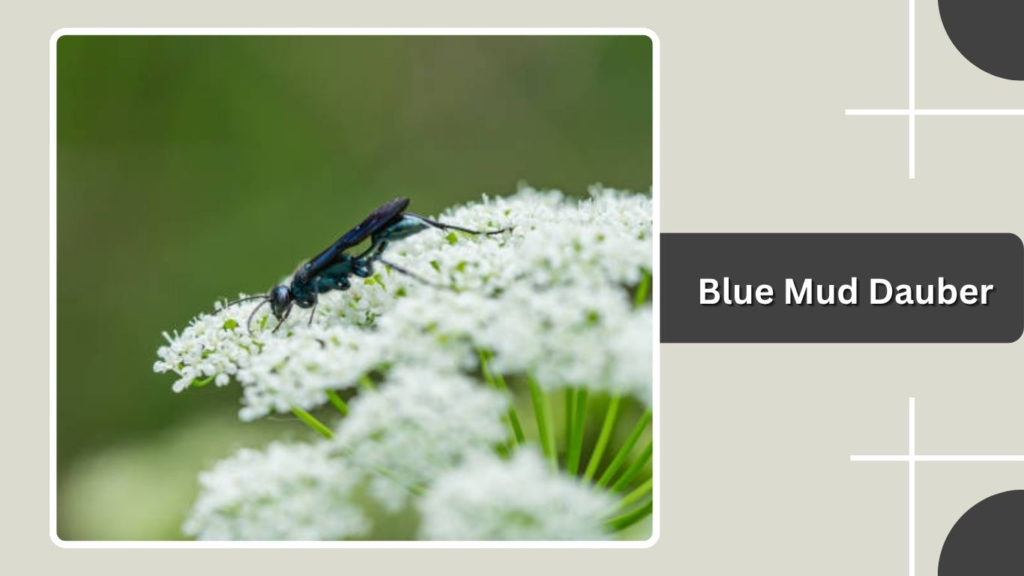
The Blue Mud Dauber is a sleek, metallic-looking thread-waisted wasp known for its deep blue coloration. It is commonly found around buildings and open areas where it searches for spiders and nesting sites. Despite its bold appearance, it is non-aggressive and beneficial to humans.
Identification
- Medium size, about 2–3 cm long
- Slender body with a narrow, thread-like waist
- Metallic dark blue or steel-blue coloration
- Smooth, shiny body surface
- Long legs that hang during flight
- Transparent wings with a dark tint
Habitat and Distribution
The Blue Mud Dauber is widely found in North America and prefers warm, open environments. It is commonly seen around homes, barns, bridges, and other structures where it can find sheltered nesting sites. Unlike some mud daubers, it often reuses or modifies old mud nests built by other wasps. It is frequently active during spring and summer and may be seen flying slowly around walls or searching for spiders.
Behavior and Diet
This wasp is solitary and non-aggressive. Adults feed mainly on nectar, contributing to pollination. The female hunts spiders, especially black widows, which she paralyzes and stores in nests for her larvae. Interestingly, it often cleans out old nests made by other mud daubers before using them. It rarely stings humans and is considered highly beneficial for controlling spider populations.
Lifecycle
The female uses existing mud nests or builds her own, dividing them into chambers. She fills each chamber with paralyzed spiders and lays a single egg. The larva hatches and feeds on the stored prey. After growing, it pupates inside the chamber. Eventually, the adult emerges by breaking through the nest and begins the cycle again.
4. Organ Pipe Mud Dauber
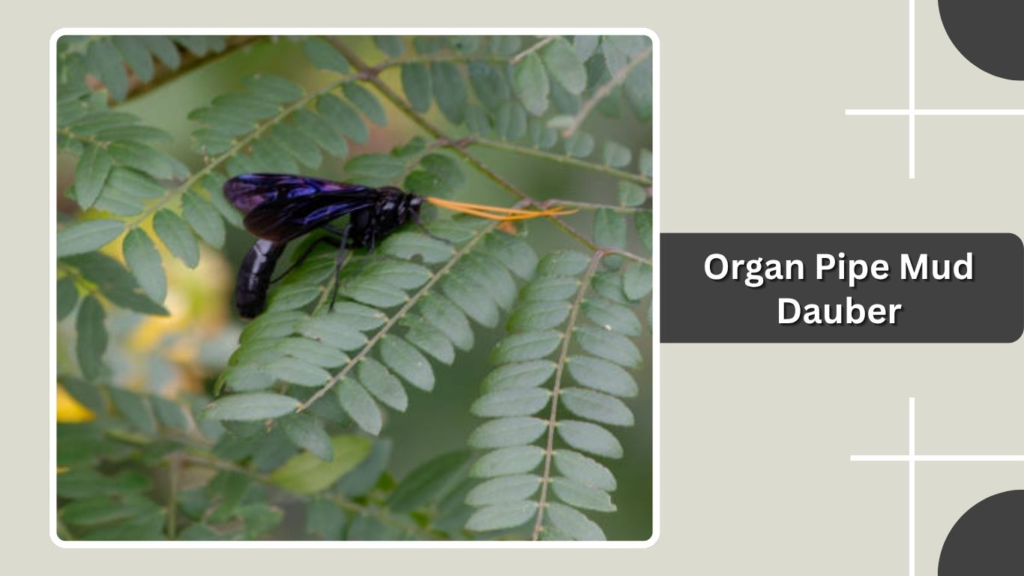
The Organ Pipe Mud Dauber is a unique thread-waisted wasp known for constructing long, pipe-like mud nests that resemble organ pipes. These nests are often clustered together on walls or rock surfaces. Despite its unusual nesting behavior, this wasp is harmless and beneficial, helping control spider populations.
Identification
- Medium size, about 2–3 cm long
- Slender body with a long, narrow waist
- Dark body, usually black or dark blue
- Smooth and slightly glossy appearance
- Long legs that dangle during flight
- Clear to slightly tinted wings
Habitat and Distribution
The Organ Pipe Mud Dauber is commonly found in warm regions, especially in the southwestern United States and parts of Central and South America. It prefers sheltered locations such as cliff faces, walls, bridges, and building exteriors where it can attach its long mud nests. These wasps thrive in dry, sunny environments where mud and prey are available. They are most active during spring and summer.
Behavior and Diet
This species is solitary and non-aggressive. Adults feed primarily on nectar from flowers. The female constructs long, cylindrical mud tubes and provisions them with paralyzed spiders. Each tube may contain multiple chambers for developing larvae. The wasp rarely stings humans and generally avoids interaction. Its role in controlling spider populations makes it beneficial in both natural and human environments.
Lifecycle
The female builds organ pipe–like mud tubes and divides them into chambers. She fills each chamber with paralyzed spiders and lays an egg inside. After hatching, the larva feeds on the stored prey. It then pupates within the mud structure. Once fully developed, the adult emerges by breaking through the mud tube and begins the cycle again.
5. Sceliphron Mud Dauber
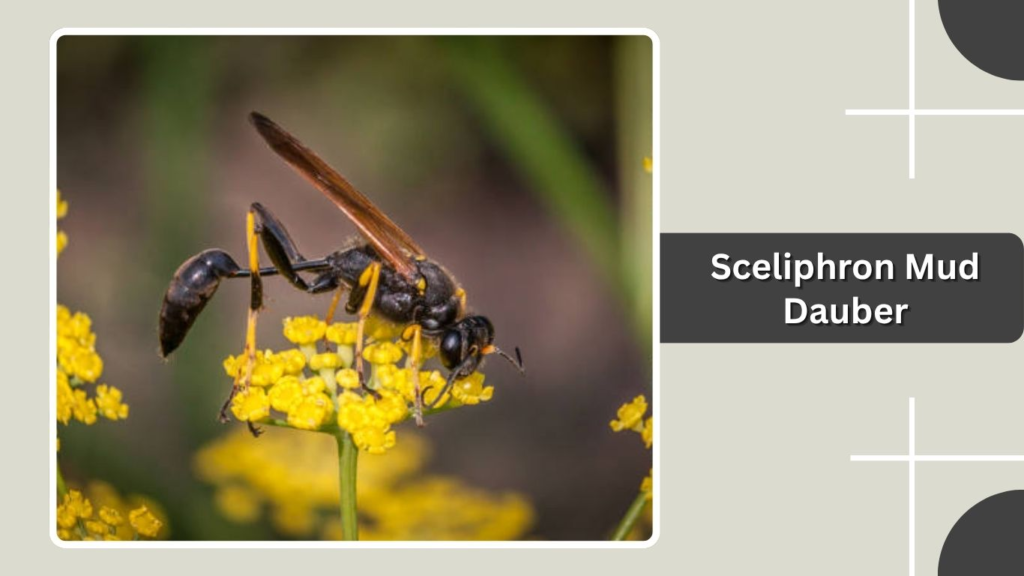
The Sceliphron Mud Dauber is a common thread-waisted wasp known for its neat, mud-built nests and slender body. It belongs to a group of wasps that are often seen around buildings and sheltered areas. Although it looks similar to stinging wasps, it is non-aggressive and beneficial.
Identification
- Medium size, about 2–3 cm long
- Slender body with a very thin, thread-like waist
- Black body with yellow markings (varies by species)
- Long legs that hang during flight
- Smooth, shiny body surface
- Clear or slightly smoky wings
Habitat and Distribution
Sceliphron Mud Daubers are widely distributed across North America, Europe, Asia, and other warm regions. They prefer sheltered locations such as walls, ceilings, barns, sheds, and bridges where they can build mud nests. These wasps are commonly found in both urban and rural environments. They are most active during warmer months, especially spring and summer, when they gather mud and hunt for prey.
Behavior and Diet
These wasps are solitary and non-aggressive. Adults feed mainly on nectar from flowers, contributing to pollination. The female builds small mud nests composed of several cells and fills each with paralyzed spiders. These spiders serve as food for the developing larvae. Sceliphron Mud Daubers rarely sting humans and generally avoid contact, making them harmless and helpful insects.
Lifecycle
The female constructs a mud nest with multiple chambers. In each chamber, she places several paralyzed spiders and lays one egg. After hatching, the larva feeds on the stored spiders until fully grown. It then pupates inside the mud cell. The adult eventually emerges by breaking through the nest wall and begins the cycle again by building new nests and reproducing.
6. Ammophila Sand Wasp
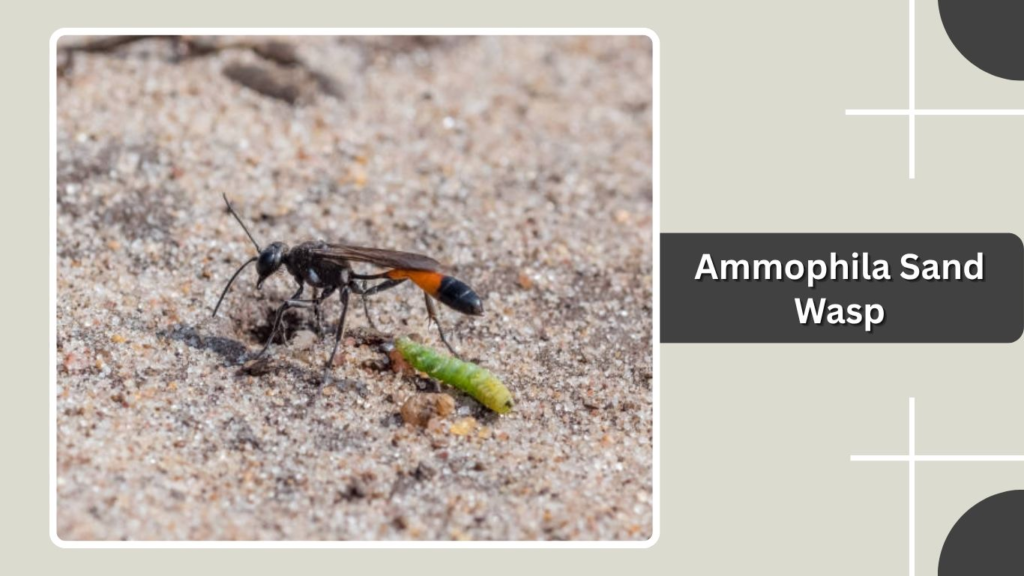
The Ammophila Sand Wasp is a slender, elegant thread-waisted wasp known for its extremely thin waist and graceful movements. It is often seen flying close to the ground in sandy areas. This wasp is solitary and beneficial, helping control caterpillar populations in natural ecosystems.
Identification
- Medium size, about 2–3 cm long
- Very long, thread-like waist (extremely narrow)
- Black body with a reddish or orange abdomen segment
- Slender, elongated body shape
- Long legs adapted for walking and digging
- Clear wings with a slight tint
Habitat and Distribution
The Ammophila Sand Wasp is commonly found in sandy or loose soil environments such as beaches, dunes, fields, and open woodlands. It prefers dry, sunny habitats where it can easily dig burrows. This species is widely distributed across North America, Europe, and parts of Asia. Adults are most active during warm months and are often seen moving quickly along the ground or visiting flowers.
Behavior and Diet
This wasp is solitary and non-aggressive. Adults feed mainly on nectar, making them occasional pollinators. The female hunts caterpillars, which she paralyzes and places in underground burrows as food for her larvae. She is known for her careful and methodical nesting behavior. The wasp rarely stings humans and typically avoids interaction unless disturbed.
Lifecycle
The female digs a burrow in sandy soil and creates a chamber for her egg. She hunts and paralyzes a caterpillar, placing it inside the burrow before laying an egg on it. After hatching, the larva feeds on the stored prey. Once fully developed, it pupates within the burrow. The adult eventually emerges and begins the cycle again.
7. Chalybion Mud Dauber
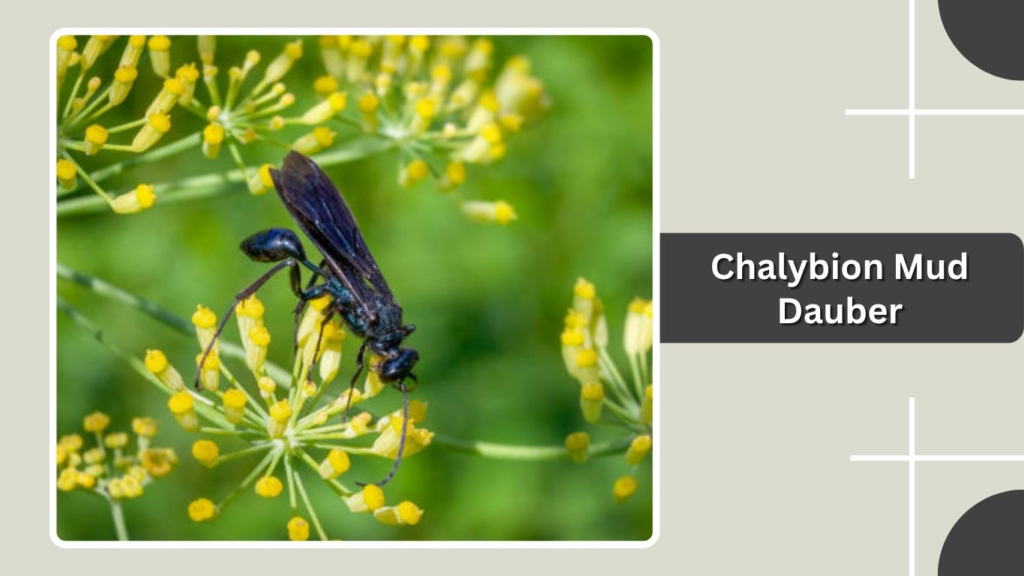
The Chalybion Mud Dauber is a sleek, metallic-blue thread-waisted wasp known for its smooth body and habit of reusing old mud nests. It is commonly seen around buildings and open areas. Despite its bold appearance, it is non-aggressive and beneficial, especially for controlling spider populations.
Identification
- Medium size, about 2–3 cm long
- Slender body with a narrow, thread-like waist
- Metallic blue or steel-blue coloration
- Smooth, shiny body surface
- Long legs that hang during flight
- Dark-tinted, transparent wings
Habitat and Distribution
The Chalybion Mud Dauber is widely distributed across North America and is often found in gardens, urban areas, barns, and around buildings. It prefers sheltered spots such as walls, eaves, and bridges where old mud nests are available. This species thrives in warm climates and is most active during spring and summer months when nesting and hunting activity is at its peak.
Behavior and Diet
This wasp is solitary and non-aggressive. Adults feed mainly on nectar from flowers. Unlike some other mud daubers, it often reuses and cleans out old mud nests instead of building new ones. The female hunts spiders, particularly black widows, which she paralyzes and stores as food for her larvae. It rarely stings humans and is considered beneficial.
Lifecycle
The female locates an existing mud nest and prepares it for reuse. She fills each chamber with paralyzed spiders and lays one egg per chamber. After hatching, the larva feeds on the stored prey. It then pupates inside the nest. The adult eventually emerges by breaking through the mud wall and begins the cycle again.
FAQs
Are thread-waisted wasps dangerous to humans?
Thread-waisted wasps are generally not dangerous. They are solitary and non-aggressive, meaning they do not defend colonies like social wasps. While they can sting, it usually happens only if they are handled or threatened. Most species prefer to avoid human interaction altogether.
What do thread-waisted wasps eat?
Adult thread-waisted wasps mainly feed on nectar from flowers, making them occasional pollinators. Their larvae, however, feed on paralyzed prey such as spiders, caterpillars, or grasshoppers, which are provided by the female wasp in the nest.
Where do thread-waisted wasps build their nests?
These wasps build nests in a variety of places depending on the species. Some dig burrows in sandy soil, while others create mud nests attached to walls, ceilings, or rocks. Many prefer sheltered, sunny environments for nesting.
Are thread-waisted wasps beneficial?
Yes, they are very beneficial. They help control pest populations by hunting insects like caterpillars, spiders, and grasshoppers. Additionally, adults contribute to pollination when they visit flowers for nectar.
How long do thread-waisted wasps live?
The lifespan varies by stage. Larvae develop inside nests over several weeks, feeding on stored prey. Adult wasps typically live for a few weeks to a couple of months, during which they focus on feeding, mating, and reproducing.
