
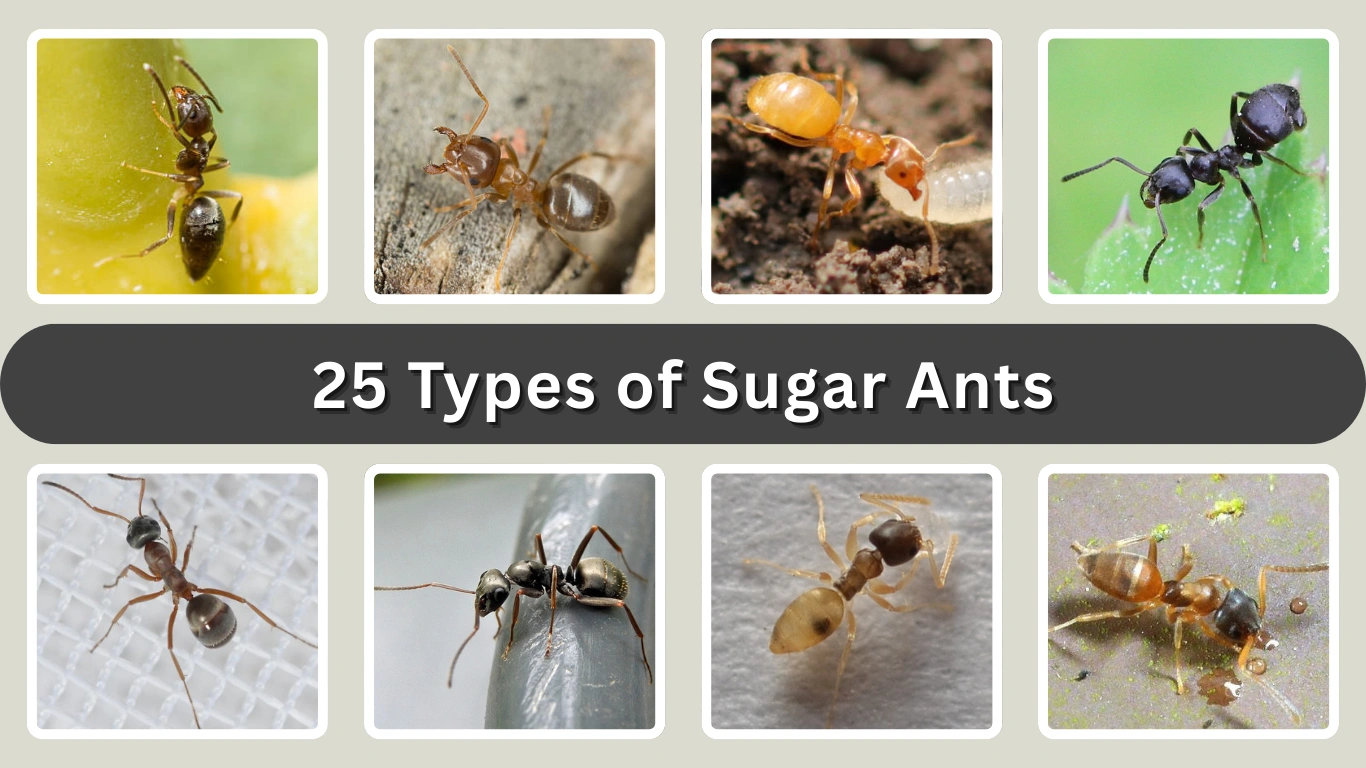
Sugar ants are a diverse group of species known for their attraction to sweet foods, both in the wild and inside homes. Found across forests, grasslands, and urban landscapes worldwide, these ants play important ecological roles as nectar feeders, honeydew collectors, and scavengers. Their behaviors, habitats, and colony structures vary widely, making sugar ants a fascinating group to study and observe in both natural and human environments.
1. Camponotus consobrinus
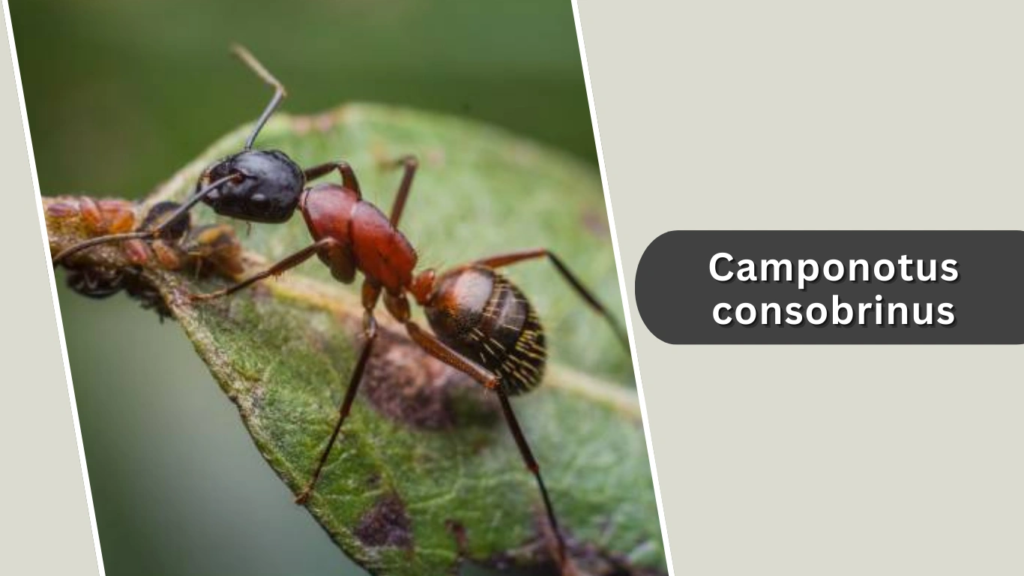
Camponotus consobrinus, commonly known as the banded sugar ant, is one of the most recognizable sugar ant species in Australia. Known for visiting homes in search of sweet foods, this species is admired for its striking coloration and complex colony behavior.
Identification
- Workers have a distinct orange-brown band on the abdomen
- Head and thorax are typically black or dark brown
- Workers vary in size due to polymorphism
- Large queens with robust bodies
- Nocturnal foragers with excellent climbing ability
Habitat
This species inhabits woodlands, grasslands, forests, and suburban areas across Australia. They commonly nest in soil, under logs, in tree cavities, and sometimes near human structures. Their flexible nesting preferences help them thrive in both natural and urban environments.
Behaviors
Camponotus consobrinus is primarily nocturnal, foraging at night for sweets, nectar, honeydew, and food scraps. They form long foraging trails and can enter homes in search of sugary substances. Colonies are large, with a clear division between minor and major workers who perform specialized tasks.
Diet and Lifecycle
Sugar ants feed on nectar, honeydew from aphids, plant secretions, and household sugars. Larvae are fed protein sources such as insects. Queens can live for many years, and colonies expand slowly over time. Workers transition through roles as they age, maintaining brood, the nest, and food supplies.
2. Camponotus humilior
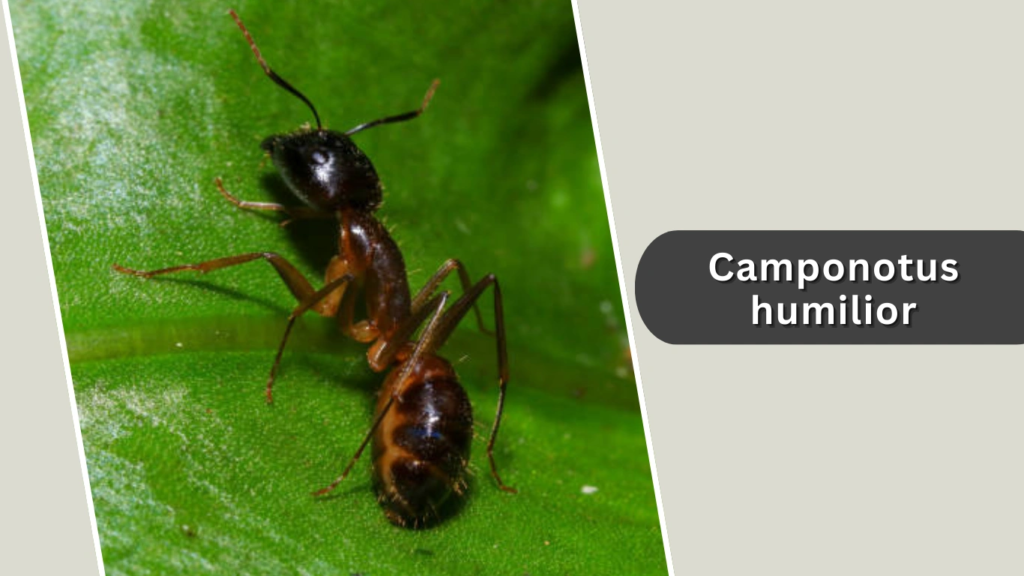
Camponotus humilior is a lesser-known sugar ant species found in various forested and dry regions. Though not as commonly encountered as some other Camponotus species, it plays an important ecological role as a nocturnal forager and scavenger.
Identification
- Workers are medium-sized with a matte dark brown to black body
- Slight size variation between minors and majors
- Smooth exoskeleton with minimal shine
- Long legs and antennae suited for ground foraging
- Queens are larger with a more robust thorax
Habitat
This species occupies dry forests, open woodlands, and shrubland environments, often nesting in soil, beneath stones, or in decaying wood. It prefers warm climates and is typically found in regions with scattered vegetation and loose soil for tunnel construction.
Behaviors
Camponotus humilior is mostly nocturnal, emerging at dusk to forage for sugary substances and small insects. Colonies maintain structured foraging lines and exhibit a clear division of labor. Workers are relatively timid compared to aggressive ant species and retreat quickly when disturbed.
Diet and Lifecycle
Its diet consists primarily of nectar, honeydew from sap-feeding insects, plant juices, and small arthropods. Colonies grow slowly, with queens laying eggs throughout the year in warm climates. Workers shift roles as they age, supporting brood care, nest maintenance, and nocturnal foraging. Colonies can persist for many years in stable environments.
3. Camponotus irritans
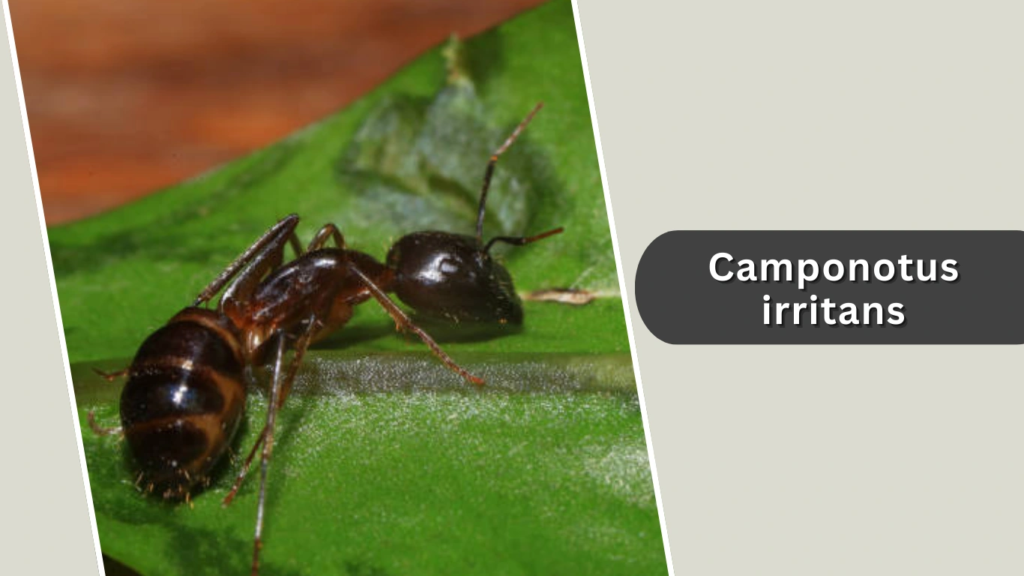
Camponotus irritans is a widespread sugar ant species found across Asia and the Pacific. Recognized for its adaptability and frequent presence near human dwellings, it thrives in both natural and urban landscapes.
Identification
- Workers range from small to medium-sized with noticeable caste variation
- Typically black or very dark brown in color
- Smooth, glossy body surface
- Long legs and antennae suited for fast, agile movement
- Queens are larger with an elongated thorax
Habitat
This species inhabits tropical forests, mangroves, plantations, gardens, and urban structures throughout Southeast Asia and the Pacific Islands. They nest in soil, rotting logs, tree hollows, and sometimes in wall crevices or under pavement stones. Their wide habitat tolerance contributes to their large distribution.
Behaviors
Camponotus irritans is an active forager, often seen at dusk or during nighttime hours. Workers form loose foraging trails and frequently visit flowers, tree canopies, and food waste areas in search of sugary substances. Colonies maintain a structured caste system with minors tending brood and majors defending the nest.
Diet and Lifecycle
Sugar sources such as nectar, honeydew, fruit juices, and household sweets make up most of their diet. They also consume small insects for protein. Queens lay eggs throughout the year in warm climates, allowing colonies to expand steadily. Workers progress through various tasks—from caring for larvae to foraging—as they age.
4. Camponotus chromaiodes

Camponotus chromaiodes, often called the red carpenter ant, is a striking sugar ant species native to North America. Known for its bold coloration and large colonies, it is commonly seen in forests and occasionally near homes.
Identification
- Workers have a bright reddish thorax with a black head and abdomen
- Strong caste variation, including robust major workers
- Smooth, slightly glossy exoskeleton
- Large, powerful mandibles on major workers
- Queens are significantly larger and deeply colored
Habitat
This species inhabits deciduous forests, pine woodlands, and suburban areas across the eastern United States. They nest in rotting logs, hollow trees, soil mounds, and occasionally in wooden structures. They prefer moist, shaded areas but can adapt to a variety of environments.
Behaviors
Camponotus chromaiodes is primarily a nocturnal forager, forming well-defined trails to food sources. Workers collect sugary liquids, insect prey, and plant juices. Colonies are organized with distinct roles between minors (brood care) and majors (defense). They are generally shy but will defend nests if threatened.
Diet and Lifecycle
This species feeds on nectar, honeydew, tree sap, fruit juices, and small insects. Larvae require protein-rich food, while adults prefer carbohydrates. Queens establish new colonies slowly, and mature colonies may contain several thousand workers. Workers transition across tasks as they age, ensuring colony efficiency.
5. Camponotus pennsylvanicus

Camponotus pennsylvanicus, widely known as the black carpenter ant, is one of the most familiar sugar ants in North America. It is frequently seen in forests and occasionally enters homes in search of sweet foods.
Identification
- Workers are entirely black with little to no color variation
- Strong caste differences, with large-headed major workers
- Smooth, matte to slightly glossy exoskeleton
- Long legs allow fast movement across vegetation and structures
- Queens are large and uniformly black
Habitat
This species thrives in deciduous forests, pine woodlands, and suburban environments throughout the eastern and central United States. Nests are usually found in rotting logs, tree cavities, or moist wood. Although often associated with homes, they do not eat wood but excavate it to expand chambers.
Behaviors
Camponotus pennsylvanicus is primarily nocturnal, foraging during the evening and night. Workers seek out sugary liquids such as sap, nectar, and honeydew. They establish long, stable foraging trails and show well-developed division of labor between minors and majors. Colonies are cautious but defend their nest vigorously when disturbed.
Diet and Lifecycle
Adults feed mainly on carbohydrates like honeydew and plant nectars, while larvae require protein from insects or scavenged arthropods. The colony grows slowly, beginning with a single queen and expanding over several years. Mature colonies may reach several thousand workers, with individuals shifting roles as they age.
6. Camponotus vicinus

Camponotus vicinus is a common sugar ant species in western North America. Known for its adaptability and frequent presence near human structures, it thrives in both natural and urban habitats.
Identification
- Workers vary from reddish-brown to black
- Noticeable size differences between minors and majors
- Smooth, slightly shiny exoskeleton
- Long legs suited for agile ground and wall foraging
- Queens are large with a robust thorax
Habitat
This species inhabits dry forests, chaparral, grasslands, and suburban areas across the western United States and parts of Canada. Nests are found in soil, rotting stumps, logs, or occasionally inside wall voids or foundations. It tolerates dry environments well compared to many sugar ants.
Behaviors
Camponotus vicinus is primarily crepuscular and nocturnal, foraging in the evening and at night. Workers gather sweet liquids, plant secretions, and insects. Colonies maintain loose foraging trails and show strong task division between minors (brood care) and majors (defense and heavy labor).
Diet and Lifecycle
The diet consists largely of nectar, honeydew, sap, fruit juices, and small arthropods. Larvae receive protein-rich foods, while adults prefer sugars for energy. Queens establish colonies slowly, often taking several years to reach maturity. Workers transition through responsibilities as they age, helping maintain colony stability over many seasons.
7. Camponotus semitestaceus

Camponotus semitestaceus is a common sugar ant found throughout western North America. Known for its calm demeanor and preference for natural woodland habitats, it is frequently encountered on trees and logs during warm months.
Identification
- Workers display a two-tone body: reddish-brown thorax and darker head and abdomen
- Minor workers are small, while majors have large, well-defined heads
- Smooth to slightly glossy exoskeleton
- Long legs and antennae suited for arboreal and ground foraging
- Queens are much larger with an enlarged thorax
Habitat
This species inhabits oak woodlands, grasslands, mixed forests, and shrublands, particularly in California and surrounding regions. Nests are built in rotting logs, tree cavities, or occasionally in soil near decaying wood. They prefer warm, dry climates with ample vegetation.
Behaviors
Camponotus semitestaceus is mostly nocturnal, although it may forage during cooler daylight hours. Workers collect nectar, honeydew, and plant juices, often tending aphids in tree canopies. Colonies establish defined foraging paths and exhibit strong cooperation between minors and majors.
Diet and Lifecycle
The species feeds on sugary plant secretions, honeydew, nectar, and small insects for protein. Queens lay eggs throughout the warm season, and colonies expand slowly over several years. Workers progress through various tasks—brood care, nest maintenance, and nighttime foraging—as they mature.
8. Camponotus floridanus

Camponotus floridanus, also known as the Florida carpenter ant, is a prominent sugar ant species in the southeastern United States. It is well known for entering homes in search of sweets and for forming large, persistent colonies.
Identification
- Workers have a reddish-brown thorax with a dark brown or black head and abdomen
- Clear caste separation between minors and large-headed majors
- Smooth, slightly glossy body surface
- Strong mandibles on majors used for defense
- Queens are large, with a deep reddish thorax
Habitat
This species is common in subtropical forests, pine flatwoods, mangroves, and residential areas across Florida and nearby states. Nests are found in tree cavities, rotting logs, soil near roots, and sometimes inside walls, attics, or window frames. It thrives in warm, humid environments.
Behaviors
Camponotus floridanus is primarily nocturnal, forming well-established foraging trails that lead to sweet food sources. Workers frequently visit kitchens, patios, and outdoor trash bins. Colonies are highly organized, with minors tending brood and majors defending the nest.
Diet and Lifecycle
Their diet consists of nectar, honeydew, sugary foods, fruit juices, and small insects. Adults favor carbohydrates, while larvae require protein. Queens produce eggs steadily in warm climates, and colonies may reach several thousand individuals. Workers shift tasks with age, maintaining foraging, brood care, and nest structure.
9. Camponotus herculeanus

Camponotus herculeanus, often called the black carpenter ant, is one of the largest sugar ant species found in northern regions. Common in boreal forests, it is known for nesting in wood and forming long-lived colonies.
Identification
- Large workers with a mostly black body and slight reddish tint on the thorax
- Pronounced caste system with massive-headed major workers
- Smooth, matte to lightly glossy exoskeleton
- Strong mandibles used for chewing wood and defense
- Queens are significantly larger and robust
Habitat
This species inhabits coniferous forests, mixed woodlands, and mountainous regions across northern Europe, Asia, and North America. Nests are often located in rotting logs, tree stumps, and decayed wood, though they may also use structural timber in cabins or sheds. They prefer cool climates.
Behaviors
Camponotus herculeanus is mostly crepuscular or nocturnal, foraging during cooler hours. Workers establish stable foraging trails and gather sweet plant secretions, honeydew, and occasional insect prey. Colonies show strong task specialization, with majors assisting in chewing and expanding wooden nest chambers.
Diet and Lifecycle
The species feeds on tree sap, honeydew, nectar, and soft-bodied insects. Adults prefer carbohydrates, while larvae rely on protein. Colonies grow slowly, with queens producing eggs for many years. Mature nests can persist for decades, containing thousands of workers that transition between tasks as they age.
10. Camponotus japonicus

Camponotus japonicus is a large and striking sugar ant species native to East Asia. Known for its glossy black coloration and strong presence in forests and urban areas, it is one of the most recognized ants in the region.
Identification
- Workers are glossy black with a smooth exoskeleton
- Clear caste differences, with large-headed major workers
- Long legs and antennae that aid in fast foraging
- Occasionally shows slight brown tint on legs or mandibles
- Queens are much larger and jet-black
Habitat
This species inhabits forests, grasslands, parks, gardens, and suburban areas across Japan, Korea, China, and surrounding regions. Nests are built in soil, rotting logs, tree bases, and sometimes under stones or pavement edges. It adapts well to both natural and human-modified habitats.
Behaviors
Camponotus japonicus is primarily nocturnal, but may forage in daylight during cool conditions. Workers form organized foraging trails to gather sugary liquids and small insects. Majors defend the colony, while minors handle brood care and routine nest tasks.
Diet and Lifecycle
The species feeds on nectar, honeydew, sugary plant secretions, fruit juices, and small arthropods. Adult ants rely on carbohydrates for energy, while larvae require protein prey. Queens lay eggs steadily throughout the warm season, and colonies may reach several thousand workers over time.
11. Tapinoma sessile
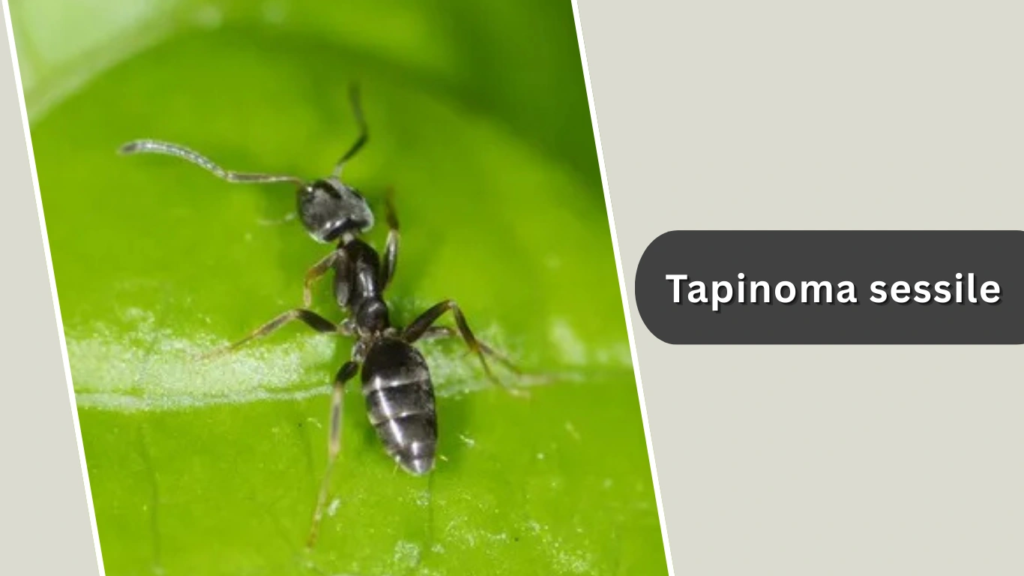
Tapinoma sessile, commonly known as the odorous house ant, is one of the most widespread sugar-loving ants in North America. They are famous for entering homes in search of sweets and producing a distinct coconut-like odor when crushed.
Identification
- Very small workers, typically brown to dark brown
- Monomorphic (no distinct major or minor castes)
- Smooth, glossy body surface
- Emits a noticeable sweet odor when disturbed
- Queens are slightly larger but similar in form
Habitat
This species thrives in forests, grasslands, urban environments, and residential areas across North America. Nests appear in soil, mulch, logs, under stones, inside walls, and beneath flooring. Highly adaptable, they can form large multi-nest networks known as “supercolonies.”
Behaviors
Tapinoma sessile is an opportunistic forager, active both day and night. Workers quickly discover sugary foods and establish strong foraging trails. They are non-aggressive but extremely persistent, often invading kitchens and patios. Colonies frequently bud, creating new nests nearby.
Diet and Lifecycle
This species feeds on sugary substances like nectar, honeydew, syrup, fruit juices, and food scraps. They also collect small insects for larval protein. Queens lay eggs throughout the warm months, and colonies grow rapidly due to multiple queens. Workers cycle through brood care and foraging duties as they age.
12. Tapinoma melanocephalum
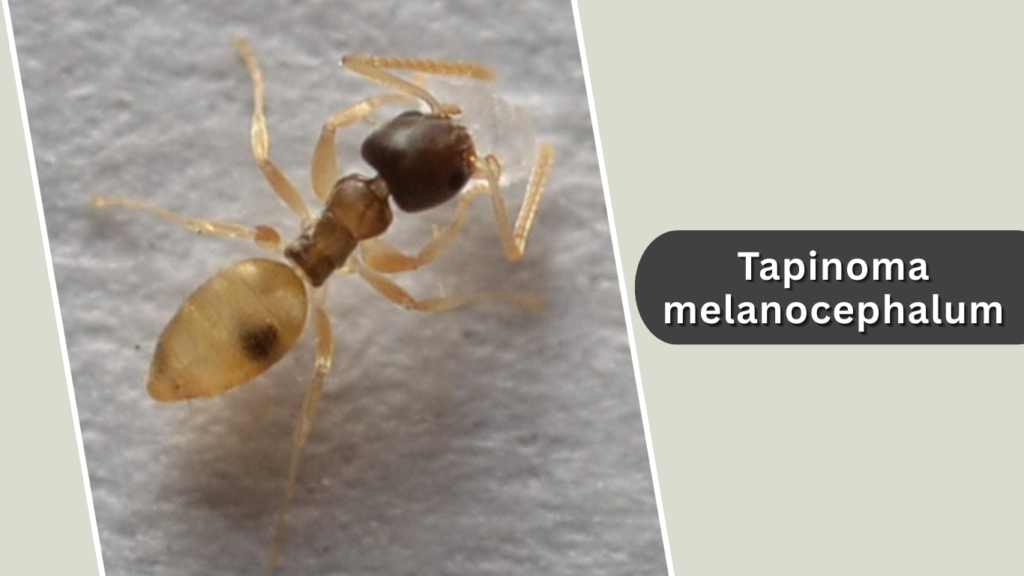
Tapinoma melanocephalum, widely known as the ghost ant, is a tiny, pale-colored species famous for invading homes and searching for sugary foods. Its near-translucent body makes it difficult to spot, contributing to its name.
Identification
- Very small workers with a dark head and pale, almost translucent abdomen
- Monomorphic, with no major worker caste
- Extremely quick and agile movements
- Smooth and glossy body texture
- Queens are larger but similarly bicolored
Habitat
This species is found in tropical and subtropical regions worldwide but often thrives indoors in cooler climates. Nests are located in soil, potted plants, wall voids, electrical outlets, and any warm, humid crevice. Their adaptability allows them to persist in both natural environments and human structures.
Behaviors
Tapinoma melanocephalum is a highly active forager, often appearing in kitchens, bathrooms, and pantries. Workers form loose, erratic trails rather than tightly organized lines. Colonies often split into multiple nests (budding), making infestations difficult to eliminate.
Diet and Lifecycle
Ghost ants feed mainly on sugary foods, such as nectar, honeydew, syrups, fruit juices, and food residue. They also collect small insects for larval protein. Queens lay eggs year-round in warm environments, and colonies can grow rapidly due to multiple queens and frequent budding.
13. Tapinoma indicum
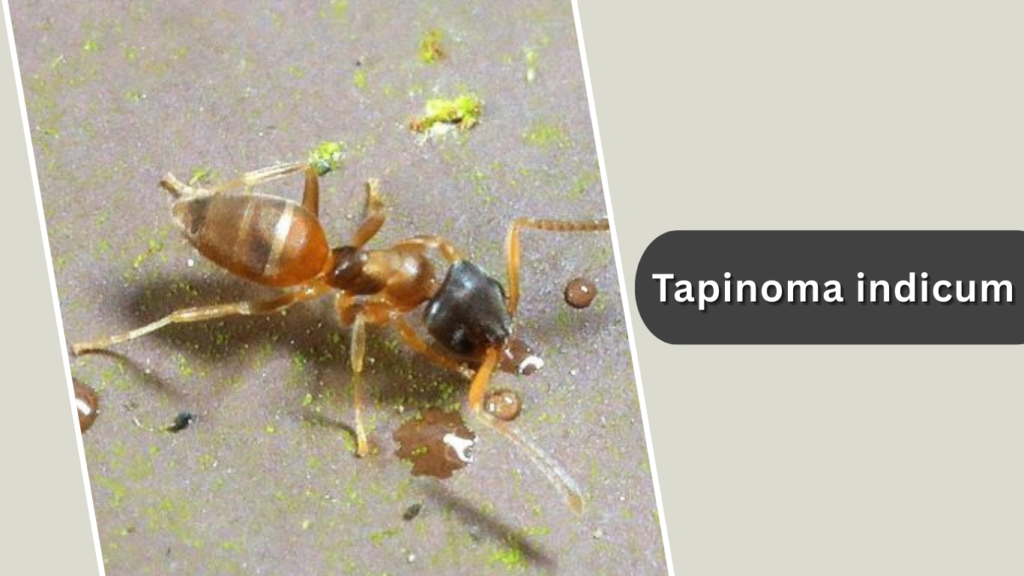
Tapinoma indicum is a common sugar-loving ant species found throughout South and Southeast Asia. It frequently inhabits human settlements and is known for its fast, persistent foraging trails.
Identification
- Small workers with slender, dark brown to black bodies
- Monomorphic, with workers all similar in size
- Smooth, shiny exoskeleton
- Emits a faint odor when disturbed
- Queens are slightly larger but similar in appearance
Habitat
This species thrives in tropical forests, farmlands, gardens, and urban areas. Nests occur in soil, under plant pots, beneath stones, inside wall cracks, and near moist debris. Their adaptability makes them one of the most common household ants in many Asian countries.
Behaviors
Tapinoma indicum forms rapid, well-defined foraging lines, often invading kitchens, storerooms, and outdoor eating areas. Workers communicate through strong pheromone trails and actively recruit others to food sources. Colonies frequently bud, creating multiple interconnected nests.
Diet and Lifecycle
Their diet consists mainly of sugary substances such as nectar, honeydew, fruit juices, and human food scraps. They also gather small insects to feed larvae. Queens lay eggs throughout the warm season, and colonies expand quickly due to multiple reproductive females and efficient worker turnover.
14. Tapinoma minutum
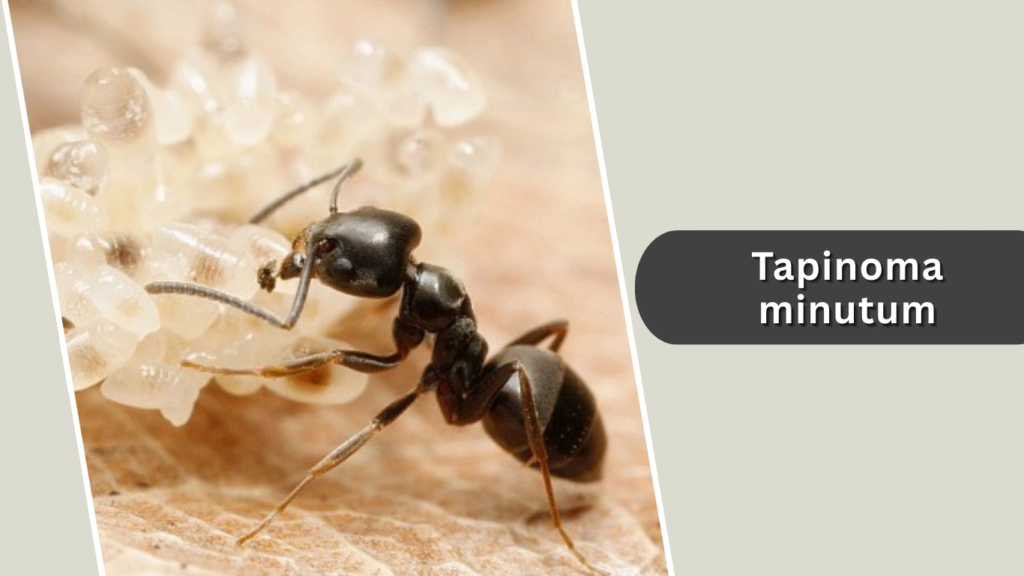
Tapinoma minutum is a small, fast-moving sugar ant species found in various tropical regions. Known for its subtle appearance and persistent foraging, it often goes unnoticed until large numbers appear near food sources.
Identification
- Very small, slender workers with light to medium brown coloration
- Monomorphic workers with minimal size differences
- Smooth, glossy body surface
- Quick, erratic movements typical of Tapinoma ants
- Queens are only slightly larger and similarly colored
Habitat
This species inhabits tropical forests, gardens, plantations, and residential areas, especially in Southeast Asia and nearby regions. Nests are built in soil, leaf litter, rotting wood, or in small cracks near human structures. They prefer warm, humid environments.
Behaviors
Tapinoma minutum forms rapid, loosely organized foraging trails that often lead to sugary sources. Workers readily enter homes, kitchens, and outdoor dining areas. Colonies exhibit budding behavior, creating numerous small sub-nests that allow them to expand quickly.
Diet and Lifecycle
The species primarily consumes nectar, honeydew, sweet liquids, fruit juices, and small insects for larval protein. Queens lay eggs steadily in warm climates, and colonies grow quickly due to high reproductive capacity and frequent budding. Workers progress through brood care, nest maintenance, and foraging roles as they age.
15. Tapinoma nigerrimum
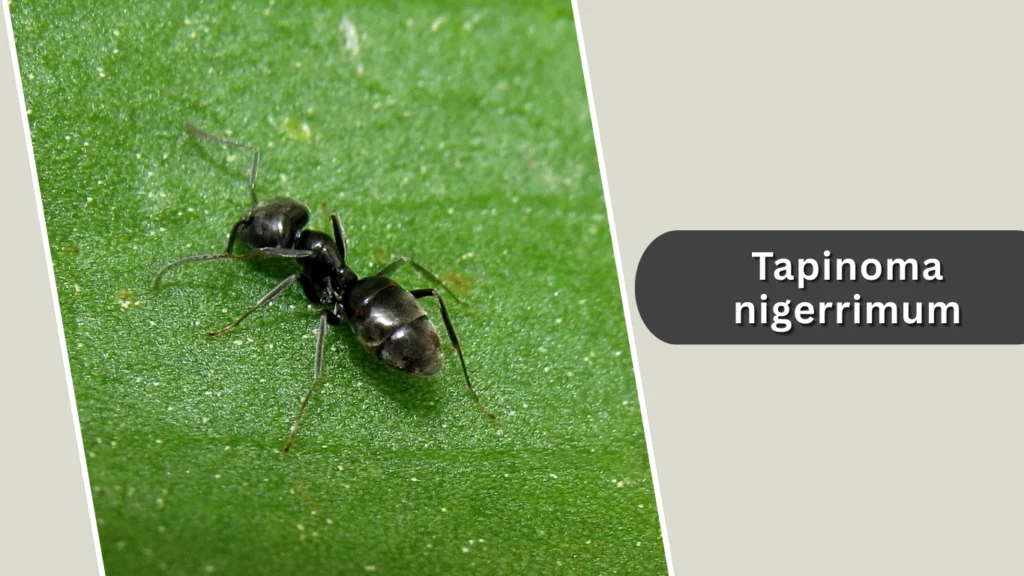
Tapinoma nigerrimum is a widespread sugar ant species native to the Mediterranean region. Known for forming large supercolonies and aggressive foraging trails, it is one of the most dominant ants in its range.
Identification
- Small, slender workers with uniform dark brown to black coloration
- Monomorphic, with little size variation among workers
- Smooth, shiny exoskeleton
- Emits a faint odor when crushed
- Queens are slightly larger but similarly colored
Habitat
This species thrives in Mediterranean scrublands, coastal areas, grasslands, agricultural zones, and urban environments. Nests occur in soil, under stones, within pavement cracks, and near plant roots. Its adaptability allows it to survive in both wild and highly developed areas.
Behaviors
Tapinoma nigerrimum is an aggressive forager, forming dense, fast-moving trails that dominate food resources. Workers frequently invade gardens, kitchens, and outdoor eating spaces. Colonies often create supercolonies, with many interconnected nests cooperating across large territories.
Diet and Lifecycle
The species feeds predominantly on sugary substances, including nectar, honeydew, plant secretions, and human food scraps. They also collect small insects for larval nourishment. Queens lay eggs throughout warm months, and colony size can expand rapidly due to multiple queens and budding nests.
16. Formica fusca
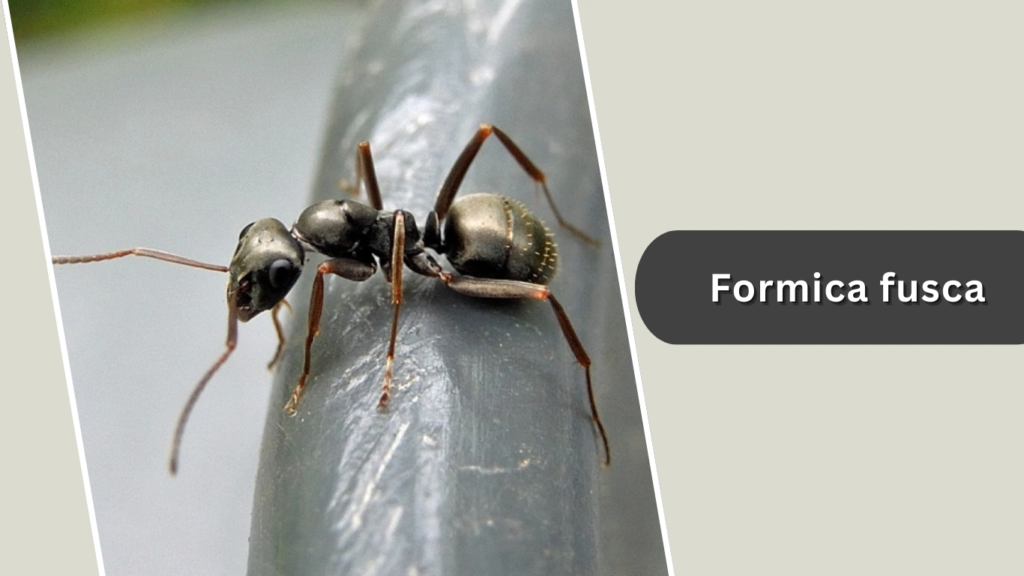
Formica fusca, commonly called the silky ant, is a widespread sugar-loving species found across Europe and parts of Asia. Known for its timid nature and smooth dark coloration, it often forages for sweet liquids in open habitats.
Identification
- Medium-sized workers with uniform dark brown to black coloration
- Monomorphic, with workers of similar size
- Smooth, silky-looking exoskeleton
- Fast-moving and timid when disturbed
- Queens are larger with the same dark coloration
Habitat
This species inhabits meadows, forests, grasslands, gardens, and open woodland areas. Nests are usually found in soil, under stones, or within rotting logs. Formica fusca favors sunny environments and is highly adaptable, making it common in both natural and semi-urban settings.
Behaviors
Formica fusca is a day-active forager, frequently visiting flowers, aphid colonies, and sugary spills. Workers are non-aggressive and retreat quickly when threatened. They maintain loose foraging trails and rarely engage in territorial disputes compared to other ant species.
Diet and Lifecycle
Their diet includes nectar, honeydew, fruit juices, and small insects for larval protein. Colonies grow slowly, usually containing a few hundred individuals, and queens may live several years. Workers rotate through tasks—brood care, nest upkeep, and foraging—depending on their age.
17. Formica pallidefulva
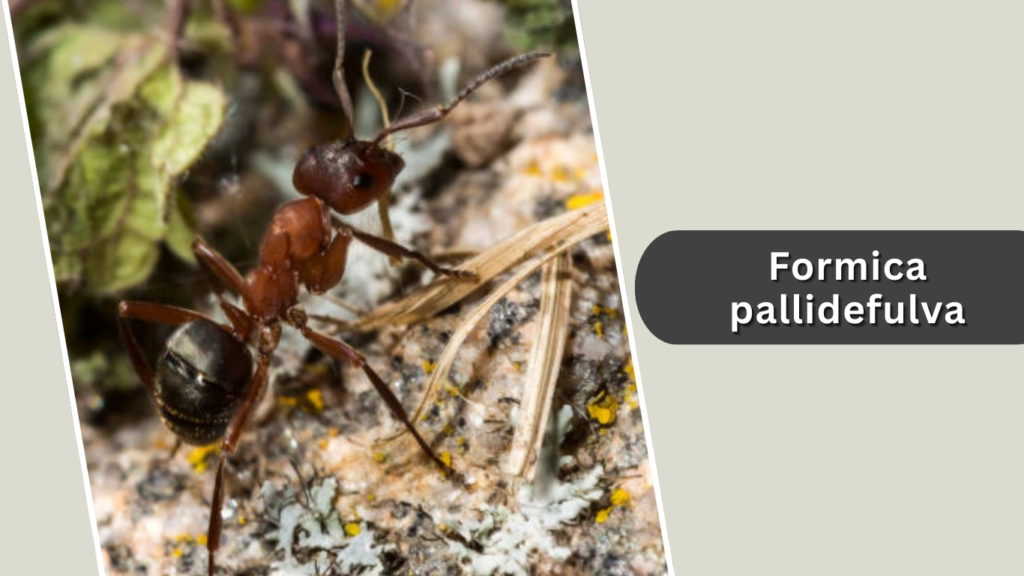
Formica pallidefulva is a brightly colored sugar-loving ant native to North America. Its warm golden-orange tones and preference for sunlit habitats make it one of the most visually distinct Formica species.
Identification
- Workers are golden-orange to reddish-brown
- Monomorphic, with workers of similar size
- Smooth, glossy exoskeleton
- Very fast-moving and agile
- Queens are larger with deeper coloration
Habitat
This species inhabits meadows, open forests, grasslands, prairies, and suburban lawns, especially in the eastern United States. Nests occur in soil, grass roots, or under stones, often forming small, low mounds. They prefer warm, sunny conditions and open spaces.
Behaviors
Formica pallidefulva is an active daytime forager, frequently visiting flowers and aphid colonies for sugary secretions. Workers form loose foraging trails and rarely show aggression unless defending their nest. They are quick to retreat when disturbed.
Diet and Lifecycle
Their diet includes honeydew, nectar, fruit juices, and small arthropods used as protein for larvae. Queens lay eggs during the warm season, and colonies typically contain several hundred workers. As they age, workers take on tasks such as brood tending, nest maintenance, and foraging.
18. Formica glacialis
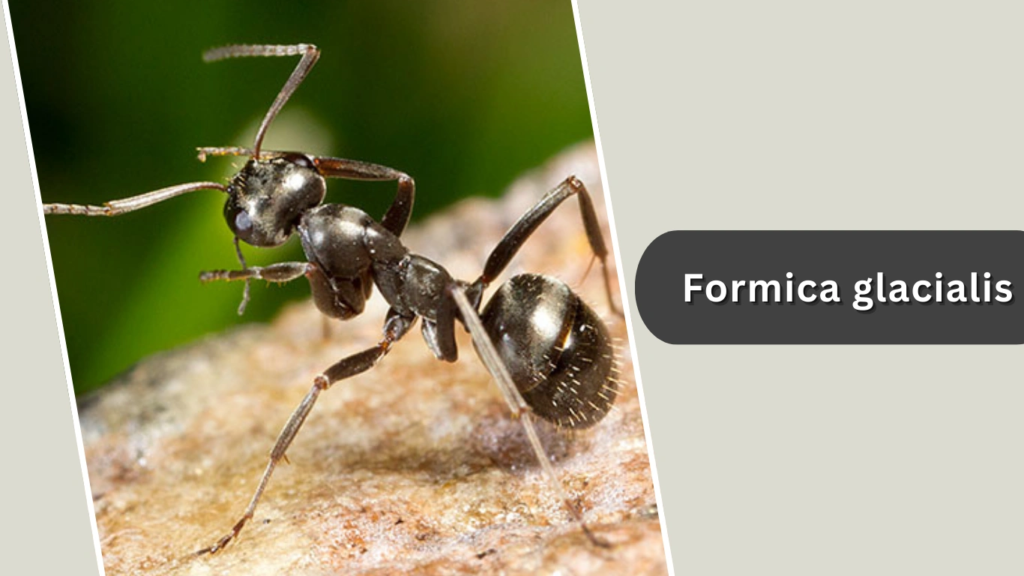
Formica glacialis is a cool-climate sugar ant species found in northern regions. Adapted to harsh environments, it thrives in high-altitude and colder habitats where few other ants can survive.
Identification
- Medium-sized workers with dark brown to black coloration
- Monomorphic, with minimal size differences
- Slightly matte exoskeleton with fine texture
- Quick-moving but cautious when disturbed
- Queens are larger with the same dark coloration
Habitat
This species inhabits cold forests, alpine meadows, tundra edges, and northern woodlands across Canada and parts of the northern United States. Nests are found in soil, under stones, or within decaying logs. Its cold tolerance allows it to thrive in environments that limit other ant species.
Behaviors
Formica glacialis is primarily a daytime forager, especially during warm daylight hours in summer. Workers gather sugary liquids from flowers, aphids, and sap flows. Colonies are generally peaceful, avoiding conflict and retreating when threatened.
Diet and Lifecycle
Their diet includes nectar, honeydew, plant juices, and small insects for larval protein. Queens produce eggs during the short warm season, and colonies remain modest in size. Workers rotate through tasks such as brood care, food gathering, and nest maintenance.
19. Formica subsericea
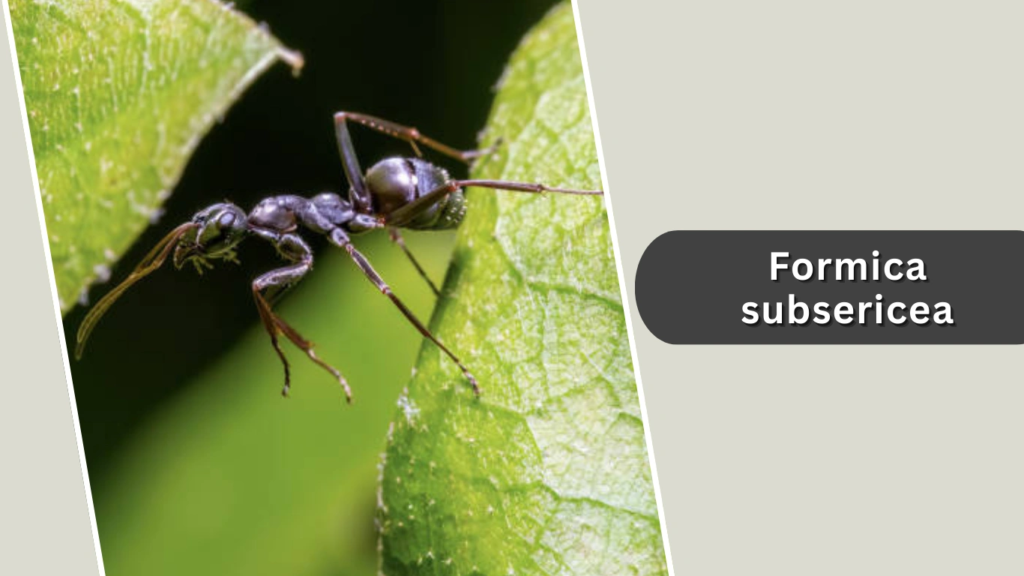
Formica subsericea is a common North American sugar ant widely recognized for its sleek, dark appearance and preference for forested environments. It is one of the most abundant Formica species in eastern regions.
Identification
- Medium-sized workers with a black or very dark brown body
- Slight metallic sheen on the abdomen
- Monomorphic, with workers of similar size
- Fast, active movement patterns
- Queens are larger with the same dark coloration
Habitat
This species inhabits deciduous forests, mixed woodlands, fields, and suburban yards. Nests are typically found in soil, under logs, beneath leaf litter, or within rotting wood. They prefer shaded, moist environments and often form multiple entrances leading into underground chambers.
Behaviors
Formica subsericea is a day-active forager, often seen collecting nectar and honeydew from plants and aphids. Workers form semi-structured foraging trails and communicate efficiently through pheromones. Although not highly aggressive, they defend their nests when threatened.
Diet and Lifecycle
The species feeds on nectar, honeydew, plant sap, fruit juices, and occasional insects. Larvae require proteins, while adult workers prefer sugary foods. Queens lay eggs throughout the warm season, and colonies may reach a few thousand workers. Task roles shift with age, from brood care to foraging and nest upkeep.
20. Formica neorufibarbis
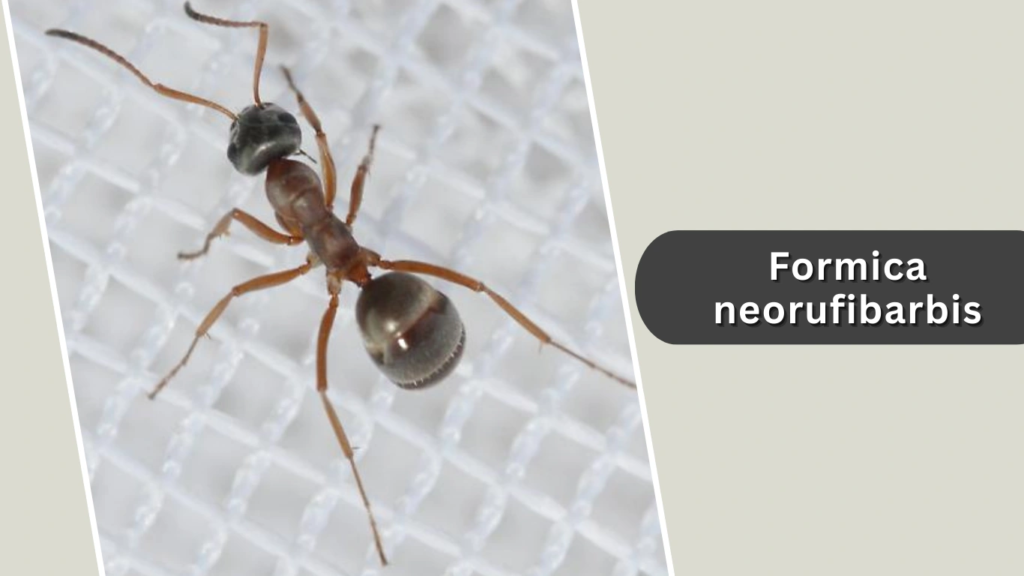
Formica neorufibarbis is a colorful sugar ant species found in cooler climates across North America. Its reddish thorax and dark abdomen make it easy to recognize in the field.
Identification
- Workers have a reddish-brown thorax with a dark brown or black head and abdomen
- Monomorphic workers with similar body size
- Smooth, slightly glossy exoskeleton
- Quick, agile movement patterns
- Queens are larger with deeper coloration
Habitat
This species inhabits montane forests, meadows, open woodlands, and northern prairies. Nests are typically located in soil, under rocks, or within decaying logs. They prefer cool climates and are often found at higher elevations or northern latitudes.
Behaviors
Formica neorufibarbis is a daytime forager, especially active in sunny conditions. Workers visit flowers and aphid colonies for sugary nourishment. They maintain loosely organized foraging trails and avoid confrontation, retreating quickly when disturbed.
Diet and Lifecycle
The species feeds on nectar, honeydew, plant juices, and small arthropods for larval protein. The colony grows during the warm season, with queens laying eggs in spring and summer. Worker roles shift over time, from brood care to nest maintenance and foraging as they age.
21. Lasius niger
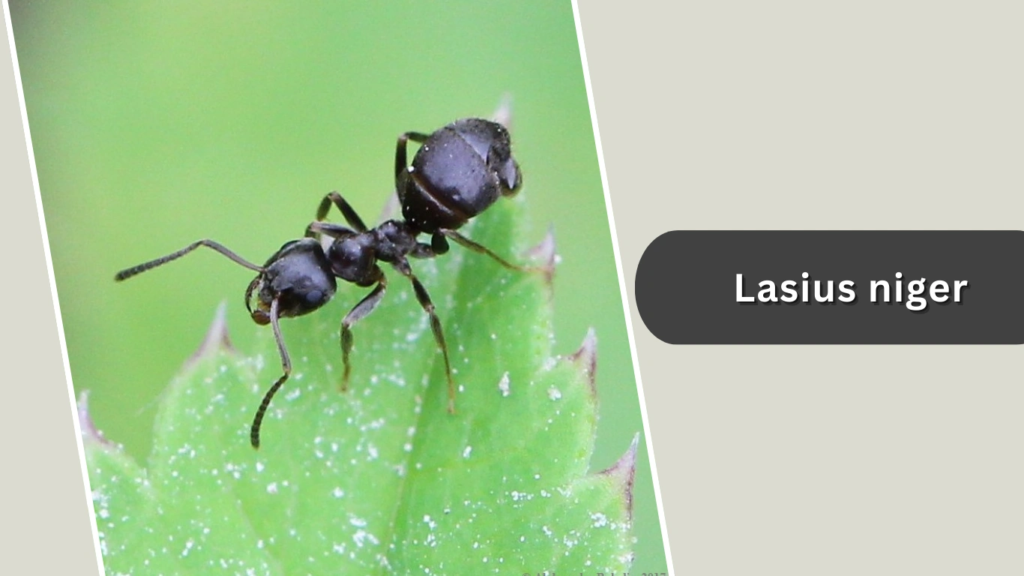
Lasius niger, commonly known as the black garden ant, is one of the most widespread sugar-loving ants in Europe and parts of Asia. It frequently appears in gardens, pathways, and occasionally inside homes searching for sweet foods.
Identification
- Small to medium-sized workers with uniformly black bodies
- Monomorphic with little size variation
- Smooth, slightly glossy exoskeleton
- Fast-moving foragers with well-organized trails
- Queens are large, long-lived, and entirely dark-colored
Habitat
This species thrives in gardens, grasslands, forests, pavements, and residential areas. Nests are built in soil, under stones, along pathways, and near building foundations. Lasius niger is highly adaptable, allowing it to coexist closely with humans.
Behaviors
Lasius niger is a day-active forager, often forming long, steady trails to sweet food sources. Workers frequently collect honeydew from aphids and tend them on plants. Colonies can be extremely persistent and may return to the same food sources repeatedly.
Diet and Lifecycle
The species feeds on nectar, honeydew, sugary liquids, fruit juices, and small insects. Queens can live for over a decade, producing eggs throughout the warm season. Colonies expand slowly and may contain several thousand workers. Workers rotate through brood care, foraging, and nest maintenance as they mature.
22. Lasius neoniger
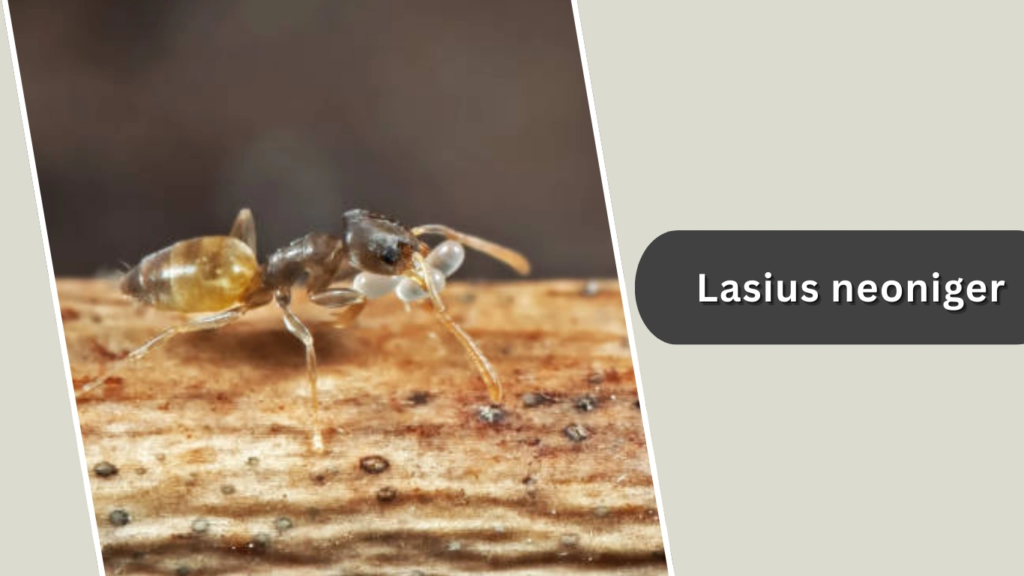
Lasius neoniger, commonly known as the cornfield ant, is a widespread sugar-loving ant species in North America. It is especially common in open, grassy habitats and is well known for building small soil mounds.
Identification
- Small workers with light to medium brown coloration
- Monomorphic, with workers of similar size
- Slightly glossy exoskeleton
- Quick-moving and highly active in open areas
- Queens are larger and darker in coloration
Habitat
This species inhabits lawns, fields, prairies, agricultural areas, and suburban yards. Nests appear as small soil mounds, often scattered across open ground. It thrives in sunny habitats and is commonly encountered during outdoor activities.
Behaviors
Lasius neoniger is a day-active forager, frequently collecting honeydew from aphids and other plant-feeding insects. Workers also visit flowers and sugary liquids. Colonies are generally non-aggressive and avoid confrontation, retreating when disturbed.
Diet and Lifecycle
Their diet includes honeydew, nectar, plant sap, and small insects for larval protein. Colonies grow during the warm season, and queens lay eggs steadily throughout summer. Mature colonies may contain a few thousand workers, which rotate through tasks such as brood care, maintenance, and foraging.
23. Lasius flavus
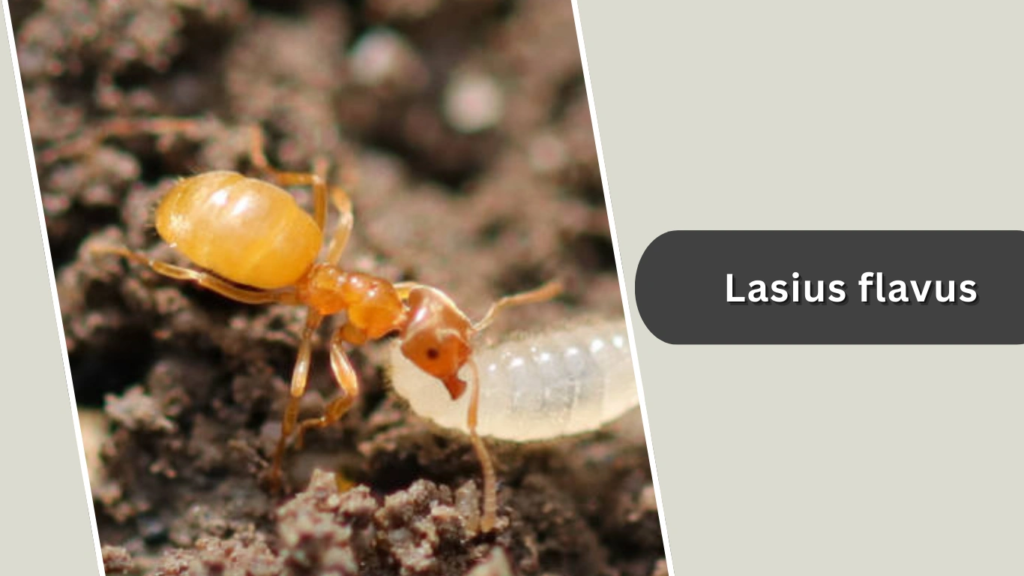
Lasius flavus, also known as the yellow meadow ant, is a subterranean sugar-loving species found throughout Europe and parts of Asia. Its bright yellow coloration and underground lifestyle make it unique among common garden ants.
Identification
- Small workers with yellow to yellow-brown bodies
- Monomorphic, with minimal size variation
- Soft, slightly matte exoskeleton
- Workers rarely appear above ground except during nuptial flights
- Queens are larger and similarly yellow
Habitat
This species inhabits meadows, grasslands, lawns, fields, and open forest edges. Nests are entirely underground, forming soil mounds or hidden chambers beneath rocks and roots. It prefers moist soils and avoids exposure to direct sunlight.
Behaviors
Lasius flavus is primarily subterranean, foraging below ground for honeydew-producing root aphids. Workers seldom forage on the surface, giving the colony a secretive lifestyle. They maintain elaborate networks of underground tunnels to access food sources.
Diet and Lifecycle
The species feeds mainly on honeydew obtained from root aphids, which they tend and protect underground. Adult ants consume sugars, while larvae receive protein from small insects. Colonies grow slowly but can become large over many years, with workers rotating between brood care, tunnel maintenance, and aphid tending.
24. Lasius alienus

Lasius alienus is a common sugar-loving ant found throughout Europe and parts of Asia. Known for its adaptability and frequent presence in gardens and grasslands, it is one of the most widespread species in its genus.
Identification
- Small to medium-sized workers with brown to dark brown coloration
- Monomorphic, with little size variation among workers
- Smooth, slightly glossy exoskeleton
- Fast-moving and often seen on warm surfaces
- Queens are larger, darker, and more robust
Habitat
This species inhabits meadows, forests, suburban yards, pavements, and field edges. Nests are found in soil, under stones, within grassy tufts, or near building foundations. Lasius alienus tolerates a wide range of environments and is often seen near human activity.
Behaviors
Lasius alienus is a daytime forager, forming loose but consistent trails to sugary liquids and aphid colonies. Workers frequently climb plants to collect honeydew. Though generally non-aggressive, they defend their nests against intruders.
Diet and Lifecycle
The species feeds on honeydew, nectar, plant sap, and small insects used for larval protein. Queens lay eggs during the warm season, and colonies grow steadily throughout summer. Workers take on different tasks as they mature, including brood care, nest maintenance, and above-ground foraging.
25. Lasius umbratus

Lasius umbratus is a parasitic sugar ant species known for its unique dependence on other Lasius ants during colony founding. Found throughout Europe and parts of North America, it prefers shaded, humid environments.
Identification
- Small workers with yellowish to yellow-brown coloration
- Monomorphic body form with minimal size variation
- Slightly matte, soft-textured exoskeleton
- Workers are rarely seen above ground
- Queens are larger and golden-yellow
Habitat
This species inhabits shaded forests, moist meadows, woodland edges, and suburban lawns. Nests are typically formed underground or beneath logs and stones. Because Lasius umbratus queens often take over nests of other Lasius species, colonies may appear in similar habitats.
Behaviors
Lasius umbratus is mostly subterranean, with workers tending root aphids below the soil surface. They seldom forage above ground, making colonies difficult to observe. The species is known for its parasitic founding behavior, where a queen infiltrates and replaces another Lasius queen.
Diet and Lifecycle
Their diet relies heavily on honeydew from subterranean aphids, which workers farm and protect. Adults feed on sugars, while larvae receive protein from small soil invertebrates. Queens start colonies by taking over another species’ nest before transitioning to a fully independent colony. Colonies remain small to moderate in size but persist for many years.
FAQs
1. Why are sugar ants attracted to homes?
Sugar ants are drawn to sweet foods, including nectar, syrups, fruit juices, and food residues left on countertops or floors. Even tiny spills or crumbs can attract them. They also enter homes seeking moisture and safe nesting spaces, especially during hot or rainy seasons.
2. Are sugar ants harmful?
Sugar ants are generally not harmful. They don’t sting, and their bites are mild. However, they can become a nuisance when large numbers forage indoors. Some species may nest in wood, but unlike termites, they do not eat it—damage is usually minimal and related to nesting space.
3. What do sugar ants eat in the wild?
In natural habitats, sugar ants feed on nectar, honeydew from aphids, plant sap, fruit juices, and small insects. Adults primarily consume carbohydrates for energy, while larvae require protein-rich foods. Many sugar ant species tend aphid colonies to collect steady sources of honeydew.
4. How long do sugar ant colonies live?
Sugar ant colonies can last several years to over a decade, depending on the species. Queens are long-lived and lay eggs throughout warm seasons. Colonies expand slowly but steadily, often reaching thousands of workers in mature nests.
5. How can sugar ants be prevented from entering homes?
To prevent sugar ants from entering, keep food sealed, wipe up spills promptly, and remove sweet residues. Seal entry points such as cracks or gaps, reduce moisture indoors, and store garbage properly. Outside, managing aphids on plants and reducing clutter can also help limit nearby colonies.
