

The sight of a red wasp buzzing near a porch or barn in Texas is enough to make anyone cautious. With their fiery coloration and painful stings, red wasps are among the most recognizable insects in the southern United States. Texas, with its long warm seasons and variety of rural and urban habitats, provides ideal conditions for these insects to thrive. While they play an important role in controlling pests and even pollinating plants, red wasps are also considered a nuisance and sometimes a threat when they build nests near homes or places of frequent human activity. Understanding how to identify them, their behavior, and the risks they pose is key to coexisting safely with these wasps.
What is a Red Wasp?
The term “red wasp” in Texas typically refers to Polistes carolina, a species of paper wasp known for its reddish-brown body and distinctive nest-building habits. Some people also use the name for closely related species such as Polistes rubiginosus. Unlike hornets or yellowjackets, red wasps are generally less aggressive, but they will defend their nests fiercely if they feel threatened.
They belong to the Vespidae family, the same group as other paper wasps, hornets, and yellowjackets. Red wasps stand out because of their large size, averaging about ¾ to 1 inch in length, and their uniform rusty-red coloration. In Texas, they are widespread across cities, farms, and natural woodlands, making them one of the most frequently encountered stinging insects in the state.
Identification of Red Wasps

At first glance, red wasps are easy to distinguish from other wasps because of their bold color. Their bodies are elongated and slender, with a narrow “waist” that separates the thorax from the abdomen.
Mature red wasps have:
- A reddish-brown body with little or no striping
- Dark wings, sometimes slightly tinted
- Long legs that dangle noticeably during flight
- A size range of about 0.75 to 1 inch
Their nests are just as distinctive. Red wasps are paper wasps, which means they chew wood fibers into pulp and shape it into a papery nest. The structure is umbrella-shaped with open hexagonal cells, usually attached to sheltered surfaces such as tree branches, under eaves, in barns, or inside sheds. Unlike hornet nests, red wasp nests are not covered, leaving the brood visible to the naked eye.
Distribution of Red Wasps in Texas
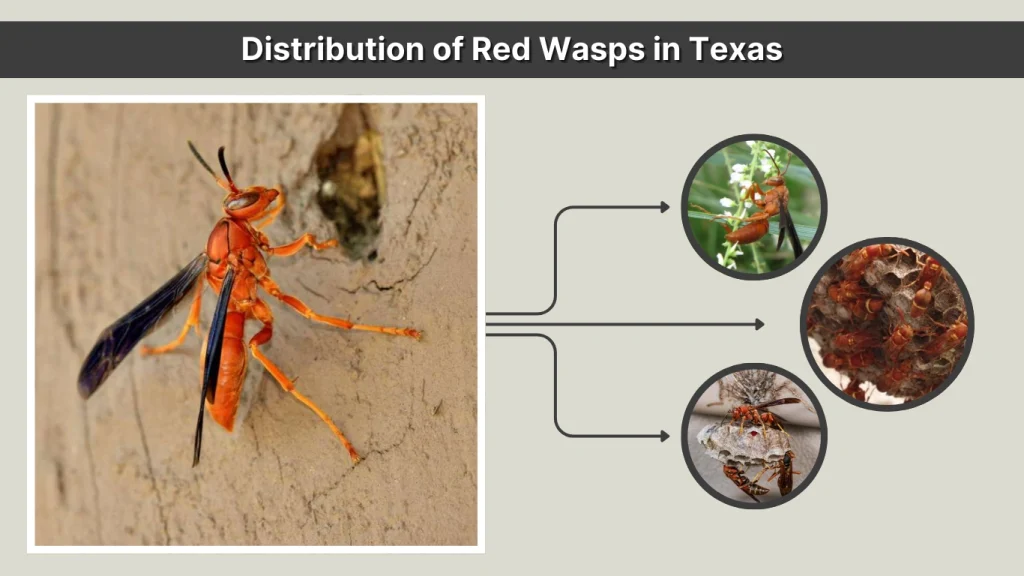
Texas offers the perfect environment for red wasps thanks to its warm climate and abundant nesting sites. These wasps are found across the entire state, from urban backyards in Houston and Dallas to ranches and wooded areas in rural counties.
Red wasps are most active between spring and early fall, when temperatures are warm. In March and April, queens begin establishing new nests, and by summer, colonies can contain dozens of individuals. As autumn approaches, the colonies decline, and only fertilized queens survive the winter to start new nests the following year.
Because Texas rarely experiences prolonged cold, red wasp populations can grow quickly, making them especially common in both rural and suburban areas.
Behavior and Lifestyle
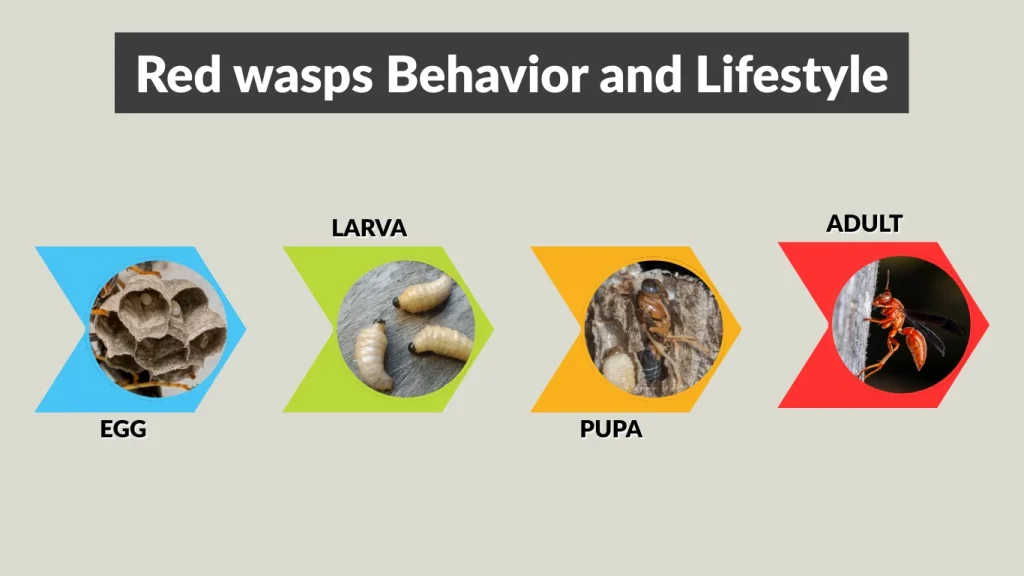
Red wasps live in social colonies that operate with a clear division of labor. At the top is the queen, who lays eggs and ensures the continuation of the colony. Worker wasps, which are sterile females, handle foraging, nest building, and defense. Males appear later in the season to mate with future queens.
These wasps feed primarily on nectar and sugary liquids, which provide them with energy. They are also important predators of caterpillars and soft-bodied insects, making them beneficial for natural pest control. Farmers and gardeners in Texas often appreciate their role in reducing crop-damaging pests, though their presence around homes is less welcome.
Red wasps are not naturally aggressive, but they are highly defensive of their nests. If a human or animal comes too close, workers will quickly swarm and sting. Because nests are often built near human activity—on porches, barns, and garages—encounters are common, and stings can become a serious issue.
Red Wasp Sting in Texas
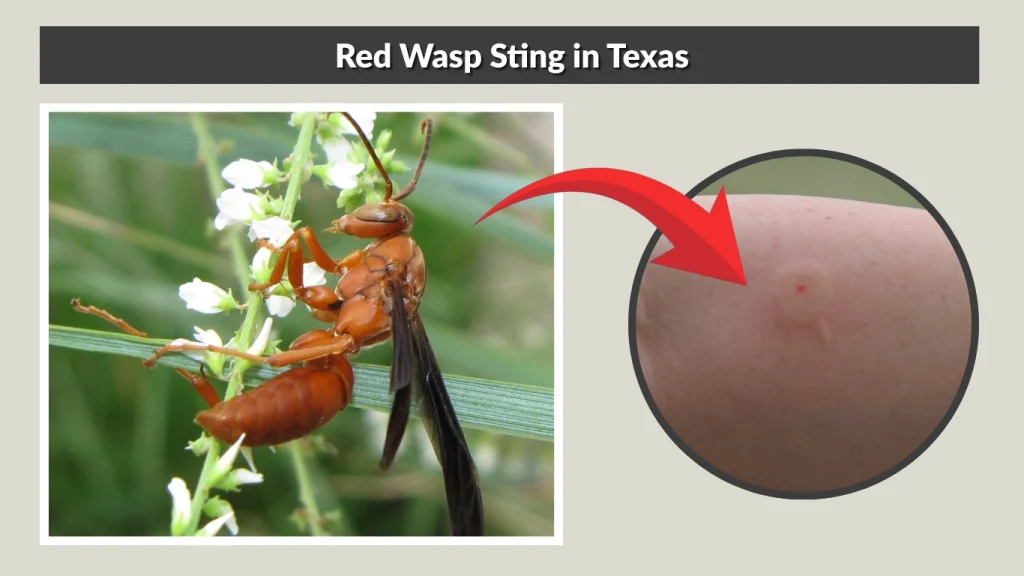
Perhaps the most feared aspect of the red wasp is its sting. A single sting delivers intense pain, burning, and swelling that can last several hours. For most people, the sting is not life-threatening, but it is certainly unpleasant.
Common symptoms include redness, warmth, and localized swelling. However, some individuals are allergic to wasp venom and can suffer from severe reactions such as hives, difficulty breathing, or even anaphylaxis. In Texas, emergency rooms regularly treat patients for wasp stings, particularly during the summer when these insects are most active.
Unlike bees, which die after stinging, red wasps can sting multiple times. This makes disturbing a nest especially dangerous, as several wasps may attack at once. In rural Texas, stories of people accidentally brushing against nests in barns or trees and receiving multiple stings are not uncommon.
Treatment for Red Wasp Stings

When stung by a red wasp in Texas, the first priority is to reduce pain and prevent further complications. The area should be cleaned immediately with soap and water to remove venom residue and lower the risk of infection. Applying a cold compress can help minimize swelling, while over-the-counter pain relievers or antihistamines may reduce discomfort and itching.
For individuals who know they are allergic, carrying an epinephrine auto-injector (EpiPen) is essential. Severe allergic reactions, including difficulty breathing, dizziness, or swelling of the face and throat, require immediate medical attention. In Texas, where medical centers in rural areas may be farther away, prompt recognition of allergic symptoms is especially important.
Children and elderly individuals may also experience stronger reactions, so even if the sting appears minor, monitoring for worsening symptoms is recommended.
Dangers of Red Wasps in Texas Homes and Yards

While red wasps contribute positively to the environment, their presence near human activity can become a serious hazard. In Texas, it is common to find nests under house eaves, in attics, sheds, or even on playground equipment. Because of their defensive behavior, people often get stung simply by passing too close to a nest without realizing it was there.
Large colonies can be particularly dangerous. A startled wasp releases a pheromone that signals others to attack, which can result in multiple stings in a matter of seconds. For families with children or pets, a nest near the home becomes more than a nuisance—it can pose real safety risks.
Farmers, ranchers, and outdoor workers in Texas are also at higher risk, as barns, corrals, and equipment provide ideal nesting spots for these insects.
Prevention and Control
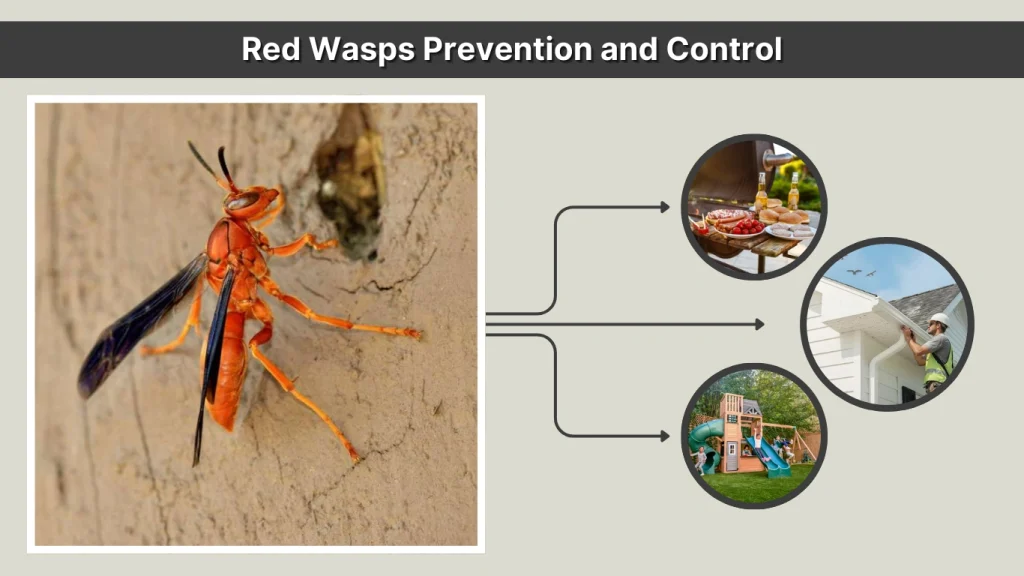
The best way to reduce the risk of painful encounters is to prevent red wasps from nesting in the first place. Homeowners can take several steps to minimize attraction:
- Keep food and sweet drinks covered when outdoors, especially during summer barbecues.
- Seal cracks, gaps, and small openings in siding, eaves, or barns where nests could be attached.
- Regularly check outdoor areas such as sheds, porches, and play equipment for the beginnings of nests.
When nests are small and contain only a few wasps, cautious removal is sometimes possible. This is best done at night, when wasps are less active, and always with protective clothing. Commercial sprays designed for wasps can be effective, but caution is necessary, as a disturbed colony can become aggressive.
For large or difficult-to-reach nests, professional pest control services are the safest option. In Texas, pest control experts are well-versed in dealing with red wasps, ensuring nests are eliminated without unnecessary risk to people or pets.
Ecological Importance of Red Wasps
Despite their reputation, red wasps are not simply pests. They play a vital ecological role in Texas. By preying on caterpillars and other soft-bodied insects, they help keep pest populations in check. Many farmers and gardeners benefit indirectly from their presence, as they reduce damage to crops and ornamental plants.
Red wasps also contribute to pollination. While not as efficient as bees, they do visit flowers for nectar, transferring pollen in the process. This dual role—as predators and pollinators—makes them a valuable part of Texas ecosystems.
For this reason, experts caution against widespread eradication. Instead, the focus should be on managing red wasp populations near homes and workplaces while allowing them to continue their beneficial roles in natural and agricultural areas.
Red Wasp vs Other Texas Wasps
Texas is home to many stinging insects, and it’s easy to confuse red wasps with similar species. Yellowjackets, for instance, are smaller, with black-and-yellow striping and a reputation for being more aggressive. Hornets, though less common in Texas, build large enclosed nests, unlike the open combs of red wasps.
Other paper wasps, such as the brown or black varieties, share similar nesting behaviors but lack the distinctive reddish coloration. Knowing the difference is important for identification, especially since treatment and control methods are similar across species but behavior and aggression levels vary.
FAQs
How painful is a red wasp sting compared to other wasps?
A red wasp sting is considered very painful, often sharper than a bee sting and lasting longer than many other wasps. Swelling and burning are common, though the pain usually subsides within a few hours. Allergic individuals, however, may experience severe or life-threatening reactions.
Where are red wasps most commonly found in Texas?
Red wasps build their nests in sheltered areas such as barns, sheds, porches, tree branches, and roof eaves. They are especially common in rural and suburban Texas, where warm weather and human structures provide abundant nesting opportunities.
How do you safely get rid of a red wasp nest?
Small nests can be removed cautiously at night using protective clothing and a wasp spray. However, larger colonies are dangerous and should be handled by professional pest control. Attempting removal without protection often results in multiple painful stings.
Do red wasps in Texas die after stinging?
No, unlike honeybees, red wasps can sting multiple times. This makes encounters more dangerous, as a single wasp may sting repeatedly, and nearby wasps often join the attack if the colony feels threatened.
