
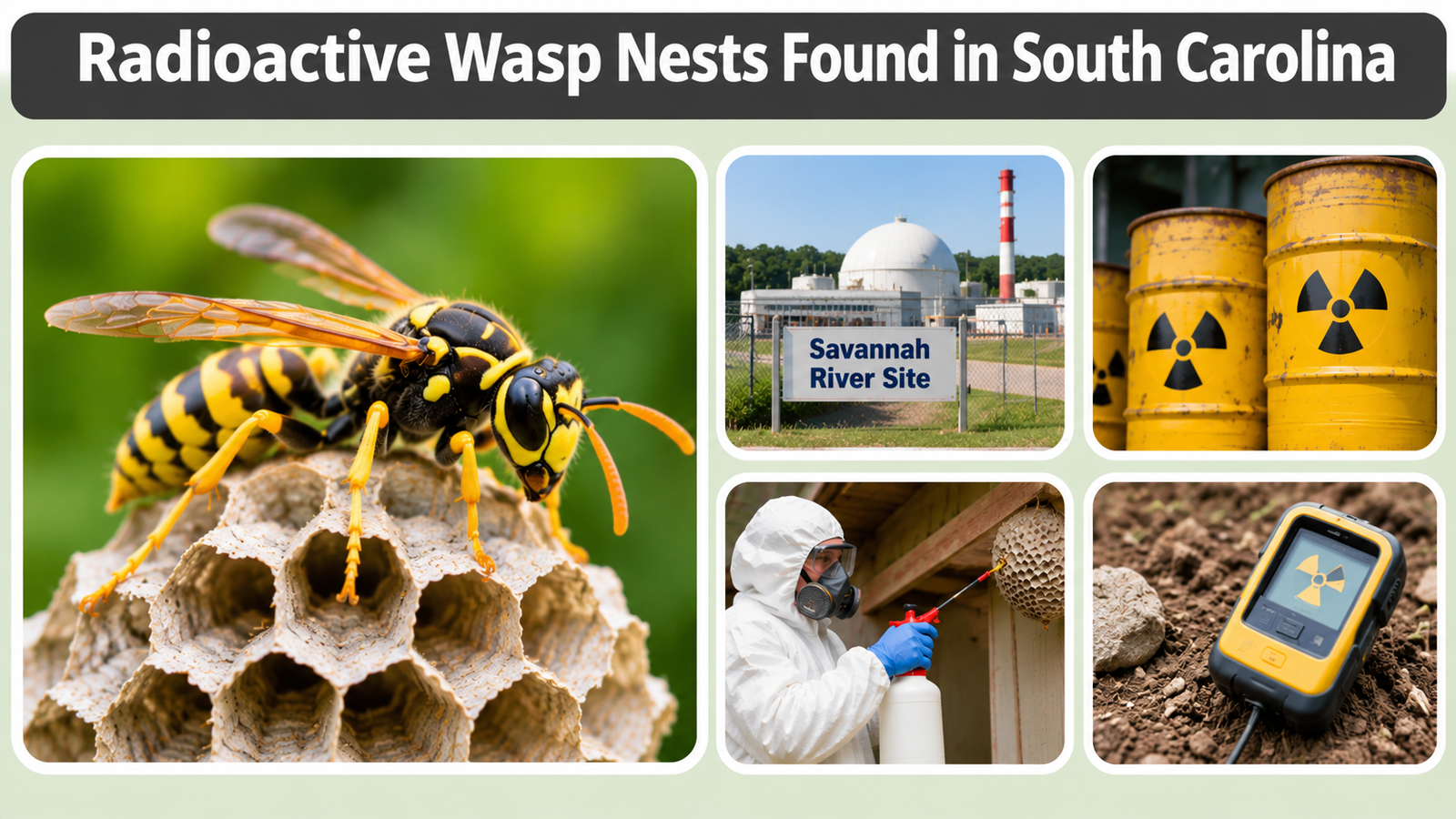
Radioactive wasp nests discovered at a former nuclear weapons production facility in South Carolina attracted widespread attention in 2025. Workers at the Savannah River Site found several nests contaminated with radioactive material, including one that exceeded a federal surface-contamination threshold by more than ten times. The discovery raised questions about how wasps encountered radioactive substances and whether they posed a danger to nearby communities. Although federal officials reported no public health threat, the unusual findings highlighted the challenges of monitoring environmental contamination at former nuclear weapons facilities.
What Is a Radioactive Wasp Nest?
A radioactive wasp nest is a nest containing radioactive substances picked up from a contaminated environment. These materials may enter the nest when wasps collect soil, wood fibers, or other building materials from affected areas. The nest itself does not produce radiation naturally; its contamination comes from external radioactive substances.
How Does a Wasp Nest Become Radioactive?
Wasps collect materials from their surroundings to construct nests. Different species use different substances, including soil, mud, and wood fibers.
If those materials contain radioactive particles, the particles may become incorporated into the nest.
Possible contamination pathways include:
- Collecting contaminated soil or mud.
- Using wood fibers carrying radioactive dust.
- Contacting contaminated surfaces.
- Transporting small particles from affected environments.
This process does not mean that radiation has transformed the insects. It simply means radioactive substances have become associated with their nesting materials.
Where Were Radioactive Wasp Nests Found?
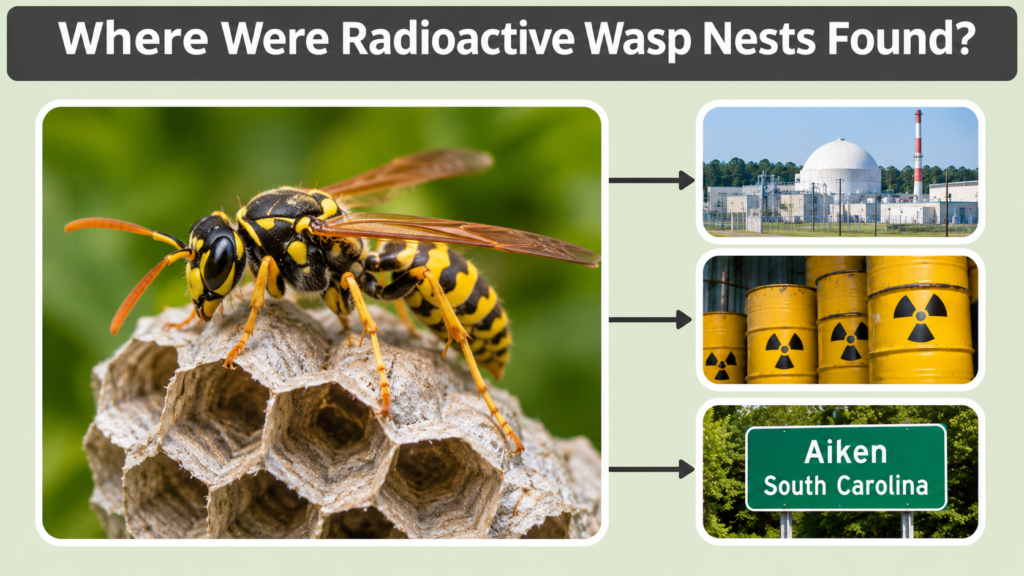
The radioactive wasp nests were discovered at the Savannah River Site near Aiken, South Carolina, close to the Georgia border. The federally owned facility has a long history of producing materials for nuclear weapons. Today, its operations include nuclear materials management and environmental cleanup.
Savannah River Site in South Carolina
The Savannah River Site covers approximately 310 square miles and began operating during the 1950s.
Historically, the facility produced materials such as plutonium and tritium for national defense programs.
These activities generated radioactive waste that requires long-term management.
The contaminated nests were discovered in the F Tank Farm, an area containing underground tanks used to store radioactive liquid waste.
The location is well inside the facility’s boundaries rather than in a residential neighborhood.
When Was the First Radioactive Wasp Nest Discovered?
Workers discovered the first contaminated nest on July 3, 2025, during routine radiological monitoring.
The nest was attached to a post near a nuclear waste storage tank identified as Tank 17.
Personnel detected elevated radioactive contamination and documented the finding in a Department of Energy occurrence report dated July 22, 2025.
The report generated widespread media attention after its details became public.
Were Four Radioactive Wasp Nests Found?
Yes. By July 31, 2025, officials had identified four contaminated wasp nests at the Savannah River Site.
All four were discovered within the F Tank Farm area.
The discovery of additional nests increased public interest because it suggested that wasps had encountered contaminated materials at more than one nesting location.
How Radioactive Were the Wasp Nests?
The contamination measurements initially sounded alarming because the first discovered nest exceeded a federal regulatory threshold by more than ten times. However, contamination measurements and radiation exposure measurements describe different things. Understanding this distinction is essential when evaluating the actual health risks.
What Did the Radiation Tests Show?
The original Department of Energy report recorded approximately 100,000 disintegrations per minute per 100 square centimeters from beta and gamma contamination measurements.
This exceeded the applicable surface-contamination threshold by more than ten times.
However, that number was not a direct measurement of radiation dose received by a person standing nearby.
Site officials subsequently stated that the nests’ measured radiation exposure levels were less than one percent of natural background radiation levels.
Both findings can be true because surface contamination and external exposure are different measurements.
Were the Wasps Themselves Radioactive?
The nests were contaminated, but that does not mean the wasps became unusually radioactive organisms.
No wasps were found inside the first nest after workers treated and collected it.
Later investigations involving additional nests reportedly found that associated wasps had lower contamination levels than the nesting structures.
There was no evidence that the wasps had developed unusual biological characteristics or that their stings presented a significant radiation hazard.
Why Were Radioactive Wasp Nests Found in South Carolina?
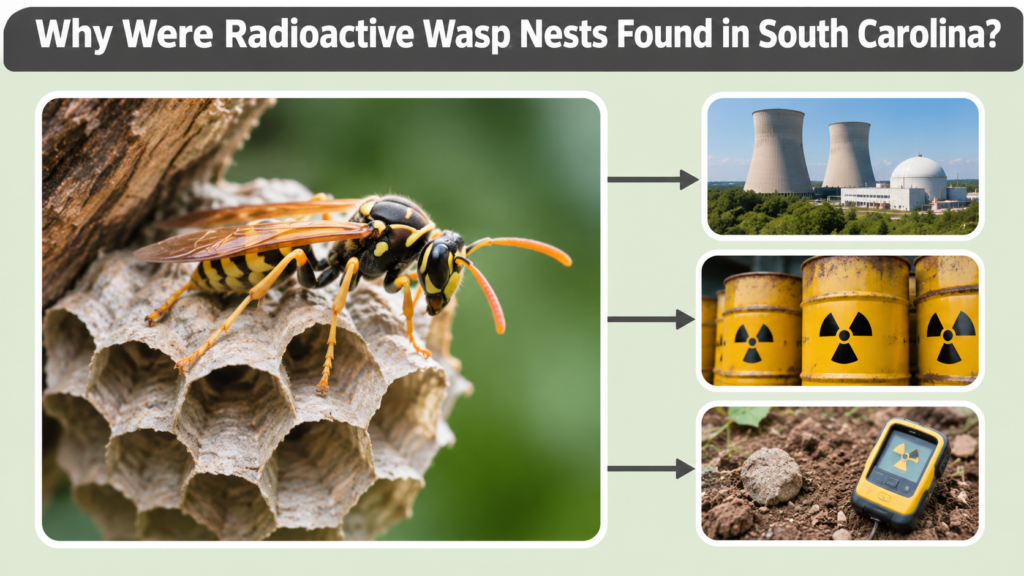
The leading explanation involves radioactive contamination remaining from decades of nuclear production activities. This is commonly called legacy contamination. Federal officials believed that wasps had encountered previously contaminated materials and incorporated them into their nests. However, the precise source of every contaminated particle was not publicly established in the initial reporting.
Legacy Radioactive Contamination
Legacy contamination refers to radioactive materials remaining in an environment because of historical operations.
The Savannah River Site produced nuclear materials for decades, creating radioactive waste that requires extensive containment and remediation.
Some contamination can remain associated with soil, sediment, equipment, and controlled work areas.
Wasps collecting nesting materials near these locations may accidentally transport small quantities of radioactive substances.
Federal officials considered this the likely explanation for the contaminated nests.
Did a Nuclear Waste Tank Leak?
The discovery did not establish that a new leak had occurred.
Officials stated that the contamination was associated with historical site activities rather than a newly identified failure of contamination controls.
Surveys around the first nest did not identify contamination in the surrounding ground or immediate area.
Nevertheless, environmental researchers and watchdog organizations requested more detailed information about the radioactive isotopes involved and where the wasps had collected their nesting materials.
These questions are relevant to determining how contaminants move through the environment.
Are Radioactive Wasp Nests Dangerous to Humans?
The presence of radioactive material can create potential hazards, but the actual risk depends on the type of material, its quantity, and the circumstances of exposure. In the Savannah River Site case, federal officials reported that the discovered nests did not threaten workers, nearby communities, or the environment.
Could Radioactive Wasps Harm Nearby Residents?
According to site officials, the contaminated nests presented no identified public health threat.
The discoveries occurred inside a large, controlled federal facility, far from surrounding residential communities.
Wasps typically forage within a relatively limited distance of their nests, although their travel distances vary by species.
The monitored contamination levels and the nests’ locations supported the officials’ assessment that the findings did not represent a significant public exposure risk.
Can Radioactive Wasps Spread Contamination?
In principle, insects can transport contaminated particles while moving between locations.
A wasp may collect materials from one surface and deposit them elsewhere during nest construction.
However, the ability to transport a substance does not automatically mean that enough radioactive material is present to cause harm.
The Savannah River Site discoveries demonstrate why monitoring wildlife can be useful around contaminated industrial locations.
What Happened to the Radioactive Wasp Nests?
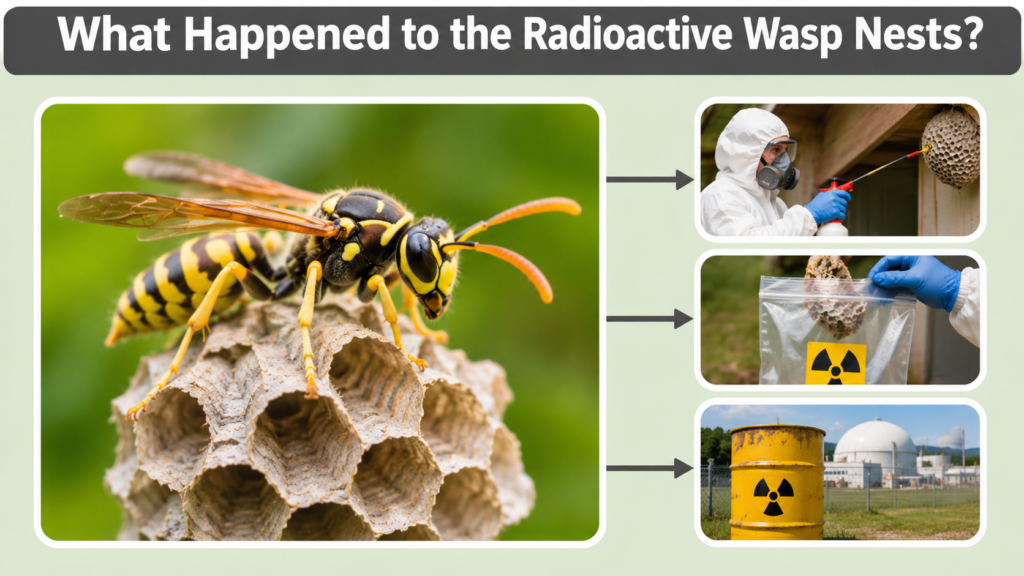
After the contaminated nests were identified, site personnel followed radiological control procedures to prevent further movement of potentially contaminated material. The response involved treating the nests, removing them from their locations, and managing the materials as radioactive waste.
How Were the Nests Removed?
Workers treated the nests with insecticide before removing them.
The first discovered nest was placed in a bag and handled as radiological waste.
Personnel also inspected the surrounding area for additional contamination.
This removal was carried out by trained workers operating within a controlled nuclear facility, not through ordinary household pest-control procedures.
Why Is Environmental Monitoring Important?
Environmental monitoring helps facilities identify unexpected contamination before it develops into a larger problem.
Wildlife can sometimes act as an indicator of environmental conditions because animals interact with soil, vegetation, water, and other materials.
Discoveries involving contaminated nests can prompt additional surveys, identify previously overlooked contamination pathways, and improve waste-management practices.
FAQs
1. Where Was the Radioactive Wasp Nest Found?
The first radioactive wasp nest was found on July 3, 2025, at the Savannah River Site near Aiken, South Carolina. It was attached to a post near a radioactive liquid waste storage tank in the F Tank Farm.
2. How Many Radioactive Wasp Nests Were Discovered?
Four radioactive wasp nests were reported at the Savannah River Site by July 31, 2025. Workers initially discovered one during routine monitoring and subsequently identified three additional contaminated nests in the same general tank farm area.
3. Are Radioactive Wasps Dangerous?
The risk depends on the amount and type of radioactive contamination. Officials stated that the nests discovered in South Carolina did not pose an identified health threat to workers or the public. There was no evidence of unusually dangerous radioactive stings.
4. Why Did the Wasp Nests Become Radioactive?
Investigators believed the nests became contaminated when wasps gathered nesting materials from areas containing radioactive residues left by historical nuclear operations. The exact material sources and contamination pathways were not fully identified in the initial public reports.
5. Did the Radioactive Wasp Nests Cause a Nuclear Emergency?
No nuclear emergency was reported as a result of the discoveries. Workers removed the contaminated nests, inspected the surrounding areas, and continued monitoring. Officials reported no newly identified waste-tank leak associated with the incident.
