
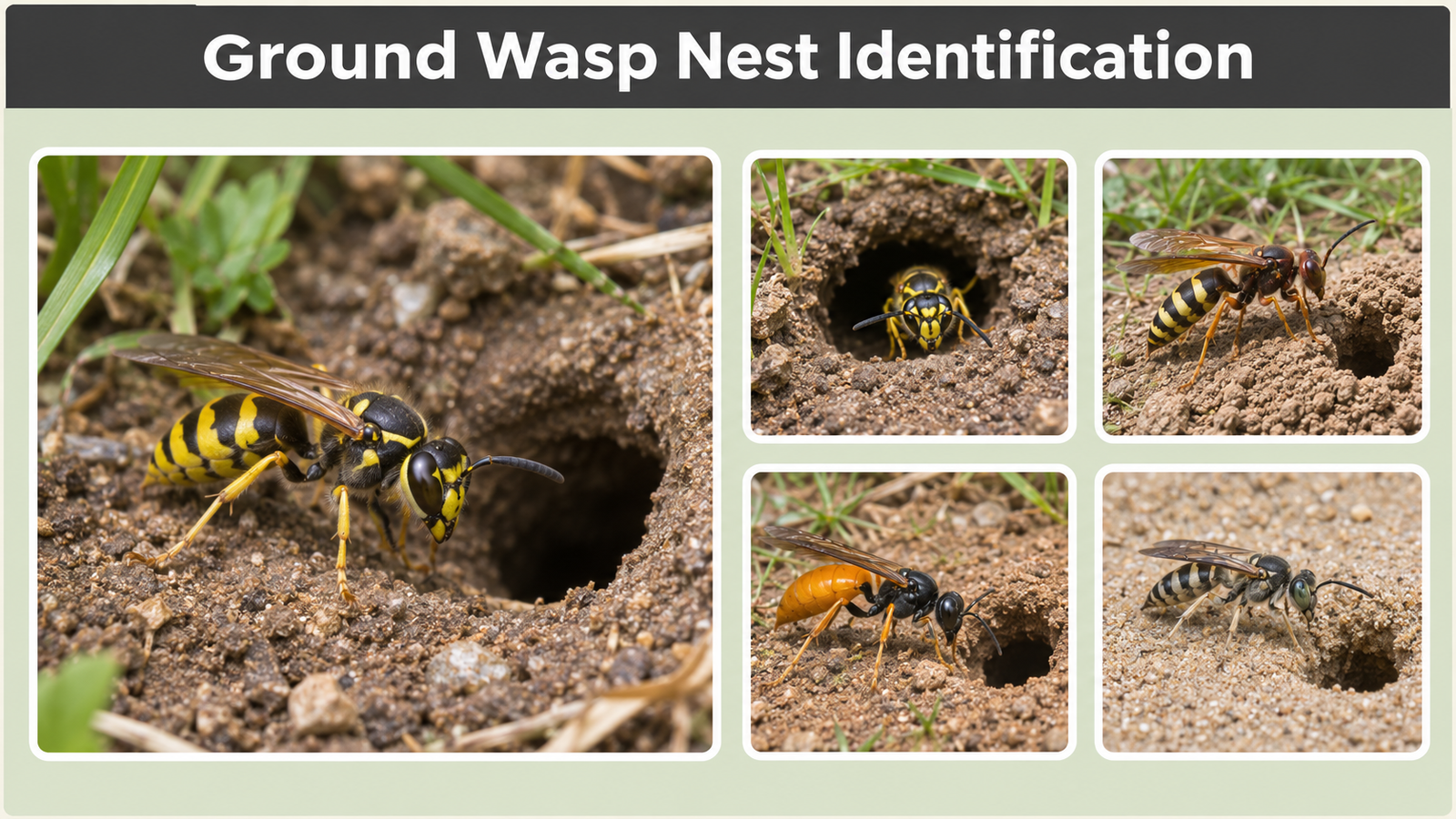
Finding small holes in your lawn or garden with wasps flying around them can be concerning. However, not every underground nest belongs to aggressive wasps. Some species form large colonies, while others live alone and rarely sting people. Proper ground wasp nest identification helps you recognize the insects, understand their nesting habits, and decide whether removal is necessary. This guide explains what ground wasp nests look like, how to identify common ground-nesting species, and which warning signs indicate a potentially dangerous colony.
What Does a Ground Wasp Nest Look Like?
Ground wasp nests usually appear as holes or burrows in soil, sometimes surrounded by loose dirt. Their appearance depends on the species, soil conditions, and whether the insects excavated the burrow themselves or occupied an existing cavity. Watching activity around the entrance is often more useful than examining the hole alone.
Common Signs of a Ground Wasp Nest
Several characteristics can help you identify an underground wasp nest.
- Round entrance holes: Openings may range from tiny tunnels to holes an inch or more across.
- Frequent wasp activity: Repeated flights into and out of an opening suggest an occupied nest.
- Loose soil: Freshly excavated dirt around a hole is common with solitary digger wasps.
- Sandy locations: Some species prefer exposed, well-drained soil.
- Defensive behavior: Large numbers of wasps reacting to disturbances may indicate a social colony.
Observe suspected nests from a distance. Never insert sticks or tools into an active entrance.
Ground Wasp Nest Hole Size and Shape
Entrance size varies considerably between species.
Yellowjackets often use existing underground cavities, with an opening around one to two inches across. Their entrances may have little loose soil surrounding them.
Cicada killer wasps construct larger burrows, often with noticeable piles of excavated soil nearby.
Smaller sand and digger wasps may create narrow tunnels surrounded by modest amounts of loose dirt.
Hole size alone cannot confirm identification.
Common Types of Ground-Nesting Wasps
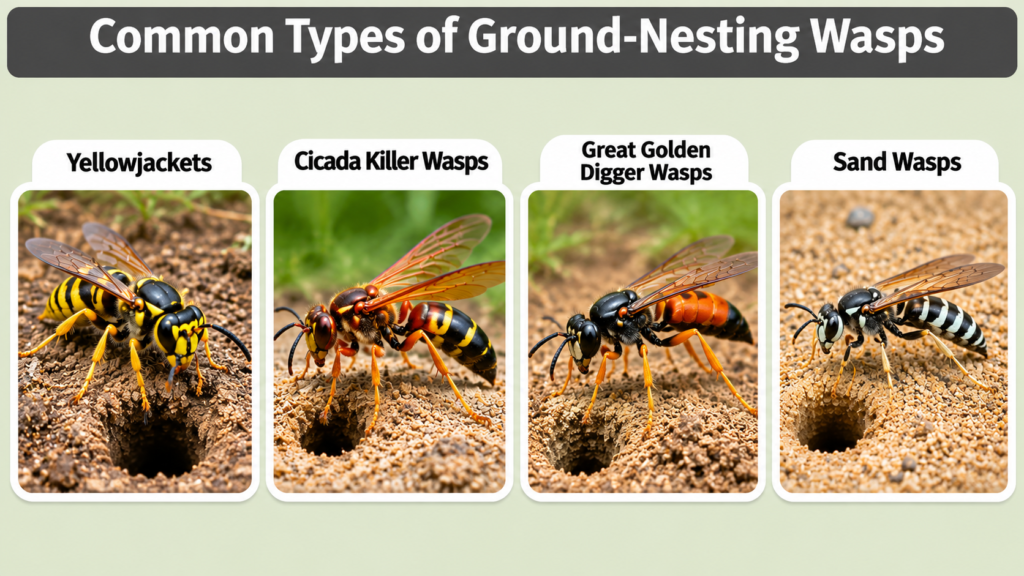
Several North American wasp species nest underground. Some are social insects that aggressively protect their colonies, while others are solitary hunters that generally avoid confrontation. Understanding their appearance, nesting patterns, and behavior makes identification easier and helps prevent unnecessary pesticide applications.
1. Yellowjackets
Yellowjackets are among the most commonly encountered social wasps nesting underground.
They frequently occupy abandoned rodent burrows, hollow spaces, and other protected cavities.
Identification features:
- Small, smooth-bodied wasps, commonly 3/8–5/8 inch long.
- Distinctive yellow-and-black markings.
- Many workers enter and leave the same opening.
- Underground nests often lack large soil mounds.
- Defensive behavior when the colony is disturbed.
Yellowjacket colonies can become substantial by late summer. Avoid approaching heavily occupied entrances.
2. Cicada Killer Wasps
Eastern cicada killers (Sphecius speciosus) are large solitary wasps that construct burrows in lawns, gardens, and sandy areas.
Despite their intimidating size, they are generally not aggressive toward people.
Identification features:
- Large bodies, typically around 1–2 inches long.
- Black abdomen with yellow markings.
- Reddish-brown legs and amber-colored wings.
- Burrow entrances accompanied by loose soil.
- Activity in sunny locations during summer.
Female cicada killers capture cicadas to provide food for their larvae. Territorial males may fly toward people, but they cannot sting.
3. Great Golden Digger Wasps
Great golden digger wasps (Sphex ichneumoneus) are solitary insects commonly found around gardens and open landscapes.
They excavate underground tunnels and provision them with insects for their developing young.
Identification features:
- Black and golden-yellow coloration.
- Reddish-orange and black abdomen.
- Orange-colored legs.
- Burrows in soil, sometimes clustered together.
- Generally nonaggressive behavior.
Although multiple wasps may nest close together, each female maintains her own nest.
4. Sand Wasps
Sand wasps, including species of Bembix, construct nests in loose, sandy ground.
They are frequently encountered in beaches, playgrounds, sandy lawns, and exposed garden soil.
Identification features:
- Usually black with pale yellow or white markings.
- Compact body compared with many thread-waisted wasps.
- Small burrows in sandy ground.
- Multiple individual nests sometimes clustered together.
- Adults frequently seen carrying captured flies.
Sand wasps are beneficial predators and rarely pose a significant threat to people.
Ground Wasp Nest Identification by Location
Ground-nesting wasps select nesting locations according to soil conditions, shelter, and access to food. Identifying the surroundings can provide useful clues about which species created a particular nest. However, the same habitat can support several different kinds of insects, so location should never be the only identification method.
Ground Wasp Nests in Lawns
Lawn nests often appear in thin grass, bare patches, and well-drained soil.
Yellowjackets may occupy existing underground cavities, while cicada killers actively excavate their own burrows.
Watch for repeated insect movements around an opening without walking directly over it.
Multiple separate holes with occasional individual wasps often indicate solitary species rather than a shared social colony.
Wasp Nests in Sandy Ground
Sandy soil is particularly attractive to many digger and sand wasps because it is easier to excavate.
Small mounds of loose sand may surround the burrow entrances.
Several females can establish nests close together, creating the appearance of a large colony even though they nest individually.
Ground Wasp Nests Near Foundations
Wasps sometimes use protected soil cavities beside buildings, patios, and foundations.
Yellowjackets can occupy openings near structural edges, making their colonies difficult to notice.
If numerous wasps enter a single opening near a frequently used doorway, keep people away and arrange professional identification.
Ground Wasp Nest vs. Ground Bee Nest
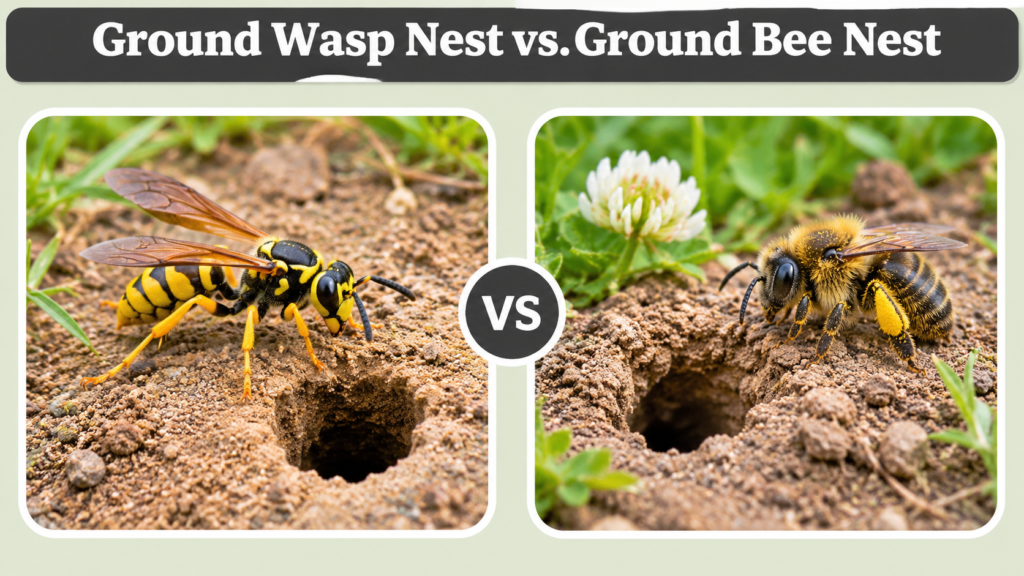
Ground-nesting wasps are frequently confused with ground bees because both may create small holes in lawns and gardens. Although their nests can look similar, differences in body appearance, behavior, and food collection can help distinguish them. Bumble bees are another possibility because some species also nest underground.
Key Identification Differences
| Feature | Ground Wasps | Ground-Nesting Bees |
| Body | Often smooth and less hairy | Usually noticeably hairy |
| Color | Often black and yellow, varies | Brown, black, yellow, or metallic |
| Nest entrance | Varies by species | Often small holes with soil mounds |
| Food collection | Often hunt insects | Collect pollen and nectar |
| Behavior | Social species may defend nests | Many solitary species are gentle |
How to Tell Them Apart
Look at the insects rather than relying entirely on the nest.
Many solitary ground bees have visibly hairy bodies adapted for carrying pollen. Solitary wasps generally have smoother bodies and may carry insect prey into their burrows.
Bumble bees are social bees and can defend an underground nest, so they should not automatically be treated like harmless solitary bees.
Are Ground Wasp Nests Dangerous?
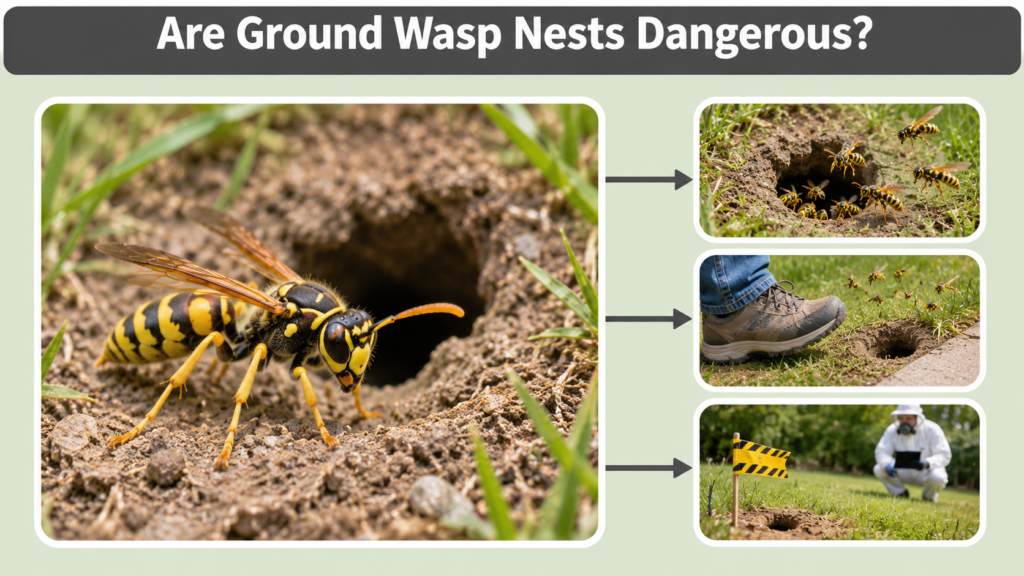
The danger associated with a ground wasp nest depends on its species, colony size, and proximity to human activity. Social yellowjackets are particularly concerning because numerous workers may defend the same nest. Solitary digging wasps are generally much less defensive, although females can sting when handled or trapped.
Signs of an Aggressive Ground Wasp Colony
Watch for the following warning signs:
- Numerous wasps using a single entrance.
- Wasps repeatedly fly toward approaching people.
- Heavy activity around the entrance.
- A nest close to walkways or play areas.
- Wasps emerging after lawn mowing or ground disturbance.
Never deliberately disturb a nest to test how aggressive its occupants are.
When Should You Call Pest Control?
Professional assistance is appropriate when an active nest is close to children, pets, or frequently used outdoor spaces.
It is especially important if someone has a known severe allergy to stings or the colony appears large and defensive.
A trained specialist can identify the insects and determine whether treatment is necessary.
How to Identify Ground Wasp Nests Safely
Accurate identification does not require digging or opening the nest. Careful visual observation can provide enough information to distinguish common solitary wasps from social species without creating unnecessary risks. A photograph taken from a safe distance can also help an extension specialist or pest control professional identify the insects.
Observe the Entrance From a Distance
Look for the number of insects using the opening, whether soil surrounds it, and whether individual wasps are carrying prey.
Avoid standing in the flight path or approaching the nest with a camera.
If identification remains uncertain, contact your local cooperative extension service.
Avoid Disturbing Active Nests
Do not pour water into suspected nests, block entrances, or dig around them.
These actions can provoke defensive wasps and create unnecessary sting risks.
When a colony poses little danger, leaving it undisturbed is often preferable.
FAQs
1. How Can You Identify a Ground Wasp Nest?
Look for a hole in the soil with wasps entering and leaving it. Yellowjackets typically use shared entrances, while solitary digger wasps create individual burrows. Entrance shape, loose soil, insect appearance, and activity patterns provide useful identification clues.
2. What Does a Yellowjacket Nest Look Like in the Ground?
A ground yellowjacket nest often has a relatively small entrance leading into an existing underground cavity. Many yellow-and-black workers may enter and leave the same opening. Unlike some solitary wasps, yellowjackets often leave little excavated soil around the entrance.
3. Do Ground Wasps Make Dirt Mounds?
Some do. Cicada killers, sand wasps, and other digging species may leave small or large piles of soil beside their entrances. Yellowjackets often occupy existing cavities without creating obvious mounds. Soil piles alone cannot identify a particular species.
4. Are All Ground-Nesting Wasps Aggressive?
No. Many solitary ground-nesting wasps rarely sting unless handled or threatened. Social yellowjackets can be considerably more defensive because numerous workers protect one colony. Identifying the insects before deciding on control helps avoid unnecessary removal.
5. How Deep Are Ground Wasp Nests?
Depth varies according to species and soil conditions. Solitary wasps may excavate tunnels with several nesting chambers, while yellowjackets can occupy deeper preexisting underground cavities. The visible entrance does not reliably indicate the depth or extent of the nest.
