
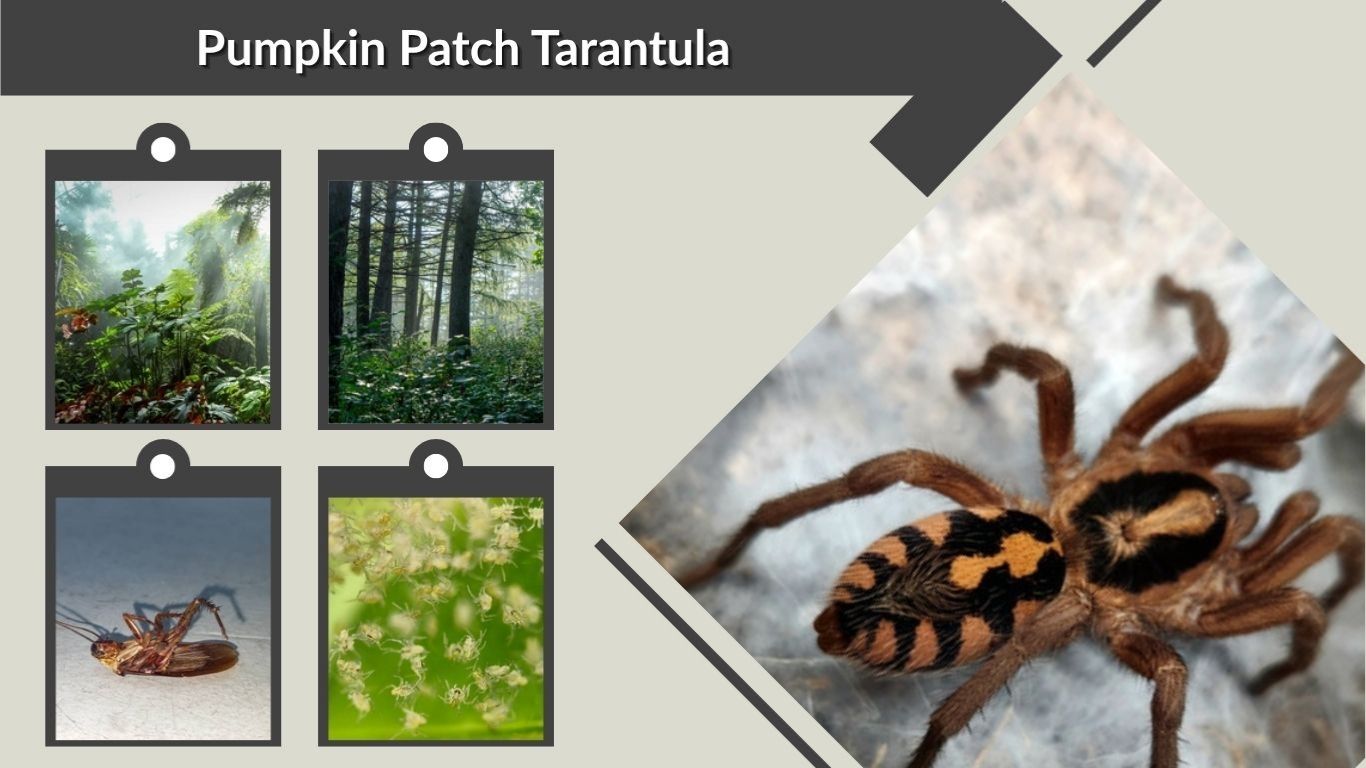
Pumpkin Patch Tarantulas, commonly referred to as Hapalopus species, are among the smallest and most visually striking tarantulas in the world. Their name comes from the bright orange markings on their abdomen that resemble tiny pumpkins scattered across a dark background. Native to South America, these dwarf tarantulas are especially popular among hobbyists due to their manageable size, fast growth, and relatively simple care requirements. Despite their small size, they are active, fascinating predators that play an important role in their natural ecosystem.
Physical Identification
Pumpkin Patch Tarantulas are easy to recognize once you know their key features. Their unique coloration and compact size make them stand out from larger, more common tarantulas.
Key Identification Features
- Bright orange spots or patterns on a dark black or brown abdomen
- Small, compact body typical of dwarf tarantulas
- Fine hairs covering the legs and body
- Distinct pattern that resembles miniature pumpkins
Species Variants
There are two commonly recognized variants of Pumpkin Patch Tarantulas, often referred to in the hobby as the “large form” and “small form.” The large form grows slightly bigger and is more commonly available, while the small form remains extremely tiny even as an adult. Both share similar coloration and behavior, making them equally appealing to enthusiasts.
Male vs Female Differences
Females are generally larger and have a longer lifespan compared to males. They tend to remain in their enclosure or burrow, showing steady growth over time. Males are smaller and more slender, and once they reach maturity, they typically focus on reproduction and do not live as long.
Size and Measurements

Pumpkin Patch Tarantulas are considered dwarf species, meaning they stay small throughout their lives.
- Body Length: Around 2–4 cm
- Leg Span: Approximately 5–8 cm
- Weight: Very light compared to larger tarantulas
- Growth Rate: Fast-growing, especially during early stages
Habitat and Distribution

These tarantulas are native to tropical regions of South America, where they thrive in warm and humid environments.
Geographic Range
Pumpkin Patch Tarantulas are primarily found in Colombia and nearby regions. Their distribution is limited to areas that provide the right balance of warmth, humidity, and shelter.
Preferred Habitat
They prefer tropical forests where the ground is covered with leaf litter and organic material. This environment offers both protection and a steady supply of small prey. The humid conditions are essential for their survival and proper growth.
Natural Microhabitat
In the wild, these spiders live close to the ground. They may create small burrows or take shelter under leaves, logs, or debris. They often reinforce their living space with silk, creating a secure and hidden retreat. Unlike larger tarantulas that dig deep burrows, Pumpkin Patch Tarantulas rely more on shallow hiding spots and webbing.
Behavior and Temperament
Pumpkin Patch Tarantulas are known for their active and energetic behavior, which makes them interesting to observe.
General Behavior
These spiders are quite active compared to many other tarantulas. They explore their surroundings frequently and respond quickly to movement. Their small size allows them to move rapidly, making them efficient hunters.
Temperament
They are generally considered calm, but their speed can make them seem unpredictable. Instead of being aggressive, they prefer to flee when disturbed. However, due to their quick movements, they can be difficult to handle safely.
Activity Patterns
Pumpkin Patch Tarantulas are mostly nocturnal. They become more active at night when they search for food and maintain their webbing. During the day, they tend to stay hidden in their shelter or under cover.
Diet and Feeding Habits

Despite their small size, Pumpkin Patch Tarantulas are effective predators with a strong feeding response.
- Primary Diet: Small insects such as fruit flies, pinhead crickets, and tiny roaches
- Juvenile Feeding: Very small prey items suited to their size
- Hunting Style: Active hunters that rely on speed and quick strikes
- Feeding Frequency: Require regular feeding due to fast metabolism
Lifespan and Lifecycle
The lifespan of Pumpkin Patch Tarantulas varies between males and females, with females living significantly longer.
Lifespan
Females can live for several years under proper conditions, while males have a shorter lifespan, especially after reaching maturity. This difference is common among tarantula species.
Growth and Molting
Like all tarantulas, Pumpkin Patch species grow by molting. During this process, they shed their exoskeleton to allow for growth. Young spiders molt frequently, which contributes to their rapid development.
Reproduction
Breeding involves the male approaching the female carefully, as females may be defensive. After mating, the female produces an egg sac containing many eggs. Once hatched, the spiderlings begin life as tiny versions of the adults and grow quickly with proper feeding.
Lifecycle and Development
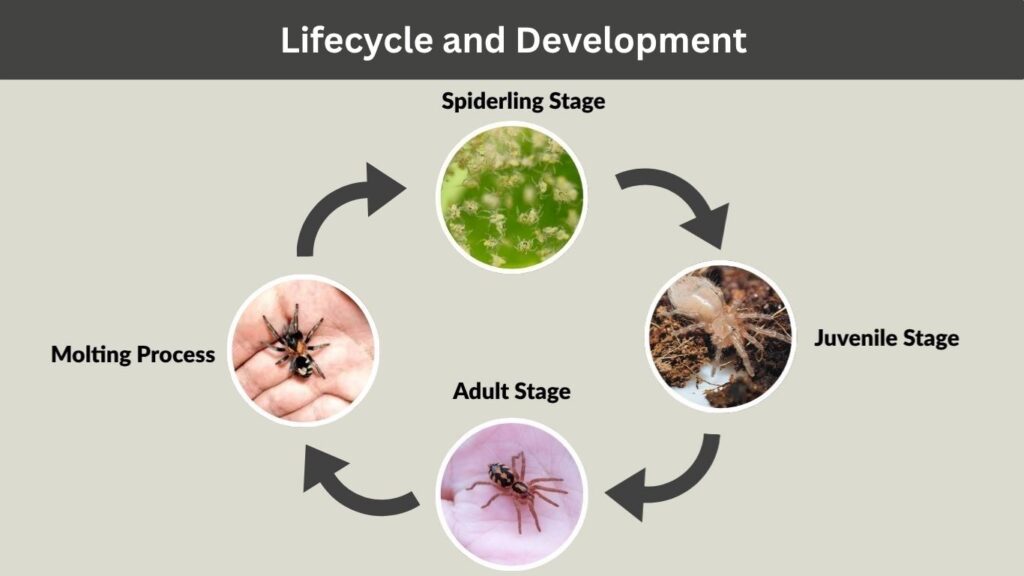
The development of Pumpkin Patch Tarantulas is relatively fast compared to larger tarantula species, making them popular among hobbyists who enjoy observing growth stages.
- Spiderling Stage: Tiny and delicate, requiring very small prey and frequent feeding
- Juvenile Stage: Rapid growth with increased activity and stronger hunting ability
- Adult Stage: Fully developed coloration with pumpkin-like markings
- Molting Process: Regular shedding of the exoskeleton for growth
- Lifespan: Females live longer than males, often several years
Pumpkin Patch Tarantula Care and Enclosure
These tarantulas are considered relatively easy to care for, but their small size and speed require attention to detail.
- Enclosure Type: Small, secure enclosure with good ventilation
- Substrate: Slightly moist soil or coconut fiber to support humidity
- Humidity: Moderate to high, reflecting tropical conditions
- Temperature: Warm environment similar to natural habitat
- Handling: Minimal handling recommended due to speed and fragility
Pumpkin Patch Tarantula vs Other Dwarf Tarantulas

This comparison helps highlight how Pumpkin Patch Tarantulas differ from other small tarantula species.
| Feature | Pumpkin Patch Tarantula | Trinidad Dwarf Tarantula | Brazilian Blue Dwarf |
| Size | Very small | Small | Small |
| Color | Orange & black | Brown | Blue tint |
| Temperament | Calm but fast | Skittish | Moderate |
| Care Level | Beginner-friendly | Intermediate | Intermediate |
| Webbing | Moderate | Heavy | Light |
Role in the Ecosystem
Pumpkin Patch Tarantulas play a small but important role in their ecosystem. As predators, they help control populations of insects and other tiny invertebrates on the forest floor. This contributes to maintaining balance within their habitat. In turn, they may serve as prey for larger animals, making them part of the broader food chain.
Threats and Conservation
Although not widely considered endangered, Pumpkin Patch Tarantulas still face certain environmental pressures.
- Habitat Loss: Deforestation in tropical regions reduces natural habitat
- Pet Trade: High demand among hobbyists may impact wild populations
- Environmental Changes: Climate shifts affecting humidity and ecosystems
- Conservation Awareness: Importance of sustainable and ethical sourcing
Interesting Facts
Pumpkin Patch Tarantulas are unique and fascinating despite their small size.
- Named for their pumpkin-like markings on the abdomen
- Among the smallest tarantula species in the world
- Popular among beginners due to manageable care
- Extremely fast-moving despite their tiny size
Conclusion
Pumpkin Patch Tarantulas are a perfect example of how even small creatures can be incredibly fascinating. Their bright coloration, active behavior, and ease of care make them a favorite among tarantula enthusiasts. While they may not have the size of larger species, their unique appearance and quick movements make them just as captivating.
FAQs
What is a Pumpkin Patch Tarantula?
It is a small tarantula species from South America known for its orange and black pattern that resembles pumpkins. It belongs to the Hapalopus genus and is popular in the pet trade.
Are Pumpkin Patch Tarantulas good for beginners?
Yes, they are generally considered beginner-friendly due to their simple care needs. However, their speed and small size require careful handling and secure enclosures.
What do Pumpkin Patch Tarantulas eat?
They primarily eat small insects such as fruit flies and tiny crickets. Younger spiders need very small prey due to their size.
How big do Pumpkin Patch Tarantulas get?
They remain small throughout their lives, usually reaching a leg span of about 5–8 cm, making them one of the smallest tarantulas.
