
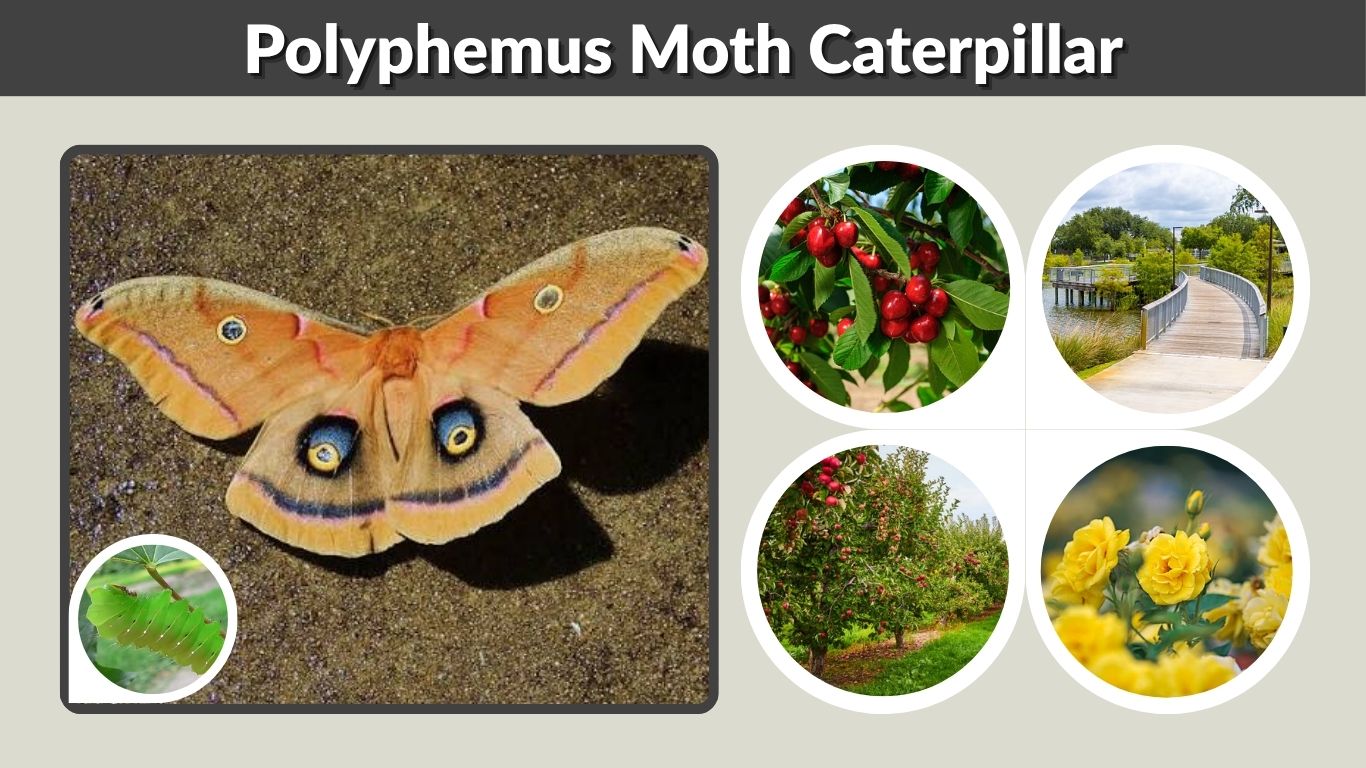
The Polyphemus moth caterpillar is the larval stage of Antheraea polyphemus, one of North America’s largest and most recognizable giant silk moths. This chunky green caterpillar spends most of its early life eating leaves and growing rapidly before spinning a tough silk cocoon. Although its size and bristly appearance can seem intimidating, it is generally harmless to people. Understanding its appearance, diet, host plants, growth stages, cocoon, and care requirements makes it much easier to identify this fascinating caterpillar in gardens, forests, and wooded areas.
What Does a Polyphemus Moth Caterpillar Look Like?
Polyphemus moth caterpillars change considerably as they grow. Newly hatched larvae are small, while mature caterpillars become thick-bodied, bright green, and several inches long.
They belong to the Saturniidae family, commonly known as giant silk moths.
Polyphemus Moth Caterpillar Identification
A mature Polyphemus caterpillar usually has several noticeable characteristics:
- Large, thick green body
- Small raised yellow, orange, or reddish tubercles
- Fine hairs growing from the tubercles
- Yellowish lines along the sides
- Clearly visible body segments
- Several pairs of fleshy prolegs
- Brownish head in some developmental stages
The green coloration provides excellent camouflage among foliage, helping protect the caterpillar while it feeds.
Polyphemus Moth Caterpillar Size
A mature Polyphemus moth caterpillar can reach approximately 3 to 4 inches long, although individual size varies.
Its body becomes considerably thicker during later developmental stages. A fully grown caterpillar can appear surprisingly large compared with many common garden caterpillars.
Much of this growth occurs because the caterpillar spends its larval life eating and storing energy needed for metamorphosis and adulthood.
What Do Polyphemus Moth Caterpillars Eat?
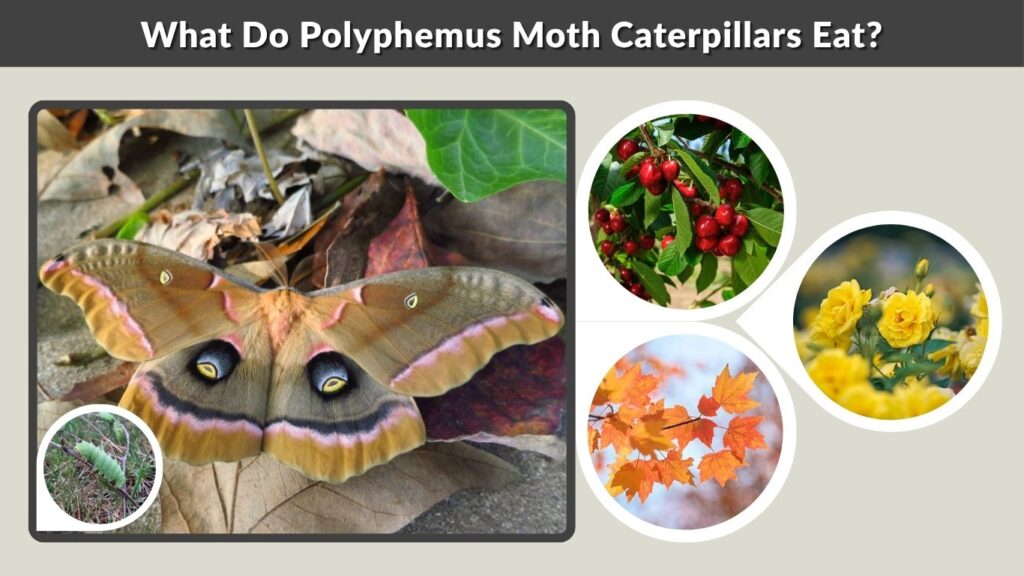
The Polyphemus moth caterpillar diet consists mainly of fresh leaves from deciduous trees and shrubs. Caterpillars may eat large quantities as they approach maturity.
Adults are completely different. Adult Polyphemus moths have reduced mouthparts and do not normally eat.
Common Polyphemus Caterpillar Host Plants
Polyphemus caterpillars can use numerous host plants, including:
- Oak
- Maple
- Birch
- Willow
- Hickory
- Elm
- Beech
- Apple
- Cherry
- Rose
Available host plants differ depending on geographic location.
Once a caterpillar is feeding successfully on a particular plant species, it is generally preferable for it to continue receiving fresh leaves from the same type of plant rather than being repeatedly switched between different foods.
How Much Do They Eat?
Young larvae eat relatively small amounts, but their appetite increases dramatically as they grow.
Large caterpillars may consume substantial portions of leaves each day. This heavy feeding is normal because the larval stage is essentially the moth’s primary opportunity to acquire nutrients.
The stored energy later supports pupation, emergence, flight, mating, and reproduction.
Polyphemus Moth Caterpillar Stages
The Polyphemus moth undergoes complete metamorphosis, progressing through egg, larva, pupa, and adult stages.
The caterpillar itself passes through several growth periods known as instars.
Caterpillar Instars
Polyphemus caterpillars typically pass through five larval instars. An instar is the period between two molts.
During development, the caterpillar:
- Hatches from its egg.
- Begins feeding on host leaves.
- Grows until its outer skin becomes restrictive.
- Molts and enters the next instar.
- Repeats this process until fully grown.
Its coloration, body size, and appearance may change during these stages.
By the final instar, the caterpillar is large, green, and ready to prepare for pupation.
Polyphemus Moth Caterpillar Cocoon
Once mature, the caterpillar stops feeding and searches for an appropriate place to pupate.
It produces silk and forms a tough oval-shaped cocoon, often incorporating leaves into its construction. Cocoons may remain attached to branches or eventually fall among leaf litter.
Inside, the caterpillar transforms into a pupa.
Depending on climate and season, the moth may remain inside its cocoon for an extended period before emerging.
Metamorphosis Into an Adult Moth
When development is complete, the adult Polyphemus moth emerges from its cocoon.
Its wings initially look small and wrinkled. The moth pumps fluid into them until they expand to their full size and then waits for the wings to harden.
The adult has large tan-to-brown wings featuring prominent eyespots on the hindwings. Those markings inspired the name Polyphemus, after the one-eyed Cyclops of Greek mythology.
Polyphemus Moth Caterpillar Care
People sometimes encounter Polyphemus caterpillars outdoors and attempt to raise them until adulthood. Proper care requires plenty of fresh host leaves, good ventilation, cleanliness, and enough room for growth.
Wild caterpillars generally do best when left in their natural environment unless they are being raised responsibly.
Feeding a Polyphemus Caterpillar
Provide fresh leaves from a suitable host plant that the caterpillar is already eating.
Fresh food should be available regularly because mature caterpillars have large appetites. Remove old, dry, or moldy leaves promptly.
Avoid leaves that have been treated with pesticides, insecticides, or other garden chemicals. Even small chemical residues can be harmful to caterpillars.
Keeping the Enclosure Clean
Caterpillars produce considerable waste, especially as they grow.
An enclosure should therefore be cleaned regularly. Remove droppings, spoiled leaves, and excess moisture to reduce mold and bacterial growth.
Adequate ventilation is particularly important. A container that remains constantly wet or poorly ventilated can create unhealthy conditions.
When the caterpillar becomes mature and stops eating, it should have suitable leaves, twigs, and enough space to construct its cocoon without disturbance.
Is a Polyphemus Moth Caterpillar Poisonous?
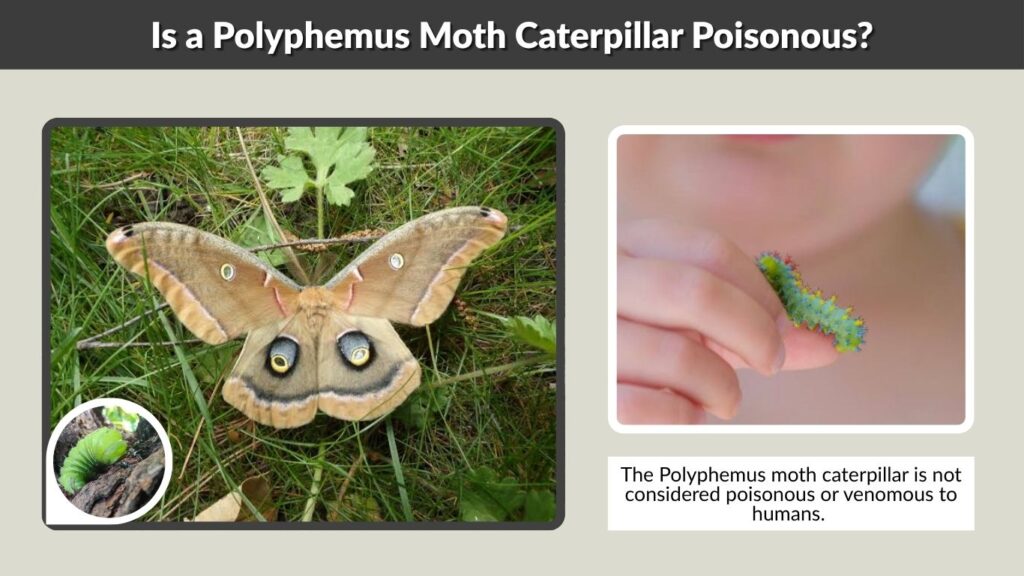
The Polyphemus moth caterpillar is not considered poisonous or venomous to humans. It does not possess the powerful stinging spines associated with dangerous caterpillars such as some flannel moth or giant silkworm species.
Its bristly appearance can easily cause confusion, however.
Can a Polyphemus Caterpillar Sting or Bite?
Polyphemus caterpillars are not known for delivering a venomous sting. They are also unlikely to bite people defensively.
Even so, unnecessary handling should be avoided. Caterpillars are delicate, and some people may experience mild skin irritation after contact with insect hairs or other materials on a caterpillar’s body.
Watching the caterpillar without handling it is usually the safest option for both the insect and observer.
Polyphemus vs Luna Moth Caterpillar
Polyphemus and Luna moth caterpillars can be difficult to distinguish because both are large green caterpillars belonging to the Saturniidae family.
However, there are several differences worth examining.
Polyphemus Caterpillar vs Luna Caterpillar
Both species have green bodies and small raised tubercles, but their markings and body details differ.
Polyphemus caterpillars often appear robust and have more noticeable yellowish side markings. Luna moth caterpillars are also bright green but may show a different arrangement of reddish or orange tubercles and lateral coloration.
Host plants can overlap, making the plant alone unreliable for identification.
The adult moths are much easier to distinguish. Luna moths are famous for pale green wings and long hindwing tails, while Polyphemus moths are tan or brown with enormous eyespots.
Polyphemus Moth Caterpillar Habitat and Range
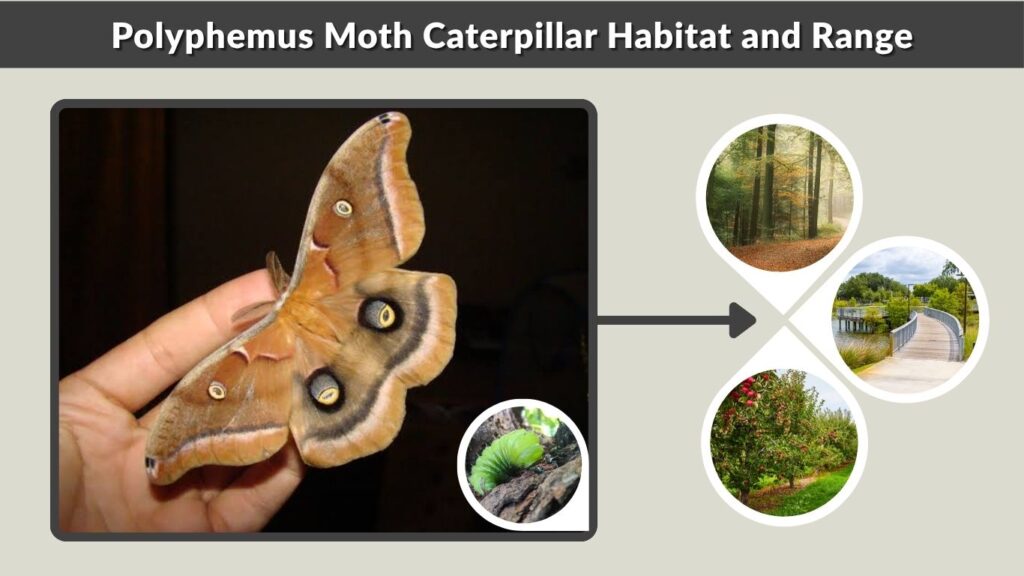
Polyphemus moths are widely distributed across much of North America. Caterpillars occur wherever suitable host trees and shrubs are available.
They may be found in forests, woodland edges, parks, gardens, orchards, and suburban areas containing deciduous trees.
Because caterpillars blend effectively with green leaves, they can be present even when people rarely notice them.
Is the Polyphemus Caterpillar a Garden Friend or Foe?
Polyphemus caterpillars eat foliage, so an individual caterpillar can remove a noticeable number of leaves while developing.
However, they generally do not occur in the enormous concentrations associated with serious defoliating pest outbreaks. A healthy mature tree can usually tolerate feeding from a small number of caterpillars.
For that reason, discovering one on a tree does not automatically mean pest control is necessary.
FAQs
Are Polyphemus moth caterpillars poisonous?
No. Polyphemus moth caterpillars are not considered poisonous or dangerously venomous to humans. Their tubercles and hairs may look threatening, but they lack the potent stinging structures associated with some harmful caterpillar species. It is still better to avoid unnecessary handling.
What does a Polyphemus moth caterpillar eat?
Polyphemus caterpillars eat leaves from many deciduous trees and shrubs. Common host plants include oak, maple, birch, willow, hickory, elm, apple, cherry, and rose. Caterpillars eat increasingly large quantities as they grow and approach their final larval stage.
How long does a Polyphemus caterpillar stay in its cocoon?
The amount of time varies with season, climate, and generation. During warm weather, development may progress relatively quickly, while caterpillars that pupate later in the year can remain inside their cocoons through winter before adults emerge when conditions become suitable.
Can you touch a Polyphemus moth caterpillar?
A Polyphemus caterpillar is not considered dangerously venomous, but handling is unnecessary. Caterpillars have delicate bodies, and repeated touching can injure or stress them. Some sensitive people may also experience minor irritation from contact with insect hairs, so observation is preferable.
What does a Polyphemus caterpillar turn into?
It becomes an adult Polyphemus moth (Antheraea polyphemus), a giant silk moth with broad tan-to-brown wings. Its most recognizable features are the enormous eyespots on its hindwings, which may help startle or discourage potential predators.
