

The peacock dancing spider is one of the most fascinating and visually stunning spiders in the world. Known for its bright colors and unique courtship dance, this tiny spider has captured global attention through viral videos and nature documentaries. Despite its small size, it stands out as one of the most remarkable examples of behavior and beauty in the insect world.
What Is a Peacock Dancing Spider?
Peacock spiders belong to the Maratus genus, a group of small jumping spiders famous for their vibrant appearance and elaborate mating displays. They are part of the Salticidae family, which includes all jumping spiders.
Scientific Classification
- Genus: Maratus
- Family: Salticidae (jumping spiders)
- Common name origin: Named after peacocks due to colorful display
These spiders are primarily found in Australia and are known for their active hunting style and excellent vision.
Why Are They Called Dancing Spiders?
The name “dancing spider” comes from the male’s courtship behavior. During mating season, male peacock spiders perform a complex dance to attract females.
This dance includes:
- Raising colorful abdominal flaps
- Vibrating their bodies
- Moving their legs in rhythmic patterns
The performance is not just for show—it plays a critical role in survival, as a failed dance can lead to rejection or even being eaten by the female.
What Does a Peacock Spider Look Like?
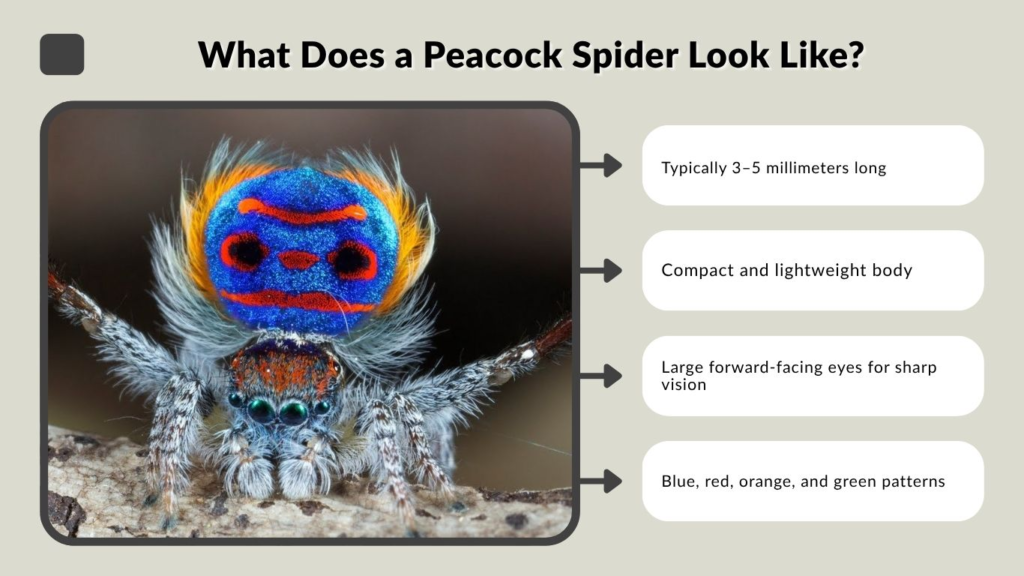
Peacock spiders are extremely small but incredibly colorful, especially the males.
Size and Physical Features
- Typically 3–5 millimeters long
- Compact and lightweight body
- Large forward-facing eyes for sharp vision
Their small size allows them to move quickly and jump efficiently when hunting or escaping danger.
Color Patterns and Appearance
Male peacock spiders are famous for their bright and striking colors, which may include:
- Blue, red, orange, and green patterns
- Iridescent scales that reflect light
- Fan-like flaps on the abdomen used in displays
In contrast, females are much less colorful and usually appear brown or gray, helping them stay hidden from predators.
The Famous Peacock Spider Dance
One of the most unique features of the peacock spider is its elaborate mating dance. This behavior is considered one of the most complex courtship displays in the spider world.
How the Dance Works
The male spider performs a carefully coordinated routine that includes:
- Lifting and spreading its abdominal flaps
- Vibrating its body rapidly
- Waving its legs in a patterned motion
- Moving side to side in a rhythmic sequence
Each movement is designed to attract the female’s attention and demonstrate strength and fitness.
Why They Dance
The dance serves several important purposes:
- Attracts a potential mate
- Signals health and genetic quality
- Reduces the risk of being attacked
If the female is not impressed, she may ignore the male or even attack him. This makes the dance both a mating ritual and a survival strategy.
Where Do Peacock Spiders Live?
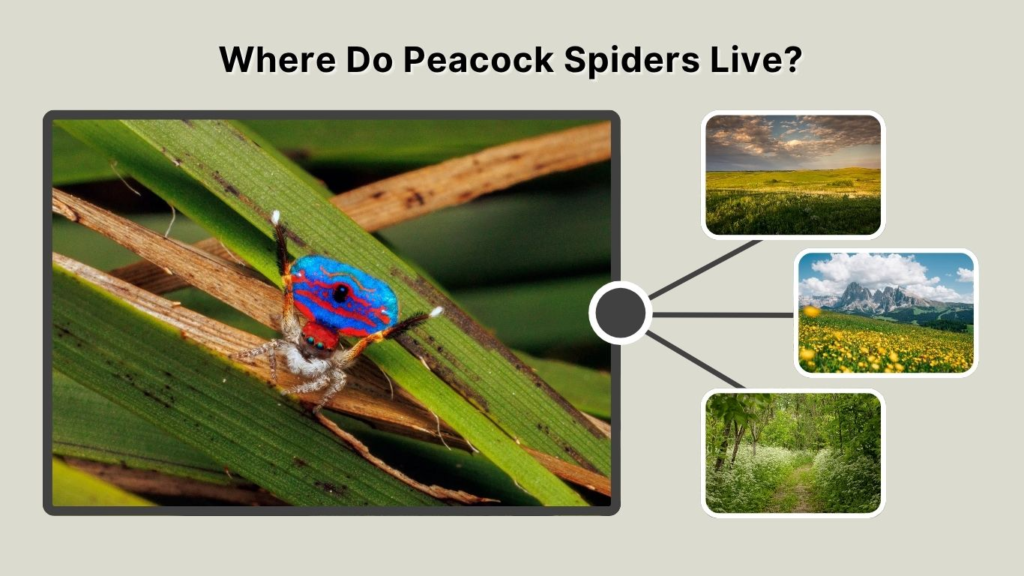
Peacock spiders are native to Australia and are found in a variety of natural environments. They are most commonly seen in open areas where sunlight helps highlight their colorful displays.
Natural Habitat
- Grasslands and meadows
- Shrublands and forests
- Leaf litter and ground vegetation
They prefer areas where they can easily hunt small insects and perform their courtship dances in visible spaces.
Environmental Preferences
- Warm and dry climates
- Areas with good sunlight
- Low vegetation for movement
Their habitat plays an important role in their behavior, especially during mating when visibility is crucial.
Behavior and Lifestyle
Peacock spiders are active, curious, and highly visual hunters. Unlike many other spiders, they do not rely on webs to catch prey.
Hunting Behavior
- Hunt actively during the day
- Use sharp vision to detect movement
- Jump quickly to capture prey
They stalk their prey carefully before making a precise leap, using silk as a safety line in case they miss.
Daily Activity
- Diurnal (active during daylight)
- Constantly exploring surroundings
- Quick and agile movements
Their active lifestyle and reliance on vision make them more similar to small predators than traditional web-building spiders.
Diet of Peacock Dancing Spiders
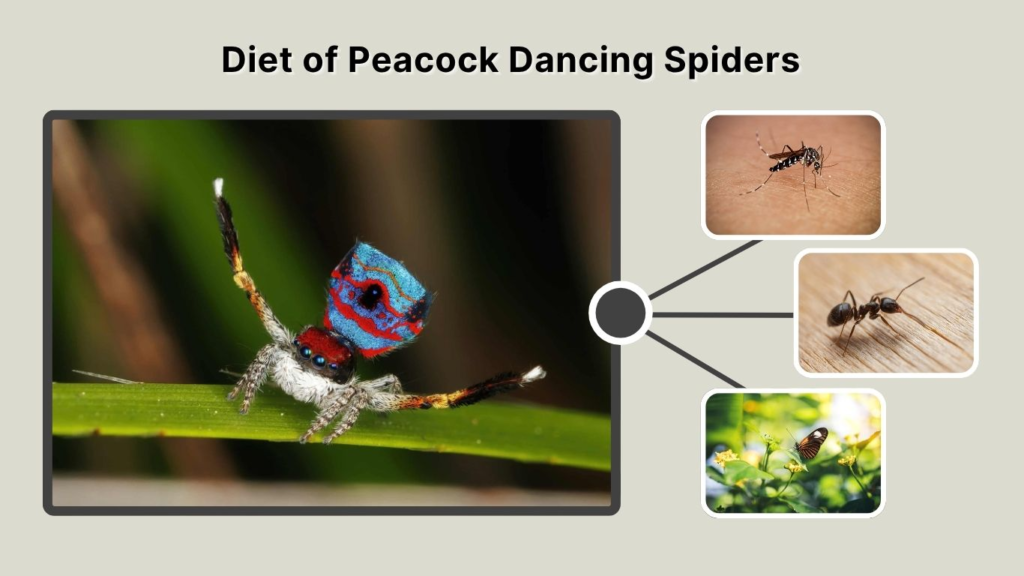
Peacock spiders feed on small insects and other tiny creatures found in their environment. Their diet supports their energy needs, especially during mating season.
Common Food Sources
- Small flies
- Ants
- Tiny insects
Hunting Technique
- Slow stalking approach
- Sudden jumping attack
- Use of silk dragline for safety
This efficient hunting method allows them to survive without building webs.
Are Peacock Dancing Spiders Dangerous?
Peacock spiders may look exotic and unusual, but they are completely harmless to humans. Despite being part of the jumping spider family, they pose no real threat.
Are They Venomous?
- Yes, like most spiders, they have venom
- Venom is used only to catch prey
- Not dangerous to humans
Their venom is too weak to affect humans, and bites are extremely rare.
Interaction With Humans
- Not aggressive by nature
- Prefer to avoid humans
- More likely to run or jump away than bite
Even if a bite occurs, it is usually mild and may feel similar to a small insect bite.
Life Cycle of a Peacock Spider
Peacock spiders have a relatively short life cycle, but it includes fascinating stages, especially during mating.
Mating Process
- Male performs a courtship dance
- Female observes and decides
- Unsuccessful males may be attacked
The mating ritual is risky for males, making their dance extremely important for survival.
Growth Stages
- Egg
- Spiderling (young spider)
- Adult
After hatching, spiderlings grow quickly and develop into adults within a few months.
Interesting Facts About Peacock Dancing Spiders
Peacock spiders are full of surprising traits that make them unique among spiders.
Fun Facts
- Often called the “cutest spiders” due to their appearance
- Each species has a different dance pattern
- Over 90 species have been discovered
- They have excellent vision compared to most spiders
- Their colors come from microscopic scales, not pigments
These features have made them popular in scientific research and online media.
Peacock Spider vs Other Jumping Spiders
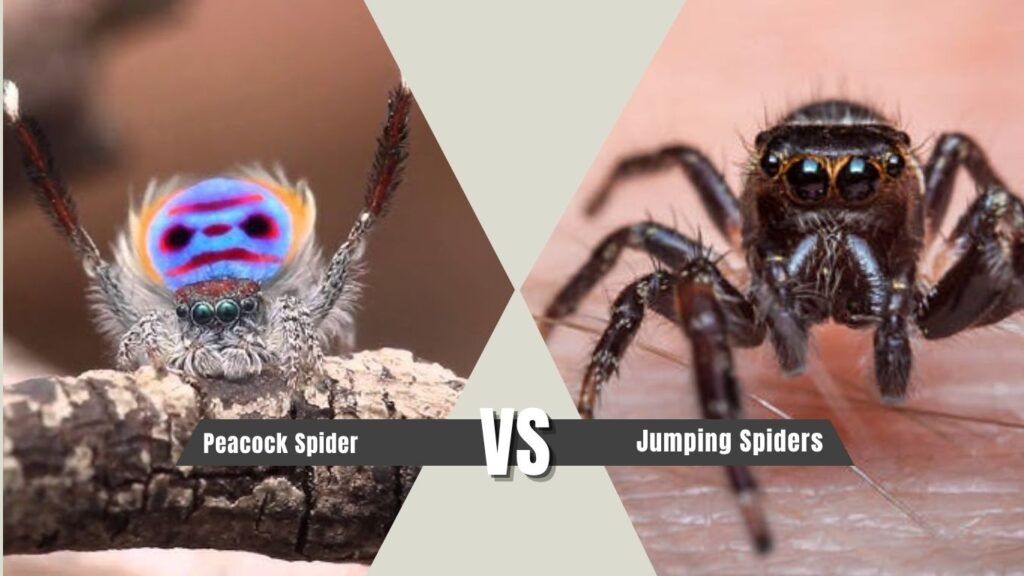
While all peacock spiders are jumping spiders, they have several unique characteristics that set them apart.
Key Differences
| Feature | Peacock Spider | Other Jumping Spiders |
| Color | Bright and vibrant | Usually dull |
| Dance | Complex courtship | Minimal or none |
| Size | Very small | Small to medium |
| Popularity | Highly popular | Less known |
Their bright colors and dance behavior make them stand out even within their own family.
Can You Keep a Peacock Spider as a Pet?
Keeping a peacock spider as a pet is possible but not very common due to their small size and specific needs.
Pet Considerations
- Extremely small and delicate
- Short lifespan (around one year)
- Requires a controlled environment
They are more suitable for observation than handling.
Challenges
- Difficult to handle due to size
- Limited availability outside Australia
- Needs proper humidity and temperature
Because of these factors, they are not ideal for beginners compared to other pet spiders.
FAQs
Why do peacock spiders dance?
Peacock spiders dance as part of their mating ritual. The male uses movement and color to attract a female and show his fitness. A successful dance increases his chances of mating.
Are peacock spiders rare?
They are mostly found in Australia, so they are not commonly seen worldwide. However, many species exist, and new ones continue to be discovered.
Can peacock spiders jump?
Yes, they are jumping spiders and can leap several times their body length. They use this ability for hunting and quick movement.
Are peacock spiders friendly?
They are not aggressive toward humans and usually avoid interaction. They are harmless and prefer to escape rather than bite.
How long do peacock spiders live?
Most peacock spiders live for about one year. Their life cycle is short but includes rapid growth and complex mating behavior.
