

Paper wasps and yellow jackets are two of the most commonly mistaken stinging insects. At first glance, both share similar black and yellow patterns, but their behavior, nests, and aggression levels differ greatly. Understanding these differences is essential for safety and pest management. This guide explains how to tell them apart, what makes each species unique, and how to handle encounters with them safely.
Understanding the Two Species
What Is a Paper Wasp?
Paper wasps belong to the Polistes genus and are known for their slender bodies and long dangling legs during flight. They build open, umbrella-shaped nests made from chewed wood fibers mixed with saliva — the origin of their name “paper.”
They’re generally non-aggressive and only sting when provoked or when defending their nests. Common species include the European Paper Wasp, Northern Paper Wasp, and Red Paper Wasp. Their colonies usually contain a single queen and 20–100 workers.
What Is a Yellow Jacket?
Yellow jackets, belonging to the Vespula or Dolichovespula genera, are stockier and more aggressive than paper wasps. Their bright black-and-yellow markings and fast, darting flight make them easy to recognize once you know the difference.
They build enclosed nests, often underground or inside walls, which can hold thousands of individuals. Yellow jackets are scavengers that feed on meat, sweets, and carrion — making them frequent visitors at picnics and outdoor gatherings.
Identification: Key Physical Differences

Appearance Comparison
| Feature | Paper Wasp | Yellow Jacket |
| Body Shape | Slender, narrow waist | Compact, thick body |
| Coloration | Brown, reddish, or dark with yellow stripes | Bright yellow and black bands |
| Legs in Flight | Hang visibly below body | Tucked close to body |
| Wings | Long, folded along the body | Shorter, rest flat |
| Flight Behavior | Smooth, slow movement | Quick, darting pattern |
Paper wasps appear more “elegant” and elongated, while yellow jackets look muscular and compact. Observing their flight is often enough to tell them apart — paper wasps drift calmly, while yellow jackets zip rapidly in short bursts.
Behavioral Differences
- Paper Wasps: Feed mostly on nectar and caterpillars. They help pollinate flowers and reduce garden pests.
- Yellow Jackets: Aggressive scavengers that forage for meat, sugary drinks, and garbage. They’re drawn to human food and become a nuisance in late summer.
Unlike paper wasps, yellow jackets continue to sting even after the first attack, and multiple individuals will join in defense.
Nesting Habits

Paper Wasp Nests
Paper wasps are expert builders. Their nests look like small umbrellas with exposed hexagonal cells. They’re attached to eaves, porch ceilings, or branches with a thin stalk.
Each nest starts small, built by a single queen in spring. As eggs hatch, workers expand it layer by layer. These nests are usually visible, and their open design makes it easy to identify the inhabitants.
Typical Features:
- Open-celled, papery texture
- Gray or light brown color
- Small colony (usually <100 wasps)
- Built above ground, under shelter
Yellow Jacket Nests
In contrast, yellow jackets construct fully enclosed nests made of a similar papery material, but thicker and multilayered. The nest is often hidden — underground, inside wall cavities, or in hollow trees.
A mature nest can house thousands of wasps, making removal dangerous. As the colony grows, their aggression increases, especially in late summer when resources dwindle.
Typical Features:
- Spherical or oval shape
- Hidden in soil, attics, or wall spaces
- Populations up to 5,000 individuals
- Heavily defended entrance hole
Nest Comparison Overview
| Aspect | Paper Wasp Nest | Yellow Jacket Nest |
| Shape | Open, umbrella-like | Enclosed, layered ball |
| Location | Above ground, visible | Underground or hidden |
| Size | Small (few dozen wasps) | Large (thousands of wasps) |
| Aggression | Moderate | Very aggressive |
If you notice an open, delicate structure under your roofline — it’s likely a paper wasp nest. If wasps are flying in and out of the ground or a hole in your wall, you’re probably dealing with yellow jackets.
Aggression and Defense Behavior

Paper Wasp Temperament
Paper wasps are relatively docile. They don’t seek out confrontation but will defend their nest fiercely if disturbed. Most stings occur when people accidentally brush against their nests while doing outdoor chores. Because they have smaller colonies, their response is limited to a few individuals rather than a full swarm.
Behavioral Traits:
- Mildly territorial
- Non-persistent attackers
- Quick to retreat once the threat is gone
Yellow Jacket Temperament
Yellow jackets, by contrast, are highly territorial and aggressive. They can sting multiple times and even release a pheromone that alerts nearby wasps to attack. Disturbing a yellow jacket nest can lead to a full-scale swarm response.
They’re also more likely to interact with humans — scavenging near trash cans, picnic tables, and outdoor food areas.
Behavioral Traits:
- Extremely protective of the nest
- Can chase intruders for long distances
- Swarm behavior triggered by pheromones
- More aggressive in late summer and early fall
Because of their speed and persistence, yellow jackets are responsible for the majority of wasp-related stings in humans.
Sting Comparison and Treatment
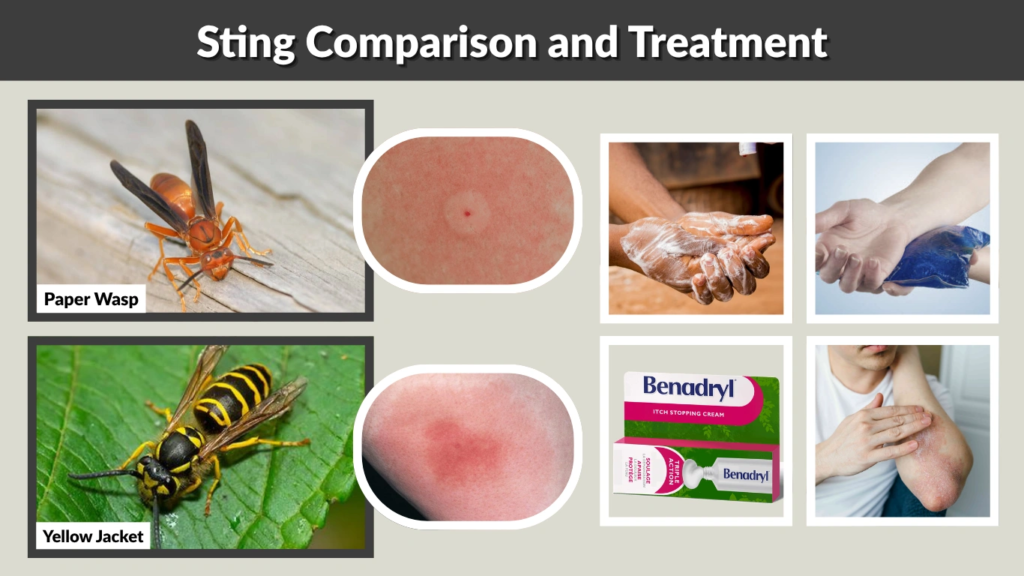
Pain and Reaction
Both species can sting, but their attacks differ significantly.
A paper wasp sting delivers a sharp, burning sensation that fades after a few minutes, leaving localized swelling. A yellow jacket sting, however, is more painful, causes longer-lasting inflammation, and can be repeated several times by the same insect.
| Type | Pain Level | Reaction | Repeat Stings |
| Paper Wasp | Moderate, quick burn | Redness and minor swelling | Usually once |
| Yellow Jacket | Severe, lingering pain | Intense swelling and itching | Multiple times |
Allergic Reactions
Both stings can cause allergic reactions, including hives, dizziness, and swelling beyond the sting site. In rare cases, anaphylaxis may occur — a medical emergency requiring immediate treatment with epinephrine and urgent care.
First Aid and Treatment
If stung:
- Clean the area with soap and water.
- Apply ice to reduce pain and swelling.
- Use antihistamines or hydrocortisone cream to relieve itching.
- Avoid scratching the sting site.
Seek medical attention if you experience difficulty breathing, swelling of the throat, or dizziness.
Diet and Ecological Roles
Paper Wasps
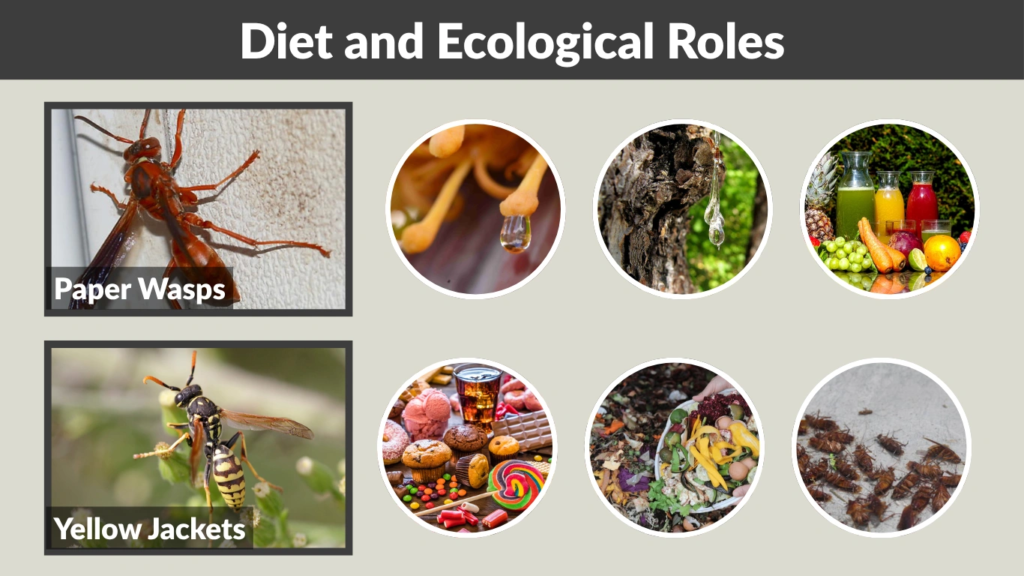
Paper wasps play a surprisingly positive role in the ecosystem. They primarily feed on nectar, which makes them helpful pollinators. Their larvae are fed with caterpillars and soft-bodied insects, helping to control garden pests naturally. Because of this, small paper wasp colonies located far from human areas can often be left undisturbed.
Yellow Jackets
Yellow jackets, on the other hand, are scavengers. They feed on proteins, sugary foods, and decaying organic matter. While they help clean up dead insects and waste, their attraction to human food—especially meat and sugary drinks—makes them frequent uninvited guests at picnics and outdoor gatherings. In nature, they also prey on other insects, contributing to pest control, but near people, they can quickly become aggressive competitors.
Ecological Importance
Despite their bad reputation, both paper wasps and yellow jackets are beneficial. They pollinate plants, feed on pests, and play key roles in maintaining ecological balance. However, their proximity to human dwellings determines whether they’re helpful allies or potential hazards.
Geographic Distribution and Variations
Common Regional Species
Paper wasps and yellow jackets are found on nearly every continent, though specific species differ by region:
- European Paper Wasp (Polistes dominula): Widespread and adaptable, known for aggressive defense near homes.
- Yellow Paper Wasp (Polistes olivaceus): Found across Asia and tropical regions; bright yellow with black bands.
- Arizona Yellow Paper Wasp: Common in the southern United States, builds large exposed nests under roofs.
- Indian Yellow Paper Wasp (Polistes hebraeus): Known for its painful sting and frequent nesting around human structures.
- German Yellow Jacket (Vespula germanica): A highly aggressive species, common in North America and Europe.
Habitat Preferences
- Paper Wasps: Prefer open, sheltered spaces like eaves, porches, and branches.
- Yellow Jackets: Favor underground burrows, hollow logs, and enclosed voids such as wall cavities or attics.
Their nesting locations often reflect the local climate — paper wasps thrive in dry environments, while yellow jackets prefer cooler, shaded areas.
Are They Dangerous?
Paper Wasps
Paper wasps are not inherently dangerous unless disturbed. They will usually ignore human activity unless someone approaches their nest too closely. A single sting is painful but rarely life-threatening unless an allergic reaction occurs. Because they eat pests and pollinate flowers, they’re considered beneficial when nests are located away from people.
Yellow Jackets
Yellow jackets are much more aggressive and likely to sting multiple times. Their colonies can number in the thousands, and a single nest disturbance can release a swarm. Late summer is their peak aggression period, as food sources become scarce. Stings are extremely painful, and multiple stings can be medically serious, particularly for children or allergic individuals.
Human Safety Tips
- Avoid bright clothing and strong perfumes outdoors.
- Keep garbage tightly sealed and clean up food spills immediately.
- Don’t swat at wasps; move away calmly and slowly.
- Regularly inspect property for early signs of nests.
Prevention and Control
How to Prevent Infestations
- Seal entry points: Close cracks, vents, and openings in walls and attics.
- Inspect early: Check eaves and sheds during spring when queens start building small nests.
- Remove attractants: Keep food, drinks, and pet food covered outdoors.
- Maintain cleanliness: Wash trash bins and compost areas regularly to prevent scavenging.
Safe Nest Removal
- Paper Wasp Nests:
Remove at night when wasps are dormant. Wear protective clothing and use a long-range wasp spray. Wait 24 hours before disposing of the nest. - Yellow Jacket Nests:
Never attempt removal on your own. Because they often nest underground or in walls, a professional pest control service is the safest and most effective solution.
Professional Removal Cost:
Ranges from $150–$400, depending on nest size and location. Professional exterminators ensure complete colony removal and apply preventive treatments to stop re-nesting.
Interesting Facts
- Paper wasps can remember human faces, helping them recognize threats near their nests.
- Yellow jackets can communicate danger by releasing alarm pheromones, signaling other wasps to attack.
- A yellow jacket colony can produce up to 5,000 wasps in one season.
- Paper wasp queens overwinter in hidden crevices and emerge each spring to start new colonies.
- The Schmidt Pain Index rates yellow jacket stings at 2.0, slightly higher than paper wasps at 1.5 on a scale of 1–4.
FAQs
Are paper wasps and yellow jackets the same?
No. Paper wasps are slender, long-legged wasps that build open umbrella-shaped nests. Yellow jackets are stockier and live in enclosed nests, often underground or in walls.
Which sting hurts more?
Yellow jacket stings are typically more painful, producing longer-lasting burning and swelling. They can also sting multiple times, unlike paper wasps.
Do both species sting multiple times?
Only yellow jackets can sting repeatedly. Paper wasps sting once and withdraw unless provoked again.
Are yellow paper wasps dangerous?
Yes. Yellow paper wasps, such as Polistes olivaceus, can sting when threatened. While generally less aggressive than yellow jackets, their stings are painful and can cause allergic reactions.
How can I safely avoid them?
Stay calm near wasps, keep food sealed outdoors, and remove small nests early in spring. If you notice heavy wasp activity near walls or underground, contact a professional immediately.
