
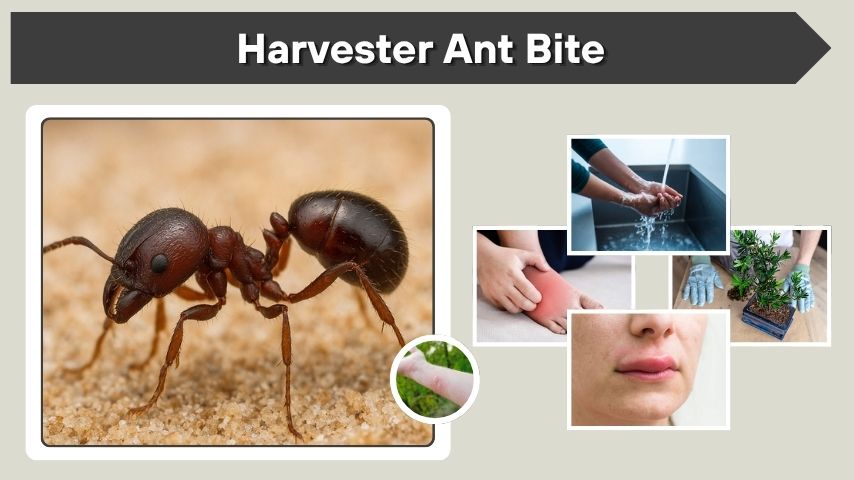
A harvester ant bite is often described as sharp, burning, and surprisingly painful. However, what many people call a “bite” is usually a bite-and-sting event. The ant may grip the skin with its jaws, then inject venom through a stinger. This is why harvester ant bites can hurt more than ordinary ant bites and may cause swelling, redness, itching, or allergic reactions in sensitive people.
What Is a Harvester Ant Bite?
Harvester ants are seed-collecting ants found in many dry, open habitats. They are common in parts of the western and southwestern United States, including areas of Texas, California, Arizona, Colorado, New Mexico, and nearby regions. Different types include red harvester ants, western harvester ants, California harvester ants, Florida harvester ants, black harvester ants, rough harvester ants, and Maricopa harvester ants.
The term “harvester ant bite” can be confusing because the injury is not always just a bite. Harvester ants have strong jaws, but the main pain usually comes from the sting. A worker ant may bite first to hold onto the skin, then curve its body and sting. Some species can sting more than once if they remain attached or if the nest is disturbed.
Harvester ants usually do not chase people without reason. Most bites or stings happen when someone steps near a mound, sits on the ground, walks barefoot, handles live ants, or lets a dog investigate a nest.
Do Harvester Ants Bite or Sting?
Yes, harvester ants can bite, but they are better known for stinging. Their mandibles can pinch the skin, but the venom-injecting sting is usually what causes the intense pain. This is why people may search for “harvester ant bite,” “harvester ant sting,” or “harvester ant bite or sting” and mean the same painful incident.
A harvester ant sting may feel like:
- A sudden burning pain
- A sharp pinprick sensation
- Heat at the sting site
- Throbbing or soreness
- Itching after the first pain fades
- Redness and swelling around the area
The pain can be stronger than expected for such a small insect. Some people compare it with a fire ant sting, while others say harvester ant pain feels deeper or more intense.
Harvester Ant Bite Symptoms
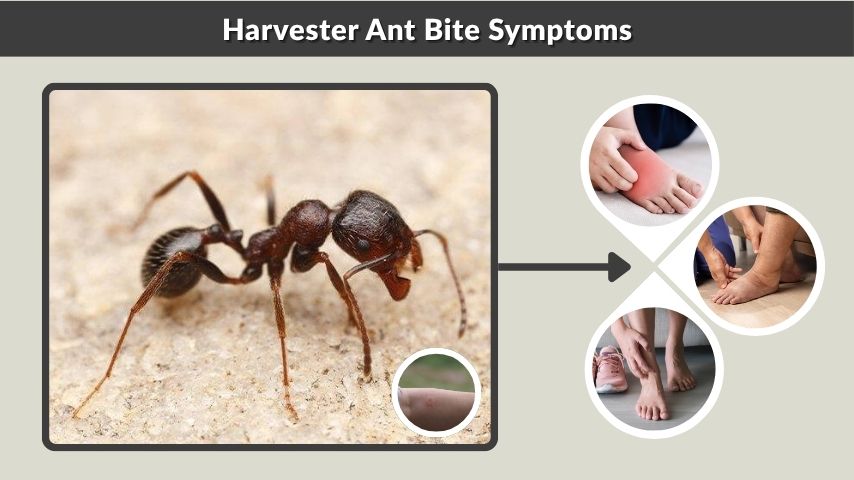
Symptoms vary depending on the species, number of stings, location on the body, and the person’s sensitivity to venom. A single sting may cause only a small painful welt. Multiple stings can cause more swelling and discomfort.
Common harvester ant bite symptoms include redness, burning pain, swelling, itching, tenderness, and a raised bump. In some cases, the area may feel warm or irritated for a day or two. Scratching can make the reaction worse and increase the chance of skin infection.
A stronger local reaction may include:
- Swelling that spreads several inches
- Pain that lasts longer than a few hours
- Intense itching
- Skin tightness
- Redness that expands around the sting site
A severe allergic reaction is less common but more serious. Warning signs include trouble breathing, dizziness, swelling of the lips or face, chest tightness, widespread hives, vomiting, faintness, or confusion. These symptoms need emergency medical care.
Harvester Ant Bite Pain: How Bad Does It Hurt?
Harvester ant bite pain can be intense because venom is involved. The ant may bite first, but the sting causes the most painful reaction. Some harvester ant species are known for strong venom, and their stings can feel more severe than common household ant bites.
Pain level depends on several factors:
- The species of harvester ant
- Whether the ant stung once or multiple times
- The number of ants involved
- The person’s pain sensitivity
- The location of the sting
- Whether the person has an allergy
A sting on thinner skin, such as the ankle, hand, foot, or wrist, may feel more painful than one on thicker skin. Children may also react more strongly because the pain is frightening and the swelling may look more dramatic.
Harvester Ant Bite Pictures: What to Look For
People often search for harvester ant bite pictures to compare their skin reaction. While pictures can help, they are not always reliable because many insect stings look similar. A harvester ant sting may look like a red bump, swollen welt, small puncture mark, or irritated patch of skin.
You may see:
- A small red dot where the sting occurred
- A raised bump or welt
- Mild swelling around the area
- Redness that fades over time
- Scratches if the area has been rubbed or picked
Do not rely only on pictures to decide whether a reaction is safe. The more important signs are how the person feels, whether swelling is spreading quickly, and whether there are symptoms beyond the sting site.
Harvester Ant Bite Treatment
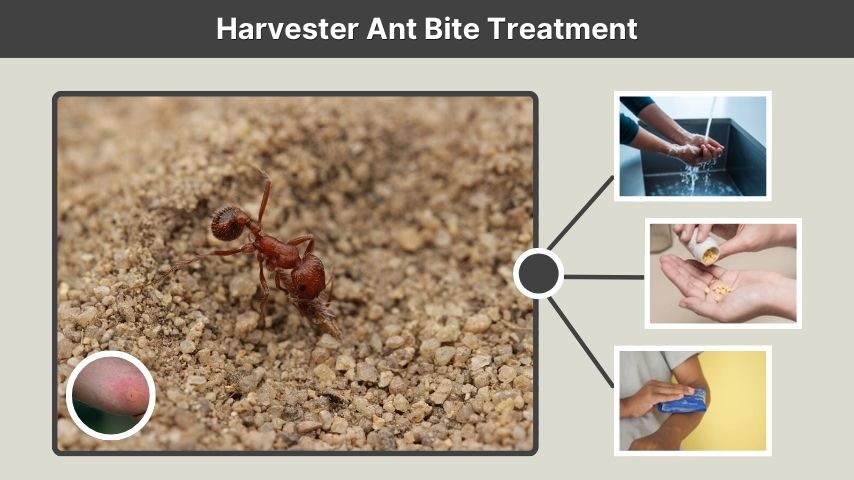
Most mild harvester ant bites or stings can be treated at home with basic first aid. The first step is to move away from the nest so more ants do not sting. Then clean the area and control pain and swelling.
| Situation | What to Do |
|---|---|
| Mild pain and redness | Wash with soap and water, then apply a cold compress |
| Itching | Use an oral antihistamine or anti-itch cream if appropriate |
| Swelling | Elevate the area and apply cold packs in short intervals |
| Scratched skin | Keep it clean and avoid picking the area |
| Severe allergic symptoms | Call emergency services immediately |
A simple first-aid routine includes washing the sting site with soap and water, applying a cold compress for 10 to 15 minutes, and avoiding scratching. Over-the-counter pain relievers or antihistamines may help, but follow the product label and avoid giving medicines to children without checking age instructions.
Do not cut the skin, squeeze the sting site, apply harsh chemicals, or use gasoline, bleach, or other unsafe home remedies. These can damage skin and make the injury worse.
Harvester Ant Bite Remedy: What Helps at Home?
A safe home remedy should reduce discomfort without irritating the skin. Cold compresses are often the most useful first step. Calamine lotion or hydrocortisone cream may help with itching, depending on the person and product directions.
Helpful home care options may include:
- Cold compresses
- Soap-and-water cleaning
- Calamine lotion for itching
- Hydrocortisone cream for irritation
- Oral antihistamine for itching
- Pain reliever if appropriate
Natural remedies should be used carefully. Some people apply aloe vera gel for cooling relief, but avoid applying unknown oils, strong acids, toothpaste, or abrasive mixtures. If the skin is broken, keep the area clean and avoid anything that could irritate the wound.
Allergic Reaction to a Harvester Ant Bite
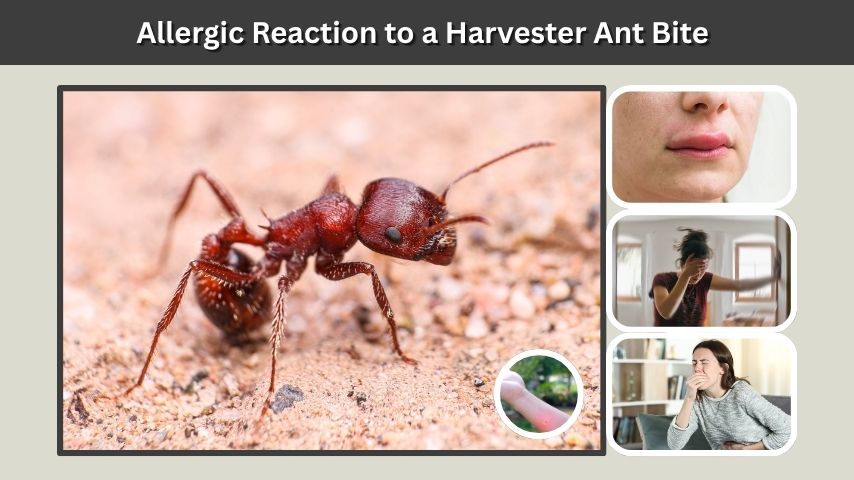
An allergic reaction can happen after a harvester ant sting, especially in people sensitive to insect venom. A small local reaction is common and usually not dangerous. A whole-body reaction is different and should be treated seriously.
Possible allergic reaction symptoms include:
- Hives away from the sting site
- Swelling of the lips, tongue, throat, or face
- Wheezing or trouble breathing
- Chest tightness
- Dizziness or fainting
- Nausea, vomiting, or weakness
- Fast heartbeat or confusion
If these symptoms appear, call emergency services. A severe allergic reaction can progress quickly. People who already know they have insect sting allergies should follow their doctor’s emergency plan and use prescribed epinephrine if instructed.
Can a Harvester Ant Bite Kill You?
A harvester ant bite or sting is not usually deadly for a healthy adult, especially if it is a single sting with a mild local reaction. However, it can become dangerous in certain situations. The biggest risks are severe allergic reaction, multiple stings, stings in sensitive areas, and delayed treatment when serious symptoms appear.
Higher-risk situations include:
- A child receiving multiple stings
- A person with a known venom allergy
- Stings near the mouth, throat, or eyes
- A dog or pet disturbing a mound
- Symptoms such as breathing trouble or fainting
The safest approach is to treat mild stings calmly but take allergic symptoms seriously.
Harvester Ant Bite on Dogs
Dogs may be stung when they sniff, paw, or dig near a harvester ant mound. A dog may suddenly yelp, lick its paws, rub its face, limp, drool, or act restless. Swelling around the muzzle, eyes, or paws may appear after a sting.
If your dog is stung, move it away from the mound and check the body for ants. Do not let the dog keep licking or biting the area. Contact a veterinarian if there are multiple stings, vomiting, facial swelling, weakness, trouble breathing, collapse, or unusual behavior.
Dog warning signs include:
- Vomiting
- Weakness
- Facial swelling
- Heavy drooling
- Trouble breathing
- Collapse
- Repeated paw licking or limping
Never give human medication to a dog unless a veterinarian specifically says it is safe.
Harvester Ant vs Fire Ant Bite
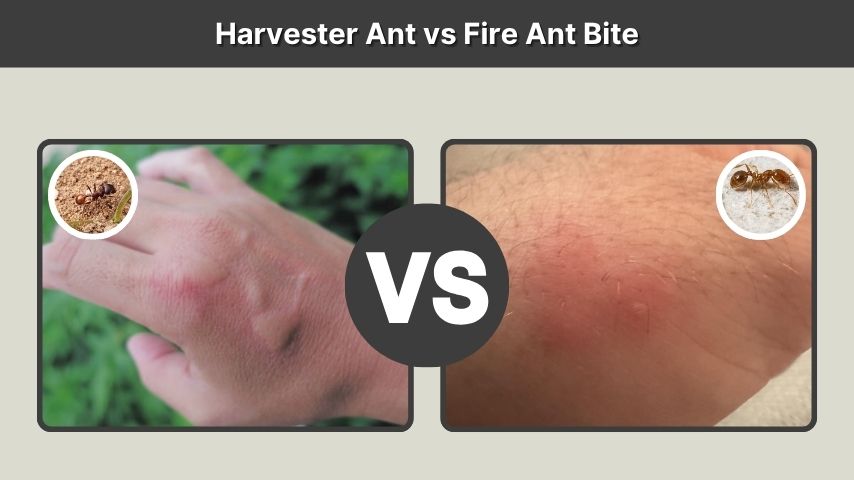
Harvester ant and fire ant stings can both be painful, but they are not identical. Fire ants often swarm quickly and may sting many times. Harvester ants may be less aggressive away from the nest, but their sting can be very painful when they defend the colony.
Fire ant stings often form itchy bumps or pustules. Harvester ant stings may cause intense burning pain, swelling, redness, and soreness. Both can trigger allergic reactions in sensitive people.
The nest can also help with identification. Fire ant mounds often look like loose soil domes, especially in lawns or disturbed ground. Harvester ant nests often have a cleared area around the entrance, sometimes with a bare circular patch.
Red, Western, California, and Maricopa Harvester Ant Bites
Searches for red harvester ant bite, western harvester ant bite, California harvester ant bite, Florida harvester ant bite, black harvester ant bite, and Maricopa harvester ant bite all point to a similar concern: painful venomous stings from harvester ants. The exact species may differ by region, but the first-aid response is similar.
Red harvester ants are common in parts of Texas and the Southwest. Western harvester ants occur in western regions. California harvester ants are associated with parts of California and nearby habitats. Maricopa harvester ants are known from desert regions and are often discussed because of venom potency.
Regardless of species, avoid handling workers, do not disturb nests, and treat stings quickly.
How to Prevent Harvester Ant Bites
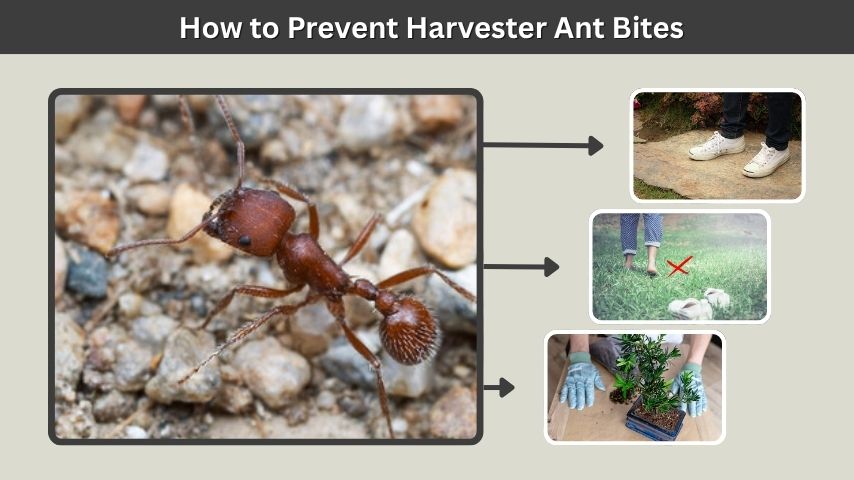
Prevention is easier than treatment. Harvester ants usually sting when their nest is threatened, so the best protection is to recognize and avoid mounds. This is especially important for children, pets, hikers, gardeners, ranch workers, and anyone walking in dry open areas.
Prevention tips include:
- Wear closed-toe shoes outdoors.
- Avoid sitting directly on bare ground near ant activity.
- Teach children not to poke ant mounds.
- Keep dogs away from cleared mound areas.
- Use gloves when working near soil.
- Mark known nests in yards or fields.
- Call pest control if nests are near play areas or walkways.
Do not collect wild harvester ants by hand. If you keep ants in an ant farm, make sure the container is secure and the species is legal to possess in your area.
When to See a Doctor
You should seek medical advice if pain or swelling is severe, symptoms keep worsening, signs of infection appear, or the sting involves a sensitive area. Signs of infection may include increasing redness, pus, warmth, fever, or red streaks spreading from the sting site.
Get emergency help immediately for breathing problems, throat tightness, widespread hives, facial swelling, fainting, chest tightness, or confusion. These symptoms can indicate a serious allergic reaction.
For most people, a harvester ant bite is painful but manageable. The key is to clean the area, reduce swelling, avoid scratching, and watch for symptoms that go beyond a normal local reaction.
FAQs
Do harvester ants bite or sting?
Harvester ants can bite, but the most painful part is usually the sting. The ant may use its jaws to grip the skin, then inject venom with its stinger. This is why people often call it a bite even though the stronger reaction comes from venom.
How do you treat a harvester ant bite?
Move away from the nest, wash the area with soap and water, and apply a cold compress. Avoid scratching the skin. For itching or swelling, use appropriate over-the-counter products according to label directions. Seek emergency care if breathing problems, facial swelling, dizziness, or widespread hives appear.
Are harvester ant bites dangerous?
Most harvester ant bites or stings cause local pain, redness, and swelling, but they can be dangerous for people with insect venom allergies. Multiple stings may also be more serious. Any whole-body reaction, breathing difficulty, faintness, or swelling away from the sting site should be treated as urgent.
What does a harvester ant bite look like?
A harvester ant bite or sting may look like a red bump, swollen welt, small puncture mark, or irritated patch of skin. It can resemble other insect stings, so appearance alone is not enough for diagnosis. Pain level, exposure history, and allergic symptoms are more important.
Can dogs get harvester ant bites?
Yes, dogs can be bitten or stung when they sniff, dig, or step near a harvester ant mound. Watch for paw licking, limping, swelling, drooling, vomiting, or weakness. Contact a veterinarian quickly if your dog has multiple stings, facial swelling, breathing trouble, or unusual behavior.
