
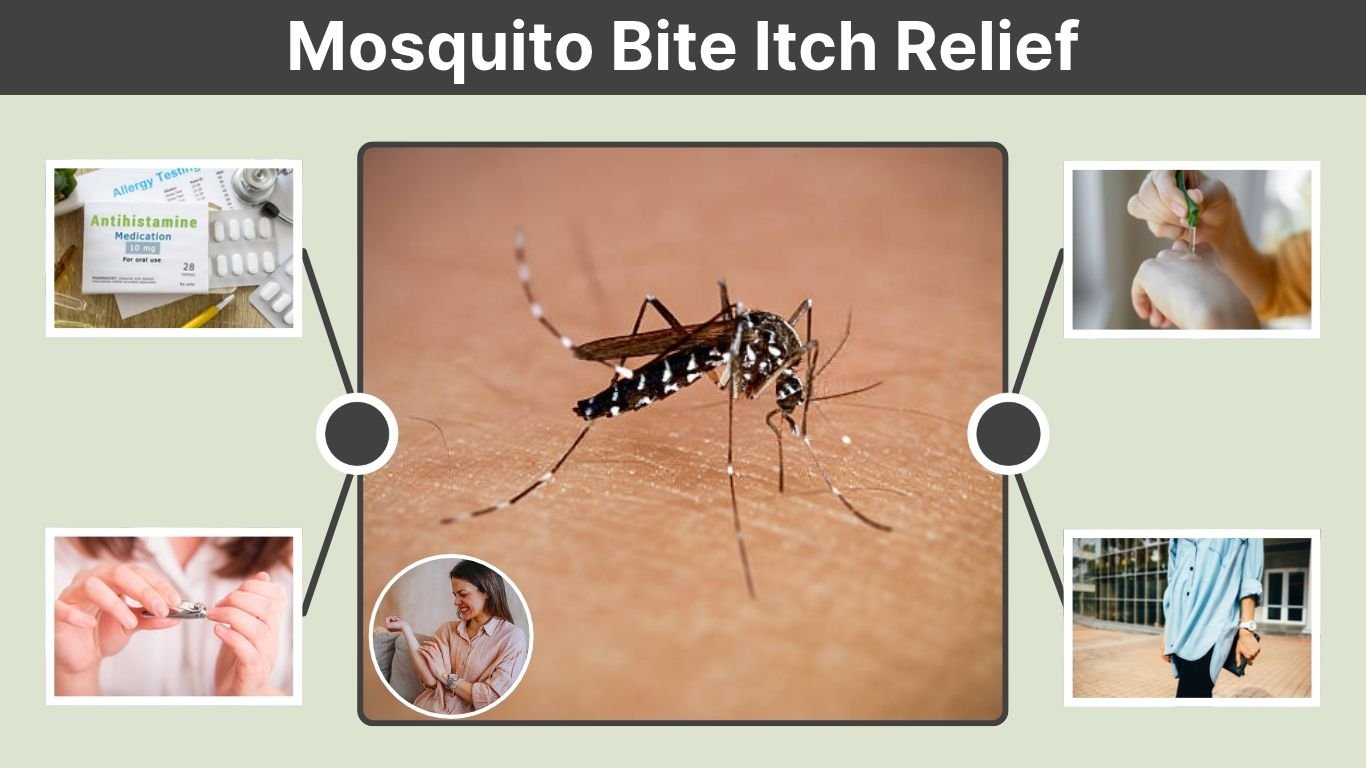
Mosquito bites can become extremely itchy, especially during warm weather when mosquitoes are most active. The itching happens because your immune system reacts to proteins in mosquito saliva, causing redness, swelling, and irritation. Although most bites heal naturally within a few days, constant scratching can make them worse. Fortunately, several mosquito bite itch relief methods can help calm irritated skin quickly. From cold compresses and anti-itch creams to aloe vera and other natural remedies, understanding which treatments actually work can help you find relief safely.
Why Do Mosquito Bites Itch So Much?
Mosquito bites itch because of the body’s immune response to mosquito saliva. When a female mosquito feeds on blood, it releases saliva containing proteins that help with feeding. Your immune system recognizes these proteins and triggers inflammation. The severity of itching varies depending on individual sensitivity and previous mosquito exposure.
How Histamine Causes Mosquito Bite Itching
Histamine is one of the chemicals released during the immune response to mosquito saliva. It contributes to blood vessel expansion, skin swelling, and the familiar itchy sensation.
Some individuals experience only small bumps, while others develop larger swollen patches.
Children and people with increased sensitivity to mosquito saliva may experience stronger reactions. However, not all mosquito bite itching is caused by histamine alone.
How Long Does Mosquito Bite Itching Last?
Most mosquito bites begin improving within a few days. However, itching can occasionally continue for a week or longer, especially after a large local reaction.
Scratching repeatedly can prolong irritation by damaging the skin.
If itching becomes progressively worse or is accompanied by increasing pain and warmth, medical evaluation may be necessary.
Best Mosquito Bite Itch Relief Methods
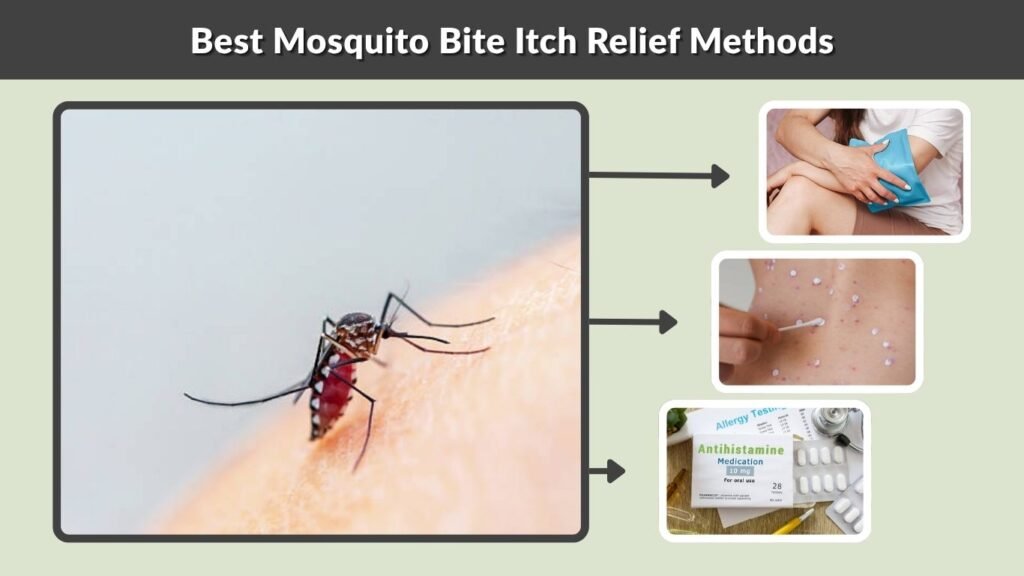
The best treatments focus on reducing inflammation and interrupting the itching sensation. Cold compresses, topical anti-inflammatory products, and oral antihistamines are commonly recommended. Some methods provide temporary comfort within minutes, while others take longer to reduce symptoms. Choosing an appropriate treatment depends on the severity of the reaction.
1. Apply a Cold Compress
A cold compress is one of the easiest ways to obtain fast mosquito bite itch relief. Cooling the skin temporarily decreases nerve activity associated with itching and can reduce swelling.
Follow these steps:
- Wrap an ice pack in a clean towel.
- Place it against the affected area.
- Keep it in position for approximately 10 minutes.
- Remove it if the skin feels uncomfortable.
- Repeat as needed throughout the day.
Never leave ice directly against your skin for extended periods because it can cause cold injury.
2. Use Hydrocortisone Cream
Over-the-counter 1% hydrocortisone cream helps reduce inflammation, redness, and itching.
Apply a thin layer according to the product label. It is often useful for itchy bites with noticeable swelling.
Avoid applying hydrocortisone to infected or broken skin without medical guidance. Consult a healthcare professional before using it on young children or sensitive facial areas.
3. Try an Oral Antihistamine
Oral antihistamines can be helpful when mosquito bites cause persistent itching or larger allergic reactions.
Cetirizine and loratadine are commonly used options. Clinical studies provide evidence that certain oral antihistamines can reduce mosquito-bite itching and swelling.
Follow dosage instructions and ask a pharmacist about potential drowsiness, age restrictions, or medication interactions.
4. Apply Calamine Lotion
Calamine lotion is a traditional treatment for minor skin irritation.
Applying a thin layer may temporarily soothe itching and provide a pleasant cooling sensation as the lotion dries.
Although commonly recommended, mosquito-specific clinical evidence for calamine is limited. Avoid applying it to the eyes, mouth, or severely damaged skin.
Natural Itch Relief for Mosquito Bites
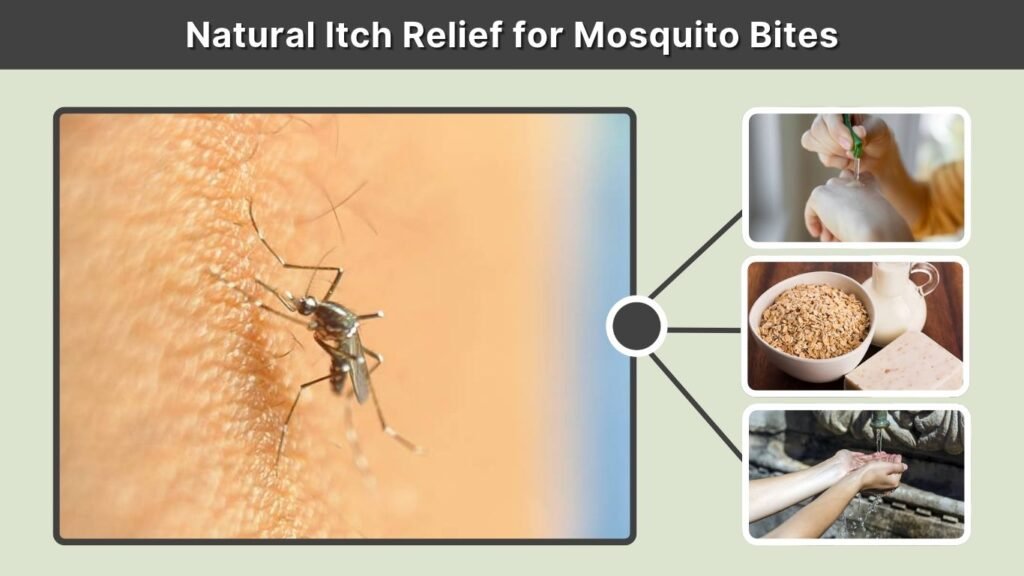
Natural mosquito bite remedies appeal to people who prefer simple home treatments. However, some popular ingredients have limited scientific evidence supporting their effectiveness. Cold water and gentle skin care are generally safer choices than acidic or strongly scented substances. Natural products can also trigger irritation in sensitive individuals.
5. Use Aloe Vera Gel
Aloe vera is widely used to moisturize and soothe irritated skin. Its naturally cooling texture makes it a popular home remedy for mosquito bites.
Apply a small amount of plain, fragrance-free aloe vera gel to clean skin and allow it to absorb naturally.
What does the scientific evidence say?
Although aloe vera has been studied for several skin conditions, there is insufficient reliable clinical evidence demonstrating that it specifically reduces mosquito bite itching.
Aloe vera may provide temporary comfort, but it should not be considered a proven replacement for established anti-itch treatments.
Stop using it if burning, redness, or irritation develops.
6. Try a Colloidal Oatmeal Bath
Colloidal oatmeal is commonly used in products designed to soothe dry and itchy skin.
A lukewarm oatmeal bath may help when multiple mosquito bites cause widespread irritation.
Use a commercially prepared colloidal oatmeal product according to its directions. Avoid hot water because excessive heat may worsen itching.
Evidence for treating mosquito bites specifically remains limited.
7. Wash With Cool Water
Gently washing mosquito bites with cool water and mild soap is a simple way to keep irritated skin clean.
Cool water may temporarily reduce discomfort, while cleansing helps remove dirt and lowers the risk of secondary skin infection.
After washing, pat the skin dry using a soft towel rather than rubbing aggressively.
Do Homemade Mosquito Bite Remedies Actually Work?
Many homemade treatments are shared online, but not all are supported by reliable research. Some can even make itching worse. When selecting a DIY mosquito bite treatment, consider both its potential benefits and its risks. Avoid applying harsh or irritating substances to already inflamed skin.
8. Consider Baking Soda Paste Carefully
Baking soda paste is sometimes recommended for mosquito bite itching.
The CDC includes a brief baking soda-and-water application among its self-care suggestions. However, the NHS advises against home remedies such as bicarbonate of soda, and strong clinical evidence for effectiveness is lacking.
Because baking soda may irritate sensitive skin, a cool compress is a more conservative first choice.
9. Avoid Hot Spoon Treatments
Placing a heated spoon on mosquito bites is a popular internet remedy.
Although some controlled-heat devices have shown potential for temporarily relieving itching, household spoons do not provide reliable temperature control.
Excessive heat can burn irritated skin. Use safer alternatives such as cold compresses or suitable anti-itch products.
How to Stop Mosquito Bite Itching at Night
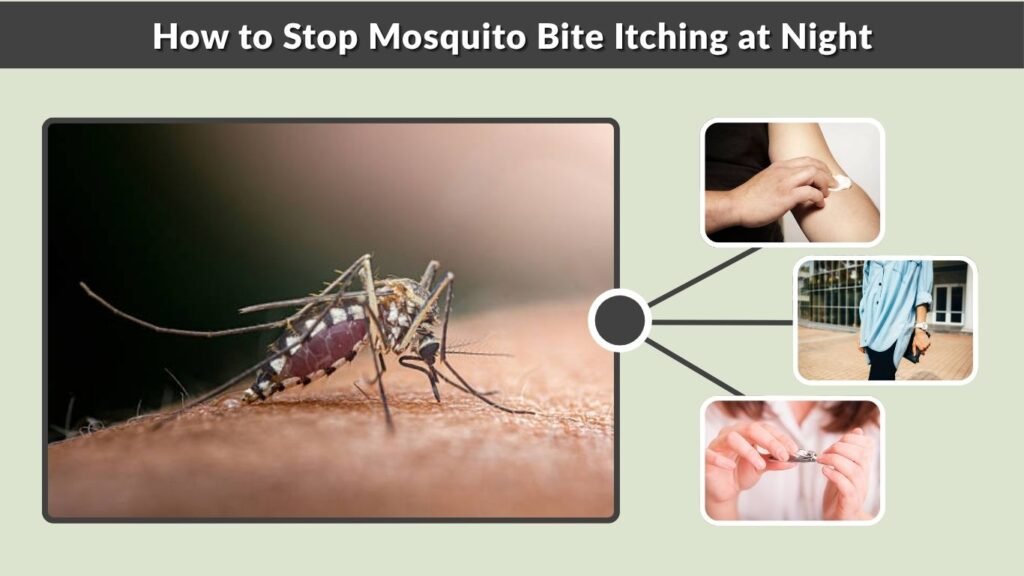
Mosquito bites often feel more irritating during the evening or bedtime. Fewer distractions make itching more noticeable, while warm bedding may increase discomfort. A simple nighttime routine can help minimize scratching and make sleeping easier.
Nighttime Mosquito Bite Relief Tips
- Cool the skin: Apply a wrapped cold pack before bedtime.
- Use appropriate anti-itch treatment: Apply a suitable cream or lotion according to its instructions.
- Keep the room comfortable: Avoid excessive heat and sweating.
- Wear loose clothing: Choose soft fabrics that do not rub against bites.
- Trim fingernails: Short nails reduce skin damage from accidental scratching.
- Consider antihistamines: Ask a pharmacist about suitable options if itching interferes with sleep.
When Is Mosquito Bite Itching Dangerous?
Most mosquito bite itching is harmless and resolves naturally. However, unusually severe symptoms may indicate a large allergic reaction, bacterial skin infection, or mosquito-borne disease. Identifying these warning signs helps determine when home treatment is insufficient.
Signs That Require Medical Attention
Contact a healthcare professional if you notice:
- Increasing redness, warmth, or pain around the bite.
- Pus or unusual discharge.
- Swelling that becomes progressively worse.
- Fever, headache, or unusual body aches.
- Itching is accompanied by severe skin inflammation.
- Symptoms that persist or worsen despite appropriate care.
Seek emergency medical attention for difficulty breathing, throat swelling, fainting, or other signs of a severe allergic reaction.
FAQs
1. What is the fastest mosquito bite itch relief?
Applying a wrapped cold pack for approximately 10 minutes can quickly reduce itching and swelling. Hydrocortisone cream may provide additional relief from inflammation. Oral antihistamines can also help, particularly when several bites cause persistent allergic itching.
2. Is aloe vera gel scientifically proven to relieve mosquito bite itching?
There is insufficient reliable mosquito-specific clinical evidence proving that aloe vera gel effectively reduces itching. Although aloe may feel cooling and moisturizing, established treatments such as cold compresses and appropriate antihistamines have stronger support for mosquito bite relief.
3. What is the best natural itch relief for mosquito bites?
A cool, damp washcloth is one of the safest natural approaches. It temporarily calms irritated skin without exposing it to strong chemicals. Colloidal oatmeal baths may also feel soothing, although evidence for mosquito-specific itching is limited.
4. Can a hot spoon stop mosquitoes from itching?
Heat may temporarily influence itching, but using a household hot spoon is unsafe because the temperature is difficult to control. Burns can occur easily. Cold compresses and appropriate anti-itch products are generally safer options for home treatment.
5. Why do mosquito bites keep itching after several days?
Mosquito bites may continue itching because the immune system remains reactive to mosquito saliva. Larger local reactions can take longer to settle. Persistent worsening redness, warmth, pain, or discharge may indicate infection and should be evaluated by a healthcare professional.
