
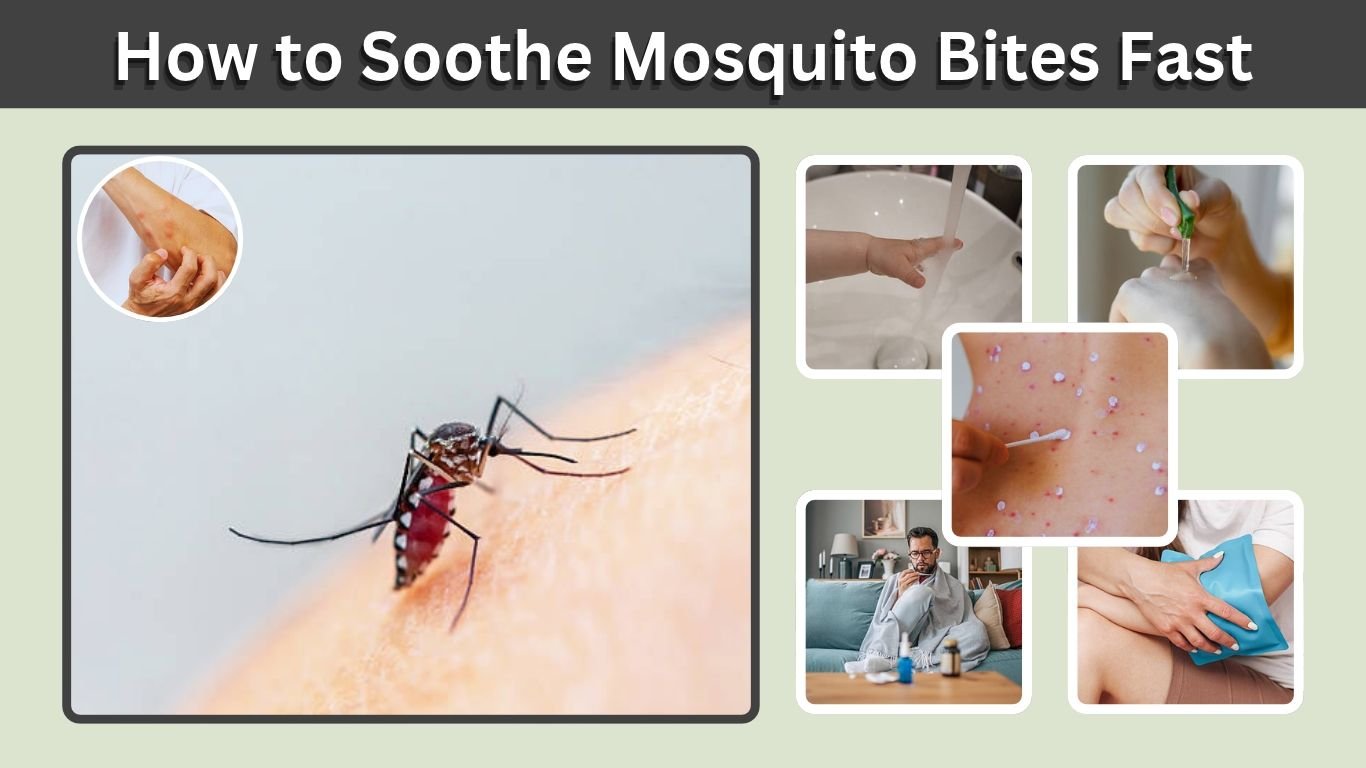
Mosquito bites can cause intense itching, redness, and swelling, making everyday activities uncomfortable. Although most bites are harmless and disappear within a few days, constant scratching can worsen irritation and sometimes lead to infection. Fortunately, several simple treatments can provide quick relief without complicated procedures. Learning how to soothe mosquito bites using cold compresses, anti-itch creams, and gentle home remedies can help calm irritated skin. Whether you are dealing with swollen bites, multiple bites, or sensitive skin, choosing the right treatment makes recovery more comfortable.
How to Soothe Mosquito Bites Fast
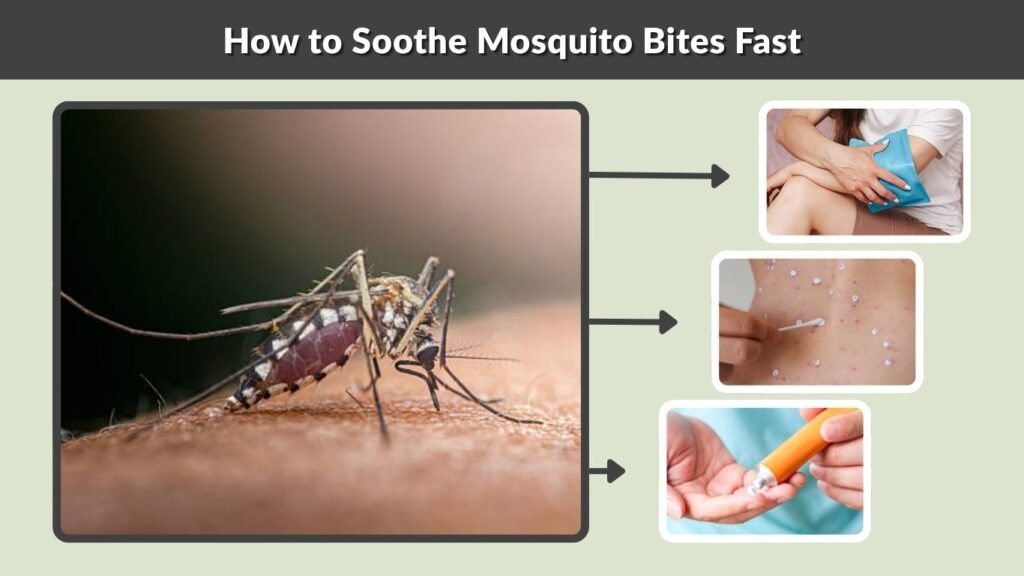
The fastest way to soothe mosquito bites is to reduce inflammation and control the itching sensation. Washing the affected area, applying something cold, and using suitable anti-itch treatments can provide relief within minutes. However, the duration of relief varies depending on your skin sensitivity and the severity of the reaction.
1. Apply a Cold Compress
A cold compress is one of the simplest ways to calm an itchy mosquito bite. Cold temperatures temporarily numb the skin and help reduce inflammation.
Follow these steps:
- Wrap an ice pack in a clean towel.
- Place it gently against the affected area.
- Leave it for approximately 10 minutes.
- Remove it if the skin becomes uncomfortable.
- Repeat when necessary.
Never place ice directly against bare skin for an extended period because it may cause skin damage.
2. Use Calamine Lotion
Calamine lotion is a common over-the-counter treatment for itchy skin. It provides a soothing sensation and may temporarily reduce discomfort caused by mosquito bites.
Apply a thin layer to clean, dry skin according to the product instructions. Allow it to dry naturally before covering the area with clothing.
Avoid applying calamine lotion near the eyes or inside the mouth.
3. Try Hydrocortisone Cream
Over-the-counter 1% hydrocortisone cream can help reduce itching, redness, and swelling.
Apply a thin layer as directed on the label. It is particularly helpful when bites cause noticeable inflammation.
Avoid using it on infected or broken skin without medical advice. Ask a healthcare professional before applying it to babies, young children, or sensitive facial areas.
How to Soothe Mosquito Bites Naturally
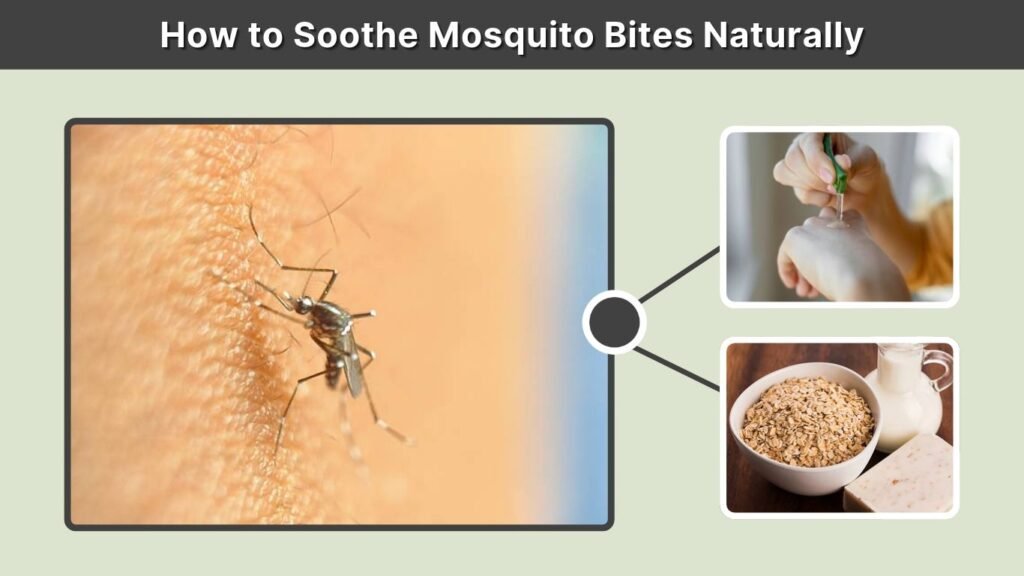
Natural approaches may help relieve minor mosquito bites without using medicated creams. However, not every popular home remedy has strong scientific evidence supporting its effectiveness. Gentle cooling methods are generally the safest starting point, especially for individuals with sensitive skin or multiple itchy bites.
4. Apply a Cool, Damp Washcloth
A clean washcloth soaked in cool water can provide immediate comfort when the skin feels hot or irritated.
Place the damp cloth over the bite for approximately 10 minutes. Repeat whenever itching becomes uncomfortable.
Unlike ice packs, cool washcloths are usually easier to apply to delicate areas, including the forehead or cheeks.
5. Use a Gentle Aloe Vera Gel
Aloe vera gel is often used to soothe irritated skin because it provides a cooling, moisturizing sensation.
Apply a small amount of plain, fragrance-free aloe vera gel to the affected area. Although it may feel soothing, evidence that aloe specifically treats mosquito-bite itching is limited.
Stop using it if redness, burning, or irritation increases.
6. Try a Colloidal Oatmeal Bath
Colloidal oatmeal can help soothe itchy skin and may be particularly comfortable when several mosquito bites cover the arms or legs.
Add a skin-safe colloidal oatmeal product to lukewarm bathwater according to its instructions. Soak briefly and pat the skin dry afterward.
Avoid hot water because excessive heat may worsen itching.
How to Soothe Swollen or Big Mosquito Bites
Some mosquito bites produce larger swollen areas rather than small bumps. These reactions occur when the immune system responds strongly to mosquito saliva. Children and sensitive individuals may experience particularly noticeable swelling. Treating inflammation early can reduce discomfort, but very large reactions sometimes require medical evaluation.
7. Elevate the Affected Area
When bites appear on your feet, ankles, or lower legs, elevating the affected area may help reduce uncomfortable swelling.
Rest your legs on a pillow while sitting or lying down. Combine elevation with a cool compress for additional comfort.
Avoid tight socks or footwear that place pressure on swollen bites.
8. Consider an Oral Antihistamine
An oral antihistamine may help when mosquito bites cause persistent itching or large local reactions.
Common options include cetirizine and loratadine. These medications reduce the effects of histamine, a chemical involved in allergic reactions.
Follow the product label and ask a pharmacist about age restrictions, medical conditions, possible drowsiness, or interactions with other medications.
How to Soothe Mosquito Bites on Babies and Toddlers
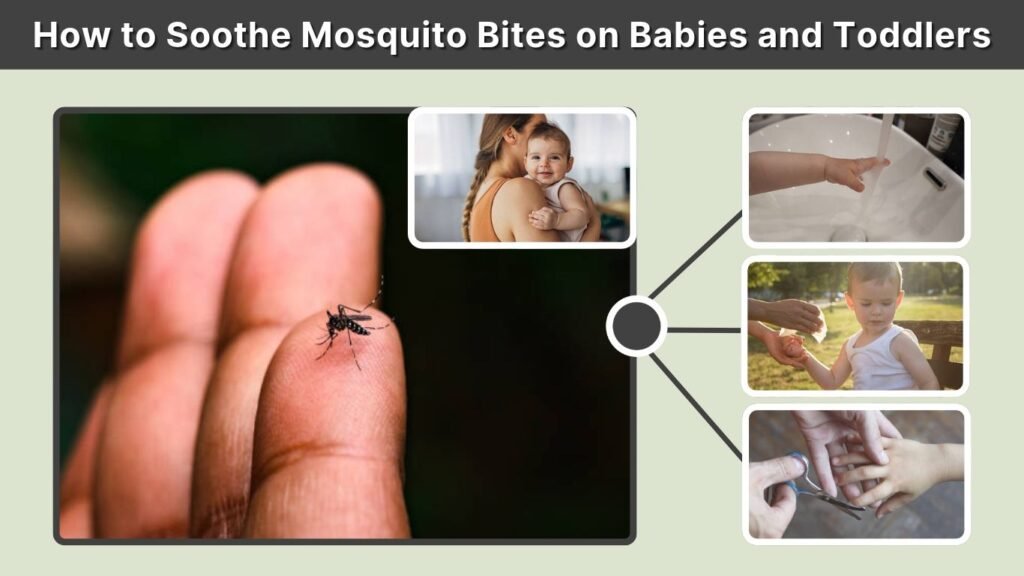
Babies and toddlers often experience noticeable swelling after mosquito bites because their skin can react strongly to insect saliva. Young children may also scratch without realizing that doing so increases irritation. Gentle treatment and careful monitoring are especially important when dealing with sensitive skin.
Safe Ways to Relieve Itching in Children
- Wash the bite gently with mild soap and water.
- Apply a cool, damp washcloth for short periods.
- Keep the child’s fingernails clean and trimmed.
- Use soft clothing to protect irritated skin.
- Ask a pediatrician before using medicated anti-itch creams or oral antihistamines.
- Monitor bites for increasing redness, warmth, pain, or discharge.
For infants, consult a healthcare professional about significant swelling or persistent symptoms.
How to Soothe Mosquito Bites on the Face
Facial mosquito bites require extra care because the skin around the eyes and mouth is sensitive.
Use a clean, cool cloth and avoid rubbing the affected area. Do not apply medicated creams close to the eyes unless directed by a healthcare professional.
Seek medical advice if swelling affects vision, continues worsening, or is accompanied by fever.
How to Soothe Multiple Mosquito Bites at Home
Having several mosquito bites simultaneously can make itching difficult to control. The irritation may become worse at night when distractions disappear. Instead of treating each bite aggressively, focus on gentle skin care, appropriate medication, and preventing further irritation throughout the healing process.
9. Take a Cool or Lukewarm Shower
A cool or lukewarm shower can help remove sweat and dirt while temporarily soothing irritated skin.
Use a mild, fragrance-free cleanser and avoid scrubbing the affected areas.
After showering, gently pat your skin dry and apply an appropriate fragrance-free moisturizer if the skin feels dry.
10. Avoid Scratching the Bites
Scratching provides temporary satisfaction but can intensify irritation and damage the skin.
Try these methods:
- Keep fingernails short and clean.
- Cover bites with loose, breathable clothing.
- Apply a cold compress whenever itching returns.
- Use an appropriate anti-itch treatment.
- Avoid excessively hot showers.
- Keep the affected skin clean and dry.
If scratching causes open wounds, monitor for signs of infection.
How to Soothe Mosquito Bites on Dogs
Dogs can also experience skin irritation from mosquito bites, especially around areas with thinner fur. Mild bites may cause temporary itching or small bumps. However, human skin treatments are not automatically safe for pets, so treatment should be gentle and veterinary guidance is important.
Safe Mosquito Bite Care for Dogs
For a mild reaction, gently place a cool, damp cloth against the irritated area if your dog tolerates it.
Prevent excessive scratching or licking, and monitor for swelling or skin changes.
Never give your dog human antihistamines or apply human anti-itch creams without veterinary guidance. Contact a veterinarian if swelling becomes severe, the dog appears unwell, or breathing problems develop.
When Should You Worry About Mosquito Bites?
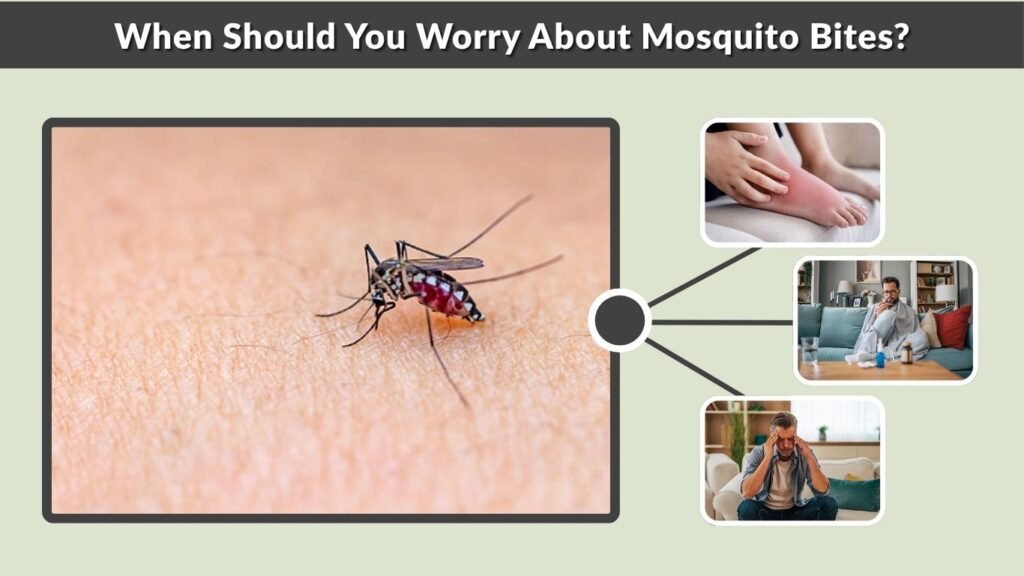
Most mosquito bites improve within several days, although larger local reactions can take longer. Occasionally, worsening symptoms indicate bacterial infection, a significant allergic reaction, or a mosquito-borne illness. Understanding the warning signs can help distinguish ordinary itching from a problem requiring medical treatment.
Signs That Require Medical Attention
Seek medical advice if you notice:
- Redness or swelling that continues spreading.
- Increasing pain, warmth, or tenderness.
- Pus or unusual discharge.
- Fever, chills, headache, or body aches.
- A large reaction that keeps worsening.
- Unusual symptoms after traveling to a malaria- or dengue-risk area.
Seek emergency care for difficulty breathing, throat swelling, fainting, or other signs of a severe allergic reaction.
FAQs
1. What is the fastest way to stop mosquito bites from itching?
Applying a cold compress is one of the fastest ways to reduce mosquito bite itching. Hold a wrapped ice pack against the bite for approximately 10 minutes. Calamine lotion or hydrocortisone cream may provide additional relief when used appropriately.
2. How can I soothe mosquito bites naturally overnight?
Before bedtime, gently wash the affected area and apply a cool compress. Keep your bedroom comfortably cool and avoid scratching. Plain aloe vera gel may feel soothing, although evidence for treating mosquito bites specifically remains limited.
3. Why do mosquito bites itch more at night?
Mosquito bites may seem itchier at night because there are fewer distractions and changes in skin temperature can influence discomfort. Warm bedding may also increase irritation. A cool sleeping environment and suitable anti-itch treatment can make symptoms easier to manage.
4. How long does it take for a mosquito bite to stop itching?
Most mosquito bites begin improving within a few days, although itching and swelling sometimes last longer. People with sensitive skin may experience symptoms for a week or more. Seek medical advice if symptoms become increasingly painful, swollen, or infected.
5. Can toothpaste or vinegar soothe mosquito bites?
Toothpaste and vinegar are not recommended treatments for mosquito bites because they can irritate sensitive or damaged skin. Cold compresses, calamine lotion, and appropriately used hydrocortisone cream are more reliable options for managing itching and inflammation.
