
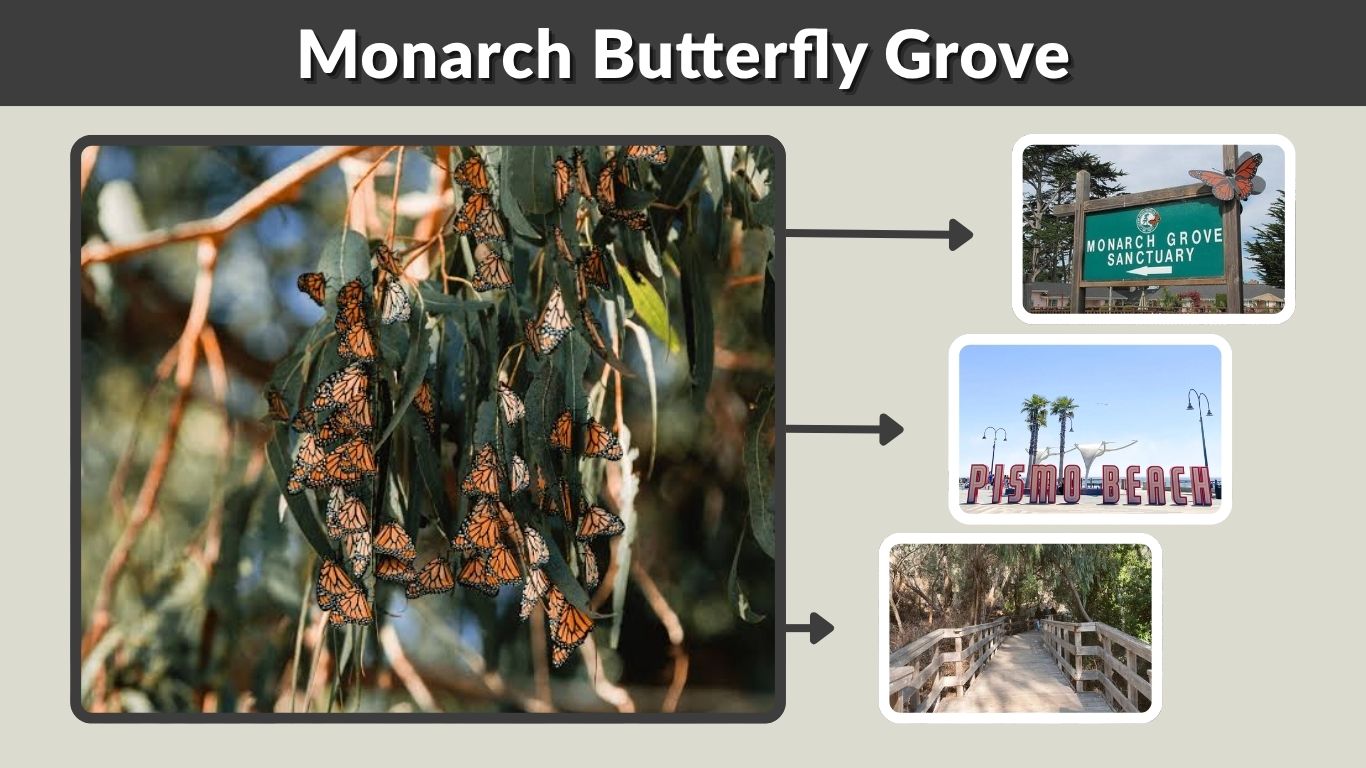
A monarch butterfly grove is a sheltered coastal habitat where thousands of western monarch butterflies may spend the winter clustered in trees. California has several publicly accessible groves, including famous sites in Pismo Beach, Pacific Grove, Goleta, and Santa Cruz.
These destinations are seasonal rather than year-round butterfly attractions. Monarchs generally begin arriving during fall, remain through winter, and depart as temperatures rise. Visitor numbers, butterfly counts, programs, and trail conditions can change annually, so checking the destination’s current report before traveling is essential.
What Is a Monarch Butterfly Grove?
A monarch butterfly grove is an overwintering site that provides the cool, protected conditions migratory monarchs need during winter. Tall trees block strong winds and storms, while the surrounding coastal climate protects butterflies from prolonged freezing temperatures.
Monarchs often gather in dense clusters on eucalyptus, Monterey cypress, pine, and other trees. With their wings closed, clustered butterflies can resemble brown leaves or pinecones. They become easier to recognize when sunlight warms the grove and some begin opening their orange-and-black wings.
Western monarchs travel from areas west of the Rocky Mountains toward overwintering locations along coastal California. Unlike the eastern population that primarily migrates to central Mexico, many western monarchs remain along the California coast until spring.
Best Monarch Butterfly Groves in California
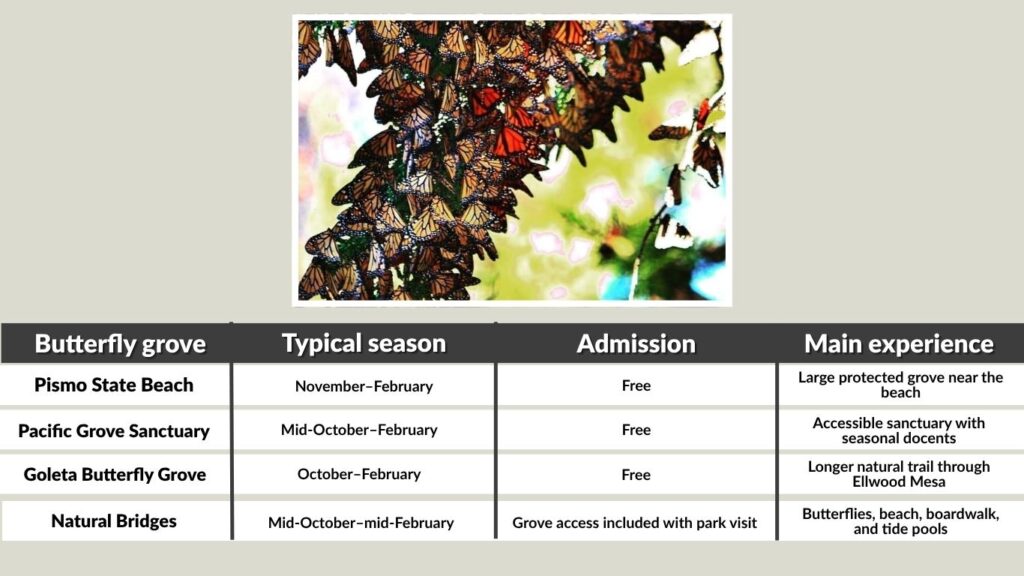
California contains more than 200 known coastal clustering sites, although only some are easily accessible to the public. Pismo Beach and Pacific Grove are the most widely known, while Goleta and Natural Bridges offer excellent alternatives.
| Butterfly grove | Typical season | Admission | Main experience |
| Pismo State Beach | November–February | Free | Large protected grove near the beach |
| Pacific Grove Sanctuary | Mid-October–February | Free | Accessible sanctuary with seasonal docents |
| Goleta Butterfly Grove | October–February | Free | Longer natural trail through Ellwood Mesa |
| Natural Bridges | Mid-October–mid-February | Grove access included with park visit | Butterflies, beach, boardwalk, and tide pools |
Seasonal timing and butterfly numbers vary according to weather, habitat conditions, and migration patterns.
Pismo State Beach Monarch Butterfly Grove
The Pismo State Beach Monarch Butterfly Grove is one of California’s best-known western monarch overwintering destinations. It is situated along Highway 1 between Pismo Beach and Grover Beach, beneath a canopy of eucalyptus and Monterey cypress trees.
The official location is 445 South Dolliver Street, Pismo Beach, California 93449. The grove is open daily from sunrise to sunset and does not charge an entrance fee. Inclement weather may affect access.
When to Visit Pismo Butterfly Grove
The official Pismo monarch season runs from November through February. Visitors arriving outside these months can still explore the area, but they should not expect to find wintering monarch clusters.
November and December are often attractive times to plan a visit because butterflies have generally arrived and winter weather has not yet reached its wettest period. However, the number present can differ dramatically from one season to another.
Tickets, Price, and Hours
No ticket or reservation is required for an ordinary self-guided visit. Grove admission is free, and the site is open from sunrise until sunset. School field trips require advance arrangements, but regular visitors can simply arrive during operating hours.
Visitors should distinguish between the free butterfly grove and other facilities within Pismo State Beach. Some state beach parking or day-use areas may charge a separate vehicle fee.
What to Expect
The main viewing area is relatively easy to explore, making Pismo a convenient choice for families and travelers who do not want a lengthy hike. Interpretive information explains migration, habitat, conservation, and the monarch life cycle.
Butterflies may rest high in the trees, so binoculars or a camera with optical zoom can improve the experience. Visitors must remain on designated paths, avoid butterflies on the ground, and never disturb clusters. Handling monarchs in the grove is prohibited.
Pacific Grove Monarch Butterfly Sanctuary
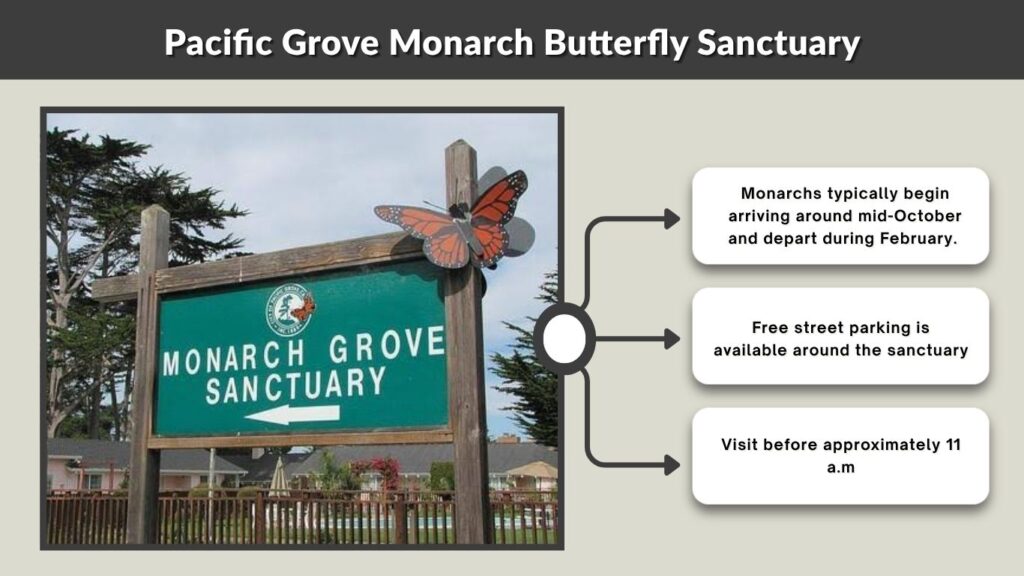
The Pacific Grove Monarch Butterfly Sanctuary is located at 250 Ridge Road, Pacific Grove, California 93950, near Monterey. It is the largest overwintering site in Monterey County and one of California’s largest publicly accessible monarch sanctuaries.
Pacific Grove has developed a close cultural connection with monarch butterflies, making the sanctuary one of the most popular locations for learning about western monarch migration.
Pacific Grove Monarch Season
Monarchs typically begin arriving around mid-October and depart during February. The strongest viewing period is generally from November through January. They are not permanent residents, so visitors coming in spring or summer should not expect winter clusters.
The sanctuary is open from sunrise to sunset every day, including weekends and holidays. Admission is free, reservations are unnecessary, and the park normally closes only when extreme weather or high winds create unsafe conditions.
Parking and Accessibility
Free street parking is available around the sanctuary, including nearby sections of Lighthouse Avenue, but spaces are limited. The sanctuary has a packed-gravel trail with a slight incline and is described as ADA accessible. Pets are not permitted inside.
Seasonal volunteer docents are commonly present between approximately 11 a.m. and 3 p.m., weather permitting. They can help visitors locate clusters that might otherwise be mistaken for leaves or cones.
Best Time of Day
Visit before approximately 11 a.m. or on a cool, overcast day to see monarchs hanging together in compact clusters. Visit during late morning or afternoon on a sunny day above roughly 55°F to increase the chance of watching active butterflies flying between trees and nectar plants.
A late-morning visit offers a useful compromise: the day may begin with visible clusters, followed by increased flight as sunlight warms the sanctuary.
Goleta Monarch Butterfly Grove at Ellwood Mesa
The Goleta Butterfly Grove is part of the Ellwood Mesa Open Space near Santa Barbara. Monarchs generally arrive from October through February, with the Ellwood population often reaching its seasonal peak around mid-December.
This site feels more like a nature hike than the compact sanctuaries at Pismo and Pacific Grove.
Trail, Parking, and Admission
Admission and parking are free. The designated parking area is at 7729 Hollister Avenue, across from Ellwood Elementary School. From there, visitors follow marked trails for a little more than half a mile, usually taking around 15 minutes to reach the main viewing area.
Ellwood Mesa contains natural terrain, eroding trails, trees that may fall, and potentially muddy conditions. Sturdy footwear is recommended, and visitors should avoid entering during rain or shortly after storms. A portable restroom is available near the parking area.
Dogs are allowed but must remain leashed. Bicycles, horses, and motorized vehicles are prohibited inside the butterfly grove itself.
Natural Bridges Monarch Grove in Santa Cruz
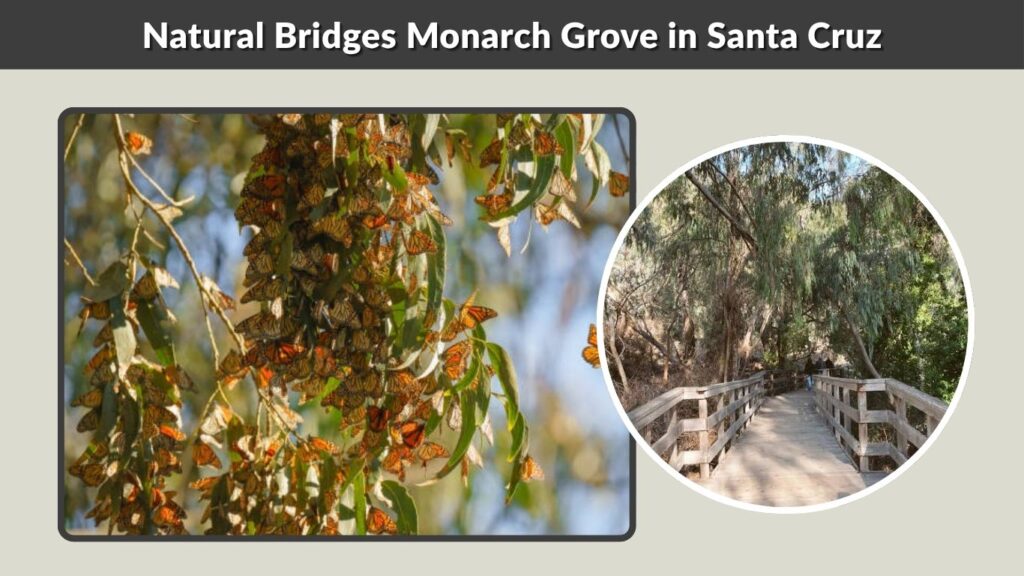
Natural Bridges State Beach offers a protected monarch preserve, coastal scenery, tide pools, and beach access within one destination. Monarchs typically begin arriving in mid-October and leave by mid-February, with late October and November frequently providing strong viewing opportunities.
The observation area is reached by a wheelchair- and stroller-accessible boardwalk leading into the eucalyptus grove. The park is open from 8 a.m. until sunset. Dogs are not allowed, and the standard vehicle day-use fee is currently listed as $10, although fees can change.
Natural Bridges is particularly suitable for families who want to combine butterfly viewing with a beach walk, visitor-center stop, or tide-pool exploration.
Pismo Beach vs. Pacific Grove
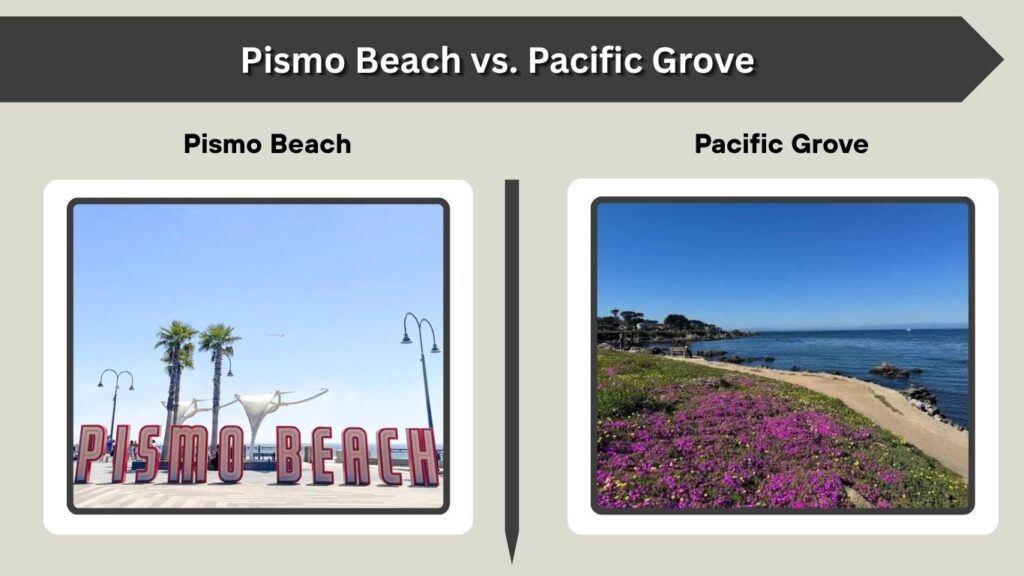
Choose Pismo Beach for a relaxed Central Coast road trip, convenient grove access, nearby beaches, and a broad overwintering habitat.
Choose Pacific Grove for an organized sanctuary experience, accessible trails, seasonal docents, and the chance to include Monterey Peninsula attractions in the same trip.
Choose Goleta when you prefer hiking, coastal open space, and a less compact environment. Choose Natural Bridges for a combined butterfly, beach, and tide-pool visit.
None can guarantee large numbers. Monarch populations naturally fluctuate, and official counts may be low even during the correct season.
Tips for Photographing Monarch Butterflies
Bring binoculars first, even when your main goal is photography. Many clusters remain high in the canopy and can be difficult to see without magnification.
Use a zoom lens rather than approaching butterflies. Morning light may reveal large motionless clusters, while warmer afternoon conditions can produce better flying photographs.
Remain quiet, keep to the trail, and never shake branches or chase butterflies to make them open their wings. At Pacific Grove, touching, chasing, picking up, or otherwise stressing monarchs can result in enforcement and substantial fines.
FAQs
Is Monarch Butterfly Grove Free?
Pismo, Pacific Grove, and Goleta do not charge admission to their butterfly-viewing areas. Natural Bridges charges a vehicle day-use fee, although people arriving without a vehicle may encounter different conditions. Always verify current fees before traveling.
What Is the Best Month to See Monarch Butterflies?
November, December, and January are generally the most dependable months across major California groves. Pacific Grove identifies November through January as its peak period, while Pismo’s full official season extends from November through February.
Are Monarch Butterflies in Pacific Grove Now?
Monarchs are not present throughout the year. They generally arrive in mid-October and leave in February. Check the sanctuary’s current weekly count before making a special trip, particularly near the beginning or end of the season.
Is Pismo Monarch Grove Dog Friendly?
Pismo State Beach permits dogs in some areas but applies restrictions within particular protected zones. Rules can differ between the wider state beach and the butterfly-viewing area, so confirm posted instructions and keep pets controlled. Pacific Grove and Natural Bridges do not allow pets in their monarch-viewing areas.
How Long Should I Spend at a Monarch Grove?
Allow approximately 30 to 60 minutes at Pismo or Pacific Grove. Plan at least one to two hours for Goleta because the viewing area requires a half-mile walk each way. Natural Bridges may require several hours when combining the grove with the beach and tide pools.
