

The Japanese Giant Hornet (Vespa mandarinia japonica) is one of the most fascinating and feared insects in the world. As a subspecies of the Asian Giant Hornet, it holds the title of the largest hornet found in Japan. With its striking orange head, powerful mandibles, and potent venom, it has earned a reputation for being both dangerous and awe-inspiring. Locally, it is respected as a part of nature’s balance, while globally it has been sensationalized under the nickname “murder hornet.” To understand this creature fully, we must explore its biology, behavior, and role in Japanese culture.
What is the Japanese Giant Hornet?
The Japanese Giant Hornet is classified under the wasp family Vespidae and is a regional subspecies of the Asian Giant Hornet (Vespa mandarinia). It shares many traits with its relatives but has adapted specifically to Japan’s environment. Its size and social organization make it one of the most dominant insect predators in the region.
Scientific Classification
- Kingdom: Animalia
- Phylum: Arthropoda
- Class: Insecta
- Order: Hymenoptera
- Family: Vespidae
- Genus: Vespa
- Species: Vespa mandarinia
- Subspecies: Vespa mandarinia japonica
Common Names
In Japan, it is widely known as the ōsuzumebachi (meaning “giant sparrow bee”). Internationally, it is usually called the Japanese Giant Hornet, while the media has popularized the sensational nickname “murder hornet.” Despite this, locals often view it as a natural part of rural life rather than a monster insect.
Physical Characteristics
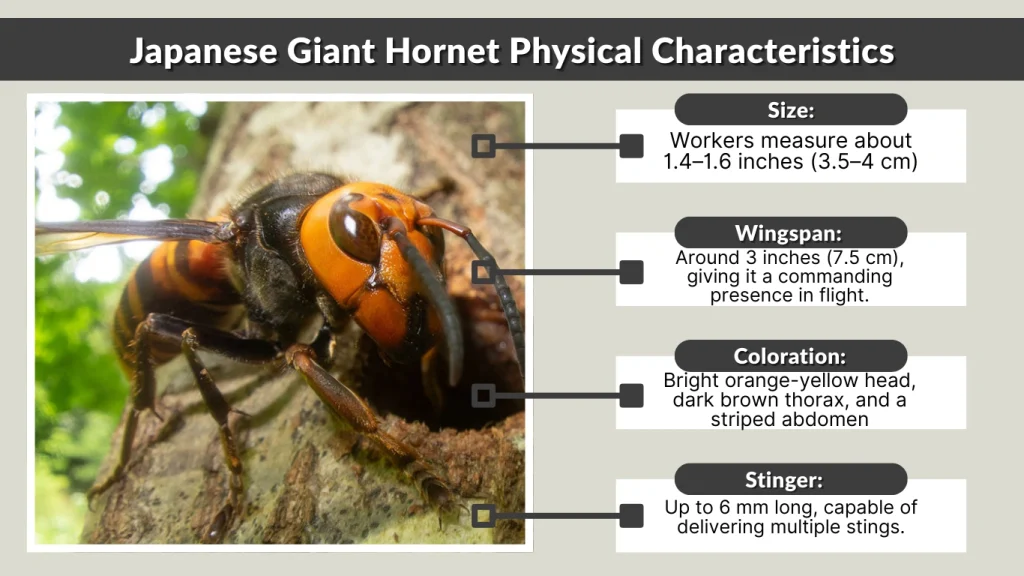
The Japanese Giant Hornet is immediately recognizable for its size and coloration. It is one of the few hornets large enough to be intimidating even to people familiar with wasps and bees.
Identification
- Size: workers measure about 1.4–1.6 inches (3.5–4 cm), while queens can exceed 2 inches (5 cm).
- Wingspan: around 3 inches (7.5 cm), giving it a commanding presence in flight.
- Coloration: bright orange-yellow head, dark brown thorax, and a striped abdomen with alternating yellow and black bands.
- Stinger: up to 6 mm long, capable of delivering multiple stings.
Its large mandibles are among its most distinctive features. They are designed to decapitate prey quickly, making the hornet a formidable hunter.
Japanese Giant Hornet Size
The queen is the largest member of the colony, towering over workers and drones. In comparison to other wasps and bees, the Japanese Giant Hornet is far more imposing. A single hornet is capable of overwhelming prey much larger than itself, demonstrating the advantage of its size.
Comparison with Other Insects
When compared with European Hornets or honeybees, the Japanese Giant Hornet is nearly twice their size. Side-by-side comparisons often show a honeybee no larger than the hornet’s mandible. This size difference explains why hornets can devastate bee colonies in such a short time.
Habitat and Distribution
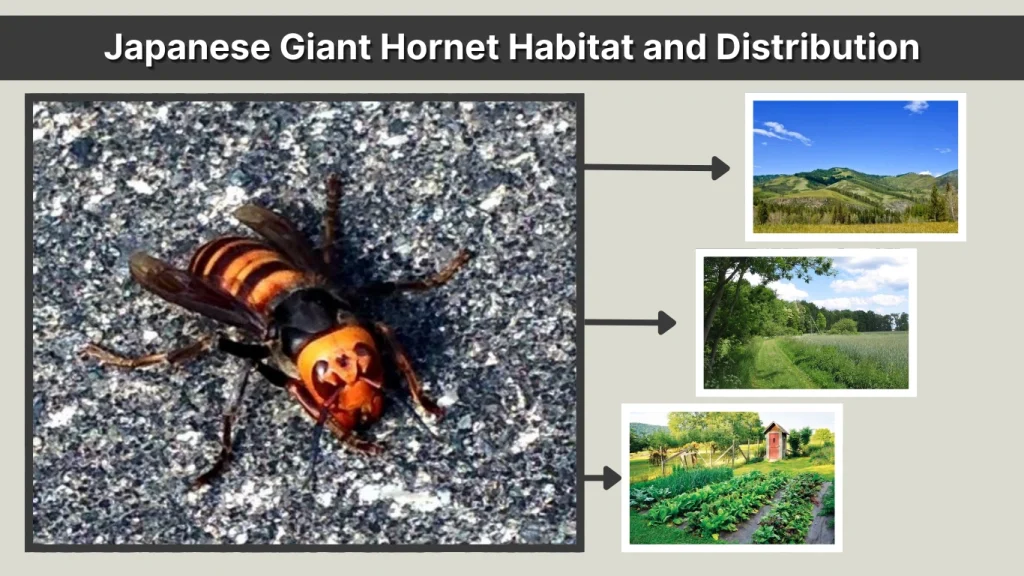
The Japanese Giant Hornet thrives in rural and semi-forested environments where prey is plentiful and human disturbance is minimal.
Native Range
As the name suggests, this subspecies is native to Japan, where it is widely distributed across the main islands. It is most common in regions with a mix of forest and farmland.
Preferred Habitat
These hornets prefer low mountains, woodlands, and rural farmlands. They avoid high-altitude areas and dense urban centers. Their nesting habits require soil, tree cavities, or abandoned animal burrows, which are more common in natural landscapes than in cities.
Global Interest
Although the Japanese Giant Hornet is specific to Japan, sightings of Asian Giant Hornets in North America have sometimes caused confusion, leading to media reports that mistakenly reference the Japanese variety. Nonetheless, interest in this subspecies has grown worldwide due to its size and deadly reputation.
Nesting and Life Cycle
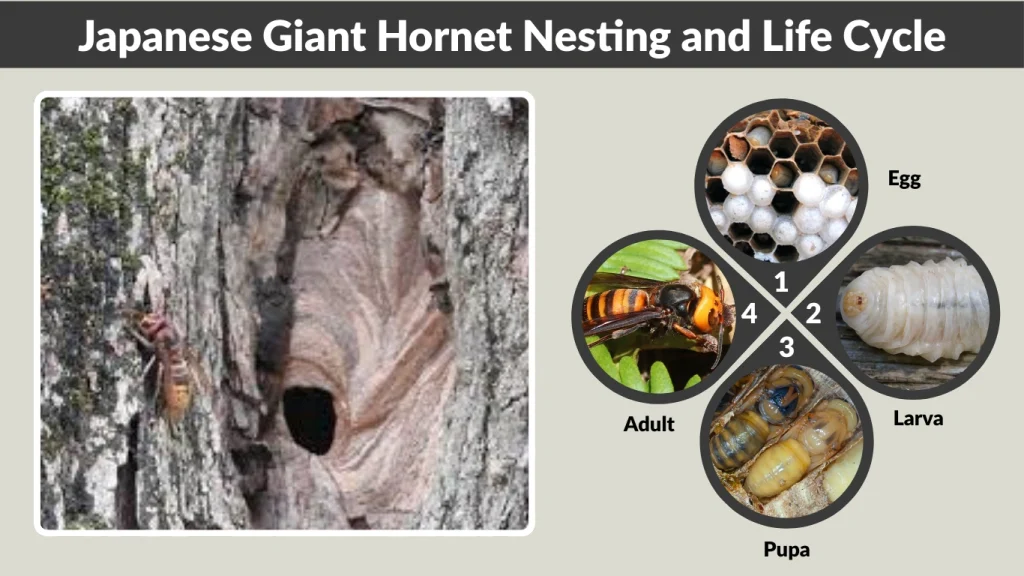
Like all hornets, the Japanese Giant Hornet follows a structured annual cycle governed by its queen and colony.
Nest Characteristics
Nests are often built underground in rodent burrows, but they can also be found in hollow trees or stumps. Unlike paper wasps that construct exposed nests, hornets prefer concealed, protected areas. The nest is composed of multiple layers of hexagonal cells made from chewed wood pulp, forming a papery structure.
Seasonal Life Cycle
- Spring: A queen emerges from hibernation and begins constructing a nest alone, laying the first eggs.
- Summer: Workers hatch and take over duties such as foraging and nest expansion, allowing the queen to focus on reproduction.
- Autumn: The colony reaches peak activity, producing new queens and drones for mating. This is also the time when hornet attacks on honeybee hives are most frequent.
- Winter: The colony dies out, leaving only newly mated queens to survive and restart the cycle the next spring.
Larval Stage and Feeding Exchange
Larvae are central to the colony’s survival. Workers feed them a diet of chewed-up insects. In return, the larvae secrete a protein-rich liquid, known as trophallactic fluid, which adult hornets consume for energy. This unique exchange provides the stamina needed for their long-distance hunting flights.
Behavior and Characteristics

The Japanese Giant Hornet’s behavior makes it one of the most efficient insect predators. It is highly social, well-organized, and ruthless when defending its colony.
Social Structure
The colony operates with strict roles:
- Queen: sole egg-layer and colony founder.
- Workers: hunt, feed larvae, defend the nest, and maintain its structure.
- Drones (males): appear late in the season to mate with new queens.
This hierarchy ensures that the colony functions smoothly and efficiently.
Hunting Behavior
Japanese Giant Hornets are specialized hunters. Their primary prey includes honeybees, beetles, and other insects. When targeting bee colonies, they engage in a brutal “slaughter phase,” where a handful of hornets can kill thousands of bees within hours. They decapitate the bees and carry their thoraxes back to feed larvae.
Aggression and Defense
These hornets are highly territorial. If a nest is disturbed, workers release pheromones that alert others to swarm the threat. Their aggression, combined with size and venom, makes encounters especially dangerous for humans and animals.
Japanese Giant Hornet Sting
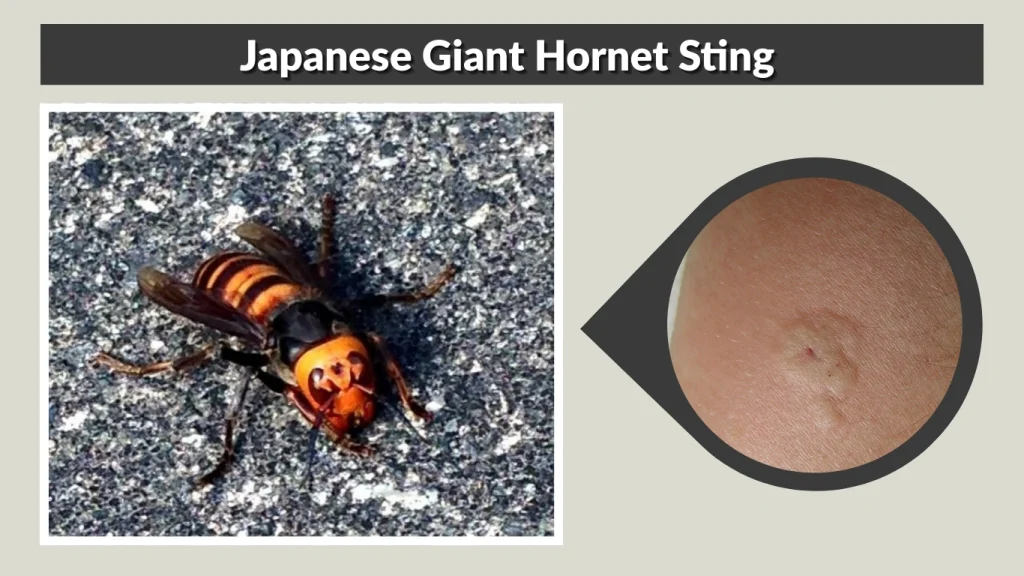
Perhaps the most infamous aspect of the hornet is its sting.
Pain and Venom
The sting of a Japanese Giant Hornet is described as excruciating, ranking high on the Schmidt Pain Index. The venom contains a mix of neurotoxins and enzymes that damage tissues and can interfere with the nervous system. Unlike bees, hornets can sting multiple times without dying.
Symptoms in Humans
Common sting symptoms include severe pain, swelling, and redness around the site. In more serious cases, venom can cause tissue necrosis or systemic reactions. People with allergies are at risk of life-threatening anaphylaxis.
Fatality Rates in Japan
Japan records dozens of hornet-related deaths each year, primarily in rural areas where people accidentally disturb nests. Multiple stings can overwhelm the body, and fatalities often result from anaphylactic shock or organ failure caused by venom toxins. Quick medical response, including epinephrine injections, is vital in such cases.
Diet and Feeding Habits

Japanese Giant Hornets have a diet that balances sugary foods for energy and protein-rich prey for larvae. Their feeding habits make them both predators and scavengers in nature.
Adult Hornets
Adults consume tree sap, nectar, honey, and fruit juices as their primary energy sources. In Japan, they are often seen at oak trees where sap flows freely. This sugary diet provides quick fuel for long-distance hunting and nest defense.
Feeding the Larvae
Workers actively hunt other insects, particularly honeybees, beetles, mantises, and caterpillars. They chew captured prey into soft balls of flesh, which are carried back to the nest and fed to larvae. In return, larvae secrete a nutrient-rich substance that adults drink for endurance. This unique food exchange system is one of the keys to their success as hunters.
Role in the Ecosystem
Although often portrayed as destructive, the Japanese Giant Hornet also has ecological value.
Predator Control
By preying on beetles, caterpillars, and other insects, these hornets help regulate populations that could otherwise damage crops and forests. Their presence reduces the number of pest outbreaks in rural areas.
Impact on Honeybees
Their relationship with honeybees is the most controversial. Japanese Giant Hornets can wipe out European honeybee colonies with ease, which poses a risk to agriculture where introduced bees are kept for pollination. However, native Japanese honeybees (Apis cerana japonica) have evolved a unique defense strategy: when attacked, hundreds of bees swarm the hornet and vibrate their bodies, generating heat that kills the intruder. This remarkable behavior is an evolutionary adaptation to survive hornet attacks.
Japanese Giant Hornet vs Asian Giant Hornet
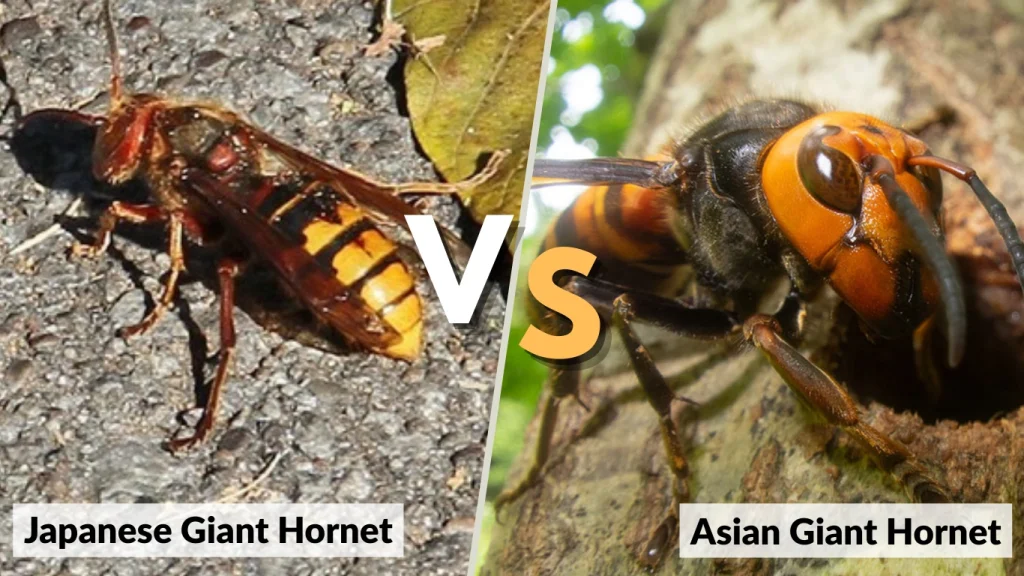
The Japanese Giant Hornet is a subspecies of the Asian Giant Hornet (Vespa mandarinia). While they share most traits, there are subtle differences.
Similarities
- Both are the largest hornets in the world, with queens exceeding 2 inches.
- Both have powerful venom and large mandibles.
- Both are apex insect predators capable of devastating bee colonies.
Differences
- Distribution: Japanese Giant Hornets are native to Japan, while Asian Giant Hornets are found across East Asia, including China, Korea, and Taiwan.
- Behavior: Japanese hornets are slightly more adapted to Japan’s cooler climate and have closer interactions with Japanese honeybees.
- Nesting: Japanese hornets show a stronger preference for underground nests, though overlap exists.
Cultural Significance in Japan
The Japanese Giant Hornet is not just a biological curiosity; it also has cultural and traditional importance in Japan.
Folklore and Symbolism
In Japanese culture, hornets are often symbols of danger, persistence, and strength. Rural communities respect them for their power and treat them with caution. Folklore has long included references to giant hornets as creatures to be feared yet admired.
Hornet in Local Cuisine
Surprisingly, hornet larvae and pupae are considered a delicacy in some rural parts of Japan. They are eaten fried, boiled, or mixed into rice dishes for their protein-rich value. There are even alcoholic drinks infused with hornets, believed to carry medicinal or energizing properties.
Media Attention and the “Murder Hornet” Hype
Globally, the hornet gained notoriety in 2020 when sightings of Asian Giant Hornets in North America sparked headlines calling them “murder hornets.” The Japanese Giant Hornet was often mentioned in these stories, sometimes inaccurately. While the species is undeniably dangerous, local Japanese attitudes tend to be more balanced, viewing them as part of the natural ecosystem rather than a terror.
Control and Human Safety
Because of their size and sting, Japanese Giant Hornets can pose risks to humans, especially in rural communities where nests are encountered.
Nest Removal
Nest removal is dangerous and should only be carried out by professionals. Hornets respond aggressively when threatened, and a swarm attack can be life-threatening. Pest control teams in Japan use protective suits, smoke, and specialized equipment to eliminate nests safely.
Safety Tips
- Avoid disturbing hornet nests in the wild.
- Stay calm if a hornet flies nearby; sudden movements may provoke it.
- Wear light clothing outdoors, as dark colors may attract aggression.
- Seek shelter indoors if multiple hornets are present.
Public Awareness
Education helps reduce unnecessary fear. By teaching people how to identify hornets and differentiate them from harmless insects, panic can be minimized. Reporting nest locations also allows authorities to respond more effectively.
Interesting Facts about Japanese Giant Hornets
- They are the largest hornet subspecies in Japan, with queens measuring over 2 inches.
- A single hornet can kill up to 40 honeybees per minute during hive raids.
- They can fly at speeds of up to 25 miles per hour.
- Japanese honeybees use a unique “heat balling” defense to kill hornets.
- In Japan, hornet larvae are sometimes raised as a protein food source.
FAQs
How big is the Japanese Giant Hornet?
Japanese Giant Hornets are massive, with workers measuring 1.4–1.6 inches (3.5–4 cm) and queens growing over 2 inches (5 cm). Their wingspan can reach 3 inches, making them the largest hornet in Japan.
Where are Japanese Giant Hornets found?
They are native to Japan and thrive in rural areas, forests, and low mountains. They avoid high-altitude and heavily urbanized areas but are common in agricultural landscapes where prey is abundant.
How painful is their sting?
Their sting is extremely painful, often described as burning or searing. It ranks high on the Schmidt Pain Index and contains venom that damages tissue and can cause allergic reactions. Multiple stings can be life-threatening.
Do Japanese Giant Hornets attack humans?
They do not usually attack humans unless their nest is threatened. Most encounters happen when people accidentally disturb nests in the ground or near farms. Fatalities are rare but do occur each year in Japan.
How do Japanese honeybees defend against hornets?
Japanese honeybees have evolved a unique defense. They swarm around an invading hornet and vibrate their bodies, raising the temperature inside the “bee ball” until the hornet dies from heat. This strategy is highly effective against hornet raids.
