

The Asian Giant Hornet (Vespa mandarinia) is often described as the world’s largest hornet, a title that makes it both fascinating and intimidating. Known for its enormous size, powerful sting, and destructive behavior toward honeybees, it has earned the sensational nickname “murder hornet” in recent years. While this name sparks fear, the species is more complex than headlines suggest. From its unique biology to its impact on ecosystems, understanding this insect requires exploring its characteristics, habitat, and behavior in depth.
What is the Asian Giant Hornet?
The Asian Giant Hornet belongs to the wasp family Vespidae and is native to parts of East and Southeast Asia. It is the largest hornet species in the world and differs significantly from smaller wasps and hornets due to its size and power. Within this group, there are slight regional variations, such as the Japanese Giant Hornet and the Northern Giant Hornet, which thrive in cooler climates.
Common names often lead to confusion. “Asian Giant Hornet” is the broad term, while “Japanese Giant Hornet” refers to the population in Japan, and “Northern Giant Hornet” has been used in scientific reports to describe those detected in North America. Despite these differences, all belong to the same species and share similar features.
Physical Characteristics
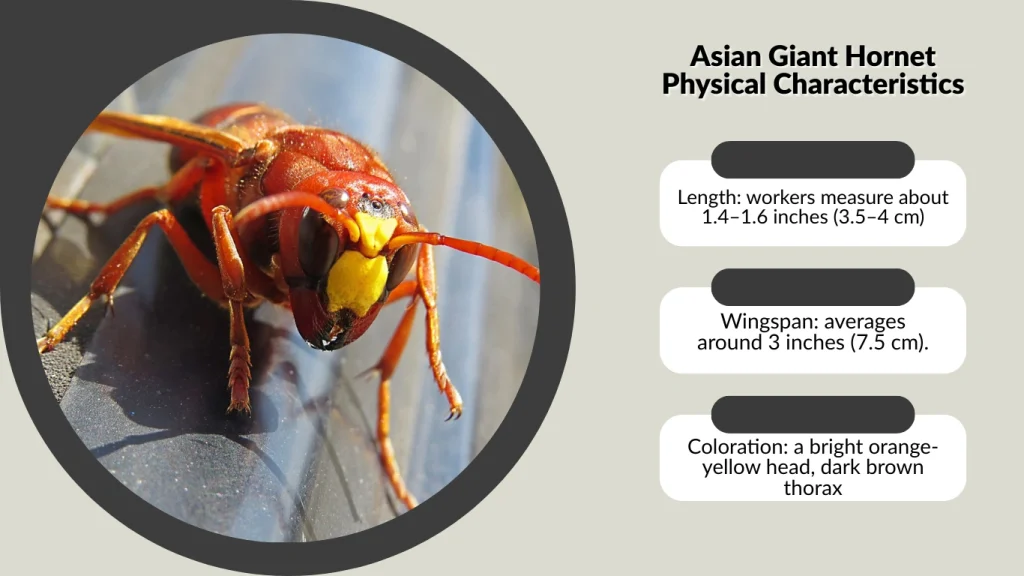
The Asian Giant Hornet is immediately recognizable by its massive body and striking colors. Workers and queens differ slightly in size, but even the smaller workers dwarf many other wasps.
Identification
- Length: workers measure about 1.4–1.6 inches (3.5–4 cm), while queens can grow over 2 inches (5 cm).
- Wingspan: averages around 3 inches (7.5 cm).
- Coloration: a bright orange-yellow head, dark brown thorax, and a striped abdomen with alternating yellow and dark bands.
Its large mandibles are among its most notable traits. These powerful jaws are designed to decapitate prey, particularly honeybees, with terrifying efficiency. The stinger, which can exceed 6 mm in length, delivers venom capable of causing significant pain and tissue damage.
Asian Giant Hornet Size and Comparison
When comparing the hornet with other insects, the differences are dramatic. Honeybees are less than half their size, while most common wasps appear tiny in contrast. Even bumblebees, which are considered large pollinators, look small next to an Asian Giant Hornet. Visual comparisons often use the human hand or thumb to show how massive these hornets can appear.
Habitat and Locations
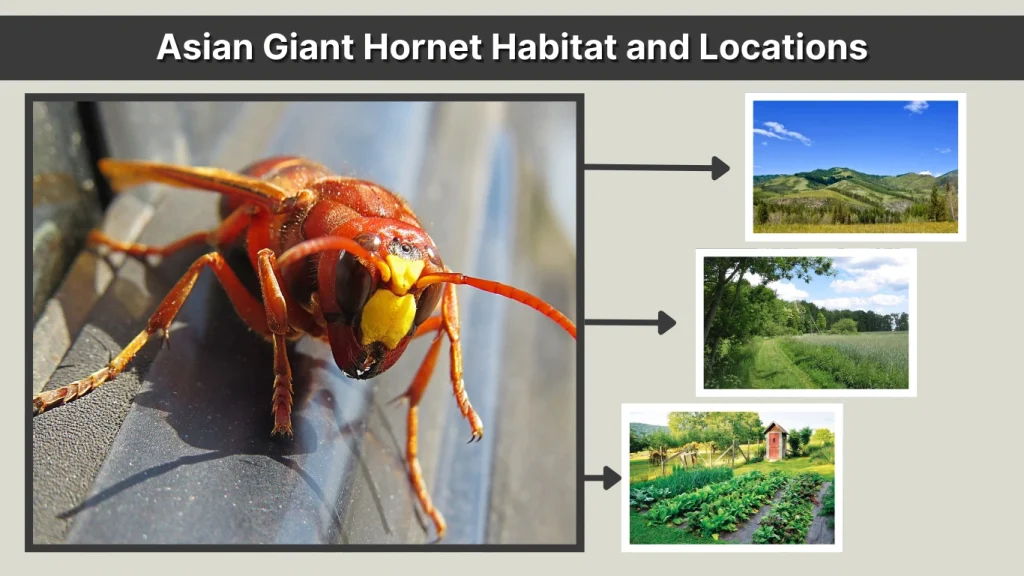
The Asian Giant Hornet prefers habitats that balance access to prey with safe nesting grounds. It is most commonly found in low-altitude woodlands, forests, and rural areas where it can thrive undisturbed.
Native Distribution
The hornet is native to Japan, China, Korea, Taiwan, and parts of Southeast Asia. In Japan, it is particularly well-known and has been integrated into local culture due to frequent encounters.
Global Spread and Invasions
In recent years, sightings outside its native range have raised global alarm. In 2019–2020, several colonies were detected in Washington State, USA, and British Columbia, Canada. These were identified as “Northern Giant Hornets,” but genetically, they are the same species. The UK has also reported occasional sightings, sparking efforts to prevent establishment.
Preferred Habitat
Asian Giant Hornets generally avoid urban centers and high-altitude regions. Instead, they prefer forest edges, rural farmlands, and mountain foothills where they can build underground nests and easily hunt insects.
Nesting and Life Cycle

Like other social wasps, Asian Giant Hornets live in colonies led by a queen. Their nests are typically hidden and difficult to locate, making eradication efforts a challenge.
Nest Characteristics
Unlike paper wasps, which build open nests, Asian Giant Hornets prefer underground burrows, tree hollows, or abandoned rodent tunnels. These locations provide protection from predators and harsh weather. Their nests are not easily spotted, which increases the risk for people accidentally encountering them.
Life Cycle Stages
The life cycle of the hornet follows a structured pattern:
- Egg – The queen lays eggs in spring after establishing a nest.
- Larva – The eggs hatch into larvae, which depend entirely on worker hornets for feeding.
- Pupa – After several molts, the larvae spin cocoons and pupate.
- Adult – Fully developed hornets emerge, taking roles as workers, drones, or new queens.
This cycle repeats annually, with colonies reaching peak activity in late summer and autumn before declining in winter.
Larvae Development
Larvae play a central role in the colony’s energy exchange. Workers feed them a diet of chewed-up insects. In return, larvae secrete a nutrient-rich liquid known as a “trophic substance,” which adult hornets consume for energy during hunts. This exchange makes the colony highly efficient and gives the hornets their endurance.
Behavior and Characteristics

The behavior of the Asian Giant Hornet sets it apart from most wasps. They are both social and aggressive, traits that make them formidable in the insect world.
Social Structure
The colony operates under a strict hierarchy:
- The queen is the sole reproductive female during the founding stage.
- Workers handle hunting, feeding larvae, and defending the nest.
- Drones (males) appear later in the season, with the sole purpose of mating.
This structure allows the colony to function like a finely tuned machine, ensuring survival through cooperation.
Hunting Behavior
Asian Giant Hornets are apex insect predators. They target other wasps, beetles, and especially honeybees. A small group of hornets can decimate an entire bee colony in hours by decapitating bees and carrying their bodies back to the nest as food for larvae. This behavior, often called the “slaughter phase,” is one of the primary reasons they are feared by beekeepers.
Aggression and Defense
Hornets are territorial and defend their nests fiercely. When threatened, they release a pheromone that alerts other colony members, leading to mass attacks. Their aggression, combined with size and venom, makes encounters dangerous for both humans and animals.
Asian Giant Hornet Sting
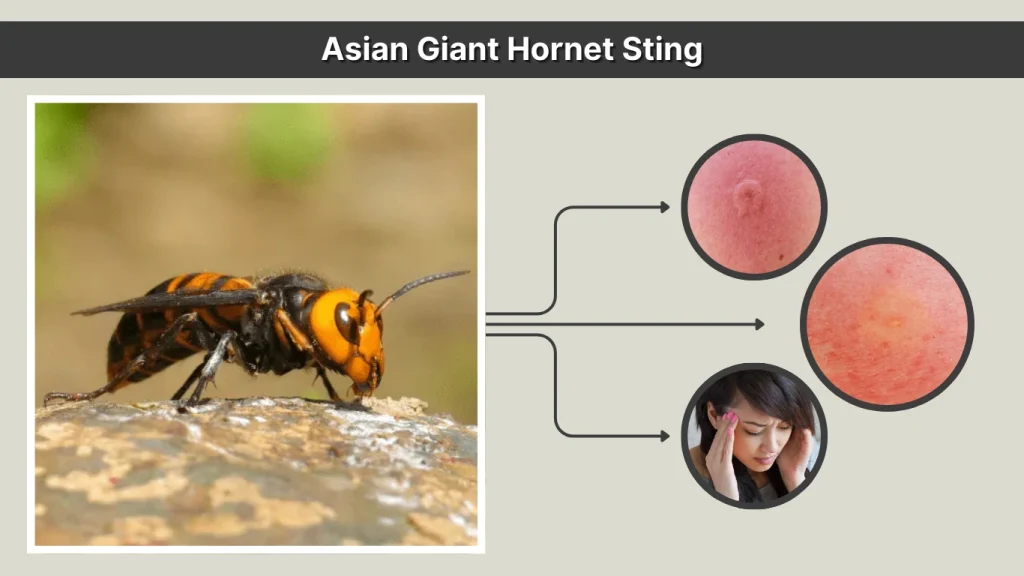
Perhaps the most infamous aspect of the hornet is its sting. Unlike bees, which die after stinging, hornets can sting repeatedly.
Pain Level and Venom
The sting of an Asian Giant Hornet is considered one of the most painful insect stings in the world. It ranks high on the Schmidt Pain Index, producing intense burning pain. The venom contains a mix of neurotoxins, enzymes, and compounds that damage tissue and interfere with nerve signaling.
Symptoms in Humans
Reactions vary depending on the person and the number of stings. Symptoms include:
- Sharp pain and swelling at the sting site
- Redness and warmth spreading around the area
- In severe cases, nausea, dizziness, or shortness of breath
Fatality and Medical Concerns
Although most stings are not fatal, multiple stings or allergic reactions can be deadly. In some Asian countries, dozens of deaths are reported annually due to hornet attacks. Immediate medical care, including antihistamines, epinephrine for anaphylaxis, and pain management, is critical after serious encounters.
Diet and Feeding Habits
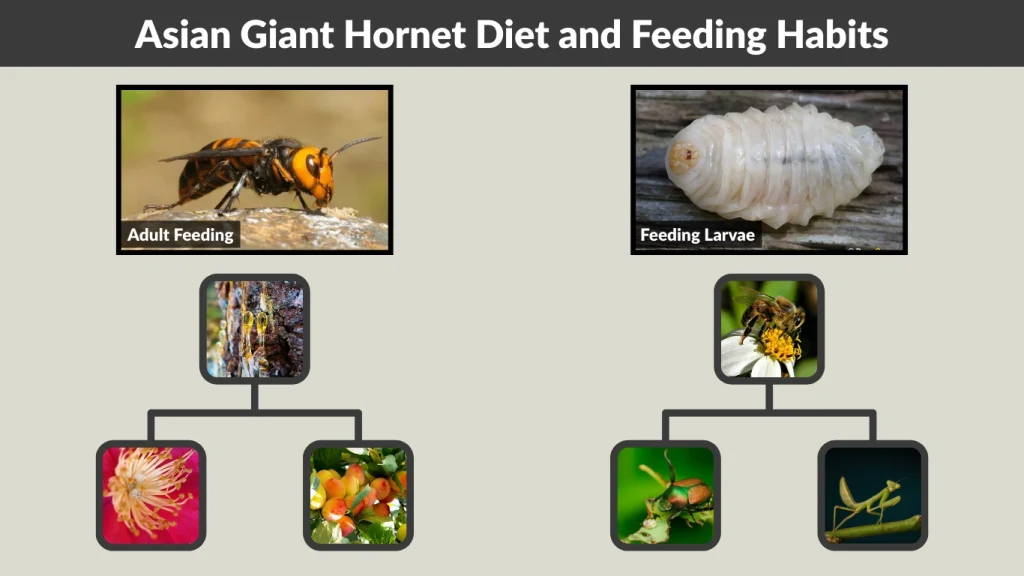
The Asian Giant Hornet’s diet is both versatile and predatory. Adults seek energy-rich foods such as tree sap, honey, and fruit juices. However, their most significant role in the ecosystem comes from their hunting behavior. They are highly skilled at capturing insects, which they chew into a paste to feed their developing larvae.
Adult Feeding
While foraging, adults prefer sweet sources of nourishment. Tree sap is a favorite, and hornets often patrol the same sap wells daily. They also consume ripe fruits and nectar when available. These sugary foods give them quick energy for hunting and defending the colony.
Feeding Larvae
The larvae, unlike adults, require protein to grow. Workers provide this by hunting honeybees, beetles, mantises, and other insects. Prey is dismembered with powerful mandibles and transported back to the nest. Once processed into a ball of chewed tissue, it becomes a protein meal for the larvae. In turn, larvae secrete a special amino acid-rich fluid, which adults consume to boost their stamina during extended flights and hunting trips. This mutual exchange strengthens the entire colony.
Role in the Ecosystem
Though feared, the Asian Giant Hornet plays an important ecological role. By preying on a variety of insects, they regulate populations and prevent outbreaks of certain pests. However, their impact can shift dramatically depending on the balance of the environment.
Predator and Prey
As predators, they help control numbers of beetles and other insects that could otherwise damage crops and forests. At the same time, hornets themselves are prey to some larger animals, including birds and mammals, though their venomous sting deters most attackers.
Impact on Pollinators
Their most controversial role is in relation to honeybees. A single hornet attack can wipe out an entire bee colony, putting pressure on local pollination. This is particularly concerning in regions where invasive hornet populations threaten already vulnerable bee species.
Asian Giant Hornet vs Other Hornets

The Asian Giant Hornet is often compared with its close relatives and other wasps. Understanding these differences highlights why it stands out as the most formidable hornet.
Japanese Giant Hornet
The Japanese Giant Hornet is essentially the same species but represents a population native to Japan. It is widely known in Japanese culture due to frequent human encounters. Its size and venomous sting are identical to those of the general Asian Giant Hornet.
Northern Giant Hornet
The Northern Giant Hornet, reported in the United States and Canada, is genetically the same species but described under this label for monitoring purposes. Scientists use the term to track invasive populations in North America, where concerns about spread remain high.
Cultural Significance and Human Perception
The Asian Giant Hornet is not just an insect; it is a part of cultural folklore, local diets, and even sensational media.
Folklore and Symbolism
In Japan, the hornet is viewed with a mix of respect and fear. It symbolizes power and danger, and its presence is well known in rural life. In some regions of China and Japan, hornet larvae are even considered a delicacy and are eaten fried or boiled for their protein-rich content.
Media and the “Murder Hornet” Label
In 2020, when hornets were first spotted in North America, global headlines labeled them as “murder hornets.” This sensational nickname amplified fear and misunderstanding. While the hornets are indeed dangerous, especially in groups, the exaggerated coverage overshadowed their ecological role and cultural significance.
Control and Prevention
Preventing the spread of Asian Giant Hornets has become a focus in non-native regions like the US and UK. Effective monitoring and control are essential to protecting both ecosystems and agriculture.
Monitoring and Distribution Tracking
Scientists and governments use traps, genetic testing, and nest searches to monitor populations. Citizen reporting has also become an important tool, as early detection can prevent colonies from establishing.
Nest Removal and Safety
Removing an Asian Giant Hornet nest is extremely dangerous due to their aggression. Professional teams wear protective suits and often carry out nest eradication at night when hornets are less active. Specialized vacuums and controlled insecticides are used to destroy colonies.
Public Awareness
Education is a critical part of prevention. People are encouraged to learn the difference between Asian Giant Hornets and similar-looking wasps or bees. Reporting sightings to local authorities helps prevent panic and ensures accurate monitoring.
Interesting Facts about Asian Giant Hornets
Despite their fearsome reputation, these hornets are also fascinating creatures. Here are a few remarkable facts:
- They are the largest hornet species in the world, with queens reaching up to 2 inches long.
- A small group can wipe out a honeybee colony in just hours, using their mandibles to decapitate bees.
- Hornets can fly up to 25 miles per hour and cover long distances while foraging.
- Workers can communicate threats through pheromones, leading to coordinated attacks.
- In Japan, their larvae and pupae are considered a nutritious delicacy.
FAQs
How big is the Asian Giant Hornet?
The Asian Giant Hornet is the world’s largest hornet, with workers averaging 1.5 inches and queens exceeding 2 inches in length. Their wingspan can reach about 3 inches, making them much larger than common wasps and bees.
Are Asian Giant Hornets dangerous to humans?
Yes, they can be dangerous if provoked. Their sting is extremely painful and contains potent venom. While most stings are not fatal, multiple stings or allergic reactions can lead to serious health risks, including death in rare cases.
Where are Asian Giant Hornets found?
They are native to East and Southeast Asia, including Japan, China, Korea, and Taiwan. However, invasive populations have been recorded in North America and occasional sightings reported in the UK.
How painful is their sting compared to other insects?
The sting ranks among the most painful insect stings in the world. It causes intense burning pain and swelling, often lasting for hours. It is considered more painful than bee or wasp stings and can be medically serious.
Do Asian Giant Hornets attack honeybees?
Yes. They are notorious for their attacks on honeybee colonies. A group of hornets can kill thousands of bees in a short period, decapitating them to carry their bodies back to feed their larvae. This behavior threatens beekeeping and pollination in regions where they spread.
