
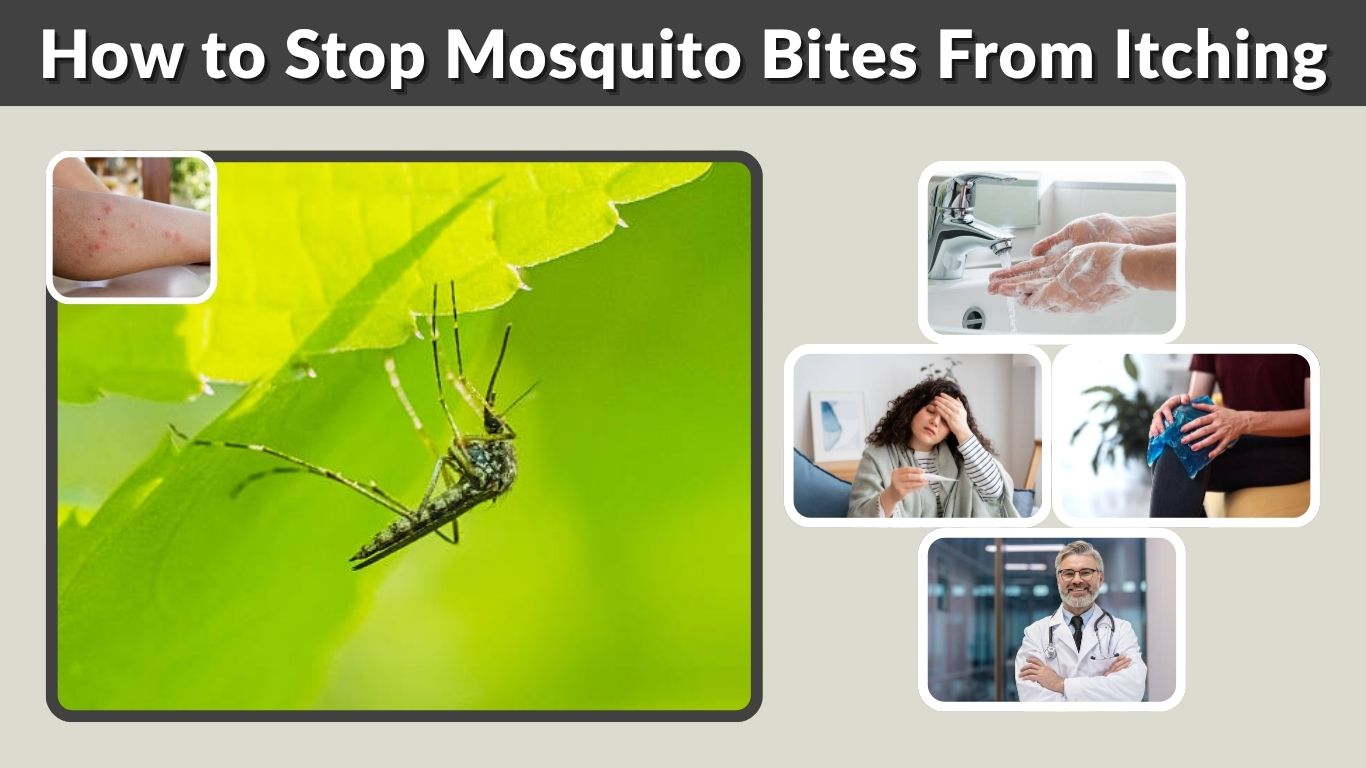
Mosquito bites can become intensely itchy within minutes or hours, making it difficult to resist scratching. Fortunately, most bites improve within a few days, and simple treatments can make the itching much easier to tolerate. Cold compresses, anti-itch creams, baking soda paste, and antihistamines are among the commonly recommended options. Here are six practical ways to stop mosquito bites from itching, plus tips for swelling, nighttime discomfort, and signs that require medical attention.
6 Ways to Stop Mosquito Bites From Itching
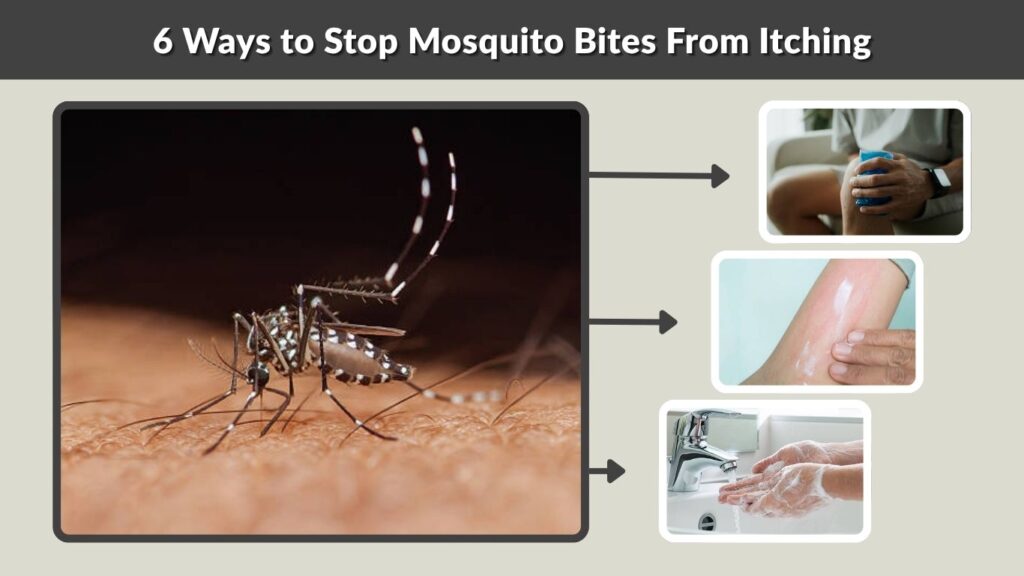
Mosquito itching occurs because your immune system reacts to proteins in mosquito saliva. The reaction can create redness, swelling, and an itchy bump. Most reactions are mild, but scratching can irritate the skin and increase the chance of infection. The following methods can provide relief while the bite naturally heals.
1. Apply a Cold Compress or Ice Pack
Cold treatment is one of the quickest ways to calm an itchy mosquito bite. The CDC recommends applying an ice pack for about 10 minutes and repeating it when needed to reduce itching and swelling.
For fast relief:
- Wrap ice in a thin cloth rather than placing it directly on the skin.
- Hold it over the bite for around 10 minutes.
- Remove it if the skin becomes painful or excessively numb.
- Repeat later if the itching returns.
Cold can be particularly helpful for swollen bites or when itching becomes uncomfortable at night.
2. Use Hydrocortisone or Calamine Lotion
An over-the-counter anti-itch product can be useful when cooling alone does not provide enough relief. Dermatologists recommend options such as hydrocortisone for itchy insect bites, and calamine can also help soothe irritated skin.
Apply a small amount according to the product label and avoid applying medication to broken or infected skin unless a healthcare professional advises otherwise.
Hydrocortisone is particularly useful when inflammation is contributing to the itch, while calamine may provide a soothing effect for mild irritation.
3. Try a Baking Soda Paste
For people looking for a simple mosquito-bite home remedy, baking soda is one option specifically recommended by the CDC.
To make the paste:
- Put about 1 tablespoon of baking soda in a small container.
- Add just enough water to create a paste.
- Apply a thin layer to the mosquito bite.
- Leave it on for about 10 minutes.
- Wash it off gently.
This method may help calm the itch response without requiring a medicated cream.
4. Consider an Oral Antihistamine
When several bites are itching badly or the reaction is stronger, an oral antihistamine may help. Mayo Clinic notes that nonprescription antihistamines such as cetirizine or loratadine can relieve itching from stronger reactions.
Before using one:
- Follow the medicine’s dosing instructions.
- Check whether it can cause drowsiness.
- Ask a pharmacist or healthcare professional about use in children.
- Get medical advice if you are pregnant, breastfeeding, taking other medicines, or have medical conditions that could affect medication choice.
Medication is usually unnecessary for a single mild bite but may be useful when itching is widespread or persistent.
5. Wash the Bite and Avoid Scratching
Wash mosquito bites gently with soap and water. More importantly, avoid scratching them even when the urge is strong.
Scratching can break the skin and increase the chance of bacterial infection.
To reduce scratching:
- Keep fingernails short and clean.
- Cover troublesome bites loosely when necessary.
- Use a cold compress when the urge to scratch becomes intense.
- Reapply an appropriate anti-itch treatment as directed.
If itching is worse during sleep, wearing loose pajamas that cover bites on the arms or legs may also make unconscious scratching less likely.
6. Use Gentle Pressure for Immediate Relief
If you have no cream or ice available, gently pressing the itchy area may temporarily reduce the sensation. Mayo Clinic suggests applying pressure to an itchy mosquito bite for about 10 seconds as one possible self-care measure.
Avoid aggressive rubbing, pinching, or scratching. The goal is simply to interrupt the itching sensation temporarily without damaging the skin.
This technique is convenient at school, work, while traveling, or any time you need quick relief before you can use a cold compress or anti-itch product.
How to Stop Mosquito Bite Itching and Swelling Fast
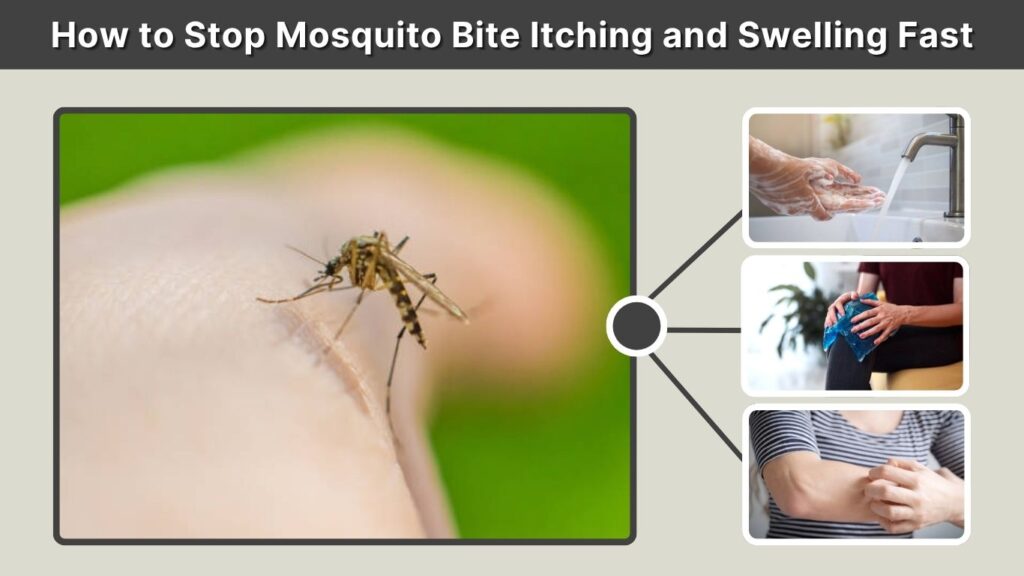
If a mosquito bite is both swollen and itchy, concentrate first on reducing inflammation. A cold compress is one of the simplest options, while hydrocortisone, calamine, or an appropriate antihistamine may provide additional relief. Large local reactions sometimes occur, especially in children, and can involve considerable redness and swelling.
What to Do for a Swollen Bite
For mild swelling:
- Wash the skin gently.
- Apply a cold pack for 10–20 minutes.
- Avoid rubbing or scratching.
- Use an appropriate anti-itch treatment.
- Elevate an affected arm or leg if swelling is uncomfortable.
Most ordinary mosquito bites gradually settle without special treatment.
What About the Hot-Spoon Method?
The “hot spoon” method is frequently discussed online, but using something very hot against the skin creates a real risk of burns. Safer, established options such as cold compresses, hydrocortisone, calamine, baking soda paste, and appropriate antihistamines are better-supported approaches.
Similarly, essential oils can irritate sensitive skin and should not be considered a guaranteed substitute for established bite treatments.
How to Stop Mosquito Bites From Itching at Night
Itching can feel more distracting at night because there are fewer competing sensations and scratching can happen unconsciously. Preparing the bites before bed can make sleeping easier. A cool compress followed by an appropriate anti-itch treatment is often a practical approach.
Nighttime Relief Tips
Before going to sleep:
- Take a cool shower if you have multiple bites.
- Apply a cold compress to the worst areas.
- Use hydrocortisone or calamine as directed.
- Wear loose, breathable sleepwear.
- Keep nails short to reduce skin damage if you scratch while asleep.
If itching is repeatedly severe enough to disturb sleep, a pharmacist or healthcare professional can advise whether an oral antihistamine is suitable for you.
When a Mosquito Bite Needs Medical Attention
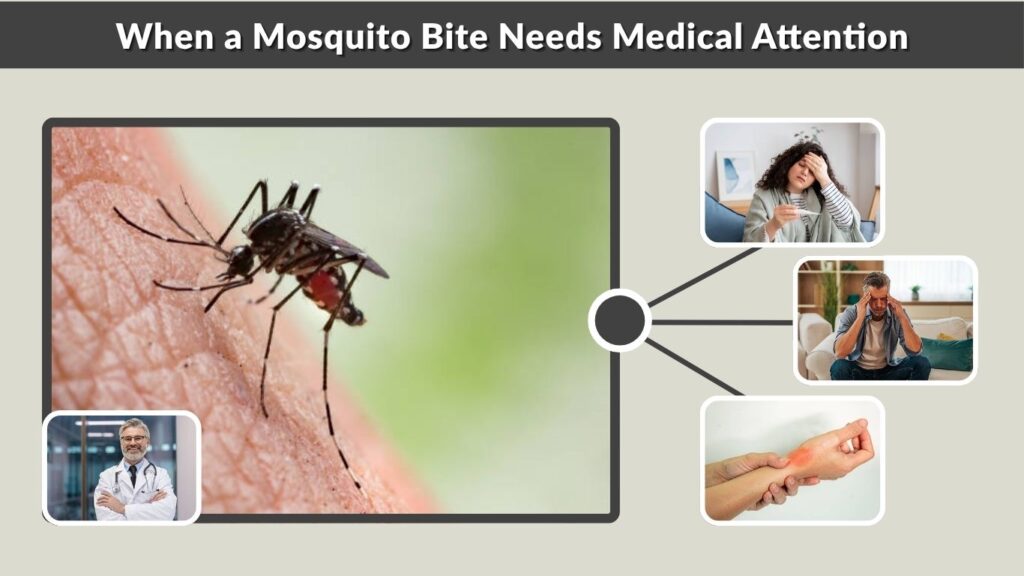
Most mosquito bites are harmless and improve within several days. However, unusually severe symptoms should not be ignored. Mosquitoes can also transmit infections in some parts of the world, so illness following mosquito exposure may require medical evaluation.
Warning Signs to Watch For
Seek medical advice if you develop:
- Increasing redness, warmth, pain, or swelling around the bite
- Red streaking or other signs of infection
- Fever, severe headache, or significant body aches
- A very large or worsening reaction
- Symptoms that do not improve as expected
Trouble breathing, swelling of the face, lips, eyelids or throat, fainting, or another serious allergic reaction requires emergency medical attention.
FAQs
How do you immediately stop mosquito bites from itching?
Apply a cold compress or wrapped ice pack for about 10 minutes. This can quickly reduce both itching and swelling. An over-the-counter anti-itch treatment may provide additional relief afterward.
What is the best home remedy for an itchy mosquito bite?
A cold compress is one of the simplest choices. Another CDC-recommended home remedy is a paste made from baking soda and water, left on the bite for around 10 minutes before being rinsed off.
Why do mosquito bites itch so badly?
Mosquitoes inject saliva while feeding. Your immune system reacts to substances in that saliva, causing inflammation, swelling, and the familiar itchy bump. Some people develop stronger reactions than others.
How long do mosquito bites itch?
Most uncomplicated mosquito bites improve on their own within a few days. If the bite becomes increasingly painful, hot, swollen, or appears infected instead of improving, seek medical advice.
Does scratching make mosquito bites worse?
Yes. Scratching can further irritate the bite, break the skin, and increase the risk of bacterial infection. Using cold treatment or an appropriate anti-itch product is safer than repeatedly scratching the area.
