
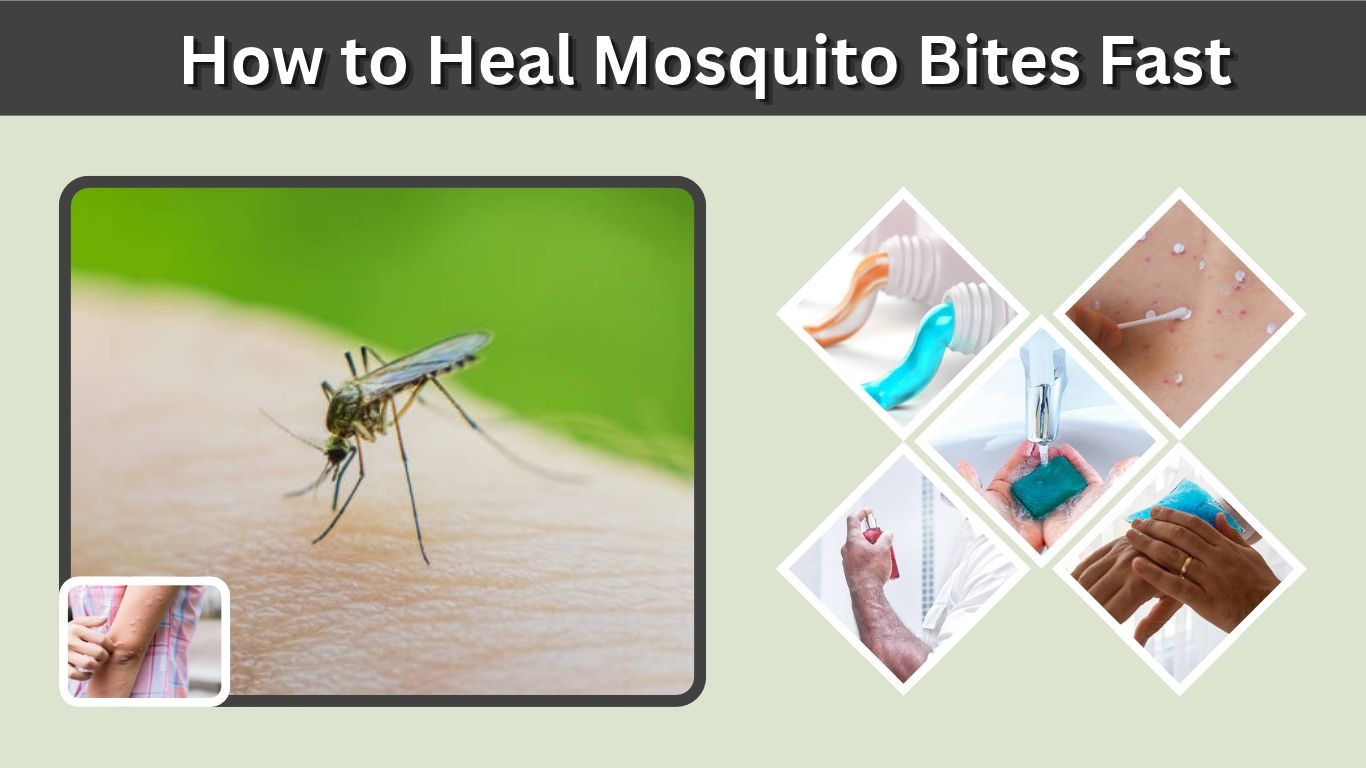
Mosquito bites can leave itchy, swollen bumps that take several days to settle. Most mild bites improve within a few days, but scratching, sensitive skin, or a stronger allergic reaction can make them last longer. The best way to help a bite heal is to clean the area, reduce swelling, protect damaged skin, and avoid further irritation. This guide explains how to heal mosquito bites fast, how long recovery usually takes, and what to do about bites on the face, scratched skin, infections, and lingering dark marks.
How Long Do Mosquito Bites Take to Heal?
Most mosquito bites heal naturally within a few days without special treatment. However, the recovery period depends on your immune response, skin sensitivity, and the severity of the reaction. Mild redness and itching often disappear within three to four days, while swelling can sometimes remain for approximately a week.
Typical Mosquito Bite Healing Time
A normal mosquito bite develops when your immune system reacts to proteins in mosquito saliva. The resulting inflammation creates a raised, itchy bump that gradually becomes smaller as your body settles the reaction.
Some people experience larger reactions, especially children and individuals sensitive to mosquito bites. In these cases, swelling and redness may take longer to disappear. A lingering dark spot does not necessarily mean the bite is still healing; it can be pigmentation left behind after the inflammation has resolved.
How to Heal Mosquito Bites Fast at Home
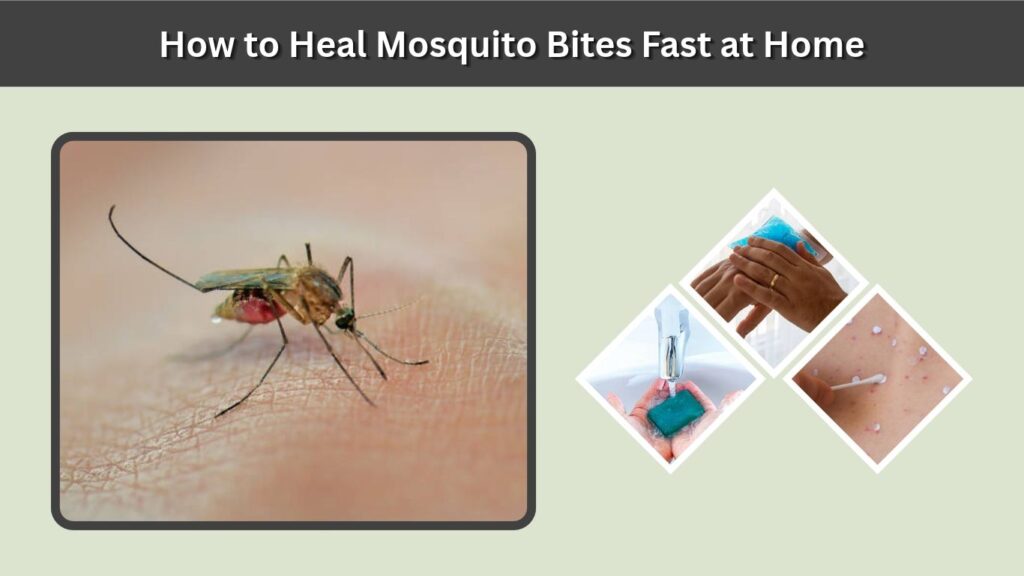
You can help mosquito bites heal comfortably by following simple skin-care steps. Most ordinary bites do not require prescription medication. Cleaning the affected area, controlling inflammation, and avoiding scratching are usually enough to support recovery.
1. Wash the Affected Area
Start by gently washing the mosquito bite with mild soap and clean water. This removes dirt, sweat, and other substances that could irritate the skin.
Pat the area dry with a clean towel instead of rubbing it. Keeping the bite clean is particularly important if you have accidentally scratched it.
2. Apply a Cold Compress
A cold compress helps reduce swelling, redness, and itching. Wrap an ice pack in a clean towel and place it gently over the bite for approximately 10–20 minutes.
Repeat as needed, allowing your skin to return to its normal temperature between applications. Never place ice directly against your skin because it can cause cold injury.
3. Use Calamine Lotion
Calamine lotion can soothe irritated skin and temporarily reduce itching. Apply a thin layer according to the product instructions.
It is particularly useful when several mosquito bites cause discomfort. Avoid applying it to open or damaged skin unless a healthcare professional recommends doing so.
4. Try Hydrocortisone Cream
Over-the-counter hydrocortisone cream can reduce inflammation, redness, and itching. It may help when a mosquito bite becomes particularly uncomfortable.
Follow the package instructions and ask a pharmacist before using it on children, broken skin, or sensitive areas. Avoid applying it around the eyes unless a healthcare professional specifically recommends it.
5. Consider an Oral Antihistamine
An oral antihistamine can help control itching caused by your body’s reaction to mosquito saliva. Common options include cetirizine and loratadine.
Follow the recommended dosage and consult a pharmacist if you take other medications, have underlying health conditions, or need treatment for a young child.
How to Heal Mosquito Bites After Scratching
Scratching mosquito bites can damage the outer layer of skin and make recovery more difficult. It can also introduce bacteria, increasing the risk of infection. If you have already scratched a bite until it becomes sore or starts bleeding, focus on protecting the damaged skin.
Care for Scratched or Open Mosquito Bites
Follow these steps to help scratched mosquito bites heal:
- Clean the wound: Gently rinse the damaged area with clean water and mild soap around the wound. Avoid scrubbing.
- Apply petroleum jelly: A thin layer of plain petroleum jelly can keep minor damaged skin moist and support healing.
- Cover the area: Use a clean, sterile bandage if the wound is open or likely to rub against clothing.
- Change the dressing: Replace the bandage daily or whenever it becomes wet or dirty.
- Avoid scratching: Keep your fingernails short and avoid picking at scabs as the skin recovers.
Do not routinely apply antibiotic ointments to clean, minor scratches. Some ingredients can irritate the skin, and antibiotics are not necessary unless an infection requires treatment.
How to Heal Mosquito Bites on the Face
Mosquito bites on the face can be particularly uncomfortable because facial skin is sensitive and swelling may be more noticeable. A bite near the forehead or eyelid can sometimes cause considerable puffiness, even when the original bite is small.
Wash the affected area gently and use a cool compress to reduce swelling. Avoid rubbing the skin, squeezing the bump, or applying strong skincare products. If you need an anti-itch treatment, ask a pharmacist about an appropriate product for facial skin.
Be especially careful around the eyes. Do not apply ordinary anti-itch creams close to the eyelids without professional advice. Seek medical attention if swelling worsens, affects your vision, or is accompanied by eye pain or other concerning symptoms.
How to Heal Infected Mosquito Bites
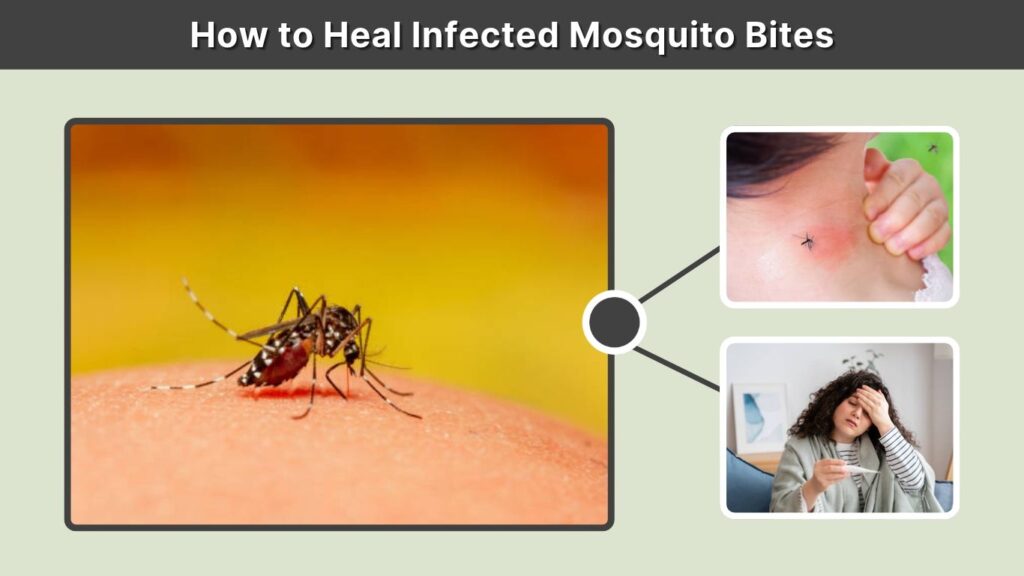
An infected mosquito bite requires more attention than an ordinary itchy bump. Infection can develop when bacteria enter damaged skin, particularly after repeated scratching. A bite that becomes increasingly painful, warm, or swollen should be evaluated by a healthcare professional.
Signs of an Infected Mosquito Bite
Look for these possible warning signs:
- Increasing redness or swelling around the bite.
- Skin that feels unusually warm or tender.
- Pus or yellowish fluid coming from the affected area.
- Red streaks extending outward from the bite.
- Increasing pain rather than gradual improvement.
- Fever or swollen lymph nodes.
What to Do About an Infected Bite
Gently clean the affected area and avoid scratching, squeezing, or picking at it. Do not rely on ordinary anti-itch creams to treat a suspected infection.
Contact a healthcare professional if you notice signs of infection. They can determine whether you need antibiotics or another treatment. Do not take leftover antibiotics or use prescription medication without medical advice.
Also seek prompt medical attention if you develop fever, severe headache, body aches, pain behind the eyes, or unusual weakness after mosquito exposure. These symptoms can indicate a mosquito-borne illness, including dengue.
What Should You Avoid While Mosquito Bites Heal?
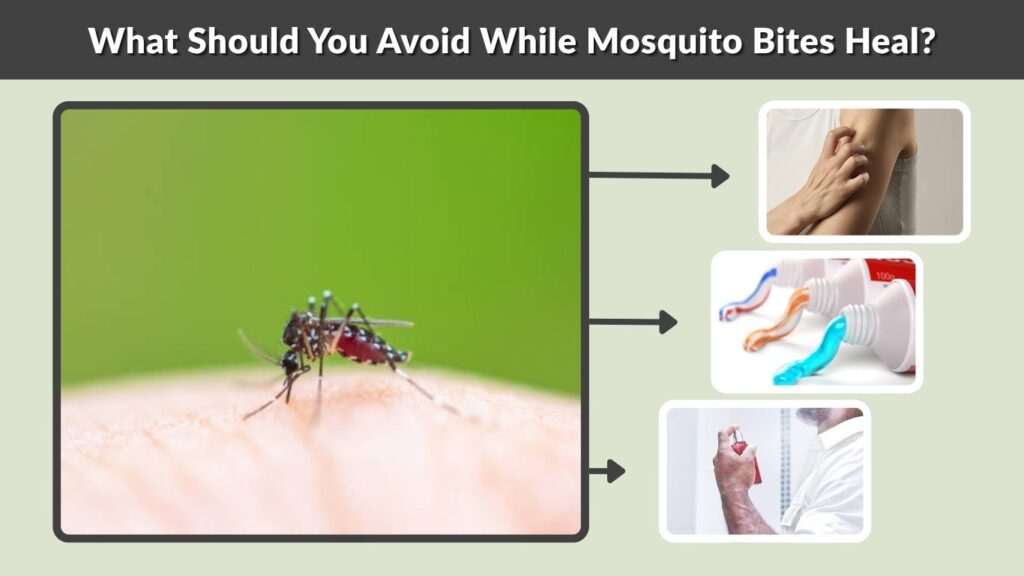
Certain habits can increase irritation and delay the recovery of mosquito bites. Even when itching becomes uncomfortable, protecting the affected skin is important.
Avoid these common mistakes:
- Scratching repeatedly: This damages the skin and increases infection risk.
- Using harsh skincare products: Alcohol, strong fragrances, and irritating chemicals can worsen discomfort.
- Applying toothpaste: Toothpaste is not a proven mosquito bite treatment and may irritate the skin.
- Picking scabs: Removing scabs can reopen damaged skin and increase the possibility of scarring.
- Using excessive heat: Hot water and heating devices can make inflammation and itching more uncomfortable.
Keeping the affected area clean and protected is generally more helpful than trying several unproven home remedies.
How to Heal Mosquito Bite Scars and Dark Marks
Sometimes a mosquito bite disappears but leaves a brown, red, or darker mark behind. This is often post-inflammatory hyperpigmentation, which occurs when inflammation or skin injury triggers extra pigment production.
These marks can be more noticeable in darker skin tones and may take several months to fade. Avoid scratching or repeatedly irritating the affected area because additional inflammation can make discoloration worse.
Once the skin has completely healed, use a broad-spectrum sunscreen with SPF 30 or higher on exposed areas. Sun protection helps prevent existing dark marks from becoming darker. If a mark persists, changes, or causes concern, a dermatologist can recommend suitable treatment.
FAQs
1. How long does it take for mosquito bites to heal?
Most mosquito bites improve within a few days. Itching and redness commonly settle within three to four days, while swelling may last approximately a week. Strong allergic reactions can take longer to disappear.
2. How can I heal a mosquito bite overnight?
There is no reliable way to completely heal a mosquito bite overnight. However, washing the area, applying a cold compress, and using an appropriate anti-itch treatment can reduce discomfort and swelling while your skin recovers.
3. How do you heal infected mosquito bites?
Keep the affected area clean and avoid scratching or squeezing it. Seek medical advice if you notice increasing redness, warmth, pain, or pus. A healthcare professional can determine whether antibiotic treatment is necessary.
4. How do you heal mosquito bites on your face quickly?
Gently wash the affected area and apply a cool compress for 10–20 minutes. Avoid scratching and strong skincare products. Ask a pharmacist before using medication on facial skin, particularly near the eyes.
5. How do you heal mosquito bite scars faster?
Protect healed skin from sunlight with broad-spectrum SPF 30 or higher sunscreen. Avoid scratching and irritating the area. Most post-bite dark marks gradually fade, although noticeable discoloration can take several months to disappear.
