
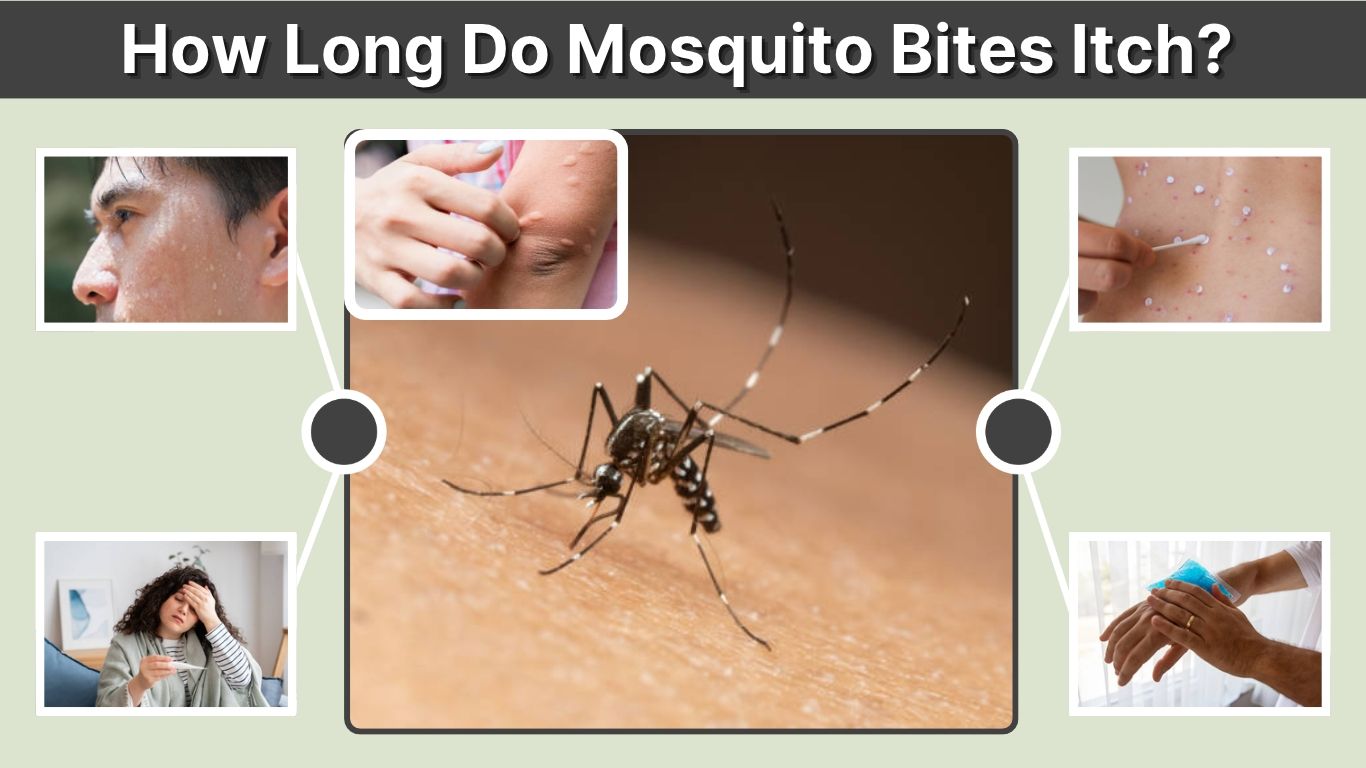
A mosquito bite may leave a small, raised bump that feels itchy for several days. For most people, the irritation starts to ease within two to three days and usually settles in about three to four days. Some bites remain itchy for a week, especially when the skin reacts strongly or gets scratched repeatedly. Knowing what causes the reaction, how long it normally lasts, and which simple treatments can help makes it easier to manage discomfort and spot symptoms that need medical attention at home.
How Long Do Mosquito Bites Itch?
Most mosquito bites itch for approximately three to four days. However, the duration varies depending on your immune system, skin sensitivity, and the severity of the reaction. Some people experience only mild irritation for a day, while others develop larger bumps that remain uncomfortable for a week or longer.
Average Duration of Mosquito Bite Itching
When a mosquito bites, it introduces saliva into your skin. Your immune system reacts to proteins in that saliva, releasing histamine and causing itching, redness, and swelling.
The itching usually becomes less noticeable as the inflammation settles. A small bump may remain even after the uncomfortable sensation disappears.
A typical mosquito bite follows this timeline:
- First few minutes: Some people experience immediate itching or notice a small raised bump.
- First 24 hours: Redness, swelling, and itching may become more noticeable.
- Days 2–3: The itching generally begins to decrease.
- Days 3–4: Most ordinary mosquito bites become much less irritating.
- Days 5–7: Remaining redness, swelling, or itching usually continues to improve.
These timeframes are estimates rather than a strict healing schedule. A stronger allergic reaction can take longer to settle.
When Do Mosquito Bites Start Itching?
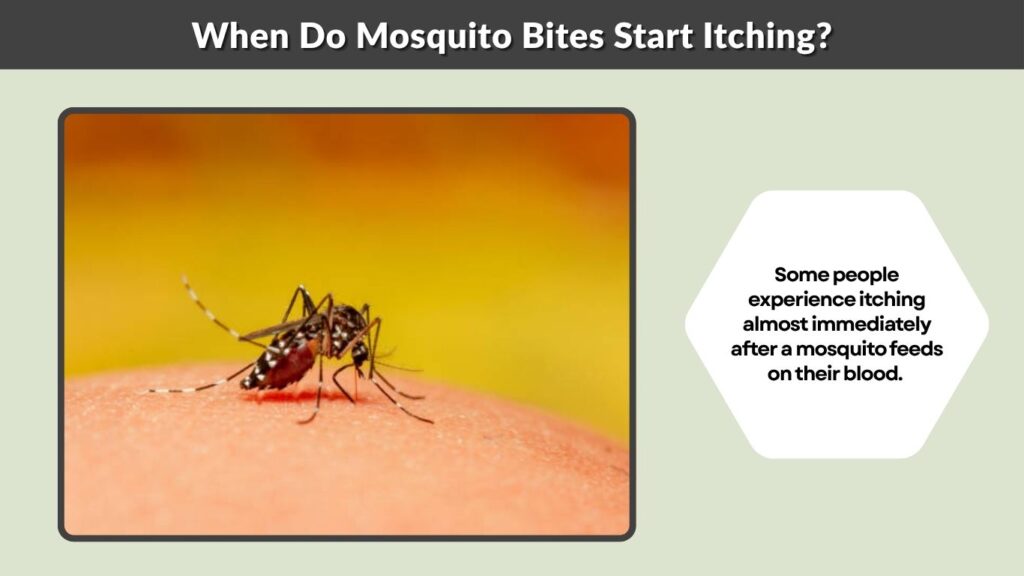
Mosquito bites do not always start itching immediately. Some people notice irritation within minutes, while others develop symptoms several hours after being bitten. The difference depends on how quickly the immune system responds to proteins in mosquito saliva.
Immediate Itching After a Mosquito Bite
Some people experience itching almost immediately after a mosquito feeds on their blood. This happens because the immune system recognizes substances in the mosquito’s saliva and triggers an inflammatory response.
The affected area may develop a small, raised bump accompanied by redness and mild swelling. People who are particularly sensitive to mosquito bites may experience more noticeable symptoms.
Delayed Itching After a Mosquito Bite
Other people do not notice itching until several hours after the bite. In some cases, the bump becomes more noticeable the following day.
This delayed response happens because the immune system can produce a later inflammatory reaction after the initial bite. Therefore, not feeling immediate itching does not mean that the mosquito bite will remain symptom-free.
Both immediate and delayed reactions are common, and the timing alone does not usually indicate how long the bite will itch.
Why Do Mosquito Bites Keep Itching?
Mosquito bites keep itching because your immune system reacts to proteins introduced through mosquito saliva. This reaction produces histamine, which causes inflammation and stimulates nearby nerve endings responsible for the itching sensation.
Your Immune System Reacts to Mosquito Saliva
Female mosquitoes use specialized mouthparts to pierce the skin and obtain blood. During feeding, they introduce saliva containing proteins that help them take a blood meal.
Your immune system recognizes these proteins as foreign substances and responds by releasing inflammatory chemicals. This creates the familiar itchy bump.
The itching gradually improves when the immune response becomes less active.
Your Skin Is Sensitive to Mosquito Bites
Some people naturally develop stronger reactions to mosquito saliva. Their bites may become larger, redder, and itchier than those experienced by other people.
Children and people exposed to unfamiliar mosquito species may also develop noticeable reactions.
A particularly strong local reaction is sometimes called skeeter syndrome. It can cause significant swelling, warmth, redness, and itching around the bite.
Scratching Makes the Irritation Worse
Scratching a mosquito bite may provide temporary relief, but it can damage the skin and increase inflammation.
Repeated scratching can also break the skin’s surface, allowing bacteria to enter and potentially cause an infection. This may lead to additional swelling, tenderness, and discomfort.
Avoiding scratching helps protect the affected area while it heals.
What Makes Mosquito Bites Itch for Longer?
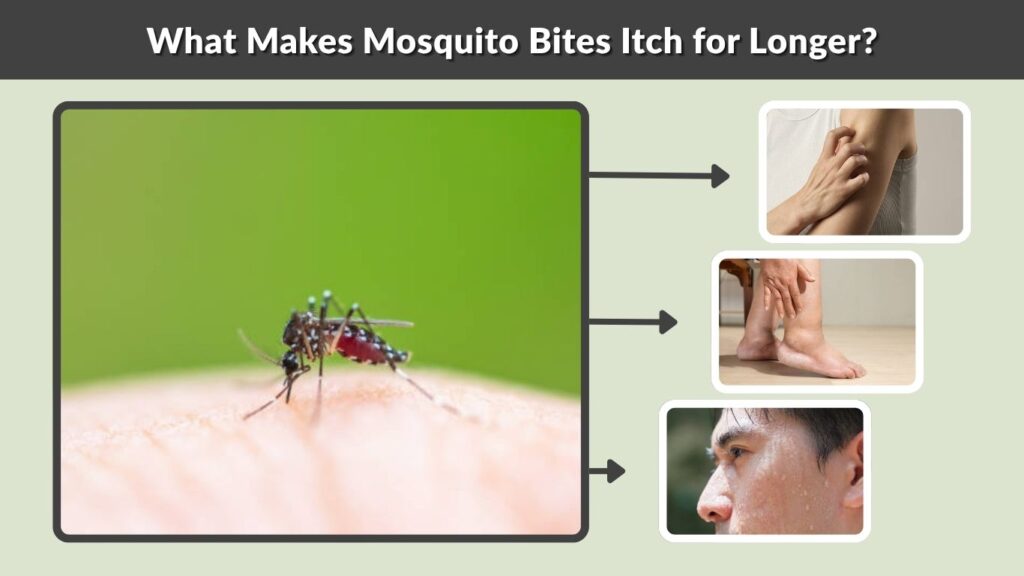
Although ordinary mosquito bites generally improve within a few days, certain factors can extend the itching period. Skin sensitivity, allergic reactions, repeated scratching, and secondary infections can all affect how quickly the affected area recovers.
Repeated Scratching
Repeated scratching can damage the skin and increase irritation around the bite. It may also cause small cuts or scabs that take additional time to heal.
If you scratch frequently, the affected area may become increasingly uncomfortable. Keeping your fingernails short and avoiding direct pressure can help prevent further damage.
Strong Allergic Reactions
Some people develop stronger allergic reactions to mosquito saliva. Instead of a small bump, they may experience extensive swelling, redness, warmth, and intense itching.
These reactions can take longer to disappear than ordinary mosquito bites. People who experience unusually large or worsening reactions should seek medical advice.
Sensitive or Irritated Skin
Sensitive skin may react more noticeably to mosquito bites. Sweating, hot weather, friction from clothing, and certain skincare products can make the affected area feel more uncomfortable.
Keeping the skin cool and avoiding unnecessary rubbing may help reduce irritation.
Secondary Skin Infections
Scratching can create openings in the skin that allow bacteria to enter. An infected bite may become increasingly painful, swollen, warm, or filled with pus.
Unlike ordinary itching, infection-related symptoms may continue getting worse. Medical evaluation may be necessary to determine whether treatment is required.
How to Stop Mosquito Bites From Itching
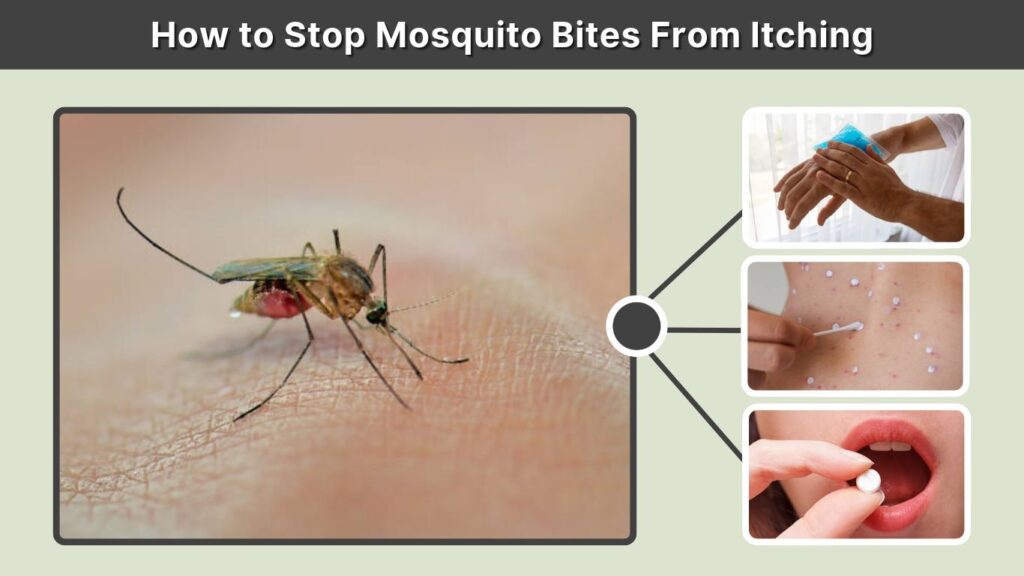
You can often manage ordinary mosquito bite itching with simple home treatments. The main goals are to reduce inflammation, soothe irritated skin, and prevent scratching while the affected area heals.
Apply a Cold Compress
A cold compress can temporarily reduce itching and mild swelling. Wrap an ice pack in a clean towel or soak a soft cloth in cold water.
Place it gently over the bite for approximately 10–20 minutes. Avoid applying ice directly to the skin because extreme cold can cause irritation or injury.
Use Calamine Lotion
Calamine lotion can soothe irritated skin and provide temporary relief from itching. Apply a small amount to the affected area according to the product instructions.
It can be useful when several mosquito bites cause discomfort in different parts of the body.
Try Hydrocortisone Cream
Over-the-counter hydrocortisone cream can help reduce inflammation, redness, and itching. Use it according to the package directions.
Avoid applying it to broken skin, and ask a healthcare professional or pharmacist before using it on young children or sensitive areas.
Consider Oral Antihistamines
Oral antihistamines can help control itching caused by the body’s allergic response to mosquito saliva. Common options include cetirizine and loratadine.
Follow the recommended dosage and check with a pharmacist if you are unsure which medication is suitable.
Keep the Affected Area Clean
Wash mosquito bites gently with soap and water. This helps remove dirt and reduces the risk of infection, especially if you have accidentally scratched the skin.
Avoid rubbing the area aggressively or using products that cause additional irritation.
Avoid Scratching
Although scratching may feel satisfying temporarily, it can make itching worse and damage the skin.
Instead, gently press or pat the affected area when it becomes uncomfortable. Keeping your fingernails short can also help prevent accidental skin damage.
When Should You Worry About an Itchy Mosquito Bite?
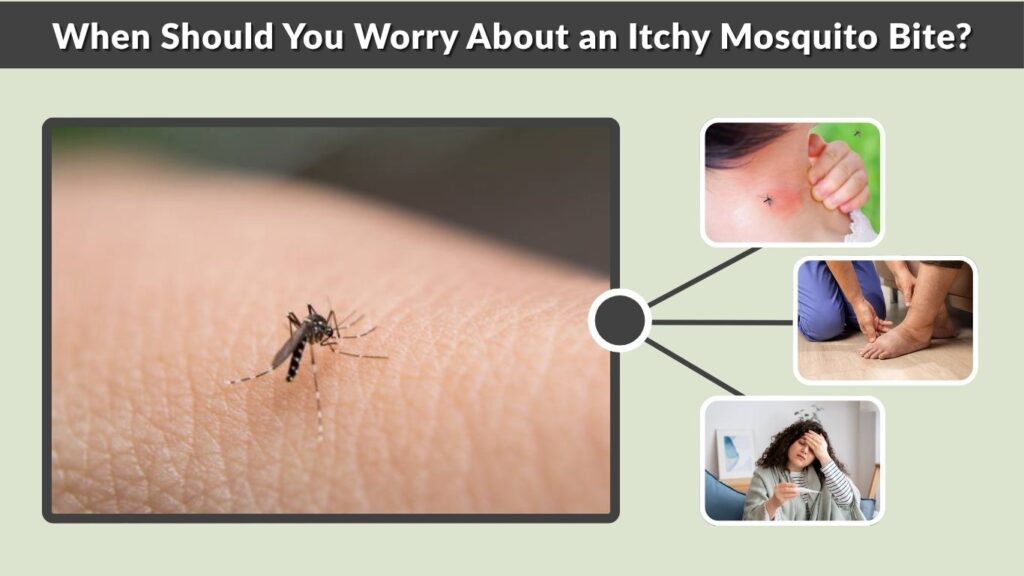
Most mosquito bites are harmless and improve without medical treatment. However, persistent itching accompanied by unusual swelling, increasing pain, or other symptoms may indicate an allergic reaction, infection, or mosquito-borne illness.
Signs of an Infected Mosquito Bite
A mosquito bite can become infected when bacteria enter through damaged skin. Watch for increasing redness, warmth, swelling, pain, pus, or red streaks extending from the affected area.
These symptoms are different from ordinary itching because they may indicate that the skin is becoming infected. Contact a healthcare professional if you notice these changes or if the bite continues getting worse.
Signs of a Serious Allergic Reaction
Severe allergic reactions to mosquito bites are uncommon, but they can occur. Extensive swelling, widespread hives, or swelling around the eyes may require medical evaluation.
Seek emergency medical assistance if you experience difficulty breathing, swelling of the tongue or throat, difficulty swallowing, or severe dizziness. These symptoms may indicate a serious allergic reaction.
Symptoms of Mosquito-Borne Illnesses
Mosquitoes can transmit diseases such as dengue, malaria, Zika, and West Nile virus. An itchy bump alone does not mean you have contracted a mosquito-borne illness.
However, fever, severe headache, body aches, pain behind the eyes, or unusual weakness after mosquito exposure should not be ignored. Seek medical advice promptly, particularly in areas where mosquito-borne diseases are common.
FAQs
1. How long do mosquito bites itch on average?
Most mosquito bites itch for approximately three to four days. However, some mild reactions disappear within a day, while stronger reactions can continue for a week or longer. The duration depends on individual skin sensitivity, immune response, and irritation from scratching.
2. How long after a mosquito bite do you start itching?
Mosquito bite itching can begin within minutes, several hours, or sometimes a day after the bite. The timing depends on how your immune system responds to proteins in mosquito saliva. Both immediate and delayed reactions are normal.
3. Do mosquito bites itch longer if you scratch them?
Yes, scratching can increase irritation and damage the skin. It may also introduce bacteria, potentially causing an infection that takes longer to heal. Avoiding scratching and keeping the affected area clean can help it recover more comfortably.
4. How long do mosquito bites take to stop itching?
Most mosquito bites gradually become less itchy within two to three days and usually stop itching after approximately three to four days. Cold compresses, calamine lotion, and suitable antihistamines can help relieve discomfort while the skin heals.
5. Why is my mosquito bite still itching after a week?
A mosquito bite may continue itching after a week because of a strong immune response, sensitive skin, repeated scratching, or a larger local allergic reaction. If the area becomes increasingly painful, swollen, warm, or produces pus, consult a healthcare professional.
