
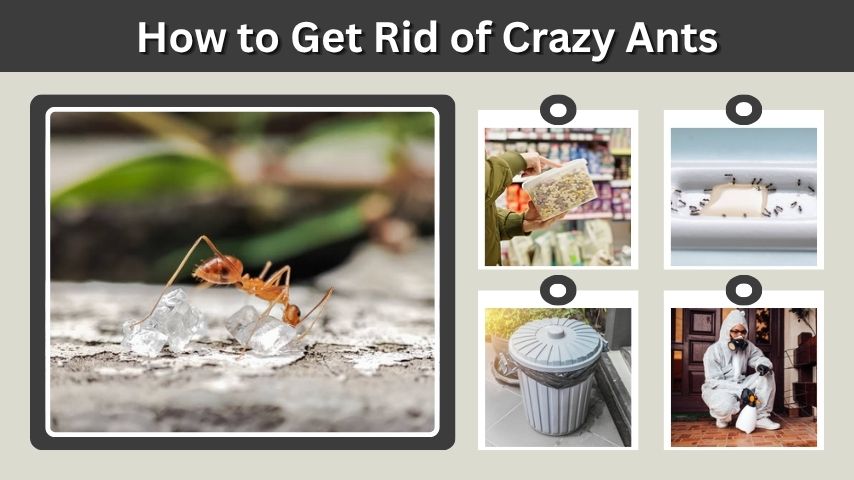
Crazy ants move fast, travel in uneven trails, and can show up in kitchens, bathrooms, wall voids, yards, garages, and even cars. Unlike some household ants, they often form large colonies with multiple nesting sites, so a quick spray usually does not solve the problem. To get rid of crazy ants, you need to find where they are coming from, remove food and moisture, use the right bait, treat outdoor nesting areas, and block future entry points.
What Are Crazy Ants?
Crazy ants are a group of ants known for their quick, erratic movement. They do not usually march in neat lines like many other ants. Instead, they run in scattered, unpredictable patterns, which is why people call them “crazy ants.”
Several ants may be called crazy ants, including tawny crazy ants, Rasberry crazy ants, black crazy ants, longhorn crazy ants, Caribbean crazy ants, and yellow crazy ants. The exact species can vary by region, but the control process is often similar.
Why Crazy Ants Are Hard to Control
Crazy ants can be frustrating because they may nest in many places at once. You might see them inside the house, but the main colony may be outdoors under mulch, logs, stones, leaf litter, potted plants, or landscape debris.
They are also attracted to sweet liquids, grease, dead insects, pet food, and honeydew from aphids or scale insects on plants. If food and moisture are available, they can keep returning even after you kill the ants you see.
Common Signs of Crazy Ants
You may have crazy ants if you notice:
- Fast-moving ants running in random patterns
- Large numbers of ants around windows, doors, pipes, or baseboards
- Ants in kitchens, bathrooms, garages, or laundry rooms
- Ant trails around outdoor mulch, tree bases, or garden beds
- Ant activity near electrical boxes, appliances, or vehicles
Crazy ants do not usually build obvious mounds like fire ants. Their nests are often hidden, so careful inspection is important.
How to Get Rid of Crazy Ants Step by Step
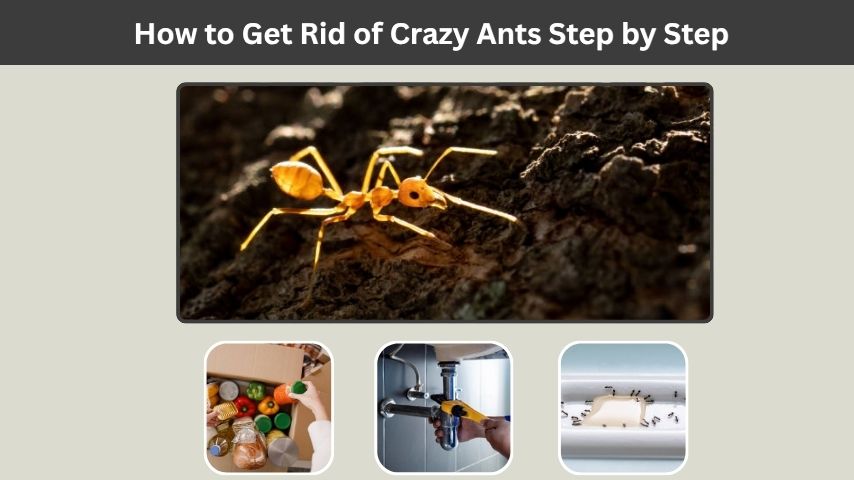
Getting rid of crazy ants works best when you use several methods together. Spraying visible ants may give short-term relief, but it often fails because it does not reach the larger colony.
Step 1: Inspect the Ant Trails
Start by watching where the ants are going. Follow trails from the kitchen, bathroom, garage, or window area back toward entry points. Look around doors, siding gaps, utility lines, plumbing openings, air conditioning lines, and foundation cracks.
Outside, check under:
- Mulch
- Stones
- Firewood
- Potted plants
- Landscape timbers
- Leaf piles
- Patio blocks
- Loose bark or logs
Do not disturb the trail too much before placing bait. The goal is to find the active foraging areas so the bait reaches more workers.
Step 2: Remove Food Sources
Crazy ants enter homes because they are looking for food, water, or shelter. Cleaning alone may not eliminate an infestation, but it makes baiting more effective.
Focus on:
- Wiping counters and floors
- Sealing sugar, cereal, snacks, and pet food
- Cleaning grease behind stoves and appliances
- Taking trash out regularly
- Washing pet bowls at night
- Rinsing sticky bottles and cans before recycling
If ants are in the kitchen, avoid leaving competing food sources near bait stations. The bait needs to be the most attractive food available.
Step 3: Fix Moisture Problems
Crazy ants are often found near damp areas. Bathrooms, kitchens, laundry rooms, sinks, dishwashers, and outdoor irrigation zones can all attract them.
Check for leaking pipes, dripping faucets, clogged gutters, wet mulch, and overwatered plants. Indoors, dry out damp cabinet areas and improve airflow where moisture collects.
Step 4: Use Ant Bait, Not Just Spray
Bait is usually more effective than contact spray because worker ants carry it back to the colony. This helps reach ants that are hidden in walls, under soil cover, or outside near the structure.
Use bait near trails, but do not place it directly on top of ants. Put small amounts near their path so they can find it naturally. If they ignore one bait, try another type. Crazy ants may switch between sweet, protein, and grease-based foods depending on colony needs.
Step 5: Treat the Outdoor Source
If crazy ants keep coming back, the source is probably outside. Indoor bait alone may not be enough. Outdoor treatment may include granular bait, liquid bait, or a perimeter treatment around the foundation.
Focus on the areas where ants are active, especially near mulch beds, shrubs, trees, patios, and entry points. Always follow the product label and keep children and pets away from treated areas until it is safe.
Best Treatments for Crazy Ants
The best treatment depends on where the ants are nesting and how severe the infestation is. The table below compares common options.
| Treatment Method | Best For | Pros | Limits |
|---|---|---|---|
| Ant bait stations | Kitchens, bathrooms, indoor trails | Can reach hidden colony members | Works slowly and may need several bait types |
| Granular bait | Yards, mulch beds, exterior trails | Covers larger outdoor areas | Must stay dry and be applied correctly |
| Non-repellent perimeter treatment | Entry points and foundation areas | Helps stop ants from entering | Usually works best with baiting |
| Sanitation and exclusion | Long-term prevention | Reduces food and access | Will not eliminate a large colony alone |
| Professional pest control | Heavy, recurring, or regional infestations | Can identify species and treat nesting zones | Costs more than DIY methods |
For a small indoor problem, bait and exclusion may be enough. For heavy tawny crazy ant or Rasberry crazy ant infestations, professional help is often the better choice.
How to Get Rid of Crazy Ants in the House
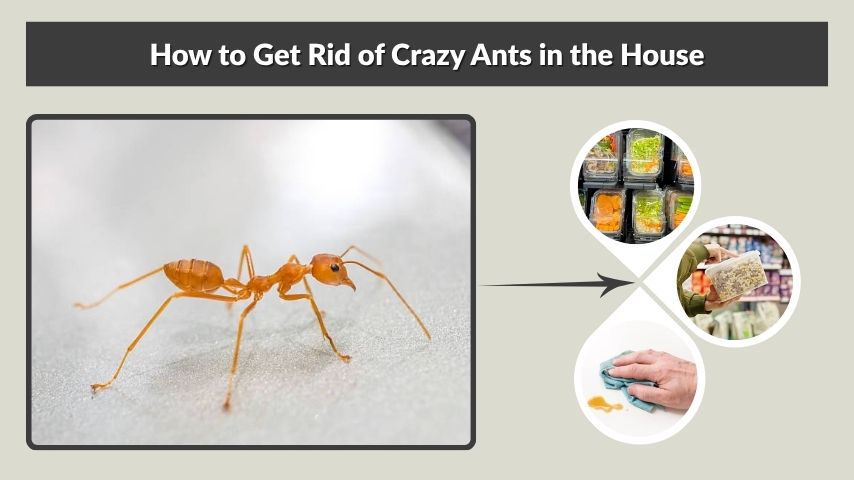
Crazy ants in the house usually enter through small gaps around windows, doors, plumbing lines, wiring, vents, or foundation cracks. Start by cleaning the affected rooms and following the trails.
In the Kitchen
Kitchens are one of the most common places to find crazy ants because food and water are easy to access.
To get rid of crazy ants in the kitchen:
- Store food in airtight containers
- Clean under appliances
- Wipe syrup, juice, honey, and grease spills
- Keep pet food sealed
- Place bait near trails, not on food surfaces
- Avoid spraying near bait stations
If you spray the trail, the ants may scatter and form new routes. Bait is usually better because it lets workers carry the active ingredient back to the colony.
In Bathrooms and Laundry Rooms
Bathrooms and laundry areas attract ants because of moisture. Check under sinks, behind toilets, around tubs, and near washing machine hookups.
Dry the area, fix leaks, and place bait near the trail. If ants are entering through wall gaps or pipe openings, seal those gaps after ant activity decreases.
In Walls or Electrical Areas
Crazy ants may sometimes gather near electrical equipment, outlets, or appliances. Do not spray liquid insecticide into outlets, breaker boxes, or electronics. This can be dangerous and may damage equipment.
If ants are in electrical areas, use enclosed bait stations nearby and consider calling a licensed pest control professional.
How to Get Rid of Crazy Ants Outside
Outdoor control is important because many indoor infestations begin in the yard. If you only treat inside, ants may return again and again.
Yard and Lawn Control
Inspect the yard for high-activity areas. Crazy ants may nest under yard debris, mulch, wood, rocks, and dense ground cover.
To reduce outdoor nesting spots:
- Remove leaf piles and yard clutter
- Store firewood away from the house
- Thin heavy mulch near the foundation
- Trim shrubs away from siding
- Move potted plants away from entry points
- Reduce aphids and scale insects on plants
Honeydew-producing insects can attract ants to trees and shrubs. If plants are covered with aphids, scale, or mealybugs, controlling those pests can also reduce ant pressure.
Around the Foundation
Seal cracks and gaps after you reduce the ant population. Look around doors, windows, utility lines, vents, and siding. Use caulk, weatherstripping, door sweeps, or mesh where appropriate.
A clean, dry, open foundation zone makes your home less attractive to ants.
How to Get Rid of Crazy Ants in a Car
Crazy ants can get into cars when vehicles are parked near infested mulch, grass, trees, or trash. They may be attracted to crumbs, drink spills, food wrappers, or moisture.
To get crazy ants out of a car:
- Remove all trash and food wrappers.
- Vacuum seats, mats, trunk, and storage areas.
- Clean sticky spills from cup holders and floors.
- Move the car away from the infested area.
- Place ant bait outside the car near the tires or parking area.
- Avoid spraying insecticide inside vents, electronics, or dashboards.
If ants are nesting inside the vehicle, especially near wiring, get professional help. Do not use harsh chemicals in enclosed vehicle spaces.
Can You Get Rid of Crazy Ants Naturally?
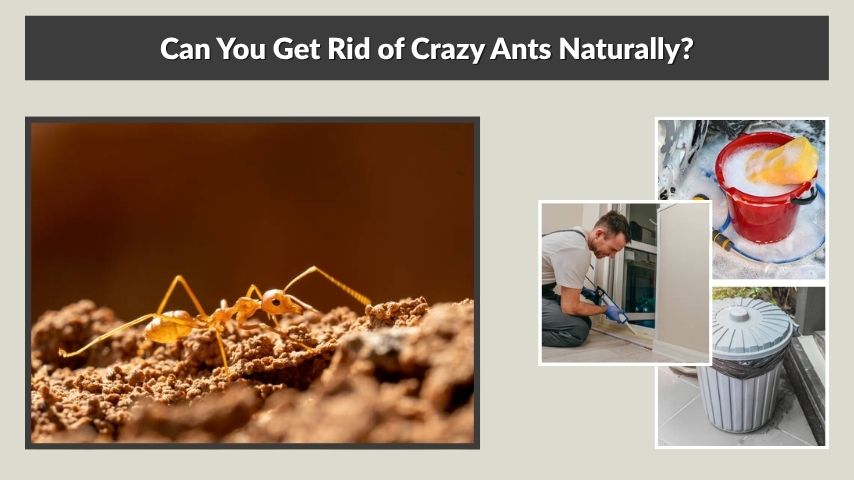
Natural methods may help with light ant activity, but they are rarely enough for a large crazy ant infestation. They work best as support methods along with sanitation, exclusion, and baiting.
Home Remedies That May Help
Some natural steps can make your home less attractive:
- Clean trails with soap and water
- Remove food residue and crumbs
- Seal entry points
- Reduce moisture
- Keep outdoor mulch and debris away from the house
- Use tight lids on trash cans
Vinegar or soapy water may remove scent trails, but it does not kill the colony. Essential oils may repel some ants temporarily, but they are not a reliable solution for a serious infestation.
Does Borax Work on Crazy Ants?
Borax-based bait can work on some ants when mixed properly, but it must be used carefully. Too much borax can kill workers before they carry it back to the colony. Too little may not control the infestation.
If using any borax bait, keep it away from children, pets, food-preparation surfaces, and wildlife. Commercial ant baits are usually safer and more consistent because the active ingredient is already measured.
How to Get Rid of Tawny, Rasberry, Black, and Yellow Crazy Ants
Many searchers use different names for crazy ants. The treatment plan is similar, but regional species can matter.
Tawny Crazy Ants and Rasberry Crazy Ants
Tawny crazy ants are also known as Rasberry crazy ants in many areas. They are a major problem in parts of Texas, Florida, and other Gulf Coast states. They can form large populations outdoors and invade homes in high numbers.
For tawny crazy ants, outdoor control is especially important. Baiting, reducing yard debris, managing honeydew-producing insects, and using perimeter treatments may all be needed.
Black Crazy Ants and Longhorn Crazy Ants
Black crazy ants and longhorn crazy ants may enter buildings for sweets, grease, and moisture. Indoor baiting and sealing entry points are usually important. Because they may nest outdoors or indoors, inspection is the first step.
Yellow Crazy Ants
Yellow crazy ants are invasive in many tropical and subtropical regions. In some places, they are regulated because of their environmental impact. If you suspect yellow crazy ants in an area where they are a restricted or reportable pest, contact your local extension office, agriculture department, or pest control authority.
How to Prevent Crazy Ants From Coming Back
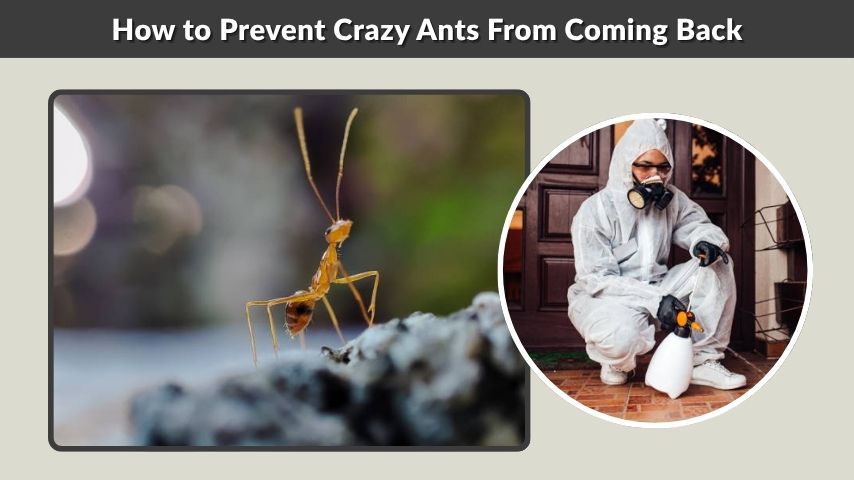
Prevention is the final step after treatment. Crazy ants can return if the conditions that attracted them are still present.
Indoor Prevention
Keep the home clean and dry. Store food tightly, remove trash often, and fix leaks quickly. Check windows, doors, and plumbing gaps every few months.
Outdoor Prevention
Maintain a clear zone around the foundation. Avoid piling mulch directly against siding. Trim branches and shrubs so ants cannot use them as bridges into the house. Keep gutters clean and correct drainage problems.
When to Call a Professional
Call a pest control professional if:
- Ants keep returning after baiting
- You see large outdoor colonies
- Ants are entering electrical areas
- The infestation covers the yard and house
- You are dealing with tawny crazy ants in Texas, Florida, or another high-pressure region
- You are unsure which ant species you have
A professional can identify the species, locate nesting zones, and use treatments that may not be available or practical for homeowners.
FAQs
What is the fastest way to get rid of crazy ants?
The fastest reliable method is to combine baiting, sanitation, moisture control, and outdoor treatment. Sprays may kill visible ants quickly, but they often do not reach the colony. Bait works more slowly, but it is usually better for long-term control because workers carry it back to hidden nesting areas.
Why do crazy ants keep coming back?
Crazy ants keep coming back when the main colony is outside or hidden in wall voids, mulch, plants, or yard debris. They may also return if food, water, or entry points remain available. Cleaning, sealing gaps, fixing leaks, and treating outdoor trails are all important for lasting control.
Can I get rid of crazy ants naturally?
You may reduce light ant activity naturally by cleaning trails, removing food, sealing gaps, drying damp areas, and clearing yard debris. However, natural remedies usually do not eliminate a large colony. For heavy infestations, bait and professional treatment are often more effective than vinegar, oils, or homemade sprays.
How do I get rid of crazy ants in my car?
Remove food, trash, and crumbs from the car, then vacuum thoroughly. Move the vehicle away from the infested parking area and use bait near the outside of the car, not inside vents or electronics. If ants are nesting near wiring, contact a professional instead of spraying chemicals inside the vehicle.
Are crazy ants dangerous?
Crazy ants are mostly nuisance pests, but large infestations can be stressful and difficult to control. Some species may invade electrical equipment, appliances, or vehicles. They can also disturb outdoor spaces and affect other insects. If the infestation is large or spreading quickly, professional identification and treatment are recommended.
