
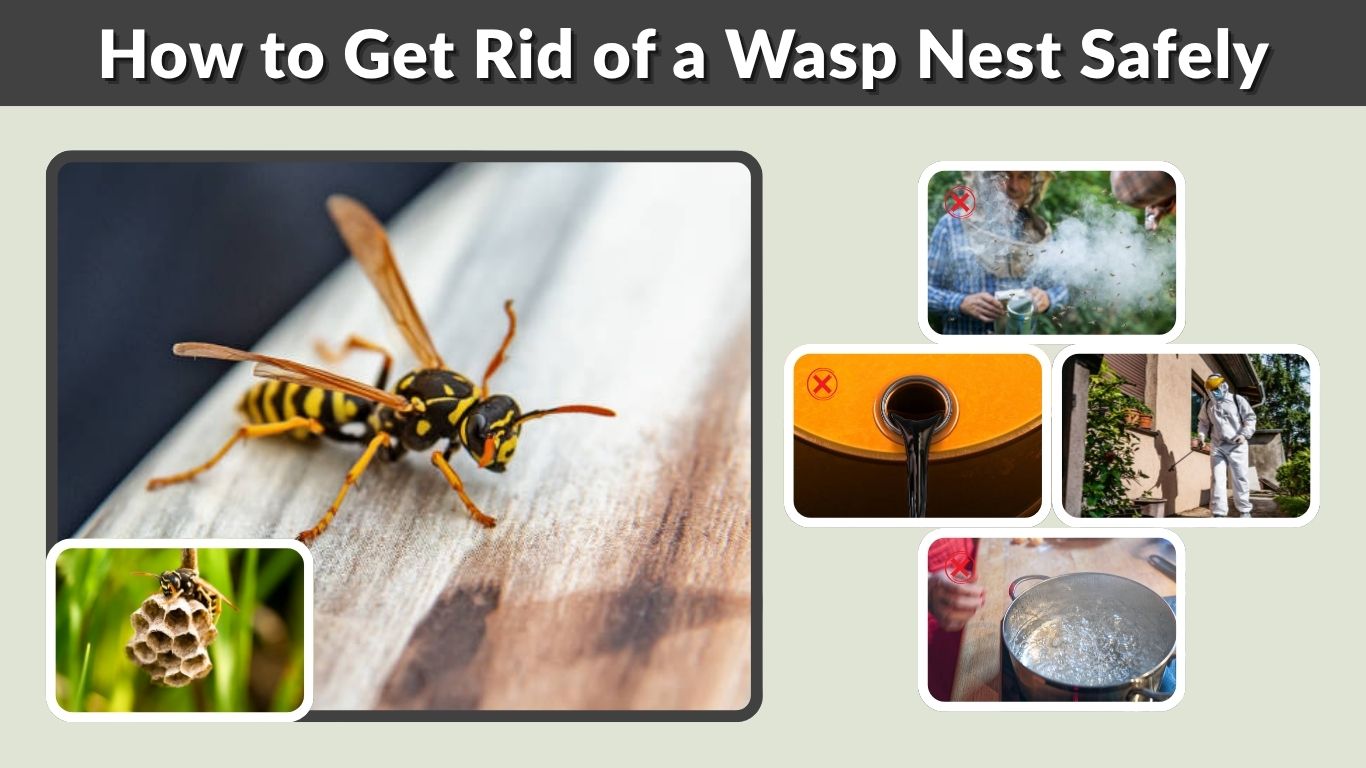
Finding a wasp nest near your home can be unsettling, especially when insects are flying around doorways, gardens, or outdoor seating areas. Knowing how to get rid of a wasp nest safely starts with identifying the species, locating the colony, and deciding whether removal is necessary. Large, underground, or hidden colonies are best handled by professionals. This guide explains safer options for different nest types, mistakes to avoid, and practical ways to prevent wasps from nesting again.
Identify the Wasp Nest Before Taking Action
Not every wasp nest presents the same danger. Some wasps live in large, defensive colonies, while others nest alone and rarely bother people. Nest shape, construction material, location, and insect activity offer useful identification clues. Watch from a safe distance rather than approaching an entrance. Correct identification helps determine whether to leave the nest undisturbed or arrange removal.
Paper Wasp Nests
Paper wasps build open, umbrella-shaped combs with visible hexagonal cells. They often attach these nests beneath roof eaves, railings, or porch ceilings. They can sting when disturbed.
Yellowjacket and Hornet Nests
Yellowjackets often occupy underground cavities, wall spaces, or other sheltered openings. Some hornets build large, enclosed paper nests in trees or on structures. Frequent flights through one opening suggest an active colony.
Mud Dauber and Grass-Carrying Wasp Nests
Mud daubers create mud tubes or clumps on sheltered surfaces. Grass-carrying wasps transport grass into narrow gaps and cavities. Both are generally solitary rather than colony-forming, so control is often unnecessary unless their nesting site causes a specific problem.
How to Get Rid of a Small Wasp Nest Safely
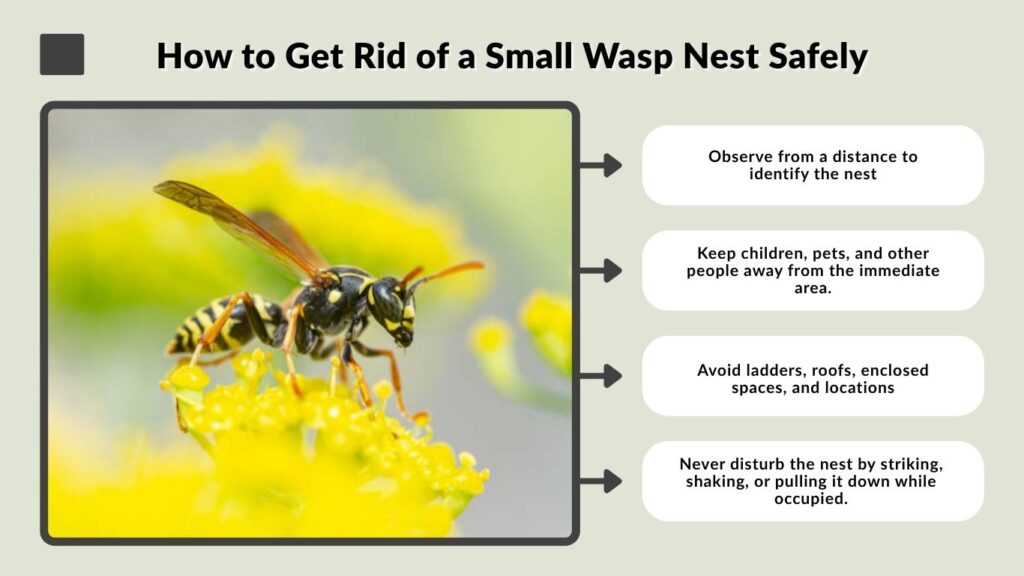
A small nest is not automatically safe to remove. The important factors are species, activity, accessibility, and your ability to retreat without being trapped. If anyone nearby has a history of severe sting reactions, avoid attempting treatment yourself. For an active nest, professional removal is usually the lowest-risk option, even when the structure looks small.
Safety Checklist Before Any Removal
- Observe from a distance to identify the nest and confirm whether wasps are entering or leaving.
- Keep children, pets, and other people away from the immediate area.
- Avoid ladders, roofs, enclosed spaces, and locations without an unobstructed exit.
- Never disturb the nest by striking, shaking, or pulling it down while occupied.
- If considering a pesticide for a small, exposed outdoor nest, use only a product specifically labeled for that site and pest, and follow every label direction.
What About an Empty Nest?
If a nest is clearly abandoned and shows no activity, it can usually be removed with basic tools from a reachable position. Wear gloves, avoid crushing it against your skin, and clean the attachment point. If you cannot confirm it is inactive, leave it alone.
Removing Wasp Nests in Different Locations
Nest location often matters more than nest size. Underground nests can have entrances that are difficult to spot, while colonies inside buildings may extend far beyond the visible hole. Outdoor nests suspended from trees create height-related hazards. Understanding the setting prevents homeowners from accidentally triggering defensive behavior or driving wasps into living spaces.
Wasp Nest in the Ground or Underground
Ground nests frequently belong to yellowjackets, although solitary digger wasps also use soil. Avoid mowing, digging, flooding, or covering an active entrance. A professional can identify and treat colonies that threaten people or pets.
Wasp Nest Inside a Wall, Siding, or Chimney
Do not seal an active entrance. Trapped wasps may seek another exit, sometimes into the house. Avoid injecting household chemicals into wall cavities or lighting fires to force wasps from chimneys. Ask a qualified pest-control professional to inspect the space and address the nest before sealing entry points.
Wasp Nest Under Eaves, Decks, or in Trees
Reaching under decks, climbing ladders, or approaching large hanging nests creates unnecessary risks. Keep the area clear and arrange professional treatment if regular household activity brings people close.
Natural Methods and Common Removal Mistakes
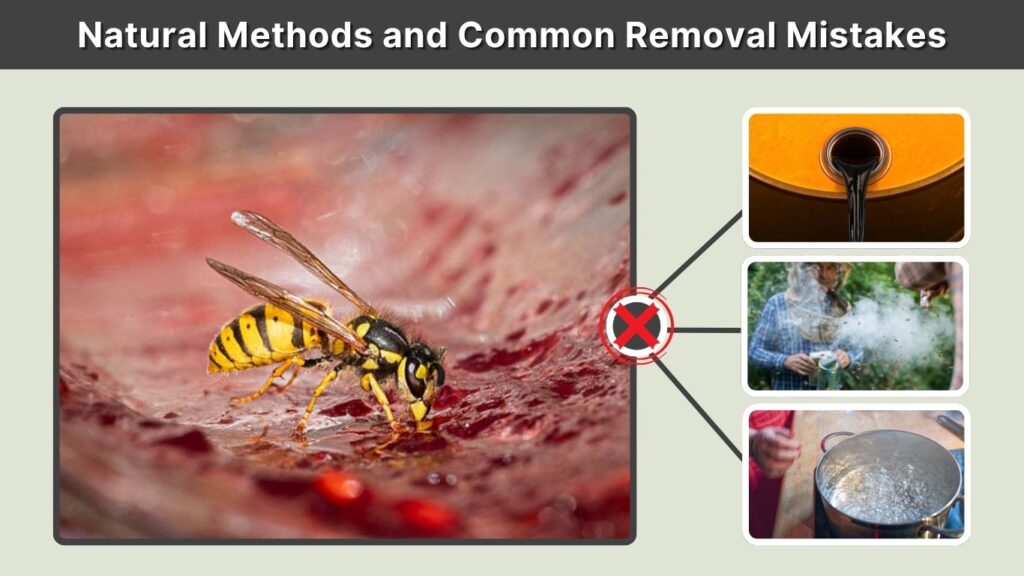
Home remedies are popular because they sound inexpensive and chemical-free. Unfortunately, effectiveness varies, and attempting to apply them to an occupied nest can provoke a swarm. Instead, leave low-risk nests in place or seek targeted treatment. Avoid methods that increase fire risk, environmental harm, or the likelihood of multiple stings.
Methods You Should Avoid
- Gasoline or kerosene: These can cause fires, contaminate soil, and seriously injure people.
- Burning or smoking nests: Heat and smoke create unpredictable dangers around homes and vegetation.
- Boiling water: Splashing water can cause burns while failing to reach the entire colony.
- Blocking an active entrance: Wasps may find a new route into occupied rooms.
- Knocking down an active nest: Disturbance may trigger repeated defensive stings.
Can You Remove a Nest Without Chemicals?
Sometimes the best chemical-free solution is simply to leave a nest undisturbed until it becomes inactive. In seasonal climates, many social wasp colonies die off during colder months and do not reuse the same paper nest. Soap mixtures, essential oils, and improvised traps should not be relied on to eliminate an established colony safely.
How to Prevent Wasps From Nesting Again
Preventing future nests is usually easier than addressing an established colony. Wasps seek sheltered structures, nesting cavities, water, and nearby food sources. Regular property checks can reveal early activity, particularly as temperatures warm. Maintenance reduces nesting opportunities, but cannot guarantee a wasp-free yard.
Practical Prevention Checklist
- Seal cracks around siding, roof edges, and foundations after confirming no insects remain inside.
- Install or repair window screens and door sweeps.
- Keep outdoor garbage containers tightly closed and clean spilled food.
- Inspect porches, sheds, play structures, and eaves for new nesting activity.
- Avoid leaving sugary drinks or uncovered food outdoors during gatherings.
Should You Remove Old Nests?
Social wasp colonies generally do not reuse old paper nests. Removing accessible, confirmed inactive nests is optional, although it may make routine inspections easier. More importantly, repair structural gaps and sheltered entry points that future queens could use.
When to Call a Wasp Removal Professional
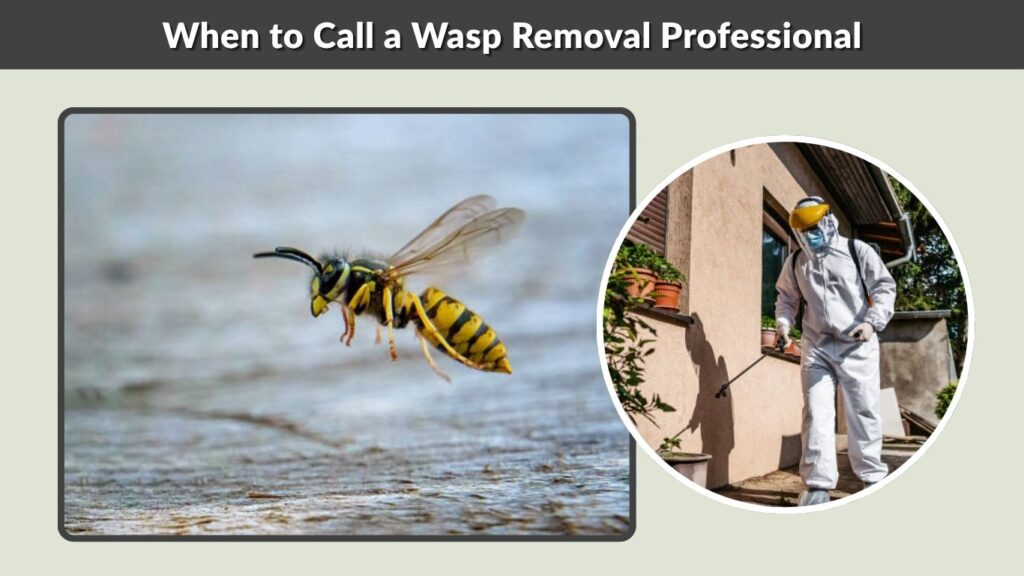
Professional removal is the sensible choice whenever nest access, wasp numbers, or sting risk makes a home treatment uncertain. Technicians can identify the pest, inspect hidden spaces, and choose suitable control methods. This is especially important around children, frequently used entrances, or anyone with a serious sting allergy. Ask about the treatment plan and follow-up before work begins.
Situations That Need Professional Help
- A large, growing, or highly active nest.
- Wasps entering walls, attics, brickwork, or chimneys.
- An underground colony near walkways or play areas.
- Any nest requiring a ladder or access to a confined space.
- Repeated indoor wasp sightings or uncertainty about the species.
After the Nest Has Been Treated
Ask when the area is safe to use and whether any nest material should be removed. Activity may not stop immediately with every treatment. Seal access gaps only after the colony has been eliminated and the site has been checked. Follow the professional’s specific instructions.
FAQs
Removing a wasp nest raises questions about timing, home remedies, and whether old nests remain dangerous. The answers depend on the species, colony activity, and nesting location. Avoid assuming that darkness, cold weather, or a small opening guarantees safety. These quick answers address common concerns while emphasizing when expert assistance is the better decision.
What Is the Safest Way to Get Rid of a Wasp Nest?
Keep your distance, identify the nest from a safe location, and hire a qualified pest-control professional if it is active or difficult to access.
Can I Remove a Wasp Nest at Night?
Wasps may be less active at night, but darkness does not eliminate sting risk. Poor visibility can make removal more dangerous.
How Do I Get Rid of a Paper Wasp Nest?
For an occupied nest, avoid disturbing it and consider professional treatment. Once clearly inactive, a reachable nest can usually be taken down carefully.
Will Wasps Return After Their Nest Is Removed?
Social wasps generally do not reuse old paper nests, but new queens may establish colonies nearby if favorable nesting sites remain.
What Should I Do if I Get Stung?
Move away from the nest, wash the sting area, and use a cold compress. Seek emergency help for breathing trouble, throat swelling, faintness, or other signs of a severe allergic reaction.
