
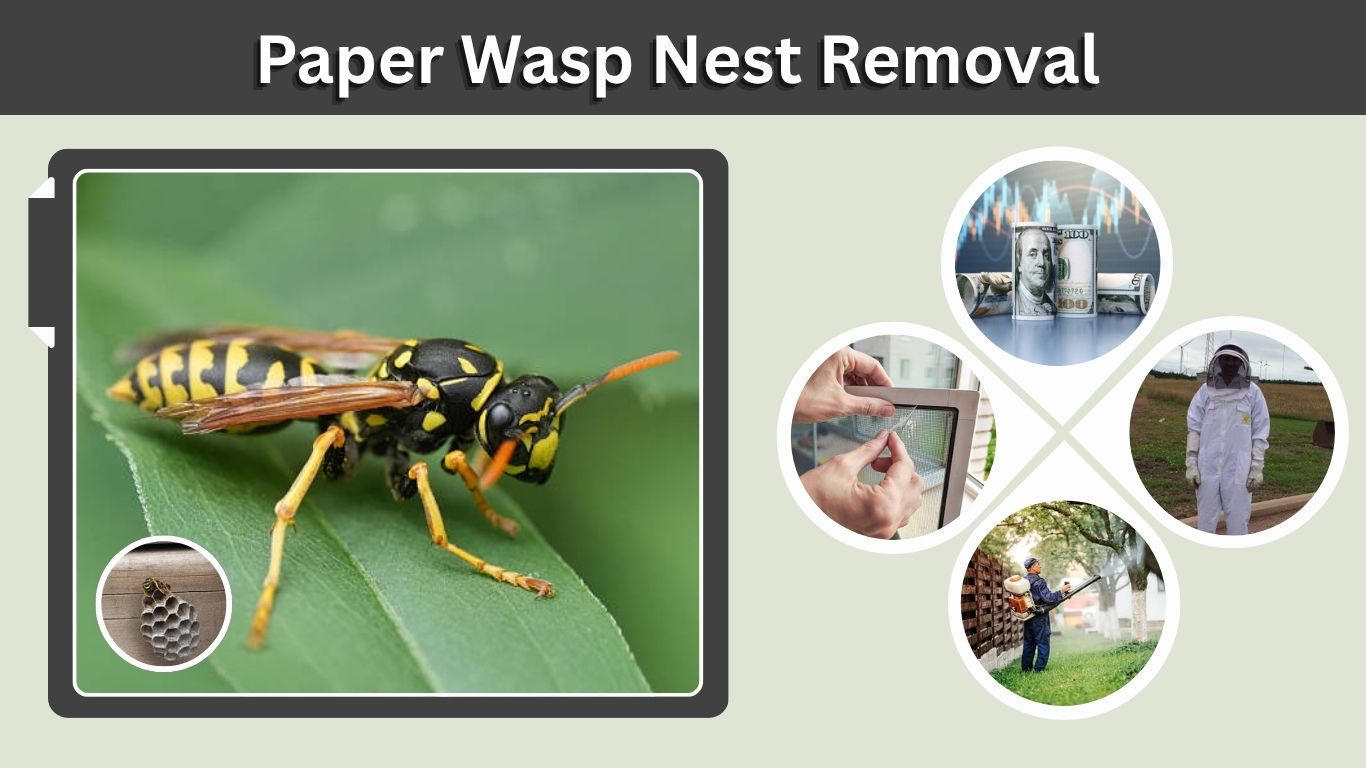
Paper wasp nest removal requires careful planning to avoid painful stings and unnecessary risks. These insects commonly build umbrella-shaped nests beneath roof eaves, porch ceilings, tree branches, and other sheltered areas. Although paper wasps help control garden pests, their nests can become dangerous when located near busy entrances or outdoor living spaces. Understanding how to remove a paper wasp nest safely, when removal is necessary, and whether professional assistance is needed can help homeowners manage these insects effectively without putting themselves or their families at risk.
How to Identify a Paper Wasp Nest
Before attempting paper wasp nest removal, correctly identifying the nest is essential. Paper wasps belong primarily to the genus Polistes and construct distinctive structures from chewed wood fibers mixed with saliva. Their nests differ from the enclosed structures produced by hornets and many yellowjackets. Recognizing the shape, location, and activity around the nest helps determine the safest management approach.
What Does a Paper Wasp Nest Look Like?
Paper wasp nests have several recognizable characteristics:
- Umbrella-shaped structure: A rounded, open comb suspended from a narrow stalk.
- Hexagonal cells: Small chambers where eggs and developing larvae are kept.
- Gray or brown material: Papery fibers created from chewed wood.
- Exposed underside: The individual cells remain visible without an outer covering.
- Sheltered placement: Usually attached beneath eaves, branches, or outdoor fixtures.
Paper Wasp Nest vs. Hornet Nest
Paper wasps construct open-comb nests, whereas bald-faced hornets typically build large, enclosed nests with a protective paper covering.
This distinction matters because different wasp colonies require different management techniques. Large enclosed nests may contain numerous defensive insects and should not be mistaken for ordinary paper wasp colonies.
Should You Remove a Paper Wasp Nest?
Not every paper wasp nest requires removal. These insects are beneficial predators that capture caterpillars and other garden pests. However, their defensive behavior can become problematic when nests develop close to human activity. Evaluating the nest’s size, accessibility, location, and surrounding environment helps homeowners decide whether removing it is necessary or whether leaving it undisturbed is preferable.
When You Should Leave a Nest Alone
Paper wasps generally avoid unnecessary confrontations when people remain away from their nests.
A nest located high in a tree or in a rarely visited garden corner may present minimal danger. Allowing the colony to complete its natural lifecycle preserves beneficial insects and avoids the risks associated with removal.
Signs That Nest Removal Is Necessary
Consider professional removal when:
- The nest is directly above a frequently used doorway.
- Children or pets regularly play near the colony.
- Someone in the household has a known severe sting allergy.
- The colony becomes defensive during ordinary outdoor activities.
- The nest blocks access to essential maintenance areas.
How to Remove a Paper Wasp Nest Safely
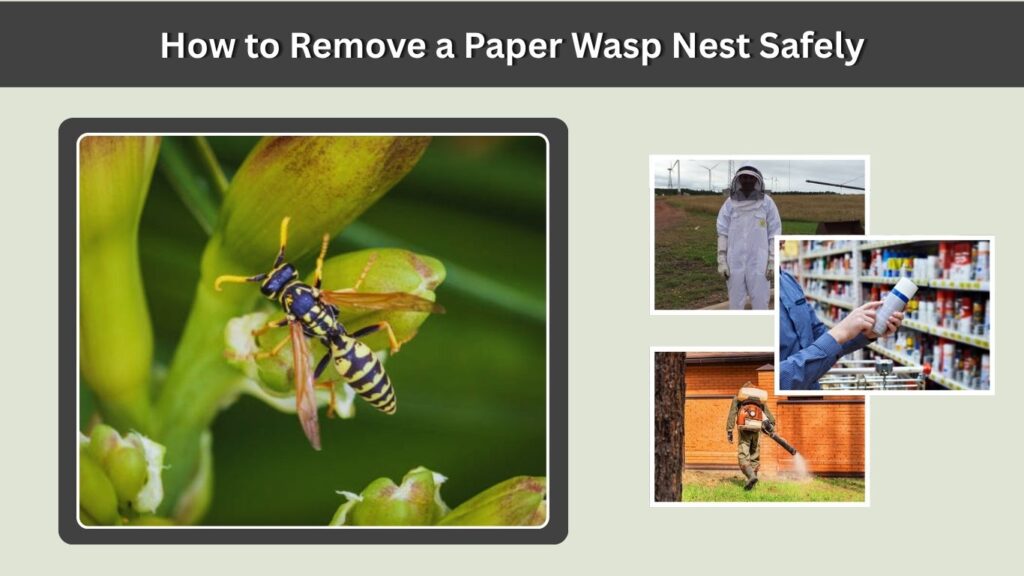
The safest removal method depends on whether the nest is occupied, how large the colony has become, and where the structure is attached. Small, newly established nests are generally easier to manage than mature colonies. However, approaching active wasps always carries a risk of stings. Homeowners should evaluate these conditions carefully before deciding between professional treatment and limited DIY management.
Step 1: Examine the Nest From a Distance
Observe the nest without touching or disturbing it. Determine whether adult wasps are entering, leaving, or resting on the comb.
Notice whether the nest is easily accessible from the ground or positioned near electrical equipment, windows, or other hazards.
If the species is uncertain or the nest is difficult to reach, contact a pest-control professional.
Step 2: Consider DIY Removal for Small Nests
Very small nests established by a single founding queen may sometimes be removed before a larger colony develops.
An exposed nest with little activity may be manageable, but an occupied nest should never be grabbed, crushed, or knocked down casually.
For an active exposed nest that genuinely requires treatment, use only a pesticide specifically labeled for the target wasps and application site. Follow its directions exactly. Professional service is safer when there is uncertainty.
Step 3: Handle Large Paper Wasp Nests Professionally
Removing a large paper wasp nest yourself increases the likelihood of multiple stings.
Established colonies contain workers capable of defending the nest. Professional pest-control technicians have specialized equipment, protective clothing, and suitable treatment methods.
Never climb a ladder to approach an active colony. A sudden defensive response can cause falls and serious injuries.
Step 4: Remove an Abandoned Nest
Once a nest has been confirmed inactive, it can usually be detached from its attachment point using a suitable tool.
Wear gloves, avoid damaging the supporting surface, and dispose of the empty structure.
Confirm that no living adults or developing brood remain before handling it. If the nest was treated with pesticide, follow the product’s reentry and handling instructions.
Essential Paper Wasp Nest Removal Safety Tips
Important precautions include:
- Wear protective clothing appropriate to the task and product label.
- Keep children and pets away from the treatment area.
- Never use gasoline, fire, boiling water, or a pressure washer.
- Avoid disturbing nests attached to electrical equipment.
- Seek professional help for large colonies, allergies, or inaccessible locations.
Best Time for Paper Wasp Nest Removal
Timing affects both the difficulty and safety of removing a paper wasp nest. Colonies generally begin with a founding queen and gradually expand as workers emerge. Cooler weather can reduce insect activity, while cold winters cause many colonies to die naturally. Understanding seasonal behavior helps determine when an abandoned nest can be removed and when an active colony requires immediate attention.
Paper Wasp Nest Removal at Night
Paper wasps are generally less active after dark, making nighttime treatment a common professional approach.
However, nighttime removal is not automatically safe. Wasps can still sting when disturbed, and artificial lighting may complicate the process.
Professionals generally evaluate the nest during daylight before deciding how and when to treat it.
Paper Wasp Nest Removal in Winter
In regions experiencing freezing winters, most paper wasp colonies die off after sustained cold weather. Newly mated queens usually overwinter elsewhere.
Consequently, established nests are often abandoned during winter and can be removed without confronting an active colony.
In warmer climates, wasps may remain active longer, so inactivity should always be verified rather than assumed.
Removing Paper Wasp Nests in Spring
Early spring is often the easiest period to address new nests because colonies are still small.
A founding queen may initially maintain the nest alone before workers develop.
Recognizing nesting activity early can prevent conflicts later in the season, particularly around porches, doorways, and frequently used outdoor spaces.
Paper Wasp Nest Removal From Different Locations
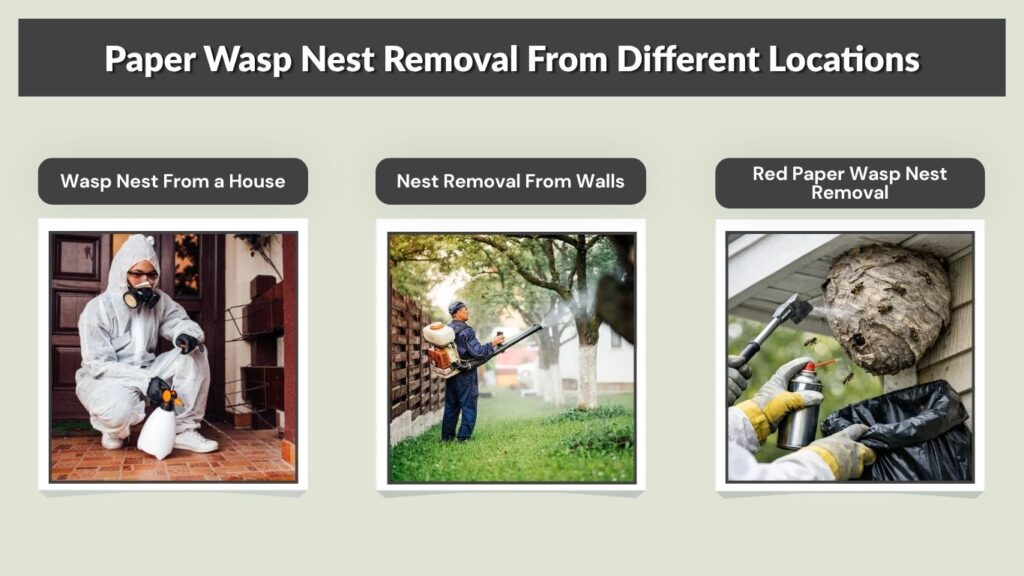
Paper wasps build nests in many protected outdoor locations, including trees, walls, rooflines, and household structures. The position of a nest affects how easily it can be reached and whether removal requires specialized equipment. Different species, including European and red paper wasps, share similar nesting patterns, although their appearance, preferred locations, and defensive responses may vary.
How to Remove a Paper Wasp Nest From a House
Nests beneath roof eaves or porch ceilings are common because these surfaces provide protection from rain.
If the colony is active and located above an entrance, professional treatment is often the safest option.
After abandonment or successful treatment, the remaining nest can be detached, and the surrounding surface inspected for other nesting opportunities.
Paper Wasp Nest Removal From Trees
Paper wasps sometimes attach nests beneath branches or within dense shrubs.
A nest away from frequently used areas can often remain undisturbed until the colony naturally declines.
Avoid shaking branches, trimming occupied vegetation, or using garden equipment close to an active colony.
Paper Wasp Nest Removal From Walls
European paper wasps may establish nests inside structural cavities or sheltered openings.
These locations can be difficult to inspect and treat. Never seal an opening while wasps are actively entering and leaving.
A qualified technician can address the colony before the opening is repaired.
European and Red Paper Wasp Nest Removal
European paper wasps often establish nests around buildings, outdoor fixtures, and sheltered cavities. Red paper wasps commonly use eaves, vegetation, and other protected surfaces.
Both groups can defend occupied nests. Identification, colony size, and accessibility should guide removal decisions rather than body coloration alone.
How Much Does Paper Wasp Nest Removal Cost?
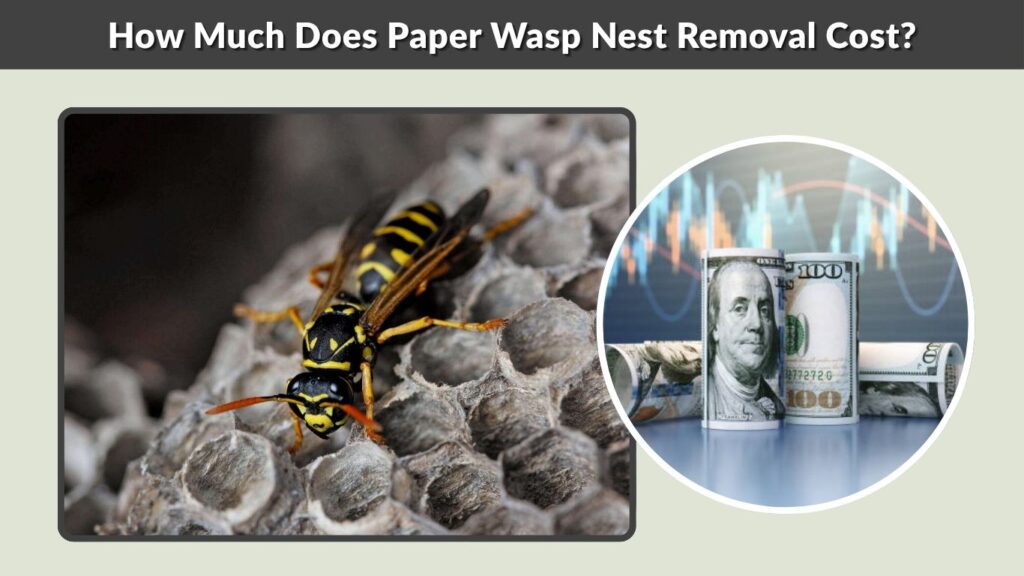
Professional paper wasp nest removal costs vary according to colony size, location, accessibility, and required treatment. A small exposed nest usually costs less to manage than a difficult-to-reach colony inside a structure. Prices also differ by region and service provider. Understanding typical charges helps homeowners compare estimates and determine whether professional assistance is appropriate for their situation.
Average Paper Wasp Nest Removal Cost
In the United States, professional paper wasp removal commonly costs approximately $150 to $350 for relatively straightforward jobs.
Complicated infestations, difficult access, additional treatments, or structural repairs can increase the total price.
Obtain a written estimate from a licensed pest-control company before authorizing treatment.
Factors That Affect Removal Prices
Several factors influence the overall cost:
- Nest size: Larger colonies generally require more extensive treatment.
- Nest location: Rooflines, wall cavities, and high branches increase difficulty.
- Accessibility: Specialized equipment or elevated work adds expense.
- Treatment requirements: Follow-up visits may increase the final price.
- Local service rates: Labor and pest-control pricing vary by location.
How to Prevent Paper Wasps From Building Nests
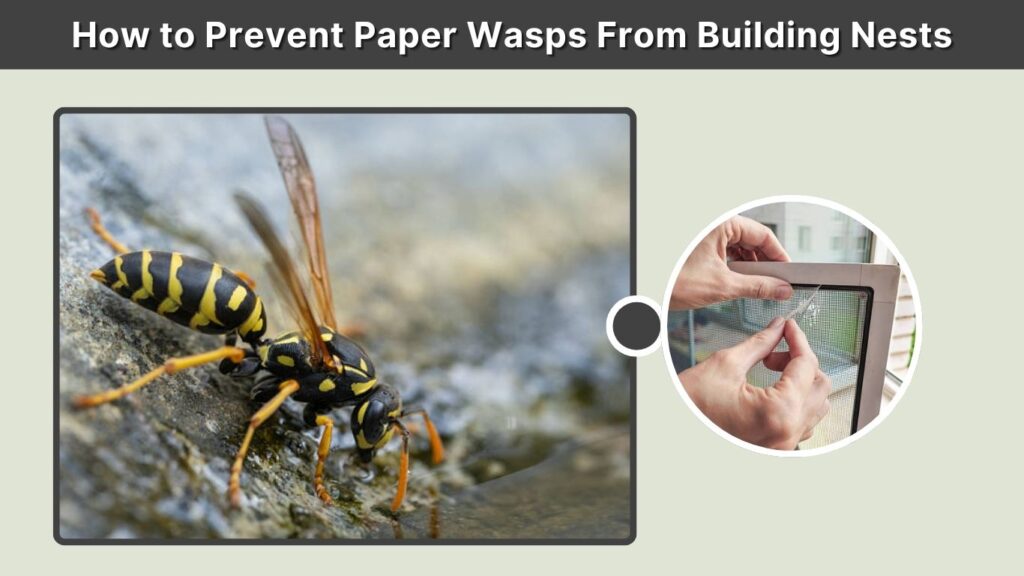
Preventing paper wasp nests begins with reducing suitable nesting locations around a property. Although completely eliminating nesting opportunities is unrealistic, regular inspections and basic maintenance can make certain areas less attractive. Homeowners should focus on sheltered structural openings and areas where nesting would create conflicts, especially near entrances, patios, decks, and frequently used garden spaces.
Inspect and Maintain Outdoor Structures
Inspect roof eaves, window frames, porch ceilings, and outdoor furniture regularly during warmer months.
Repair damaged screens and close unused structural gaps once they are confirmed free of insects.
Early detection is particularly valuable because newly developing nests are usually smaller and easier to manage.
Do Natural Paper Wasp Deterrents Work?
Natural remedies and artificial decoy nests are frequently promoted as paper wasp deterrents, but reliable evidence supporting many of these approaches is limited.
Decoy nests, in particular, should not be considered dependable protection.
Regular inspections, structural maintenance, and professional advice offer more predictable ways to manage recurring nesting problems.
FAQs
Homeowners often have questions about safely removing occupied nests, managing abandoned structures, and preventing wasps from returning. The answers depend on the species, nest location, seasonal conditions, and colony activity. Because paper wasps can sting repeatedly when defending their nests, understanding these differences is important before attempting any removal. These five questions address common concerns about paper wasp nest management.
1. How Do You Remove a Paper Wasp Nest Safely?
First, determine whether the nest is active. An abandoned nest can generally be detached after confirming it is empty. For occupied colonies, professional pest control is the safer choice, particularly when the nest is large or difficult to access.
2. Can You Remove a Paper Wasp Nest Without Killing the Wasps?
Sometimes, a very small newly established colony can be relocated by someone with appropriate experience. However, relocation can disturb the queen and developing brood. Leaving the nest undisturbed is usually the simplest nonlethal option.
3. Is It Safe to Remove a Paper Wasp Nest in Winter?
In climates with freezing winters, abandoned nests can usually be removed safely after the colony dies. Verify that no adults remain active, especially in regions where winter temperatures stay relatively warm.
4. Will Paper Wasps Return After Nest Removal?
Paper wasps may establish new nests near previous nesting locations if suitable shelter remains available. However, they generally do not reuse old annual nests. Regular inspection and structural maintenance can help reduce recurring problems.
5. What Is the Best Way to Remove a Large Paper Wasp Nest?
The safest approach is to contact a licensed pest-control professional. Large active colonies contain defensive workers, and attempting to knock down or spray a nest without appropriate precautions can cause multiple stings.
