
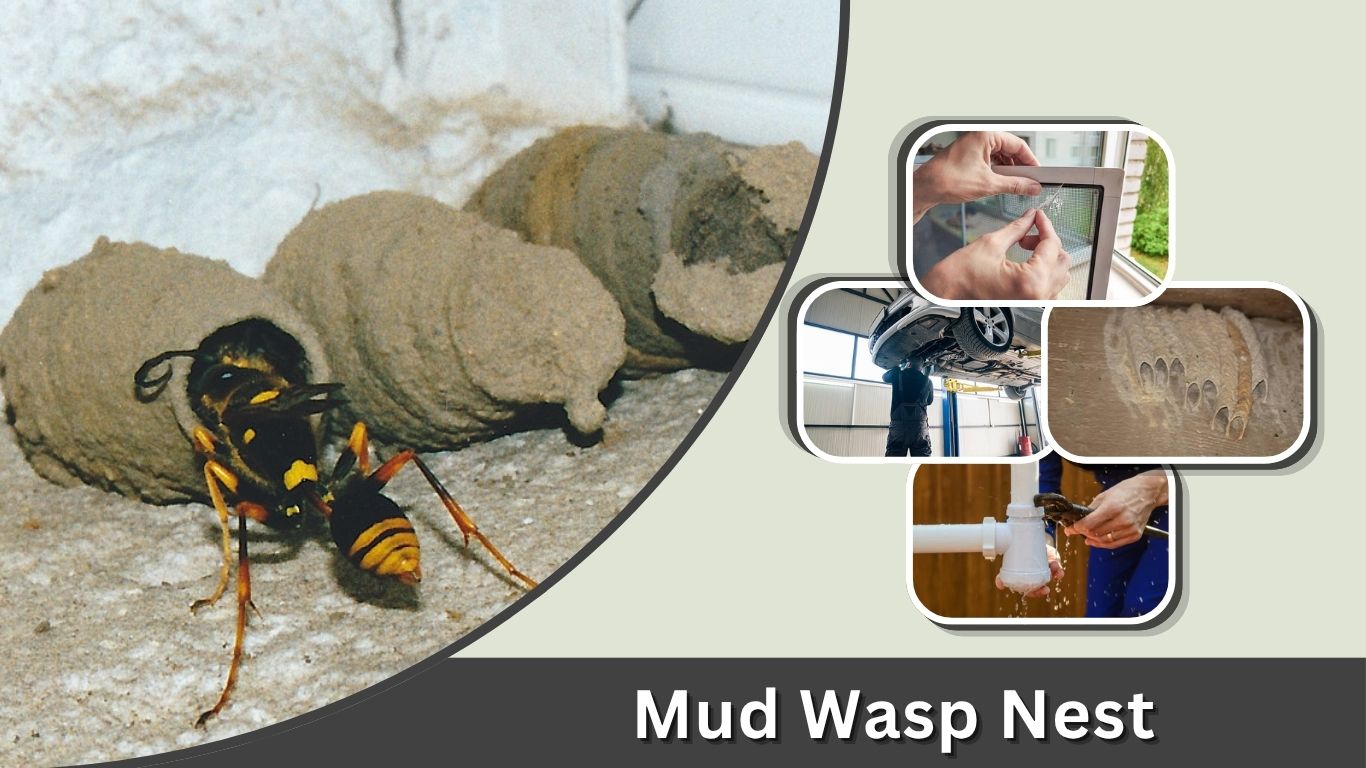
A mud wasp nest may look like a small lump of dried clay, a cluster of narrow tubes, or a miniature pottery structure attached to your home. These unusual nests are usually built by solitary wasps that hunt spiders and other insects. Although they can appear alarming, most mud daubers are relatively harmless and rarely sting people. Understanding mud wasp nest identification, nesting behavior, and safe removal methods can help you decide whether to leave a nest undisturbed or remove it from your property.
What Does a Mud Wasp Nest Look Like?
Mud wasp nests have a distinctive appearance that separates them from ordinary paper wasp nests. Instead of using chewed wood fibers, mud-building wasps collect moist soil and shape it into protective chambers. Once dry, the material becomes hard and clay-like. Nest shapes vary depending on the species, ranging from irregular clusters to carefully arranged cylindrical tubes.
Mud Wasp Nest Identification
Common characteristics include:
- Color: Usually brown, gray, reddish-brown, or similar to the surrounding soil.
- Material: Hardened mud or clay collected from damp locations.
- Shape: Rounded lumps, tubular chambers, small pots, or irregular clusters.
- Size: Individual cells are generally small, although multiple cells can form larger structures.
- Location: Commonly attached to walls, ceilings, roof eaves, and sheltered outdoor surfaces.
- Entrance holes: Small circular openings may indicate that adult wasps have emerged.
Mud Dauber Nest vs. Paper Wasp Nest
Mud dauber nests are made from hardened soil and typically contain enclosed chambers. Paper wasps construct exposed, umbrella-shaped combs using wood fibers mixed with saliva.
Another major difference is behavior. Mud daubers generally live alone and rarely defend their nests aggressively. Paper wasps form social colonies and can become defensive when disturbed.
Common Types of Mud Wasp Nests
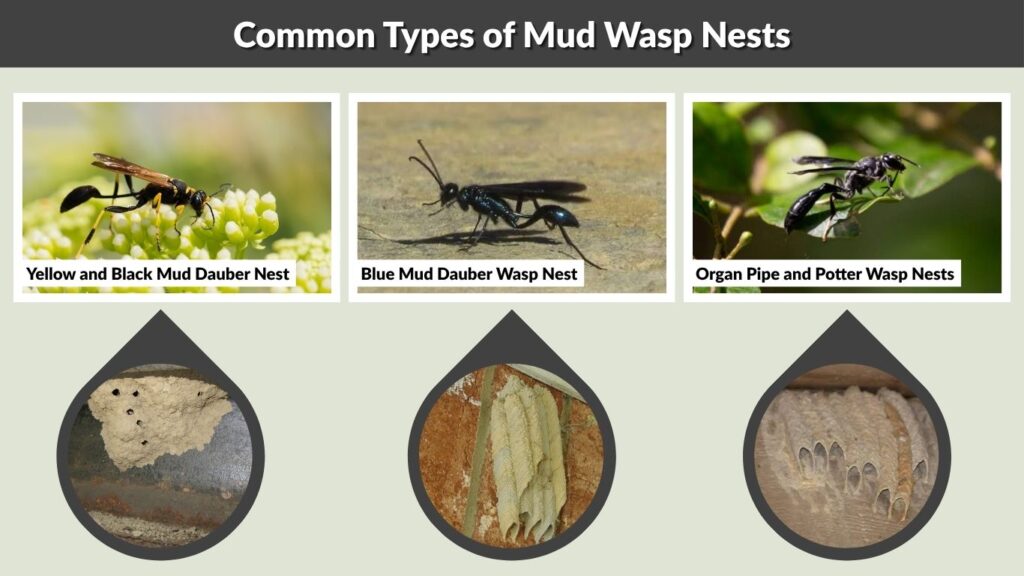
Several wasp species construct mud nests, and each produces a somewhat different structure. Some build individual chambers, while others create groups of tubes or reuse abandoned nests. Recognizing these differences makes identification easier and helps explain why one nest may appear smooth and rounded while another resembles a collection of tiny clay pipes.
Yellow and Black Mud Dauber Nest
The yellow and black mud dauber (Sceliphron caementarium) constructs irregular, rounded clusters of mud cells. These nests frequently appear beneath roof overhangs, inside sheds, and along exterior walls.
Females collect moist soil, build individual compartments, and fill them with paralyzed spiders before laying eggs. The completed chambers are sealed with mud to protect the developing larvae.
Blue Mud Dauber Wasp Nest
The blue mud dauber (Chalybion californicum) has a metallic blue-black body. Unlike many other mud daubers, it usually renovates existing mud nests rather than constructing entirely new ones.
It commonly reuses nests originally built by yellow and black mud daubers. Fresh mud covering an older entrance may indicate that a blue mud dauber has taken possession of an abandoned chamber.
Organ Pipe and Potter Wasp Nests
Organ pipe mud daubers (Trypoxylon politum) build long, parallel mud tubes resembling organ pipes. Their nests are especially distinctive beneath bridges, porches, and sheltered structures.
Related potter wasps create small, jug-shaped mud chambers with narrow openings. Although they share similar nesting materials, potter wasps generally provision their nests with caterpillars rather than spiders.
Why Are There Spiders Inside a Mud Wasp Nest?
Finding spiders inside a mud wasp nest can surprise homeowners. However, these spiders are not usually living there voluntarily. Female mud daubers hunt spiders and transport them into specially prepared chambers as food for their offspring. This predatory behavior is an important part of their reproductive cycle and explains why mud nests sometimes contain numerous spiders.
How Mud Wasps Collect Spiders
A female mud dauber searches vegetation, webs, and sheltered areas for suitable spiders. After capturing one, she delivers a paralyzing sting and carries the immobilized prey back to her nest.
She places several spiders inside a chamber, lays an egg, and seals the opening. The stored prey provides food for the developing larva.
Some blue mud daubers are particularly known for capturing cobweb spiders, including black widows.
Mud Wasp Nest Larvae and Life Cycle
After hatching, the larva consumes the spiders stored inside its chamber. As development continues, it eventually forms a cocoon and enters the pupal stage.
Depending on the species and season, the insect may remain inside the nest through winter. When development finishes, the adult chews an exit hole through the hardened mud.
These circular openings are useful clues when identifying previously occupied nests.
Where Do Mud Wasps Build Their Nests?
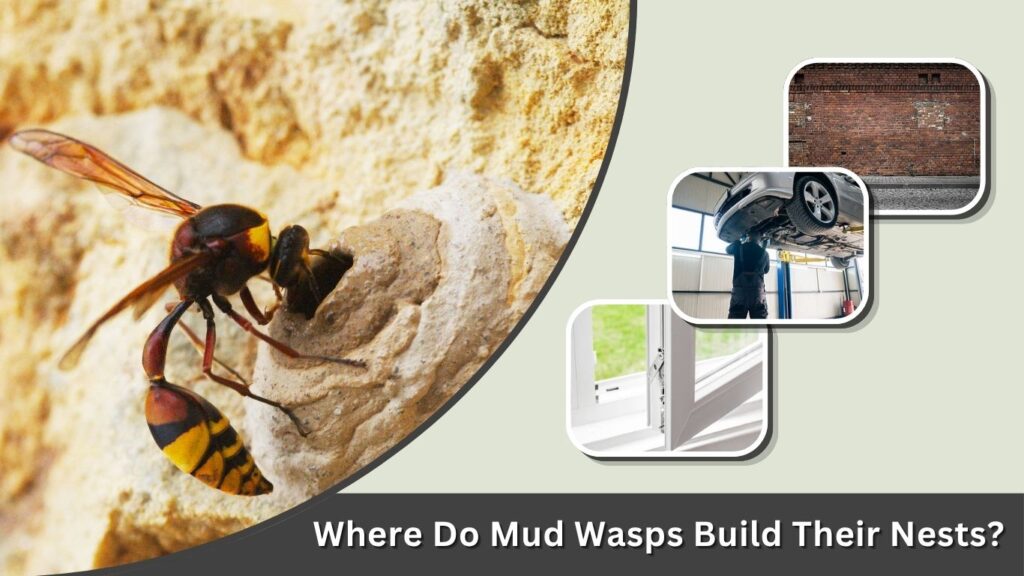
Mud-building wasps prefer protected locations where their nests remain sheltered from heavy rain and direct disturbance. They often choose buildings because walls, overhangs, and structural gaps provide convenient attachment points. Access to damp soil and suitable prey also influences nesting activity. Consequently, mud wasp nests frequently appear around houses, garages, sheds, and other outdoor structures.
Common Mud Wasp Nest Locations
- Exterior walls: Protected brick, wood, and stucco surfaces provide attachment points.
- Roof eaves: Overhangs shelter mud chambers from rain.
- Garages and sheds: Quiet corners and ceilings offer nesting locations.
- Window frames: Small sheltered gaps can attract nesting females.
- Attics: Openings may allow wasps to reach protected interior spaces.
- Outdoor equipment: Unused machinery and narrow openings may occasionally contain nests.
Can Mud Wasps Nest in the Ground?
Typical mud daubers build aboveground mud structures rather than underground colonies.
However, some solitary digger wasps excavate nests in soil. If numerous wasps repeatedly enter one underground opening, yellowjackets may be responsible. Such colonies require different precautions and should not be mistaken for harmless mud daubers.
How to Remove a Mud Wasp Nest Safely
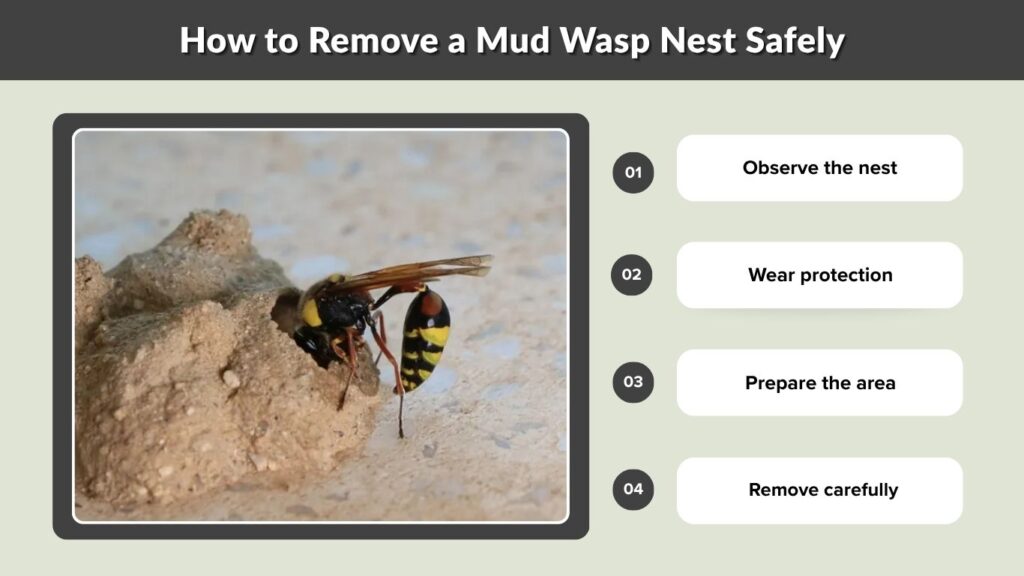
Mud wasp nest removal is often unnecessary because these insects are beneficial predators and generally nonaggressive. Nevertheless, removal may be appropriate when nests interfere with equipment, damage decorative surfaces, or appear in inconvenient indoor locations. The safest approach depends on whether the nest is occupied and how easily it can be reached without disturbing the wasps.
Steps for Safe Mud Wasp Nest Removal
For a reachable nest confirmed to be inactive:
- Observe the nest: Check for wasp activity from a safe distance over several days.
- Wear protection: Use gloves, long sleeves, and eye protection.
- Prepare the area: Place a container or bag below the nest to collect debris.
- Remove carefully: Gently loosen the dried mud with an appropriate scraper.
- Clean the surface: Wash remaining mud with mild soap and water.
- Inspect the location: Check for additional nests and potential entry gaps.
Do not handle an active nest if you are uncertain about the species or sting risk. Contact a pest-control professional when necessary.
Removing Mud Nests From Walls and Stucco
Hardened mud can leave visible marks after removal. On brick, gently loosen dried residue using a suitable soft brush and water.
Stucco and painted surfaces require additional care because aggressive scraping can damage their finish. Test cleaning methods on a small, inconspicuous area before treating visible sections.
Avoid working near electrical equipment or inaccessible nesting locations without professional assistance.
How to Prevent Mud Wasp Nests Around Your Home
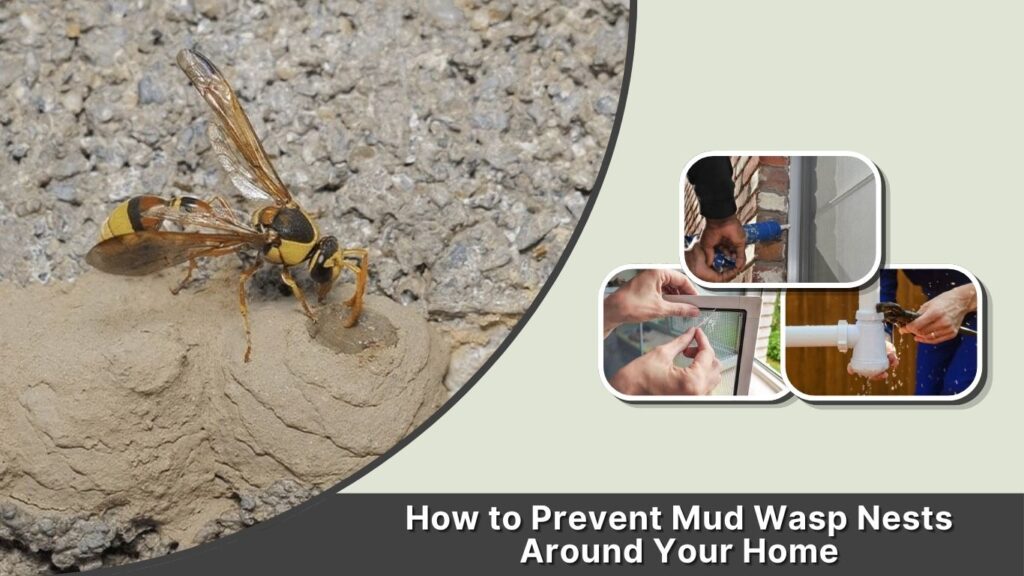
Although mud daubers are not major structural pests, their nests can accumulate in sheltered spaces. Preventive maintenance helps reduce opportunities for nesting without unnecessarily harming beneficial insects. A combination of regular inspections, sealing openings, and maintaining protected areas can make a property less attractive for nest construction. Complete prevention, however, is not always possible.
Mud Wasp Nest Prevention Tips
- Seal unused gaps around windows, doors, and siding.
- Repair damaged screens and weatherstripping.
- Inspect garages, sheds, and roof overhangs regularly.
- Cover suitable openings in stored outdoor equipment.
- Remove abandoned nests from inconvenient locations when safely accessible.
- Repair unnecessary water leaks that create persistent muddy areas.
Are Mud Dauber Wasps Dangerous?
Mud daubers can sting, but they rarely attack people unless directly handled or trapped. Unlike social wasps, they do not defend large colonies.
Their spider-hunting behavior also makes them beneficial in many gardens. If a nest is located away from entrances and frequently used spaces, leaving it undisturbed is often the most practical option.
Anyone experiencing breathing difficulty, throat swelling, or faintness after a sting should seek emergency medical attention.
FAQs
Homeowners often have questions about the safety, contents, and removal of mud wasp nests. Their unusual clay structures can make them appear more threatening than they actually are. Understanding whether a nest is occupied, why spiders are stored inside, and how the insects behave helps homeowners make informed decisions without unnecessary pesticide use or disturbance.
1. What Wasp Makes a Nest Out of Mud?
Mud daubers, potter wasps, and some related solitary wasps construct nests using collected mud. Yellow and black mud daubers are among the most recognizable examples.
2. Should I Remove a Mud Wasp Nest?
Removal is generally unnecessary unless the nest creates a specific problem. Mud daubers rarely sting and help control spider populations.
3. Are Spiders Inside Mud Wasp Nests Alive?
The spiders are initially paralyzed by the female wasp’s sting. They remain immobilized and serve as food for developing larvae.
4. Do Mud Wasps Reuse Their Old Nests?
Some species, especially blue mud daubers, reuse and renovate existing mud nests. Others construct new chambers for their offspring.
5. How Long Does a Mud Wasp Nest Last?
A dried mud nest may remain attached to a protected surface for months or years. The developing wasp’s time inside varies by species, climate, and season.
