

Paper wasps are not just a nuisance — they can be aggressive defenders of their nests and pose real risks, especially to those with insect sting allergies. Whether they’re building under your eaves, in your shed, or near a porch, getting rid of their nests and preventing them from returning is essential for safety and peace of mind. In this guide, we’ll walk you through how to remove a paper wasp nest safely and explore six of the best prevention strategies.
Understanding the Paper Wasp and Its Nest

What Does a Paper Wasp Nest Look Like?
Paper wasp nests are distinctive and fairly easy to recognize. They have a gray, papery texture, resembling an upside-down umbrella with exposed hexagonal cells. These nests are usually suspended from horizontal surfaces like porch ceilings, rafters, window frames, and tree branches.
When and Why They Build Nests
Paper wasps start building nests in early spring. A single queen begins the nest and lays the first set of eggs. As these hatch into workers, the colony expands rapidly. By summer, a nest can contain dozens of adult wasps. Their primary goal is to protect the queen and feed the larvae, often by hunting small insects.
Why You Should Be Cautious
While paper wasps aren’t naturally aggressive when left alone, they become very defensive near their nests. If disturbed, they can sting repeatedly. Unlike bees, paper wasps don’t lose their stingers. For individuals allergic to wasp stings, even one encounter can trigger a severe reaction.
Safety First – Before You Remove a Nest
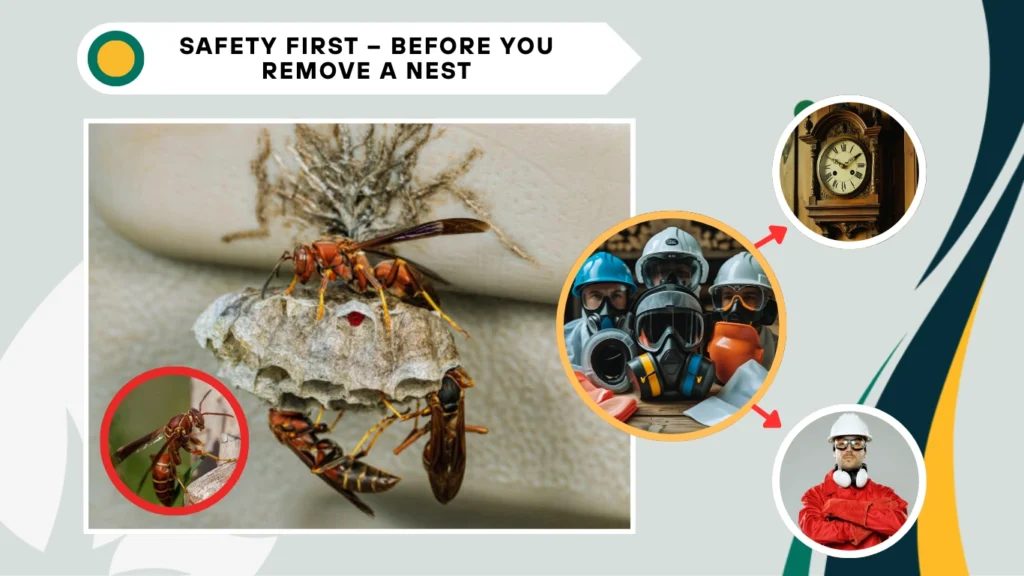
Protective Gear You’ll Need
Before attempting any removal, safety is your top priority. Wear thick clothing that covers your entire body, including gloves, a long-sleeved shirt, long pants tucked into boots, and a hat with netting or a face shield. This gear can reduce the risk of painful stings.
Best Time of Day to Act
Wasps are less active during the early morning or after dusk. At these times, they’re usually inside the nest, less aggressive, and moving slowly due to cooler temperatures. These are the safest windows to approach and treat the nest.
When to Call a Professional
If the nest is large, high up, or in a risky spot (like inside a wall or attic), it’s best to leave it to professionals. Also, if you or someone nearby is allergic to wasp stings, do not attempt removal yourself. Pest control experts have protective suits, advanced sprays, and experience handling aggressive colonies.
6 Best Ways to Get Rid of and Prevent Paper Wasp Nests

1. Use a Wasp Spray in the Evening
One of the most direct methods to eliminate an active nest is using a commercial wasp spray. These sprays shoot a powerful jet from a safe distance (up to 15–20 feet) and contain fast-acting insecticides that kill wasps on contact.
- Approach during dusk or dawn.
- Spray the entrance and entire nest thoroughly.
- Wait 24 hours before checking if all activity has ceased.
- Repeat if necessary before removing the nest.
2. Knock Down the Nest and Dispose Safely
Once you’re sure the wasps are dead or gone, carefully knock down the nest using a broomstick or long pole. Wear gloves, and place the nest in a sealed plastic bag. Dispose of it in a covered outdoor garbage bin to avoid attracting new insects.
Important: Never attempt to knock down a nest that is still active — this can provoke a swarm of defensive wasps.
3. Install Fake Wasp Nests
Wasps are territorial. If they spot what appears to be another colony nearby, they usually avoid settling in that area. You can purchase or craft decoy nests and hang them in potential nesting spots like under roof edges, patio corners, and garages.
Install one every 20 feet in problem zones. This method works best as a preventative measure before the nesting season starts.
4. Seal Entry Points Around the Home
Wasps may try to build nests in hidden indoor spaces like attics or behind siding. To prevent this, seal gaps, cracks, and crevices where they might enter:
- Use caulk to fill small wall or foundation cracks.
- Install mesh over attic vents and exhaust fans.
- Check screens and weatherstripping on doors and windows.
This not only keeps out wasps but also other pests like ants, spiders, and flies.
5. Remove Attractants
Wasps are drawn to food, especially sugary items. Keeping your yard and patio clean is crucial:
- Don’t leave pet food outside.
- Cover trash cans with tight lids.
- Clean up after picnics and barbecues.
- Avoid leaving overripe fruit or sugary drinks exposed.
Eliminating their food sources makes your space far less attractive to paper wasps.
6. Use Natural Deterrents
Some scents repel wasps, and you can use these to discourage nesting:
- Peppermint oil is particularly effective. Mix 1 tablespoon with water and dish soap in a spray bottle and apply to nesting areas weekly.
- Other options: clove, lemongrass, geranium, and citronella oils.
- Plant deterrents: Mint, eucalyptus, and wormwood planted around your patio or garden can help ward off wasps.
These natural repellents are safe for people and pets and can be used regularly during the warm months.
How to Keep Paper Wasps Away Long-Term
Routine Property Checks
Every month, especially in spring and summer, inspect your home’s exterior:
- Look under railings, balconies, porches, and deck furniture.
- Early nests are easier and safer to deal with before they grow.
Spotting a small nest early allows you to remove it before a colony becomes dangerous.
Yard Maintenance
Wasps are more likely to build nests in untended areas:
- Trim overgrown trees and bushes.
- Clear away yard debris.
- Remove any abandoned nests, even if inactive. Some wasps return to old locations or use them as starting points.
A well-maintained yard is less inviting to paper wasps and other pests.
FAQs
1. What happens if you leave a paper wasp nest alone?
If left undisturbed, the colony will grow throughout the summer. By fall, it may contain hundreds of wasps. While they die off in winter, they can rebuild in the same spot next season.
2. Can paper wasps return to the same spot next year?
Yes, especially if the previous nest was successful. Queens often revisit the same location to rebuild — another reason to remove inactive nests and use deterrents early.
3. How long does it take for a nest to die off on its own?
In cold climates, paper wasps die naturally after the first frost. However, during warmer months, the nest remains active and should be removed if near human activity.
4. What smell do paper wasps hate most?
Peppermint oil is the top natural repellent. They also dislike clove, citronella, and eucalyptus. Regularly spraying these scents helps keep them away.
5. Will vinegar kill paper wasps?
Vinegar alone may repel wasps slightly but doesn’t kill them effectively. For elimination, use commercial insecticides or natural oil-based sprays with soap and water.
