
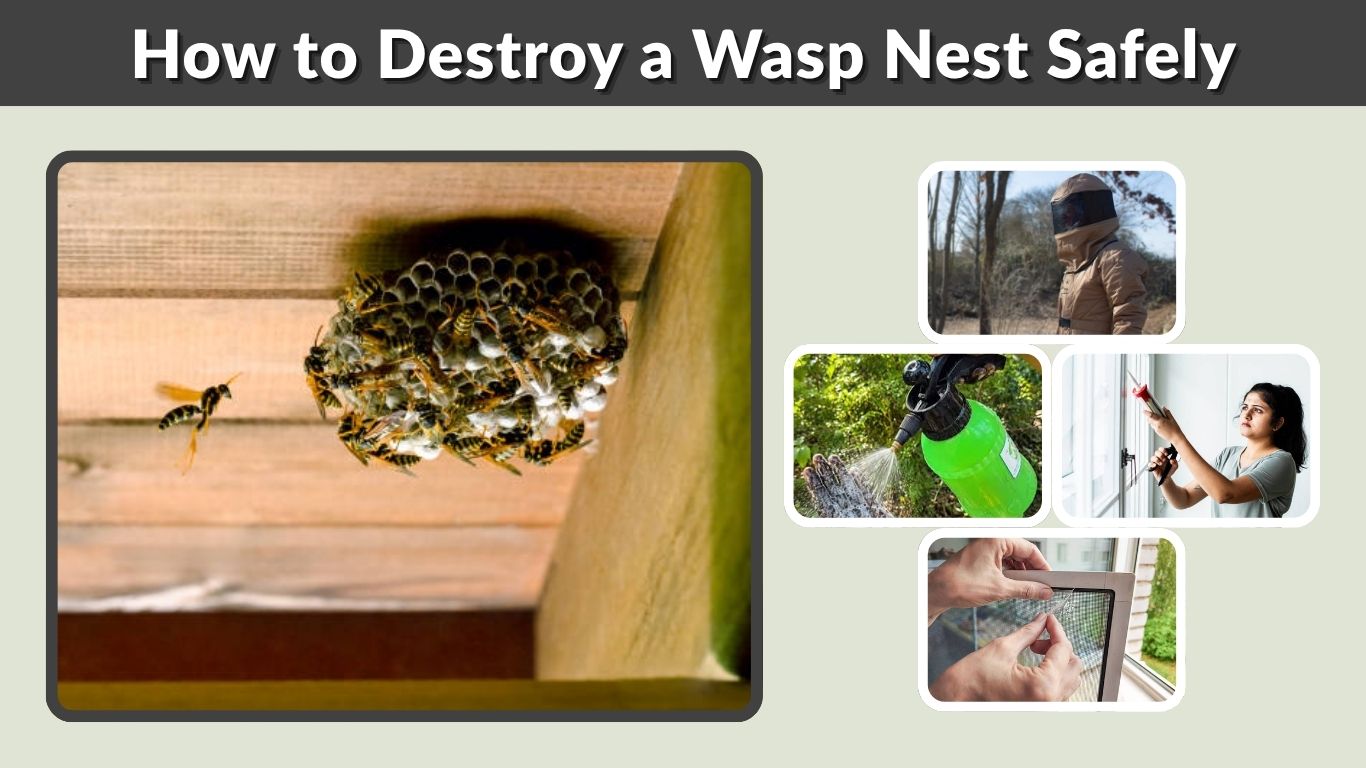
Finding a wasp nest around your home can be frightening, especially when wasps gather near doors, gardens, or outdoor seating areas. Knowing how to destroy a wasp nest safely is important because disturbing an active colony can trigger aggressive behavior and multiple stings. Small, accessible nests may sometimes be treated with properly labeled products, while large or hidden nests often require professional removal. This guide explains the safest approaches for different nest locations, common mistakes to avoid, and how to prevent wasps from returning.
How to Destroy a Wasp Nest Safely
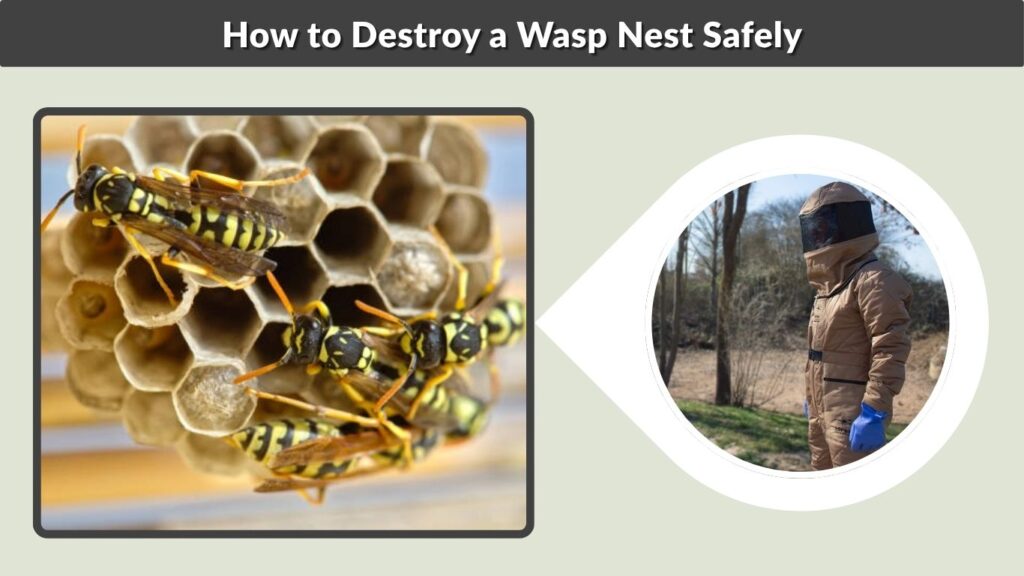
Destroying a wasp nest requires careful preparation, proper identification, and an appropriate removal method. Wasps defend their colonies when threatened, making sudden disturbances dangerous. Before attempting treatment, consider the nest’s size, location, and activity level. Never attempt DIY removal if you have a known sting allergy, cannot retreat safely, or cannot reach the nest without a ladder.
1. Identify the Wasp Nest
First, observe the nest from a safe distance without disturbing it. Different wasp species build different structures, and identifying the nest helps determine the safest approach.
Common nest types include:
- Paper wasp nests: Open, umbrella-shaped nests with visible hexagonal cells, commonly attached beneath roofs.
- Yellowjacket nests: Often concealed underground, inside walls, or within other cavities.
- Hornet nests: Some species construct large, enclosed, football-shaped paper nests in trees or bushes.
- Mud dauber nests: Small, hardened mud structures made by solitary wasps that rarely defend their nests.
If you suspect the insects are bees rather than wasps, seek identification before considering treatment.
2. Prepare Protective Clothing and Equipment
If a small, exposed nest is suitable for DIY treatment, protective clothing can reduce skin exposure but cannot guarantee protection against stings.
Consider these precautions:
- Wear long sleeves, long pants, gloves, and closed shoes.
- Protect exposed skin around your wrists, ankles, and neck.
- Keep children and pets away from the treatment area.
- Identify a clear escape route before approaching.
- Avoid ladders, confined spaces, and unstable surfaces.
Professional sting-resistant clothing offers substantially better protection than ordinary household clothing.
3. Treat a Small, Exposed Nest
For a small, reachable paper wasp nest, a wasp-and-hornet aerosol specifically labeled for the location may be appropriate.
Follow these steps:
- Observe the nest from a distance to identify its location and activity.
- Read the entire pesticide label, including protective equipment requirements and application distances.
- If the label permits, treat during late evening or early morning when wasps are generally less active.
- Apply the product exactly as directed, without standing underneath the nest.
- Leave the area immediately after treatment and keep others away.
Never approach the nest simply because wasps appear inactive. Cooler temperatures reduce activity but do not make an active colony harmless.
4. Check Activity Before Removing the Nest
After treatment, wait at least the time specified on the product label before considering physical removal. Some treatments require more than one day to eliminate the colony.
Observe from a safe distance for incoming and outgoing wasps. If activity continues, avoid touching the nest and consider professional assistance.
Only after confirming that the nest is inactive should it be physically removed, if removal is necessary and safely accessible. Dispose of the old nest according to applicable pesticide-label instructions.
How to Destroy a Wasp Nest in Different Locations
The location of a wasp nest determines which control methods are appropriate. Underground colonies behave differently from exposed paper wasps, while hidden nests inside buildings can be particularly difficult to eliminate. Choosing an unsuitable treatment may increase sting risks or drive wasps into occupied spaces.
How to Destroy a Wasp Nest in the Ground
Ground wasp nests are often occupied by yellowjackets, which can aggressively defend their underground colonies. Their entrances may look like small holes in lawns, flower beds, or areas beneath stones.
Professionals commonly use insecticidal dust specifically labeled for underground wasp nests. The insects carry treatment particles into the colony as they move through the entrance.
Because the entrance may connect to a large hidden nest, professional treatment is the safer choice for active ground colonies.
Never pour gasoline, boiling water, or household chemicals into the opening. These methods can cause injuries, contaminate soil, and fail to eliminate the colony.
How to Destroy a Wasp Nest in a Wall
Wasps sometimes build colonies inside wall cavities, roof spaces, and gaps around siding. These nests are difficult to access and may contain many insects.
Do not seal the exterior entrance while the colony remains active. Trapped wasps may find another exit, potentially entering living spaces through walls or ceilings.
A pest-control professional can locate the colony, select an appropriate treatment, and determine whether the nest needs to be extracted.
After the colony has been eliminated, damaged areas and access points can be repaired to discourage future nesting.
How to Destroy a Wasp Nest in a Bush or Tree
Wasps and hornets frequently construct enclosed paper nests among branches or inside dense shrubs.
If the nest is far from people, leaving it undisturbed may be the best option. However, nests near walkways, children’s play areas, or frequently used gardens can create hazards.
Avoid shaking branches, trimming vegetation, or attempting to knock down an active nest. Large nests and those positioned above head height should be handled by professionals.
How to Destroy a Wasp Nest in the Attic
Attic nests can be especially hazardous because they may be concealed behind insulation or structural materials. Confined spaces also make escape difficult.
Avoid entering an attic containing an active colony, and never spray pesticides around electrical equipment unless the product is explicitly approved for that application.
Professional removal is strongly recommended for nests inside attics, lofts, ceilings, and inaccessible roof spaces.
How to Destroy Small and Large Wasp Nests
Small, exposed paper wasp nests can sometimes be managed by homeowners using a labeled product and appropriate precautions.
Large wasp nests are considerably more dangerous because they may contain hundreds or thousands of insects, depending on the species.
If the nest is large, difficult to access, or surrounded by heavy wasp activity, professional pest control is the safest option. The same applies when the nest’s size is unknown.
Can You Destroy a Wasp Nest Naturally?
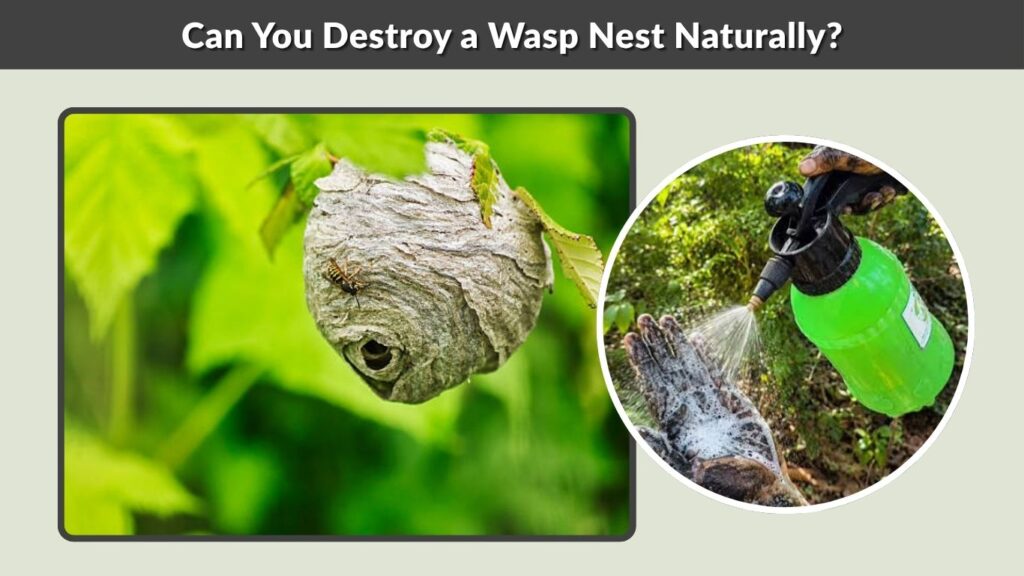
Some homeowners prefer avoiding chemical pesticides when removing wasp nests. However, natural approaches have significant limitations, particularly against established social wasp colonies.
Soapy water may kill directly contacted paper wasps, but applying it to an active nest can provoke defensive behavior and is not a reliable method for eliminating concealed colonies.
The safest nonchemical option is often leaving an undisturbed nest alone until its colony naturally dies out in cold weather, where seasonal conditions allow.
Solitary mud daubers are another consideration. They rarely defend their nests, and old, inactive mud nests can often be scraped away without pesticide treatment.
Dangerous Methods You Should Never Use
Several commonly suggested wasp nest removal techniques create unnecessary risks and should be avoided.
- Fire: Burning nests can spread flames to buildings, vegetation, and nearby objects.
- Gasoline or petrol: These highly flammable substances can cause fires and contaminate soil.
- Garden hoses: High-pressure water may break apart a nest without eliminating the wasps.
- Knocking down active nests: Physical disturbance can provoke a defensive swarm.
- Blocking active entrances: Trapped wasps may escape through unexpected openings.
- Mixing household chemicals: Chemical mixtures can create harmful fumes or reactions.
Using a correctly labeled treatment or hiring a qualified professional is safer than experimenting with household remedies.
How Long Will Wasps Return to a Destroyed Nest?
Wasps may continue returning to a destroyed or treated nest for several hours or days, depending on whether any workers remain alive and whether the treatment reached the entire colony.
Workers that were gathering food when treatment occurred may return to the original location. Continued heavy traffic can indicate that the colony remains active.
Most social wasps in temperate climates do not reuse old nests in subsequent years. However, new queens may establish new colonies in the same favorable nesting area.
Therefore, destroying one nest does not guarantee that wasps will never return to your property.
How to Prevent Wasps from Building New Nests
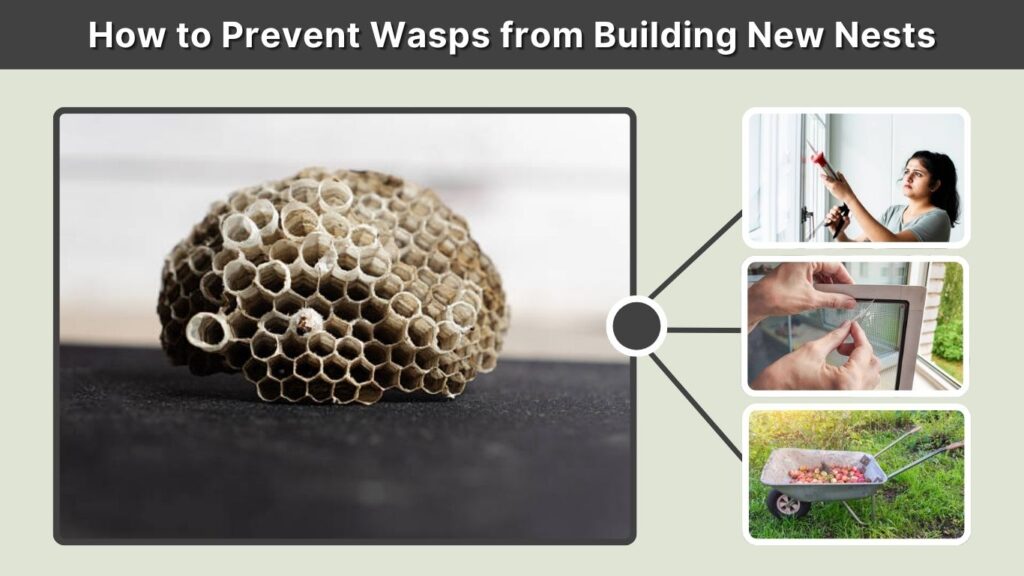
Preventing future infestations involves reducing nesting opportunities and removing common food attractants.
- Seal gaps around siding, windows, and rooflines after confirming no insects are inside.
- Repair damaged screens, soffits, and exterior vents.
- Keep outdoor garbage containers tightly closed.
- Remove fallen fruit and clean up food spills.
- Inspect sheltered areas for newly developing nests.
- Avoid leaving sugary drinks and uncovered food outdoors.
Early inspection is particularly useful during spring in temperate regions, when many social wasp queens establish new colonies.
FAQs
1. What Is the Safest Way to Destroy a Wasp Nest?
The safest approach depends on the nest’s location and size. Small, exposed nests may be suitable for properly labeled treatments, while ground nests, large colonies, and nests inside buildings are best handled by professionals.
2. Can You Destroy a Wasp Nest Without Getting Stung?
No method guarantees zero stings. Protective clothing, treating during periods of reduced activity, and avoiding physical disturbance can lower the risk. Professional removal is advisable when exposure cannot be controlled.
3. Is It Better to Destroy a Wasp Nest at Night?
Many wasps are less active during late evening or early morning, making these common treatment periods. However, wasps can still sting after dark, so always follow the product label and assess the risks.
4. Can You Destroy a Wasp Nest in Winter?
In regions with freezing winters, most annual social wasp colonies die out before or during winter. Once a nest is confirmed completely inactive, it can generally be removed safely. Warmer climates may have different seasonal patterns.
5. Will Wasps Come Back After Their Nest Is Destroyed?
Surviving workers may return temporarily, and new colonies can develop nearby in future seasons. Eliminating the colony, monitoring for continued activity, and sealing potential nesting sites can help reduce future problems.
