
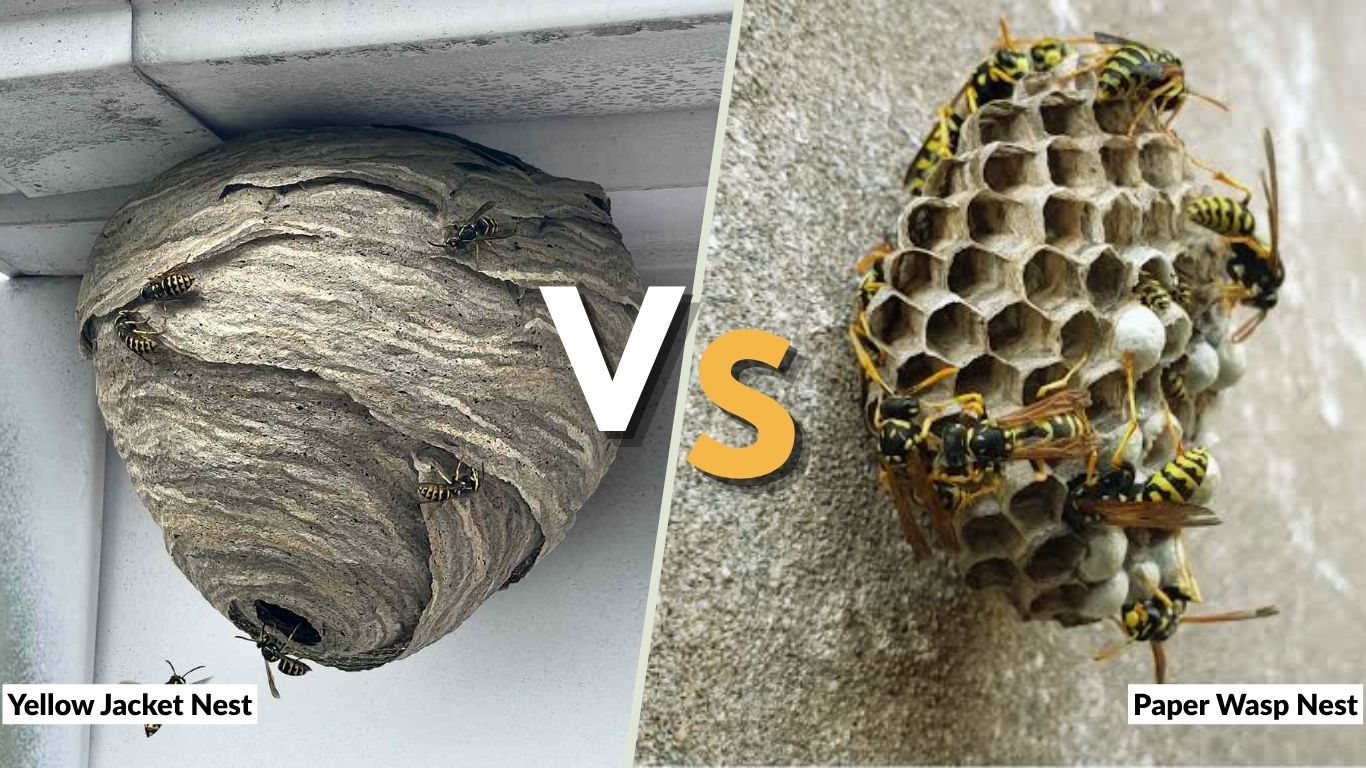
Identifying a yellow jacket nest vs paper wasp nest can be confusing because both insects build paper-like structures and often appear around homes and gardens. However, their nests differ significantly in shape, location, size, and defensive behavior. Yellowjackets commonly construct enclosed nests underground or inside walls, while paper wasps usually build exposed, umbrella-shaped combs beneath roof eaves. Understanding these differences helps homeowners identify potential hazards and choose appropriate removal methods. This guide compares yellowjacket and paper wasp nests, including pictures, nesting habits, colony sizes, and safety considerations.
Yellow Jacket Nest vs Paper Wasp Nest: Quick Comparison
Yellowjackets and paper wasps belong to the same wasp family, but their nesting habits are distinctive. The most obvious difference is their nest structure: yellowjackets build enclosed colonies, while paper wasps construct exposed combs with visible hexagonal cells.
| Feature | Yellowjacket Nest | Paper Wasp Nest |
| Shape | Enclosed, rounded or irregular | Open, umbrella-shaped |
| Structure | Multiple comb layers | Usually one exposed comb |
| Location | Underground, walls, trees | Eaves, branches, sheltered areas |
| Colony size | Often hundreds to thousands | Usually dozens |
| Appearance | Gray or brown paper envelope | Gray or brown exposed cells |
| Behavior | Strong colony defense | Usually less defensive away from nest |
| Visibility | Frequently hidden | Often clearly visible |
These differences provide useful identification clues, although species and nesting conditions can affect appearances.
What Does a Paper Wasp Nest Look Like?
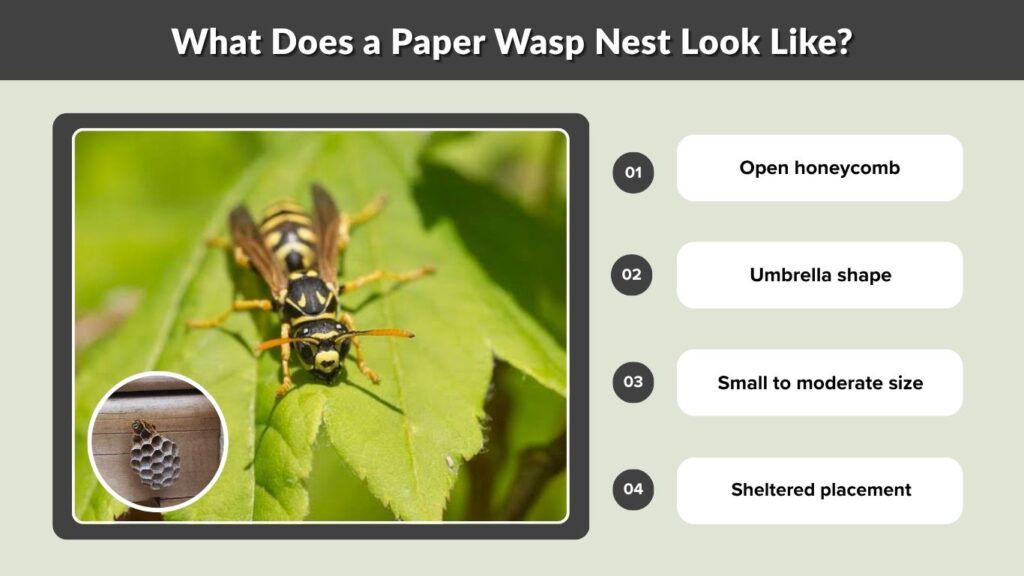
A paper wasp nest resembles an upside-down umbrella with exposed hexagonal cells. The nest usually hangs from a short stalk attached to a protected surface, such as a roof eave, porch ceiling, or tree branch.
Unlike yellowjacket nests, paper wasp nests have no protective outer envelope. Their cells remain visible from below, allowing observers to recognize the characteristic honeycomb-like structure.
Common Paper Wasp Nest Features
- Open honeycomb: Clearly visible hexagonal chambers.
- Umbrella shape: A single comb hanging downward.
- Small to moderate size: Usually smaller than mature yellowjacket nests.
- Sheltered placement: Common beneath rooflines and overhangs.
- Visible insects: Adult wasps often rest directly on the comb.
Paper wasp nests generally house smaller colonies, although the exact population varies by species.
What Does a Yellow Jacket Nest Look Like?
A yellowjacket nest consists of enclosed paper-like layers made from chewed wood fibers and saliva. Inside, multiple horizontal combs provide cells for eggs, larvae, and developing pupae.
Unlike paper wasp nests, the brood chambers are generally concealed beneath an outer envelope. Some nests hang aboveground, while others remain completely hidden inside soil cavities or building walls.
Common Yellowjacket Nest Features
- Enclosed structure: An outer shell covers the internal combs.
- Layered construction: Several levels of hexagonal brood cells.
- Variable shape: Rounded, oval, or irregular depending on location.
- Hidden entrances: Small openings in soil, siding, or structures.
- Large colonies: Established nests may support thousands of workers.
Yellowjackets are especially defensive when their nests are disturbed, making proper identification important before attempting removal.
7 Key Differences Between Yellow Jacket and Paper Wasp Nests
Although yellowjackets and paper wasps use similar nesting materials, their colonies differ in several important ways. Nest shape, construction, location, and defensive behavior are especially useful for distinguishing these insects.
1. Nest Shape and Appearance
Paper wasps build open, umbrella-shaped nests with visible cells. Yellowjackets construct enclosed nests with protective paper coverings. Aboveground yellowjacket nests may appear rounded or oval, while underground colonies remain largely hidden.
2. Nest Location
Paper wasps prefer sheltered aboveground locations, including eaves, porch ceilings, and branches. Yellowjackets frequently use underground burrows, hollow trees, wall cavities, and other protected spaces. Nesting preferences vary among species.
3. Nest Construction
Both insects collect wood fibers and mix them with saliva to create papery material. Paper wasps usually construct one exposed comb, whereas yellowjackets develop multiple comb layers surrounded by a protective envelope.
4. Colony Size
Paper wasp colonies commonly contain dozens of individuals, although some grow larger. Yellowjacket colonies often support hundreds or thousands of workers, particularly toward the end of the growing season.
5. Defensive Behavior
Yellowjackets may defend their nests aggressively when disturbed. Paper wasps also protect their colonies but are generally less defensive away from their nests. Both can sting repeatedly.
6. Physical Appearance
Yellowjackets typically have compact bodies with bold black-and-yellow markings. Paper wasps generally have slimmer bodies, narrow waists, and longer legs that often hang visibly during flight.
7. Seasonal Nest Development
Both insects establish colonies during warmer months in temperate regions. Yellowjacket colonies often expand rapidly toward late summer, while paper wasp colonies usually remain smaller. Most colonies die after prolonged freezing weather.
Wasp vs Hornet vs Yellow Jacket Nest
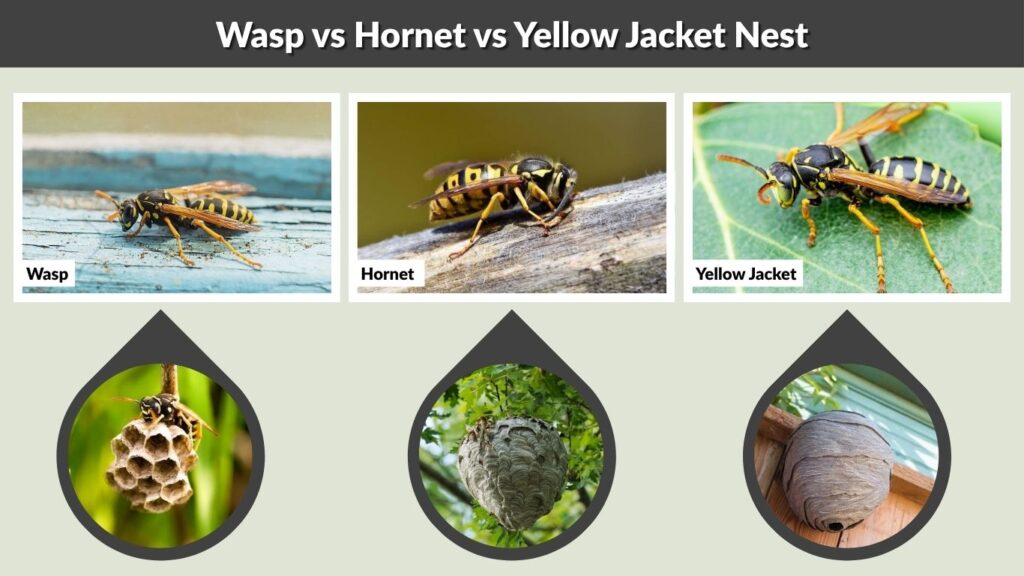
Hornets, yellowjackets, and paper wasps are closely related insects, but their nest structures can help distinguish them.
Hornet nesting structure inside a cavity
Paper wasps build exposed umbrella-shaped combs. Yellowjackets generally create enclosed nests in the ground, trees, or building cavities. True hornets also construct enclosed nests, commonly in trees or sheltered cavities.
However, the bald-faced hornet is actually an aerial yellowjacket, not a true hornet. Therefore, identifying the insects themselves is often necessary for accurate classification.
Yellow Jacket Nest vs Paper Wasp Nest in Siding
Yellowjackets frequently enter wall cavities through gaps in siding, soffits, or exterior structures. Their nests may remain completely hidden, making identification difficult.
Paper wasps usually attach their combs to sheltered surfaces, although some species may use small cavities or structural openings.
If numerous wasps repeatedly enter a siding gap, avoid blocking the entrance. Sealing an active yellowjacket nest may force workers to emerge inside the house. Contact a pest control professional for safe identification and treatment.
Which Nest Is More Dangerous?
Yellowjacket nests generally present a greater risk when large colonies are disturbed because many workers may defend the nest simultaneously.
Paper wasps are usually less aggressive during normal foraging activities, but they can still deliver painful stings when protecting their colonies.
People with serious insect-sting allergies should avoid both nest types. Breathing difficulties, throat swelling, or fainting after a sting require immediate emergency medical attention.
Should You Remove a Yellow Jacket or Paper Wasp Nest?
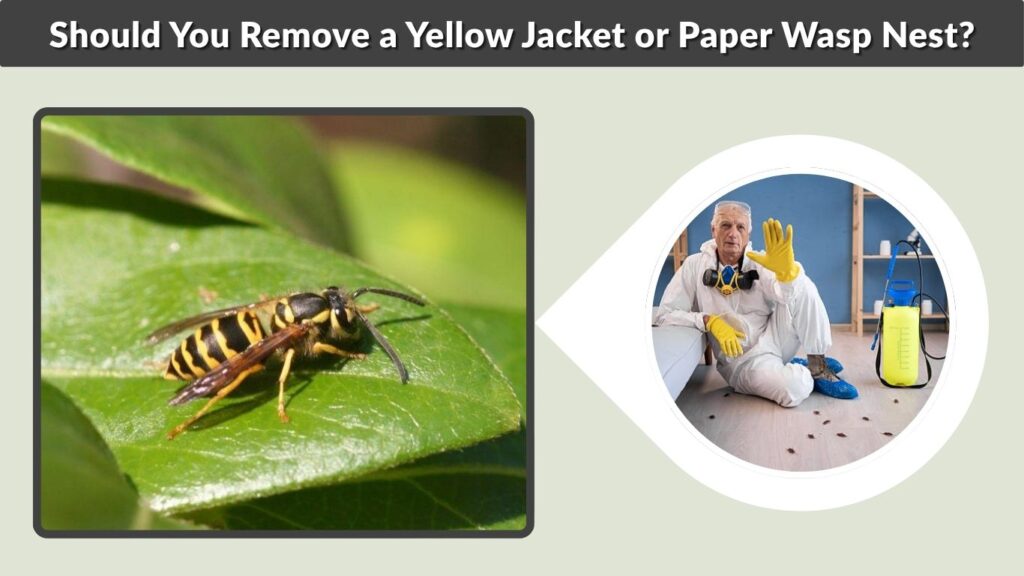
Not every wasp nest needs removal. Both insects help control pest populations by hunting other insects.
However, nests near doorways, playgrounds, patios, or frequently used outdoor spaces may create safety concerns.
For safer management:
- Identify the nest type from a distance.
- Keep children and pets away from active entrances.
- Avoid disturbing the colony with tools or water.
- Hire professional pest control for large or concealed nests.
- Seal structural gaps after confirming that nests are inactive.
Never attempt to burn a nest or treat concealed colonies with gasoline or boiling water.
FAQs
1. What Is the Main Difference Between a Yellow Jacket Nest and a Paper Wasp Nest?
Yellowjacket nests are enclosed with protective paper layers and often occur underground or inside structures. Paper wasp nests feature exposed, umbrella-shaped combs with visible hexagonal cells. Yellowjacket colonies also typically contain more workers than most paper wasp colonies.
2. Are Yellow Jacket Nests More Dangerous Than Paper Wasp Nests?
Yellowjacket nests are generally more dangerous when disturbed because their larger colonies can defend themselves aggressively. Paper wasps may also sting repeatedly, especially near their nests. Both insects pose significant risks to individuals with severe allergies to insect venom.
3. Can Yellow Jackets and Paper Wasps Build Nests in the Same Location?
Yes, both insects may use similar sheltered areas around buildings, including rooflines and structural openings. However, they usually maintain separate colonies. Yellowjackets prefer enclosed cavities, while paper wasps commonly attach exposed combs beneath eaves, branches, and other protected surfaces.
4. How Can You Identify a Yellow Jacket Nest in the Ground?
Look for repeated yellowjacket activity around a small opening in soil, grass, or an abandoned animal burrow. The actual nest usually remains hidden underground. Never dig into the entrance or disturb nearby soil because defensive workers may emerge rapidly.
5. Do Yellow Jackets and Paper Wasps Reuse Their Old Nests?
In temperate climates, yellowjackets and paper wasps generally abandon their colonies after cold weather arrives. New queens typically establish fresh nests the following spring. However, suitable nesting locations may be reused, and some yellowjacket colonies survive longer in warm climates.
