
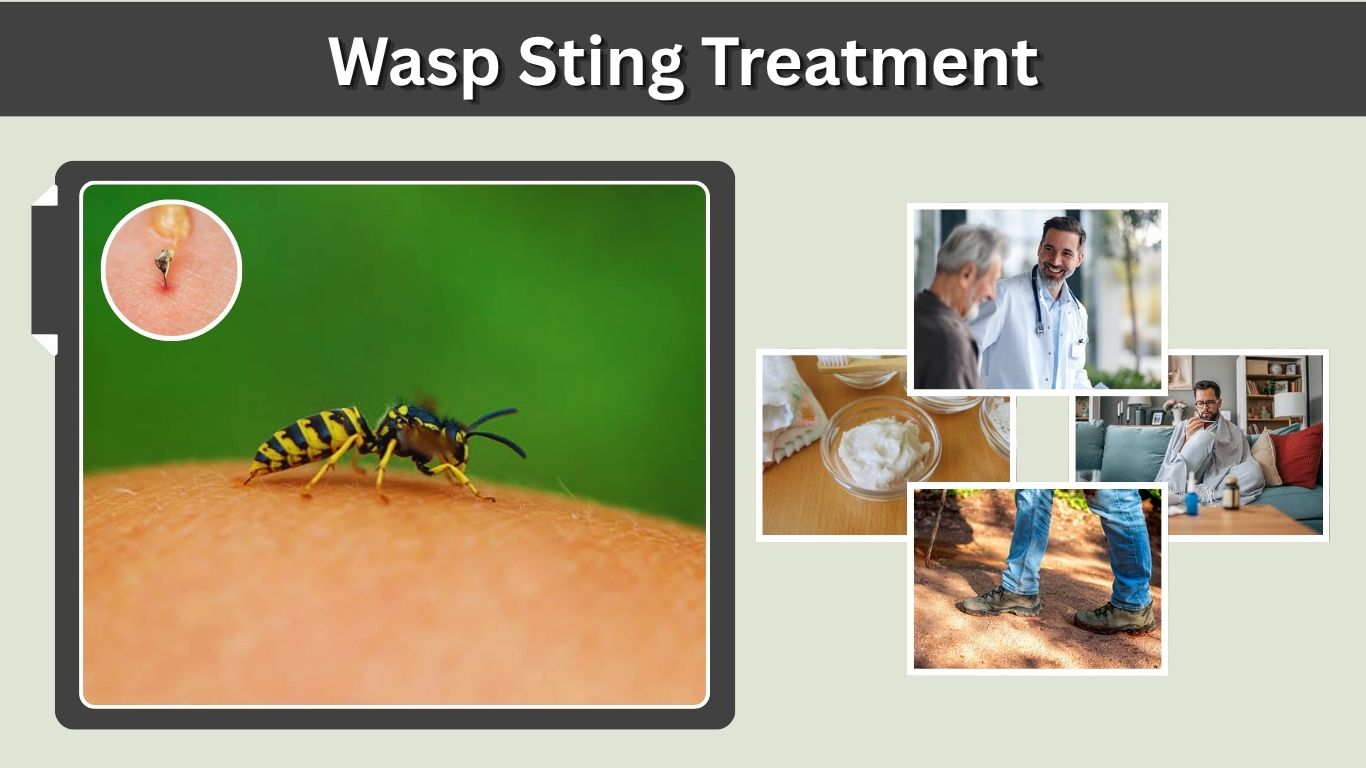
A wasp sting can cause sharp pain, redness, itching, and swelling within minutes. Most reactions are mild and improve with simple first aid, but some people develop extensive swelling or dangerous allergies. Knowing the right wasp sting treatment helps you manage discomfort without relying on ineffective home remedies. This guide explains what to do immediately, how to reduce swelling after 48 hours, which medicines may help, and when symptoms require medical attention. It also covers paper wasps, yellowjackets, and ways to avoid future stings.
What Is the Best Wasp Sting Treatment?
The best wasp sting treatment depends on the severity of the reaction. Mild stings generally respond well to cleaning, cold compresses, and over-the-counter medication. However, severe allergic reactions require emergency medical attention. Taking appropriate action immediately can reduce discomfort and help prevent further complications.
Immediate First Aid for Wasp Stings
Follow these steps after being stung by a wasp:
- Move to safety: Leave the area calmly to avoid additional stings, especially near an active wasp nest.
- Check for a stinger: Wasps rarely leave their stingers behind, but remove any visible stinger promptly.
- Clean the area: Wash the affected skin gently with soap and water to remove dirt and reduce infection risks.
- Apply a cold compress: Hold a cloth-wrapped ice pack against the sting for 10–20 minutes to ease pain and swelling.
- Monitor symptoms: Watch for breathing difficulties, dizziness, or swelling beyond the sting area.
If the sting is on your hand, remove rings before swelling increases. Seek emergency care immediately if symptoms suggest anaphylaxis.
How to Remove a Wasp Stinger
Unlike honeybees, wasps usually retain their stingers and can sting repeatedly. Therefore, finding a stinger after an apparent wasp sting is uncommon.
If something resembling a stinger remains embedded in the skin, remove it promptly by gently scraping with a fingernail or card edge. Avoid digging into the skin because this can cause additional irritation.
After removal, clean the area again and apply a cold compress.
Wasp Sting Treatment at Home
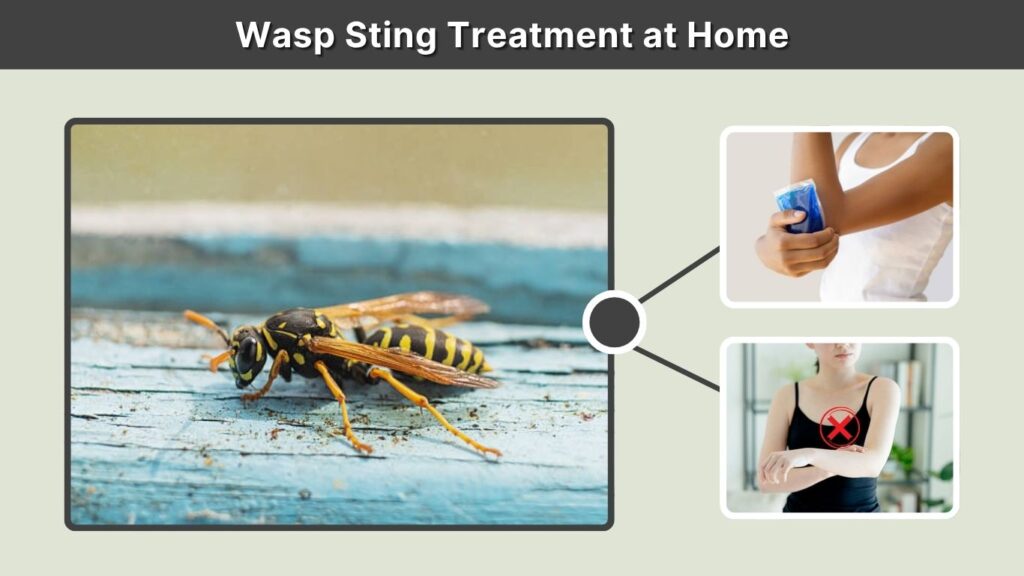
Most uncomplicated wasp stings can be treated at home using basic first aid and suitable over-the-counter products. Pain and redness often develop immediately, while itching and swelling may become more noticeable later. The treatment should focus on reducing inflammation and keeping the affected area clean.
How to Relieve Wasp Sting Pain
Wasp venom causes immediate discomfort because it contains substances that activate pain and inflammatory responses.
A cold compress can temporarily numb the affected area and reduce pain. Place a clean cloth between the ice pack and your skin to prevent cold-related injury.
For persistent discomfort, acetaminophen (paracetamol) or ibuprofen may help when taken according to package directions. Choose medicines appropriate for your age and medical history.
Avoid rubbing or scratching the sting because additional irritation can worsen the discomfort.
Best Treatment for Wasp Sting Itching
Itching is a common reaction that develops as the body responds to wasp venom.
Oral antihistamines such as cetirizine or loratadine may help reduce itching. Hydrocortisone cream or calamine lotion can also provide localized relief when used as directed.
Some antihistamines cause drowsiness, so always check the medication instructions.
Avoid scratching the affected skin, even when the itching becomes uncomfortable. Broken skin can increase the likelihood of a secondary bacterial infection.
How to Treat Wasp Sting Swelling
Swelling is one of the most noticeable symptoms following a wasp sting. It occurs when the body’s immune system responds to venom, causing fluid and inflammatory substances to accumulate in nearby tissues. Although minor swelling often improves quickly, larger reactions may continue developing for approximately two days.
Wasp Sting Swelling After 48 Hours
Swelling after 48 hours does not automatically indicate an infection. Some people experience a large local reaction, where redness and swelling spread more than 10 centimeters around the sting.
These reactions can peak during the first 24–48 hours and take five to ten days, or occasionally longer, to disappear.
However, severe pain, fever, pus, or swelling that continues worsening beyond the expected period should prompt medical assessment.
How to Reduce Wasp Sting Swelling
Several simple measures can help manage localized swelling:
- Use cold compresses: Apply a wrapped ice pack for 10–20 minutes at a time.
- Elevate the affected limb: Raise a swollen hand, arm, or leg when practical.
- Consider antihistamines: Appropriate oral antihistamines may relieve itching associated with inflammation.
- Avoid tight clothing: Remove restrictive items that put pressure on swollen skin.
- Monitor the affected area: Check whether swelling gradually improves or continues spreading.
Large reactions sometimes require prescription treatment. Consult a healthcare professional when swelling becomes extensive or interferes with normal activities.
Natural Wasp Sting Treatment and Home Remedies
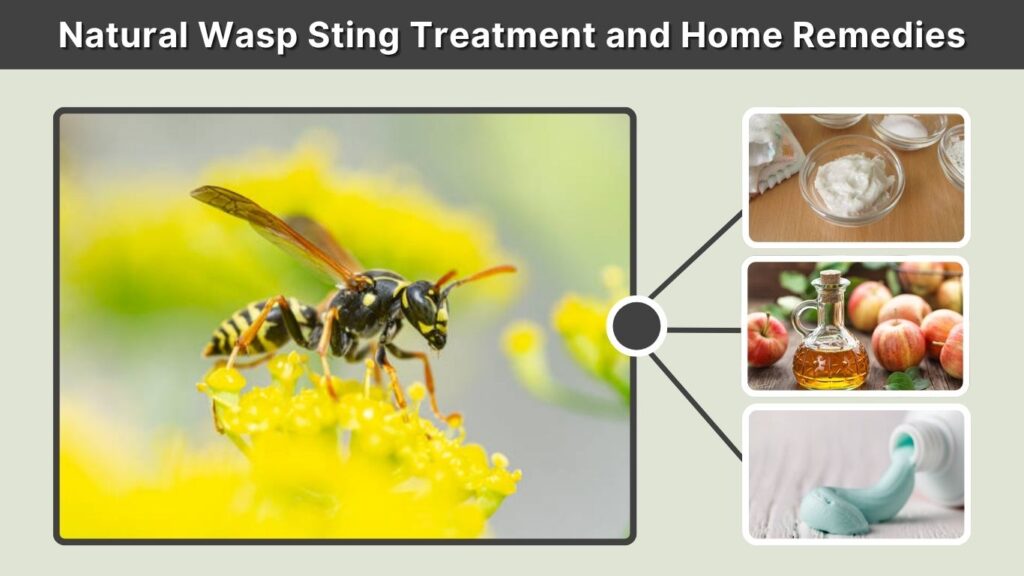
Natural wasp sting treatments are popular because many people want immediate relief without prescription medication. However, not every household remedy is effective or safe. Simple measures such as cooling the skin and avoiding irritation are generally more dependable than applying unfamiliar substances.
Does Baking Soda Help Wasp Stings?
Baking soda paste is frequently recommended as a traditional remedy for insect stings.
However, there is insufficient reliable evidence that baking soda neutralizes wasp venom or accelerates healing. Applying homemade mixtures can also irritate sensitive skin.
Vinegar, toothpaste, and other household substances are similarly unsupported as reliable treatments.
Instead of experimenting with these remedies, clean the affected area and use a cold compress for symptom relief.
Simple Home Remedies for Wasp Sting Relief
A clean cloth soaked in cool water can help relieve localized discomfort. Resting the affected limb and avoiding scratching may also make recovery more comfortable.
Keeping the sting site clean is particularly important because irritated skin becomes more vulnerable to infection.
Home remedies should only be used for mild reactions. They cannot prevent or treat a dangerous allergic response.
Allergic Reaction to Wasp Sting Treatment
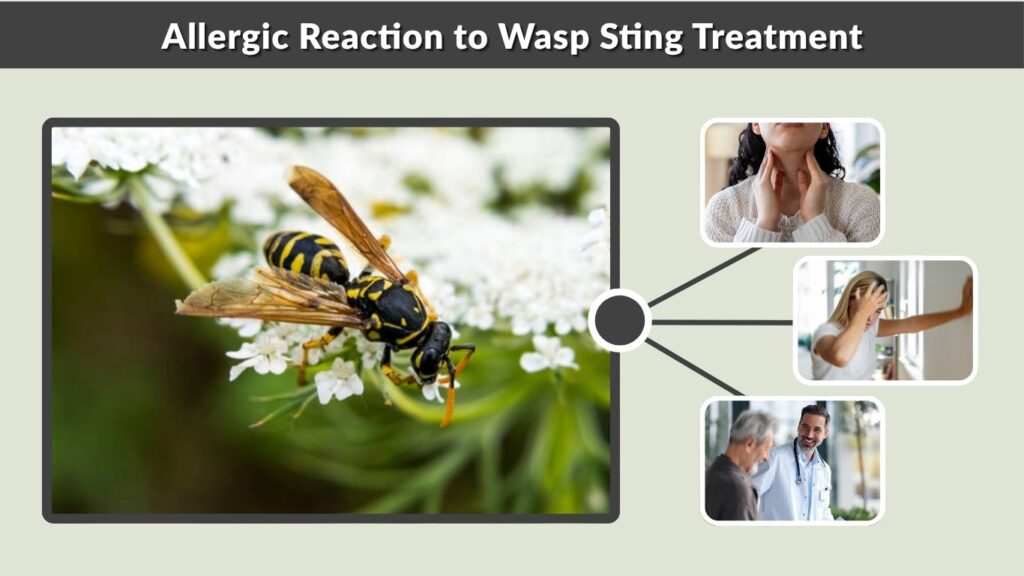
Some individuals develop an allergic reaction because their immune systems overreact to proteins in wasp venom. These reactions may affect areas beyond the sting site. The most serious form, anaphylaxis, can develop rapidly and become life-threatening without immediate medical treatment.
Symptoms of a Severe Wasp Sting Allergy
Seek emergency medical assistance if any of these symptoms occur:
- Breathing difficulties: Wheezing, shortness of breath, or difficulty breathing normally.
- Throat or tongue swelling: Swelling that affects swallowing, speaking, or breathing.
- Widespread hives: Raised, itchy skin reactions accompanied by other systemic symptoms.
- Dizziness or fainting: Sudden weakness, confusion, or loss of consciousness.
- Severe gastrointestinal symptoms: Repeated vomiting, abdominal cramps, or diarrhea associated with an allergic reaction.
Anaphylaxis may occur even after a single sting. Do not wait for every symptom to develop before seeking emergency care.
Emergency Medical Treatment for Wasp Stings
Epinephrine (adrenaline) is the first-line treatment for anaphylaxis.
If someone develops anaphylaxis and has prescribed emergency epinephrine, administer it immediately according to their emergency plan and device instructions. Call emergency services even if their symptoms improve.
Antihistamines and steroid creams cannot replace epinephrine during a severe allergic reaction.
People who have previously experienced anaphylaxis should consult an allergy specialist about emergency medication and possible venom immunotherapy.
Treatment for Different Types of Wasp Stings
Different wasp species can produce varying levels of pain and defensive behavior. However, their stings generally require similar first-aid treatment. The severity of the person’s symptoms is usually more important than identifying the exact species responsible.
Red Wasp and Paper Wasp Sting Treatment
Red wasps and paper wasps commonly cause sharp pain, localized redness, and swelling.
Clean the skin with soap and water, apply a cold compress, and consider appropriate medication for pain or itching.
Paper wasps can sting repeatedly when threatened, particularly near their nests. Avoid returning to the area until the insects are no longer posing a risk.
Yellow Jacket and Black Wasp Sting Treatment
Yellowjackets may become defensive when their colonies are disturbed. Their stings can produce significant localized pain and swelling.
Black wasps include several species, but uncomplicated stings are generally treated using the same basic methods.
Multiple stings require prompt medical advice because substantial venom exposure can cause serious effects even without a known allergy.
When Should You See a Doctor for a Wasp Sting?
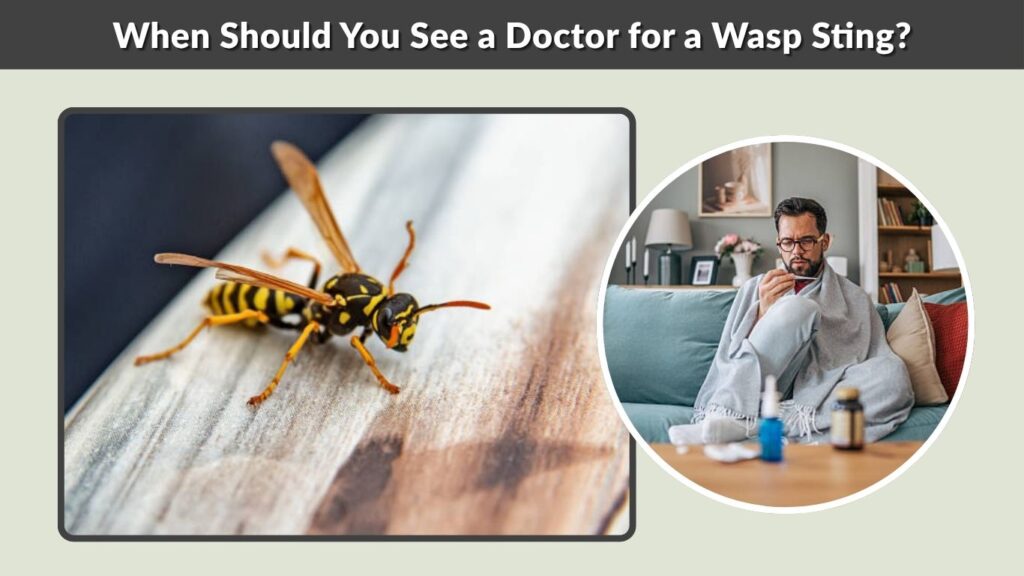
Most mild wasp stings resolve without professional treatment. However, some reactions require medical assessment because symptoms may resemble infections or involve sensitive areas. Understanding when ordinary inflammation becomes concerning helps prevent unnecessary delays in seeking care.
Signs of an Infected Wasp Sting
A wasp sting may occasionally develop a secondary bacterial infection, particularly when the skin has been scratched repeatedly.
Increasing pain, spreading redness, pus, fever, or worsening warmth after the initial reaction should be assessed by a healthcare professional.
Swelling alone does not prove an infection is present. Antibiotics are generally unnecessary unless a bacterial infection is suspected or diagnosed.
When Medical Attention Is Necessary
Contact a healthcare professional if symptoms continue worsening, swelling becomes unusually extensive, or the sting occurs near an eye or inside the mouth or throat.
Multiple stings and a history of serious sting allergies also warrant prompt medical advice.
Breathing difficulties, fainting, or sudden throat swelling require emergency care rather than a routine appointment.
How to Prevent Wasp Stings
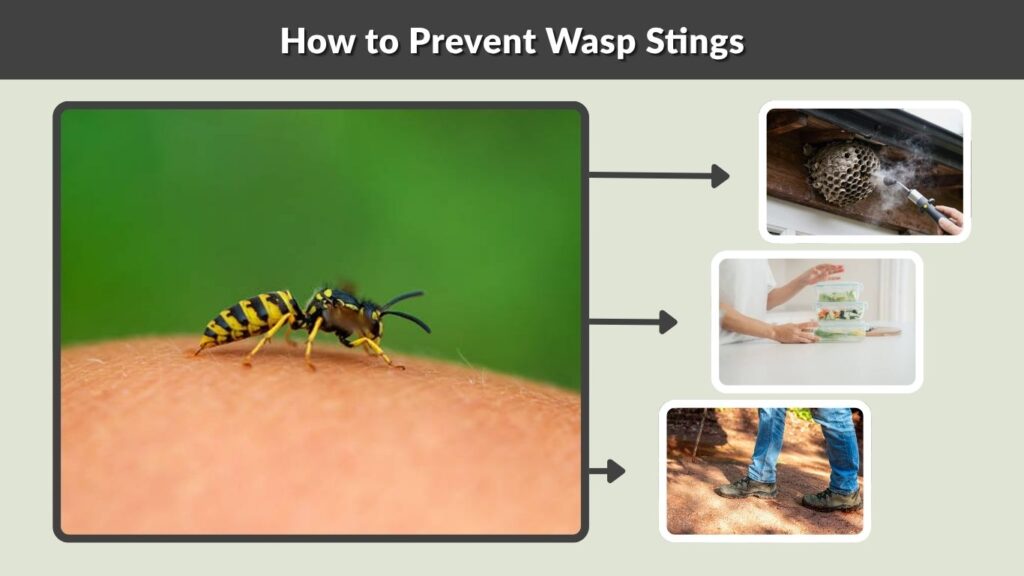
Preventing wasp stings is particularly important for people with previous allergic reactions. Wasps may become defensive when nests are disturbed or when they become trapped against the skin. Simple precautions can reduce unwanted encounters during gardening, outdoor dining, and recreational activities.
Practical Ways to Avoid Wasp Stings
Consider these precautions when spending time outdoors:
- Avoid disturbing nests: Never shake, spray, or knock down an active colony.
- Cover food and drinks: Keep sugary beverages and outdoor meals protected.
- Wear suitable footwear: Avoid walking barefoot in areas where wasps may be feeding.
- Stay calm around wasps: Move away slowly rather than swatting at them.
- Maintain outdoor spaces: Keep garbage containers covered and remove fallen fruit.
If a colony develops near an entrance or frequently used outdoor area, contact a qualified pest-control professional for safe management.
Long-Term Prevention for People with Allergies
People with confirmed wasp venom allergies should discuss prevention and emergency planning with an allergist.
An allergy specialist may recommend carrying prescribed epinephrine and considering venom immunotherapy, which can substantially reduce the risk of future severe allergic reactions.
Following a personalized treatment plan is especially important for individuals who regularly spend time outdoors.
FAQs
1. What Is the Fastest Way to Treat a Wasp Sting?
Wash the sting with soap and water, then apply a cold compress for 10–20 minutes. Suitable pain relievers or antihistamines may help with discomfort and itching.
2. How Long Does Wasp Sting Swelling Last?
Mild swelling often improves within a few days. Large local reactions may peak after 24–48 hours and take approximately five to ten days or longer to resolve.
3. Is Vinegar Good for Wasp Sting Treatment?
Vinegar is not a proven treatment for wasp venom and may irritate the skin. Cold compresses and appropriate medications are more reliable options.
4. Can You Treat a Wasp Sting Without Medication?
Yes. Mild stings may improve with cleaning, cold compresses, elevation, and avoiding scratching. Severe allergic reactions always require emergency medical treatment.
5. What Is the Best Treatment for a Severe Wasp Sting Reaction?
Anaphylaxis requires immediate emergency care and prompt epinephrine administration. Anyone experiencing breathing difficulties, throat swelling, or fainting after a sting needs emergency assistance.
