
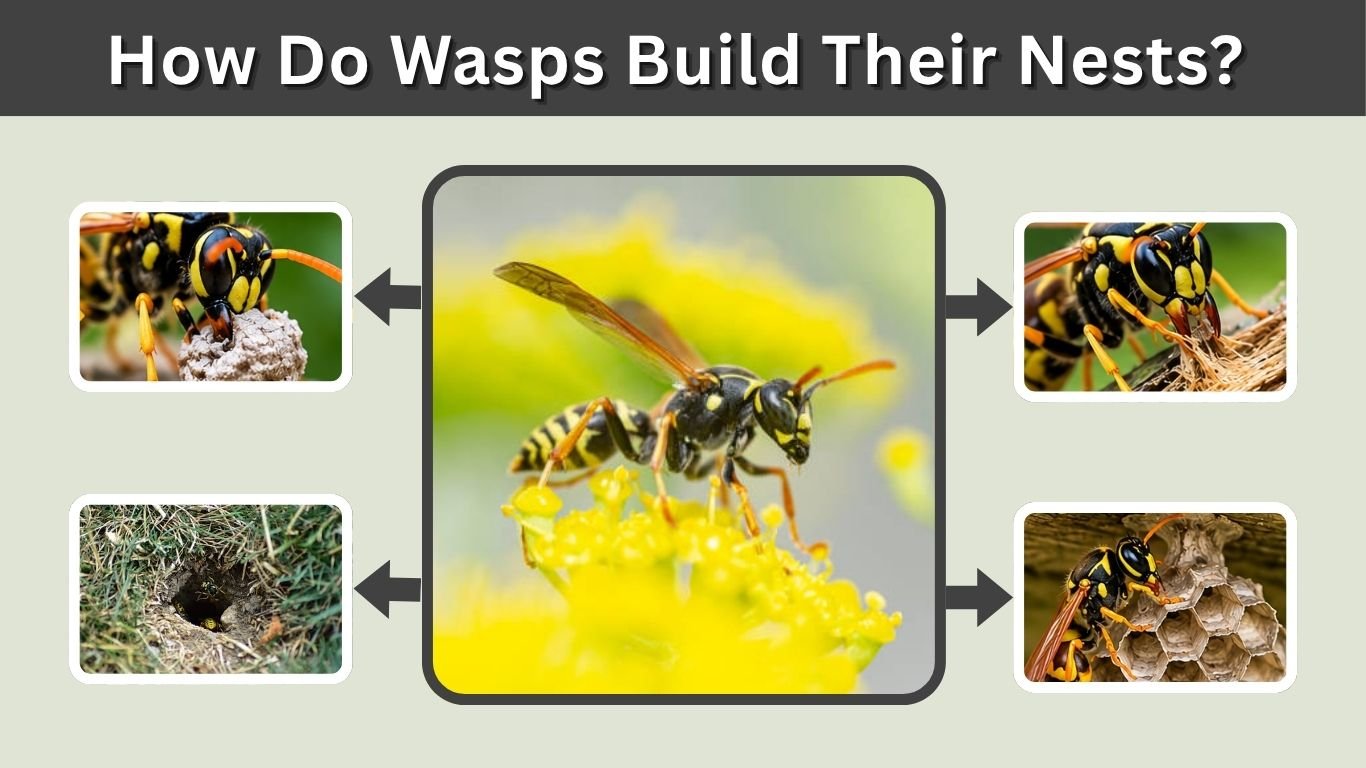
Wasps are remarkable builders that create intricate nests using natural materials such as wood fibers, saliva, and mud. Their nests provide shelter, protect developing larvae, and support growing colonies. But how do wasps build their nests without tools? The process involves collecting materials, shaping small chambers, and carefully expanding the structure over time. Different wasp species use different construction techniques, from paper-like hanging nests to underground tunnels. Understanding these methods reveals how wasps choose locations, build their homes, and protect their young.
How Do Wasps Build Their Nests Step by Step?
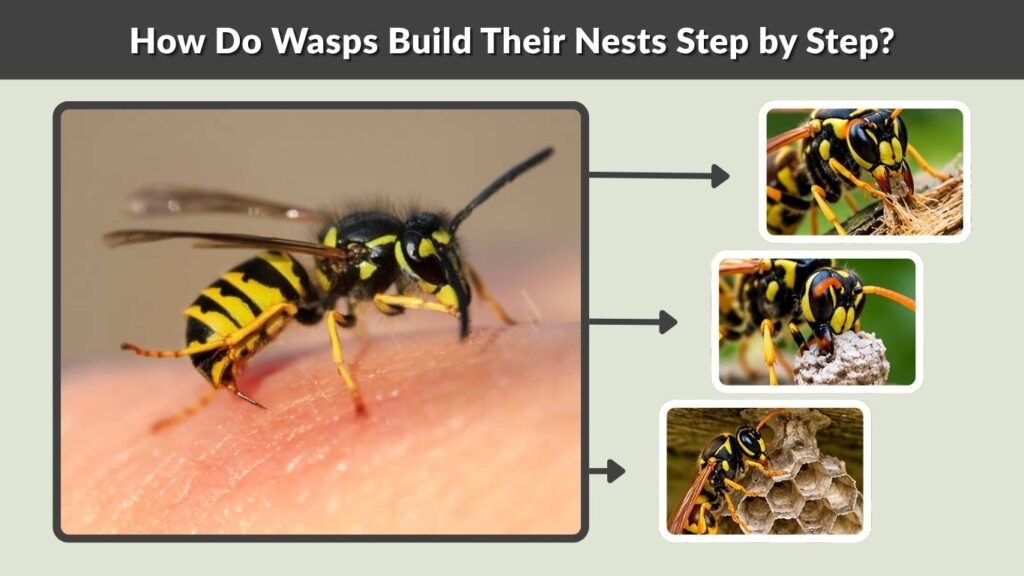
Social wasps generally follow a systematic construction process involving material collection, nest attachment, cell formation, and expansion. In temperate climates, a surviving queen usually begins a new colony during spring. She initially performs the building work herself, but once the first workers develop, they help enlarge and maintain the nest throughout the growing season.
Step 1: Choosing a Suitable Nesting Location
The process begins when a queen searches for a sheltered location. She looks for places offering protection from heavy rain, strong winds, and frequent disturbances.
Common locations include roof eaves, tree branches, wall cavities, and covered outdoor structures. Some species establish nests underground.
A suitable location provides a stable foundation for construction and access to nearby food and water sources.
Step 2: Collecting Wood Fibers
Paper-making wasps collect tiny fibers from weathered wood, dead branches, fences, and other exposed wooden surfaces.
Using their strong mandibles, they scrape loose fibers from the material. These fibers are chewed and mixed with saliva to create a moist, workable pulp.
This mixture eventually dries into a lightweight, paper-like substance that forms the nest’s walls and cells.
Step 3: Building the Nest Foundation
After preparing the pulp, the queen begins forming the attachment point.
Paper wasps commonly create a narrow stalk that connects their nest to a branch, beam, or another supporting surface.
The stalk holds the developing nest securely while leaving the comb suspended beneath it.
Other social wasps construct enclosed nests that attach to supporting surfaces or occupy existing cavities.
Step 4: Constructing Hexagonal Cells
The queen shapes the pulp into small chambers where eggs will be deposited.
These chambers develop into closely packed, approximately hexagonal cells. Their arrangement allows many developing wasps to occupy a relatively compact space while sharing cell walls.
Each brood cell generally holds one developing wasp at a time, from egg through larval and pupal stages.
Step 5: Expanding and Maintaining the Nest
As the first worker wasps mature, they take over much of the building responsibility.
Workers gather additional materials, extend the comb, repair damaged areas, and care for developing larvae. The queen increasingly concentrates on laying eggs.
Some social species also construct protective outer layers around their combs.
Nest expansion continues as the colony grows and requires additional brood chambers.
What Materials Do Wasps Use to Build Their Nests?
Not every wasp species uses the same construction materials. Paper wasps, yellowjackets, and hornets mainly use processed plant fibers. Mud daubers and potter wasps use moist soil, while certain solitary ground-nesting species excavate tunnels directly into the earth.
The material determines the nest’s appearance, durability, and construction method.
Wood Fibers and Saliva
Wood fibers are the primary construction material for many social wasps.
After chewing the fibers and mixing them with saliva, wasps spread the resulting pulp into thin layers. These layers dry and form the familiar papery texture of their nests.
Different wood sources can produce varying shades of gray, brown, or tan.
Mud and Moist Soil
Mud daubers collect small quantities of wet soil, which they shape into chambers or tubes attached to sheltered surfaces.
The mud hardens after drying, creating protective compartments for their offspring.
These nests are generally constructed by individual female wasps rather than large worker colonies.
Natural Underground Cavities
Many ground-nesting yellowjackets establish colonies in abandoned rodent burrows or other existing cavities.
They build paper combs inside these spaces and may enlarge the cavities by removing soil.
Other solitary wasps, including various digger wasps, excavate their own tunnels and brood chambers.
How Do Different Types of Wasps Build Their Nests?
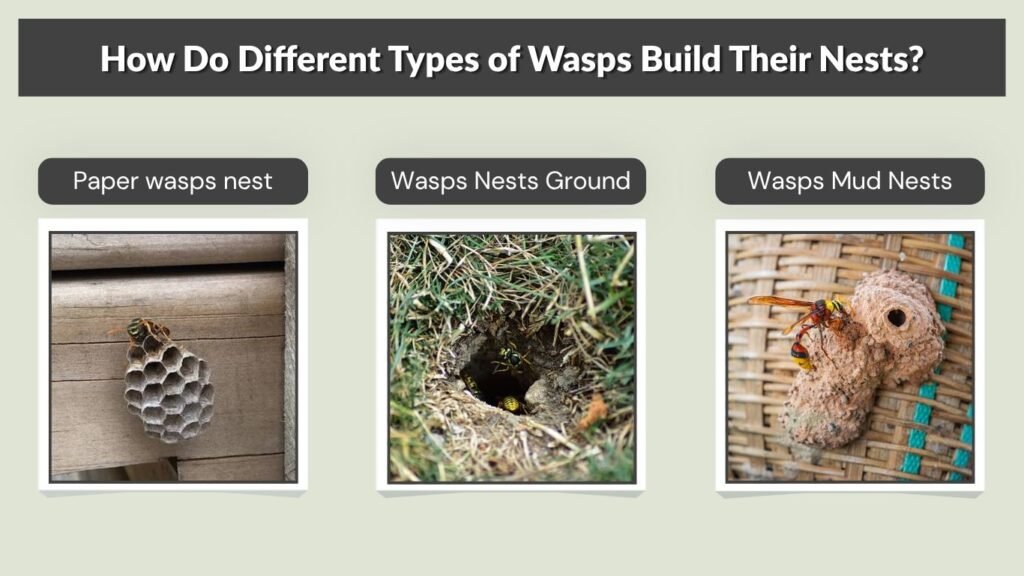
Nest construction varies considerably among wasp groups. Some build open paper combs, others construct enclosed structures, and many solitary species create individual chambers for their offspring. Recognizing these differences can help homeowners identify nests without approaching or disturbing them.
How Do Paper Wasps Build Their Nests?
Paper wasps build distinctive umbrella-shaped nests with exposed, downward-facing hexagonal cells.
The queen attaches a short stalk to a sheltered surface and constructs the first few cells using chewed wood fibers. Workers add new cells as the colony develops.
Unlike many yellowjackets and hornets, paper wasps do not construct an outer envelope around their combs.
How Do Wasps Build Nests in the Ground?
Underground yellowjackets often establish their nests inside abandoned burrows or hollow spaces beneath the soil.
They construct layers of paper brood cells within the underground cavity and expand the nest as their population increases.
Some workers also excavate soil to make additional room. The entrance typically appears as a small opening with repeated wasp activity.
How Do Wasps Build Their Mud Nests?
Mud dauber wasps use wet mud rather than chewed wood to construct their nests.
A female gathers mud, carries it to a protected surface, and builds individual brood chambers. She stocks them with paralyzed spiders that provide food for her developing larvae.
After laying an egg, she seals the chamber with additional mud. These solitary wasps generally do not defend their nests as aggressively as social wasps.
How Do Wasps Choose Where to Build Their Nests?
Wasps select nesting sites according to the needs of their species. Protection, structural stability, available nesting materials, and access to resources influence their choices.
Although some species prefer exposed branches or sheltered building surfaces, others rely on underground cavities or hollow wooden structures.
Preferred Nesting Locations
Common nesting locations include building eaves, porch ceilings, tree branches, sheds, wall voids, hollow logs, and underground burrows.
Paper wasps frequently select sheltered overhead surfaces. Yellowjackets often use ground cavities, while mud daubers commonly attach their nests to walls and other protected structures.
How Far Apart Do Wasps Build Their Nests?
There is no universal distance that wasps maintain between nests.
Spacing depends on the species, nesting-site availability, food resources, and local colony density.
Several solitary wasps may construct individual nests close together, while social colonies occupy separate sites.
Finding one nest does not necessarily mean another is nearby.
How Fast Do Wasps Build Their Nests?
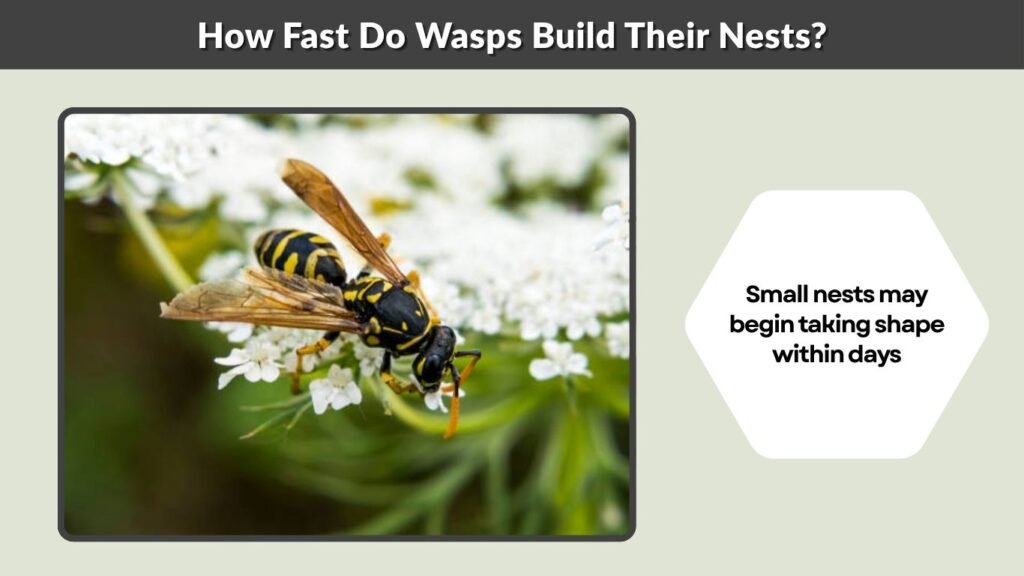
Nest construction speed depends on the species, number of available workers, weather conditions, and colony development.
Small nests may begin taking shape within days, but establishing and expanding a mature social wasp colony generally takes weeks or months. Construction often accelerates after the first workers emerge.
How Fast Do Paper Wasps Build Their Nests?
A founding paper wasp queen gradually constructs the first cells while also collecting food and caring for her offspring.
After her first adult workers emerge, additional building activity can significantly increase the nest’s size.
Warm weather, suitable nesting materials, and successful brood development can support faster expansion.
Do Wasps Build New Nests Every Year?
Most familiar social wasps in temperate regions establish new colonies and nests each year.
Their old colonies typically die off during colder months, while newly mated queens survive in protected overwintering locations.
The following spring, surviving queens generally begin new nests rather than reuse old paper structures. However, nesting cycles vary in warmer climates.
FAQs
1. How Do Wasps Make Paper Without Tools?
Wasps scrape wood fibers using their mandibles, chew the fibers with saliva, and spread the softened material into thin layers. Once dried, the mixture becomes a lightweight paper-like building material.
2. How Long Does It Take Wasps to Build a Complete Nest?
A small nest can begin forming within days, while a large colony’s nest may take several months to reach its maximum size. The exact duration depends on the species, weather, and number of workers.
3. Do All Wasps Build Their Nests Out of Wood?
No. Many social wasps use wood fibers and saliva, but mud daubers construct mud chambers, while certain solitary wasps excavate nests in soil or occupy existing cavities.
4. Why Do Wasps Build Hexagonal Nests?
Closely packed hexagonal cells use space efficiently and share walls, reducing the amount of construction material needed. Their arrangement also creates compact, interconnected brood chambers.
5. Do Wasps Build Their Nests at Night?
Most familiar social wasps perform much of their construction and material collection during daylight. Activity generally decreases at night, although some species remain active under particular conditions.
