
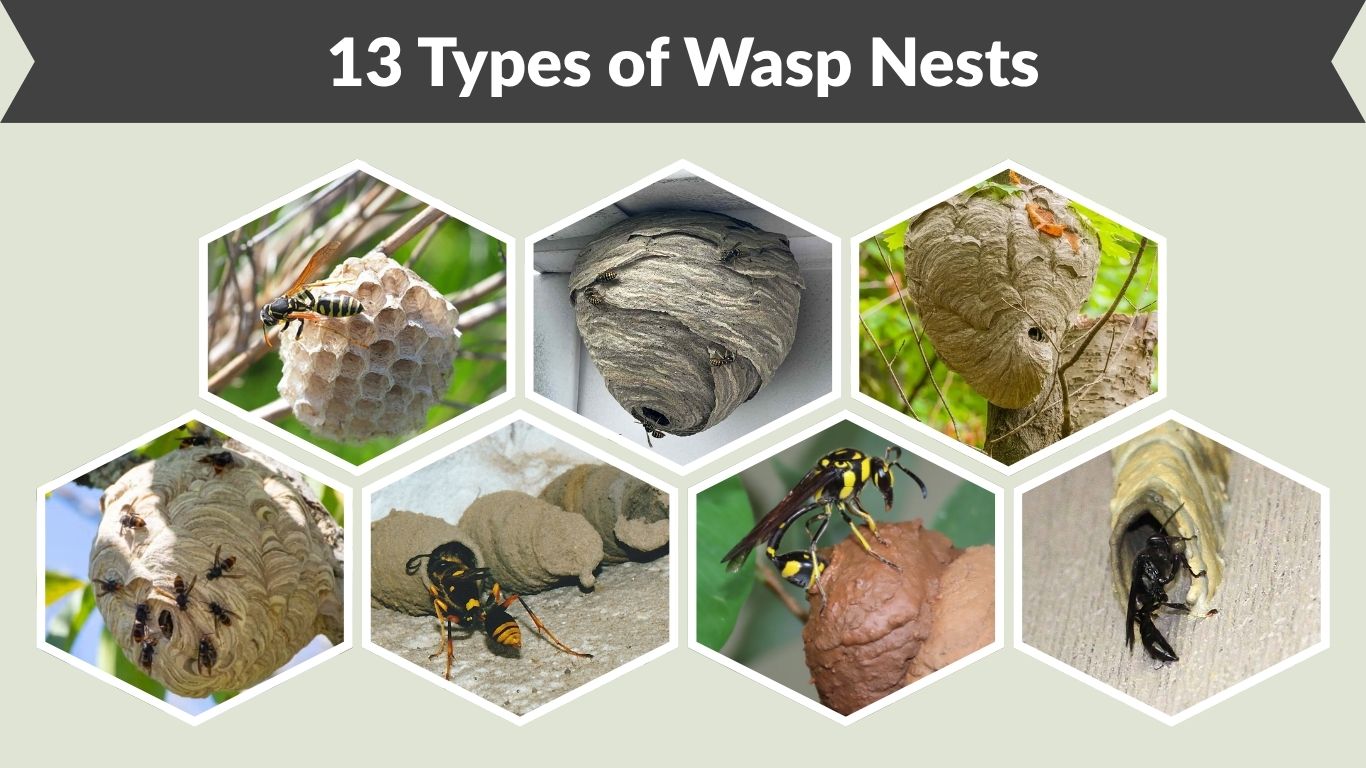
Wasps build different types of nests using materials such as wood fibers, mud, grass, and soil. Some create hanging paper nests, while others construct underground tunnels or clay-like chambers. Each nest has unique features, shapes, and nesting locations. In this guide, we’ll explore 13 types of wasp nests, including their identification, construction methods, common locations, and nesting behavior to help you recognize them easily.
1. Paper Wasp Nest
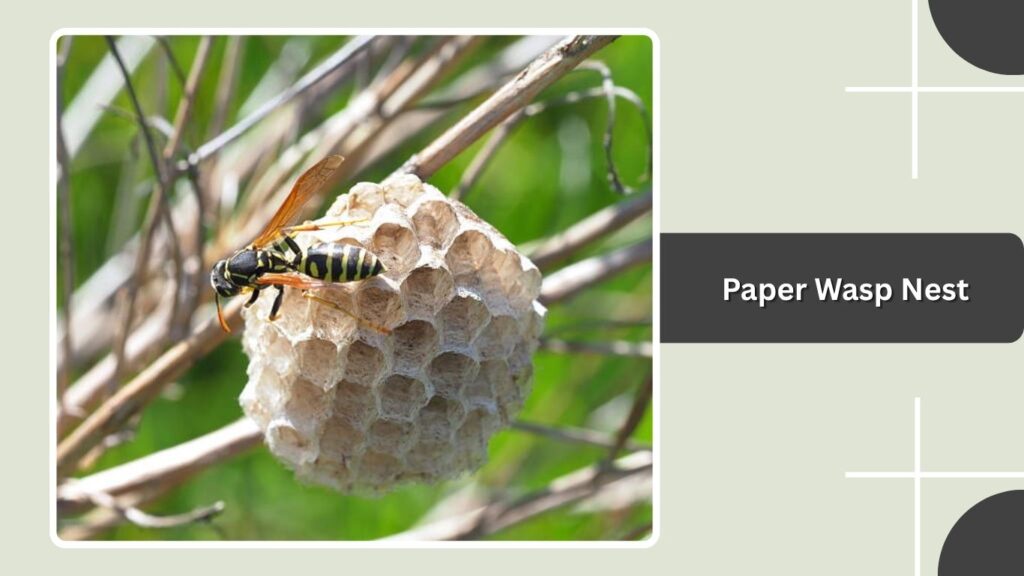
Paper wasp nests are among the most recognizable wasp nests, featuring exposed hexagonal cells arranged in an umbrella-like structure. These nests are made from chewed wood fibers mixed with saliva, creating a lightweight, paper-like material. Paper wasps typically build their nests in sheltered outdoor locations, where they raise their young and protect their developing colony.
Identification
- Shape: Umbrella-shaped structure with open, hexagonal cells.
- Color: Usually gray, light brown, or tan.
- Size: Commonly 2–8 inches across, although sizes vary.
- Material: Chewed wood fibers mixed with wasp saliva.
- Structure: A single exposed comb suspended from a narrow stalk.
- Location: Roof eaves, porch ceilings, tree branches, sheds, and window frames.
- Appearance: Brood cells face downward and remain visible without an outer protective covering.
How Paper Wasps Build Their Nests
Paper wasps begin constructing their nests in spring when a founding queen selects a suitable location. She scrapes wood fibers from weathered surfaces, mixes them with saliva, and forms a small stalk attached to a supporting structure. Using additional pulp, she creates the first hexagonal brood cells.
As the colony develops, worker wasps help expand the nest by adding more cells. Unlike yellowjackets and many hornets, paper wasps leave their combs exposed rather than surrounding them with a protective envelope.
Common Nesting Locations and Behavior
Paper wasps prefer protected areas that provide shelter from rain, strong winds, and frequent disturbances. They commonly establish nests beneath roof overhangs, inside open sheds, under decks, and along tree branches.
These wasps are generally less aggressive away from their nests but may sting when their colony is threatened. Their nests also provide environmental benefits because adult wasps capture caterpillars and other insects to feed their developing larvae.
2. Yellowjacket Nest
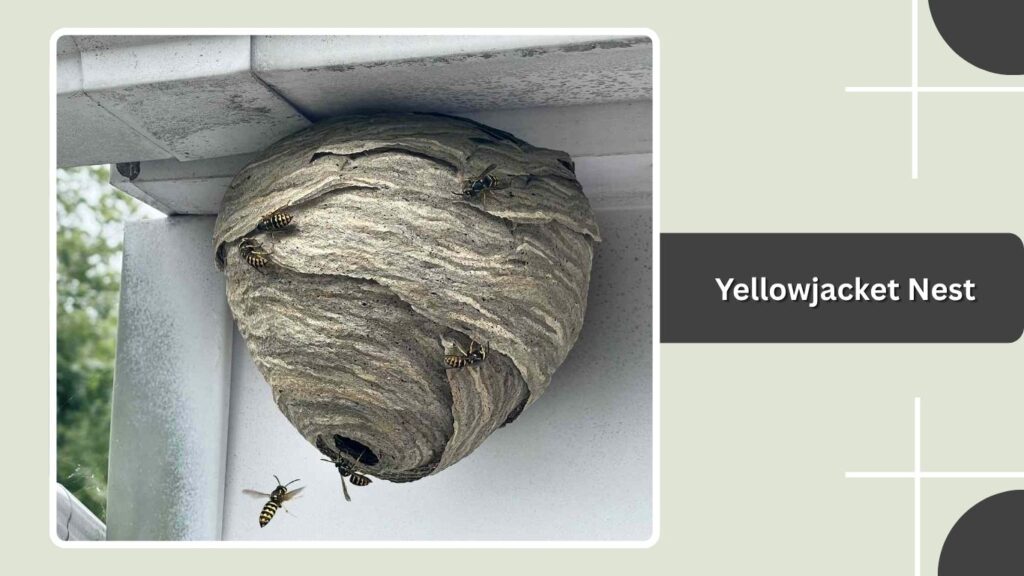
Yellowjacket nests are enclosed paper structures commonly found underground, inside wall cavities, or in sheltered outdoor areas. These nests contain multiple layers of hexagonal brood cells surrounded by protective paper coverings. Yellowjackets construct their nests using chewed wood fibers mixed with saliva. Their colonies can become large during warmer months, making these nests important to identify before approaching them.
Identification
- Shape: Rounded, oval, or irregular structures with enclosed chambers.
- Color: Usually gray, tan, or light brown.
- Size: Ranges from small structures to nests more than 12 inches across.
- Material: Chewed wood fibers mixed with saliva.
- Structure: Multiple horizontal combs surrounded by protective paper layers.
- Location: Underground burrows, wall cavities, attics, trees, and sheds.
- Appearance: Layered paper covering with one or more entrance openings.
How Yellowjackets Build Their Nests
A yellowjacket queen begins constructing a nest during spring, often inside an existing cavity. She collects wood fibers, chews them with saliva, and creates the first brood cells.
As workers emerge, they expand the nest by adding more combs and protective paper layers. Underground colonies may also enlarge their cavities by removing surrounding soil. Construction continues throughout the growing season as the colony population increases.
Common Nesting Locations and Behavior
Yellowjackets commonly establish nests in abandoned rodent burrows, hollow trees, building cavities, and sheltered outdoor structures. Some species also construct hanging aerial nests.
They are highly protective of their colonies and may sting repeatedly when disturbed. Their nests often become particularly active during late summer and early autumn.
3. Bald-Faced Hornet Nest
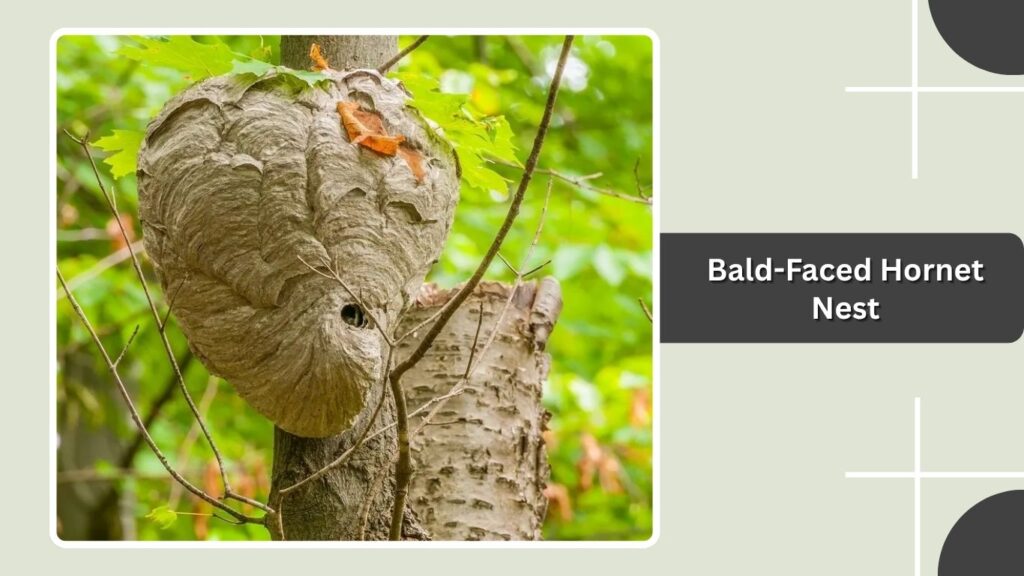
Bald-faced hornet nests are large, enclosed, paper-like structures commonly suspended from tree branches or attached to buildings. Despite their name, bald-faced hornets are actually a type of yellowjacket rather than true hornets. Their nests are especially recognizable because of their rounded shape, gray outer covering, and layered construction. These structures protect the developing colony from weather and potential predators.
Identification
- Shape: Rounded, oval, or football-shaped hanging structure.
- Color: Primarily gray with occasional brown or white streaks.
- Size: Mature nests commonly reach 12–24 inches or more in length.
- Material: Wood fibers mixed with saliva.
- Structure: Multiple enclosed brood combs surrounded by layered paper.
- Location: Tree branches, shrubs, roof overhangs, and building exteriors.
- Appearance: Smooth, layered exterior with a small entrance near the lower portion.
How Bald-Faced Hornets Build Their Nests
A founding queen starts construction by creating a small paper structure attached to a secure surface. She builds the first brood cells and surrounds them with a protective envelope.
Once workers develop, they collect more wood fibers and enlarge the nest. Additional brood combs are constructed inside while workers continuously expand and repair the outer envelope.
As the colony grows, the nest becomes increasingly rounded and develops several protective layers.
Common Nesting Locations and Behavior
Bald-faced hornets often construct nests high in trees, although some colonies choose low shrubs or buildings.
These wasps aggressively defend their nests when threatened. They capture other insects to feed their larvae and can help control certain pest populations.
4. European Hornet Nest
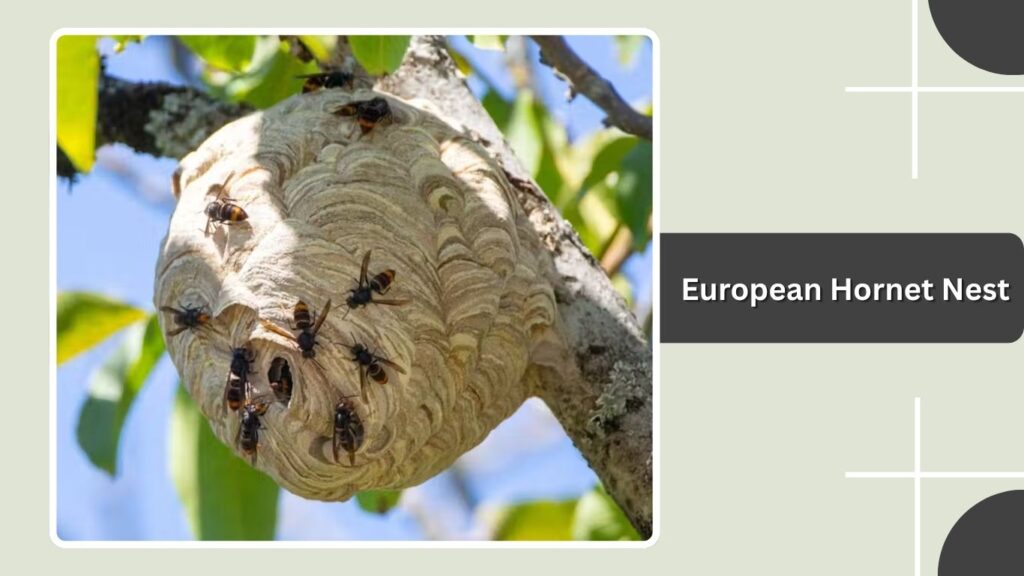
European hornet nests are large paper structures typically built inside hollow trees, wall cavities, attics, and other protected spaces. Unlike bald-faced hornets, European hornets usually prefer concealed nesting locations. Their nests consist of multiple brood combs surrounded by a protective paper envelope, although the covering may be incomplete within confined spaces.
Identification
- Shape: Rounded or irregular, depending on the available nesting cavity.
- Color: Usually tan, brown, or reddish-brown.
- Size: Often exceeds 12 inches across in established colonies.
- Material: Chewed wood fibers mixed with saliva.
- Structure: Multiple brood combs with a coarse, layered outer covering.
- Location: Hollow trees, attics, wall voids, sheds, and wooden structures.
- Appearance: Brownish paper layers with enclosed brood chambers.
How European Hornets Build Their Nests
A European hornet queen begins nest construction during spring after selecting a sheltered cavity. She collects weathered wood fibers and mixes them with saliva to produce a paper-like pulp.
The queen builds the first brood cells and lays eggs inside them. Once workers emerge, they gather additional materials and expand the structure.
Workers construct new combs, enlarge existing chambers, and maintain the protective envelope. The nest gradually expands as the colony population increases.
Common Nesting Locations and Behavior
European hornets frequently nest inside tree hollows, roof spaces, and other protected building cavities.
They are active during daylight and may also fly at night, sometimes approaching artificial lights. Although they usually avoid unnecessary confrontation, they can become defensive when their nests are disturbed.
5. Mud Dauber Wasp Nest
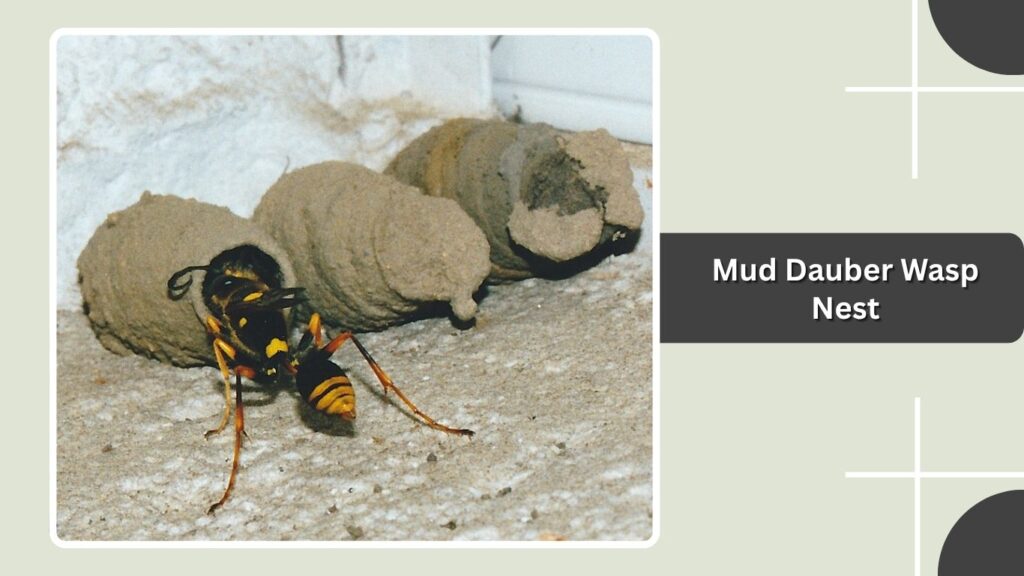
Mud dauber wasp nests are distinctive structures made from dried mud rather than paper. These nests commonly appear as narrow tubes, rounded clusters, or irregular mud-covered chambers attached to walls and sheltered surfaces. Mud daubers are solitary wasps, meaning individual females construct and provision their own nests instead of forming large social colonies.
Identification
- Shape: Tubular, cylindrical, rounded, or irregular mud chambers.
- Color: Usually brown, gray, or reddish-brown.
- Size: Individual chambers may measure around 1–2 inches long, with larger clusters containing several chambers.
- Material: Wet mud collected from soil or muddy areas.
- Structure: Separate enclosed brood chambers made from hardened mud.
- Location: Building walls, garages, sheds, bridges, and roof overhangs.
- Appearance: Hardened mud structures that may resemble narrow clay pipes.
How Mud Daubers Build Their Nests
Female mud daubers collect small portions of wet soil and carry them to a protected construction site. Using their mandibles, they shape the mud into tubes or enclosed chambers.
Each chamber is stocked with paralyzed spiders that serve as food for the developing larva. After depositing an egg, the female seals the chamber with additional mud.
The mud gradually hardens, forming a protective enclosure around the offspring.
Common Nesting Locations and Behavior
Mud daubers prefer sheltered locations protected from direct rainfall. They frequently build nests on walls, underneath bridges, inside garages, and around roof structures.
These solitary wasps are generally less defensive than social yellowjackets or hornets. They also help control spider populations by collecting spiders as food for their larvae.
6. Potter Wasp Nest
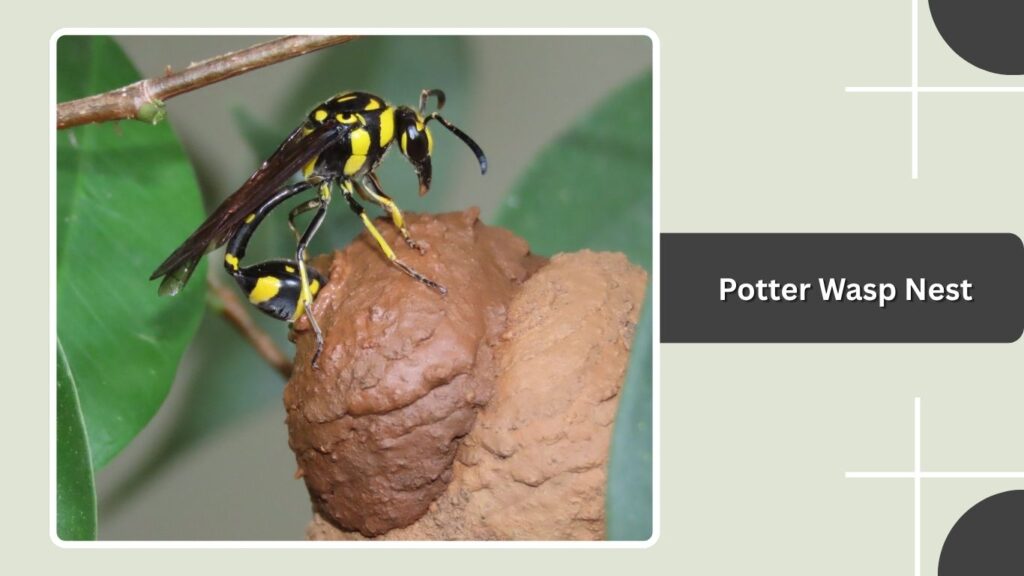
Potter wasp nests are small, rounded mud structures that resemble miniature clay pots or urns. These fascinating nests are constructed by solitary female wasps and commonly appear on twigs, stones, walls, or other sheltered surfaces. Their distinctive pottery-like appearance makes them different from the larger paper nests created by social wasps.
Identification
- Shape: Small, rounded, pot-shaped, or urn-shaped chambers.
- Color: Usually brown, reddish-brown, or gray.
- Size: Often approximately 0.5–1 inch across, depending on the species.
- Material: Moist clay or mud collected from the ground.
- Structure: Individual enclosed chambers with a narrow opening during construction.
- Location: Twigs, rocks, building walls, and protected outdoor surfaces.
- Appearance: Miniature clay pots with smooth or slightly rough exteriors.
How Potter Wasps Build Their Nests
Female potter wasps gather moist soil or clay and transport it to a suitable nesting location. They carefully shape the material into a small rounded chamber, often forming a narrow neck around the entrance.
After completing the chamber, the female places an egg inside and supplies it with paralyzed caterpillars or other suitable insect larvae.
She then seals the opening with additional mud, creating a secure environment where the developing wasp can feed and mature.
Common Nesting Locations and Behavior
Potter wasps construct nests on plant stems, tree branches, rocks, wooden structures, and sheltered building surfaces.
Most species are solitary and do not maintain large colonies. They are generally nonaggressive unless handled or threatened. Their hunting behavior also benefits gardens by helping reduce populations of leaf-eating caterpillars.
7. Mason Wasp Nest
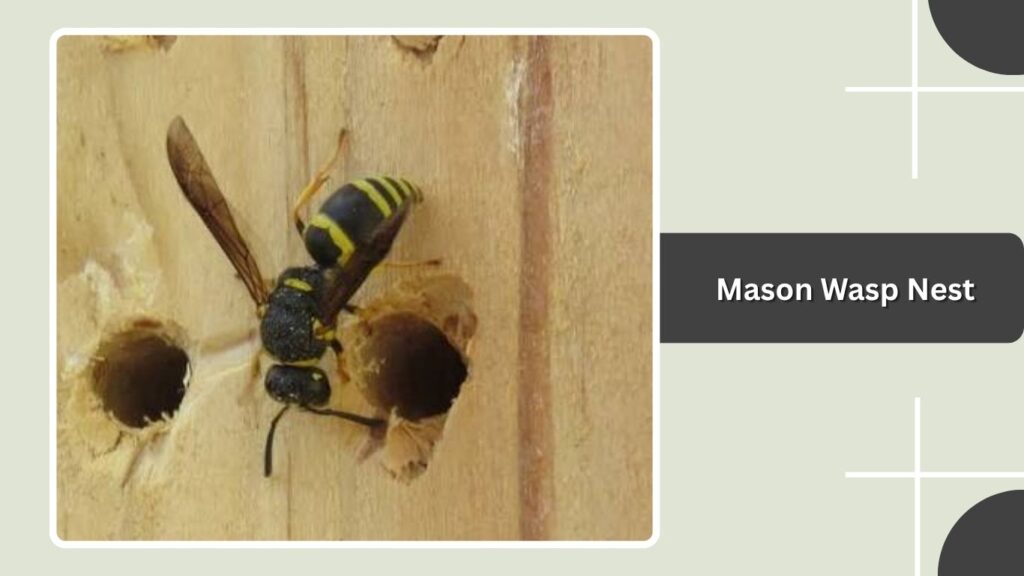
Mason wasp nests are small, enclosed structures commonly constructed inside existing holes, hollow stems, and wooden cavities. These solitary wasps use mud, clay, or sand to create protective partitions between individual brood chambers. Unlike social wasps, mason wasps do not form large colonies. Their nests are often difficult to notice because much of the construction remains hidden inside natural cavities.
Identification
- Shape: Narrow tunnels containing multiple individual chambers.
- Color: Usually brown, gray, or tan.
- Size: Varies depending on the species and nesting cavity.
- Material: Mud, clay, sand, and other natural materials.
- Structure: Separate brood cells divided by hardened mud partitions.
- Location: Hollow stems, wooden holes, wall crevices, and abandoned insect tunnels.
- Appearance: Small cavity openings sometimes sealed with dried mud.
How Mason Wasps Build Their Nests
Female mason wasps search for suitable cavities, often choosing abandoned beetle tunnels or hollow plant stems. After selecting a location, they collect moist soil and use it to construct partitions inside the cavity.
Each chamber receives an egg and a supply of paralyzed caterpillars or other insect larvae. The female then closes the chamber with mud before creating another section.
Once construction is complete, the nest remains sealed while the young develop inside.
Common Nesting Locations and Behavior
Mason wasps frequently nest in old wooden structures, hollow plant stems, tree cavities, and artificial insect nesting blocks.
These solitary insects are generally nonaggressive and rarely sting unless handled. They also benefit gardens by hunting caterpillars and other plant-feeding insects.
8. Cicada Killer Wasp Nest
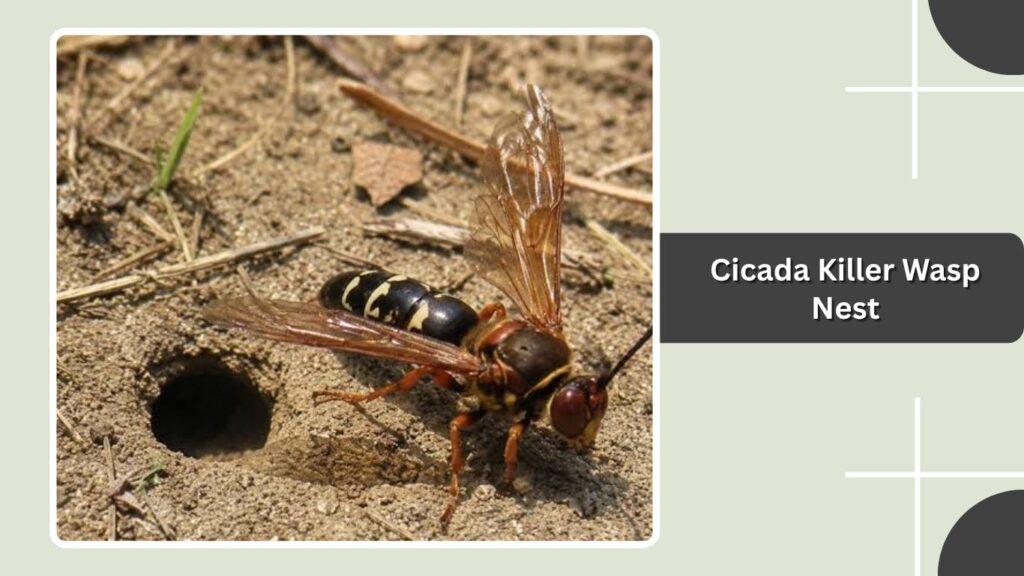
Cicada killer wasp nests are underground burrows constructed primarily in loose, well-drained soil. These nests consist of tunnels leading to individual chambers where developing larvae feed on captured cicadas. Although cicada killers are large, intimidating-looking wasps, they are solitary insects that rarely attack humans. Their nesting activity can create noticeable soil mounds in lawns, gardens, and sandy outdoor areas.
Identification
- Shape: Underground tunnels with branching brood chambers.
- Color: The entrance is surrounded by natural soil or sand.
- Size: Burrows are commonly 6–10 inches deep, with tunnels extending farther horizontally.
- Material: Excavated soil rather than constructed paper or mud.
- Structure: Main tunnel connected to several individual brood cells.
- Location: Sandy lawns, garden beds, sidewalks, and exposed soil.
- Appearance: Round entrance holes surrounded by loose soil mounds.
How Cicada Killer Wasps Build Their Nests
Female cicada killers begin construction by digging into loose soil using their powerful legs and mandibles. They remove soil particles and gradually create a tunnel leading to underground chambers.
After completing a chamber, the female hunts cicadas, paralyzes them with her sting, and transports them into the burrow.
She places one or more cicadas inside, lays an egg, and seals the chamber. The developing larva feeds on the stored prey before completing its development.
Common Nesting Locations and Behavior
Cicada killers prefer sunny locations with loose, well-drained soil. They commonly construct nests along sidewalks, beneath trees, and in sparsely vegetated lawns.
Several females may establish separate burrows close together. Males sometimes patrol these nesting areas but cannot sting, while females generally sting only when threatened or handled.
9. Digger Wasp Nest
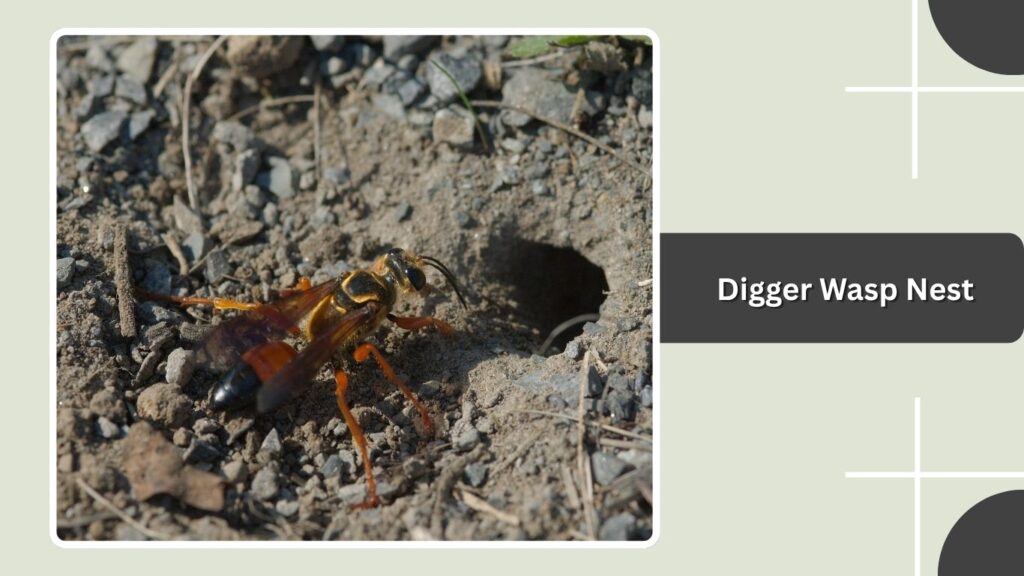
Digger wasp nests are underground structures created by solitary wasps that excavate tunnels and chambers in the soil. These nests provide protected spaces for eggs and developing larvae. Digger wasps include several groups with different nesting habits, but many prefer exposed ground with loose soil. Their nests are generally less elaborate than the paper structures built by social wasps.
Identification
- Shape: Underground tunnels with one or more brood chambers.
- Color: Matches the surrounding soil.
- Size: Varies considerably among different digger wasp species.
- Material: Natural soil and sand.
- Structure: Excavated tunnels leading to individual chambers.
- Location: Garden beds, lawns, open fields, and sandy ground.
- Appearance: Small circular holes, sometimes surrounded by excavated soil.
How Digger Wasps Build Their Nests
Female digger wasps select suitable soil and begin digging using their legs and mandibles. They remove loose particles to form an underground passage leading to one or more brood chambers.
After constructing the nest, the female captures suitable prey, such as grasshoppers, crickets, or other insects, depending on the species.
She paralyzes the prey and carries it into the chamber, where it becomes food for her developing offspring. Once the chamber is provisioned, she typically seals it with soil.
Common Nesting Locations and Behavior
Digger wasps frequently nest in sunny, exposed areas with soft or sandy soil. They may appear in vegetable gardens, lawns, open fields, and around pathways.
Although multiple wasps sometimes nest near one another, each female generally maintains her own burrow. These insects are usually nonaggressive and help regulate populations of other insects.
10. Sand Wasp Nest
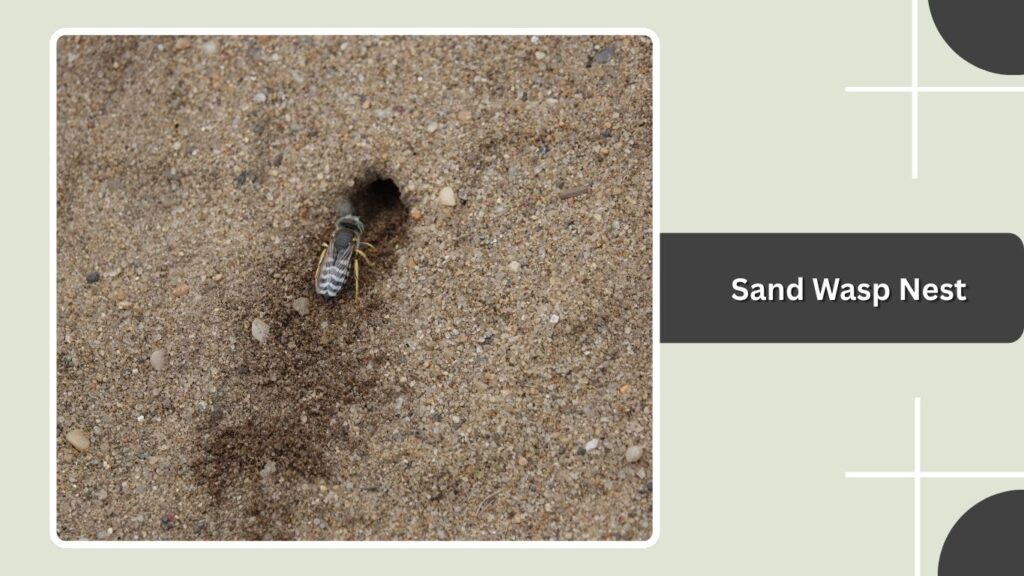
Sand wasp nests are small underground burrows commonly constructed in sandy soil, dunes, and open landscapes. Many sand wasps belong to the genus Bembix, a group of solitary hunting wasps known for capturing flies and other insects. Their nests are designed to protect developing larvae while providing access to food. Unlike social wasps, sand wasps do not construct large communal nests.
Identification
- Shape: Narrow underground tunnels leading to brood chambers.
- Color: Usually matches the surrounding sand.
- Size: Varies by species and soil conditions.
- Material: Loose sand or sandy soil.
- Structure: Sloping burrows containing individual brood cells.
- Location: Sandy beaches, dunes, exposed riverbanks, and open sandy ground.
- Appearance: Small entrance holes that may be surrounded by freshly displaced sand.
How Sand Wasps Build Their Nests
Female sand wasps begin construction by digging into loose sand with their legs. They create an angled tunnel that ends in a chamber for their offspring.
After preparing the chamber, the female captures flies or other suitable insects and carries them into the burrow.
Many Bembix species continue supplying prey while their larvae develop, although provisioning behavior varies among species.
The female eventually seals the brood chamber, allowing the developing wasp to complete its growth underground.
Common Nesting Locations and Behavior
Sand wasps prefer warm, sunny habitats containing loose, well-drained soil. They commonly establish nests in sandy fields, dunes, and other exposed areas.
Several females may construct individual nests close together, creating visible nesting aggregations. Despite this activity, sand wasps are generally nonaggressive toward humans and help control fly populations.
11. Spider Wasp Nest
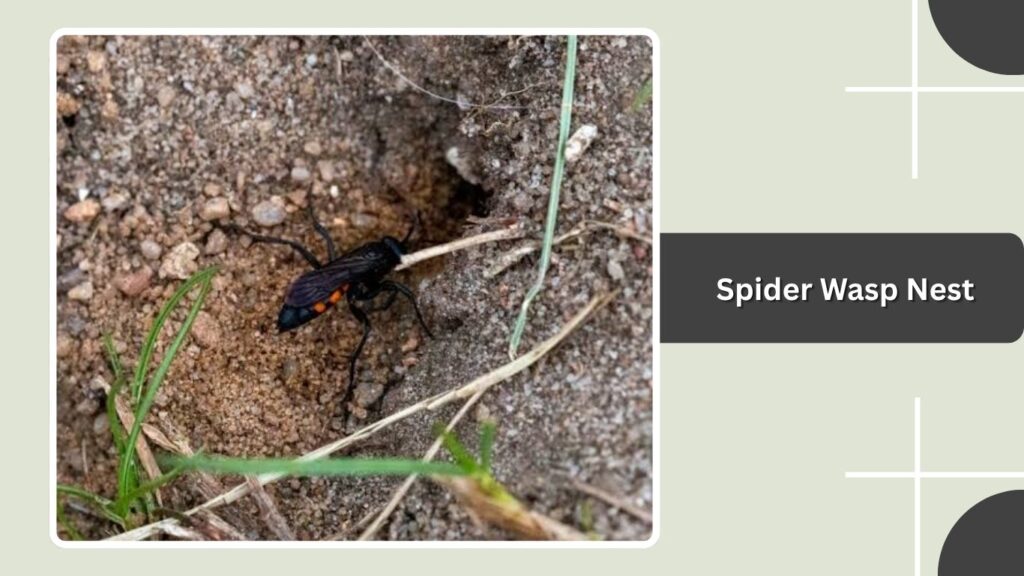
Spider wasp nests are solitary structures that commonly occur in underground burrows, existing cavities, or other protected spaces. These nests are particularly interesting because the female captures and paralyzes spiders to provide food for her offspring. Spider wasps belong to the family Pompilidae, and their nesting methods vary by species. Some excavate their own chambers, while others use existing spider burrows or construct specialized shelters.
Identification
- Shape: Underground chambers, small cavities, or enclosed shelters.
- Color: Depends on the surrounding soil or nesting material.
- Size: Varies considerably depending on the wasp species.
- Material: Soil, sand, or other available nesting materials.
- Structure: Individual brood chambers containing a paralyzed spider.
- Location: Sandy ground, soil banks, rock crevices, and existing burrows.
- Appearance: Small openings or concealed chambers that can be difficult to identify.
How Spider Wasps Build Their Nests
Female spider wasps search for suitable nesting locations, sometimes excavating small underground chambers before hunting.
After finding a spider, the female uses her sting to paralyze it. She then transports the spider to a prepared chamber or uses the spider’s existing burrow as a nesting site.
The female lays an egg on the immobilized spider and typically seals the chamber to protect her offspring.
When the egg hatches, the developing larva feeds on the spider until it is ready to pupate.
Common Nesting Locations and Behavior
Spider wasps commonly nest in loose soil, sandy habitats, natural crevices, and sheltered ground cavities.
Most are solitary hunters and do not form defensive colonies. They are usually more interested in searching for spiders than interacting with humans. Their hunting behavior helps regulate local spider populations.
12. Grass-Carrying Wasp Nest
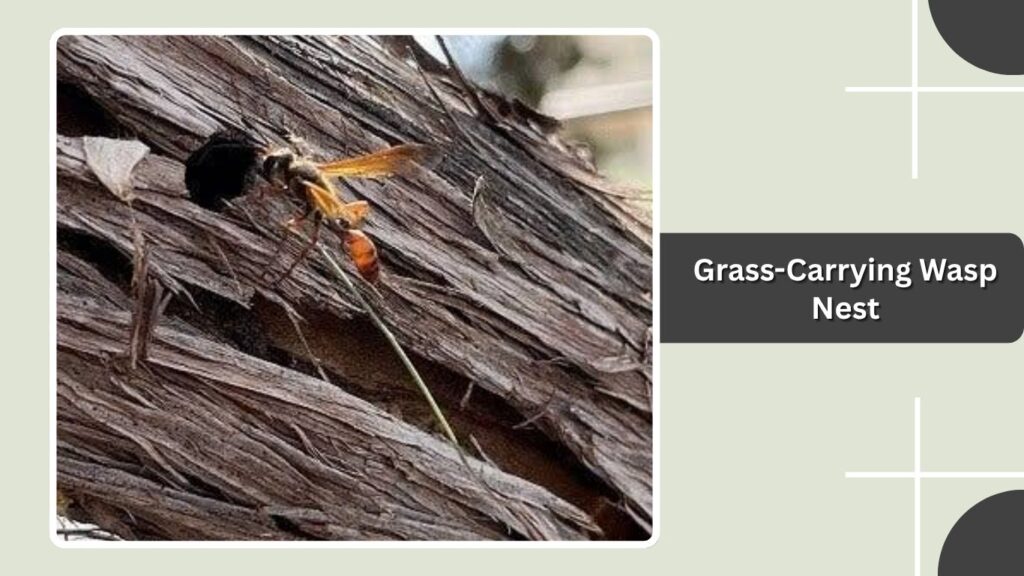
Grass-carrying wasp nests are unusual structures made from dried grass, plant fibers, and other soft vegetation. These nests are commonly constructed inside hollow stems, abandoned insect tunnels, and narrow openings in wooden structures. Grass-carrying wasps belong to the genus Isodontia and are solitary insects. Their nests provide protected spaces where developing larvae feed on captured crickets and other small insects.
Identification
- Shape: Narrow, elongated structures fitted inside existing cavities.
- Color: Usually light brown, tan, or greenish-brown.
- Size: Varies depending on the length and width of the nesting cavity.
- Material: Dried grass, plant fibers, and occasionally soft bark.
- Structure: Grass-filled tunnels containing brood chambers.
- Location: Hollow plant stems, wooden holes, window tracks, and abandoned insect tunnels.
- Appearance: Loose bundles of dried grass protruding from small openings.
How Grass-Carrying Wasps Build Their Nests
Female grass-carrying wasps begin by locating a suitable hollow space, often inside a plant stem or abandoned insect tunnel. They collect long blades of dried grass and carry them into the opening.
The grass forms protective nesting material around the developing brood. After preparing the cavity, the female hunts tree crickets, katydids, or other suitable insects.
She paralyzes the captured prey and places it inside the nest before laying eggs. Additional grass fibers help separate and close the nesting chambers, protecting the developing larvae.
Common Nesting Locations and Behavior
Grass-carrying wasps commonly nest in hollow stems, wooden structures, window frames, and artificial insect nesting blocks.
They prefer protected spaces where grass fibers can remain relatively dry. These solitary wasps are generally nonaggressive and rarely sting unless handled. Their hunting behavior helps control cricket and katydid populations in gardens and natural habitats.
13. Organ Pipe Mud Dauber Nest
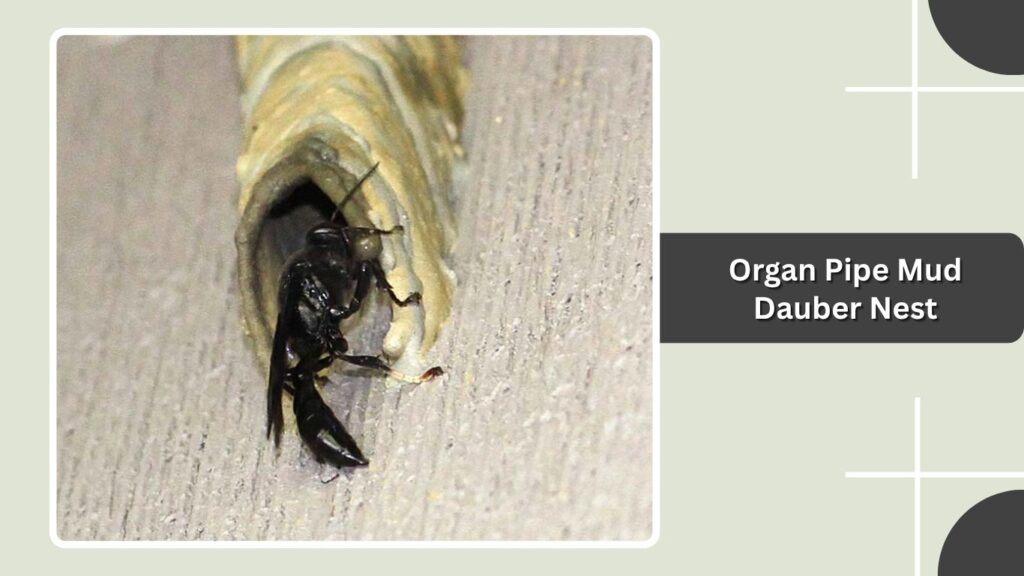
Organ pipe mud dauber nests are distinctive structures made from long, parallel tubes of hardened mud. Their unusual appearance resembles the pipes of a musical organ, giving these nests their common name. The organ pipe mud dauber (Trypoxylon politum) is a solitary wasp that constructs these tubular chambers to protect its developing offspring. These nests commonly appear on walls, bridges, and other sheltered surfaces.
Identification
- Shape: Long, narrow, cylindrical tubes arranged closely together.
- Color: Usually gray, brown, or reddish-brown.
- Size: Individual tubes commonly reach several inches in length.
- Material: Wet mud collected from nearby soil.
- Structure: Parallel mud tubes divided internally into brood chambers.
- Location: Building walls, bridges, roof eaves, and sheltered rock surfaces.
- Appearance: Multiple hardened mud tubes resembling miniature organ pipes.
How Organ Pipe Mud Daubers Build Their Nests
Female organ pipe mud daubers collect moist soil from muddy areas and transport it to a sheltered nesting location. They gradually shape the mud into long, cylindrical tubes attached to a supporting surface.
Each tube contains several brood chambers. The female hunts spiders, paralyzes them, and places them inside these compartments to provide food for her developing offspring.
After laying an egg, she seals the chamber with mud and continues constructing additional sections. Male wasps sometimes guard the nest while the female collects materials and prey.
Common Nesting Locations and Behavior
Organ pipe mud daubers prefer shaded, protected locations such as bridge undersides, roof overhangs, walls, and sheltered rock surfaces.
These wasps are generally docile and rarely sting unless threatened or handled. They help regulate spider populations by capturing spiders to feed their larvae.
FAQs
1. What Is the Most Common Type of Wasp Nest?
Paper wasp and yellowjacket nests are among the most frequently encountered wasp nests around homes and gardens. Paper wasps build exposed, umbrella-shaped combs, while yellowjackets commonly construct enclosed paper nests underground or inside cavities.
2. Which Types of Wasp Nests Are Found Underground?
Yellowjackets, cicada killers, digger wasps, sand wasps, and many spider wasps build nests underground. Yellowjackets typically construct paper combs inside cavities, while many solitary wasps excavate individual tunnels and brood chambers directly into the soil.
3. What Is the Difference Between Paper Wasp Nests and Mud Dauber Nests?
Paper wasp nests are made from chewed wood fibers and have exposed hexagonal brood cells. Mud dauber nests are made from hardened mud and usually consist of enclosed tubes or chambers. Paper wasps live in social colonies, while mud daubers generally nest alone.
4. Which Types of Wasp Nests Are Most Dangerous?
Active nests belonging to social wasps, particularly yellowjackets and bald-faced hornets, can present greater sting risks when disturbed. These wasps defend their colonies and may sting repeatedly. Solitary wasps, including mud daubers and grass-carrying wasps, are generally less defensive.
5. Can Different Types of Wasps Build Nests in the Same Location?
Yes. Different wasp species may select similar nesting environments, such as roof eaves, tree cavities, sheds, and garden soil. However, they generally maintain separate nests. Some solitary species may even occupy abandoned nesting cavities previously used by other insects.
