
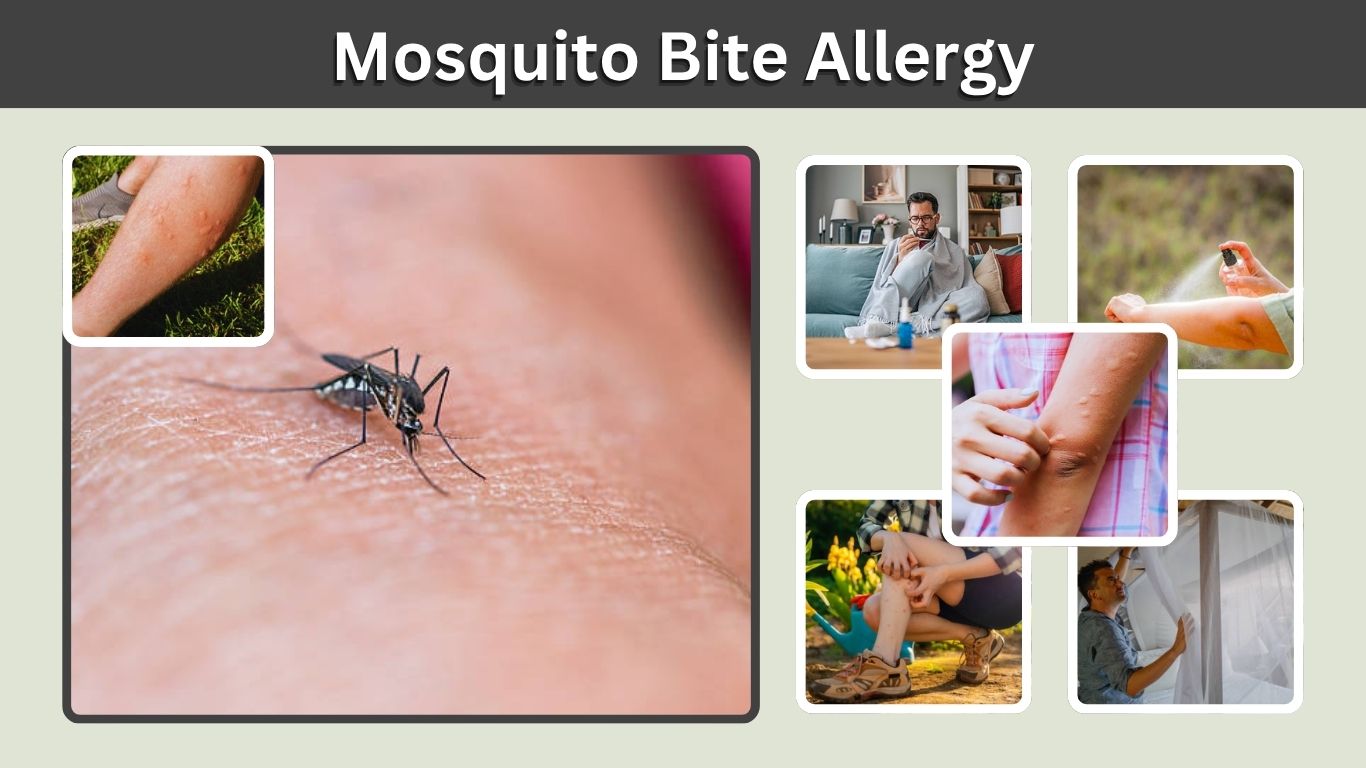
A mosquito bite allergy occurs when your immune system reacts strongly to proteins in mosquito saliva, causing excessive itching, swelling, redness, or even blisters. While most mosquito bites produce small, temporary bumps, allergic reactions can affect a much larger area of skin and remain uncomfortable for several days. Some people experience a condition called Skeeter syndrome, which causes particularly intense swelling. Understanding mosquito bite allergy symptoms, their appearance, and available treatments can help you distinguish ordinary irritation from reactions that require medical attention.
What Is a Mosquito Bite Allergy?
A mosquito bite allergy is an exaggerated immune response to proteins introduced into your skin when a mosquito feeds. Most people experience a mild reaction, but some develop larger, more uncomfortable skin reactions. The severity depends on individual sensitivity, previous exposure, and other immune factors.
Why Do Mosquito Bites Cause Allergic Reactions?
When a female mosquito bites, it releases saliva containing proteins that help it feed. Your immune system recognizes components of this saliva and triggers inflammation.
Histamine and other inflammatory chemicals contribute to itching, swelling, and skin discoloration. People with greater sensitivity may develop extensive swelling or hives rather than a small localized bump.
A large reaction does not necessarily indicate a dangerous allergy. However, severe or widespread symptoms should be medically assessed.
Mosquito Bite Allergy Symptoms
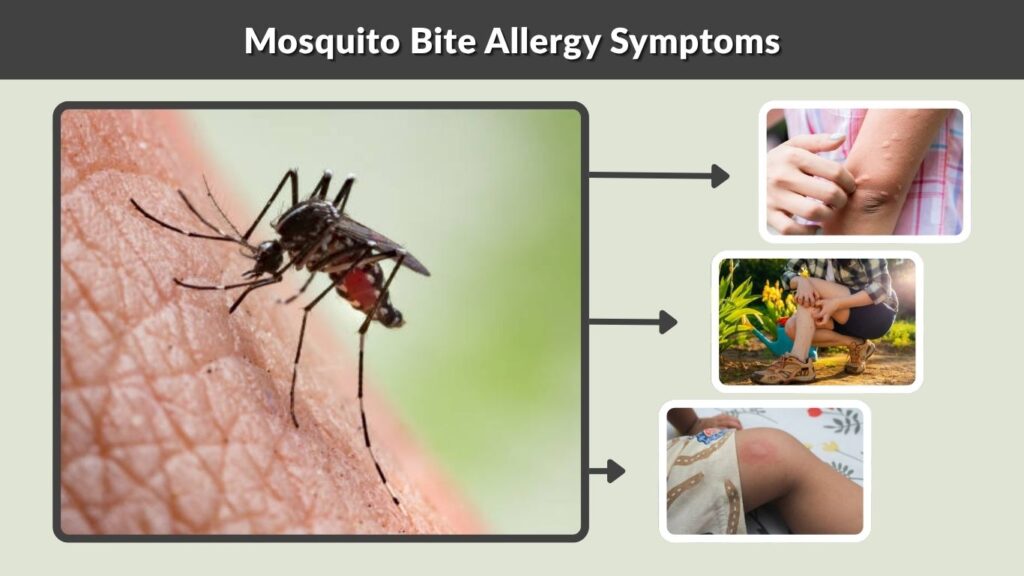
Mosquito bite allergy symptoms range from localized swelling to extensive inflammatory reactions. Symptoms may begin shortly after the bite or become more noticeable over several hours. Recognizing the pattern can help determine whether the reaction is mild or requires medical evaluation.
Common Signs of Mosquito Bite Allergy
- Large swollen bumps: Raised areas may extend considerably beyond the bite.
- Intense itching: Persistent itching can interfere with sleep or daily activities.
- Redness or discoloration: Skin may become red, pink, purple, or darker than surrounding areas.
- Warmth and tenderness: The affected area may feel hot, firm, or painful.
- Blisters: Some stronger reactions cause small fluid-filled blisters.
- Hives: Occasionally, itchy, raised patches appear beyond the immediate bite area.
Children and individuals with certain immune conditions may experience more pronounced symptoms.
Normal Mosquito Bite vs. Allergy: Key Differences
A normal mosquito bite and an allergic reaction can initially look similar. Both may produce itching, redness, and swelling, but their size, intensity, and duration often differ. Comparing these features can help you recognize a possible exaggerated reaction.
Normal Bite vs. Allergic Reaction
| Feature | Normal mosquito bite | Larger allergic reaction |
| Swelling | Small, localized bump | Large swollen area |
| Itching | Mild to moderate | Often intense |
| Skin appearance | Small raised bump | Extensive discoloration or welts |
| Pain | Usually minimal | May be tender or painful |
| Duration | Usually a few days | Often 3–10 days |
| Blisters | Possible but uncommon | More likely in strong reactions |
These differences are general guidelines. Bite size alone cannot confirm an allergy, and infection can sometimes resemble a severe allergic reaction.
What Does a Mosquito Bite Allergy Look Like?
Mosquito bite allergy pictures often show noticeably swollen skin surrounding a small central bump. The affected area may form a large raised welt, become firm, or develop fluid-filled blisters. Appearance varies with skin tone and the severity of inflammation.
Appearance on Different Skin Tones
On lighter skin, an allergic reaction may appear bright red or pink with obvious swelling. On darker skin, the affected area may look purple, brown, or darker than the surrounding tissue.
Warmth, tenderness, and swelling can be useful signs when redness is difficult to see.
Medical photographs can provide examples, but pictures alone cannot reliably distinguish an allergy from an infection.
What Is Skeeter Syndrome?
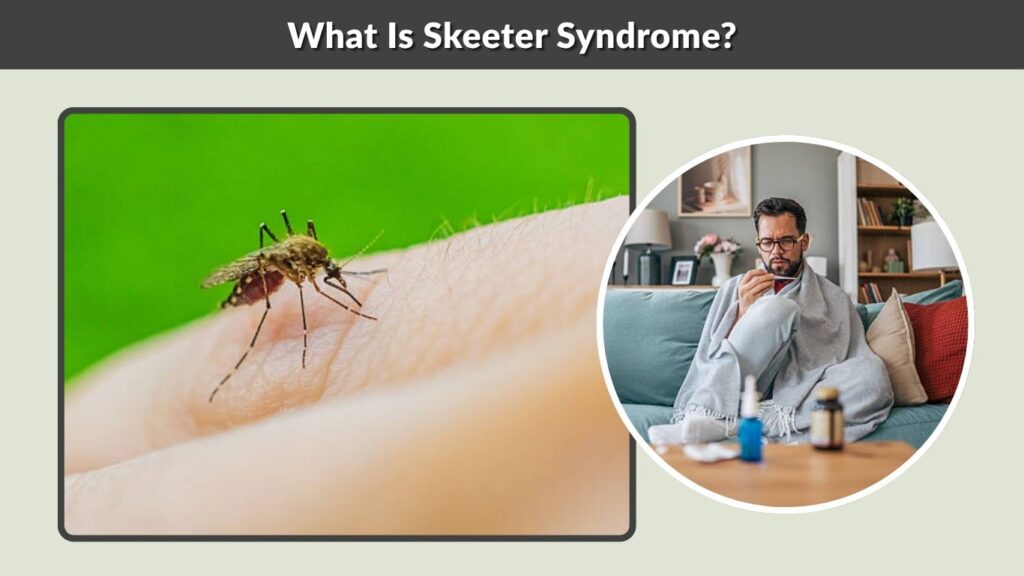
Skeeter syndrome is a pronounced local inflammatory reaction caused by mosquito saliva. Unlike a typical bite, it produces extensive swelling, warmth, itching, and sometimes pain. It is particularly common in young children and may resemble a bacterial skin infection.
Skeeter Syndrome Symptoms and Duration
Symptoms typically develop within hours of a mosquito bite. Affected skin may become very swollen, firm, warm, and discolored.
Occasionally, fever or swollen lymph nodes accompany the reaction. Most cases improve within 3 to 10 days.
Doctors generally diagnose Skeeter syndrome using the appearance of the reaction and the history of mosquito exposure. Routine allergy testing is not usually necessary.
Can Mosquito Bite Allergies Cause Blisters or Hives?
Some mosquito bite allergies produce symptoms beyond ordinary itching and swelling. Blisters and hives may develop when the immune response is particularly strong. However, these symptoms can have other causes and should not automatically be attributed to mosquitoes.
Mosquito Bite Allergy Blisters
Blisters are small pockets of fluid that develop within the skin. They can occur after an exaggerated mosquito bite reaction.
Avoid popping blisters because broken skin increases infection risk. Gently wash the area and protect it from scratching.
Mosquito Bite Allergy Hives
Hives appear as itchy, raised patches that may change shape or location. They can occur during stronger mosquito bite reactions.
Hives affecting much of the body require prompt medical assessment, particularly when accompanied by dizziness, breathing difficulty, or facial swelling.
How to Treat a Mosquito Bite Allergy
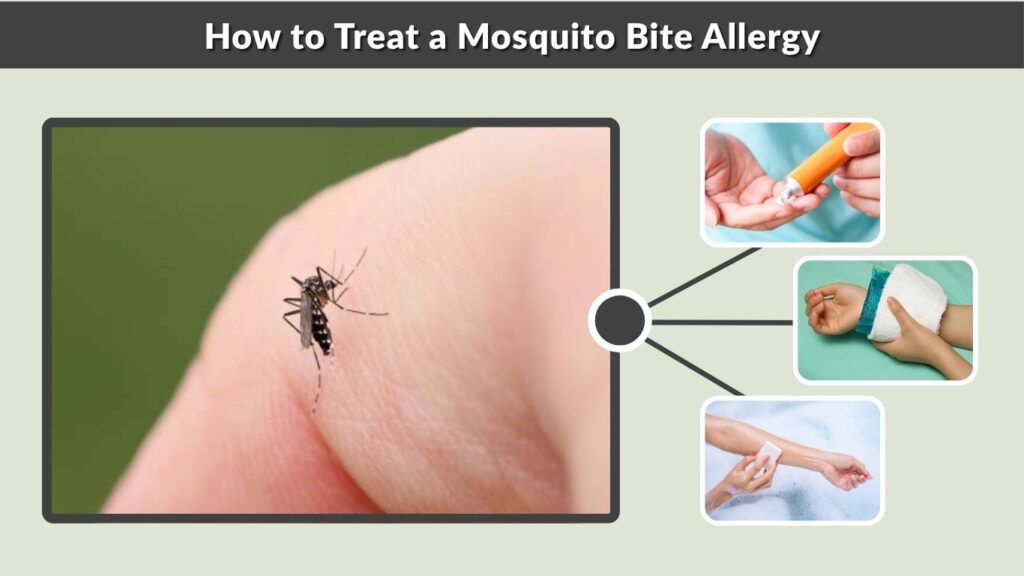
Most localized mosquito bite allergic reactions can be managed with simple treatments that reduce inflammation and discomfort. More severe reactions may require prescription medication or professional evaluation. The appropriate treatment depends on swelling severity, associated symptoms, and the person’s age.
Effective Mosquito Bite Allergy Treatments
- Cold compress: Apply a wrapped ice pack or cool cloth to reduce swelling and discomfort.
- Oral antihistamines: Medicines such as cetirizine, loratadine, or fexofenadine may help relieve itching.
- Hydrocortisone cream: An appropriate topical steroid can reduce localized inflammation and itching.
- Gentle cleaning: Wash affected skin with soap and water.
- Avoid scratching: Scratching increases irritation, skin damage, and infection risk.
- Medical treatment: Doctors may prescribe corticosteroids for particularly severe local reactions.
Follow medication instructions and seek professional advice before treating infants or young children. Antihistamines are not a substitute for emergency treatment of anaphylaxis.
Can Allergy Medicine or Allergy Shots Help?
Allergy medicines can help control mosquito bite symptoms, but they cannot guarantee that future reactions will disappear. Treatment generally focuses on reducing itching and preventing additional bites.
Antihistamines and Allergy Shots
Second-generation antihistamines may reduce itching and the size of mosquito bite reactions.
Allergy shots for mosquito bites are not an established routine treatment. Although mosquito-extract immunotherapy has been studied, more research is needed to confirm its effectiveness and safety.
People experiencing repeated severe reactions should consult an allergist to discuss appropriate management.
How to Prevent Mosquito Bite Allergies
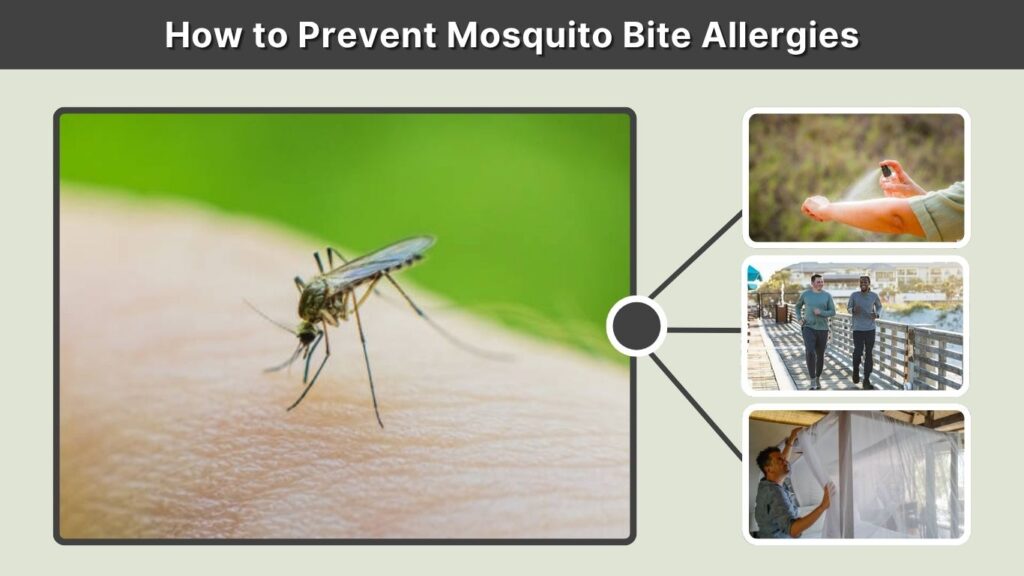
Preventing mosquito bites is the most reliable way to avoid allergic reactions. People who regularly develop large swollen areas should take additional precautions when spending time outdoors, especially in places with substantial mosquito activity.
Practical Mosquito Bite Prevention Tips
- Use insect repellent: Choose an appropriately registered product containing ingredients such as DEET or picaridin.
- Wear protective clothing: Long sleeves and trousers reduce exposed skin.
- Install window screens: Repair damaged screens to keep mosquitoes outdoors.
- Remove standing water: Empty containers where mosquitoes can breed.
- Use mosquito nets: Protect sleeping areas where mosquitoes are common.
- Treat clothing appropriately: Permethrin-treated clothing can provide additional protection; never apply permethrin clothing treatments directly to skin.
Always follow product labels, especially when protecting children.
When Is a Mosquito Bite Allergy Dangerous?
Most mosquito bite allergies remain localized and resolve without serious complications. However, worsening symptoms, infection, or reactions affecting the entire body require medical attention. Mosquito-borne illnesses can also cause symptoms that should not be mistaken for an allergy.
Warning Signs That Need Medical Attention
Seek medical evaluation for increasing pain, spreading redness, pus, unusually large swelling, or persistent symptoms that fail to improve.
Fever, severe headache, body aches, or unusual fatigue after mosquito exposure may indicate an illness transmitted by mosquitoes rather than an allergic reaction.
Call emergency services immediately for difficulty breathing, throat tightness, fainting, or sudden swelling of the tongue or throat. These may indicate anaphylaxis, which is extremely rare after mosquito bites but potentially life-threatening.
FAQs
1. Can you develop an allergy to mosquito bites?
Yes. Sensitivity to mosquito saliva can change over time. Some people develop stronger reactions after repeated exposure, while others gradually become less reactive. Both children and adults can experience mosquito bite allergies.
2. How long does a mosquito bite allergy last?
Mild reactions usually improve within a few days. Larger allergic reactions, including Skeeter syndrome, may last approximately 3–10 days. Increasing pain, warmth, or swelling should be medically evaluated.
3. Can mosquito bite allergies affect the face?
Yes. Mosquito bite allergies can develop on the face, including around the eyes. Facial swelling may appear especially noticeable. Seek urgent medical care for swelling that affects breathing, swallowing, or vision.
4. What is the best allergy medicine for mosquito bites?
Oral antihistamines such as cetirizine or loratadine may help reduce itching. Hydrocortisone cream can also provide localized relief. The most appropriate medicine depends on age, medical history, and symptom severity.
5. Can Asian tiger mosquitoes cause allergic reactions?
Yes. Asian tiger mosquitoes can trigger allergic skin reactions because their saliva contains proteins recognized by the immune system. The severity varies between individuals, and appearance alone cannot establish which mosquito caused the bite.
