

Gall wasps may be tiny, but their influence on plants is hard to miss. These insects are responsible for the unusual growths we often see on oak leaves, stems, or even acorns—structures known as galls. While most wasps are associated with painful stings or aggressive behavior, gall wasps stand apart with a lifestyle that revolves more around plants than people. Understanding them not only answers common concerns—like whether they sting humans—but also reveals their fascinating role in nature.
What is a Gall Wasp?
Gall wasps are small parasitic insects belonging to the family Cynipidae. With over a thousand species identified worldwide, they are most famous for inducing galls on plants, especially oak trees. Unlike larger wasps that build visible nests, gall wasps use plants themselves as nurseries.
Their presence can be traced back centuries, with records of gall formations used in ink-making in medieval Europe. Despite their small size, their activity significantly impacts ecosystems, horticulture, and sometimes agriculture.
Physical Characteristics of Gall Wasps

Gall wasps are usually no more than 2–4 millimeters long, making them easy to overlook. Their bodies are typically dark brown or black, with a shiny exoskeleton and delicate, transparent wings. The antennae are segmented, helping them detect suitable sites for egg-laying.
Compared to hornets or yellowjackets, gall wasps look fragile and unthreatening. Most species are winged, although some generations may include wingless females specialized for reproduction. These insects are highly adapted to finding specific host plants, with their physical features playing a role in how they interact with plant tissue.
Gall Wasp Life Cycle

The life cycle of a gall wasp is a fascinating process that shows how closely these insects depend on their host plants. It typically includes four main stages: egg, larva, pupa, and adult.
Egg Stage – The cycle begins when a female gall wasp uses her ovipositor to lay eggs inside soft plant tissue such as leaves, buds, stems, or acorns. The insertion also introduces chemicals that trigger the plant to form a protective gall around the egg.
Larval Stage – Once the egg hatches, the tiny larva feeds inside the developing gall. This stage is crucial, as the gall not only provides food but also shelters the larva from predators and harsh weather. Depending on the species, several larvae may share one gall.
Pupal Stage – After feeding and growing, the larva enters the pupal stage within the gall. During this time, it transforms into its adult form, still protected inside its plant-made chamber.
Adult Stage – The fully formed adult gall wasp eventually chews its way out of the gall to emerge. Adults live only briefly, focusing mainly on reproduction and continuing the cycle by laying new eggs in host plants.
Gall Formation Explained

A gall is not just a random growth but a highly organized structure created by plant cells responding to the wasp’s secretions. Scientists believe that chemicals from the female’s egg-laying process trigger plant tissues to form unique structures tailored for larval survival.
Different species of gall wasps create different types of galls. For example:
- Oak Apple Galls: Round, apple-sized growths often found on oak trees.
- Acorn Galls: Formed on developing acorns, altering their shape.
- Leaf Galls: Small, blister-like swellings on oak or citrus leaves.
These galls vary in color, shape, and size, but all serve the same purpose: protection and nourishment of developing larvae.
Gall Wasp Eggs & Larvae
The most remarkable stage of the gall wasp’s life begins with the egg. Females carefully insert their eggs into leaves, buds, stems, or acorns of host plants. Within days, larvae emerge and immediately influence their environment.
The gall acts like a miniature home. The larvae feed on the tissue lining the inside, which is rich in nutrients produced by the plant specifically for them. Since they are hidden inside, predators like birds or parasitic insects find it difficult to attack them.
In some cases, multiple larvae share a single gall, each in its own chamber. As they mature, the galls may change color—from green to brown or even woody—before the adults break free.
Common Gall Wasp Hosts
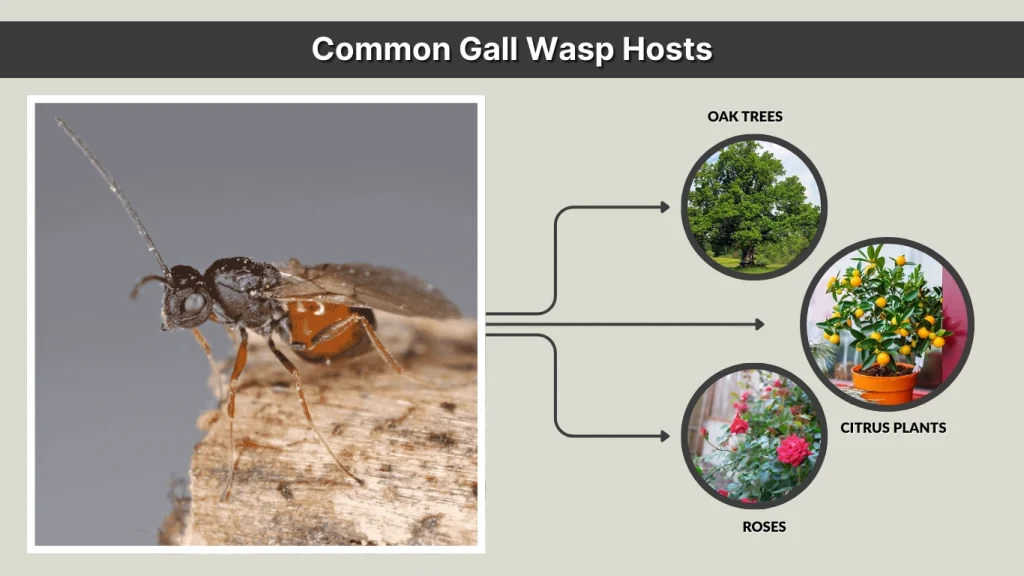
Gall wasps are host-specific, meaning each species targets particular plants. The most common hosts include:
- Oak Trees: The majority of gall wasps form galls on oaks, leading to hundreds of gall varieties such as oak apples, spangle galls, and acorn galls.
- Citrus Plants: Some gall wasps affect citrus trees, creating unsightly galls on leaves or fruit.
- Other Trees and Shrubs: Roses, willows, and maples may also occasionally host gall wasps.
In the UK, oak gall wasps are especially well known, while in the US, oak and citrus trees see the most activity. Their choice of plant directly influences the type and shape of galls produced.
Gall Wasp Behavior & Nests

Unlike hornets or paper wasps, gall wasps do not build traditional nests. Instead, they rely on the galls induced on plants to serve as both a nursery and a food source for their larvae. In this sense, the plant itself becomes the “nest.”
Adult gall wasps are short-lived and spend their time seeking suitable plants to continue the cycle. They are not aggressive, rarely fly far from their host trees, and generally go unnoticed unless galls are spotted.
Do Gall Wasps Sting?

One of the most common questions about gall wasps is whether they sting humans. While they belong to the wasp family, their stingers are not designed for defense like those of yellowjackets or hornets. Instead, their ovipositors are specialized for egg-laying in plants.
This means gall wasps do not sting humans. In rare cases, if handled roughly, they may cause a mild prick, but they are not venomous and pose no risk. Their reputation for being dangerous is largely a misconception.
Are Gall Wasps Dangerous to Humans?
Gall wasps are harmless to people. They do not sting aggressively, do not carry diseases, and are not venomous. Unlike their larger cousins, they are not a threat to outdoor activities, gardening, or picnics.
Some people may confuse plant galls with signs of disease or pest infestation harmful to humans, but gall wasps do not spread anything to people. At most, they are a minor nuisance to plants. Rare allergic reactions from contact with plant galls are extremely uncommon.
Impact on Plants
While gall wasps don’t threaten people, they do have effects on their host plants. Most galls are harmless and only cause cosmetic damage, such as bumps on leaves or acorns. However, heavy infestations can stress a tree, reducing growth or weakening branches.
On oak trees, large numbers of galls may distort leaves or reduce acorn production. In citrus plants, gall formation may stunt young shoots or reduce fruit quality.
Still, most healthy trees tolerate gall wasps well. Unless infestations are severe, the damage is more of an aesthetic issue than a real threat to plant survival.
Gall Wasp Treatment & Management
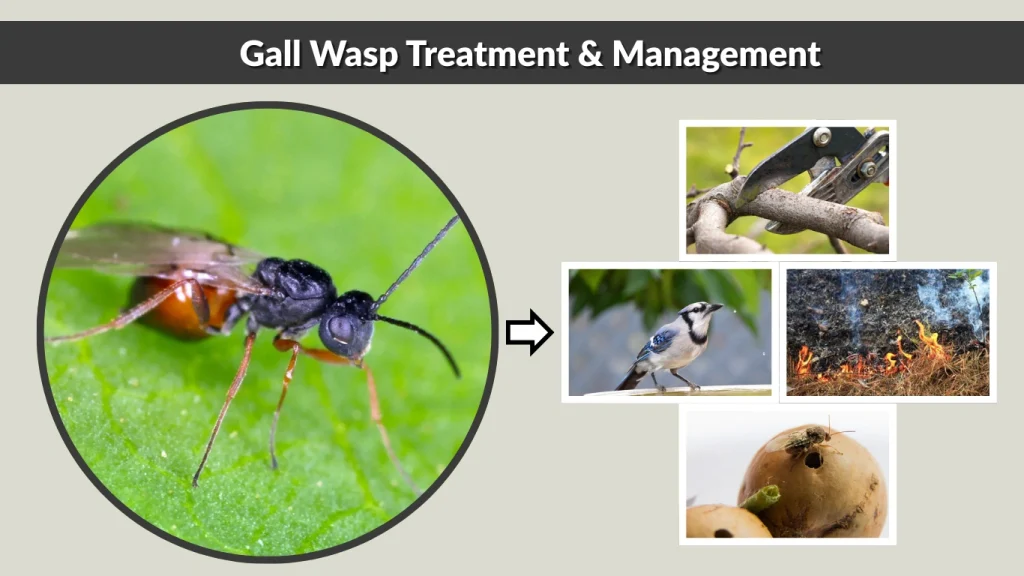
In most cases, gall wasps do not require treatment. Since they rarely cause long-term harm to healthy trees, the galls are often left alone. However, gardeners or orchard owners may consider control methods if infestations become severe.
- Pruning: Removing and destroying galled twigs, branches, or leaves before adult wasps emerge can reduce future populations.
- Burning or Disposal: Collected galls should be destroyed rather than composted, since larvae can survive until emergence.
- Chemical Treatments: Insecticides are usually ineffective because the larvae are hidden inside galls. They are not recommended except in large-scale citrus orchards.
- Encouraging Natural Enemies: Birds, parasitic wasps, and other insects feed on gall wasps, helping control populations naturally.
Overall, patience and regular tree care are the best solutions. Since gall wasps are part of natural ecosystems, eradication is neither practical nor necessary.
Gall Wasps in the UK and Worldwide
Gall wasps are widespread, but their prominence varies by region.
- United Kingdom: Oak gall wasps are particularly well known. Species such as the marble gall and oak apple gall are common on British oaks. These galls have even been historically significant—oak galls were once used to produce ink.
- United States: A wide variety of gall wasps affect native oak species. In the south, citrus gall wasps also cause problems for orchard owners.
- Europe and Asia: Several invasive species have spread through trade and movement of trees, sometimes affecting forestry practices.
- Australia: Citrus gall wasp (Bruchophagus fellis) is a notable pest, threatening citrus production in certain regions.
The global spread of gall wasps highlights their adaptability and their close ties to specific host plants.
Ecological Importance of Gall Wasps

Though often seen as pests, gall wasps play an important role in ecosystems:
- Microhabitats: Galls provide shelter not only for gall wasp larvae but also for other organisms such as mites, beetles, and parasitic insects.
- Food Source: Birds and predatory insects feed on adult gall wasps or invade galls for larvae.
- Biodiversity: By inducing plant changes, gall wasps indirectly support complex food webs.
While gardeners may see galls as a nuisance, ecologists value gall wasps for their role in maintaining biodiversity and creating unique interactions between plants and insects.
Gall Wasps vs. Other Gall Makers
Not all galls are caused by wasps. Other organisms also create similar plant growths:
- Gall Midges: Tiny flies that induce galls on leaves and stems.
- Mites: Microscopic arachnids that cause small, fuzzy, or blister-like galls.
- Fungi and Bacteria: Some plant diseases create tumor-like growths resembling galls.
The difference lies in the cause. Gall wasps are unique because their galls are often larger, more structured, and species-specific, such as oak apple galls or acorn galls. Correct identification helps avoid misdiagnosing plant problems.
Key Facts About Gall Wasps
- Gall wasps belong to the family Cynipidae.
- Most species are only a few millimeters long.
- They lay eggs inside plant tissue, triggering gall formation.
- Common hosts include oak and citrus trees.
- Galls serve as food and protection for larvae.
- Gall wasps do not sting humans.
- While unsightly, galls rarely harm healthy trees.
- They contribute to biodiversity by supporting other insects and animals.
FAQs
What do gall wasps look like?
Gall wasps are tiny, dark-colored insects, usually 2–4 mm long, with delicate wings and segmented antennae. They are often overlooked until galls reveal their presence.
Do gall wasps sting humans?
No, gall wasps do not sting people. Their stingers are adapted for egg-laying in plants, not defense. They are harmless to humans.
Are oak galls harmful to trees?
Most oak galls cause only minor, cosmetic damage. However, heavy infestations can stress young or weak trees, reducing growth and acorn production.
How can I treat gall wasp infestations in my garden?
Prune and destroy galled branches before adult wasps emerge. Encourage natural predators like birds and parasitic wasps. Chemical sprays are generally ineffective.
Are gall wasps beneficial or pests?
Gall wasps are considered minor pests in orchards but ecologically beneficial in natural habitats. They support biodiversity and create unique microhabitats.
