
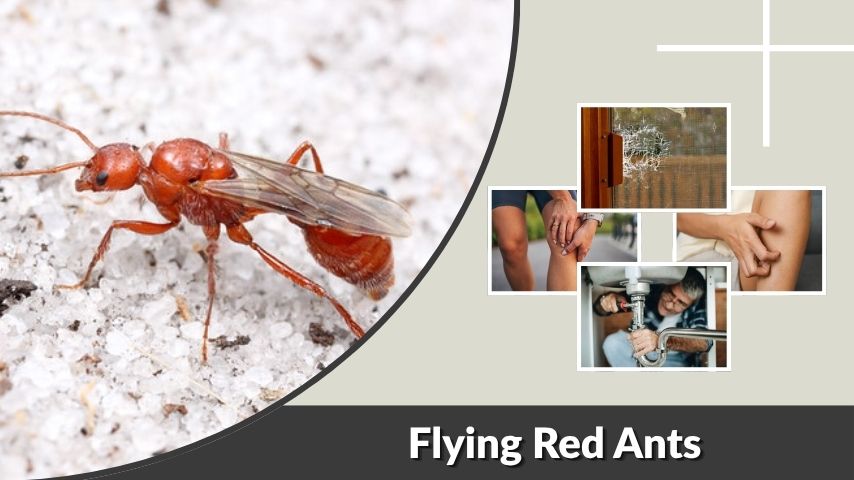
Flying red ants can look alarming when they suddenly appear in a yard, pool, patio, or house. Many people wonder whether they are dangerous, whether they bite or sting, and whether they might actually be termites. In most cases, flying red ants are winged reproductive ants leaving a colony to mate and start new nests. They may be harmless swarmers, but some red ants can bite or sting, so proper identification matters.
What Are Flying Red Ants?
Flying red ants are usually winged reproductive ants, also called alates. They are not a separate species. Instead, they are male ants and young queen ants that have wings for a short period of their life.
A mature ant colony may produce winged ants when conditions are right. These ants leave the nest in a mating flight, often called a swarm. After mating, males usually die, while fertilized queens search for a suitable place to start a new colony.
Flying red ants may appear reddish, orange-red, reddish-brown, black and red, or red with darker wings. Their exact look depends on the ant species.
Can Red Ants Fly?
Yes, some red ants can fly, but only the reproductive ants have wings. Worker ants are usually wingless. A flying red ant is typically a male or a young queen from a mature colony.
Red ants do not “turn into” flying ants in the way a caterpillar turns into a butterfly. Instead, some ants develop as winged reproductive ants from the beginning of their adult stage. Their role is to leave the colony, mate, and help create new colonies.
You may see flying red ants during:
- Warm weather
- Humid conditions
- After rain
- Mating season
- Evening light activity
- Large ant swarms
- Colony expansion
A few flying red ants outside are usually normal. Many flying ants indoors may suggest a nest nearby or inside the structure.
What Do Flying Red Ants Look Like?
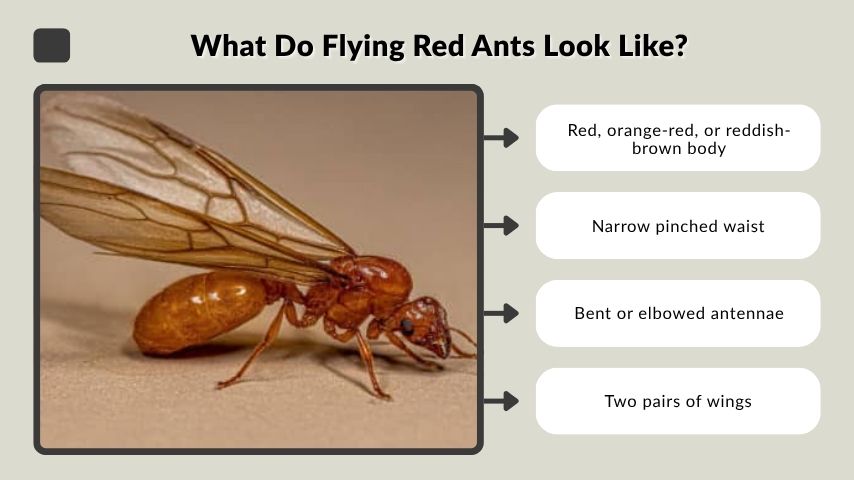
Flying red ants look like ants with wings. They usually have a narrow waist, bent antennae, six legs, and two pairs of wings. Their front wings are usually longer than their back wings.
Common features include:
- Red, orange-red, or reddish-brown body
- Narrow pinched waist
- Bent or elbowed antennae
- Two pairs of wings
- Front wings longer than hind wings
- Segmented ant-like body
- Crawling and short fluttering flight
Some are small red flying ants, while others may be large red flying ants. Large red or red-and-black flying ants may be queens or species with naturally bigger bodies.
Flying Red Ants vs Termites
Many people confuse flying red ants with winged termites. This is an important difference because termites can cause serious wood damage. Flying ants and termites both swarm, both have wings, and both may appear near windows or lights.
The easiest way to compare them is by waist, antennae, and wings.
| Feature | Flying Red Ants | Winged Termites |
|---|---|---|
| Waist | Narrow and pinched | Broad and straight |
| Antennae | Bent or elbowed | Straight |
| Wings | Front wings longer than back wings | All four wings similar length |
| Body shape | Clearly segmented | More uniform body |
| Main concern | Nuisance, bites/stings, possible nesting | Wood damage risk |
If the insect has a pinched waist and bent antennae, it is more likely a flying ant. If it has a straight body, straight antennae, and equal wings, it may be a termite.
Why Are Red Ants Flying?
Red ants fly for reproduction. Winged males and queens leave the colony during a mating flight. This usually happens when weather conditions help ants survive and spread.
Flying red ant swarms may happen after rain because the soil is softer and more suitable for new queens to dig nesting chambers. Warm and humid weather also helps ants fly and mate successfully.
After mating, a queen may remove her wings and begin looking for a nesting site. This is why you may find red ants with wings, wingless queens, or loose wings around windows, floors, or outdoor surfaces.
Flying Red Ants in the House
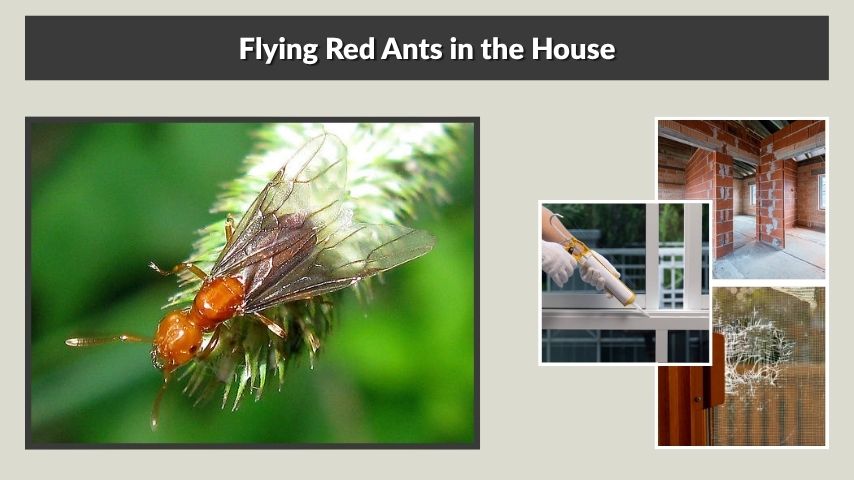
Finding flying red ants in the house can mean two different things. A few may have flown in from outside through a door, window, screen, vent, or crack. A larger swarm indoors may suggest a nest inside or very close to the house.
Common indoor entry points include:
- Window gaps
- Door cracks
- Foundation openings
- Utility lines
- Vents
- Damaged screens
- Gaps around baseboards
- Attic or crawl space openings
If flying red ants appear once, clean them up and seal entry points. If they keep appearing, especially in the same room, look for trails, moisture, wall gaps, or nearby nesting sites.
Red Flying Ants in Yard or Outside
Red flying ants outside are usually part of a natural swarming event. Ant colonies often release winged ants at the same time, which can make the yard look suddenly full of flying insects.
Outdoor flying red ants may come from:
- Lawn nests
- Soil mounds
- Garden beds
- Cracks in pavement
- Mulch
- Tree roots
- Firewood piles
- Moist soil near the foundation
If they are outside and not causing problems, they may disappear after the swarm ends. If they are aggressive, stinging, or nesting close to walkways, play areas, or pet spaces, you may need control measures.
Do Flying Red Ants Bite?
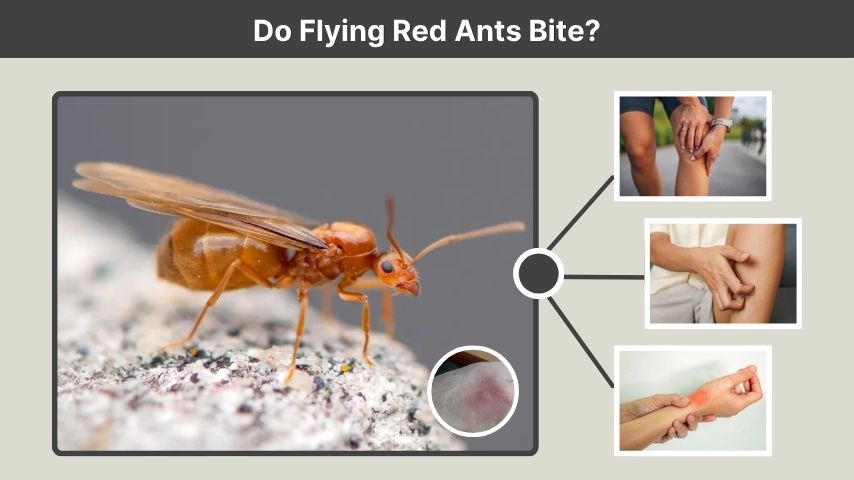
Yes, some flying red ants can bite. A bite may feel like a pinch and can cause mild redness, itching, or swelling. Most flying ants do not go out of their way to bite people, but they may bite if handled, squeezed, or trapped against the skin.
A flying red ant bite may cause:
- Mild pain
- Itching
- Redness
- Small bump
- Tenderness
- Local swelling
Wash the area with soap and water, apply a cold compress, and avoid scratching. Most minor bites improve on their own.
Do Flying Red Ants Sting?
Some red ants can sting, depending on the species. Fire ants are the best-known example of red ants that sting. Winged fire ant reproductives can exist, but the most painful encounters usually come from worker fire ants defending a mound.
A sting may feel sharper or more burning than a bite. It may cause a red welt, swelling, or a small white pustule. Do not pop pustules because that can increase infection risk.
Seek medical help if you have trouble breathing, swelling of the face or throat, dizziness, widespread hives, or a severe reaction after an ant sting.
Are Flying Red Ants Dangerous?
Flying red ants are not always dangerous, but some species can bite or sting. Most are more of a nuisance than a serious threat. The risk depends on the species and the size of the swarm.
They may be a concern if:
- They are fire ants
- They are stinging people or pets
- They appear indoors repeatedly
- They are nesting near the foundation
- They are confused with termites
- Large numbers enter living spaces
- Children or pets disturb outdoor nests
If the ants are aggressive and sting repeatedly, avoid the area and consider professional pest control.
Flying Red Ant With Stinger
Many people search for “flying red ant with stinger” because the insect has a pointed abdomen. Not every pointed abdomen is a stinger. Some winged ants simply have a tapered body shape.
However, some ants can sting. If the insect is red, aggressive, and causes a burning sting, it may be related to fire ants or another stinging ant species.
A flying red ant with a long “stinger” may also be a wasp, not an ant. Wasps have narrow waists and wings too, so they are sometimes mistaken for ants. Look at the antennae, body shape, and behavior to help identify it.
Red Velvet Ants: Are They Flying Red Ants?
Red velvet ants are often confused with red ants, but they are actually wasps. The wingless females look like fuzzy red ants and can deliver a painful sting. Male velvet ants have wings and can fly, but they do not sting like females.
If you see a fuzzy red insect that looks like an ant, be careful. It may be a velvet ant rather than a true flying red ant. Do not handle it with bare hands.
Flying Red Carpenter Ants
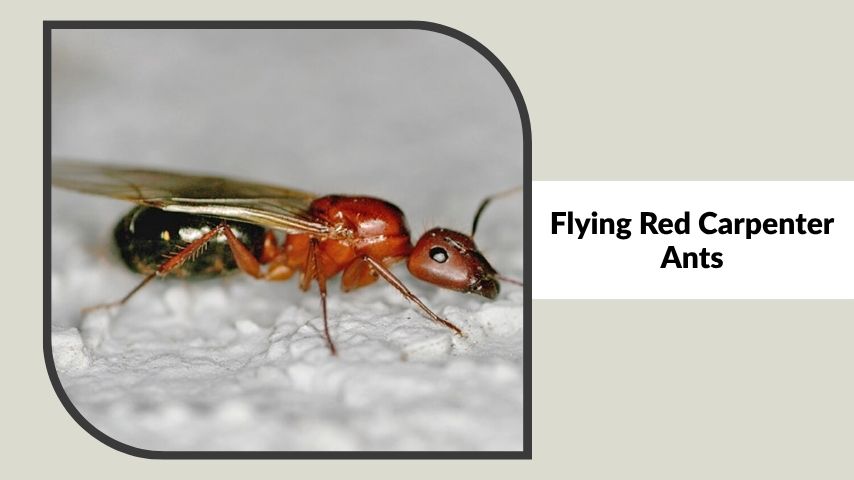
Some carpenter ants may have reddish or red-and-black coloring. Winged carpenter ants can appear indoors when a colony is mature. Carpenter ants do not eat wood like termites, but they can tunnel into damp or damaged wood to build nests.
Possible carpenter ant signs include:
- Large winged ants indoors
- Red and black flying ants
- Sawdust-like debris
- Ants near damp wood
- Activity around windows
- Repeated indoor swarms
- Rustling sounds in walls
If you suspect carpenter ants, fix moisture problems and inspect wood around windows, bathrooms, kitchens, basements, and crawl spaces.
How to Get Rid of Flying Red Ants
The best removal method depends on whether the ants are outdoors, entering from outside, or nesting indoors.
For indoor flying red ants:
- Vacuum visible ants
- Empty the vacuum outdoors
- Seal cracks and gaps
- Repair window screens
- Reduce indoor moisture
- Check for ant trails
- Store food in sealed containers
- Look for loose wings near windows
For outdoor red flying ants:
- Identify the nest location
- Avoid disturbing aggressive mounds
- Keep children and pets away
- Remove food sources
- Move firewood away from the house
- Trim vegetation touching the home
- Use ant bait suitable for the species
- Call pest control for fire ants or repeated swarms
Avoid spraying randomly without finding the source. Sprays may kill visible ants but fail to control the colony.
How to Prevent Flying Red Ants
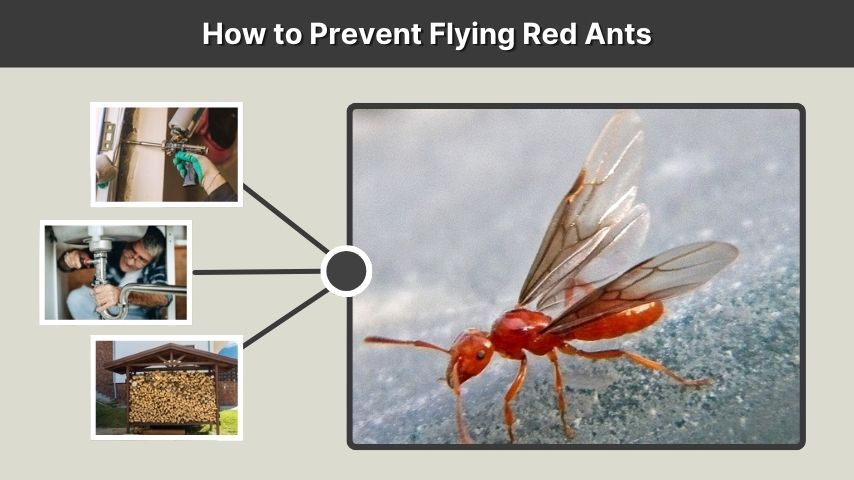
Prevention focuses on keeping ants out and reducing nesting conditions near the home.
Helpful steps include:
- Seal foundation cracks
- Install door sweeps
- Repair damaged screens
- Keep gutters working
- Fix water leaks
- Reduce mulch against the foundation
- Store firewood away from the house
- Clean up outdoor food spills
- Keep trash sealed
- Maintain dry, well-ventilated crawl spaces
You cannot stop all outdoor swarms, but you can reduce indoor entry and lower the chance of colonies forming near your home.
FAQs
What are flying red ants?
Flying red ants are usually winged reproductive ants. They are males and young queens that leave a mature colony to mate and start new colonies. They may be red, reddish-brown, orange-red, or red and black depending on the species.
Do red ants fly?
Yes, some red ants fly. Only reproductive males and queens have wings. Worker red ants usually do not fly. Flying happens during mating swarms, often in warm and humid weather.
Do flying red ants bite?
Some flying red ants can bite if handled or trapped against the skin. A bite may cause a small red bump, mild pain, itching, or swelling. Most bites are minor.
Are flying red ants dangerous?
Flying red ants are not always dangerous, but some species can sting or bite. Fire ants and velvet ants need extra caution. Repeated indoor swarms should also be checked to rule out nesting problems or termite confusion.
How do I get rid of flying red ants in the house?
Vacuum visible ants, seal entry points, repair screens, reduce moisture, and look for a nest source. If they keep appearing indoors or you suspect carpenter ants, fire ants, or termites, contact a pest control professional.
