
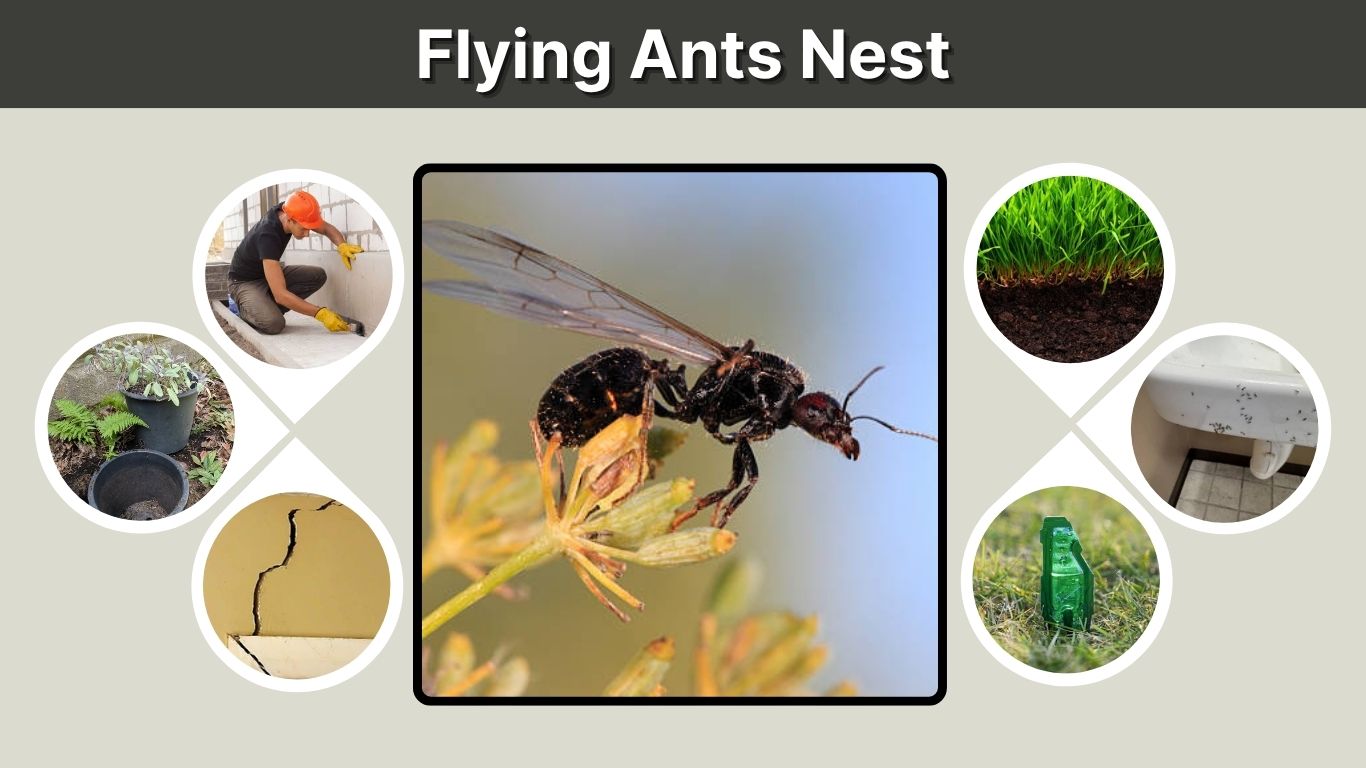
A flying ants nest is usually a regular ant colony that has produced winged reproductive ants. These winged ants leave the nest during mating season, often appearing suddenly in homes, gardens, lawns, or near walls. Seeing a few flying ants outside is normal, but repeated swarms indoors may mean a nest is hidden in a wall, floor, roof void, or damp wood nearby.
What Is a Flying Ants Nest?
A flying ants nest is not a special nest made only for flying ants. Flying ants are reproductive ants, also called alates. They are usually young queens and males that develop wings so they can leave the colony, mate, and start new nests elsewhere.
Most ants in the nest are wingless workers. These workers gather food, care for young, protect the colony, and maintain tunnels. The flying ants appear when the colony is mature enough to reproduce.
During a swarm, winged ants leave the original nest in large numbers. After mating, males usually die. Fertilized queens may shed their wings and search for a new nesting site.
Where Do Flying Ants Nest?
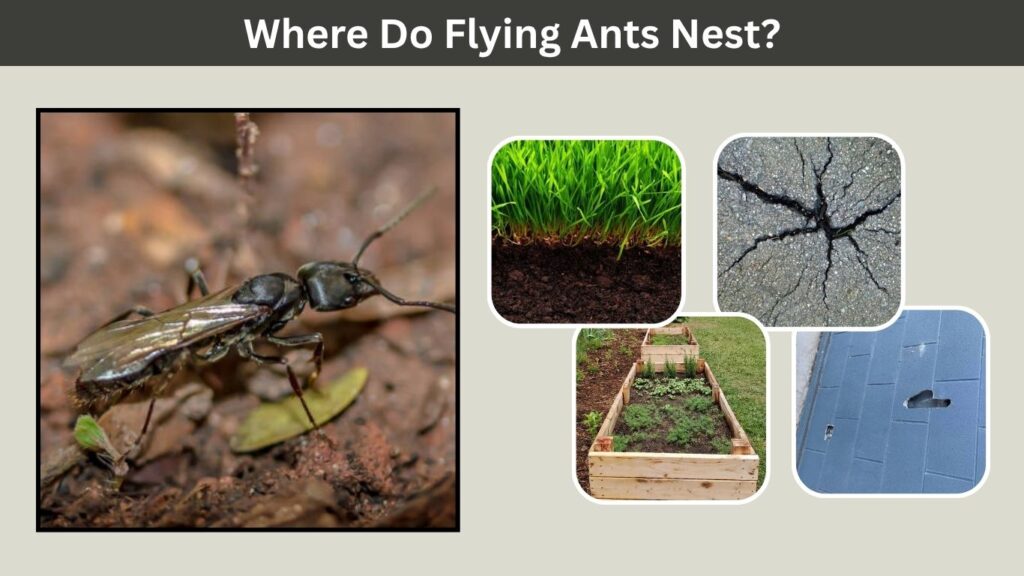
Flying ants come from ordinary ant nests. The nest location depends on the ant species, moisture, food sources, and shelter. Some nest outdoors in soil, lawns, gardens, or under paving. Others may nest inside walls, wood, roof spaces, or floor voids.
Common flying ant nest locations include:
- Soil under lawns
- Garden beds
- Cracks in paving
- Under stones or bricks
- Wall voids
- Damp wood
- Tree stumps
- Firewood piles
- Under patios
- Around foundations
- Kitchens or bathrooms
- Attics or crawl spaces
If flying ants appear outdoors once, the nest may simply be in the ground nearby. If they appear indoors repeatedly, the source may be inside or directly against the structure.
What Does a Flying Ant Nest Look Like?
A flying ant nest can look different depending on where it is built. Outdoors, it may look like a small soil mound, a crack with ant activity, or a hidden entrance under a stone, brick, or plant pot. Indoors, the nest may not be visible at all.
| Nest Location | What You May See | What It May Mean |
|---|---|---|
| Lawn or garden | Soil mound, ants entering holes | Outdoor ground nest |
| Paving cracks | Ant trails, loose soil | Nest under hard surface |
| Wall void | Flying ants from cracks | Indoor hidden nest |
| Damp wood | Large ants, sawdust-like debris | Possible carpenter ants |
| Window area | Winged ants, shed wings | Swarmers attracted to light |
| Kitchen or bathroom | Ant trails, moisture | Nest near food or water |
A nest of flying ants may not always have an obvious mound. Sometimes the only clue is ants emerging from the same crack, gap, or room.
Flying Ant Nest in House
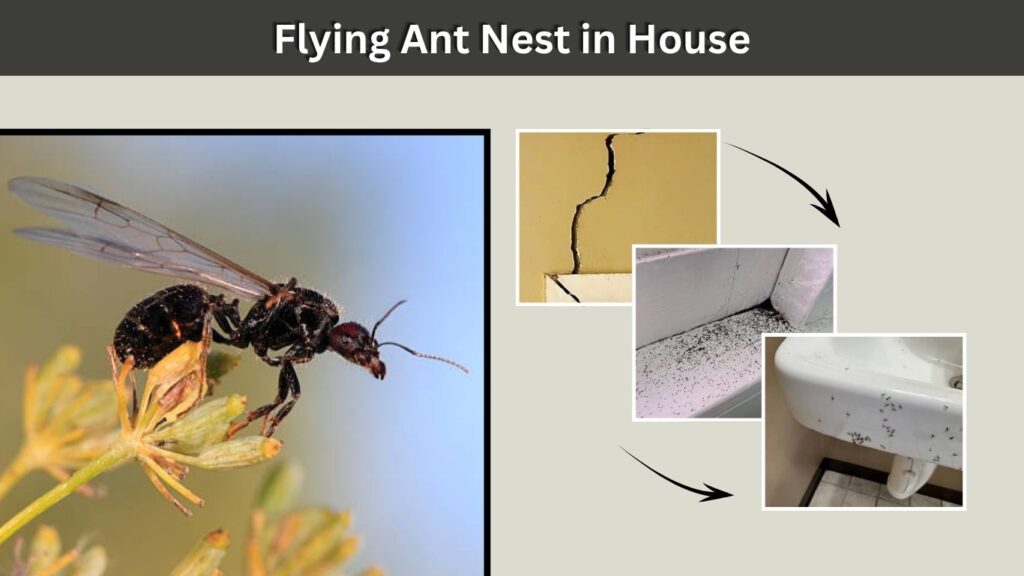
A flying ant nest in the house is more concerning than a temporary outdoor swarm. If flying ants are coming from inside, the colony may be nesting in a wall void, under flooring, behind skirting boards, in insulation, or near damp wood.
Common indoor signs include:
- Flying ants appearing in the same room
- Ants emerging from cracks or gaps
- Loose wings near windowsills
- Ant trails in kitchens or bathrooms
- Activity near damp areas
- Large winged ants indoors
- Sawdust-like debris near wood
A few ants near a window may have flown in from outside. However, if you see flying ants indoors several times, especially in large numbers, it is worth locating the source.
Flying Ant Nest in Wall
A flying ant nest in a wall can be difficult to find because the colony may be hidden behind plaster, drywall, brickwork, or insulation. Ants may enter through tiny cracks around pipes, windows, electrical outlets, or baseboards.
Signs of a possible wall nest include:
- Flying ants coming from a wall crack
- Ants near sockets or vents
- Repeated swarms in one room
- Rustling sounds in quiet areas
- Ant trails along baseboards
- Loose wings below windows
If the ants are large, black, or reddish-black, consider the possibility of carpenter ants. Carpenter ants often nest in damp or damaged wood and may need professional treatment if the colony is inside the structure.
Flying Ant Nest in Ground
Many flying ants come from nests in the ground. These are common in lawns, gardens, flower beds, paths, patios, and under stones. Ground nests may become noticeable only when winged ants leave during a swarm.
A ground nest may look like:
- Small holes in soil
- Fine soil pushed up around entrances
- Ant trails across grass
- Ants entering cracks in paving
- Activity near plant roots
- Mounds in dry or sandy areas
Outdoor ground nests are often not a serious problem unless ants are entering the house, damaging lawns, biting, stinging, or nesting too close to patios and play areas.
Flying Ant Nest in Garden or Lawn
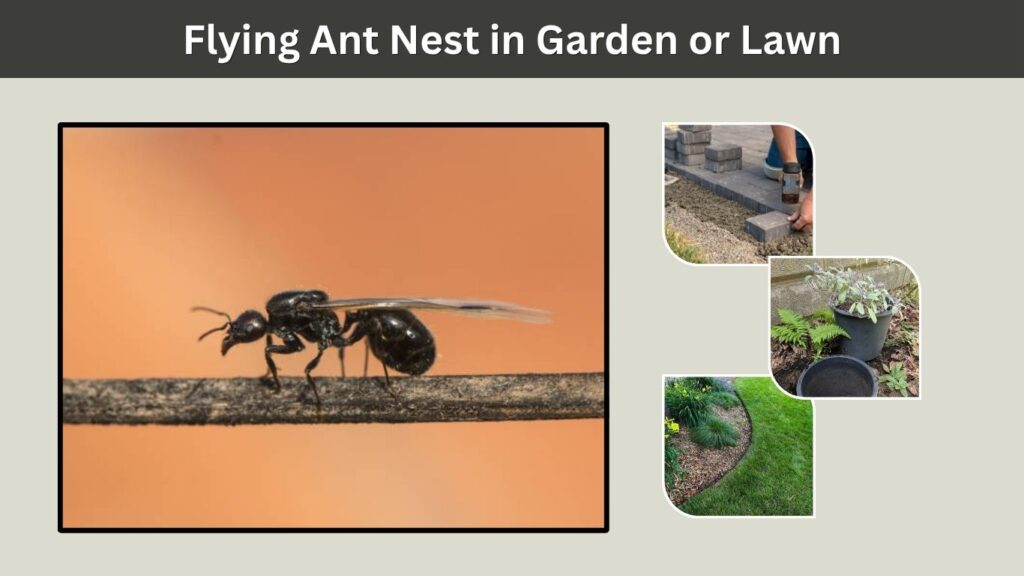
A flying ants nest in the garden is usually part of normal ant activity. Ants help break down organic matter, move soil, and feed on other small insects. However, they can become a nuisance if they swarm near doors, patios, outdoor seating, or children’s areas.
Garden nests are often found:
- Under paving stones
- Beneath flower pots
- In dry soil
- Near lawn edges
- Under logs or boards
- Around raised beds
- Near warm walls
If the nest is not causing problems, it may be best to leave it alone. If ants are entering the house or swarming heavily around living areas, control may be needed.
Do Flying Ants Go Back to the Nest?
Some flying ants may return briefly, but most winged ants leave the nest to mate. Males usually die after mating. Fertilized queens look for new nesting sites and often shed their wings.
Worker ants remain in the original nest. This means killing only the flying ants you see does not usually remove the colony. The main nest can continue producing workers and may produce more winged ants later.
If you want long-term control, you need to locate and treat the colony source, not just the swarmers.
Flying Ants Leaving Nest
Flying ants leaving a nest is a normal reproductive event. It often happens on warm, humid days, especially after rain. Many colonies in the same area may release flying ants at the same time, which is why swarms can feel sudden and intense.
You may see flying ants leaving:
- Soil holes
- Lawn mounds
- Wall cracks
- Pavement gaps
- Tree bases
- Roof spaces
- Window frames
- Brickwork gaps
The swarm may last a short time, but the original nest may remain active afterward.
How to Find a Flying Ant Nest
Finding a flying ant nest takes observation. Start by watching where ants are coming from and where they are going. Do not rely only on where they gather, because flying ants often move toward light after leaving the nest.
Steps to locate the nest:
- Look for the first place ants appear.
- Check cracks around windows and doors.
- Follow ant trails if workers are present.
- Inspect damp wood and hidden gaps.
- Look near kitchens, bathrooms, and basements.
- Check outside walls and foundation cracks.
- Search the lawn, garden, and paving nearby.
- Look for loose wings near the source.
If ants appear from several locations, there may be more than one nest or a larger colony network.
How to Get Rid of a Flying Ant Nest
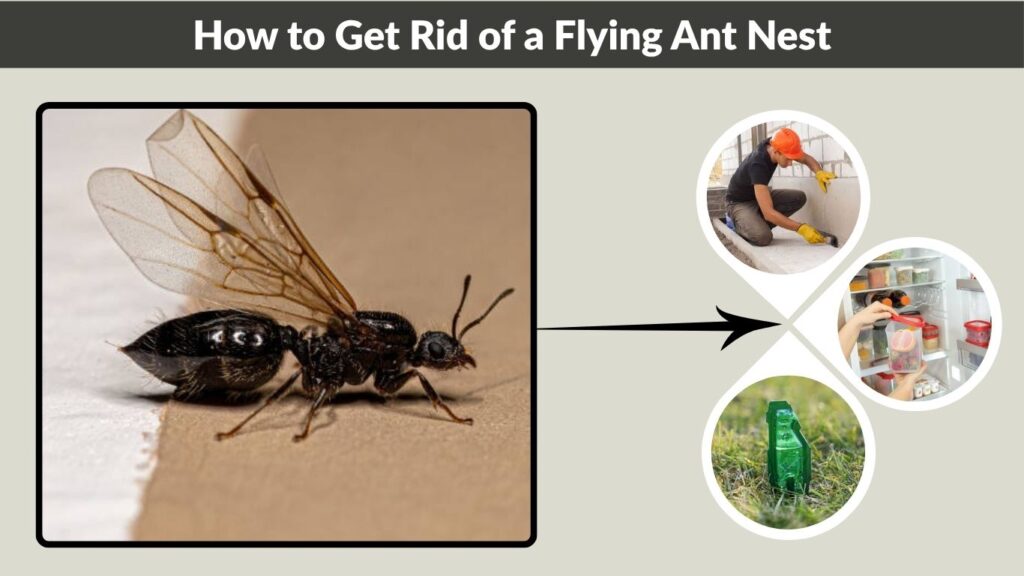
The best way to get rid of a flying ant nest depends on whether it is indoors or outdoors. Start with identification. Flying ants can be confused with winged termites, and termites need different treatment.
For indoor flying ants:
- Vacuum visible ants
- Seal cracks after activity stops
- Fix leaks and moisture problems
- Store food in sealed containers
- Use ant bait where workers are active
- Avoid spraying randomly into walls
- Call a professional for repeated swarms
For outdoor nests:
- Locate the nest entrance
- Keep food and waste sealed
- Reduce moisture near the foundation
- Move logs, boards, and firewood away
- Use appropriate outdoor ant bait
- Avoid disturbing aggressive ants
- Treat problem nests near entry points
If you suspect carpenter ants, termites, or ants nesting in structural wood, professional inspection is the safest option.
Flying Ant Nest Killer: What to Know
A flying ant nest killer may help, but it should match the ant species and nest location. Sprays often kill visible ants quickly but may not reach the queen or hidden colony. Baits can work better for some ant problems because workers carry the bait back to the nest.
Before using any product:
- Read the label carefully
- Keep children and pets away
- Use indoor products only indoors
- Use outdoor products only as directed
- Avoid contaminating food surfaces
- Do not overapply chemicals
For wall nests, repeated indoor swarms, or suspected carpenter ants, it is often better to get a pest professional rather than guessing.
What to Do With Flying Ants Nest
If the nest is outdoors and not causing issues, you may not need to do anything. Flying ant swarms are seasonal and often pass quickly. If the nest is indoors, close to the foundation, or producing repeated swarms, take action.
Practical next steps include:
- Identify whether they are ants or termites
- Clean up visible swarmers
- Look for the source
- Seal entry points
- Reduce moisture
- Use bait if appropriate
- Monitor for repeat activity
- Get help if the source is hidden
The goal is not just to remove flying ants but to understand why they are appearing.
FAQs
Do flying ants have nests?
Yes, flying ants come from regular ant nests. They are winged reproductive ants produced by a mature colony. The main nest may be in soil, walls, wood, gardens, lawns, or hidden indoor spaces.
Where do flying ants nest?
Flying ants may come from nests in the ground, lawns, gardens, paving cracks, wall voids, damp wood, roof spaces, or near foundations. The location depends on the ant species and available shelter.
What does a flying ant nest look like?
Outdoors, it may look like a small soil mound, hole, or crack with ant activity. Indoors, the nest may be hidden, with only flying ants, worker trails, or loose wings giving away the location.
How do I find a flying ant nest in my house?
Watch where the ants first appear. Check wall cracks, windows, baseboards, damp wood, bathrooms, kitchens, basements, and exterior walls. Loose wings and repeated activity in one room can point to the source.
How do I get rid of a flying ants nest?
Find the source, clean up visible ants, seal entry points, reduce moisture, and use suitable ant bait if workers are active. For wall nests, carpenter ants, termites, or repeated swarms, contact a pest control professional.
