
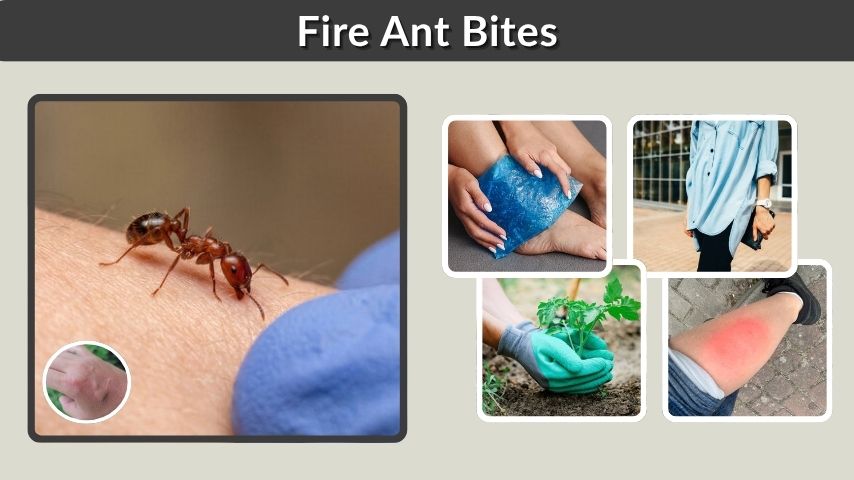
Fire ant bites can be painful, itchy, and surprisingly uncomfortable, especially when several ants sting at once. Many people call them “bites,” but fire ants usually bite first to grip the skin, then sting and inject venom. The result may be burning pain, redness, swelling, blisters, and days of itching. Knowing what fire ant bites look like, how to treat them, and when to seek medical help can reduce discomfort and prevent complications.
What Are Fire Ant Bites?
Fire ant bites are skin reactions caused by fire ants defending their colony. When a person steps on or near a mound, fire ants may swarm quickly and sting repeatedly. This is why fire ant bites often appear in clusters, especially on the feet, ankles, legs, hands, or arms.
Although people commonly say “fire ant bite,” the painful reaction usually comes from the sting. The ant bites the skin with its jaws, anchors itself, and then uses its stinger to inject venom. This venom causes the burning sensation that gives fire ants their name.
Fire ants are aggressive compared with many common ants. They may attack in groups, and one ant can sting more than once. Because of this, a person may develop several red bumps or pustules in the same area within a short time.
What Do Fire Ant Bites Look Like?
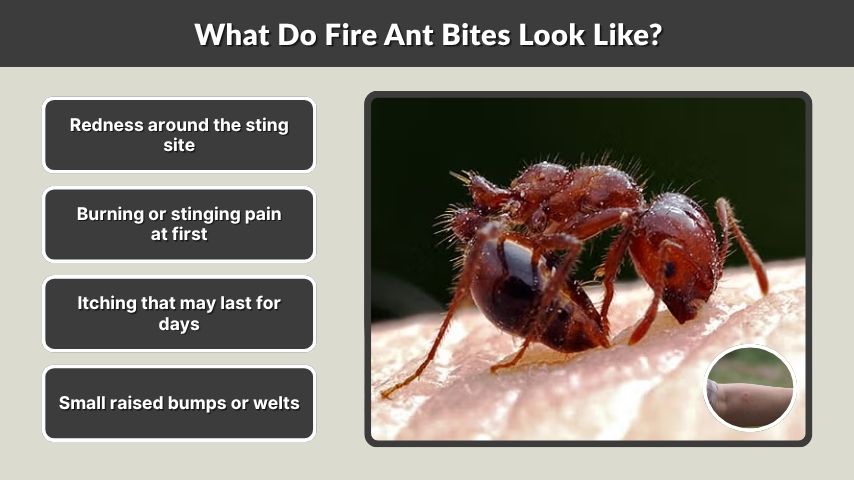
Fire ant bites often follow a recognizable pattern. At first, the area may feel like a sharp burning pinch. Soon after, small red bumps may appear. Over the next several hours, these bumps can become itchy and swollen.
Common Appearance
Most fire ant bites look like small red welts or raised bumps. In many cases, a white or yellowish pustule forms within about a day. This pustule may look like a tiny pimple or blister filled with fluid.
Common signs include:
- Redness around the sting site
- Burning or stinging pain at first
- Itching that may last for days
- Small raised bumps or welts
- White pustules or blisters
- Mild to moderate swelling
The pustule is a typical reaction to fire ant venom. It does not always mean the bite is infected. However, scratching, squeezing, or popping the blister can break the skin and increase the risk of infection.
Fire Ant Bites vs Other Bug Bites
Fire ant bites can be confused with mosquito bites, flea bites, or other ant bites. The biggest difference is the burning pain at the beginning and the pustule that may appear later. Fire ant stings also often appear in groups because multiple ants may sting at once.
| Feature | Fire Ant Bites | Mosquito Bites | Flea Bites |
| First feeling | Burning or stinging pain | Mild prick or no pain | Small sharp bite |
| Common look | Red bumps, pustules, swelling | Itchy raised bumps | Small red clustered bumps |
| Usual location | Feet, ankles, legs, hands | Exposed skin | Ankles, legs, waistline |
| Blister/pustule | Common | Uncommon | Uncommon |
| Main discomfort | Burning, itching, swelling | Itching | Itching |
Fire Ant Bite Symptoms
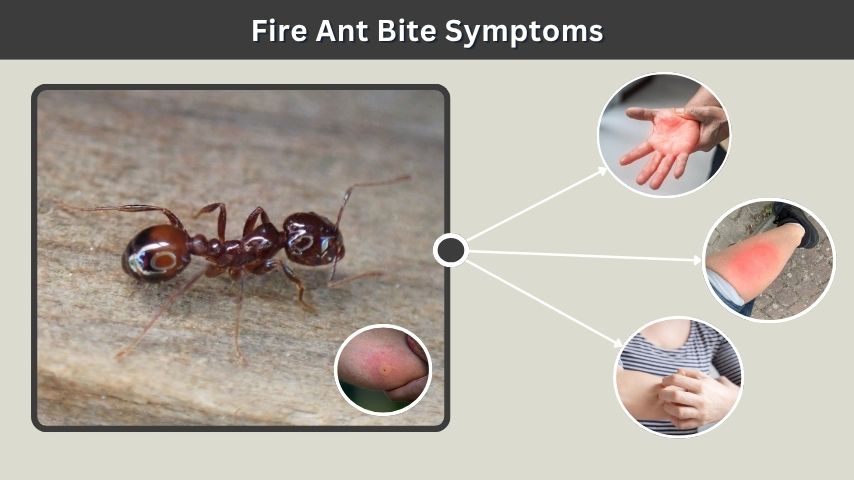
Symptoms vary depending on the number of stings, skin sensitivity, and whether the person is allergic. Most reactions are mild and can be treated at home. Others may need medical care, especially if swelling spreads or signs of allergy appear.
Mild Symptoms
Mild symptoms are the most common. These usually stay around the sting area and improve over several days.
Mild fire ant bite symptoms may include:
- Burning pain for a short time
- Redness near the bite
- Itching
- Tenderness
- Small blisters or pustules
- Minor swelling
The itching can be intense. It may get worse at night or when clothing rubs against the area. Keeping the skin clean and avoiding scratching can help the bites heal more comfortably.
Larger Local Reactions
Some people develop a larger reaction around the sting site. The area may become more swollen, warm, red, or painful than expected. This does not always mean infection, but it should be watched closely.
Large local reactions can happen on the foot, ankle, hand, or arm. Swelling may make the area feel tight or uncomfortable. If swelling keeps spreading, pain worsens, or the skin becomes very hot, medical advice is a good idea.
Allergic Reaction Symptoms
A fire ant bite allergic reaction can be serious. Some people are sensitive to fire ant venom and may develop symptoms beyond the sting site.
Warning signs may include:
- Hives away from the bite area
- Swelling of the lips, tongue, face, or throat
- Trouble breathing
- Wheezing
- Chest tightness
- Dizziness or fainting
- Nausea, vomiting, or stomach cramps
- Fast heartbeat
- Confusion or weakness
These symptoms may suggest anaphylaxis, a life-threatening allergic reaction. Emergency medical help is needed immediately.
How to Treat Fire Ant Bites
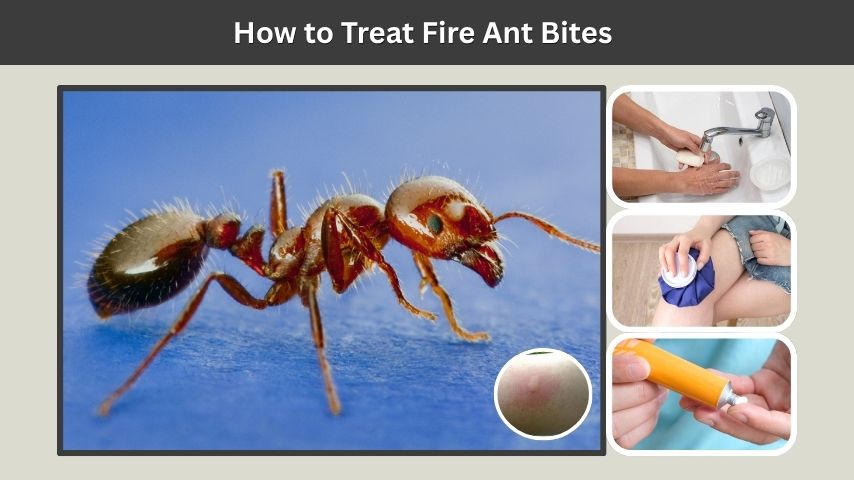
Most fire ant bites can be managed at home with simple first aid. The goals are to clean the area, reduce swelling, calm itching, and prevent infection.
Step-by-Step First Aid
Use these steps soon after being stung:
- Move away from the ant mound quickly.
- Brush ants off your skin and clothing.
- Wash the bites with soap and water.
- Apply a cold compress for 10 to 15 minutes.
- Use an over-the-counter anti-itch cream if needed.
- Avoid scratching or popping blisters.
- Keep the area clean and dry.
A cold compress can help reduce pain and swelling. Wrap ice or a cold pack in a thin cloth instead of putting ice directly on the skin.
What to Put on Fire Ant Bites
For mild itching and swelling, several over-the-counter options may help. Hydrocortisone cream can reduce itching and inflammation. Calamine lotion may soothe irritated skin. An oral antihistamine may help when itching is widespread or interfering with sleep.
Common options include:
- Cold compress
- Hydrocortisone cream
- Calamine lotion
- Oral antihistamine
- Mild pain reliever
- Gentle soap and water
Always follow the product label. For children, pregnant people, people with medical conditions, or anyone taking other medication, it is best to ask a healthcare professional or pharmacist before using oral medicine.
Home Remedies for Fire Ant Bites
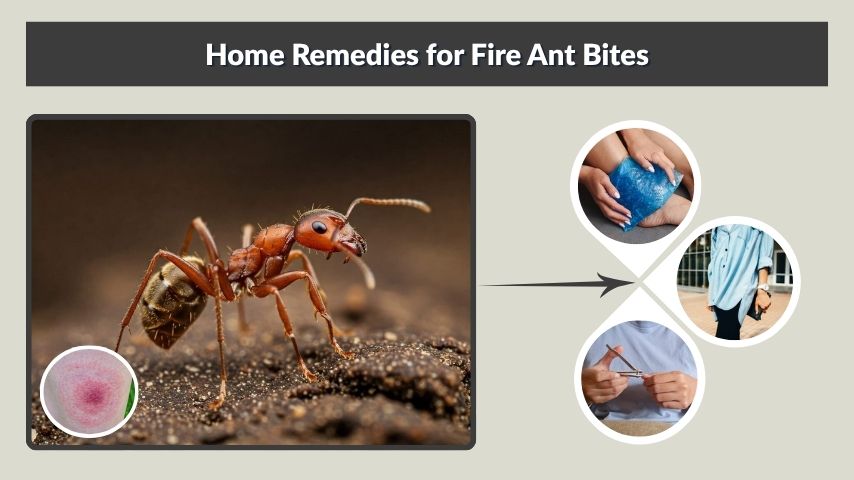
Home remedies may help with mild discomfort, but they should not replace medical care for allergic reactions, infection, or severe swelling. The safest home remedies are simple, gentle, and focused on cooling and protecting the skin.
Helpful Home Care Tips
You can try:
- Cool compresses to reduce swelling
- Elevating the affected foot or hand
- Keeping the area clean
- Wearing loose clothing around the bites
- Covering irritated spots with a clean bandage
- Trimming fingernails to reduce scratching damage
Avoid harsh remedies that can irritate the skin. Strong chemicals, undiluted essential oils, bleach, or aggressive scrubbing may make the reaction worse. The skin is already inflamed, so gentle care is usually better.
Should You Pop Fire Ant Bites?
No, you should not pop fire ant bite blisters or pustules. Even when they look like pimples, popping them can open the skin and let bacteria enter. This increases the chance of infection and may slow healing.
If a blister breaks on its own, wash the area gently with soap and water. Pat it dry and cover it with a clean bandage if clothing or shoes rub against it.
How Long Do Fire Ant Bites Last?
Fire ant bites often start with burning pain that fades within minutes to hours. Itching may last several days. Small pustules may appear within about 24 hours and can take several days to heal.
For many people, fire ant bites improve within 3 to 7 days. Some marks may linger longer, especially if the bites were scratched or irritated. Larger local reactions may take more time to fully calm down.
Healing can depend on:
- Number of stings
- Location of the bites
- Skin sensitivity
- Scratching or rubbing
- Whether infection develops
- Allergy history
If symptoms are getting worse instead of better after a few days, it may be time to contact a healthcare provider.
Infected Fire Ant Bite: Signs to Watch For
A fire ant bite can become infected if bacteria enter broken skin. This is more likely when bites are scratched, picked, or popped.
Possible Infection Signs
Watch for:
- Increasing redness
- Worsening pain
- Skin that feels hot
- Swelling that keeps spreading
- Pus or drainage
- Red streaks from the bite area
- Fever
- Tender swollen lymph nodes
A white pustule by itself is common after a fire ant sting and does not always mean infection. The bigger concern is worsening pain, spreading redness, warmth, fever, or drainage. If these signs appear, seek medical advice.
Fire Ant Bites on Dogs
Dogs can also get fire ant bites, especially on their paws, belly, nose, or mouth. Curious dogs may sniff or step on fire ant mounds and get stung several times.
Signs in dogs may include:
- Licking or chewing paws
- Sudden yelping or restlessness
- Red bumps
- Swelling
- Limping
- Facial swelling
- Vomiting
- Weakness
- Trouble breathing
If your dog has mild paw irritation, move them away from the ants, brush off any remaining ants, and contact your veterinarian for safe treatment advice. Do not give human medication unless a veterinarian says it is safe. If your dog has facial swelling, vomiting, weakness, collapse, or breathing problems, seek emergency veterinary care.
How to Prevent Fire Ant Bites
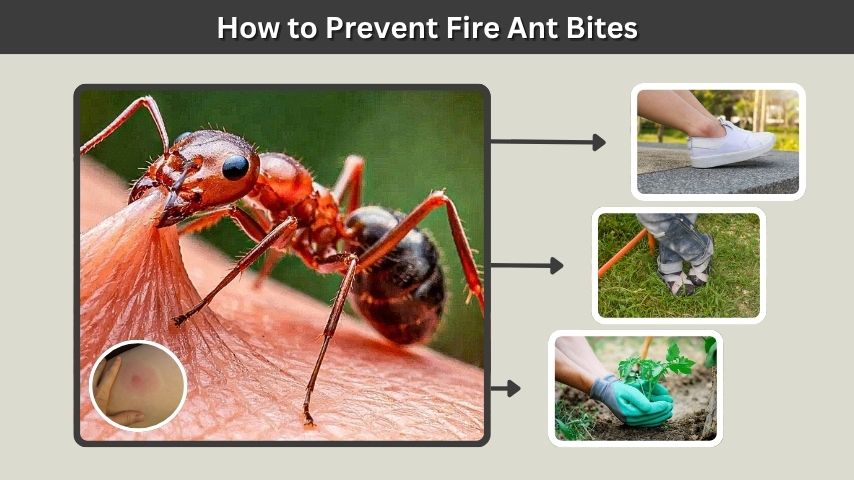
Prevention is important because fire ants can sting quickly and repeatedly. The best way to avoid bites is to avoid disturbing fire ant mounds and protect your skin when outdoors.
Prevention Tips
Use these habits in fire ant areas:
- Watch for mounds before walking, gardening, or sitting.
- Wear closed-toe shoes outdoors.
- Use socks and long pants when working in grass.
- Wear gloves while gardening.
- Do not stand on or near ant mounds.
- Keep children and pets away from mounds.
- Shake out shoes, towels, and outdoor gear.
- Treat fire ant colonies safely when needed.
If your yard has many fire ant mounds, consider professional pest control or approved fire ant treatments. Avoid disturbing large colonies without protection.
When to See a Doctor
Most fire ant bites do not need a doctor. However, medical help is important if symptoms are severe, spreading, or unusual.
See a doctor if:
- Swelling is severe or spreading
- Pain gets worse after the first day
- Redness expands around the bite
- You see signs of infection
- Bites are near the eyes, mouth, or genitals
- A child has many stings
- You have a history of serious allergic reactions
- Symptoms do not improve after several days
Call emergency services right away if there is trouble breathing, throat swelling, dizziness, fainting, widespread hives, chest tightness, or confusion. These may be signs of anaphylaxis.
FAQs
Do fire ants bite or sting?
Fire ants can do both. They bite to grip the skin, then sting and inject venom. The sting is usually what causes the burning pain, swelling, itching, and pustule that many people associate with fire ant bites.
What is the best treatment for fire ant bites?
The best treatment for mild fire ant bites is washing the area with soap and water, applying a cold compress, using anti-itch cream, and avoiding scratching. Oral antihistamines may help with itching, but severe allergic symptoms need emergency care.
What does a fire ant bite look like?
A fire ant bite often looks like a red, raised bump that may turn into a small white pustule or blister within about a day. Bites often appear in clusters, especially on the feet, ankles, legs, or hands.
How long do fire ant bites itch?
Fire ant bites may itch for several days. Some people feel relief within 2 or 3 days, while others may have itching for a week or more. Scratching can make itching worse and may increase the risk of infection.
Should I pop a fire ant bite blister?
No. Do not pop a fire ant bite blister or pustule. Popping it can break the skin, introduce bacteria, and increase infection risk. Keep the area clean and let it heal naturally.
