
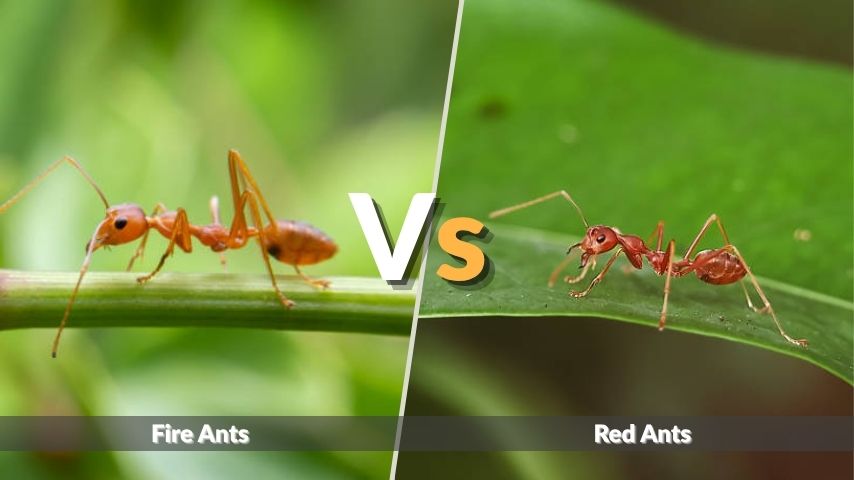
Fire ants and red ants are often mistaken for the same insect because many ant species have a reddish appearance. However, fire ants belong to a specific group known for their painful stings, aggressive behavior, and large colonies, while the term “red ants” can refer to several different species. Understanding the differences between these ants is important for identification, safety, and pest control. This guide compares fire ants and red ants in terms of appearance, behavior, bites, nests, and overall impact on humans and the environment.
Are Fire Ants and Red Ants the Same?
Many people use the terms fire ants and red ants interchangeably, but they are not always the same. Fire ants are a specific type of ant, while red ants are a broader category that includes several ant species with reddish coloring.
Why the Confusion Exists
The confusion occurs because most fire ants are reddish-brown in color. When homeowners encounter red-colored ants in their yards, they often assume they are fire ants. In reality, red carpenter ants, harvester ants, and other species may look similar at first glance but behave very differently.
Scientific Difference
Fire ants belong primarily to the genus Solenopsis. They are known for their aggressive defense mechanisms and painful stings. Red ants, on the other hand, may belong to several different genera and vary significantly in behavior, habitat, and threat level.
Fire Ants vs Red Ants at a Glance
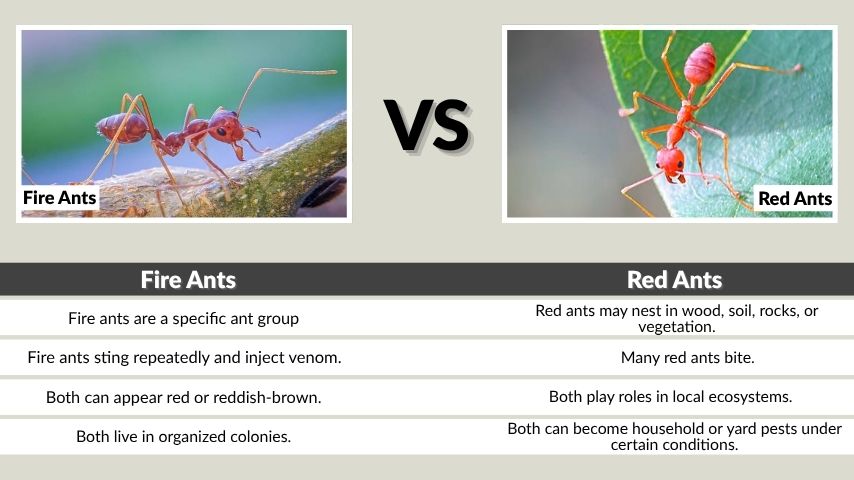
Before examining specific characteristics, it helps to compare the most important features side by side. While both may share a reddish appearance, their behavior and impact differ greatly.
Key Differences
- Fire ants are a specific ant group, while red ants include many species.
- Fire ants sting repeatedly and inject venom.
- Many red ants bite but do not have powerful stings.
- Fire ants build large soil mounds in open areas.
- Red ants may nest in wood, soil, rocks, or vegetation.
- Fire ants are generally more aggressive toward humans and animals.
Similarities
- Both can appear red or reddish-brown.
- Both live in organized colonies.
- Both play roles in local ecosystems.
- Both can become household or yard pests under certain conditions.
Fire Ant vs Red Ant Identification
Correct identification is essential because treatment methods and risks vary depending on the species. Physical characteristics often provide the first clues.
Body Appearance
Fire ants typically have a coppery-red head and body with a darker abdomen. Worker ants vary in size within the same colony, which is one of their distinguishing features. Many other red ants have a more uniform appearance and size.
Size Comparison
Fire ant workers usually range from 2 to 6 millimeters in length. Colonies contain workers of different sizes that perform different tasks. Some red ant species may be larger or smaller, depending on the species involved.
Color Differences
Although fire ants are generally reddish-brown, not every red ant shares the same shade. Some species appear bright red, while others may have darker red or reddish-black coloring. Color alone should never be used as the only identification factor.
Fire Ant Bite vs Red Ant Bite
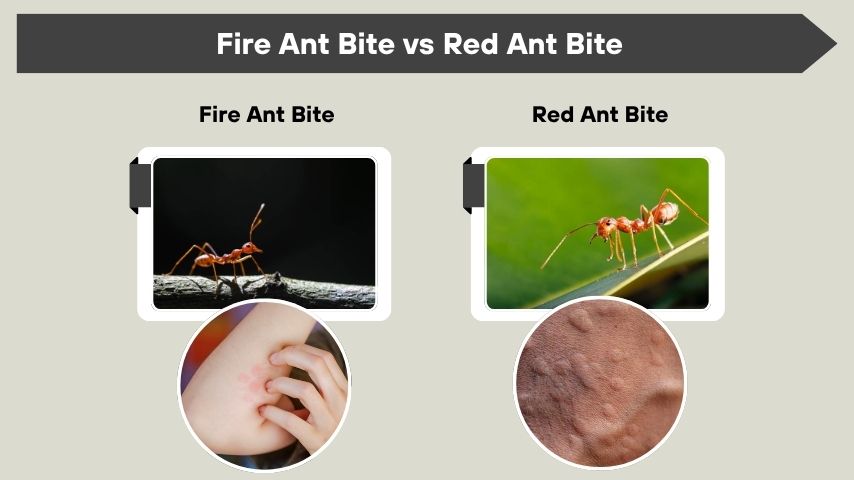
One of the biggest concerns for homeowners is the difference between fire ant bites and red ant bites. This distinction is important because the symptoms can vary significantly.
How Fire Ants Attack
Fire ants first bite to anchor themselves to the skin. After securing their position, they sting multiple times in a circular pattern. Their venom causes intense burning pain and often produces white pustules within a day.
Symptoms of Fire Ant Stings
Common symptoms include:
- Immediate burning sensation
- Redness and swelling
- Itching around the sting site
- White pus-filled blisters
- Allergic reactions in sensitive individuals
Because multiple ants often attack at once, victims may receive numerous stings within seconds.
How Typical Red Ants Bite
Many red ant species rely primarily on biting rather than stinging. Their bites are often painful but usually less severe than fire ant stings. Depending on the species, the discomfort may disappear within a few hours without major complications.
Fire Ant Mounds vs Red Ant Nests
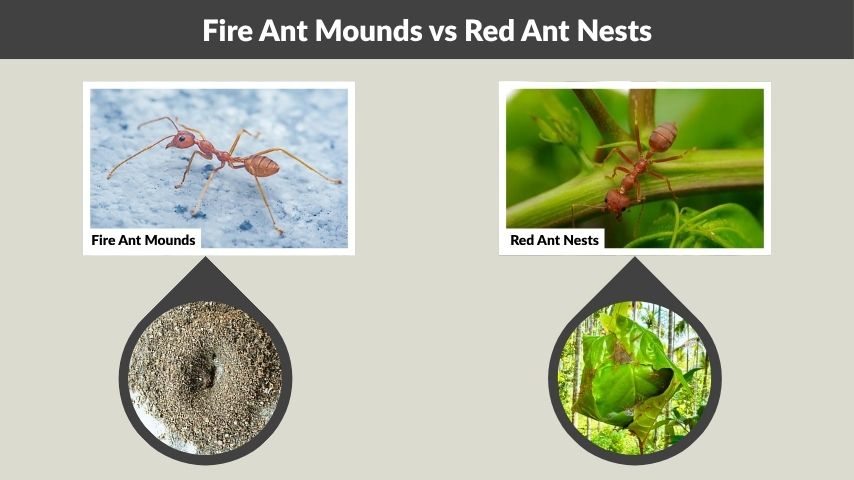
Nest structure is one of the easiest ways to distinguish fire ants from other red ants. Observing the colony from a safe distance can reveal important clues.
Fire Ant Mounds
Fire ants are famous for constructing large soil mounds in lawns, fields, parks, and roadside areas. These mounds may reach several inches in height and often lack a visible entrance hole at the top. Workers enter and exit through underground tunnels instead.
When disturbed, thousands of ants can emerge rapidly to defend the colony. This aggressive response is one of the defining characteristics of fire ants.
Red Ant Nesting Habits
Red ants use a wider variety of nesting locations. Depending on the species, colonies may be found inside rotting wood, beneath rocks, within tree roots, or underground. Some species build small soil nests, while others prefer hidden locations that provide protection from predators and weather conditions.
Because nesting habits differ greatly among red ant species, identifying the nest alone may not always be enough. However, combining nest observations with ant appearance can greatly improve identification accuracy.
Fire Ants vs Red Ants: Who Would Win?
When comparing fire ants to other red ant species, the outcome often depends on colony size, aggression, and defensive abilities. Fire ants are among the most successful invasive ants because they aggressively defend territory and rapidly expand their colonies.
Advantages of Fire Ants
Fire ants possess several traits that give them an advantage in territorial conflicts:
- Large colony populations
- Aggressive swarming behavior
- Painful venomous stings
- Rapid colony expansion
- Ability to adapt to various environments
Situations Where Red Ants Compete Successfully
Some native red ant species can resist fire ant invasions under favorable conditions. Species with strong colony structures, specialized habitats, or effective defensive behaviors may maintain their populations despite fire ant pressure.
In most direct confrontations, however, fire ants often dominate because of their numbers and coordinated attacks.
Red Harvester Ant vs Fire Ant
Red harvester ants are commonly confused with fire ants due to their similar coloration. Despite their appearance, these species differ significantly in behavior and ecological role.
Physical Differences
Red harvester ants are generally larger than fire ants and have a more robust body structure. Fire ants tend to vary in size within a colony, whereas harvester ants are usually more uniform.
Sting Comparison
Both species can sting, but their stings differ in effect. Fire ant stings often result in painful pustules and prolonged irritation. Harvester ant stings are extremely painful but usually do not produce the same characteristic blisters associated with fire ants.
Ecological Role
Harvester ants primarily collect and store seeds, helping influence plant distribution and soil health. Fire ants are opportunistic feeders that consume insects, seeds, and other food sources.
Red Carpenter Ant vs Fire Ant
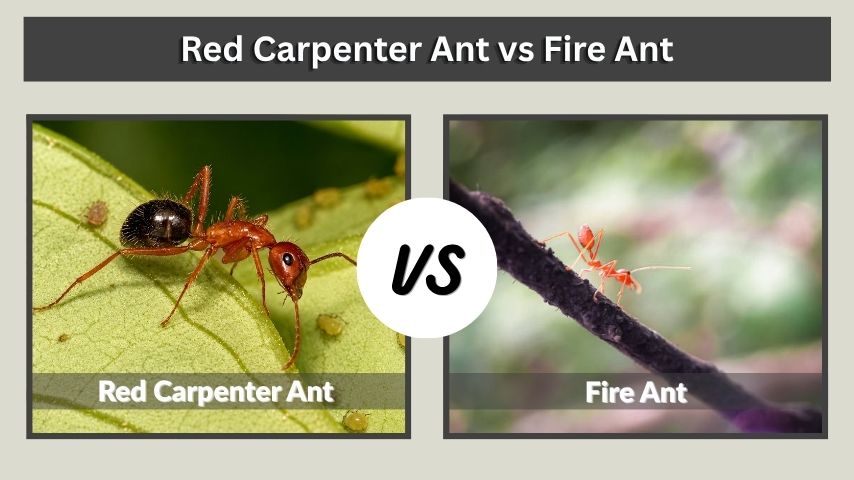
Although both species may appear reddish, carpenter ants and fire ants occupy very different habitats and pose different risks.
Nesting Behavior
Carpenter ants typically establish colonies inside damp or decaying wood. They excavate tunnels to create nesting galleries but do not consume wood as termites do.
Fire ants prefer underground nests and construct visible mounds in open soil.
Human Concerns
The main concern with carpenter ants is structural damage caused by their nesting activities. Fire ants are considered more dangerous because of their aggressive stinging behavior and potential health risks.
Bite and Sting Differences
Carpenter ants can bite using powerful jaws, but they lack the repeated venomous stings that make fire ants notorious. As a result, encounters with carpenter ants are generally less medically significant.
Argentine Ant vs Red Imported Fire Ant
Argentine ants and red imported fire ants are two highly successful invasive species that compete in many regions around the world.
Colony Structure
Argentine ants form enormous interconnected colonies that may contain millions of workers. Unlike many ant species, neighboring Argentine ant colonies often cooperate rather than compete.
Fire ants form large colonies as well, but individual colonies remain more distinct and territorial.
Competition Between Species
When these species occupy the same area, competition for food and nesting sites can be intense. The outcome depends on environmental conditions, colony size, and available resources.
In some regions, Argentine ants successfully displace native ants. In others, fire ants become the dominant invasive species due to their aggressive defense strategies.
Texas Red Ants vs Fire Ants
Texas is home to several native red ant species as well as large populations of imported fire ants. Because both are common, misidentification frequently occurs.
Common Differences in Texas
- Fire ants build noticeable soil mounds.
- Native red ants often have more specialized habitats.
- Fire ants are generally more aggressive toward people.
- Fire ant infestations spread rapidly across lawns and pastures.
Which Is More Dangerous?
For most homeowners, fire ants represent the greater concern. Their painful stings, large colonies, and invasive nature make them one of the most problematic outdoor pests in Texas.
Native red ants may still bite or sting, but they rarely cause the same level of widespread infestation.
How to Control Fire Ants and Other Red Ants
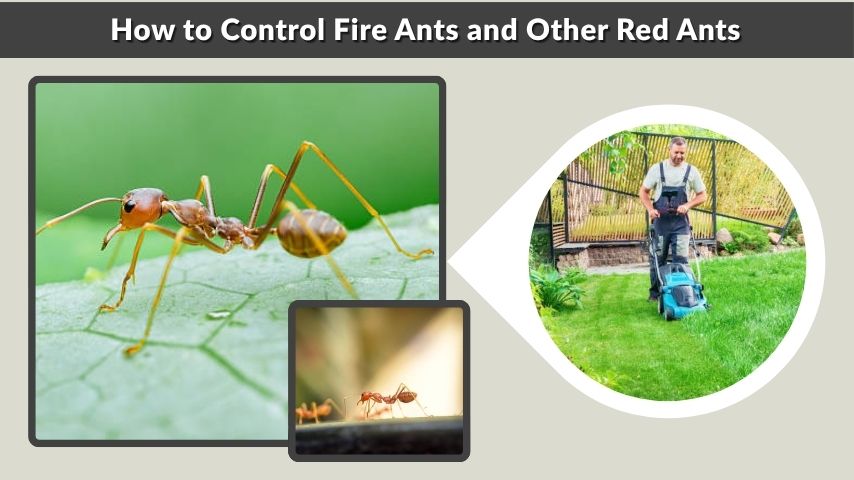
Effective control begins with proper identification. Different species often require different management strategies.
Fire Ant Control Methods
Several approaches can help reduce fire ant populations:
- Use approved fire ant bait products.
- Treat active mounds directly.
- Maintain healthy lawns and landscapes.
- Monitor properties for new colony formation.
- Follow local pest management recommendations.
Because fire ants can quickly re-establish colonies, ongoing monitoring is important.
Control for Other Red Ant Species
Management strategies vary depending on the species involved. Carpenter ants may require moisture control and wood repairs, while harvester ants often require targeted treatments around nesting areas.
Understanding the specific ant species present helps ensure that control efforts are both effective and environmentally responsible.
FAQs
Are all red ants fire ants?
No. Fire ants are only one type of red-colored ant. Many other species may also appear red.
Do fire ants bite or sting?
Fire ants both bite and sting. They use their bite to hold onto the skin before delivering multiple venomous stings.
How can I identify a fire ant mound?
Fire ant mounds are usually dome-shaped soil structures without a visible entrance hole at the top.
Which is more painful, a fire ant or a red ant?
In most cases, fire ant stings are more painful and produce more severe reactions than typical red ant bites.
Are fire ants invasive?
Many fire ant species, especially the red imported fire ant, are considered highly invasive and can disrupt local ecosystems.
