
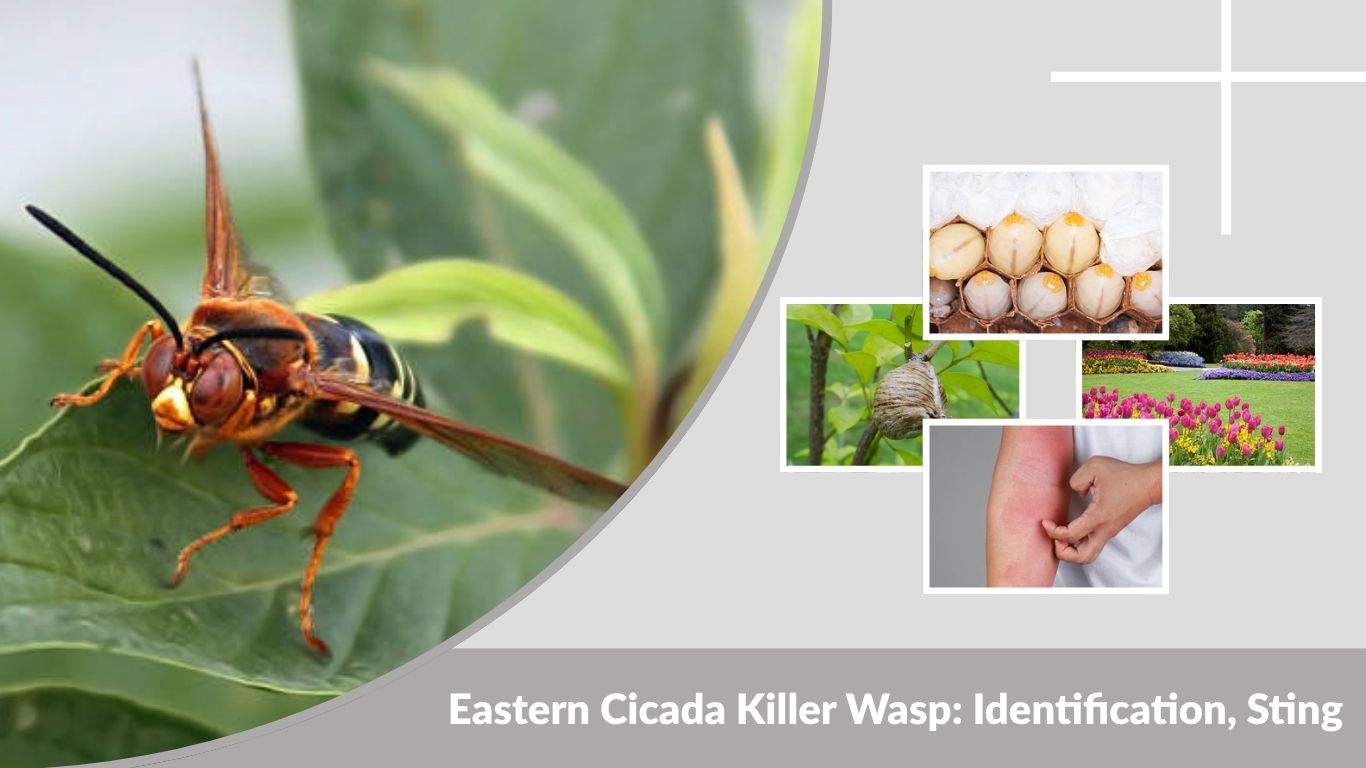
The eastern cicada killer wasp is one of the largest and most eye-catching wasps in North America. Its size and bold coloring often make people nervous, especially when it appears in yards, gardens, or near homes.
Many people immediately assume it is dangerous or aggressive. However, despite its intimidating look, this wasp is mostly harmless to humans and plays an important role in the ecosystem.
In this guide, you’ll learn how to identify the eastern cicada killer, understand its behavior, and determine whether it’s something to worry about—or actually appreciate.
What Is the Eastern Cicada Killer Wasp?
The eastern cicada killer wasp, scientifically known as Sphecius speciosus, belongs to the Crabronidae family. Unlike hornets or yellowjackets, it is a solitary wasp, meaning it does not live in colonies or defend large nests.
Its name comes from its unique behavior—female wasps hunt and paralyze cicadas to feed their developing offspring.
Despite being a predator, this wasp is considered beneficial because it helps control cicada populations and contributes to a balanced ecosystem.
Identification: Size, Color, and Appearance
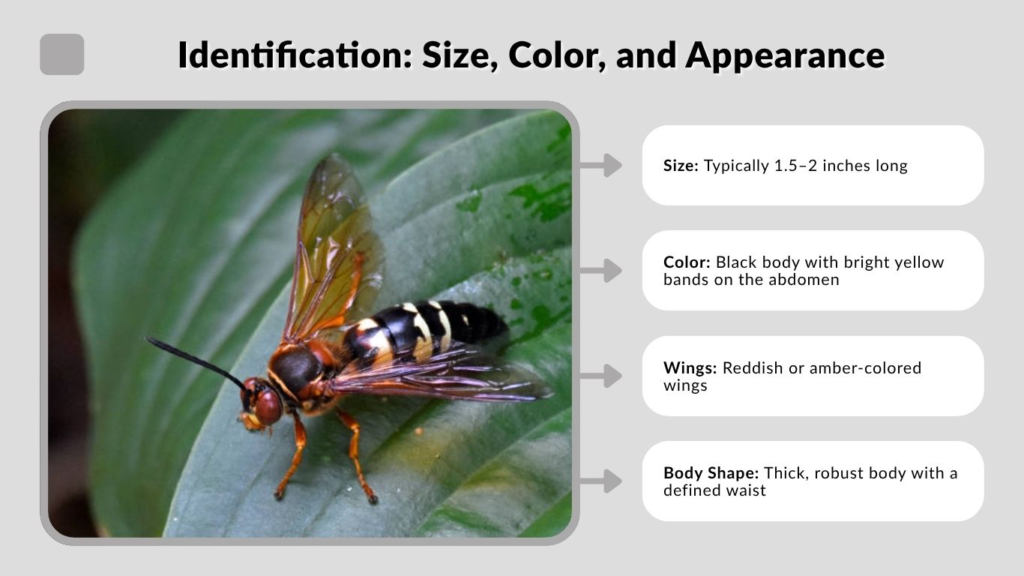
The eastern cicada killer is easy to recognize once you know its key features. Its large size and bold markings often cause confusion with hornets, but a closer look reveals important differences.
Physical Characteristics
- Size: Typically 1.5–2 inches long (one of the largest wasps)
- Color: Black body with bright yellow bands on the abdomen
- Wings: Reddish or amber-colored wings
- Body Shape: Thick, robust body with a defined waist
- Overall Look: Resembles a large hornet but less aggressive in behavior
Male vs Female Differences
- Females are larger and equipped with a stinger
- Males are smaller and more active around nesting areas
- Males cannot sting at all
Common Misidentifications
Because of its size and color, this wasp is often mistaken for:
- European hornets
- Asian giant hornets (“murder hornets”)
- Yellowjackets
This confusion is one of the main reasons people fear cicada killers, even though their behavior is very different.
Eastern Cicada Killer Size and Why It Looks Scary
One of the main reasons people are alarmed by this wasp is its large size. At up to 2 inches long, it is significantly bigger than common wasps and bees.
This size makes it look more dangerous than it actually is. In reality, size does not determine aggression. While hornets of similar size can be aggressive, cicada killers are much calmer and less defensive.
Their slow, heavy flight and loud buzzing can also add to their intimidating presence, but these traits are harmless.
Eastern Cicada Killer Wasp Habitat and Geographic Range
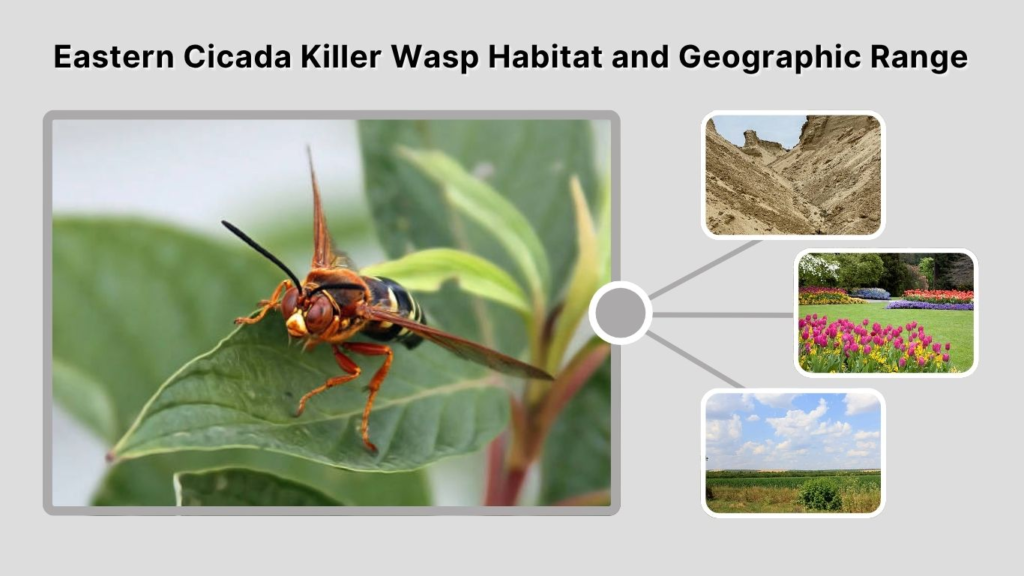
The eastern cicada killer is widely distributed across the eastern and central United States. It is commonly seen in states such as Texas, Georgia, Florida, Missouri, Virginia, and New Jersey.
Preferred Habitat
These wasps prefer environments that make nesting easy:
- Sandy or loose soil
- Lawns and gardens
- Open, sunny areas
- Areas with minimal vegetation cover
They are especially attracted to places where the ground is easy to dig, which is why they are often found in residential yards.
Eastern Cicada Killer Nest (Burrow)
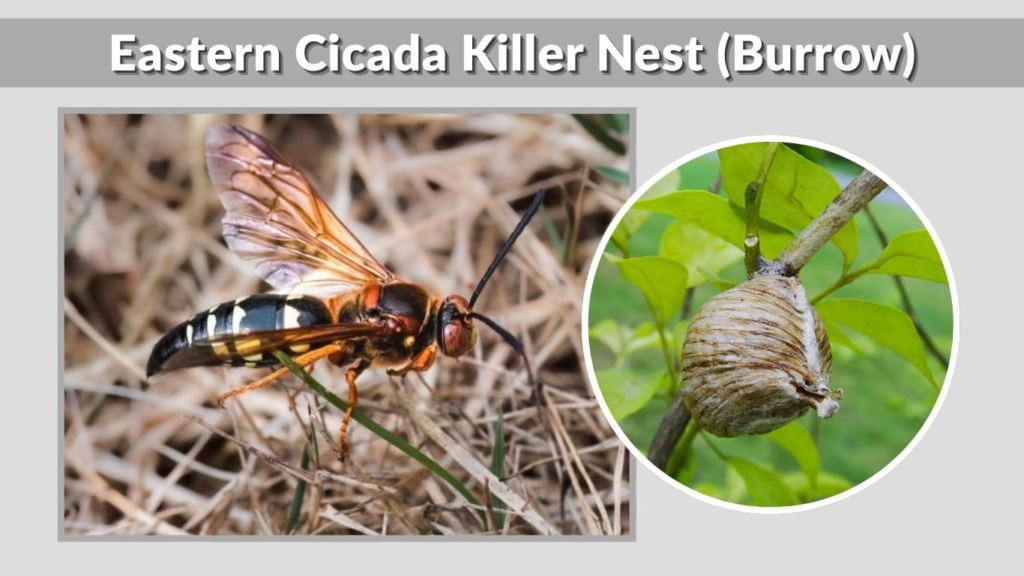
Unlike many wasps that build visible nests, cicada killers create underground burrows.
What the Burrow Looks Like
The entrance to a cicada killer nest is usually easy to spot:
- A round hole in the ground
- A small mound of loose soil around it
- Often found in clusters if multiple females are nesting nearby
These holes can resemble ant hills but are typically larger.
Nest Structure
Inside the ground, the wasp creates:
- A main tunnel
- Several side chambers
- Each chamber holds one egg
Each chamber is carefully prepared to support the development of a single larva.
Where Nests Are Commonly Found
You are most likely to find these burrows in:
- Lawns
- Garden beds
- Sandboxes
- Along sidewalks or driveways
Although they may appear alarming, these nests do not cause significant structural damage.
Life Cycle of the Eastern Cicada Killer
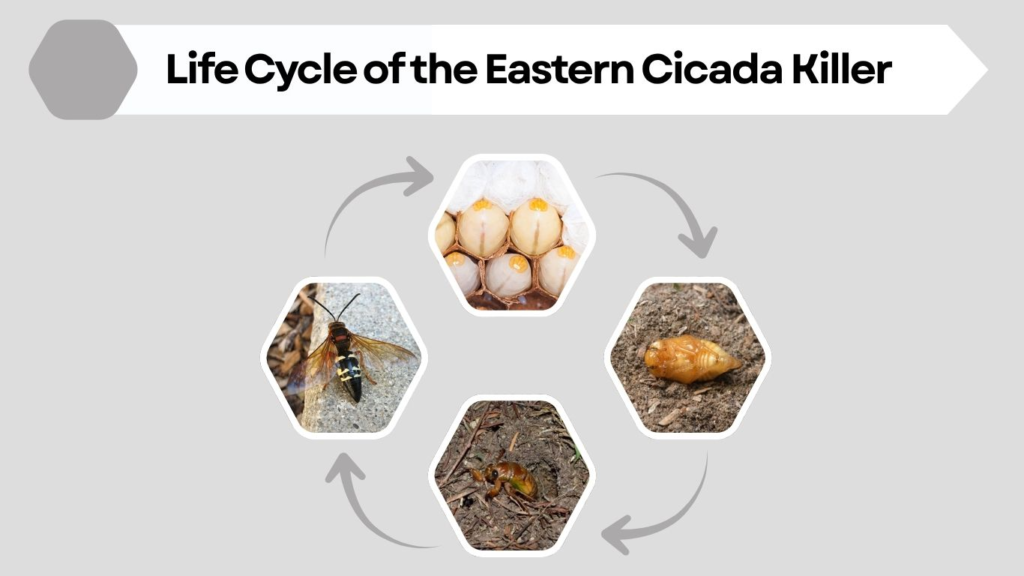
The eastern cicada killer undergoes a complete life cycle consisting of four stages: egg, larva, pupa, and adult.
The process begins when the female captures and paralyzes a cicada. She then places it inside a chamber and lays an egg on it.
Once the egg hatches, the larva feeds on the cicada, using it as a food source.
Lifecycle Timeline
- Eggs hatch within a few days
- Larvae develop over several weeks
- Pupation occurs underground
- Adults emerge the following summer
This cycle ensures that adult wasps appear during peak cicada activity.
What Do Eastern Cicada Killer Wasps Eat?
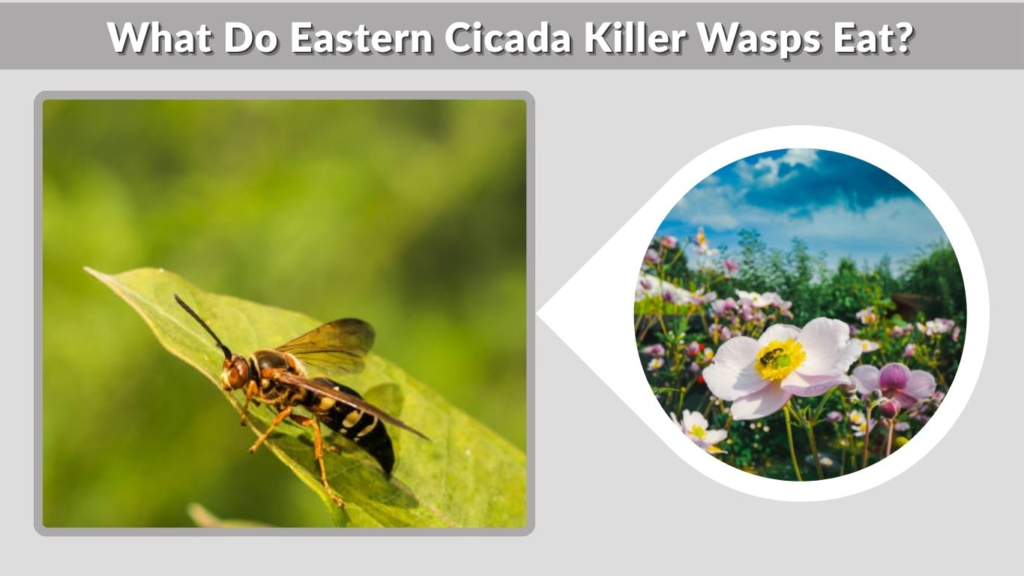
Adult cicada killers primarily feed on nectar from flowers, making them occasional pollinators.
However, the female has a unique hunting role. She captures cicadas, stings them to paralyze them, and carries them back to her burrow.
These cicadas are not eaten immediately. Instead, they serve as a food supply for the developing larvae.
This behavior makes cicada killers beneficial, as they help regulate cicada populations naturally.
Eastern Cicada Killer Male vs Female
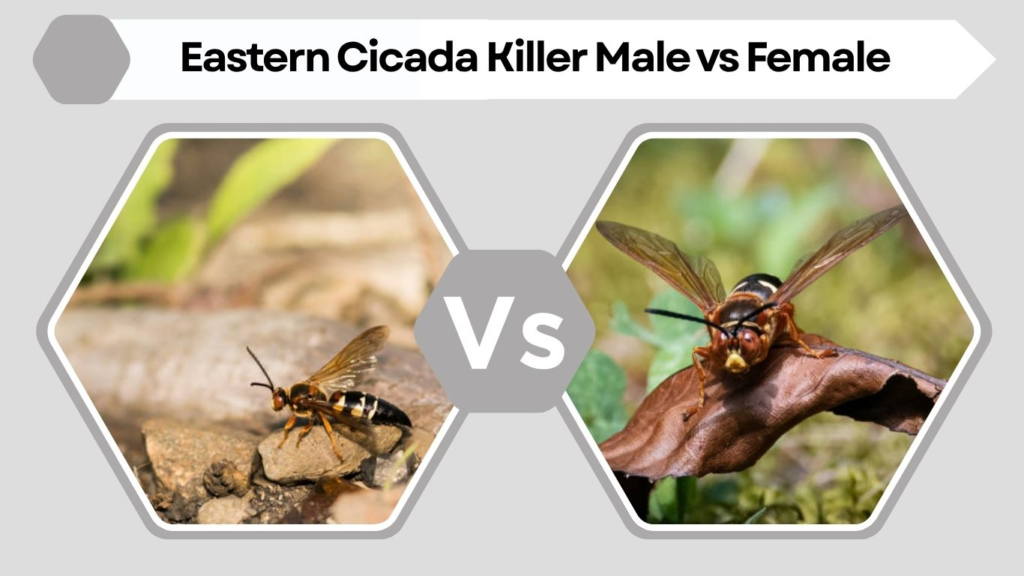
Understanding the difference between male and female cicada killers helps explain their behavior.
Male Behavior
Male cicada killers are often seen flying aggressively around nesting areas. They may:
- Hover near people
- Dive or buzz close to intruders
- Defend territory
Despite this intimidating behavior, males are completely harmless because they cannot sting.
Female Behavior
Females are responsible for:
- Hunting cicadas
- Building nests
- Laying eggs
They are generally calm and focused on their tasks and will avoid humans unless directly threatened.
Are Eastern Cicada Killer Wasps Aggressive?
Despite their size and intimidating behavior, eastern cicada killer wasps are not aggressive toward humans.
They do not form colonies, so they have no need to defend a shared nest like hornets or yellowjackets.
Why They Seem Aggressive
Some people feel threatened because:
- Males fly quickly toward people
- They hover and “dive-bomb” intruders
- Their buzzing is loud and noticeable
However, this is territorial behavior, not aggression.
The Truth About Their Behavior
- Males: territorial but harmless (cannot sting)
- Females: calm and avoid humans
- No swarming or chasing behavior
Overall, they are far less aggressive than most wasps.
Do Eastern Cicada Killer Wasps Sting?
A common concern is whether these wasps sting humans.
Yes, female cicada killers can sting, but it is very rare. They are not defensive by nature and usually avoid human contact.
Males, despite their aggressive display, cannot sting at all.
When Stings May Occur
Stings are most likely in situations such as:
- Handling the wasp
- Stepping on it accidentally
- Disturbing its burrow
In everyday encounters, stings are unlikely.
Eastern Cicada Killer Sting Pain
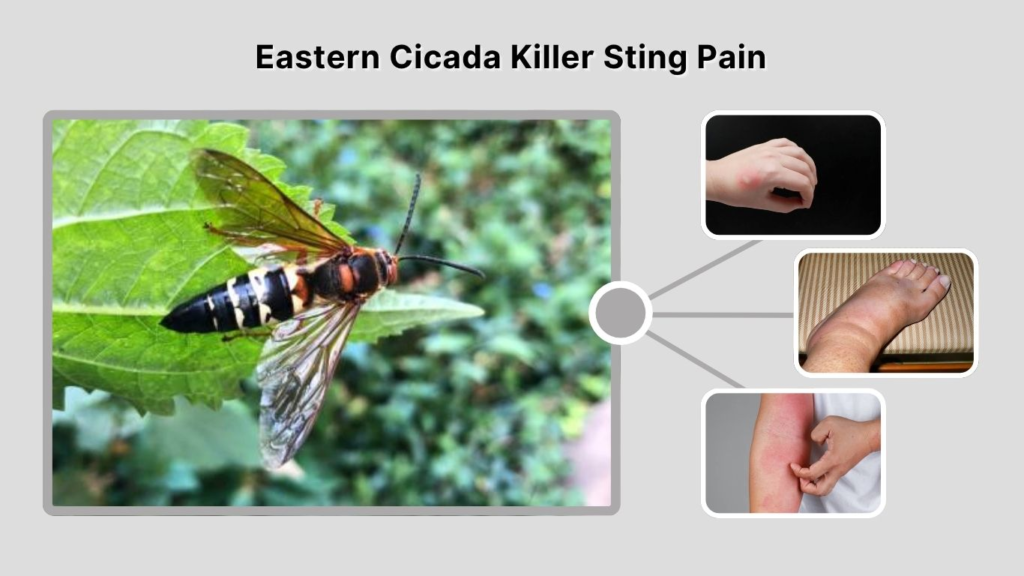
Understanding the sting helps reduce fear.
The sting is typically described as mild to moderate. It is not as painful as stings from hornets or more aggressive wasps.
Common Symptoms
After a sting, you may notice:
- Sharp but brief pain
- Redness around the area
- Mild swelling
- Slight irritation or itching
These symptoms usually fade within a short time.
Allergic Reactions
Although rare, allergic reactions can occur. Warning signs include:
- Severe swelling
- Difficulty breathing
- Dizziness
If these symptoms appear, medical attention is necessary.
Are Eastern Cicada Killer Wasps Dangerous to Humans?
Evaluating their actual threat level.
For most people, eastern cicada killers are not dangerous. They do not attack, swarm, or actively seek to sting humans.
Their intimidating appearance often exaggerates the perceived risk.
Risk Summary
- Very low risk for the general population
- Minimal human interaction
- Rare stings
When They Can Be a Concern
They may be a concern if:
- You are allergic to insect stings
- Burrows are located in high-traffic areas
- There is frequent accidental contact
Even then, the risk remains relatively low.
Eastern Cicada Killer Predators
These wasps are part of a larger food chain.
Natural predators include:
- Birds that feed on insects
- Small mammals
- Other predatory insects
- Parasitic species that target larvae
These predators help keep their population balanced.
Eastern Cicada Killer vs Hornets
A comparison helps reduce confusion and fear.
Vs European Hornet
- Similar size and color patterns
- Hornets are social and aggressive
- Cicada killers are solitary and calm
Vs Asian Giant Hornet (Murder Hornet)
- Cicada killers are less aggressive
- Do not attack humans or form colonies
- Pose no serious threat
Key Differences
- Solitary vs social behavior
- Underground burrows vs paper nests
- Low aggression vs high aggression
Benefits of Eastern Cicada Killer Wasps
These wasps provide important ecological benefits.
- Control cicada populations naturally
- Reduce the need for pesticides
- Contribute to pollination while feeding on nectar
- Support ecosystem balance
Their presence is often a sign of a healthy environment.
How to Get Rid of Eastern Cicada Killer Wasps
While generally harmless, some people may want to reduce their presence.
Prevention Tips
- Keep lawns thick and well-maintained
- Reduce areas of bare or sandy soil
- Add mulch to exposed ground
Natural Control Methods
- Regularly water soil to make digging difficult
- Encourage dense vegetation
- Remove attractants like exposed soil patches
Direct Control Options
- Fill burrows with soil or sand
- Use safe insect control products if necessary
- Address nesting areas early
When to Call Professionals
- Large or repeated infestations
- Wasps nesting in high-traffic areas
- Safety concerns due to allergies
Quick Facts Summary
Key points at a glance.
- One of the largest wasps in North America
- Solitary and non-aggressive
- Males cannot sting; females rarely sting
- Nest in underground burrows
- Beneficial for pest control
FAQs
Are eastern cicada killer wasps dangerous?
No, they are not dangerous to most people. They are non-aggressive and rarely sting. Their large size may look intimidating, but they pose little risk unless someone has an allergic reaction.
Do eastern cicada killer wasps sting humans?
Yes, females can sting, but it is uncommon. Males cannot sting at all. Most encounters with humans do not result in stings.
Why do cicada killers fly at people?
Male cicada killers are territorial and may fly toward people to defend their area. However, they cannot sting, so this behavior is harmless and mainly for display.
What does an eastern cicada killer nest look like?
Their nests are underground burrows with visible holes and loose soil around the entrance. Inside, there are chambers containing eggs and paralyzed cicadas.
How do you get rid of eastern cicada killer wasps?
You can reduce their presence by eliminating bare soil, watering lawns regularly, and filling burrows. For larger infestations, professional pest control may be needed.
