
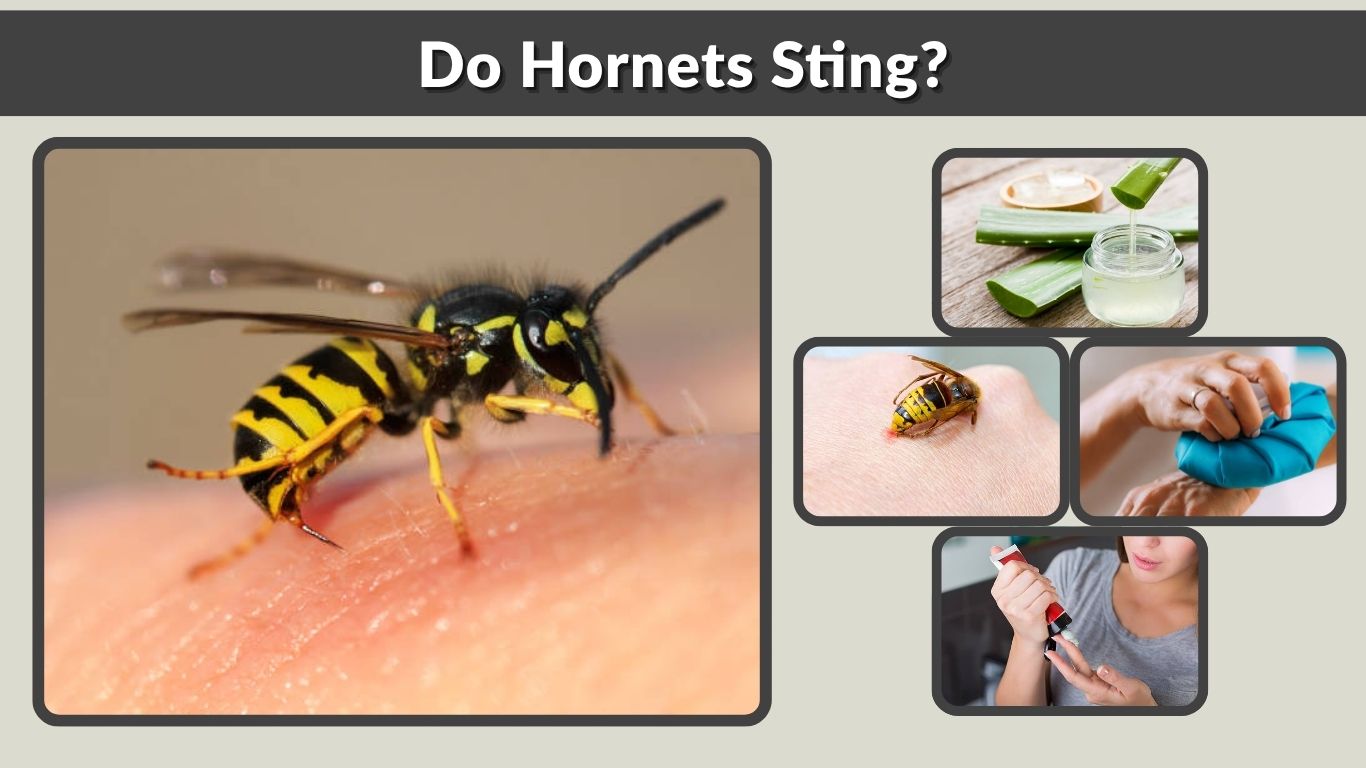
Hornets are often feared because of their painful stings and aggressive reputation. Many people wonder whether hornets sting or bite, how dangerous they are, and what to do if they get stung. In reality, hornets use their stinger as a defense mechanism and can sting more than once. Understanding their behavior, pain level, and treatment options can help you stay safe and respond quickly. This guide explains how hornets sting, why they do it, and what you should do if it happens.
Do Hornets Sting or Bite
Hornets do not bite in the way many people think. Their primary defense mechanism is stinging. While they do have strong jaws that can grip or chew, these are not used to inject venom. Instead, hornets rely on their stinger to protect themselves and their colony.
When a hornet stings, it injects venom into the skin, which causes immediate pain and triggers the body’s reaction. This is why their sting feels sharp and intense compared to many other insects. Understanding this difference helps clear up the confusion between biting and stinging.
Why Do Hornets Sting
Hornets sting mainly as a form of defense. They are protective of their nests and will react quickly if they feel threatened. Common triggers include getting too close to a nest, making sudden movements, or disturbing their environment.
Although it may seem like hornets sting randomly, they usually respond to perceived danger. Loud noises, vibrations, or attempts to swat them can increase the likelihood of being stung. Staying calm and avoiding sudden actions can reduce the risk of provoking them.
Do Hornets Sting for No Reason
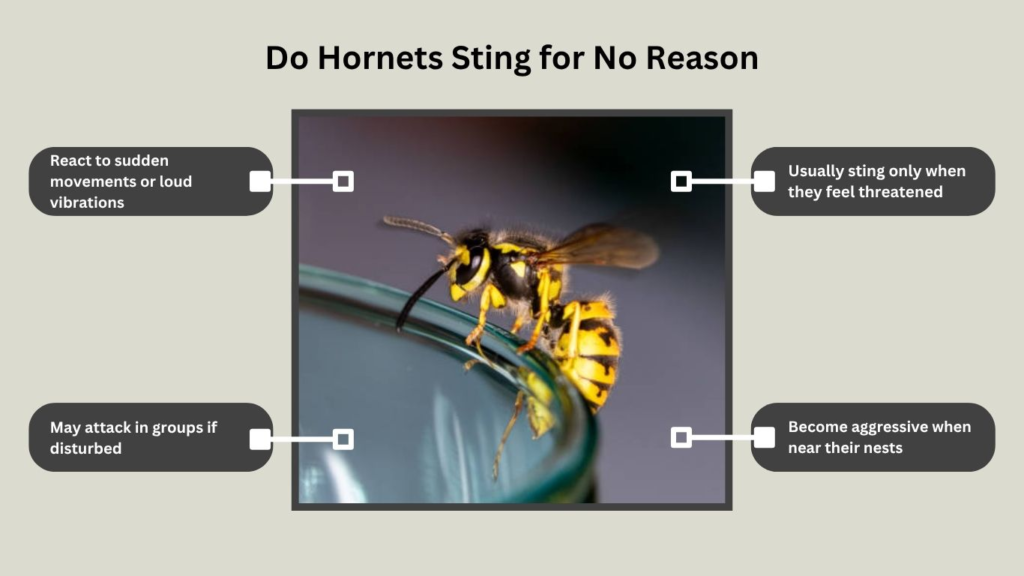
- Usually sting only when they feel threatened
- Become aggressive when near their nests
- React to sudden movements or loud vibrations
- May attack in groups if disturbed
These behaviors show that hornets do not sting without reason, but their defensive nature can make them seem aggressive.
Do All Hornets Sting
- Female hornets have stingers and can sting
- Male hornets do not have stingers
- Most common hornet species can sting humans
- Includes European, bald-faced, and Asian hornets
This distinction is important because only female hornets pose a stinging risk.
Do Hornets Sting More Than Once
- They do not lose their stinger after attacking
- Can sting repeatedly in a short time
- More dangerous than bees in this regard
- Multiple stings increase pain and risk
Unlike honeybees, hornets can sting multiple times, making encounters more serious if several hornets are involved.
Do Hornets Leave a Stinger or Die After Stinging
- Do not leave their stinger in the skin
- Do not die after stinging
- Can continue to sting multiple times
- Different from honeybees
This is a key difference between hornets and bees. Bees typically lose their stinger and die, while hornets remain active and capable of stinging again.
Do Hornet Stings Hurt
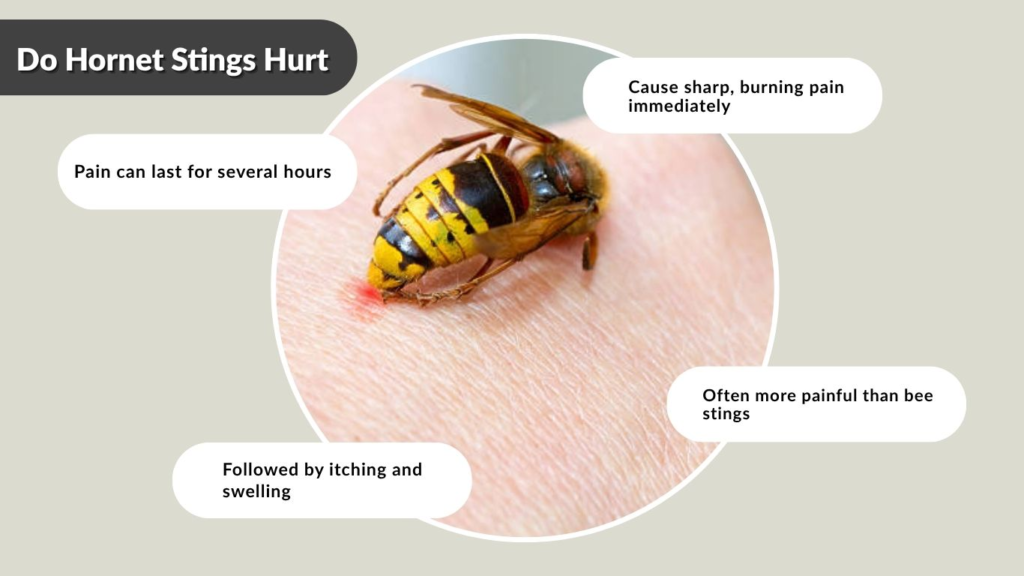
- Cause sharp, burning pain immediately
- Often more painful than bee stings
- Pain can last for several hours
- Followed by itching and swelling
Hornet stings are widely known for their intensity. The venom affects nerve endings quickly, causing a strong burning sensation. While the pain usually decreases after a few hours, the area may remain sensitive and swollen.
What Do Hornet Stings Feel Like
A hornet sting typically feels like a sudden, sharp jab followed by a burning or throbbing sensation. The pain can spread slightly around the sting area and may feel warm or tender to the touch. Over time, the intense pain fades, but itching and mild discomfort often replace it as the skin begins to heal.
The experience can vary depending on the location of the sting and the individual’s tolerance to pain. Stings on sensitive areas like the face or neck may feel more severe and uncomfortable.
What to Do If a Hornet Stings You
- Move away from the hornet immediately to avoid additional stings
- Clean the sting area with soap and water
- Apply a cold compress to reduce swelling and pain
- Take antihistamines to control itching and inflammation
- Use over-the-counter pain relief if needed
Acting quickly after a sting can significantly reduce discomfort. Applying a cold compress several times during the first day helps control swelling. Keeping the area clean also lowers the risk of infection.
What to Put on a Hornet Sting
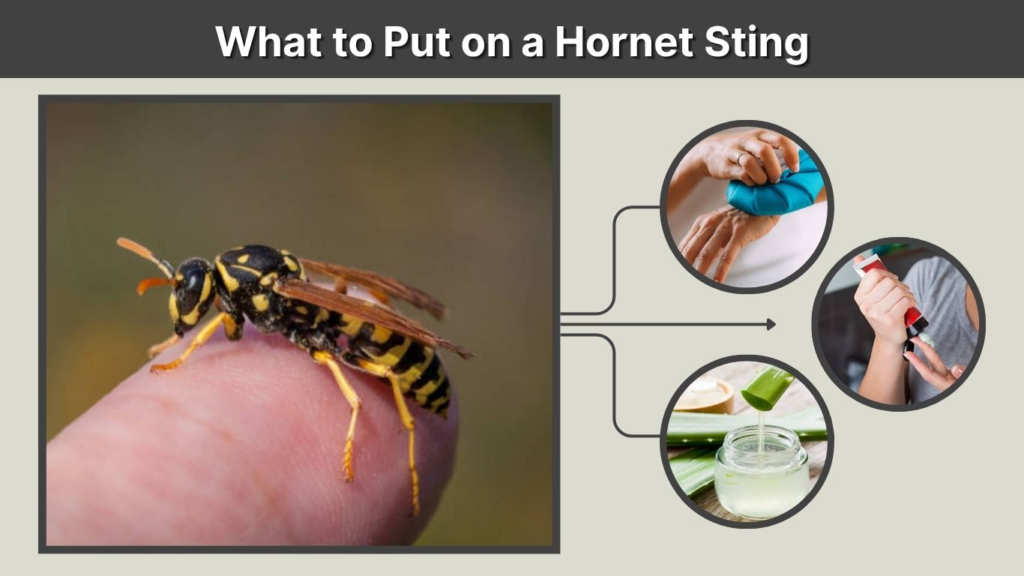
- Ice or a cold pack wrapped in cloth
- Anti-itch creams such as hydrocortisone
- Oral antihistamines for swelling
- Natural soothing remedies like aloe vera
These treatments help calm the skin and reduce irritation. Combining cold therapy with medication often provides the fastest relief.
How Long Do Hornet Stings Last
The duration of a hornet sting reaction varies depending on the individual and the severity of the sting. In most cases, the sharp pain fades within a few hours. Swelling and redness typically last one to three days, while mild itching may continue for a few more days.
If the swelling increases after 48 hours or the pain becomes more intense instead of improving, it may indicate a stronger reaction or complication. Monitoring symptoms carefully helps ensure proper recovery.
Do Different Types of Hornets Sting
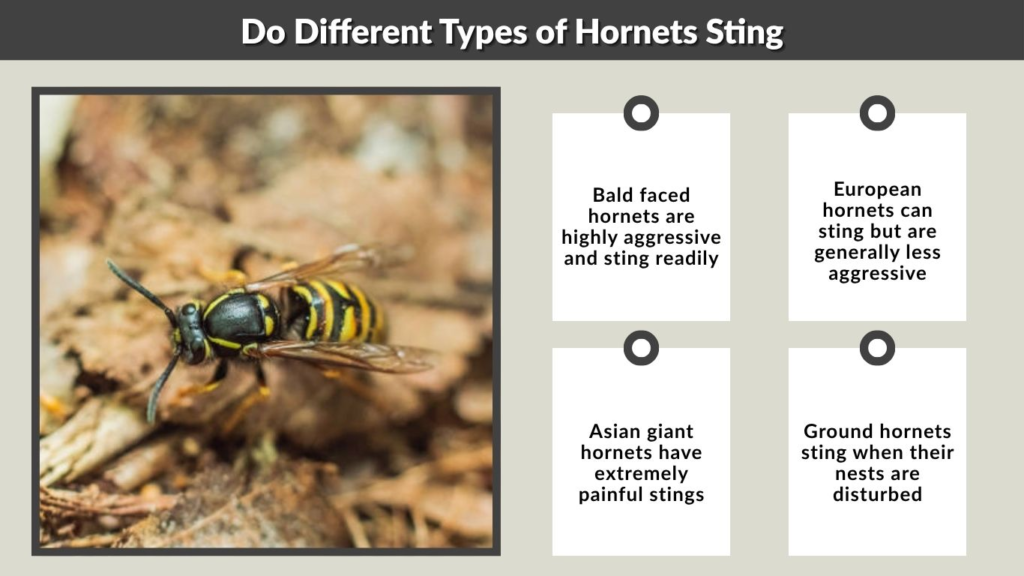
- Bald faced hornets are highly aggressive and sting readily
- European hornets can sting but are generally less aggressive
- Asian giant hornets have extremely painful stings
- Ground hornets sting when their nests are disturbed
Different species vary in aggressiveness and sting intensity, but all hornets are capable of stinging when threatened.
When a Hornet Sting Becomes Dangerous
Warning Signs
Severe reactions can include difficulty breathing, swelling of the face or throat, dizziness, or a rapid heartbeat. These symptoms may indicate an allergic reaction that requires immediate attention.
When to Seek Help
Medical help should be sought immediately if any severe symptoms appear. Quick treatment is important to prevent complications, especially in cases of allergic reactions or multiple stings.
FAQs
Do hornets sting or bite?
Hornets sting rather than bite. They may use their jaws to grip, but their primary defense mechanism is their stinger, which injects venom into the skin.
Do hornets die after they sting?
No, hornets do not die after stinging because they have smooth stingers. This allows them to sting multiple times without harming themselves.
Do hornets sting more than once?
Yes, hornets can sting repeatedly since they do not lose their stinger. This makes them more dangerous than bees in repeated encounters.
How long do hornet stings last?
The pain usually lasts a few hours, while swelling and redness can remain for one to three days depending on the individual’s reaction.
What should you do after a hornet sting?
You should clean the area, apply ice, take antihistamines, and monitor symptoms. Seek medical help if severe reactions develop.
