
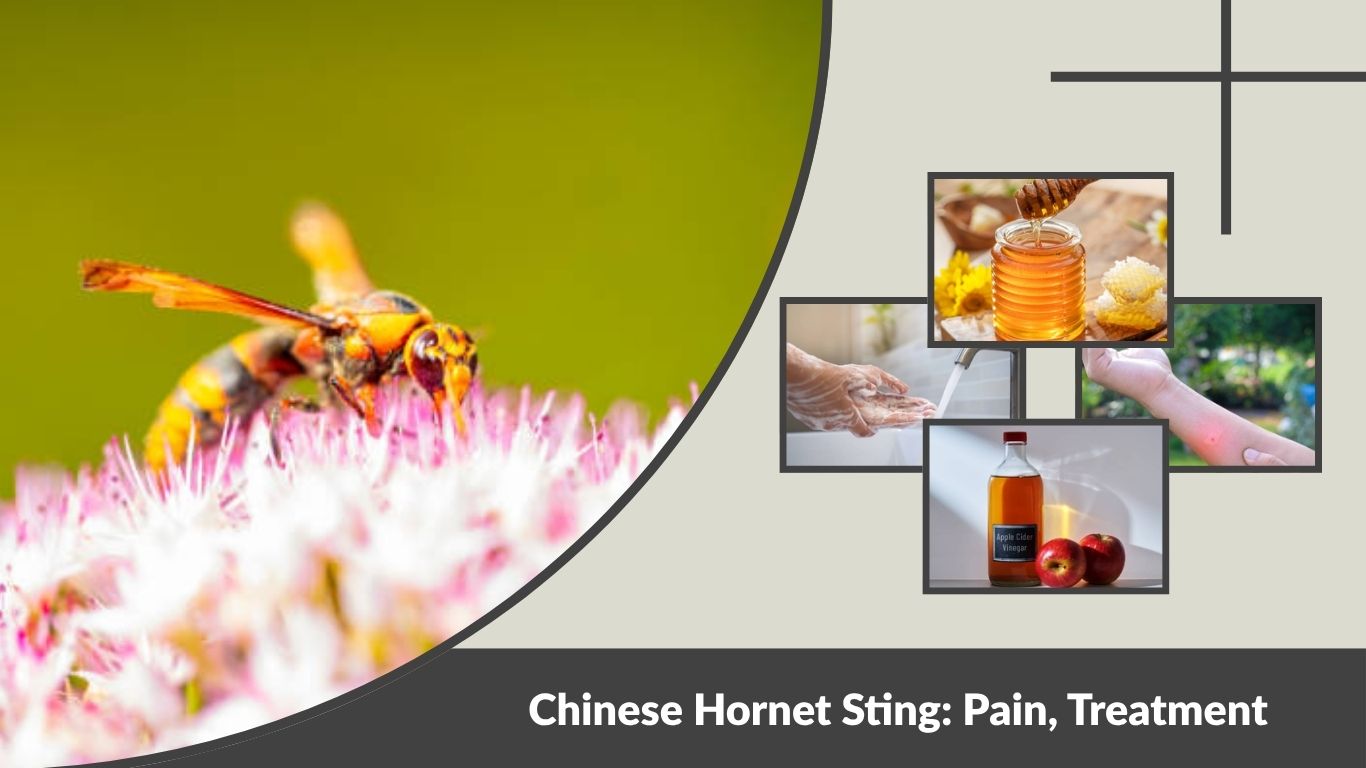
Chinese hornet stings can be painful and sometimes dangerous, especially if you are unsure how to respond. These hornets are known for their strong venom and aggressive defensive behavior, which can lead to multiple stings in a short time. While most stings cause temporary pain and swelling, some may trigger serious allergic reactions. Understanding the symptoms, pain level, and proper treatment can help you act quickly, reduce discomfort, and avoid complications after a Chinese hornet sting.
What Is a Chinese Hornet
A Chinese hornet is a large, aggressive insect that belongs to the wasp family. It is commonly found in parts of Asia and is known for its strong venom and defensive nature. These hornets often build nests in trees or sheltered areas and will protect them aggressively if disturbed.
Unlike bees, Chinese hornets have smooth stingers that allow them to sting multiple times without harming themselves. This makes them more dangerous in certain situations, especially when people accidentally get too close to their nests. Their venom is designed to cause pain and deter threats, which is why their sting feels intense.
Do Chinese Hornets Sting or Bite
Chinese hornets primarily sting rather than bite. While they do have strong jaws that can grip or chew, their main method of defense and attack is through their stinger. They typically sting when they feel threatened or when their nest is disturbed.
Sudden movements, loud noises, or getting too close to their colony can trigger aggressive behavior. In some cases, multiple hornets may attack at once, increasing the severity of the situation. Understanding these triggers can help reduce the chances of getting stung.
How Painful Is a Chinese Hornet Sting
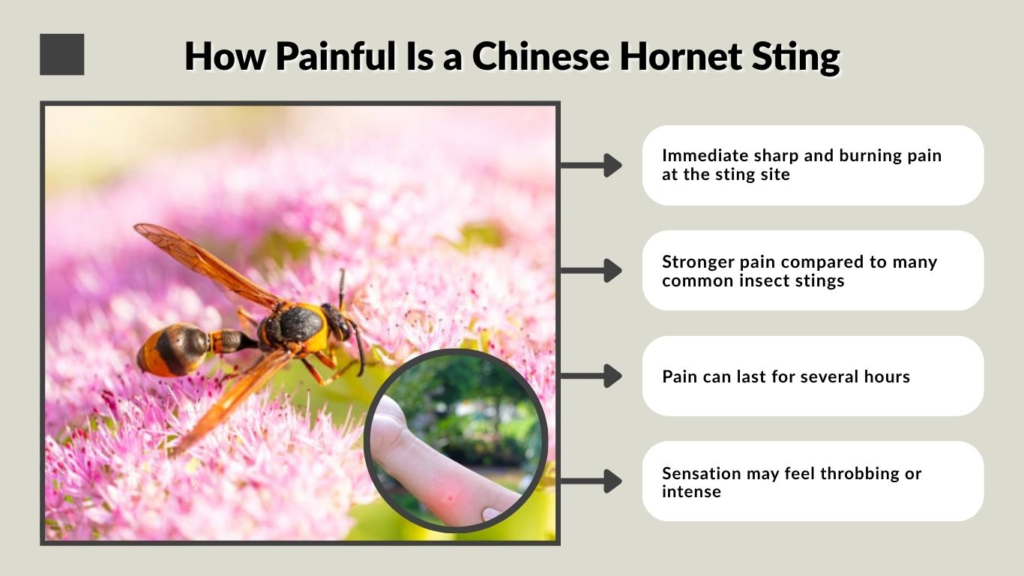
- Immediate sharp and burning pain at the sting site
- Stronger pain compared to many common insect stings
- Pain can last for several hours
- Sensation may feel throbbing or intense
The pain from a Chinese hornet sting is often described as sudden and severe. It usually peaks quickly and then gradually decreases over time. However, the area may remain sensitive, especially if the sting occurs on thinner or more delicate skin.
Chinese Hornet Sting Symptoms
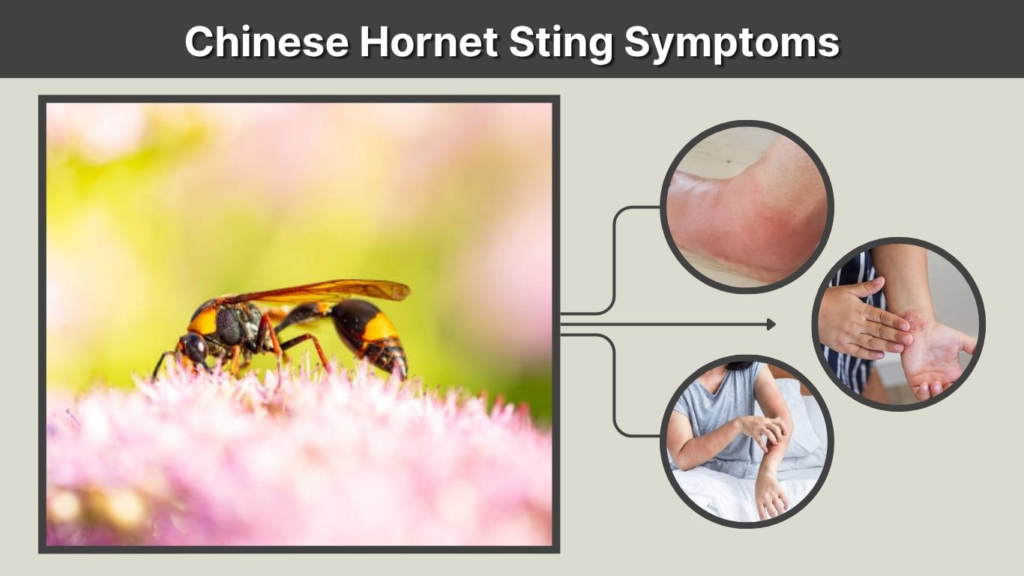
- Redness and swelling around the sting area
- Burning or stinging sensation
- Itching as the skin begins to heal
- Mild inflammation lasting a few days
These symptoms are common and usually not serious. The swelling may appear larger depending on where the sting occurs, such as the face or hands. In most cases, symptoms improve with simple care and do not require medical treatment.
Chinese Hornet Sting Treatment
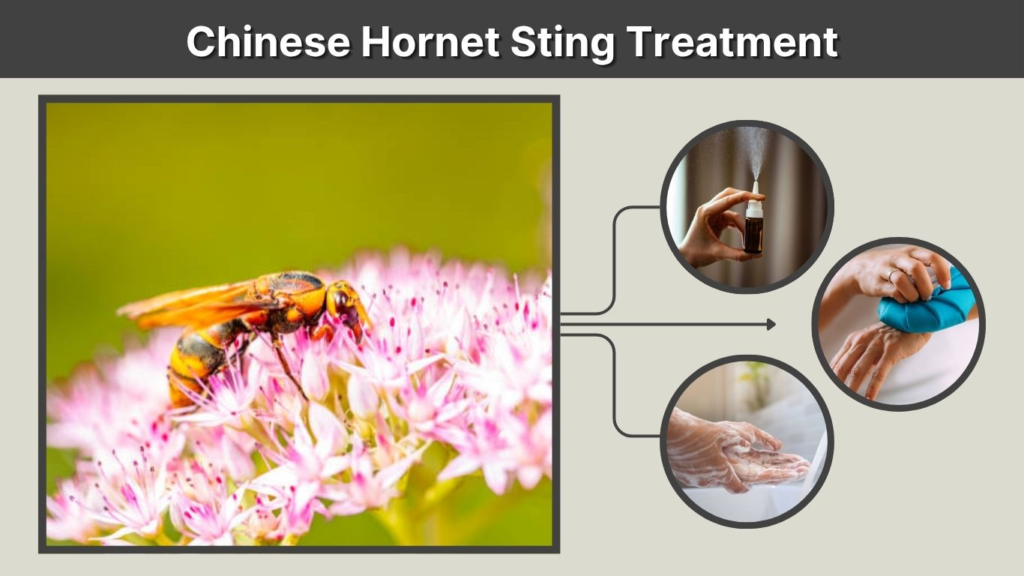
- Move away from the hornet immediately to avoid further stings
- Clean the affected area with soap and water
- Apply a cold compress for 10–15 minutes
- Take antihistamines to reduce swelling and itching
- Use over-the-counter pain relief if necessary
Taking quick action after a sting can help reduce pain and prevent the reaction from becoming worse. Repeating cold compress application throughout the day can further control swelling. Keeping the area clean is also important to avoid infection.
Home Remedies for Chinese Hornet Sting
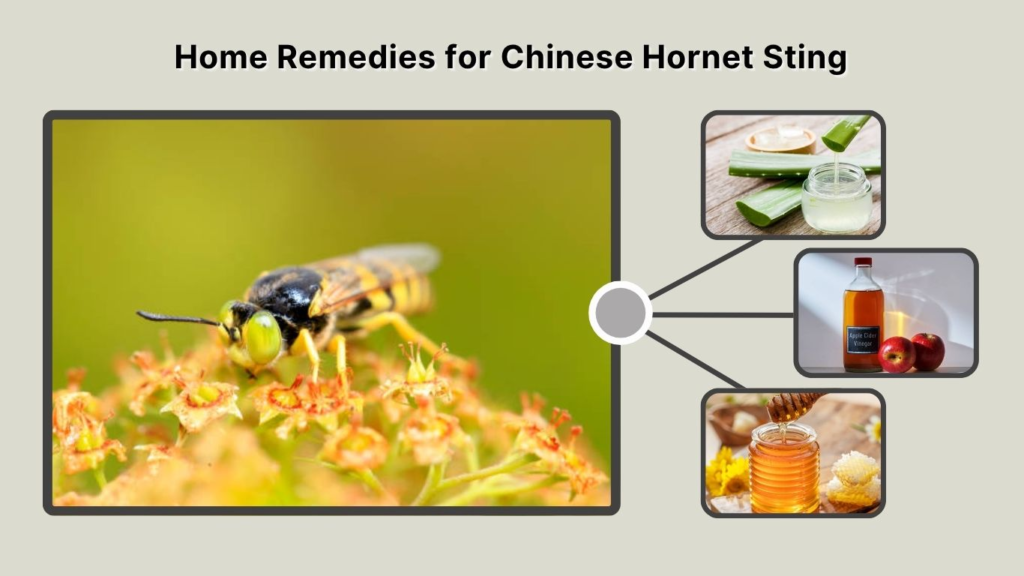
- Aloe vera gel to calm irritated skin
- Baking soda paste to relieve itching
- Honey for its soothing and antibacterial properties
- Apple cider vinegar for mild relief
These home remedies can provide additional comfort when used alongside basic first aid. While they are not a replacement for medical care, they are helpful for managing minor symptoms and speeding up the healing process.
How Long Does a Chinese Hornet Sting Last
The duration of a Chinese hornet sting depends on individual sensitivity and the severity of the reaction. In most cases, the sharp pain fades within a few hours. Swelling and redness usually last between one and three days, although mild itching may continue for a longer period.
For some individuals, especially those with sensitive skin, the swelling may take a bit longer to fully disappear. Proper care, including cleaning the area and avoiding irritation, can help speed up recovery and reduce discomfort.
Can Chinese Hornets Sting More Than Once
- They have a smooth stinger that does not get stuck
- Can sting repeatedly without harm to themselves
- Often attack in groups when threatened
- Multiple stings increase pain and risk
Because Chinese hornets do not lose their stinger, they are capable of delivering several stings in a short time. This makes encounters more dangerous, especially if a nest is disturbed. The risk becomes higher when multiple hornets attack at once.
Are Chinese Hornet Stings Dangerous
- Usually mild for most healthy individuals
- Can be dangerous for people with allergies
- Risk increases with multiple stings
- May cause severe swelling in sensitive areas
For most people, a single sting causes temporary discomfort but is not life-threatening. However, stings near the face, neck, or inside the mouth can be more serious due to swelling. People with known allergies should take extra precautions.
Allergic Reactions and Emergency Response
Signs of Anaphylaxis
A severe allergic reaction can develop quickly after a Chinese hornet sting. Symptoms may include difficulty breathing, swelling of the face or throat, rapid heartbeat, dizziness, and widespread hives. These signs indicate a medical emergency and require immediate attention.
What to Do in an Emergency
If severe symptoms appear, call emergency services immediately. If an epinephrine auto-injector is available, use it without delay. Keep the person calm and lying down while waiting for medical help. Quick action can be life-saving in these situations.
Chinese Hornet Sting vs Other Hornets
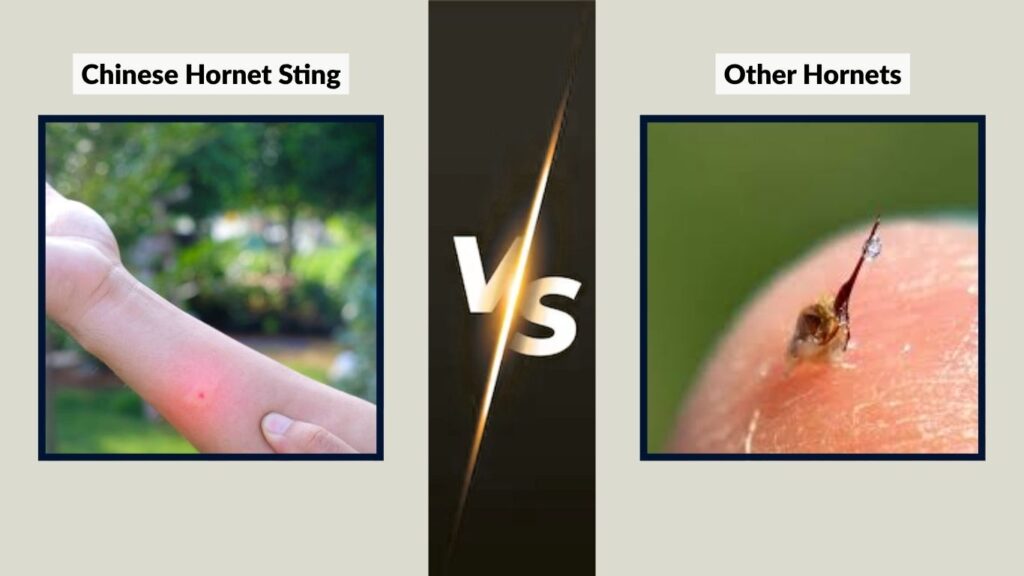
Chinese hornet stings are generally considered more painful than many common wasp stings due to their potent venom. Compared to Asian hornets and other species, they tend to be more aggressive when defending their nest. While most hornets can sting multiple times, the intensity of pain and swelling may vary slightly depending on the species and the amount of venom injected.
What Does a Chinese Hornet Sting Look Like
A Chinese hornet sting usually appears as a raised red bump with a central puncture point. The surrounding skin may become swollen, warm, and slightly firm. Over time, the redness may spread slightly, and itching can develop as the area begins to heal. In some cases, the swelling may look more noticeable depending on the location of the sting.
What Not to Do After a Sting
- Do not scratch the affected area
- Avoid applying heat to the sting site
- Do not ignore symptoms that worsen over time
- Avoid tight clothing around the sting
These precautions help prevent irritation, reduce the chance of infection, and support faster healing.
FAQs
How painful is a Chinese hornet sting?
A Chinese hornet sting is very painful due to its strong venom. The pain is immediate and intense but usually becomes manageable within a few hours, followed by mild swelling and itching.
What should I do if a Chinese hornet stings me?
You should move to a safe area, clean the sting site, apply a cold compress, and take antihistamines. Seek medical help if severe symptoms such as breathing difficulty appear.
Are Chinese hornet stings dangerous?
They can be dangerous, especially for individuals with allergies or when multiple stings occur. Severe reactions require immediate medical attention to prevent complications.
How long does a Chinese hornet sting last?
The pain usually lasts a few hours, while swelling and redness may remain for one to three days depending on how the body reacts.
Can Chinese hornets sting more than once?
Yes, Chinese hornets can sting multiple times because they do not lose their stinger, making them more aggressive in defensive situations.
